
Luxe Surfaces and Patty Madden Reimagine Real Wood Veneer
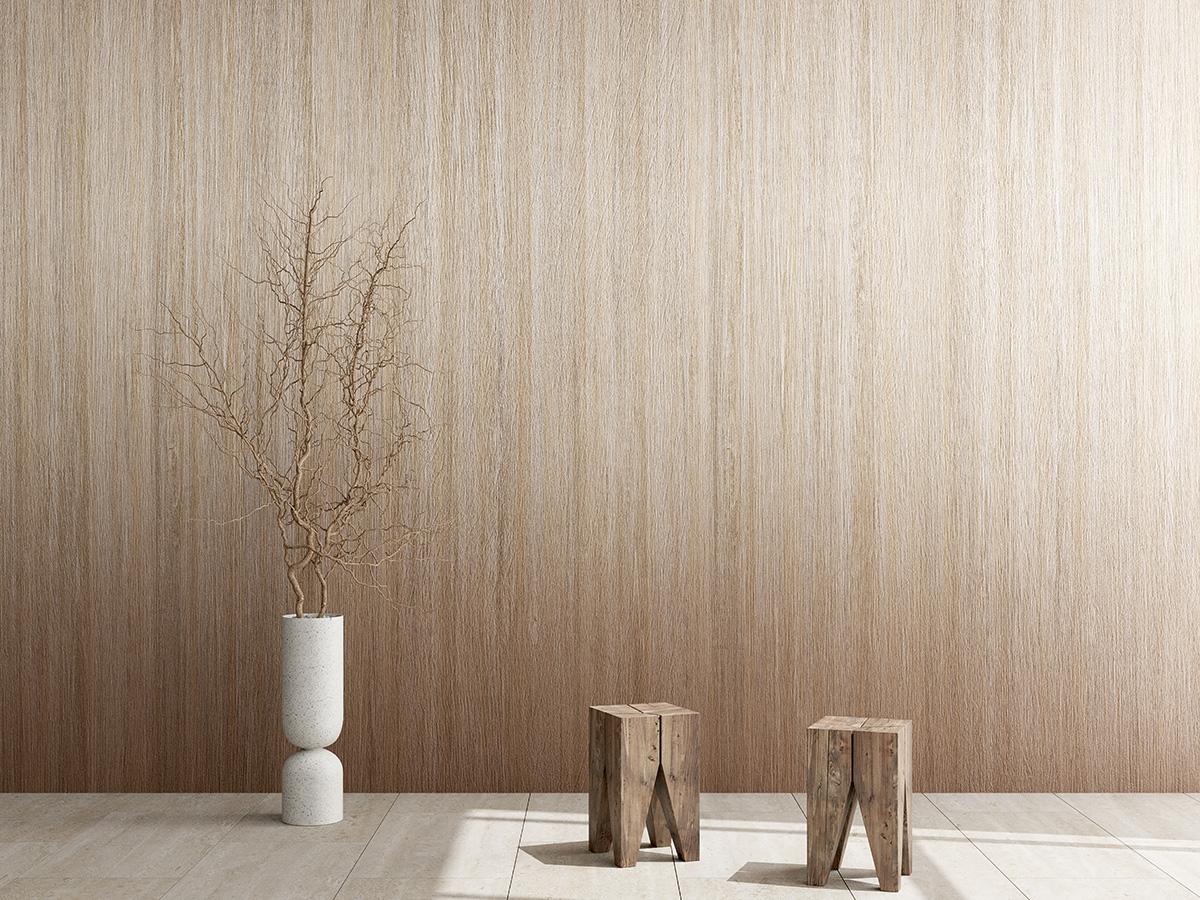
Each line of grain moves in steady rhythm across tall walls and expansive planes, its pattern unfolding as a single, fluid gesture carrying the imprint of craftsmanship and control. The latest collaboration between Luxe Surfaces and designer Patty Madden has yielded a breakthrough in material fabrication: continuous rolls of real wood veneer developed for large-scale interiors to fit the space.
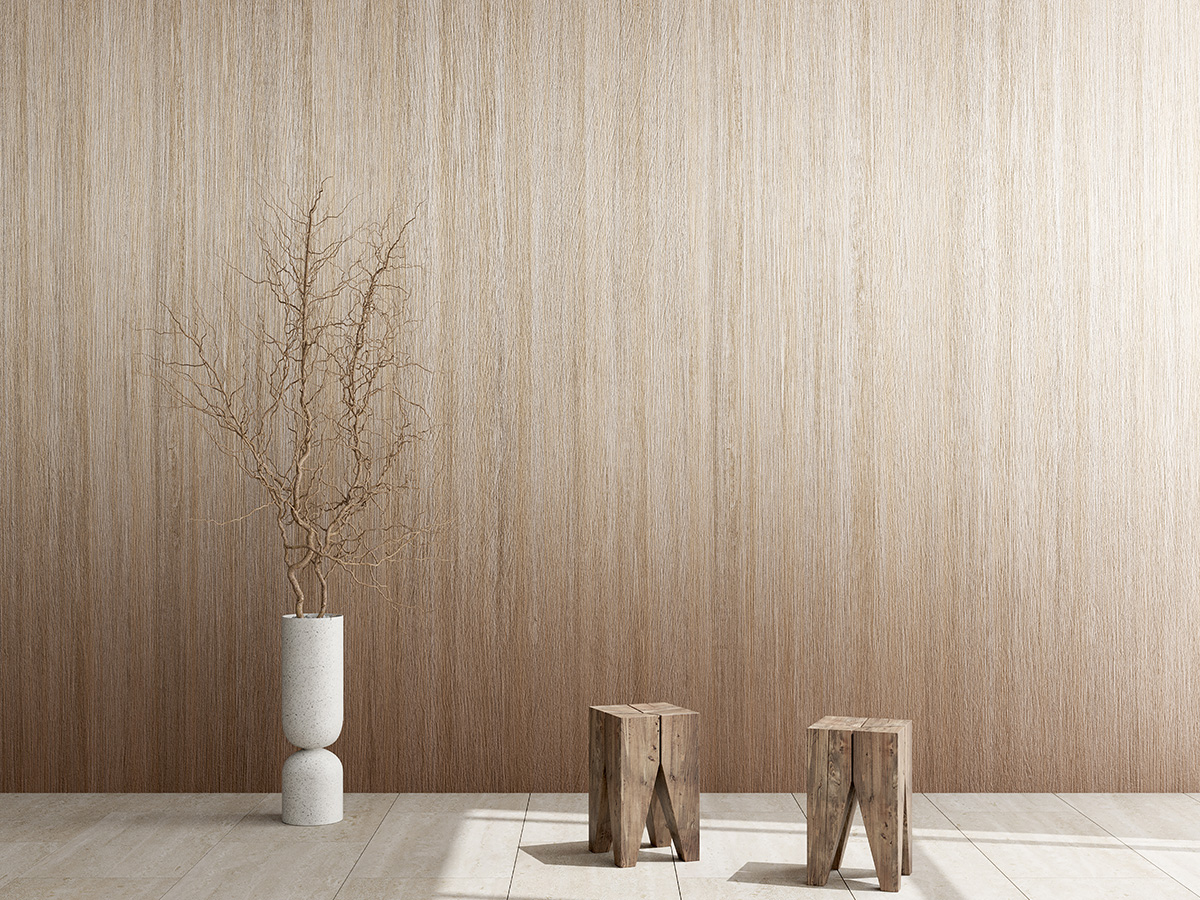
Created through a patented joining process that aligns and bonds sequenced sheets, the veneer maintains the natural direction of the grain across its full length, allowing designers to work with real wood at new dimensions. What emerges is a material that reveals both the hand of the maker and the rigor of engineering. By transforming real wood into a surface capable of spanning entire planes, the collaboration redefines how natural materials can shape space.
From Artistry to Innovation
The starting point was a question of possibility—how to take the familiar language of wood veneer and extend it beyond its limits. “The idea was born from a shared vision of our partners and Luxe Surfaces to push the boundaries of what's possible with natural materials,” says Patty Madden. “For years, designers have loved the look and feel of real wood veneer, but sheet sizes and end-match seams have limited its application. We saw an opportunity to transform those limitations into possibilities.”
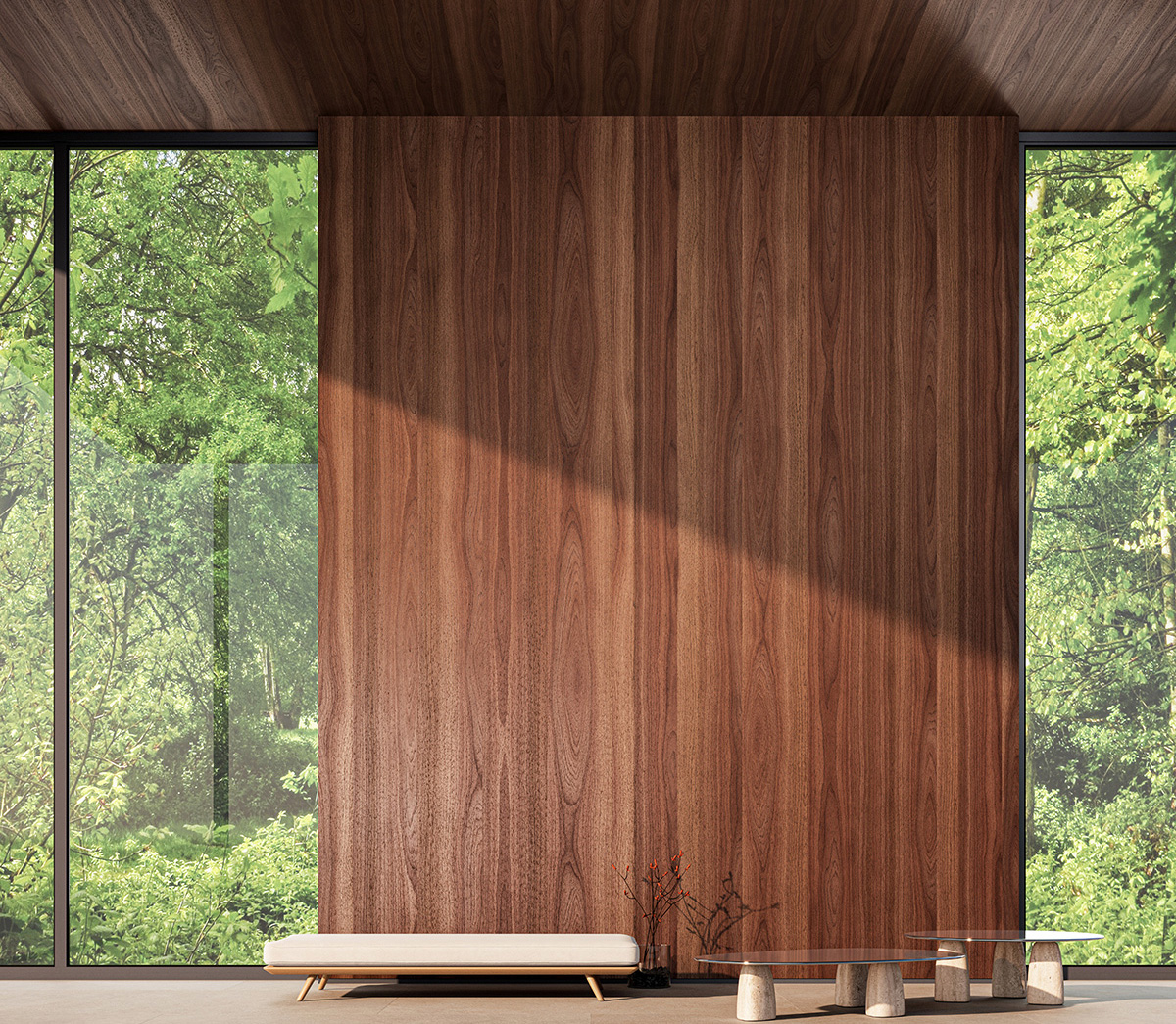
As development progressed, the material began to influence the artwork itself. “Initially, we saw wood as a beautiful, natural surface—but once we unlocked the ability to print on continuous rolls of real wood veneer, it became a new creative canvas,” Madden explains. The scale prompted her to think compositionally, working with the grain rather than over it. “The combination of precision printing and uninterrupted veneer opened the door to creating large, luminous, textural surfaces that feel both crafted and contemporary,” she adds.
The Process Behind Seamless Wood
Creating real wood veneer at architectural scale required equal measures of engineering precision and craft. Through long-standing relationships with trusted mills, Luxe Surfaces and its manufacturing partners source veneer sliced from logs or reconstituted wood blocks, ensuring material quality from the start. Veneer from North American and European mills is carefully selected, assembled into wide sheets, and bonded under controlled alignment to preserve the direction and character of the wood.
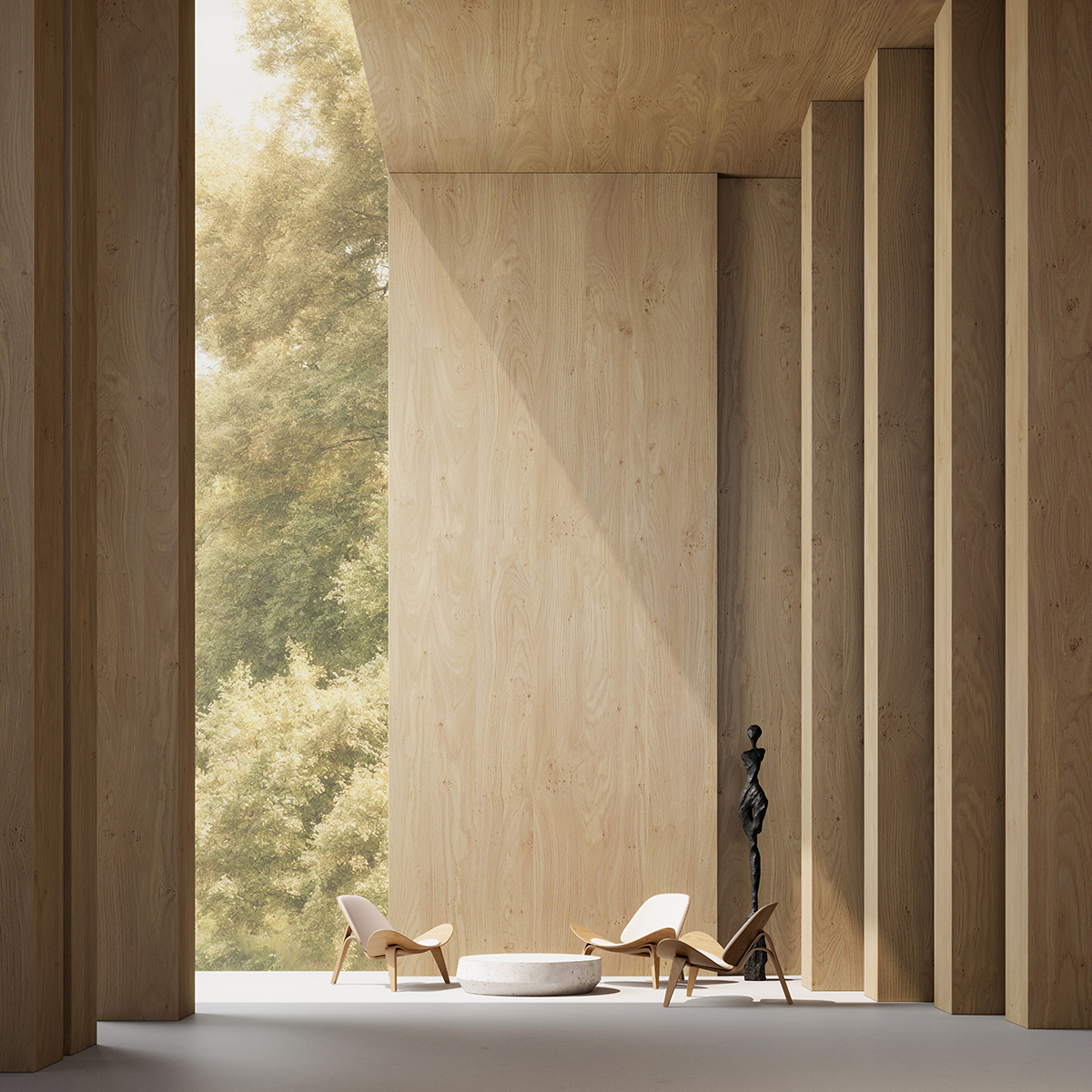
Each strip is joined by skilled artisans, using both hand and machine techniques to achieve continuous grain flow across the roll. “The joining process has taken years to perfect,” says Mike Leon, president of Luxe Surfaces. “Now, the continuous roll product can be crafted and processed using a variety of technologies and creative artwork to uniquely fit any space.” The patented process aligns and bonds sequenced sheets with such accuracy that the grain appears to move without interruption. The effect is most striking in spaces with tall ceilings—atriums, theaters, hospitality venues, and large-scale commercial interiors—where traditional sheet formats would require multiple seams. Such continuity has never before been possible in real wood veneer wallcovering.
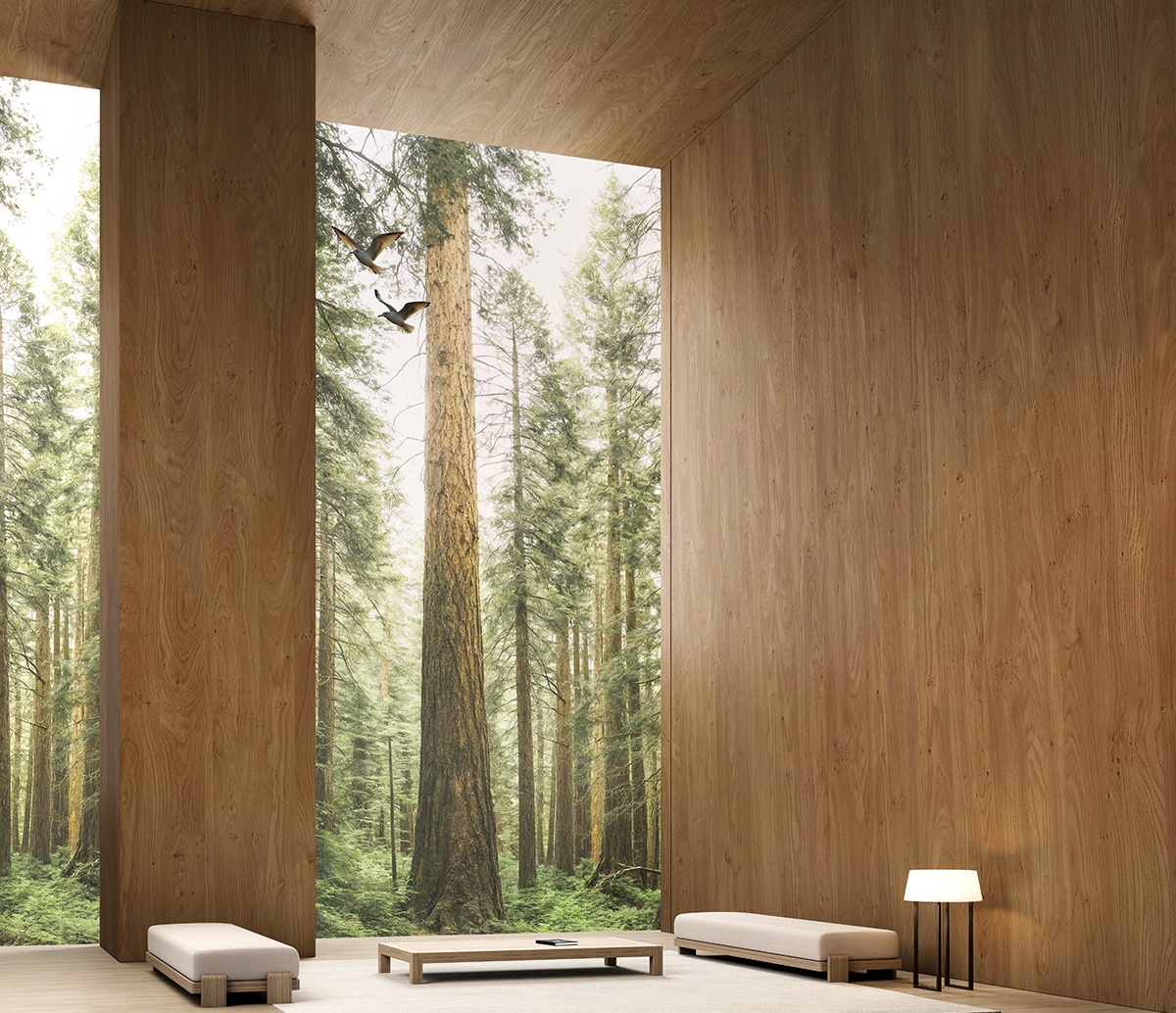
Because of its ultra-thin construction, the veneer also adapts easily to complex architectural conditions—from columns and ceilings to millwork, and even over acoustical panels—while maintaining structural integrity. In addition, every roll meets Class A fire-rating standards and passes both IMO and ASTM E84 testing, ensuring performance and safety for commercial spaces while maintaining the tactility of real wood at scale. “These tests are not just regulatory requirements; they are a vital design decision that ensures the integrity of the project,” adds Leon.
Expanding Design Possibilities
The continuous veneer format redefines how wood can function in interiors. Each roll extends the material’s reach across uninterrupted expanses, offering new possibilities for rhythm and proportion. “This technology allows us to explore larger scales, more fluid transitions, and deeper integrations between natural materials and architectural form,” says Leon. “I see opportunities for immersive environments, where walls, ceilings, and millwork flow together seamlessly, and where wood becomes both structure and a storytelling element.”
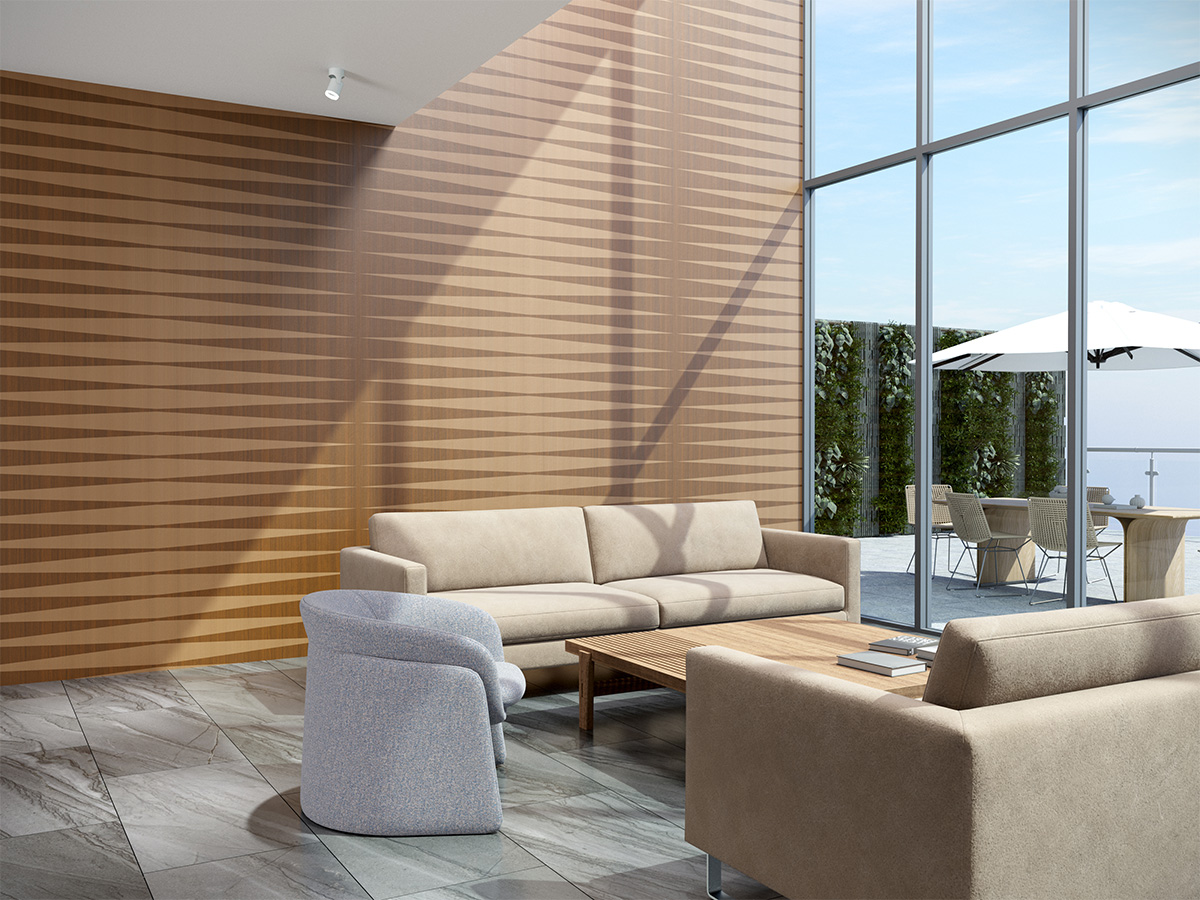
The format also improves installation efficiency, ease of transport, and material yield, ensuring that more of each log is used effectively. “This innovation gives designers the tools to push past old boundaries, leading the wallcoverings and veneer category into a future that is more artistic, sustainable, and architecturally more ambitious,” Leon adds. Positioned between wallcovering and built surface, the collaboration between Patty Madden and Luxe Surfaces defines a new category in design, one that allows natural beauty and advanced engineering to move in rhythm.