
Maine Inspiration: A Conversation with Stinson’s Design Duo
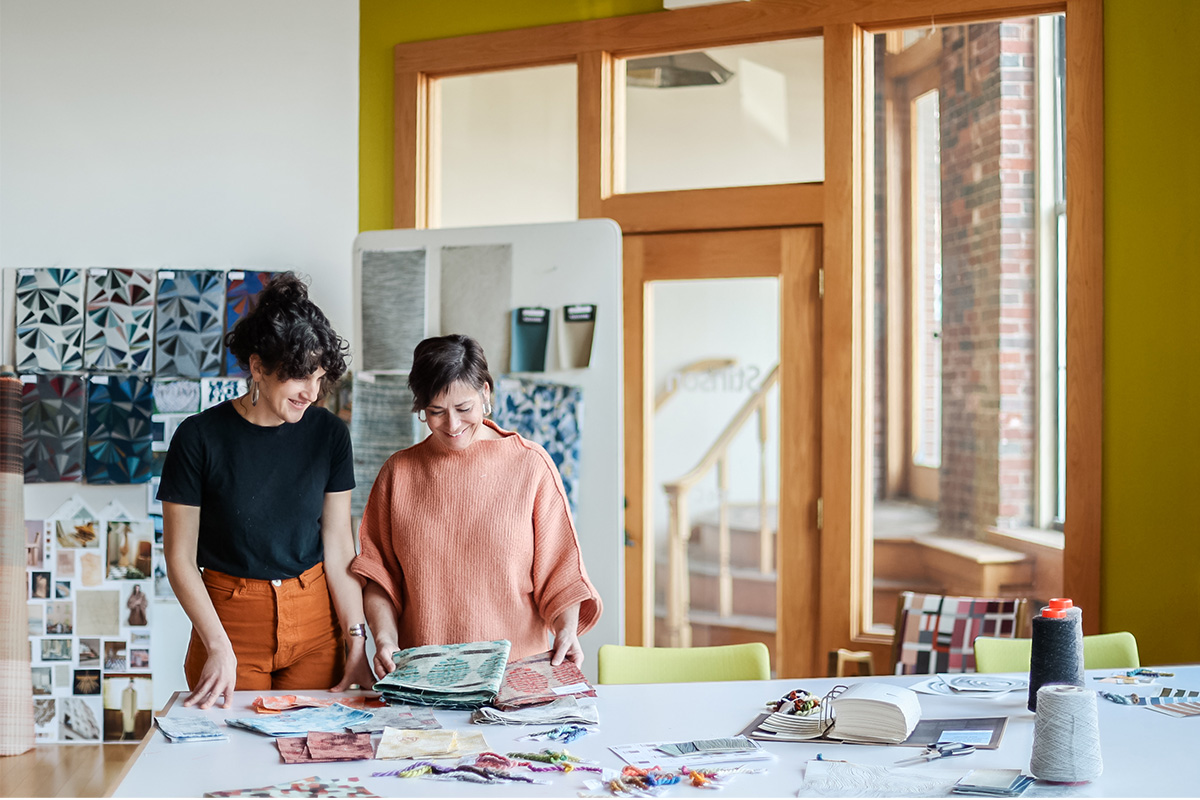
In the Stinson studio, design is a tactile conversation—one that starts with the sweep of a brush, the swirl of pigment, or the hum of a loom in motion. For Lori Roop and Lauren Kidwell, crafting collections is a hands-on endeavor, where paint, ink, and fiber come together to create pieces that are permeated by depth and movement. Their designs speak of process and offer a tactility that feels grounded in tradition yet forward-thinking in execution.
For over a decade, Roop and Kidwell have woven their individual talents into a partnership that balances artistry with purpose. From their studio in Maine, the surrounding landscape—with its rugged coastlines and changing skies—naturally influences their designs. In this conversation, they shed light on the inspirations that shape their work at Stinson and the creative process that drives them, while offering insights into how they continue to balance artistry and performance in the world of contract textiles.
Can you tell us about what first drew each of you to textile design?
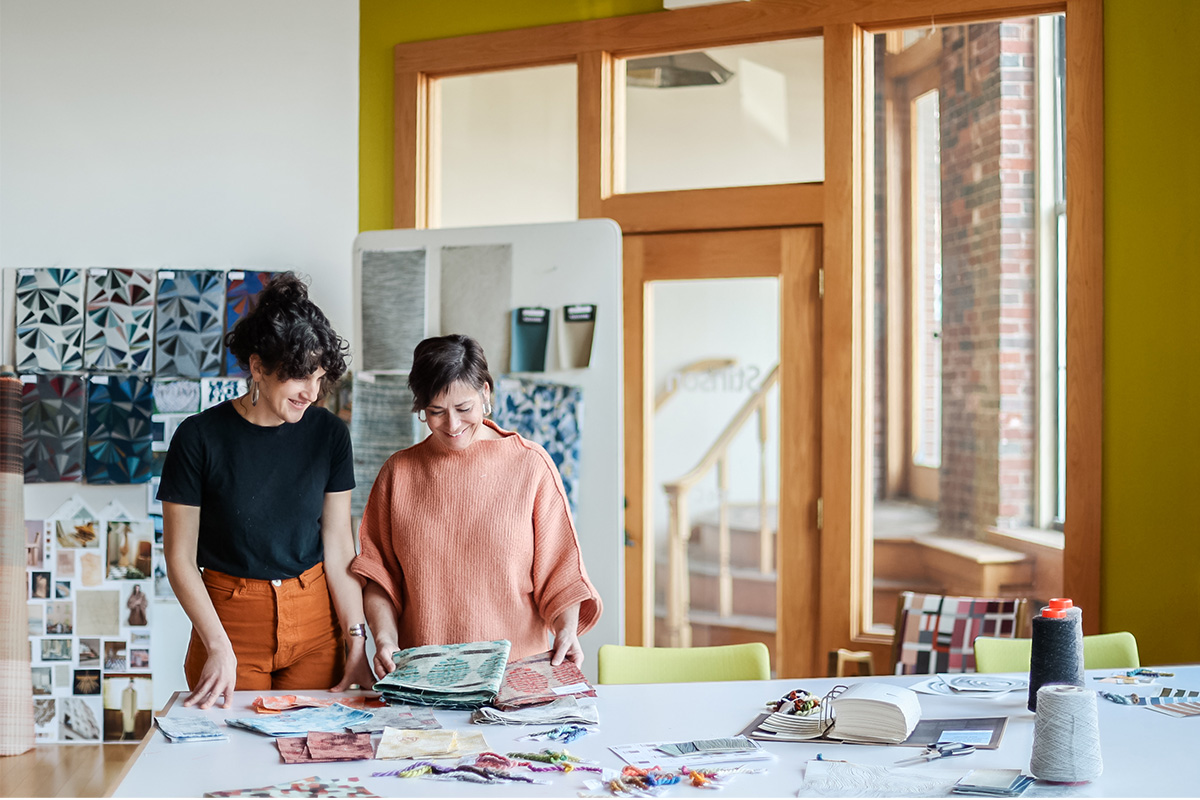
Lori Roop: The irresistible textile department at RISD. I was an admissions office tour guide my freshman year and loved visiting the bubbling dye lab, the messy silkscreen printing room, the hand weaving studios and loud jacquard weaving shed. The variety of what is called “textile design” felt very open for exploration at that age. It still does!
Lauren Kidwell: I had no clue what textile design was when I started college at the Rhode Island School of Design (RISD) nearly 20 years ago! Fortunately for me, RISD does not require major declaration until the end of freshman year. This encourages students to explore the different disciplines, drawing, two-dimensional design, and three-dimensional design. Choosing a major was an extremely difficult decision for me to make, because I loved everything. I felt a wave of relief when learning about the textiles department, it allowed me to continue doing everything I loved. Hand weaving allowed me to think three-dimensionally, while print making allowed me to further hone my skills of drawing and painting. In my junior year I was introduced to jacquard design, which sealed my fate. When I saw the jacquard loom running, precisely weaving a detailed drawing I created, I swooned. Jacquard weaving integrated everything that spoke to me as an artist. I felt like the merger of technology combined with the tactility of yarn and my own hand was absolutely thrilling, and I have loved it ever since.
You’ve been working together for over a decade—how do your individual strengths complement each other? Can you walk us through how your creative process together unfolds?
LR: Because there are only two of us in our studio sometimes it feels like we are work sisters. And that feels lovely and unique. After defining some loose objectives for each project, we respect the process and give plenty of space at the start to try different approaches. When we are ready to come together and review our progress, I think I am helpful as a fresh and objective eye. I like pulling out the strongest concepts for our purposes and then working through the details together, bringing the product to fruition.
LK: It's been very easy to collaborate with Lori, we speak the same design language. Our backgrounds are similar—both RISD grads and both started our careers as designers working under the same mentor, Mark Pollack. This gives us a shorthand for communication. It is wonderful to have a thought partner that I can talk to about a loose concept or small sketch and she understands the potential immediately. The approach to each collection, even each fabric is different, but the way we support and enhance each other's ideas remains the same.
How does the natural environment of Maine inform your collective design approach? Are there any specific landscapes, textures, or moments that have directly influenced your work?
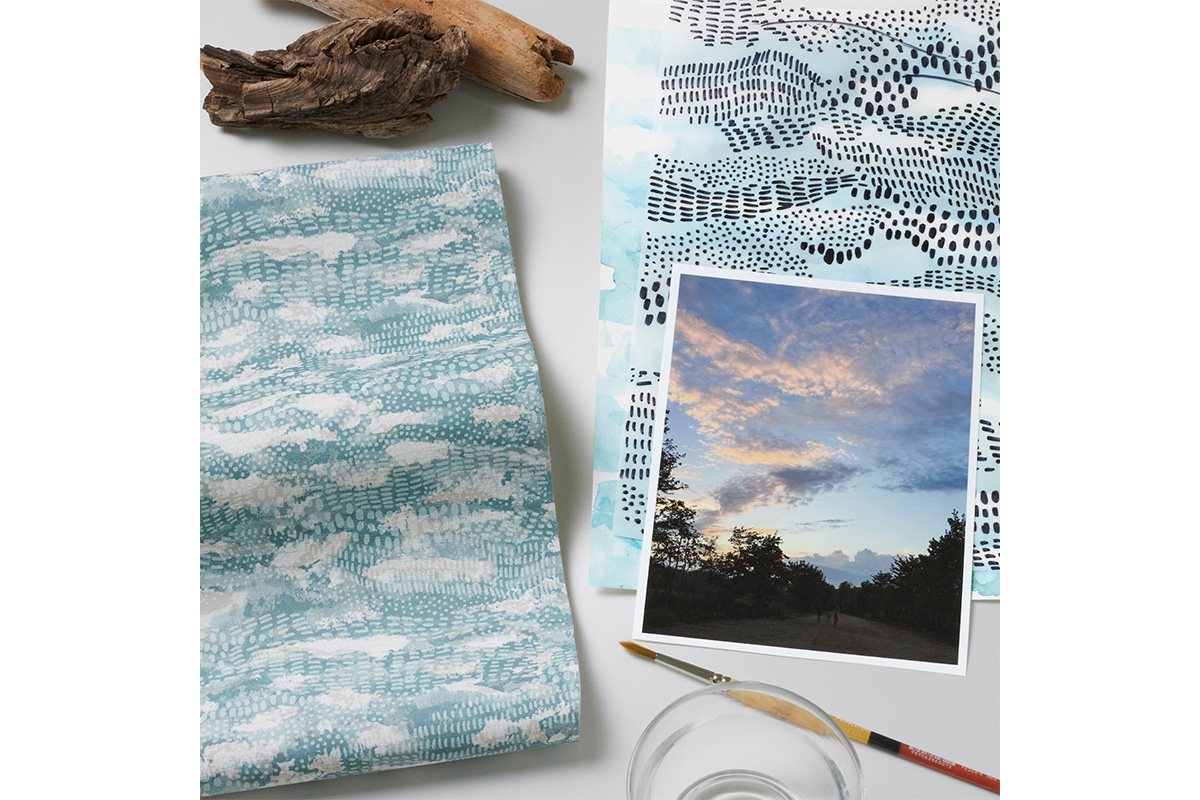
LK: Maine has a quiet beauty that I feel grateful to take in every day. After spending the first decade of my career living and working in New York City, I find being able to live so close to the rocky Atlantic coastline restorative. It can provide inspiration but also is a place to clear my mind to create space for other ideas that may not be connected to what I am seeing around me. There are some designs that I have made that are very directly taken from my beach walks, like Sea of Clouds, Tides, and Skipping Stones. But there are countless other projects that I have had aha moments when taking a walk or sitting by the river next to our studio.
LR: I agree with Lauren’s comment that our easy access to nature is a place to ground and connect. My daily walk with our studio dog Fern in the woods or at the beach is always a brain and creativity reset. The high-contrast black-and-white world that Maine becomes in the winter feels very modern to me and has influenced some of my designs like Sylvan, River, and Riverstone.
Can you elaborate on some of your go-to design techniques or materials?
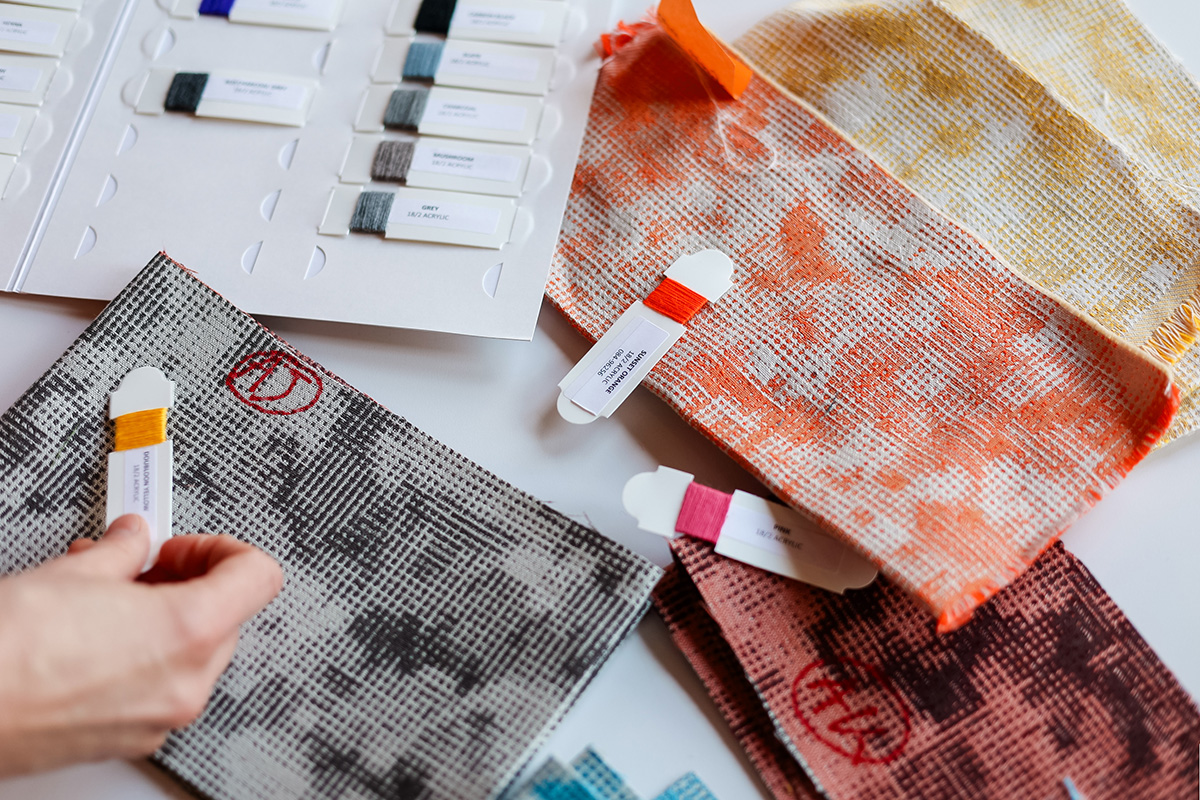
LK: I start by gathering inspiration whether it is from nature, art, or magazines that help me start brainstorming. Most often, my design process for a pattern starts with a very rough sketch or doodle to get the idea out of my head and onto paper. The design goes through iterations. Once the idea becomes more solid, I bring it to the computer where I finesse the pattern and put it into a repeat. If I am working on a woven textile the process can start with something as simple as a yarn that I would like to use in a texture.
Textile design for contract interiors requires both artistic expression and performance—how do you navigate that balance in your work?
LR: Since we have been designing for contract interiors for our entire careers, we have a baked-in knowledge of what things work and don’t work for contract interiors. We can’t "unknow" the information, so even in the infancy of a project we are making minute decisions that build the fabrics to heavy duty specifications without even being cognizant. It’s in our DNA at this point. That doesn’t mean it is easy! Making a beautiful, artistically expressive fabric from silk or linen is a lot easier than making something satisfying and beautiful out of high-performance polyester and nylon. It is a design challenge that takes experience, strong mill partners, and trial after trial before coming to market. We strive to make each fabric look amazing without sacrificing the high-performance standards that Stinson is known for.
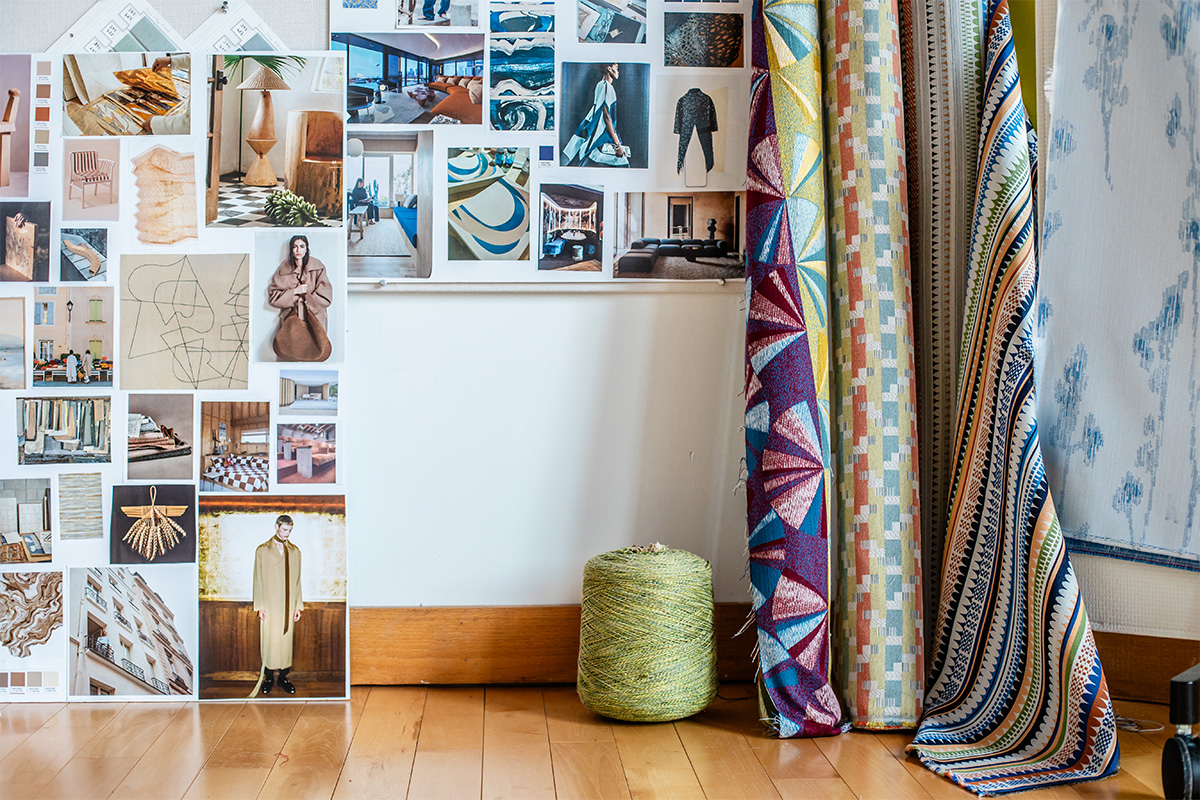
Your process is deeply tactile, working with paint and ink before translating designs into textiles. What distinctive qualities does this hands-on approach allow you to bring to your work?
LK: Yes, the backbone to most of our design work begins with drawing, painting, and collage. We believe it gives our line personality and a unique perspective. Our hands-on approach is most apparent in our considered details that we try to maintain when translating artwork to fabric. In our competitive market, having our own studio to create endless concepts helps keep our fabric offerings diverse. We can respond quickly to our customer’s changing tastes.
Looking ahead, is there anything exciting on the horizon for the Stinson studio that you can share?
LR: This spring we have nothing but excitement. We will be introducing The Collective, a design-forward grouping of textiles that feels like a new and modern conversation for Stinson. We will also be adding an influx of window fabric options to round out our Anzea brand—Lauren and I are in love with these. And we are also going to share a revolutionary development in sustainability for vinyl fabrics.