
Material Precision Drives Hanover and Optimum Innovations
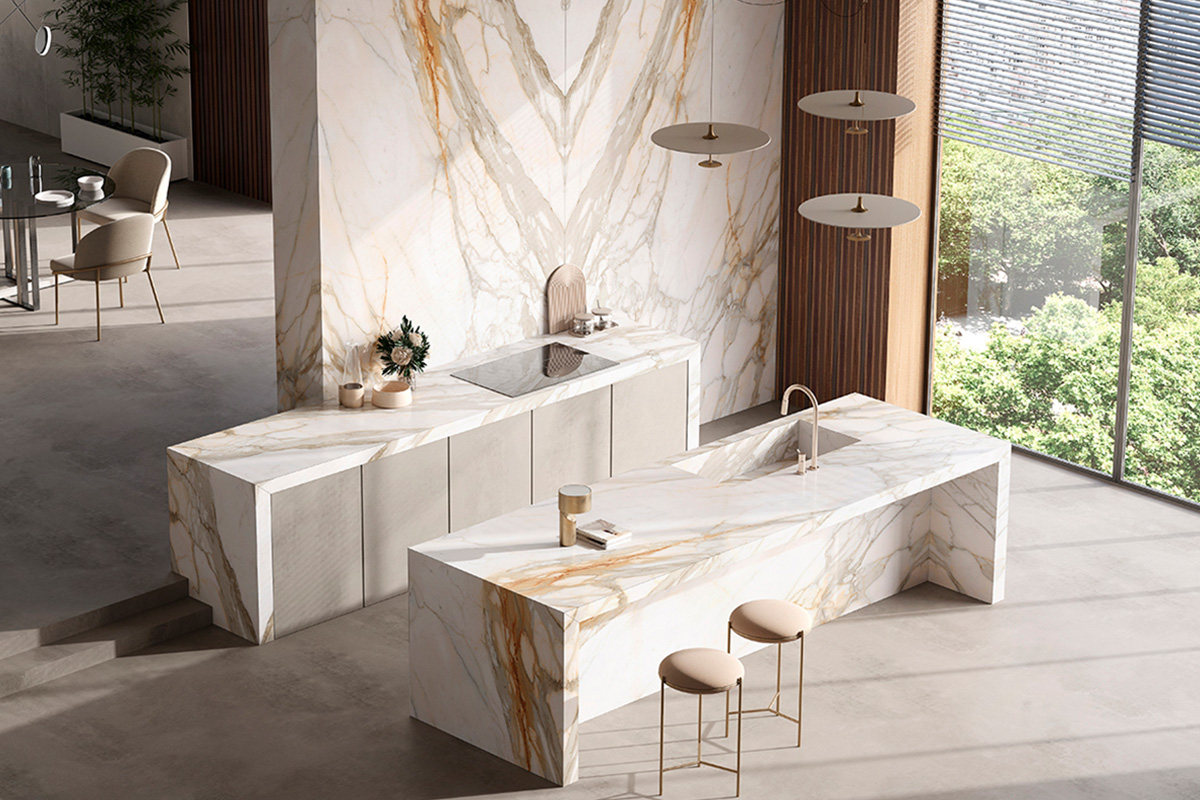
A natural stone slab, scanned in high definition, reveals a blueprint of color cues, fissures, and tonal shifts—each detail mapped, modified, and reassembled with digital precision. At Optimum Surfaces, distributed through Hanover Architectural Products, this process becomes the foundation for large-format porcelain slabs that mirror the complexities of quarried stone while eliminating the flaws that limit it. Through layered adjustments and production trials, the material is refined into a repeatable system of surface expression, scaled for architectural use.
Shared Foundations
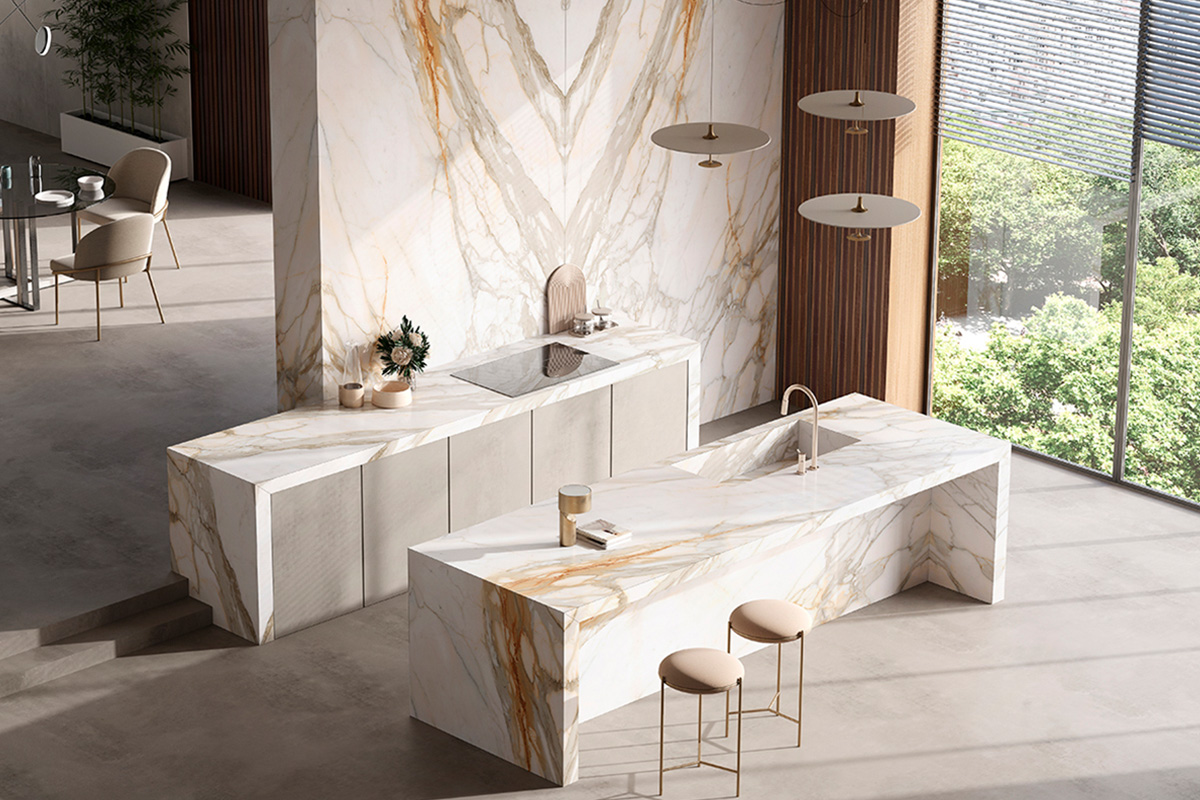
Represented in the market through Hanover Architectural Products—its master distributor and strategic partner—Optimum Surfaces designs and produces extra-large porcelain slabs for architectural and interior applications. Measuring approximately 72.5 by 130 inches, the format offers expansive surface coverage with minimal seams. These material innovations balance technical performance with a studied appreciation for surface detail and geological source material. From wall cladding to countertops, the slabs are engineered for consistency, durability, and scale.
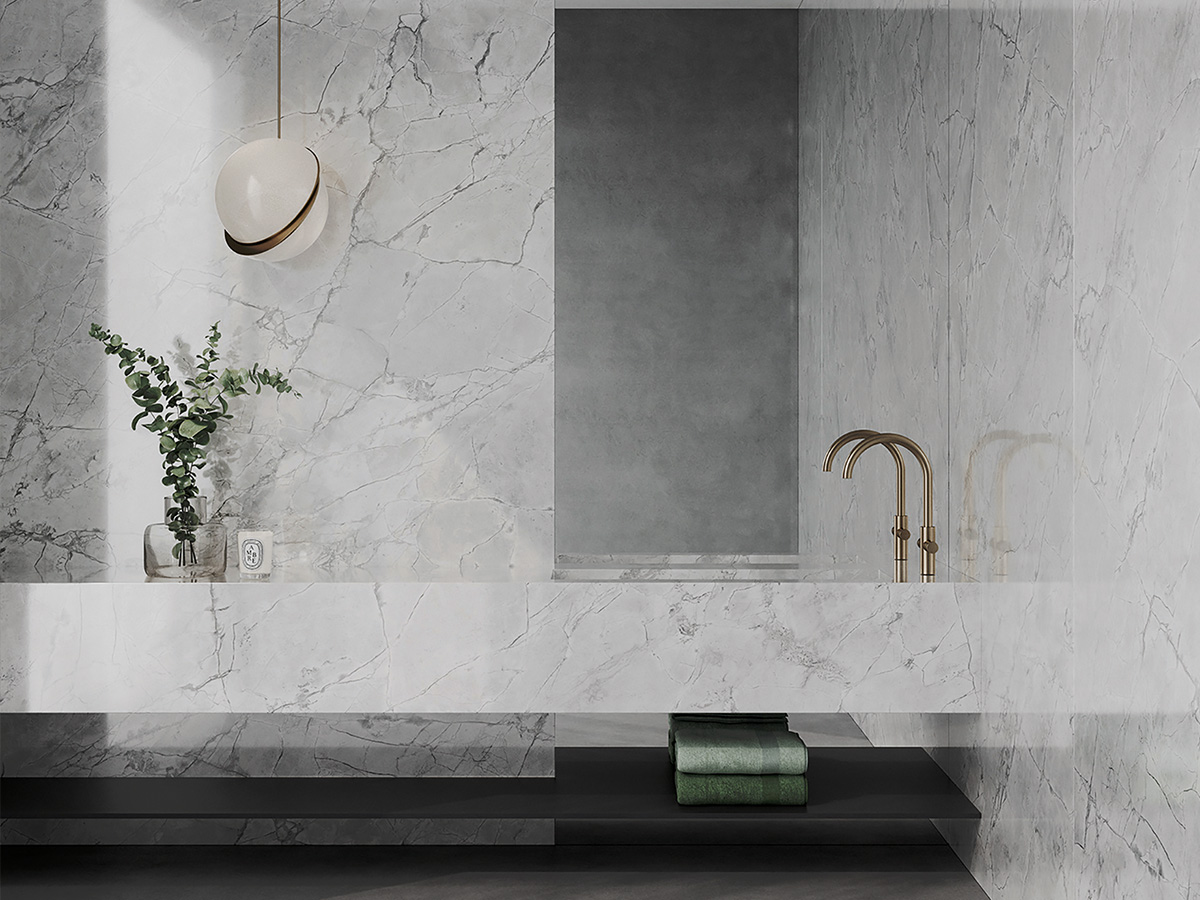
Known for its expertise in concrete pavers and architectural solutions, Hanover identified Optimum as a complement to its product offerings, expanding its reach into large-format porcelain. “[It] started with two similar, family-owned companies that provide high-quality building materials that have a great relationship and like-minded corporate values,” says Luke Lardarello, Optimum Sales Representative at Hanover Architectural Products. “As porcelain pavers have complemented Hanover’s concrete product line, Optimum does the same by fulfilling Hanover's desire to collaborate with designers, creating that next project of distinction.”
Surface Expression
Much of Optimum’s design philosophy begins at the surface. The visual identity of each slab—its tone, pattern, and depth—is developed through a process that merges geological inspiration with digital engineering. Once a reference stone is identified, Optimum applies high-resolution imaging to extract its visual signature, including veining patterns, surface variation, and subtle irregularities. These digital references are then fine-tuned by a team of technicians who eliminate natural blemishes, like iron oxidation, and adjust the hue, matrix, or patterning to ensure the design can be reliably repeated at scale.
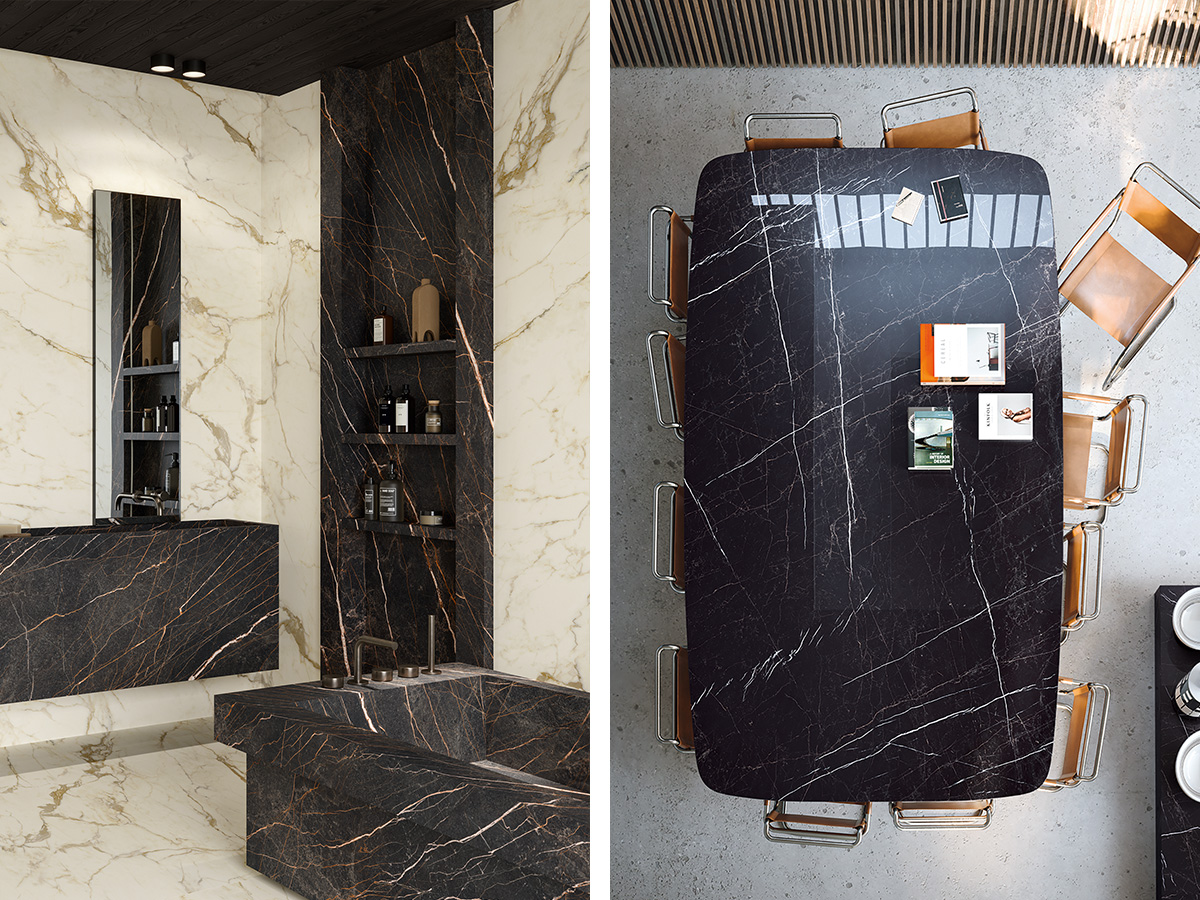
“Adjustments and tests are also vital to Optimum’s material selection process," explains Lardarello. "This can include changing color tones, hues, matrix, and moving veining with computer software to effectively create a perfect repeatable slab in mass quantities." Once a design has been refined through production trials, the team reviews the final options to assess which interpretation offers the strongest alignment with current design demands and long-term relevance.
Performance and Application
The production of Optimum slabs involves a precise technical sequence developed to enhance material stability and ease of use. The slabs are de-tensioned at the end of manufacturing, reducing the brittleness and rigidity often associated with large porcelain formats. This process also increases fabrication efficiency. A standard four-slab project elsewhere becomes a three-slab project using Optimum slabs distributed by Hanover, due to their size and material efficiency. Book-matching options allow for visual continuity or subtle variance, depending on the designer’s intent. Engineered for strength and precision, the slabs perform reliably across interior and exterior settings. Their scale reduces seam requirements in large installations, while low porosity makes them suitable for varied environments with minimal maintenance.
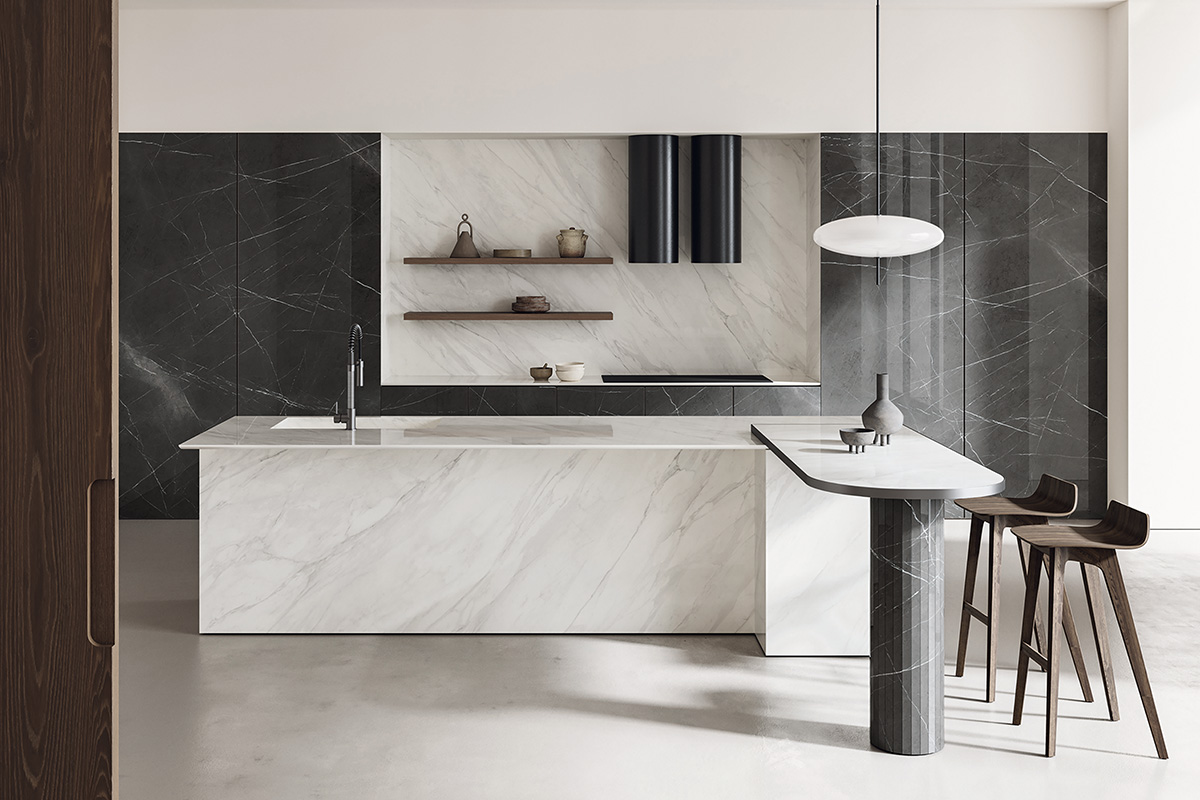
Sustainability guides every stage of production. Optimum sources sands, clays, and feldspars locally, recycles all water and scrap material, and captures kiln heat for reuse during cooling. The use of common, abundant raw materials helps reduce environmental extraction pressure, especially when compared to the impacts of natural stone quarrying. “The kiln mimics the naturally occurring million-year process in just hours and is hydrogen (H₂) ready," says Lardarello. “This means as soon as hydrogen energy is available to be used through advancing technology, the kiln will operate on this cleaner energy source.”
Through research, testing, and ongoing dialogue with designers, Optimum and Hanover continue to refine their surface offerings. Every slab is a product of engineered precision and aesthetic deliberation. It reflects an ongoing conversation between the natural world and the built environment.