Mohawk Group Bridges Heritage And Innovation
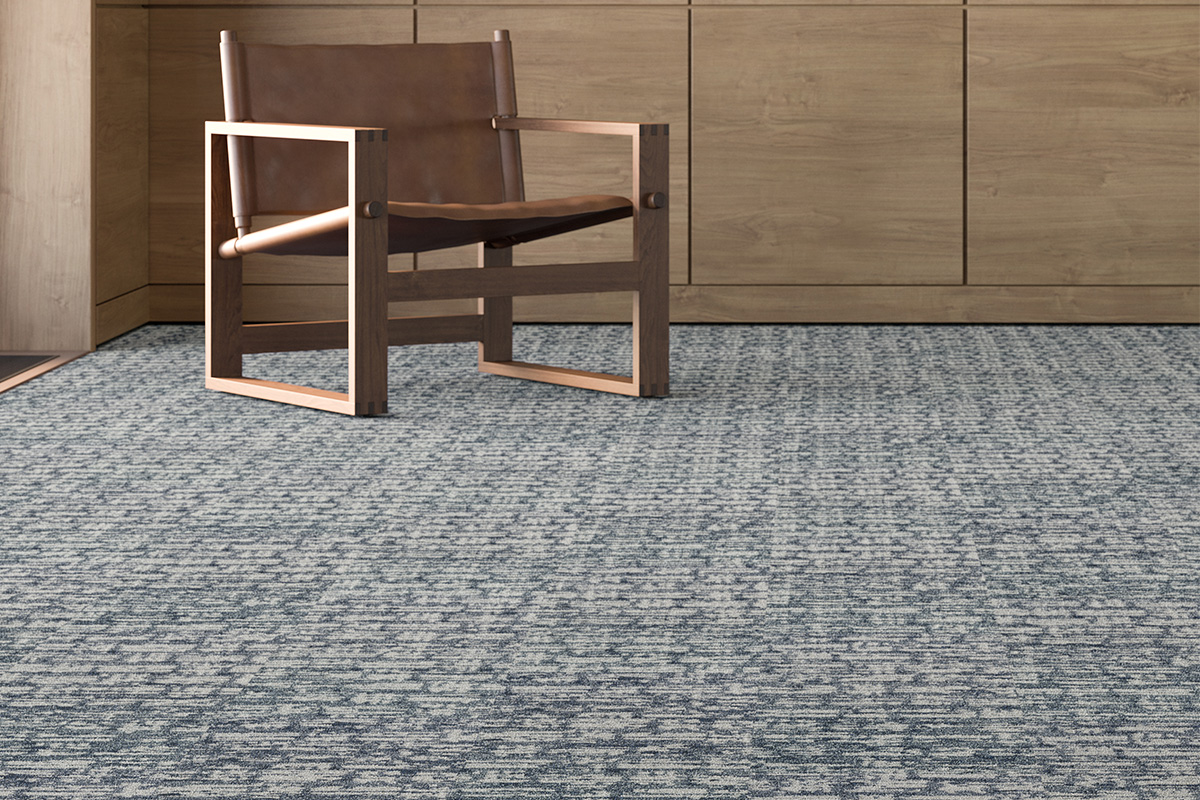
Craft is an evolving language at Mohawk Group, one where the past is present in every fiber. The process begins with a single strand—selected, spun, and set into motion. Through enduring techniques and innovations that push materiality forward, the company’s legacy is built on the foundations of weaving, while advancements in tufting and fiber development have expanded their possibilities across the full spectrum of soft surface manufacturing.
The Foundations of Craft
Mohawk Group has a long heritage of weaving that dates back to the 1800s. The company’s founders began with looms imported from the United Kingdom, which set the stage for what would become a storied tradition of woven artistry. This tradition continues today at the company’s Sugar Valley, Georgia plant—now home to the Karastan line. Karastan, launched in the 1930s by Marshall Field’s, pioneered machine-made rugs that rivaled hand-knotted designs. Karastan’s engineers invented the Axminster spool weaving technique and later the Karaloc technology in the 1940s—a breakthrough that bridged horizontal weaving with vertical tufting methods.
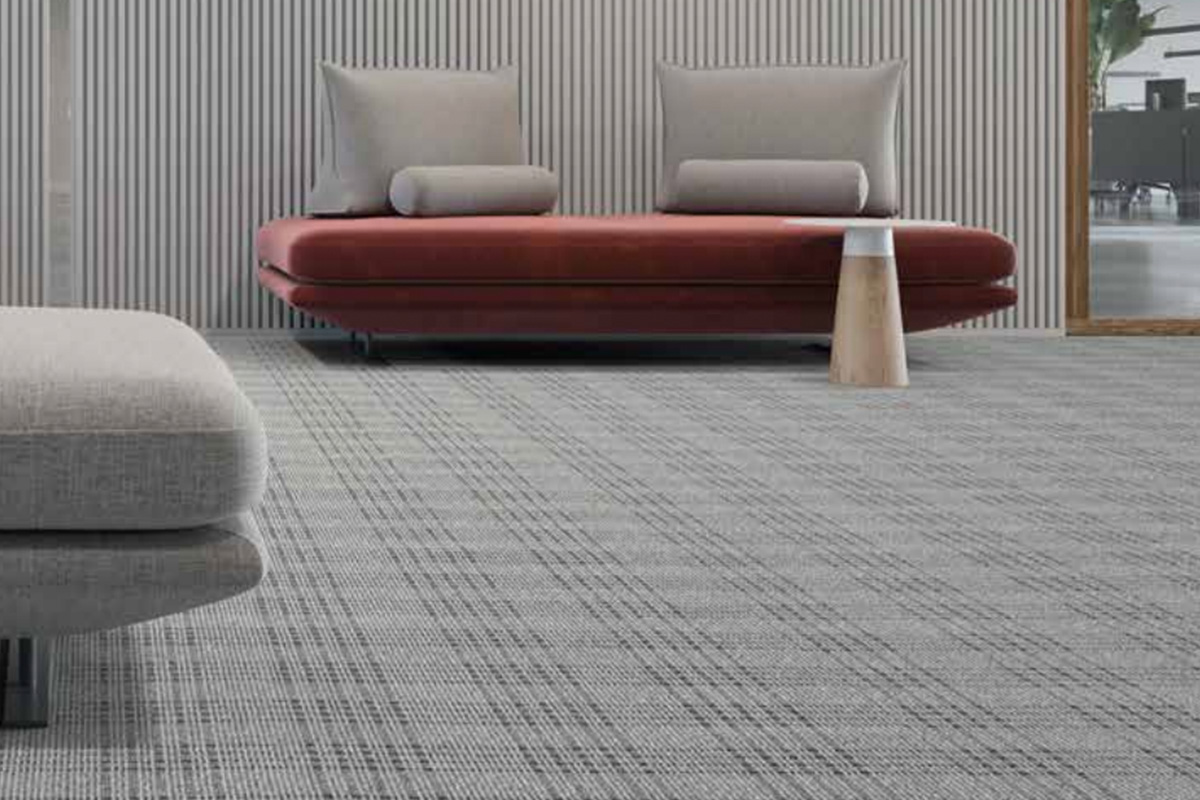
While Mohawk Group proudly honors its heritage of traditional Wilton weaving, a technique renowned for its flat, needlepoint-like textures and linear patterns, the company has also embraced decades of innovation in tufting technology. Today, Mohawk Group's capabilities extend far beyond traditional weaving, incorporating advanced power looms and sophisticated software to create a diverse range of aesthetics and performance characteristics. This evolution allows for greater variation in height, texture, and pattern, opening up new possibilities in commercial carpet design. From the intricate craftsmanship of woven products, where 32 skilled hands contribute to each loom, to the dynamic capabilities of tufting, Mohawk Group's commitment to quality remains constant. The journey begins in Mohawk Group’s fiber manufacturing areas, where polymer chips are transformed into yarn. “The journey continues with those yarns into our weaving and tufting mills where creelers, tufters, weavers, finishers, and material handlers place care into each step of the process to make sure we are creating perfect fabrics every step of the way,” says Jackie Dettmar, Vice President of Marketing, Design, and Product Development at Mohawk Group. “Finally, the fabrics are finished into broadloom carpet or carpet tiles by skilled finishing line technicians who diligently measure, inspect, and test the final products to meet the highest standards of our customers.”
Tufting and Fiber Innovation
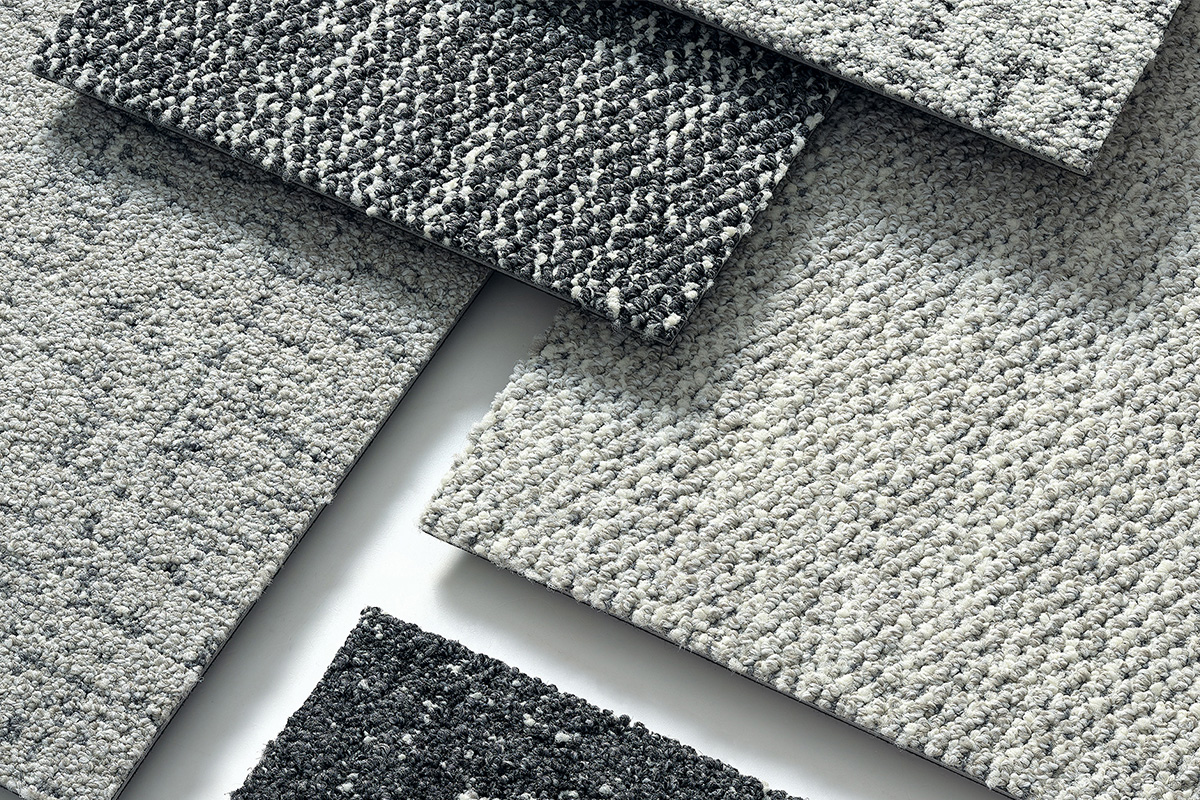
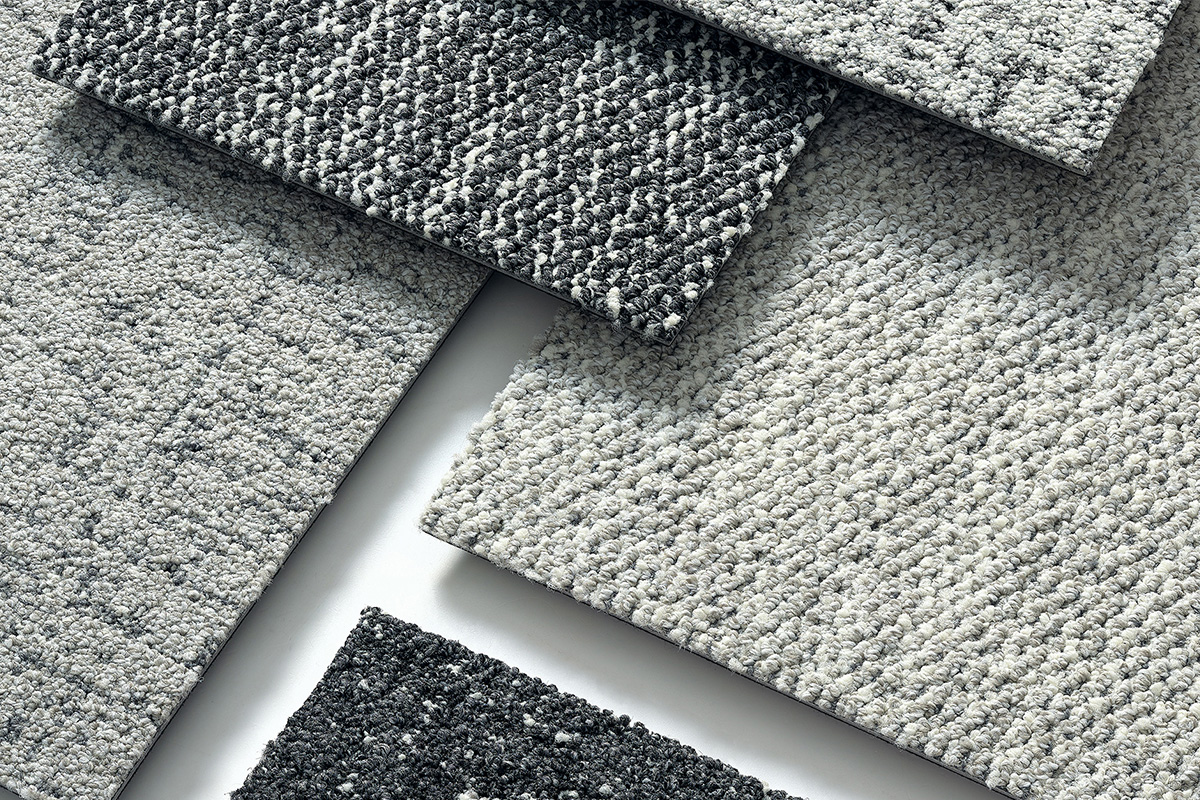
While weaving remains a defining technique, Mohawk Group has continued to push the boundaries of carpet design through tufting. “As innovations in weaving progressed with higher speed looms and tufting machines were commercialized, we used weaving craft to inform our tufting innovations,” Dettmar explains. Pattern Perfect Tufting replicates the precision of Wilton weaving, allowing exact color control. Definity Tufting expands possibilities further: “It allows precision placement of color tufts like Axminster weaving did, but also allows for loop or cut tufts and high-density areas that were not possible before,” says Dettmar.
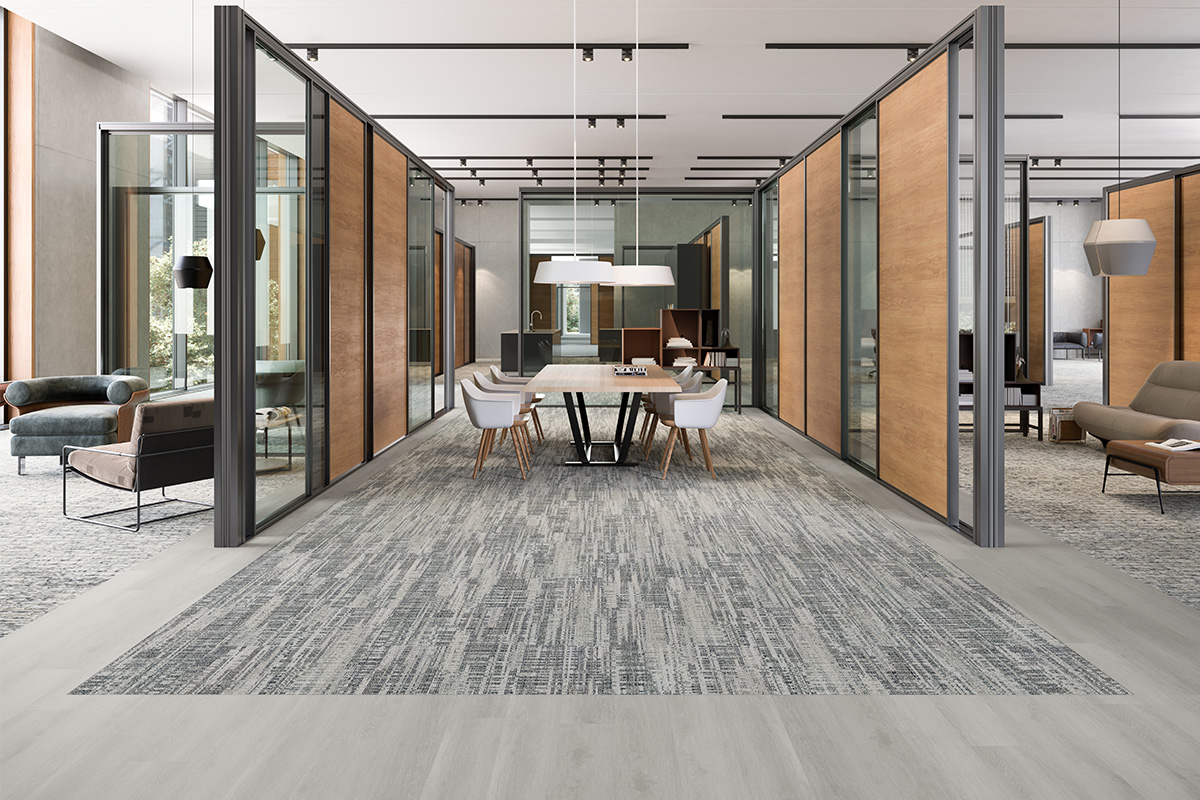
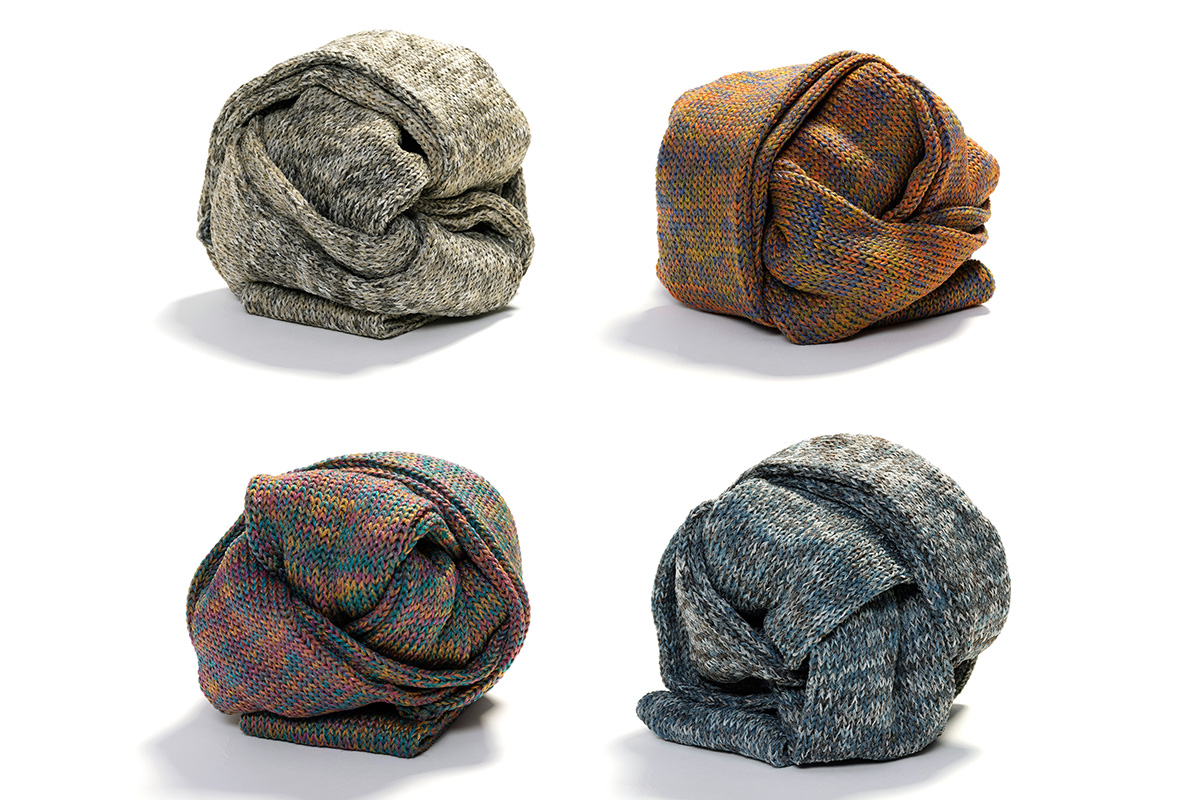
Then there’s fiber technology—a critical element shaping both tufted and woven carpets. “The mixing of pigments to create the perfect color is a craft,” says Dettmar. “Our technicians and scientists work on unique fiber constructions and extrusion controls, adding their hands to producing high-quality differentiated yarns.” This innovation shines in fiber technologies like Color Pulse, which delivers vibrant, space-dyed colors in solution-dyed nylon, and Heathered Hues, which is extruded to create a natural, wool-like look. By pairing high-speed tufting looms with advanced fibers like Duracolor Tricor nylon, Mohawk Group extends the limits of design and durability.
Crafting Human Connection
For Mohawk Group, craft is tied to both history and innovation. The Celebrated Heritage II collection, created with New Mexico’s Museum of Indian Arts and Culture, reinterprets Indigenous Tlingit basket-weaving. The collection’s Woven Traditions style draws from the Tlingit People’s use of spruce roots to create intricate, ornamental patterns. It celebrates pottery, basketry, and textile traditions from the Pacific Northwest to the Southwestern US and Mexico. The Pathmakers Textures collection shifts focus to nature, inspired by pollinator ecosystems. Designs like Gentle Ground and Buzzing Trails mimic fields crisscrossed by bees, using sustainable materials to enhance indoor air quality and comfort. Both collections reflect Mohawk Group’s commitment to craftsmanship, sustainability, and storytelling through design.