
Mohawk Group Ignites Fractals Movement
Clouds drift, rivers bend, and branches divide, each form shaped by repeating geometries. These patterns, called fractals, offer a lens for rethinking how design influences the spaces we inhabit. Mohawk Group has been at the forefront of bringing this research into the architecture and design industry. Interior Design sat down with Jackie Dettmar, Vice President of Design, Marketing, and Product Development, to discuss the origins of the company’s research, its collaborations with leading scientists and designers, and the ways fractal-based collections are shaping healthier, more adaptive interior environments.
Interior Design: We've seen a growing buzz around biophilic design and the science of fractals in commercial interiors. Could you take us back to the beginning? How did you first encounter the research on fractals, and what was that initial "aha!" moment that made you realize its potential for flooring and the built environment?
Jackie Dettmar: It started about a decade ago when biophilic design became a major topic of conversation. We had already been researching biophilia, referencing pioneers such as E.O. Wilson and Stephen Kellert, and understanding its core meaning. We were actively exploring ways to incorporate the 14 patterns of Biophilic Design into our carpet tile systems. In 2016, we launched Lichen, our first Living Product—an authentic, meticulously researched example of copying nature.
The "aha!" moment for fractals came the very next year, in 2017. We were collaborating with Martin and Anastasija Lesjak from 13&9 Design. After the phenomenal success of Lichen, Martin challenged us: "How do we do something better than just copying nature?" He firmly stated, "What if instead of copying nature, we learn how nature makes patterns?" That's what set us on the path to explore the science behind biophilic design. We sought out preeminent researchers, which led 13&9 to Dr. Richard Taylor, a physicist exploring fractal patterns and their connection to biophilic design. Our expanded collaboration including Dr. Taylor and 13&9 Design began, marking a new chapter in Mohawk Group’s design philosophy and the beginning of ScienceDesignLab.
ID: What was it specifically about fractals—these repeating patterns found in nature—that resonated so deeply with you and inspired you to champion their integration into Mohawk Group's product design? What problem or opportunity did you see them addressing in commercial spaces?
JD: For me, the idea that we could use proven science to make an environment healthier for human beings was incredibly compelling. If we have a way to design patterns that lead to a significant relaxation effect in people, why would we not do that on every pattern we create? It felt like a fundamental imperative.
In my career, I've seen patterns become wildly successful, and sometimes you couldn't quite articulate why. It turns out that fractal dimension helps explain why certain designs "feel right" or "look pleasing." Designers have always had that intuitive sense, but now, fractals provide the scientific data to bridge the gap between art and business. It offers a tangible explanation for why something is beautiful or effective, which is invaluable when discussing design choices with those who need quantitative proof. It truly helps tie the art, science, and business aspects of design together.
ID: This pioneering work led to significant collaborations, notably with 13&9 Design and Dr. Richard Taylor of Fractals Research. How did these partnerships form, and how was the scientific understanding of stress reduction and psychological wellness translated into tangible design elements within your collections?
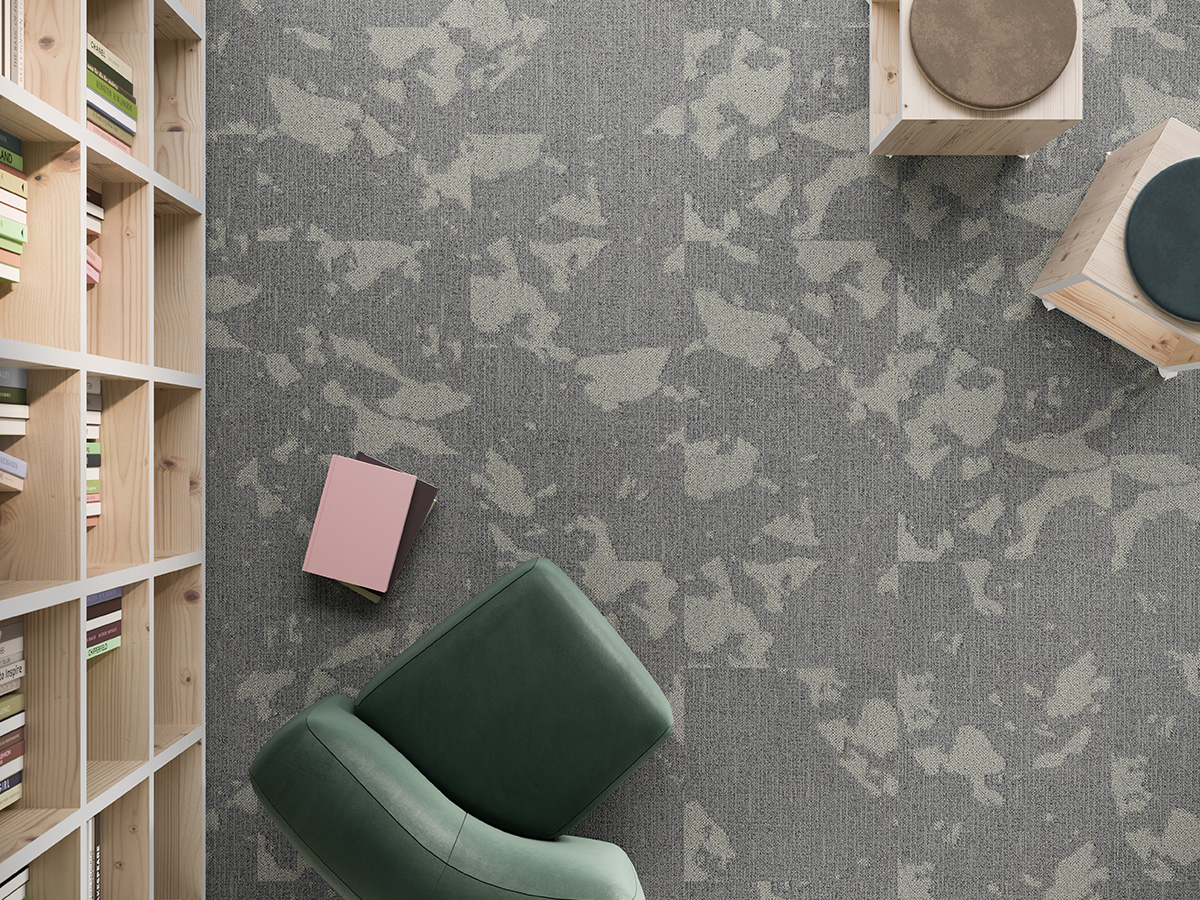
JD: Our collaborations with ScienceDesignLab, 13&9 Design, and Dr. Richard Taylor organically grew from our pursuit of understanding how nature works. After connecting with Dr. Taylor, we held in-person meetings to explore how his fractal dimension research could be applied to flooring. Our early work involved understanding how they recreated patterns using software, referencing concepts like the "Lévy flight" pattern found in nature. We had to figure out how to translate these complex patterns into carpet tile, ensuring the fractal dimension was maintained even after cutting and installation.
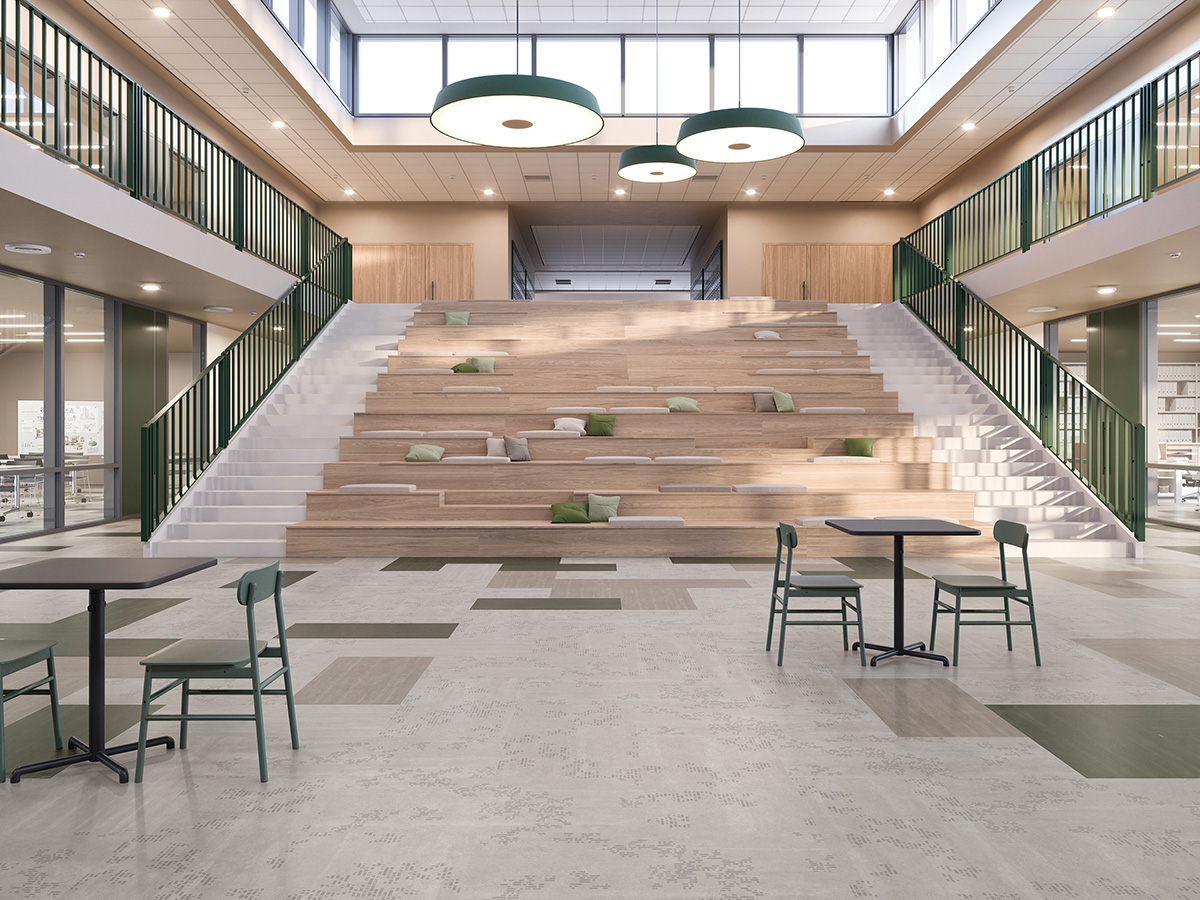
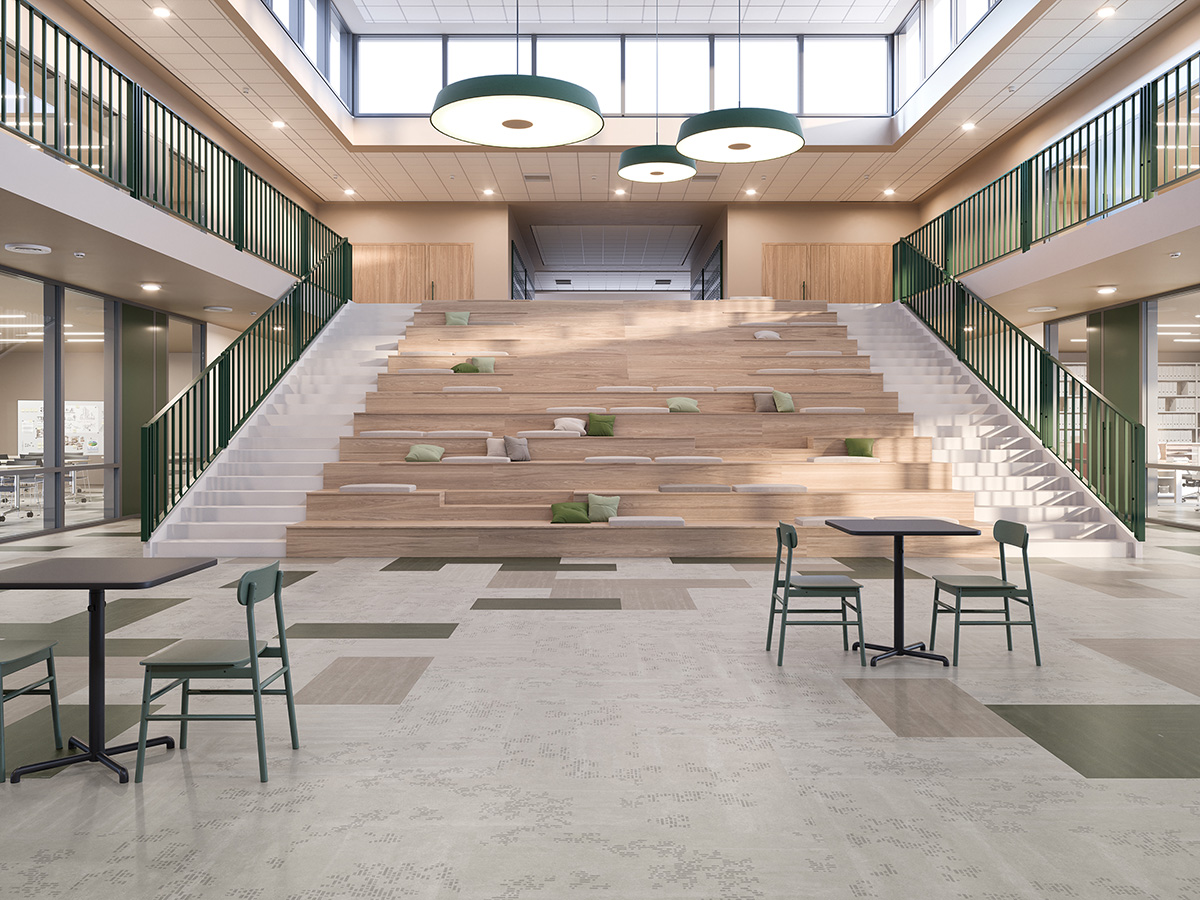
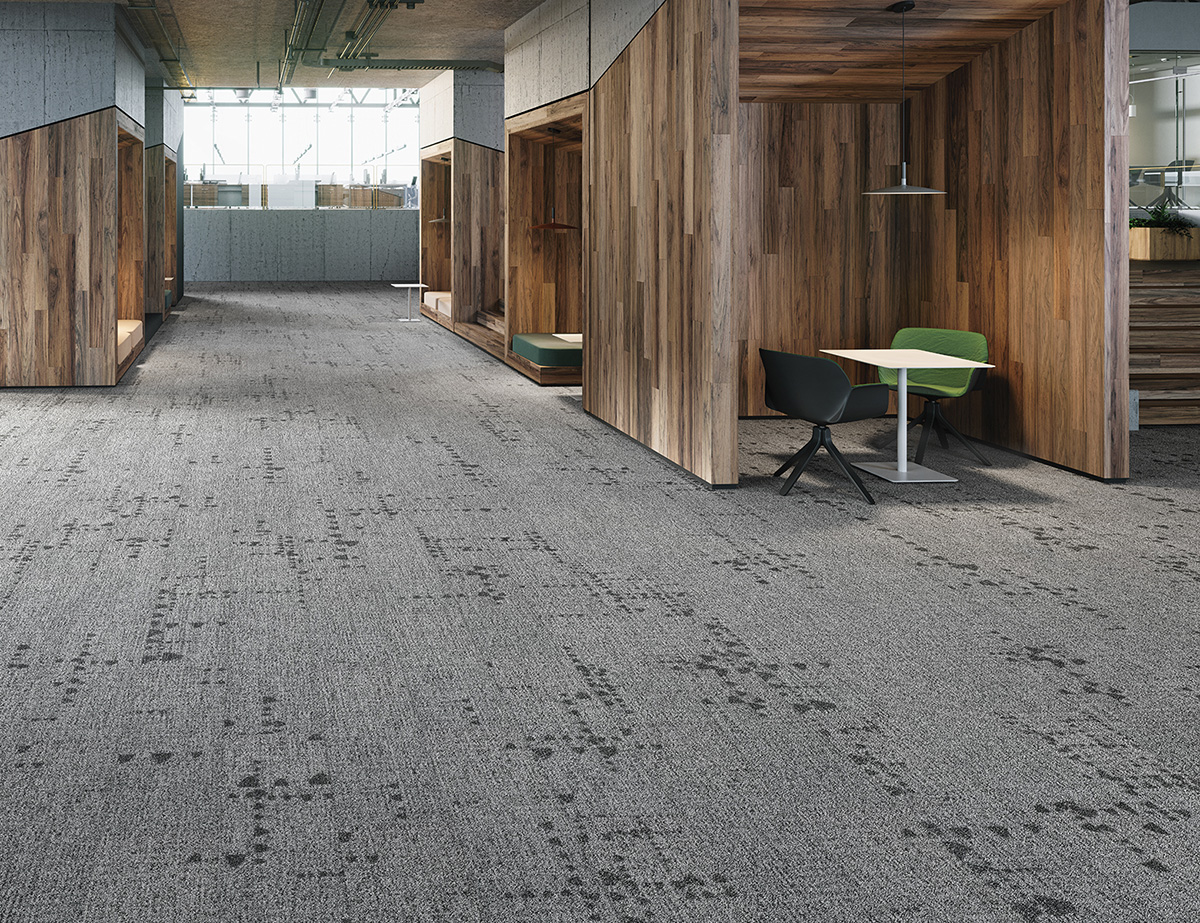
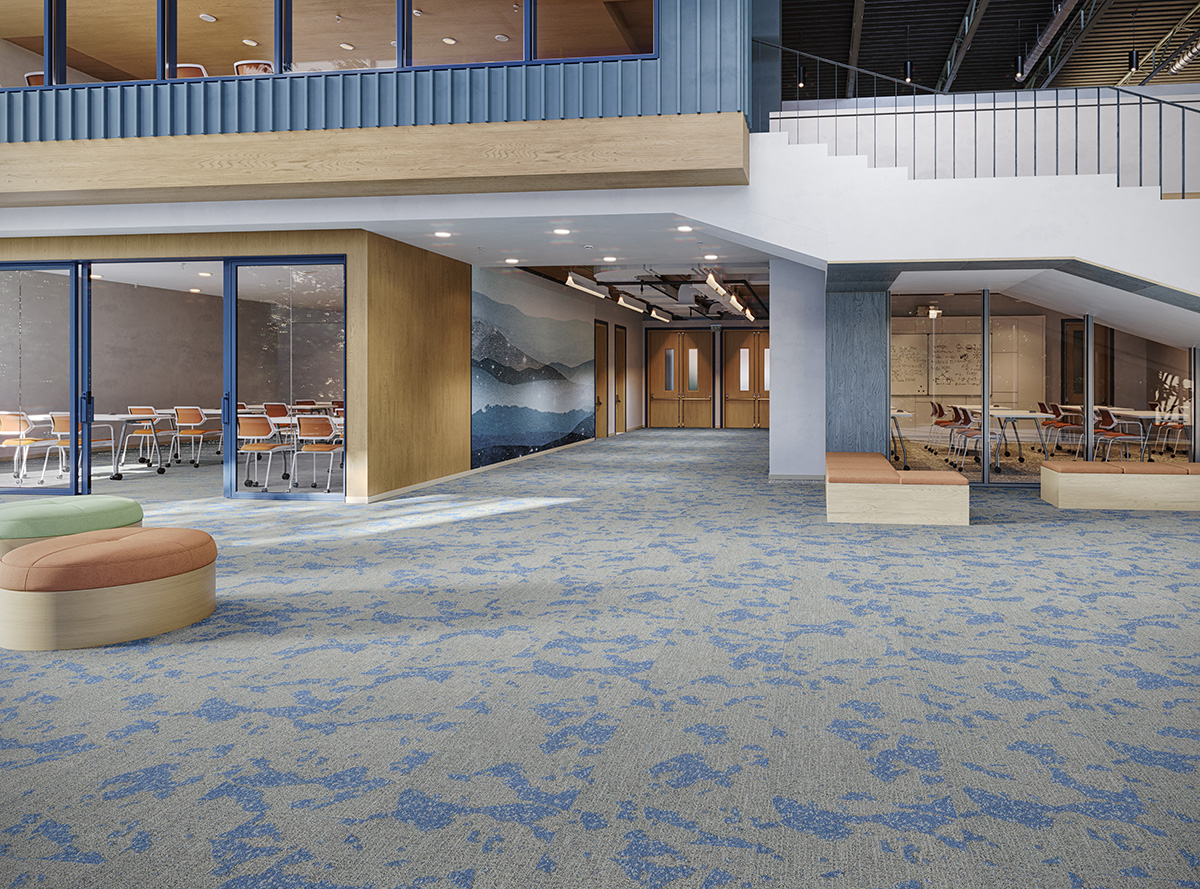
As our work with fractals evolved, collections like Relaxing Floors and Fractal Fluency expanded the application of fractals. The third collection, Fractal Findings, was specifically curated for K-12 education, driven by design firms like PBK, which sought stress-reductive spaces for students. We learned that mid-level fractal 'D-values' at a higher value are better for collaborative areas, while mid-level D-values at a lower value are ideal for focused learning environments. This direct curation of D-values based on the space's function, its users, and other elements within the space is where we're heading. This also ties into the growing understanding of neurodiversity, allowing us to fine-tune environments to support diverse ways of thinking and being. This knowledge is especially relevant given the increased focus on neurodiverse populations and mental health and well-being in this post-COVID era.
ID: Mohawk Group has truly launched a "Fractals Movement" in the commercial interior design industry. Were there any initial challenges in bringing this concept to market? And if so, how did you overcome them to establish this new design paradigm?
JD: The initial challenges largely revolved around education and adoption. It was about explaining the value of fractals and translating that scientific concept into something meaningful for the market. It took curiosity and a willingness to listen for people to truly grasp its potential. This is why it's been a "slow burn" over eight years, gradually gaining momentum as more and more successful projects have been installed and people recognize the inherent need for these types of spaces.
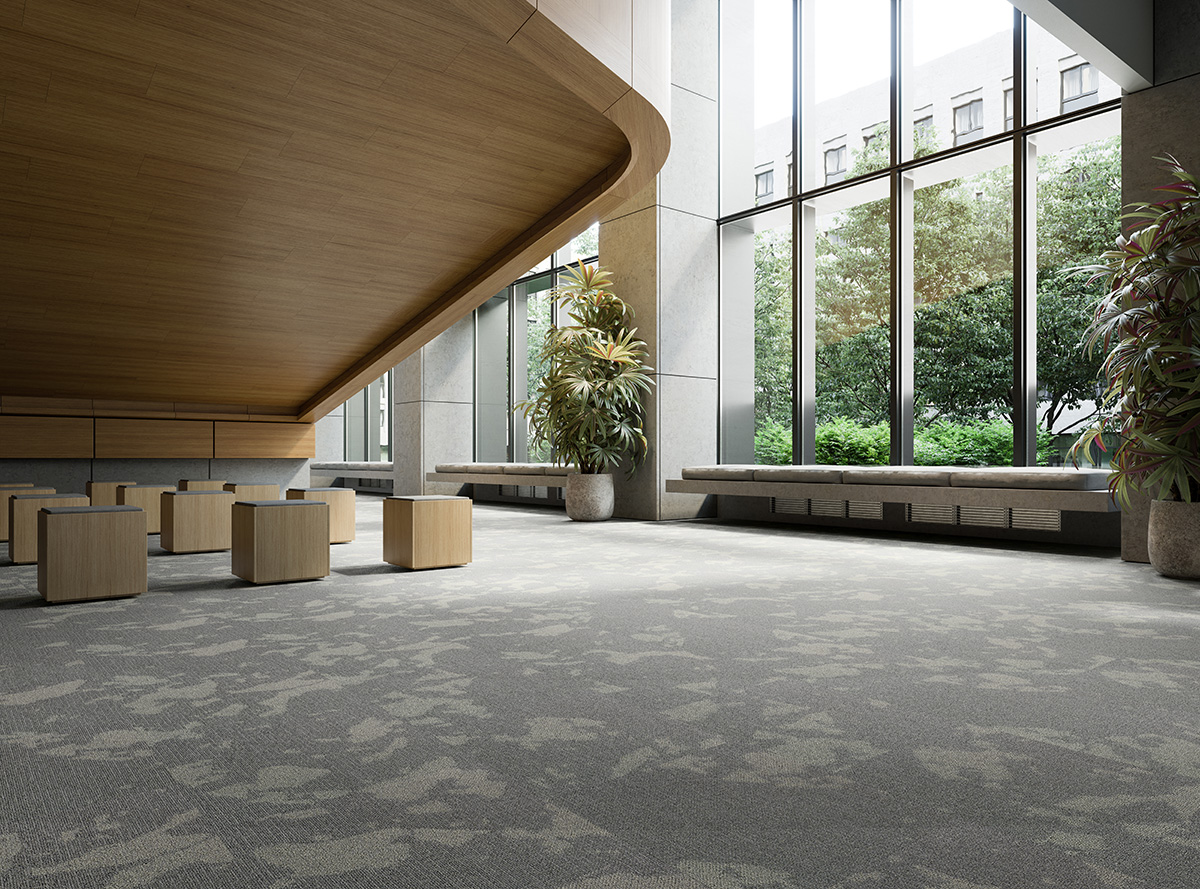
We've been very persistent in our education efforts, continuously adding to our body of work and research. We've deliberately been very open and generous with our collaborations with Martin, Anastasija, and Dr. Taylor. We wanted this science to be available to everyone, whether for walls, ceilings, or flooring. We genuinely believe Mohawk Group was among the first companies to intentionally apply this science to a specific product, measure its fractal dimension, and confirm its effect on relaxation. There's still a mystique, as it's not just about measuring a D-value on a computer; it requires a mix of art and science to truly work in a space.
ID: Beyond the aesthetic and well-being benefits, how does Mohawk Group ensure that its fractal-based collections and design vision align with the company's broader commitment to sustainability and creating healthier, more equitable spaces?
JD: It absolutely aligns with our brand's core values and our "Believe in Better" ethos. For us, it's always about bringing value into a space and making it better than before. We care just as much about the aesthetics of our products as we do about the materials we put into them—the backing, the yarn, the pattern. Fractals add an intentional, measurable value to a pattern and design, giving something profound back to the space and the people within it. It's about continuously asking, "How is this better than what we made yesterday?" and applying that commitment to every aspect, from well-being to environmental impact.
ID: Looking ahead, how do you see the application of fractal design evolving within commercial interiors, and what's next for Mohawk Group in this innovative space?
JD: We will continue to expand our fractal patterns, delving deeper into the parallel between neurodivergent populations and how we can create curated experiences for specific spaces. We are supporting continued research with ScienceDesignLab to help us precisely curate the D-value needed for optimal experience.
Ultimately, we aim to precisely curate the D-value based on who is using the space and what else is present. It’s exciting to think about all the conversations we can continue to add to, and we believe this unique collaboration of art and science will continue to drive innovation in the industry.