
Momentum’s Renaturation Collection Draws from Fractal Research
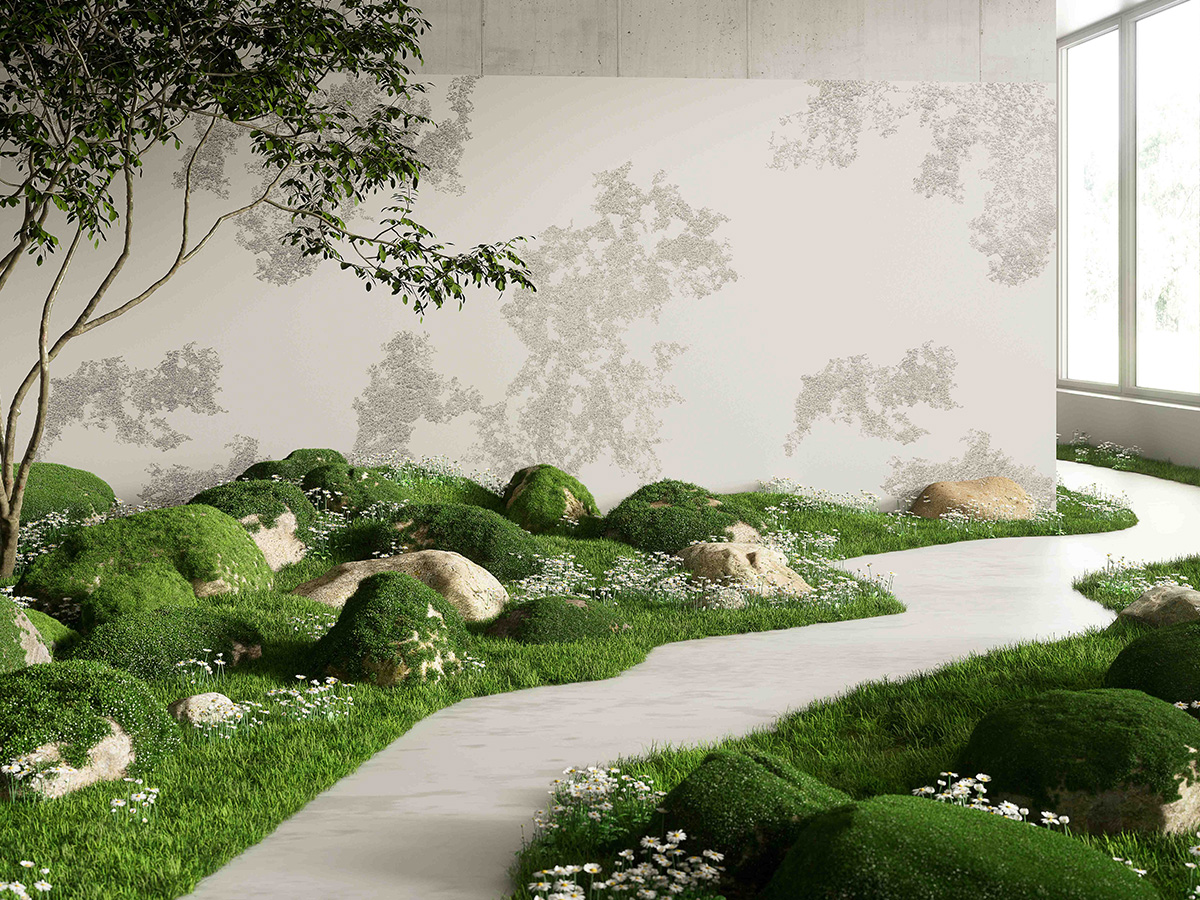
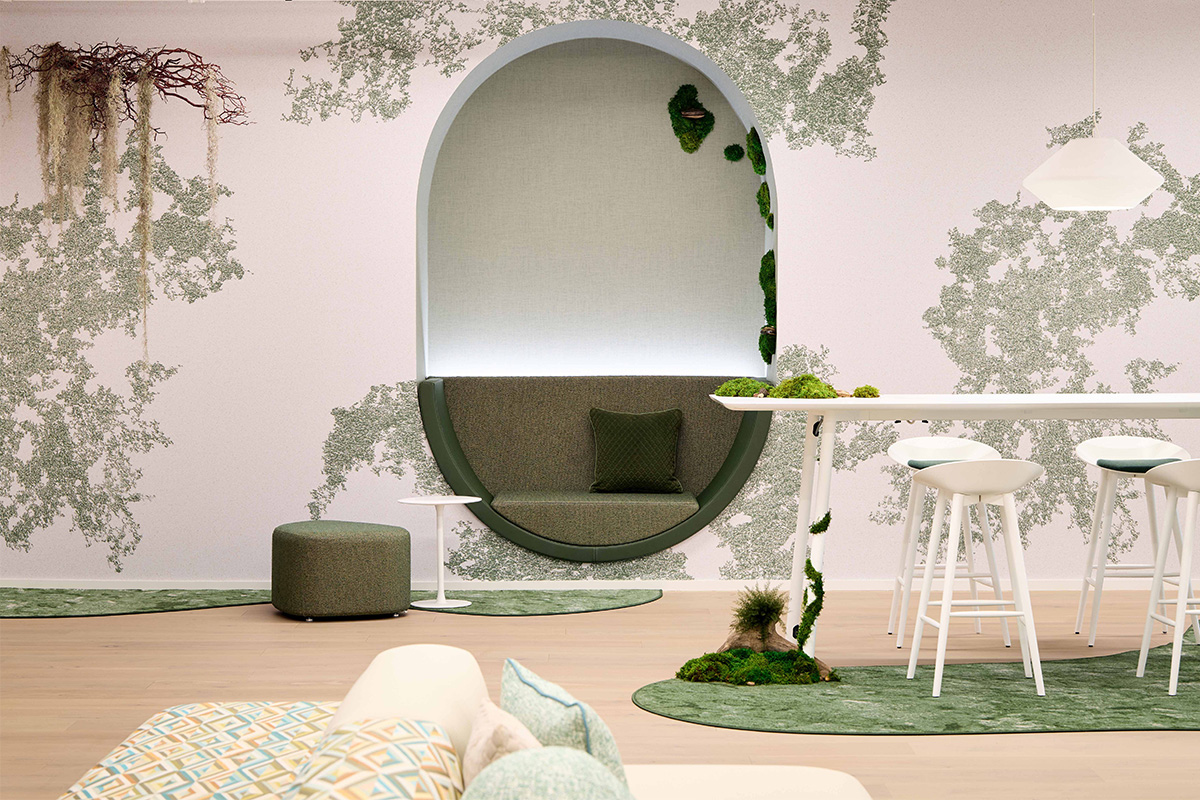
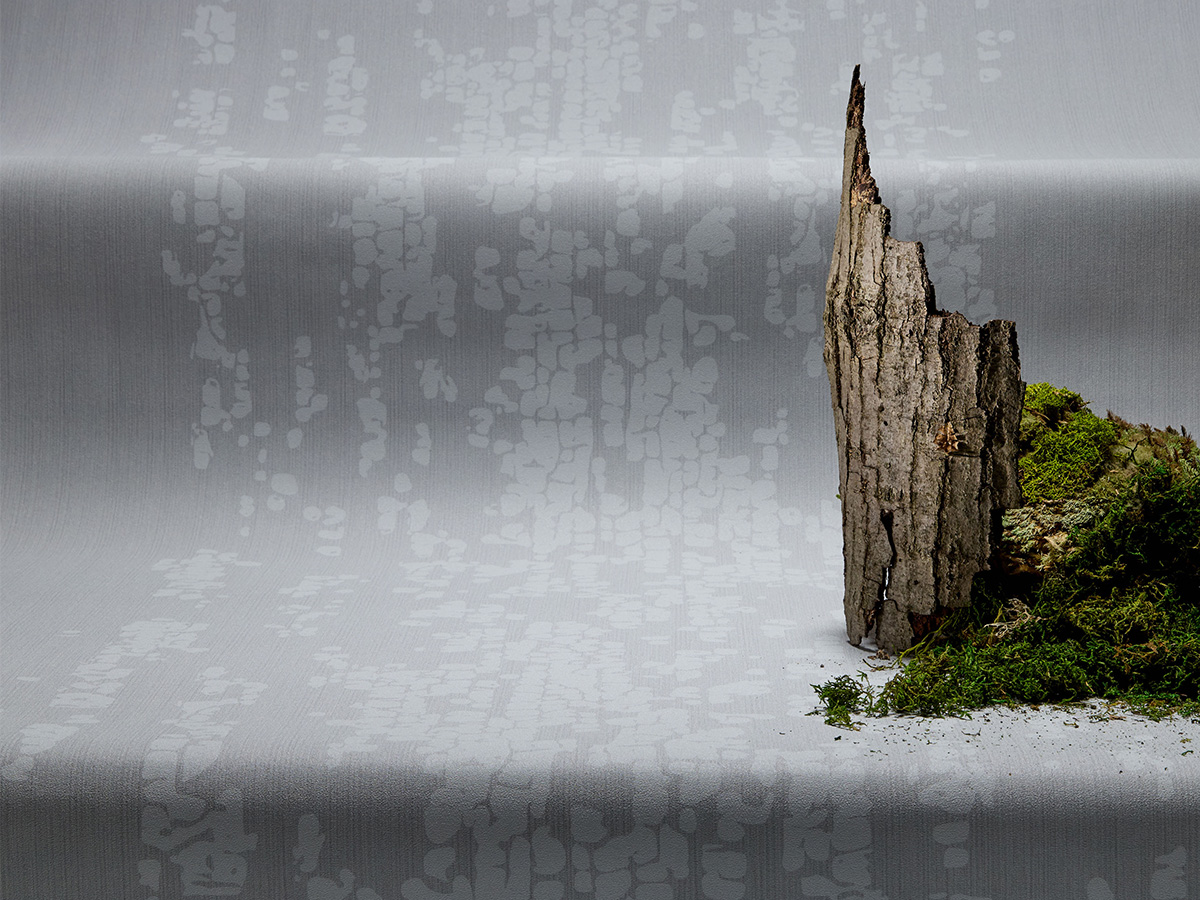
Lines drift like a river’s current, organic scatter recalls moss across stone, and vertical striations suggest the surface of bark. These visual cues anchor the Renaturation Collection, conceived by 13&9 Design in collaboration with Fractals Research for Momentum Textiles & Wallcovering. The three designs—Fractal River, Fractal Moss, and Fractal Bark—are rooted in the study of natural fractals, self-repeating forms proven to lower stress and aid cognitive balance. Named for the gradual return of nature into human-made environments, Renaturation translates these patterns into calibrated wallcoverings that merge science, design, and wellness.
Anastasija and Martin Lesjak, founders of 13&9, drew on the concept of ecological restoration as a point of departure for the collection. Based in Graz, Austria, their studio works with a holistic approach that balances human well-being and environmental responsibility, viewing design as a way to shape how people feel and function. That perspective has guided their ongoing collaboration with physicist Dr. Richard Taylor of Fractals Research at the University of Oregon, where together they explore a science-based evolution of biophilia rooted in fractal design. Renaturation extends that inquiry, drawing from places where the return of natural processes could be observed.
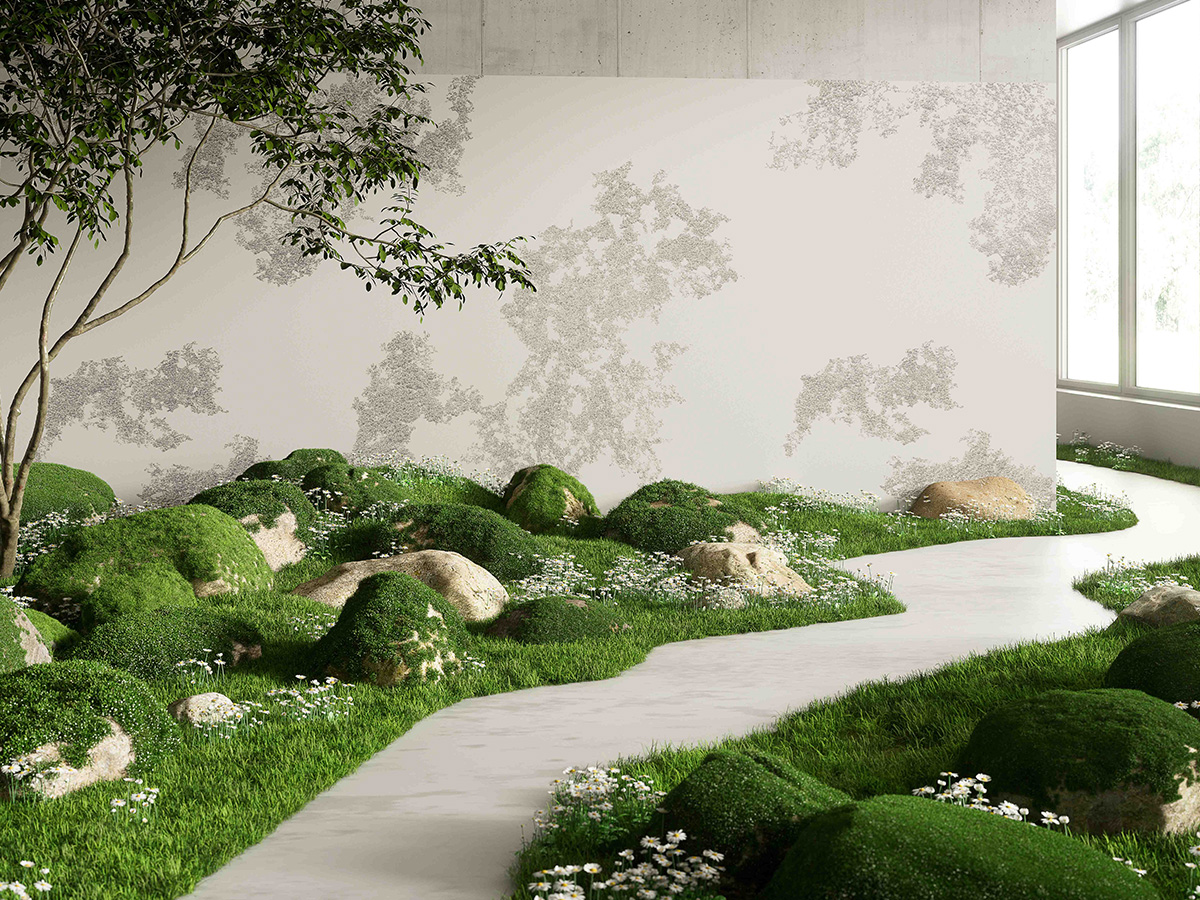
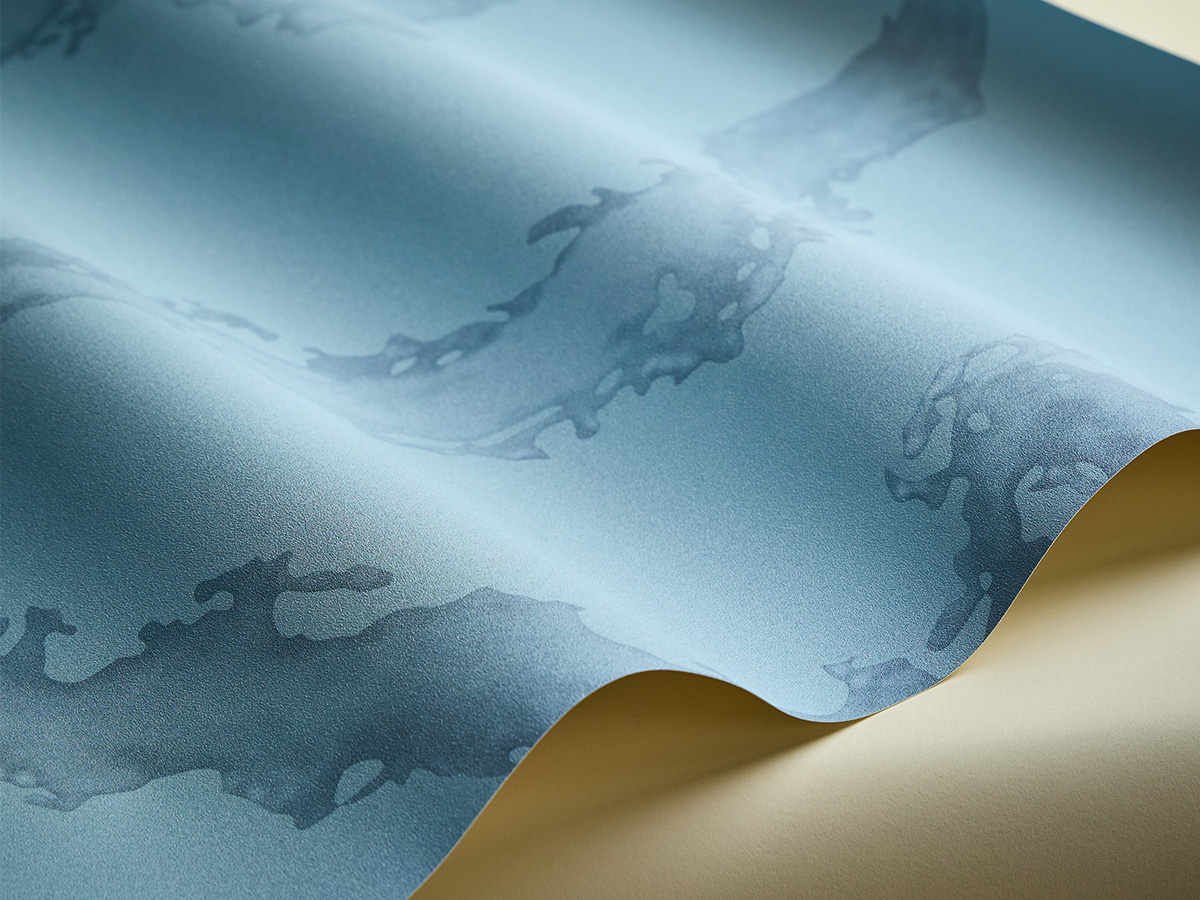
They found a powerful reference point in the River Aire in Geneva, a waterway that had been canalized into a straight channel for more than a century to control flooding. “In 2001, the river in essence was ‘set free,’ explains Anastasija, in reference to the restoration work that allowed the river to gradually regain its winding path. “Our pattern, Fractal River captures the wild, meandering flow of the river symbolizing the ability of nature to return to its more organic, natural state.” The collection also drew from everyday observations: Fractal Moss from lichen overtaking a stone wall near their studio in Graz, and Fractal Bark from the vertical calm of the surrounding forests.
From Inspiration to Application
The next phase carried the designs from idea to execution, shaped by science-backed insights that guided their path to production. The process focused on statistical fractals—natural patterns that echo across scales without repeating exactly—making them adaptable for use in wallcoverings. “We designed the patterns based on their aesthetic quality but also on their ‘spatial context’ as well as scale, complexity, scientific design principles and manufacturing requirements,” says Martin Lesjak. “Then the fun begins as we begin to morph and calibrate the designs in alignment with the appropriate D value.” The D value refers to a fractal’s visual complexity—where 1 is a line and 2 is a filled shape, with fractals falling between.
Once drafted, the patterns were tested through analysis software at Dr. Taylor’s lab to ensure they held the right balance of fractal complexity—neither too simple nor too chaotic, but within the narrow band where stress-reduction and cognitive benefits are most pronounced. “Sometimes we have weeks of back-and-forth between the design team in Graz and the scientific team in Eugene until the pattern is exactly what we want—from a D value and aesthetic one,” Martin explains, referring to the collaboration with Dr. Taylor’s team in Oregon.
Dr. Taylor guided the collaboration by applying decades of research on fractal complexity, using analysis tools to tune each pattern within that sweet spot of 1.7–1.74 on the D scale. “Having spent 600 million years immersed in fractal-rich environments, humans have an intrinsic need to be near natural patterns. Our eyes crave visual complexity and are wired to detect fractals,” Dr. Taylor explains. “Today, with most of our lives spent indoors and on screens, even brief exposure to fractal patterns can trigger measurable, healing responses.” That impact, he notes, became tangible when the research moved out of the lab and onto the wall.
Material Choices for Wellness
Momentum grounded the collection in careful attention to material health, sustainable practices, and the ability of design to shape well-being. The collection—which is structured around two murals, Fractal River and Fractal Moss, and one standard wallcovering, Fractal Bark—is PVC-free, PFAS-free, Red List Free, and printed with water-based inks on a Greenguard Gold Certified substrate. “Sustainability and wellness are not separate tracks—they are one and the same,” says Julia Gillespie, Vice President of Sustainability at Momentum. “Every choice is guided by the principle that the health of people and the health of the planet are interconnected.”
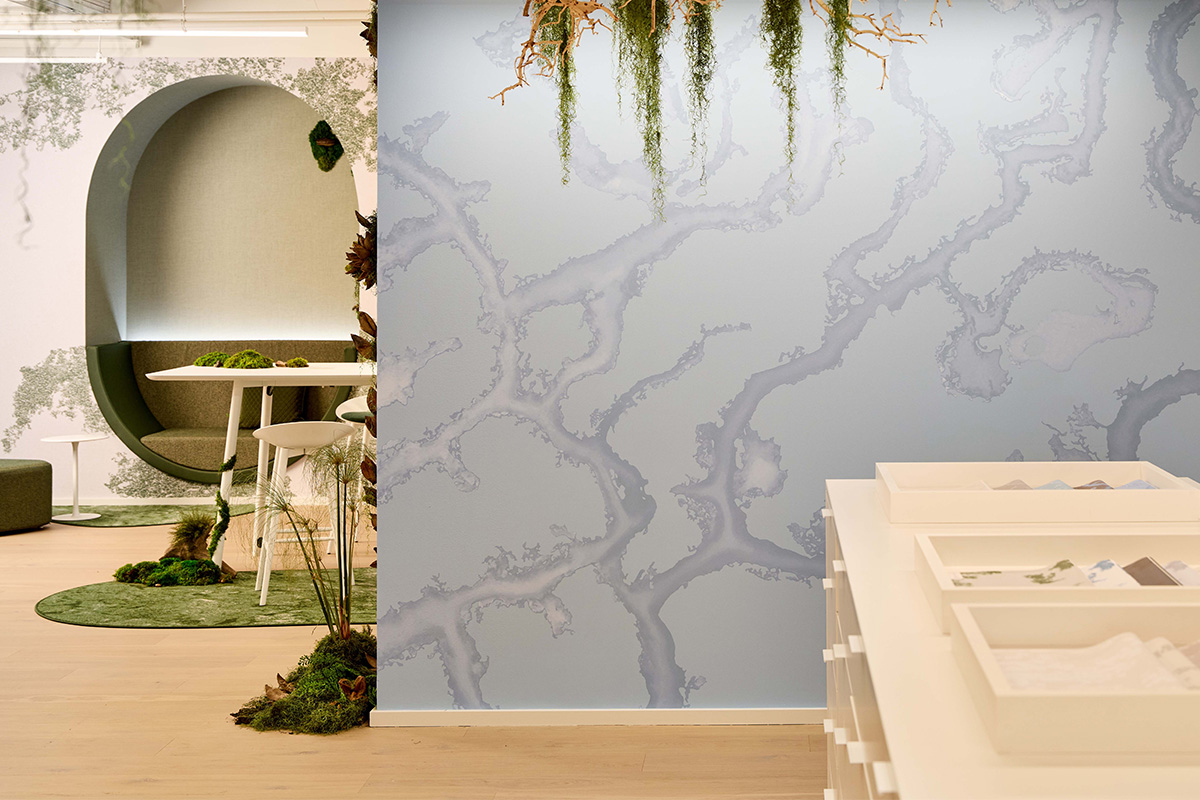
Each pattern carries the imprint of both design intent and scientific calibration, showing how the two moved in tandem. “Claims of stress reduction and wellness benefits must be grounded in evidence, and that’s exactly what Dr. Richard Taylor has been studying and proving through 25 years of work,” Gillespie notes.
With Renaturation, aesthetics and science converge. The collection is rooted in nature’s language and realized through collaboration across disciplines. Each surface returns a fragment of the natural world to the built environment, translating fractal geometries into forms that invite reflection, balance, and well-being.