
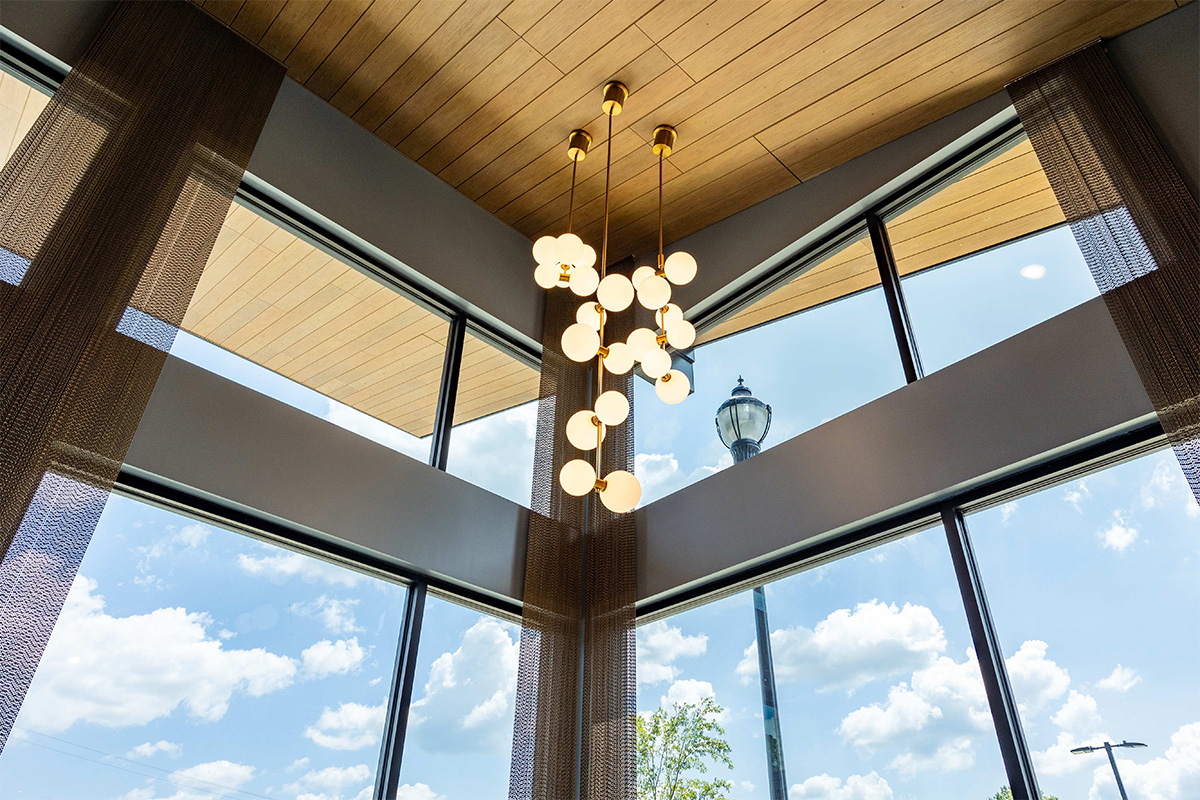
Nichiha Delivers Performance Across Interiors and Exteriors
Seismic risk, coastal exposure, and evolving building standards shaped expectations for material performance in Japan during the 1970s. This context prompted Nichiha, a manufacturer founded in 1956 with industrial roots, to leverage its experience in engineered materials to develop fiber cement panels suited to such conditions. The company’s approach focused on consistency across systems. Panels were engineered to meet performance standards without altering composition between uses.
When Nichiha entered the U.S. market in the 1990s, the panel system was adapted to meet the scale and pace of commercial construction while retaining the same material logic. “Whether we're working on a bustling restaurant chain's nationwide rollout, a luxury hotel's signature aesthetic, or biophilic designs requiring seamless interior-exterior continuity, our panels deliver the same exacting standards indoors and out,” says Tim Seims, Interiors Sales Manager.
System Consistency
Nichiha’s fiber cement panels are made using a dry manufacturing process that combines cement, sand, fly ash, wood fibers, and oriented chips. The mixture is formed under high pressure into molds, then cured to stabilize the surface. This results in a thicker, stronger panel with greater surface definition—engineered to perform consistently across environments. “It's the same high-performance material whether you're cladding a retail storefront facing harsh weather or creating an elegant interior feature wall in a hospitality lobby,” says Seims. The system remains unchanged across settings, with no hardware substitutions, format variations, or installation adjustments required.
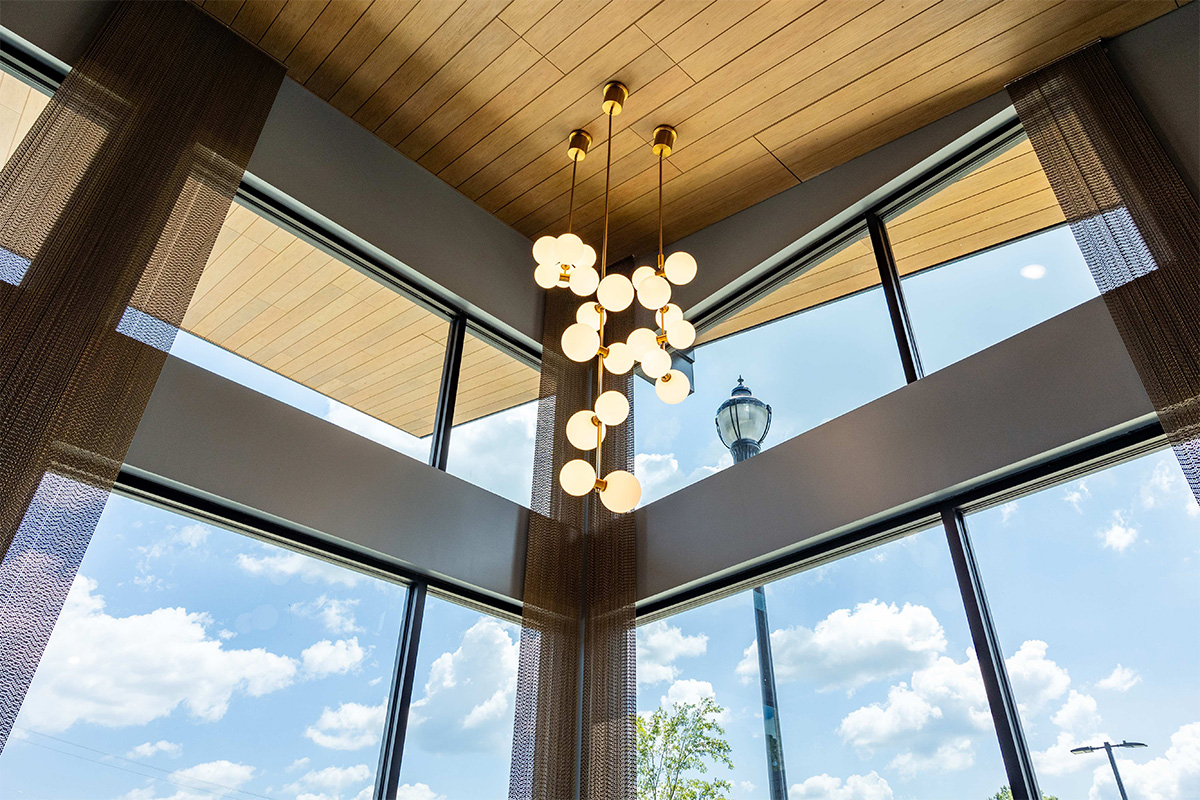
Installation follows the same system logic. Nichiha’s universal clip-and-track system is designed for commercial efficiency. It can be installed by general carpentry crews and doesn’t require wet-set materials or extended cure times. “The business impact is immediate,” says Seims. “General contractors can use the same crew throughout the project, eliminating scheduling conflicts between exterior and interior trades.” The approach simplifies delivery across complex builds, including mixed-use developments, national retail programs, and institutional spaces. Panels arrive ready for installation, tested to meet NFPA 286 fire safety requirements for interior use. The system carries a Class A fire rating with a flame spread index of 0 and a smoke developed index of 0 or 5, confirming its suitability for a wide range of code-driven applications.
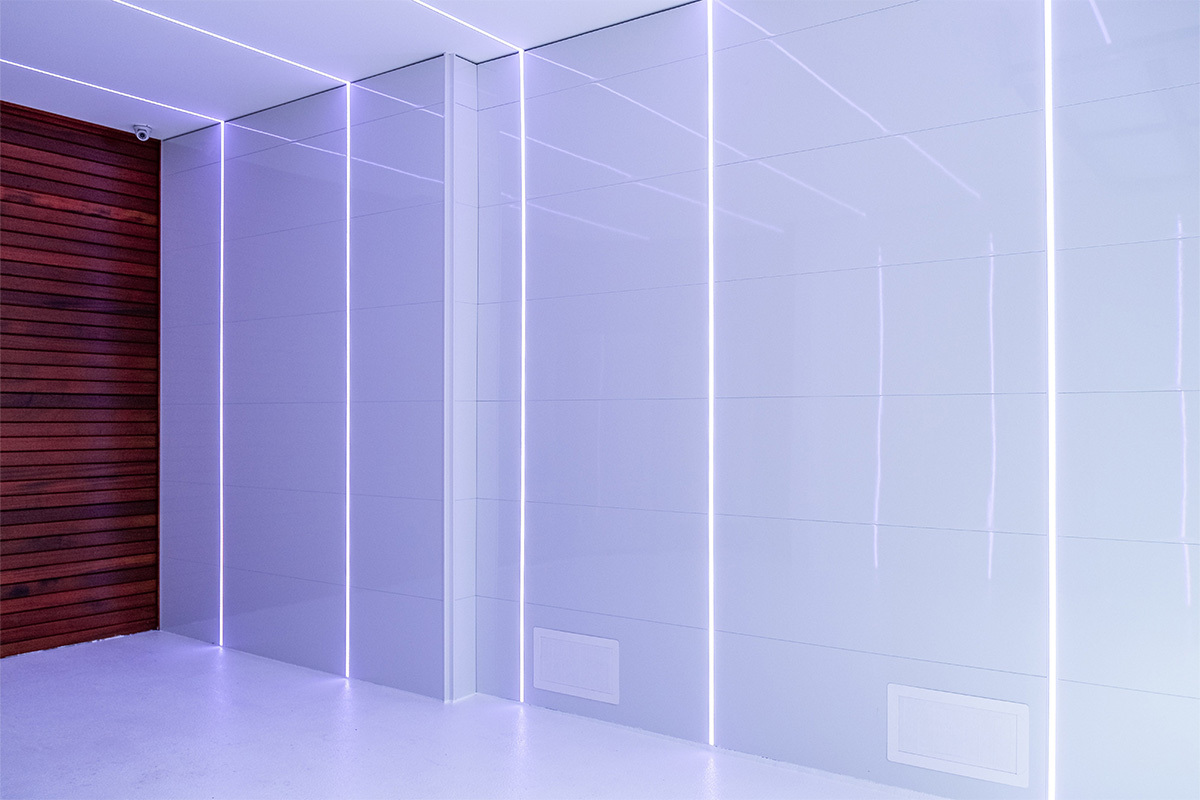
Nichiha’s library includes over 35 textures supporting a range of architectural typologies. Finishes replicate materials such as stone, concrete, and weathered brick to maintain visual continuity between a building’s facade and interior surfaces. “Great architecture shouldn’t be interrupted by the transition between spaces,” Seims says. “We’ve invested decades in perfecting surface technology that captures the authentic look and feel of natural materials.”
Custom Color and Visual Continuity
Color is also treated as an architectural tool within the Nichiha system. Factory-applied custom color matching is offered with no minimum order requirement. This level of specificity supports commercial programs that require continuity across multiple locations, where maintaining exact brand or site-specific palettes is part of the architectural intent.
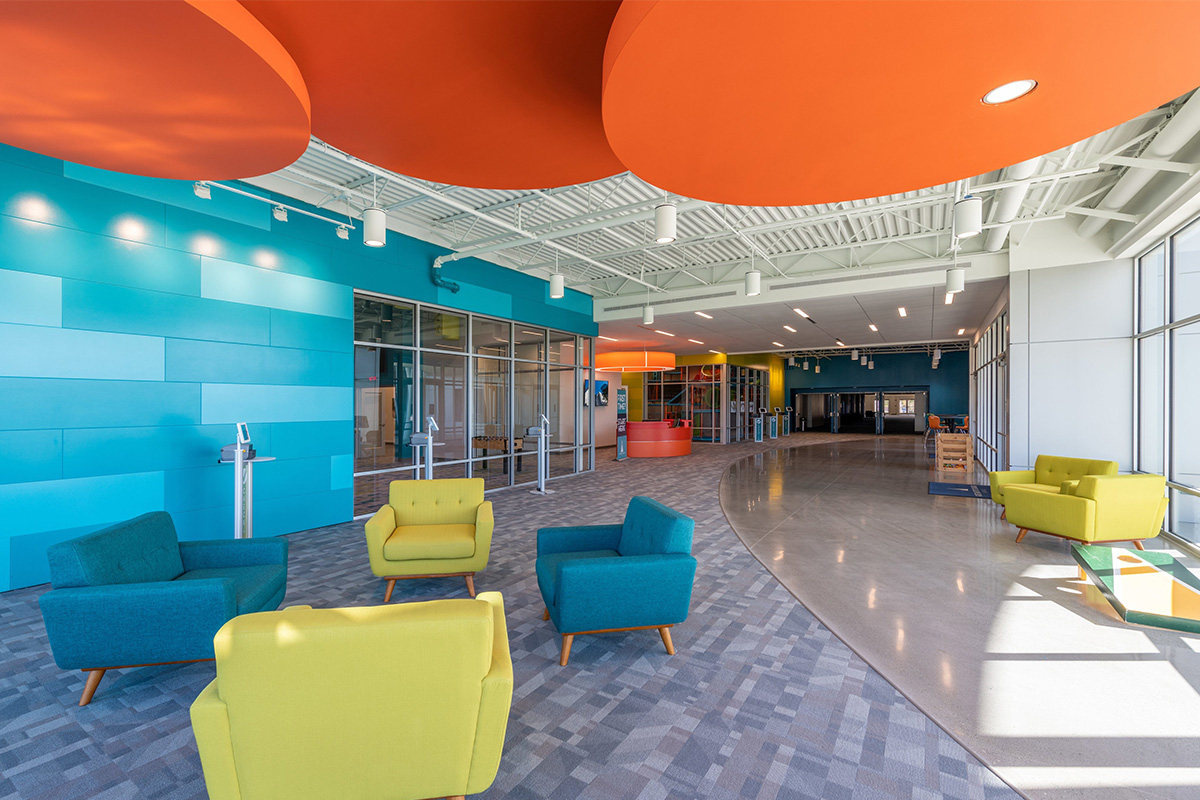
One project that illustrates this approach is the First Baptist Church children’s wing in Lewisville, Texas, where the design team collaborated with Nichiha to develop custom-matched, child-friendly colors. “The same bold, cheerful palette that families saw from the parking lot continued seamlessly into corridors and classrooms,” Seims says. Panels were specified for both exterior and interior learning spaces. This level of integration supports broader applications, including brand rollouts in hospitality and retail or therapeutic palettes in healthcare, allowing exact color continuity across conditions using one system.
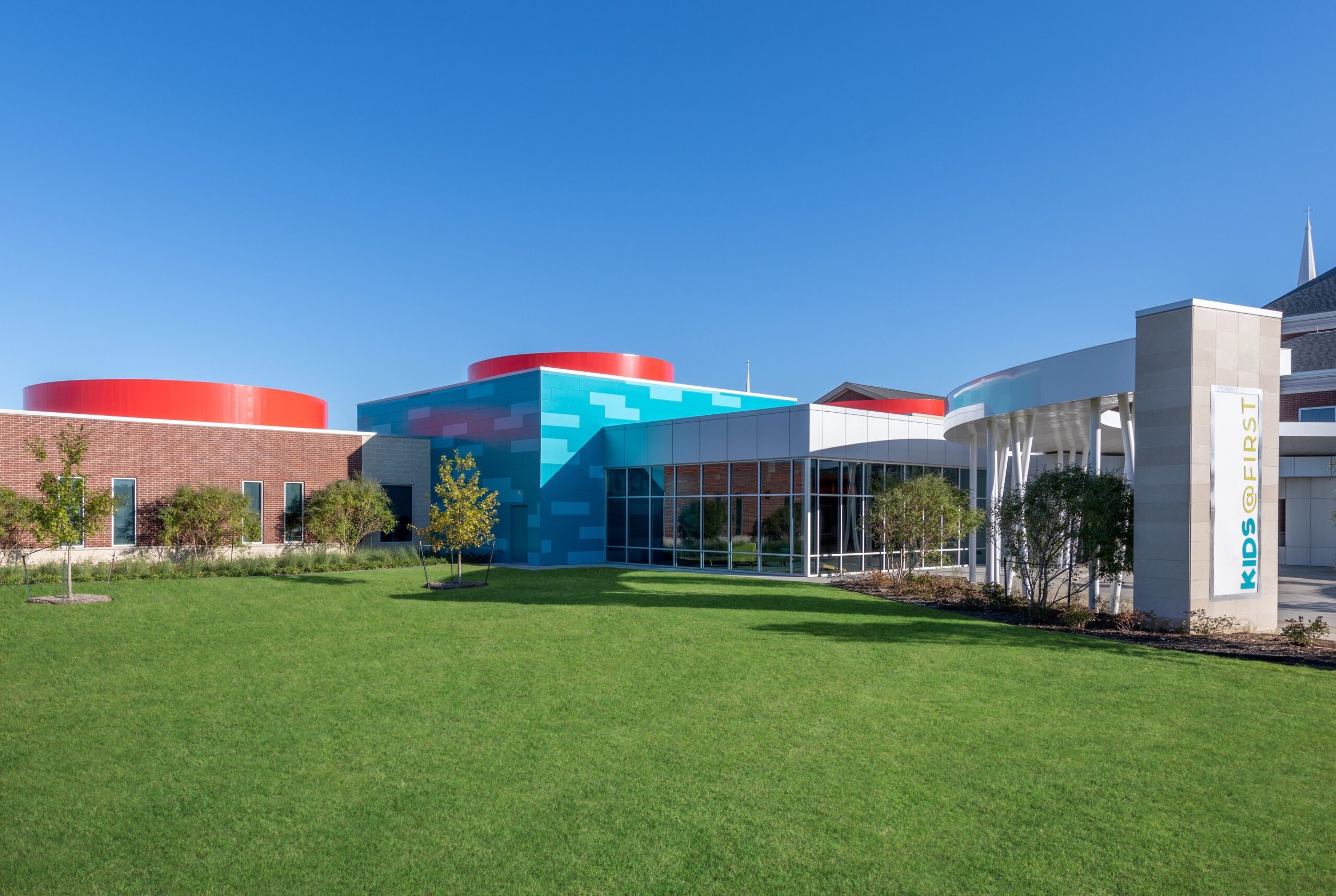
Continuity across structure, surface, and tone defines Nichiha’s approach. The panels were developed to meet performance standards and continue to carry that expectation in every setting.