
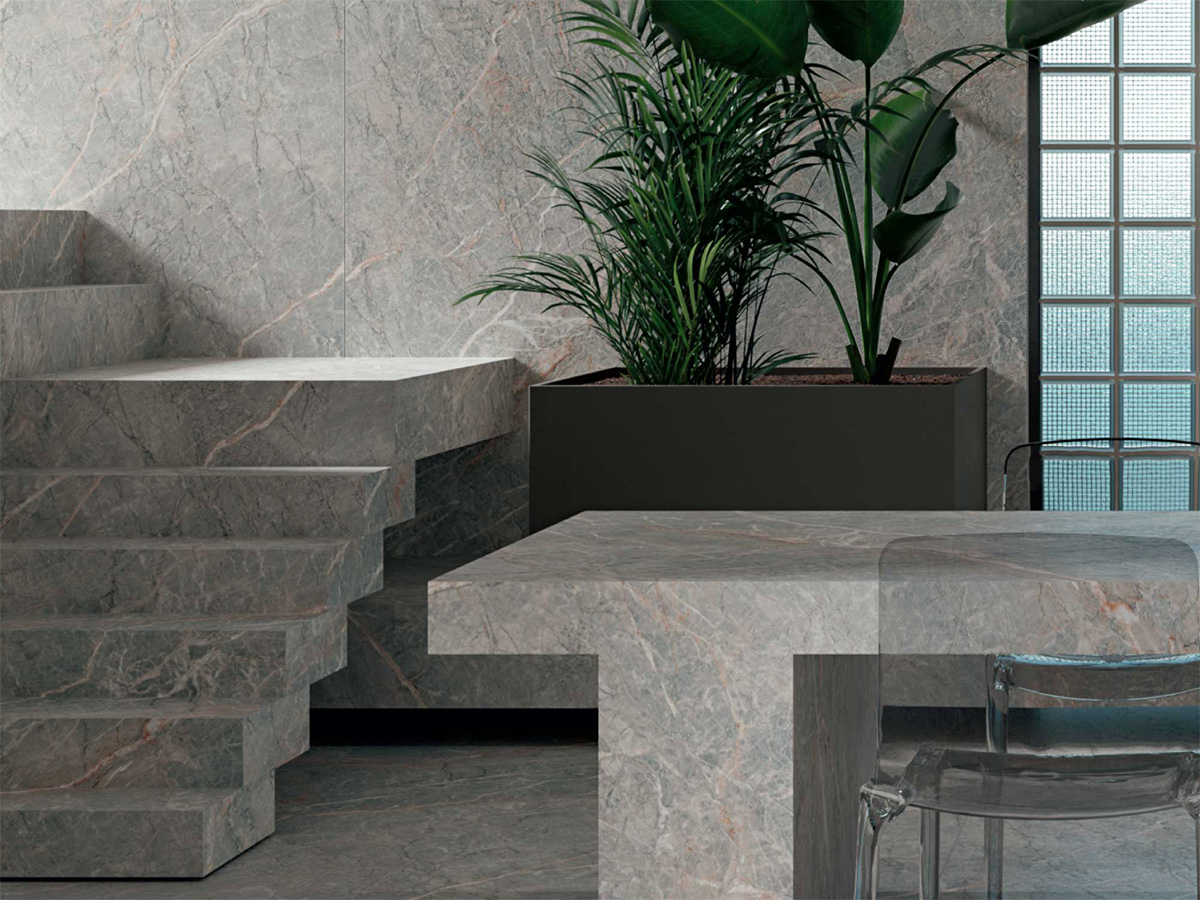
Relief and Detail Align in Rilievo by Hanover and Optimum Surfaces
High-definition printing taught porcelain to imitate marble with near-perfect fidelity, though texture never left the plane. Rilievo, the surface technology Optimum Surfaces developed for its large-format porcelain slabs, ends the compromise, registering physical relief against the printed pattern.
Crafted in Italy and distributed in the United States by Hanover Architectural Products, Optimum slabs reach specifiers with inventory and technical expertise already in place. Rilievo is the most recent development in the range.

Scanning the Stone
Every Rilievo colorway traces to a quarried specimen chosen for its idiosyncrasies. “The process begins with high-resolution scanning of carefully selected stone pieces to capture its intricate veining, color variation, and natural characteristics,” explains Dan Utz, Director of Specialty Products. Digital imaging and specialized glazing bring the tactile dimension into register with the graphic, so relief tracks the pattern across the full field of the slab rather than lapsing into generic grain. “Achieving this level of precision requires the integration of advanced technology with the expertise of skilled craftspeople throughout the production process,” Utz says. Soft Touch, a finish applied over the relief, lends the porcelain a velvety hand.
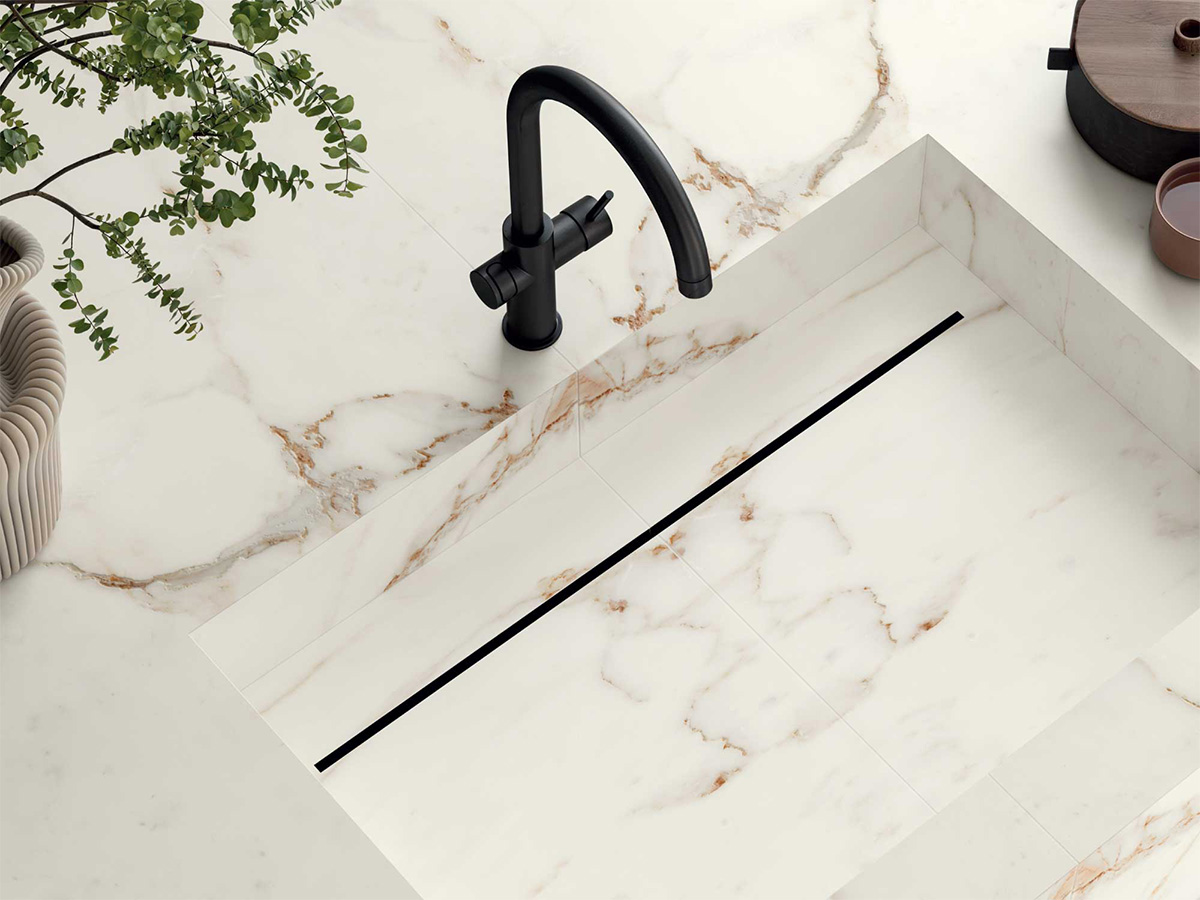
Four colorways carry the technology, each drawn from a distinct reference stone. Calacatta Venere holds to the register of white marble, its veining gold and linear, while Lotus Grey resolves into denser and more clouded passages, and Green Moon assumes the pooled movement of serpentine. Travertino Lumina, recipient of an Archiproducts Design Award, arrives at a moment when the appetite for convincing alternatives to quarried stone has rarely run higher. “It replicates a cross-cut travertine, offering our clients a warm, classic look,” says Utz, who notes the colorway was built to carry the warm tones and linear movement of the original.

One Slab, Fewer Seams
Each slab measures roughly seventy-two and a half by 130 inches, or 1,840 by 3,300 millimeters. Slabs of this scale allow a single piece to yield a countertop, a waterfall edge, and the backsplash behind it, sustaining the pattern through each transition and reducing seams and offcuts. Detensioning at the factory dispenses with relief cuts and the labor they consume. “The philosophy behind Optimum has always been to reduce waste and fabrication costs while improving efficiency,” says Luke Lardarello, Optimum Surfaces Sales Representative. Bookmatching extends this same logic, pairing adjoining slabs along opposing vein patterns for mirror-image installations across feature walls, showers, and fireplace surrounds.

Composition has become a subject in itself across the surfacing category, where uncertainty around silica exposure has unsettled engineered stone. Optimum porcelain carries a lower silica content than traditional quartz and many natural stones, present from the raw material stage with no alteration required. Drawn from natural raw materials and fired through energy-efficient production, the stoneware curbs emissions and waste while outlasting softer materials by a wide margin. Hanover stocks the line domestically, keeping it within reach of projects already underway.