
Tate’s Underfloor Systems Shape Flexible Commercial Spaces
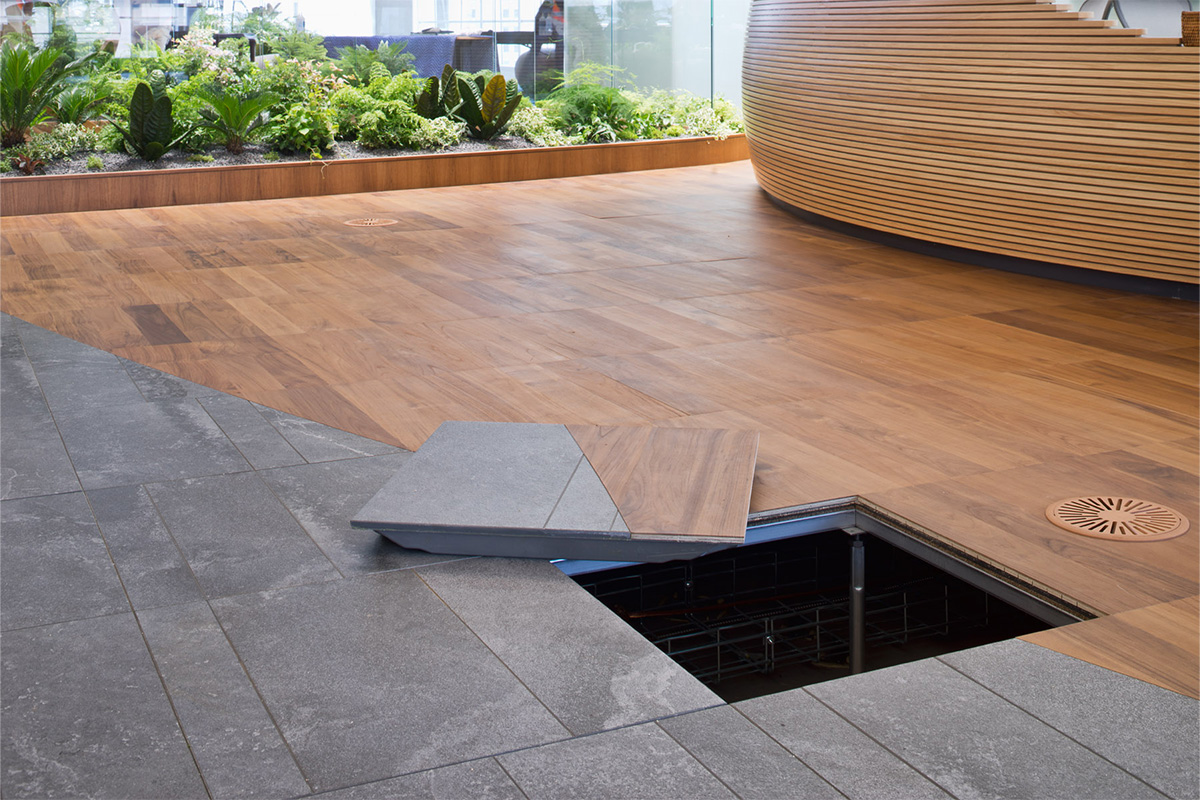
Tate's raised access flooring systems have become an active infrastructure platform, consolidating power, data, and air beneath the floor while supporting projects ranging from high-density data centers to mass timber commercial buildings. It's an evolution reshaping how buildings are designed and maintained over the long term. In this Q&A, Peter Martin, Global President, Flooring at Tate discusses how raised access flooring is being applied across building types and what that means for the future of flexible building design.
Interior Design: Tate has long been associated with raised access flooring, but the scope of that work has expanded. How is the company defining its role within a project today?
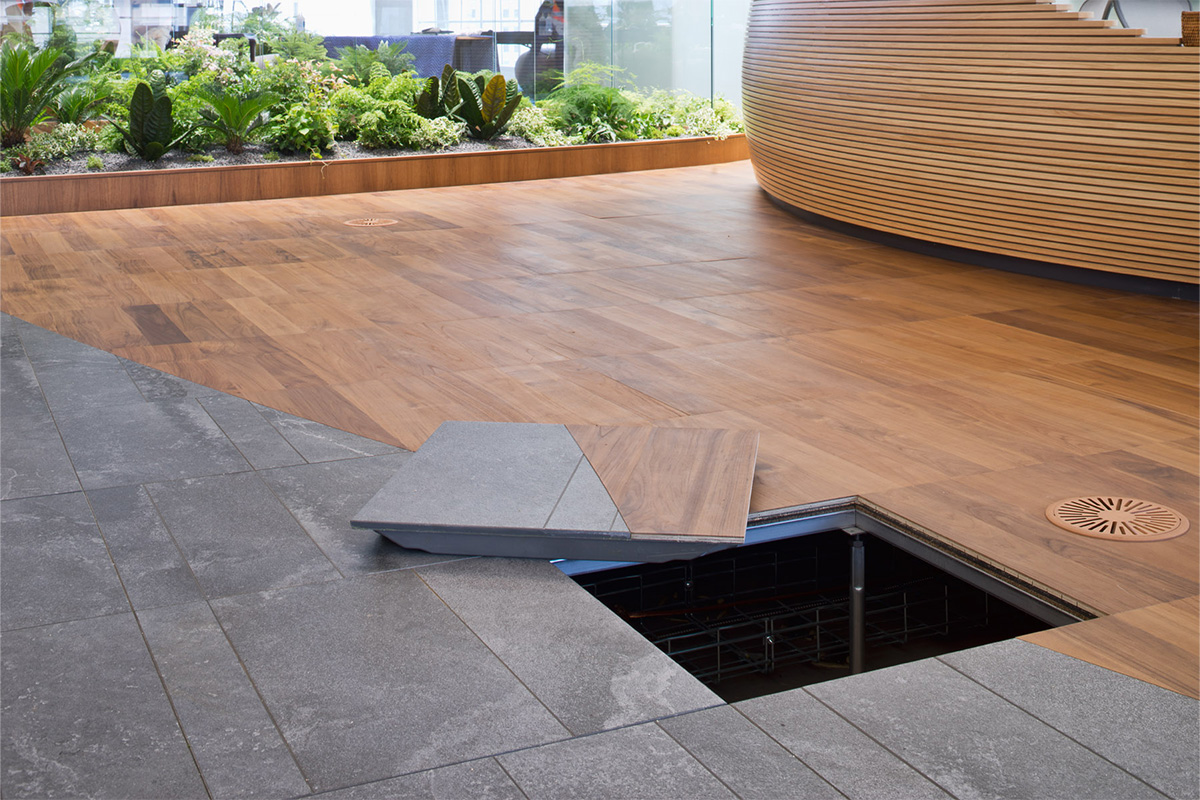
Peter Martin: While Tate has long been known for raised access flooring, the company now defines its role more broadly as an enabler of integrated infrastructure strategy within the built environment. In today’s data centers, where high-density computing, liquid cooling, and continuous uptime are critical, Tate’s systems extend beyond the floor itself to become an active platform for performance. Raised access flooring is no longer just a structural element; it serves as a foundation for load distribution, cooling delivery, and infrastructure flexibility. The underfloor plenum supports liquid cooling manifolds, manages airflow precisely where it is needed, and carries concentrated equipment loads, all while remaining fully accessible.
Engineered to CISCA performance standards, Tate’s panels and pedestals are designed to meet the rigorous demands of modern facilities. Equally important, the accessibility of the system allows operators to quickly upgrade equipment, reroute services, and adapt to evolving technologies without disruption. In this way, Tate’s role today is not just supplying flooring; it is delivering a flexible, high-performance infrastructure layer that enables resilience, scalability, and operational efficiency in mission-critical environments.

ID: Raised access flooring is no longer limited to highly technical environments. Where is Tate seeing the strongest demand now, particularly in projects where flexibility and layout are central to the design?
PM: Raised access flooring is now seeing strong demand beyond technical spaces, especially in mass timber and modern commercial projects where flexibility and layout adaptability are central to the design. In these environments, Tate’s systems move mechanical, electrical, and plumbing services beneath the floor, preserving exposed timber ceilings for aesthetics and performance. At the same time, they create a flexible infrastructure layer that allows spaces to be easily reconfigured as needs evolve. Key benefits driving demand include:
- Preserving structural and design integrity of exposed timber
- Improving acoustics and vibration control
- Enabling adaptable distribution of HVAC, power, and data
- Supporting healthier indoor environments with underfloor air systems
- Simplifying installation and future upgrades
As a result, raised access flooring is becoming a core strategy for projects focused on long-term flexibility, sustainability, and performance.
ID: Working across workplaces, civic buildings, and large-scale infrastructure introduces very different spatial and programmatic needs. How does that range shape how systems are developed and integrated into the overall design of a space?
PM: Working across workplaces, civic buildings, and large-scale infrastructure means designing systems that adapt to very different spatial and programmatic needs. Tate addresses this by developing solutions that integrate seamlessly into the overall design while maximizing both performance and usable space.
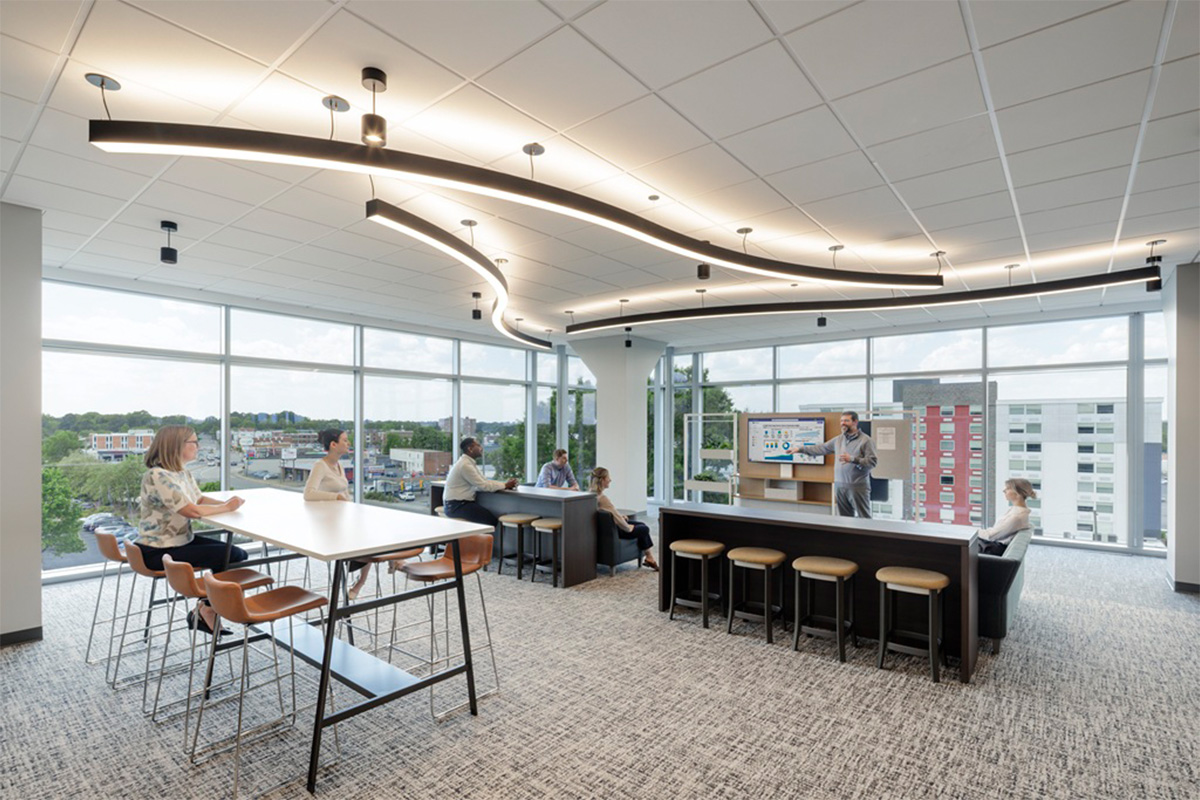
By relocating services underfoot, raised access flooring eliminates overhead congestion, allowing for higher ceilings, improved daylighting, and greater design freedom. This flexibility can also translate into added leasable space or enhanced occupant experience, both of which increase long-term building value. Ultimately, this broad application drives a focus on systems that deliver flexibility, efficiency, and strong return on investment while turning infrastructure into a strategic asset that supports evolving needs across building types.

ID: Buildings are being reworked more frequently, with layouts shifting over time. How does a raised access flooring system change how those updates are carried out within an occupied space?
PM: With commercial spaces seeing frequent layout changes, raised access flooring fundamentally changes how updates are carried out in occupied environments. Instead of disruptive renovations, systems can be quickly reconfigured by accessing services beneath the floor—reducing downtime, labor, and cost.
This modular approach supports rapid churn, preserves asset value, and minimizes disruption to occupants. It also reduces construction waste and embodied carbon by allowing materials to be reused rather than replaced, lowering the total cost of ownership over time while supporting sustainability goals.
ID: Routing power, data, and air beneath the floor consolidates multiple systems into a single layer. How does that approach influence how a space is organized, both during planning and over time?
PM: Consolidating power, data, and air beneath a raised access floor creates a clean, open environment during planning, freeing the ceiling for design, daylight, and occupant experience. It simplifies coordination by organizing multiple systems into a single, accessible layer. Over time, this approach makes spaces far more adaptable. Layouts can be reconfigured, and services can be rerouted quickly without invasive construction, allowing the space to evolve efficiently as needs change.
ID: As buildings continue to accommodate shifting uses and higher performance demands, where is Tate focusing its development efforts next?
PM: Tate is focusing its development efforts on advancing sustainability and delivering more integrated, customer-centric solutions. This includes reducing environmental impact through material and design innovation, while also evolving systems to better support changing performance demands. At the same time, the company is expanding toward a more comprehensive, end-to-end offering, providing a complete raised access flooring solution that simplifies specification, installation, and long-term support.