
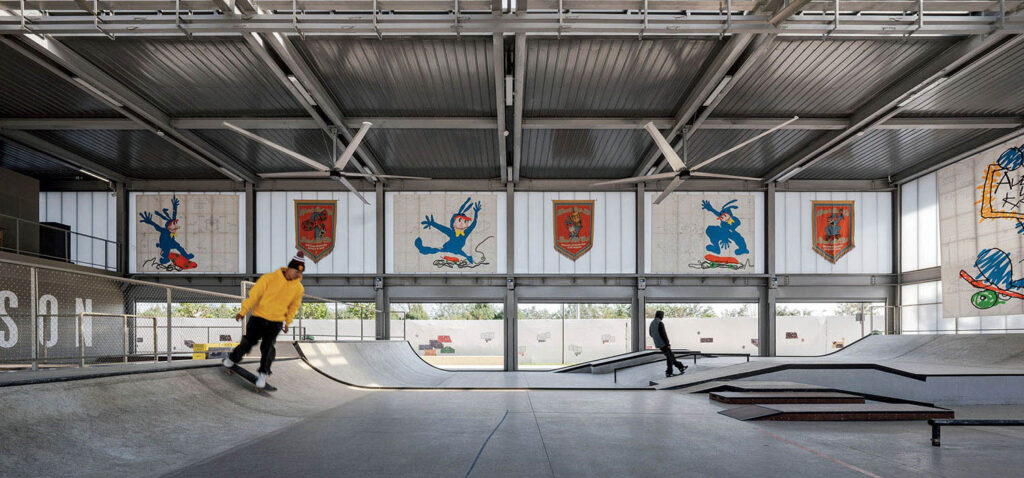
This Skate Park In China Offers More Than Concrete Ramps
Skateboarding in China has rapidly evolved from a niche, underground pastime into a fast-growing mainstream sport, driven by state support and the arrival of such international events as the Park Skateboarding World Championships and the Olympic Qualifier Series. The northern city of Qinhuangdao was among the first to welcome global skaters in the mid-1990s and has remained an important hub ever since. It’s therefore a fitting location for Shanghai-based skate brand Avenue & Son to develop Skatepark North Coast, a new venue for professional competitions like the week-long Grand Masters—China’s largest street-sports festival, drawing more than 300 pro skaters each year.
The 3 ½-acre park is in the seaside neighborhood of Riverain, part of the ninth phase of the Aranya resort development south of Qinhuangdao in Hebei Province. Avenue & Son tapped Shenzhen-based studio Various Associates—a frequent collaborator—to conceive the facility, which spans indoor and outdoor terrain for all skill levels, alongside dining, retail, and green spaces for the local community. Various Associates cofounders Qianyi Lin and Dongzi Yang, who met while studying interior design and architecture, respectively, in London, took on the challenge of combining those disciplines along with landscape and the project’s highly specific elements—ramps, halfpipes, bowls, rails—required for demonstrating the sport’s transitions and tricks.
The Making Of A Multipurpose Skate Park In Qinhuangdao, China
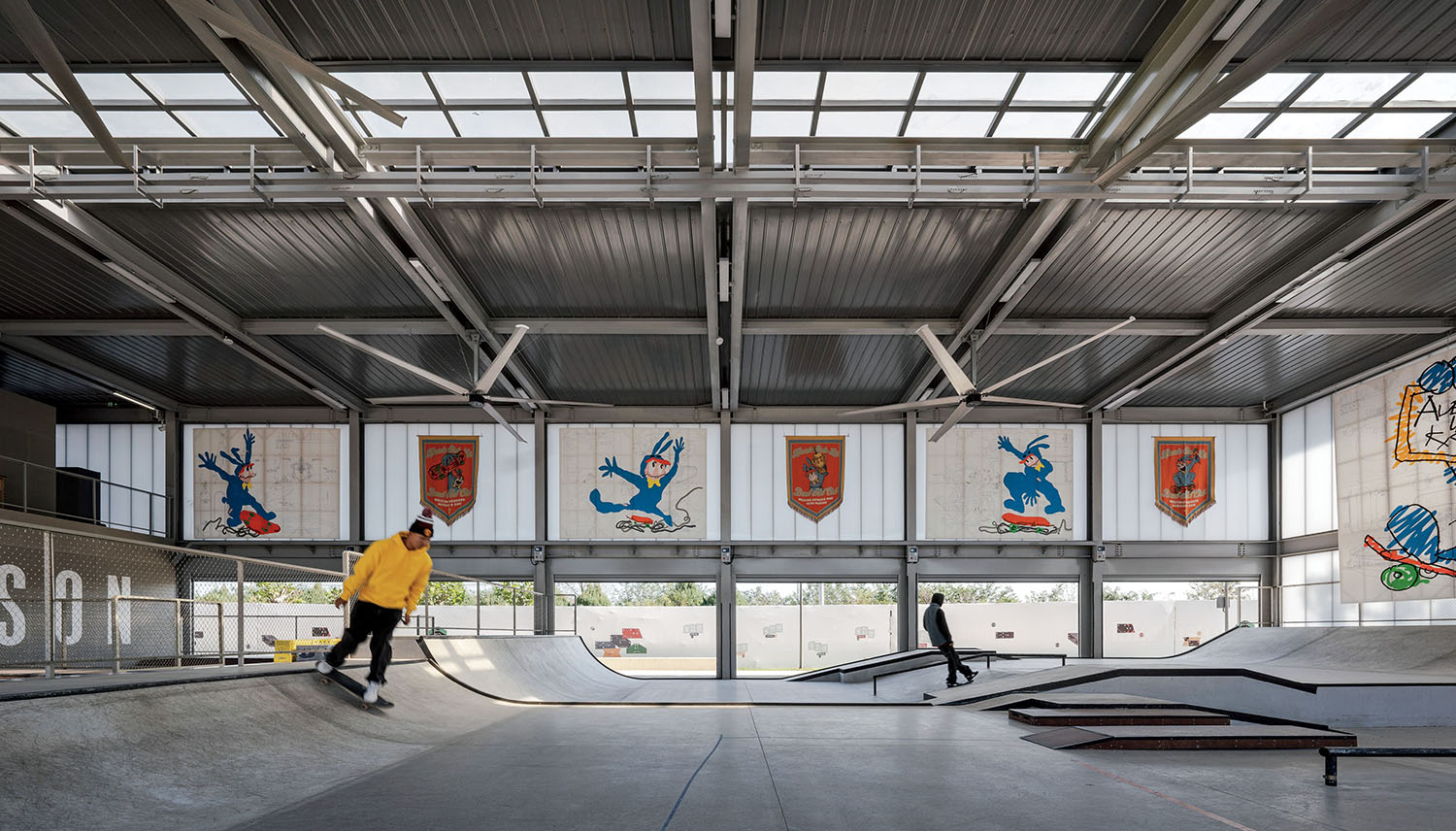
At the 3½-acre Avenue & Son Skatepark North Coast in Qinhuangdao, China, by Various Associates, a 9,000-square-foot building with skylights, concrete ramps, and custom fans contains indoor facilities. 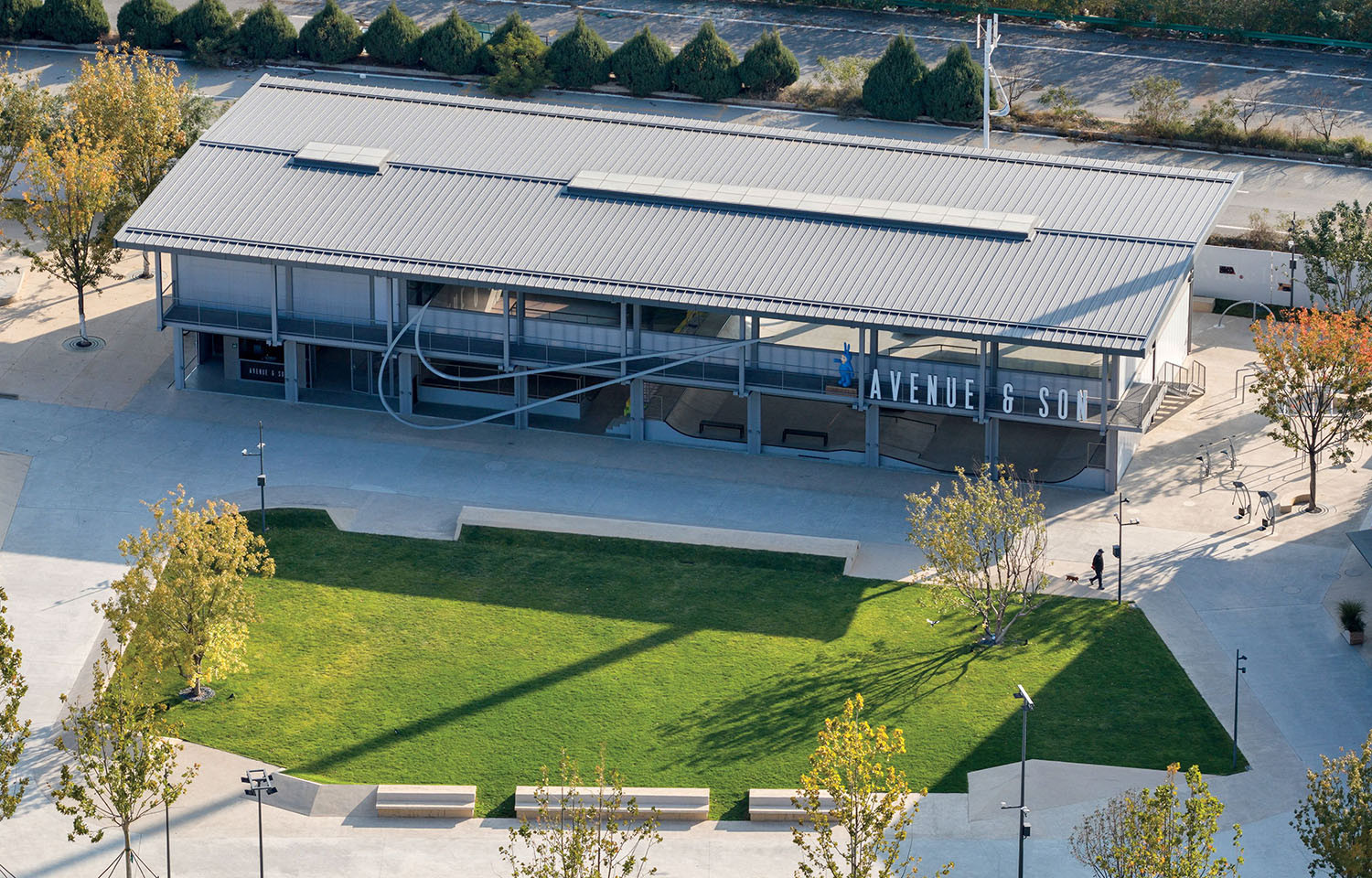
The facade’s steel signage of Chinese skate brand Avenue & Son overlooks the public landscaped space dubbed the green heart. 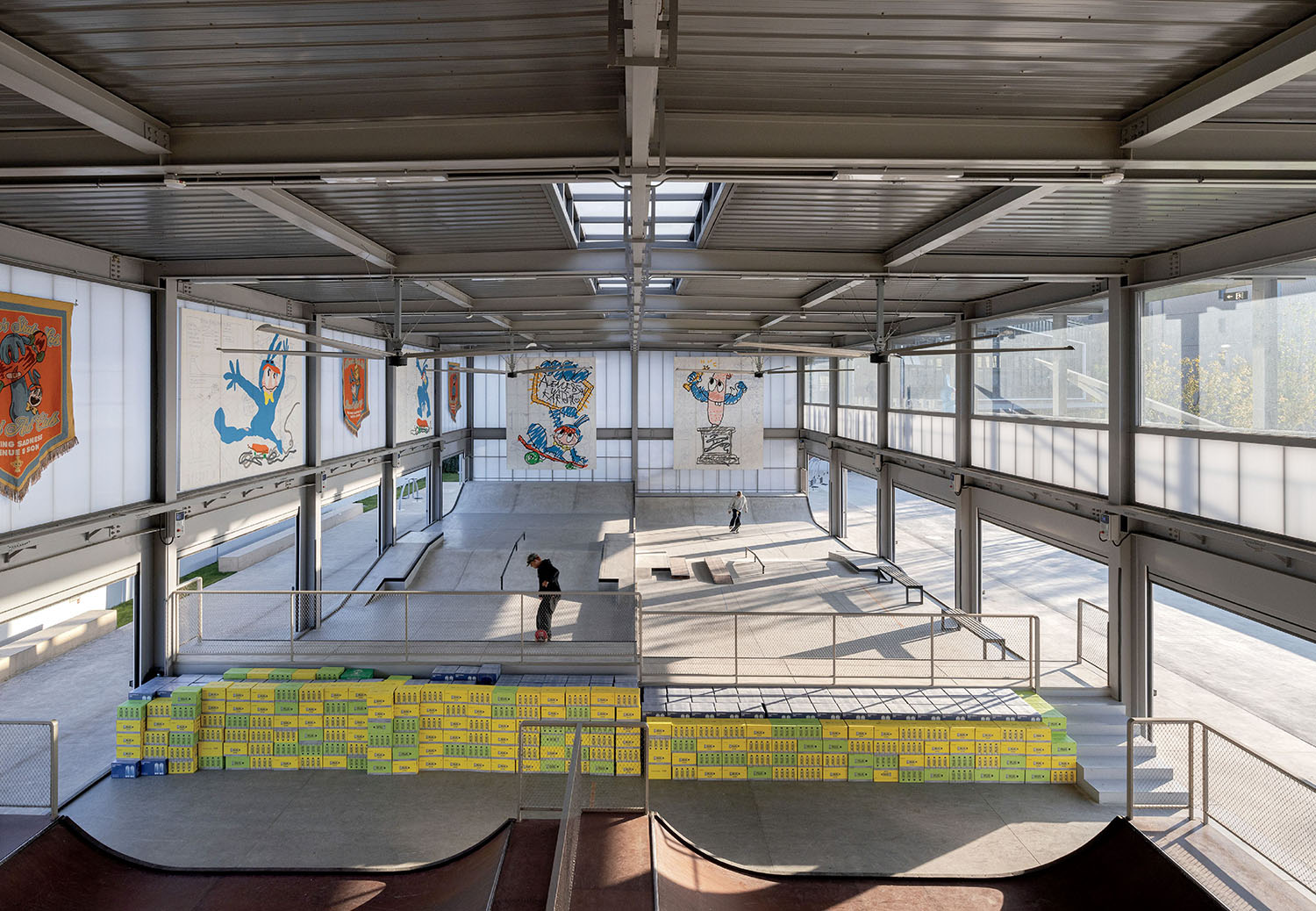
Retractable walls and double-layer polycarbonate panels keep the indoor arena airy and bright. 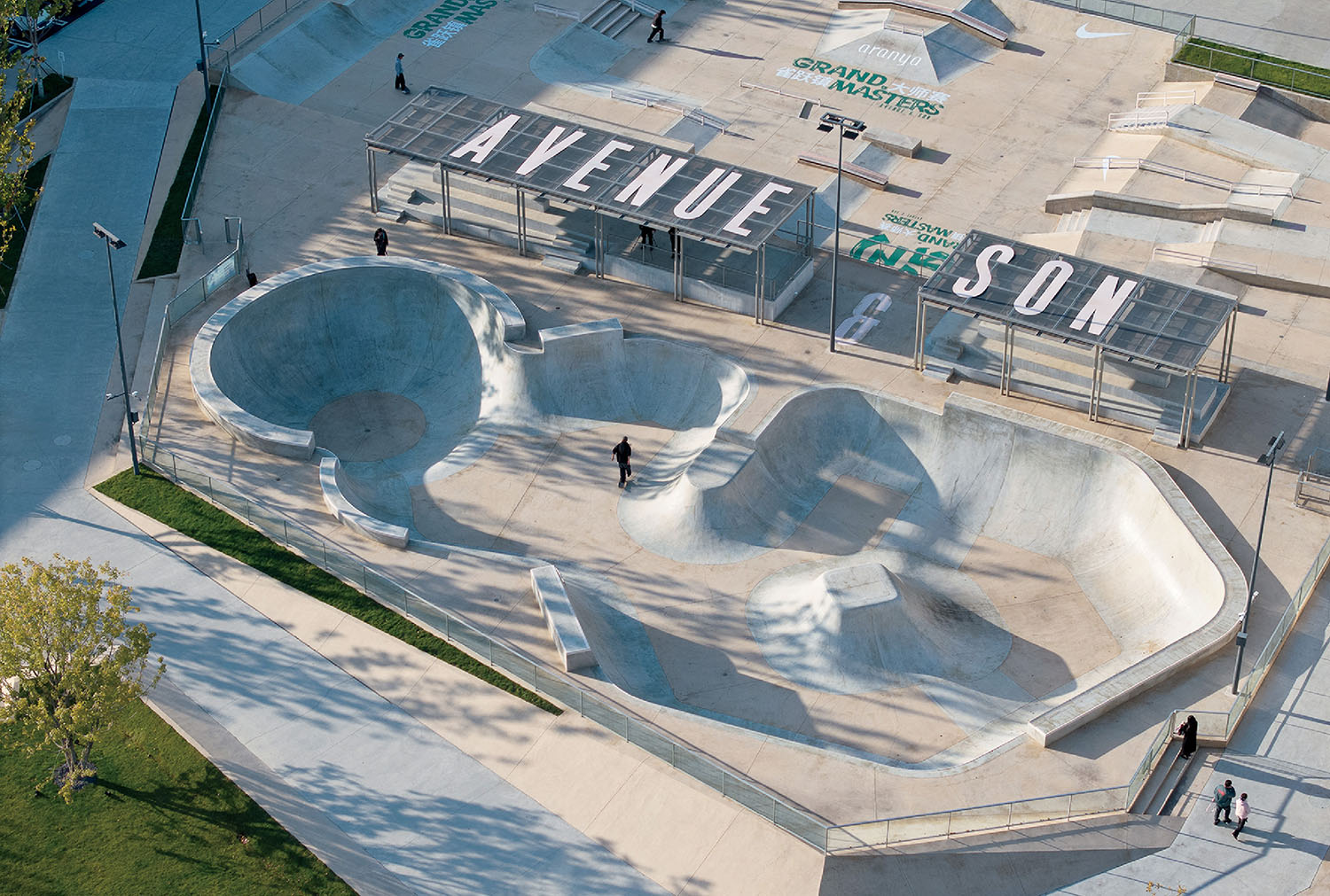
More branding appears on the roofs of the simple shade structures provided for spectators of the professional skate pool. 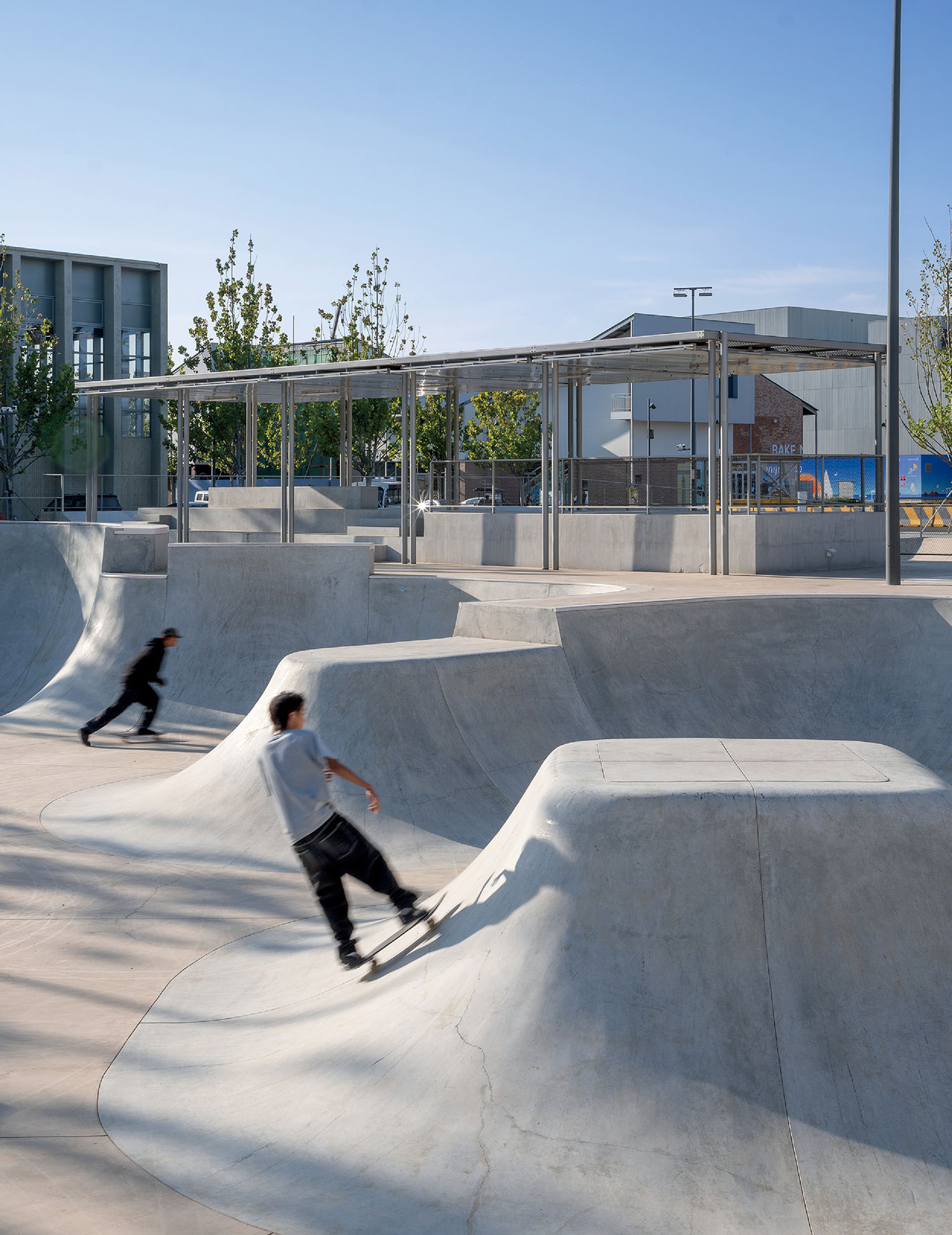
Its nearly 12-foot-deep bowl is sculpted from cast-in-place concrete. 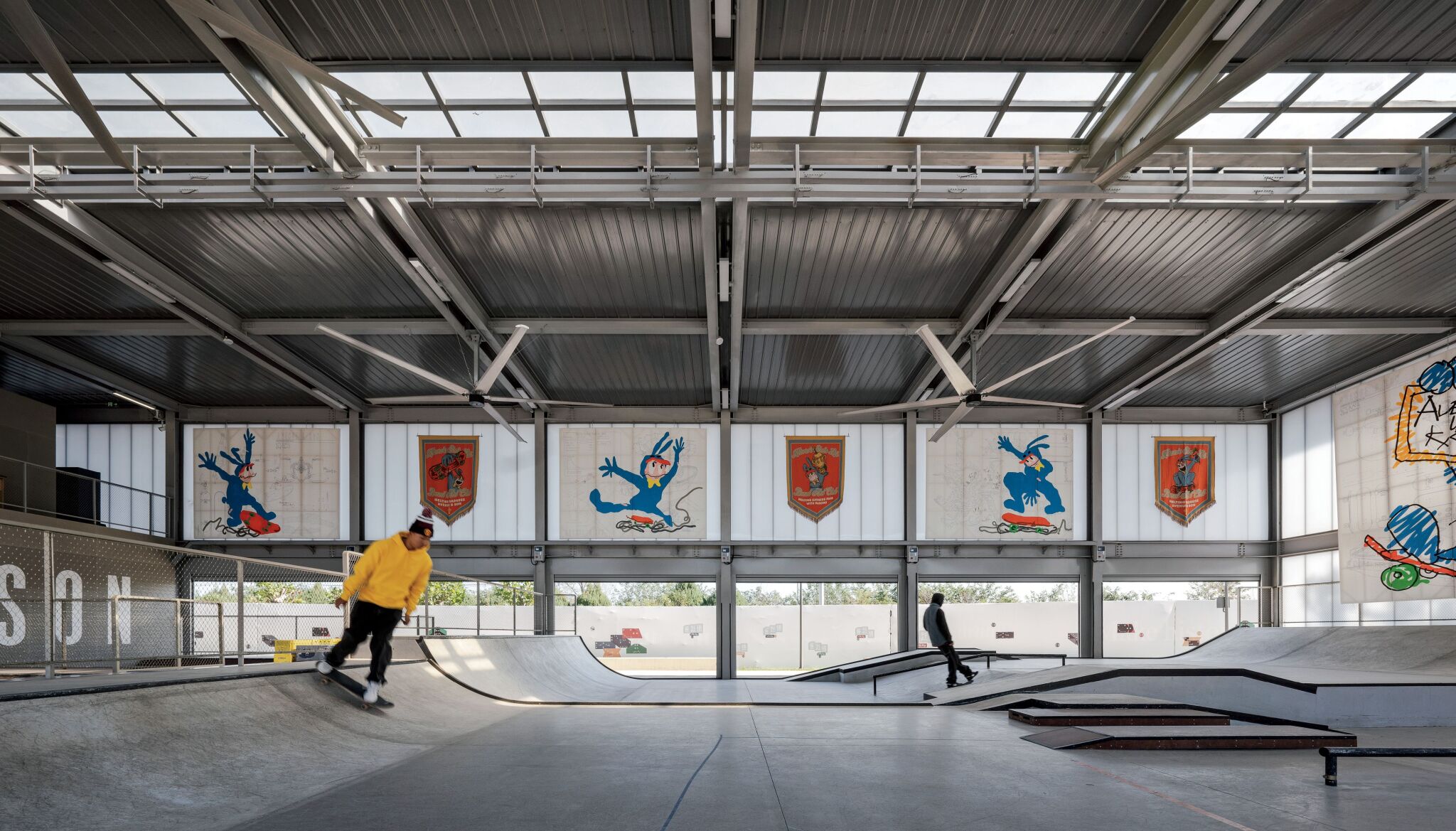
At the 3½-acre Avenue & Son Skatepark North Coast in Qinhuangdao, China, by Various Associates, a 9,000-square-foot building with skylights, concrete ramps, and custom fans contains indoor facilities.
“Given the scale of this professional skatepark, we needed to ensure it meets the technical requirements for hosting a world-class competition annually, while also fulfilling the essential functions for promotion and instruction,” Lin recalls. Outside of competitions, the park functions as both a training facility and a public recreation space, so it also had to cater to a broad audience. “Within such a large site, its primary role is to encourage people to socialize and gather here,” Yang adds.
Outdoors, expanses of cast-in-place concrete tinted gray and pale pink are divided into a small beginner zone and a larger professional skate pool, where competitions take place across an orthogonal arrangement of ramps and rails, and a series of rounded bowls. Between these two elements, a pair of open-sided structures with flat roofs emblazoned with “Avenue” and “Son” in white lettering provide shade and shelter for spectators.
Ample Space to Skate, Indoors and Out
For the indoor skate park’s architecture, materials commonly used for factories, such as the roof’s aluminum-magnesium-manganese, were employed. 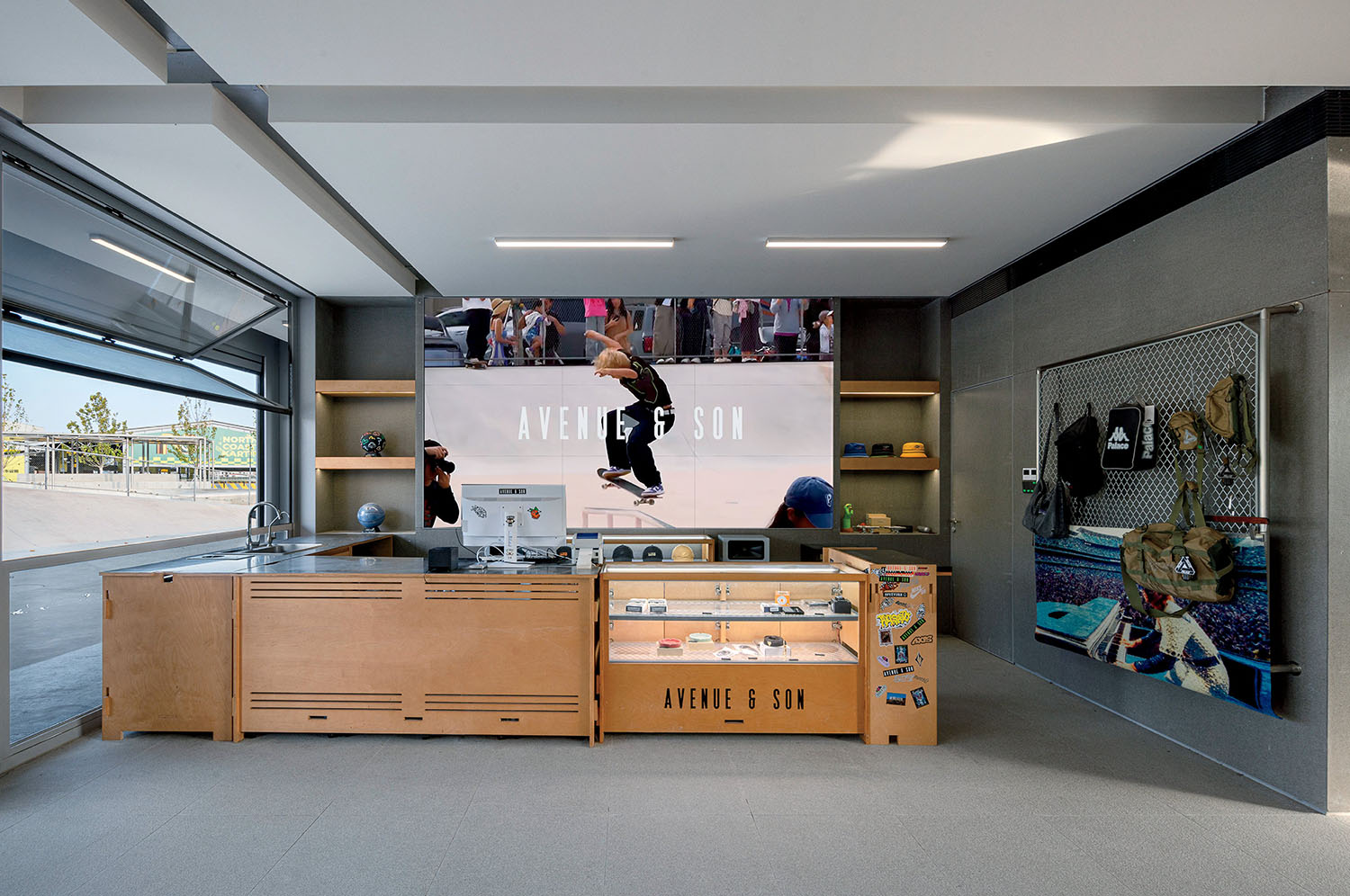
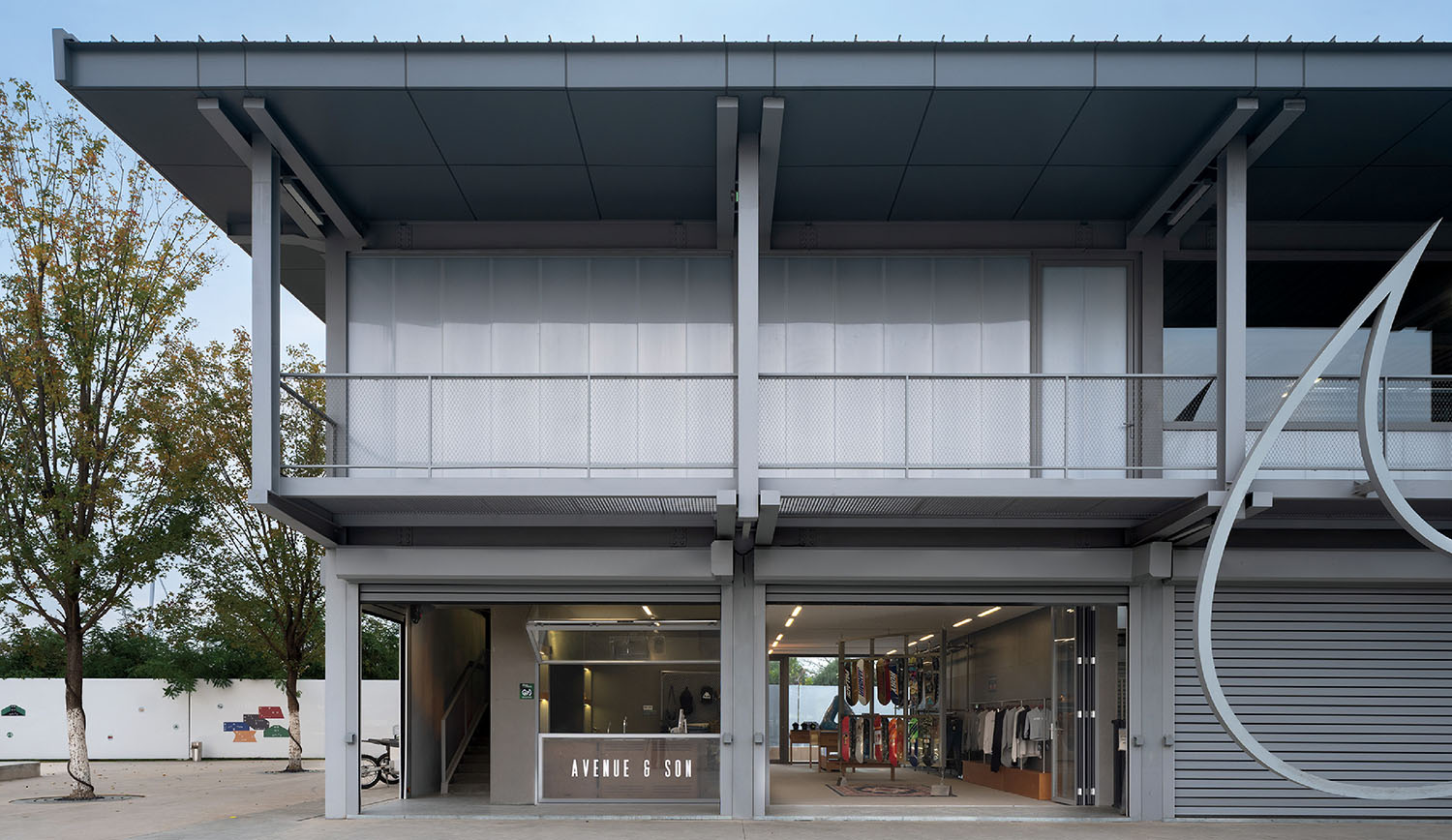
It also houses the retail shop, where a garagelike door folds all the way up and a 55-inch LED screen displays skate competition videos from behind the service counter. 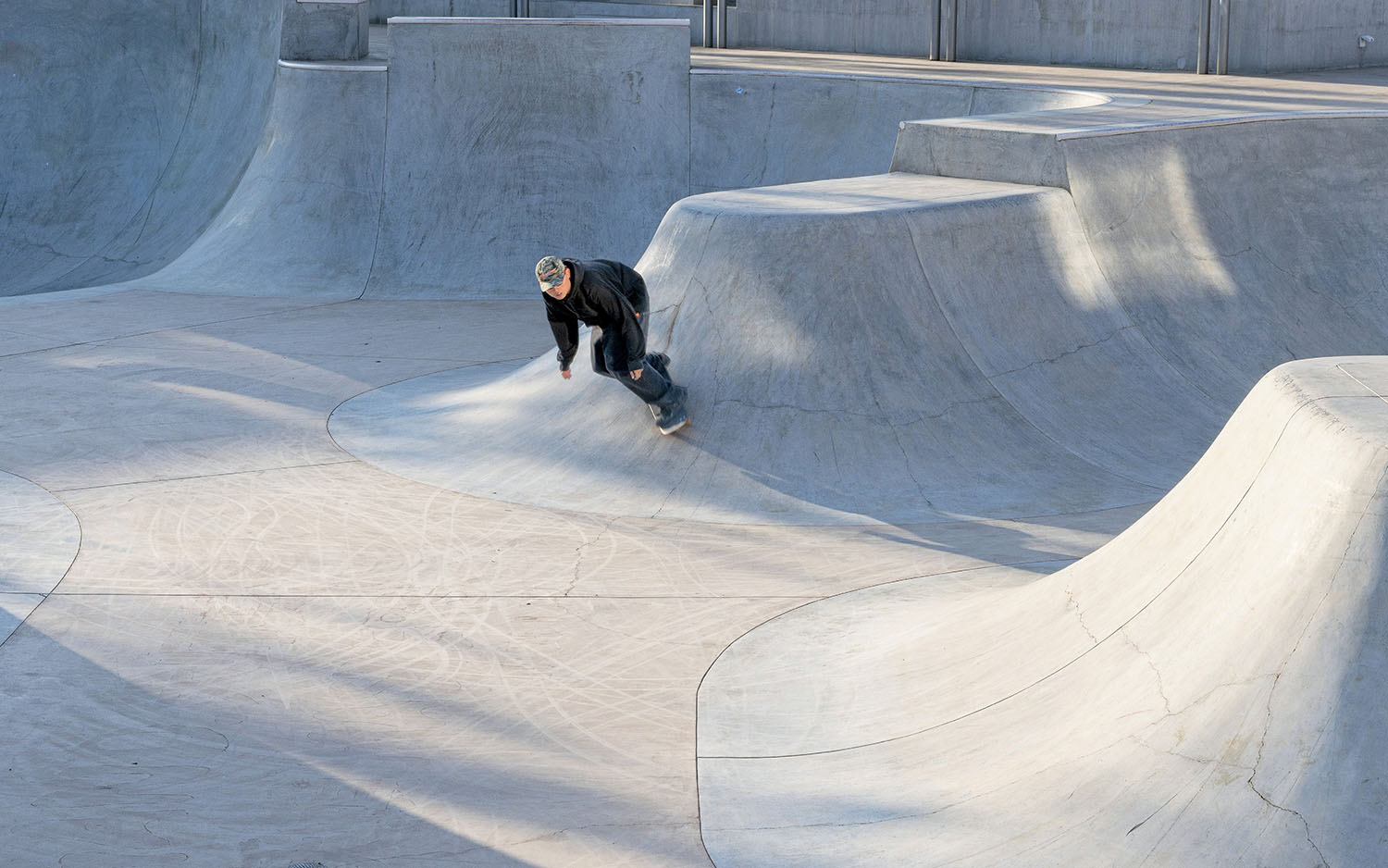
The pool’s concrete is pigmented to differentiate its base from the ramps. 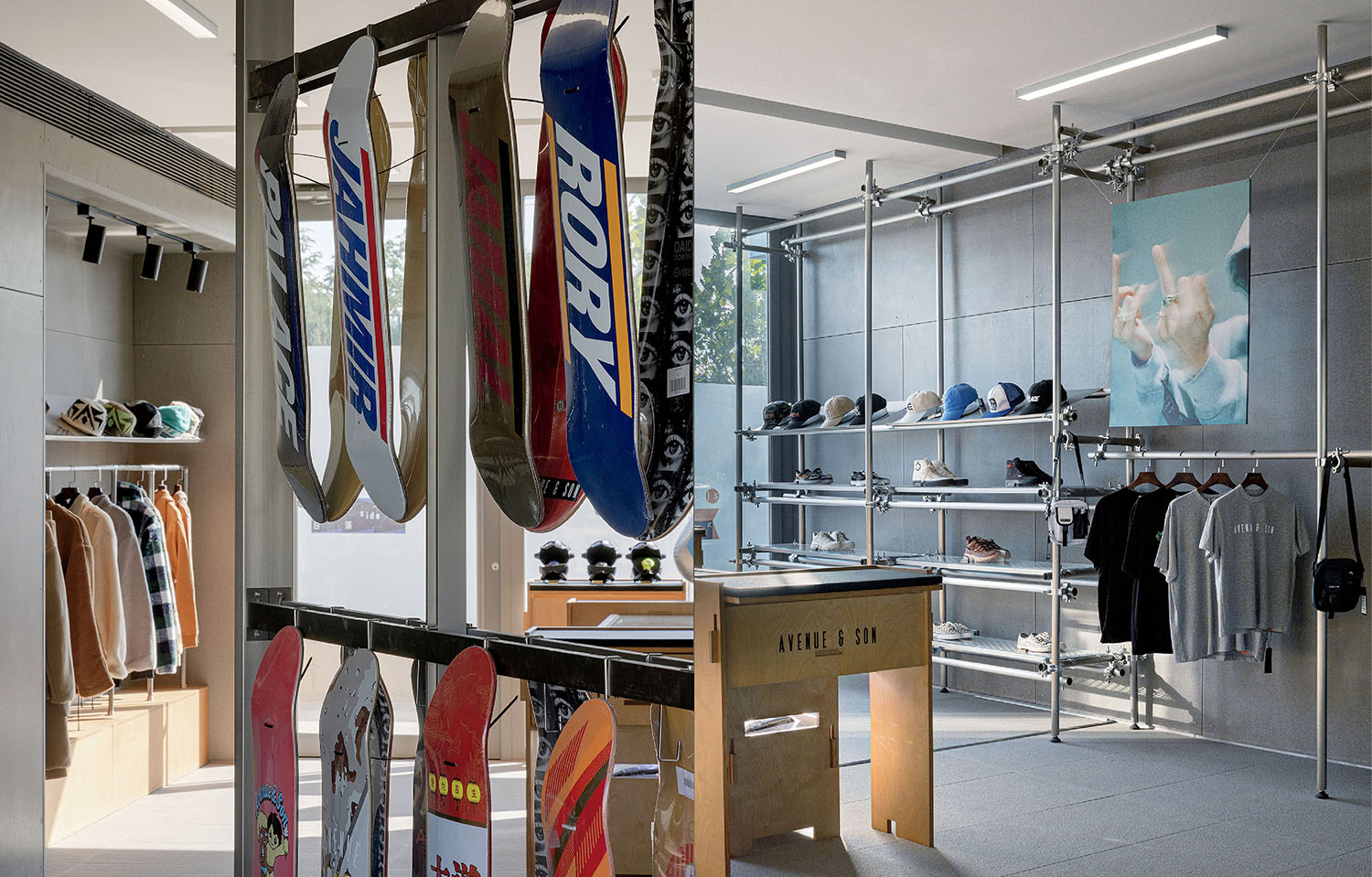
Back in the shop, decks are hung from steel frames, while apparel is displayed on shelves and rails supported by scaffolding-style structures.
The outdoor areas connect seamlessly to the indoor skate park, housed within a two-story, steel-framed structure reminiscent of a contemporary warehouse. “Skaters—the actual users—can move fluidly between inside and out,” Lin notes. Drawing on previous collaborations with the brand, “We gained an understanding of skateboarders’ preferences and their movement paths,” Yang says. “For this project, we were able to directly apply that accumulated experience.” The double-height skating arena occupies most of the volume and features large ceiling fans to cool it during hot summers. Its walls can retract to enhance airflow and flexibility, while polycarbonate panels and glass skylights filter natural light, creating a bright, comfortable environment. “We didn’t want to confine people inside a box,” Yang continues. “This is why, in both the architecture and the overall design, we leaned toward an open, industrial, almost factorylike aesthetic.”
At the other end of the building, an Avenue & Son shop offers equipment and apparel, including skateboard decks, caps, and shoes. A bifold glass facade opens upward, allowing skaters to roll directly up to the store window. Inside, cratelike wooden boxes form the service counter within an otherwise pale-gray interior of fiber-cement boards and an emulsion-coated floor. Merchandise is displayed on shelving and rails attached to a scaffolding-style system, while additional items hang from a wall-mounted, steel chain-link fence—both contributing to what Yang describes as a “functional aesthetic.” Upstairs, a flexible studio with a black ceiling, rubber flooring, and a mirrored wall hosts dance and movement classes.
A Community Hub That Reflects The Growth Of China’s Skateboarding Culture
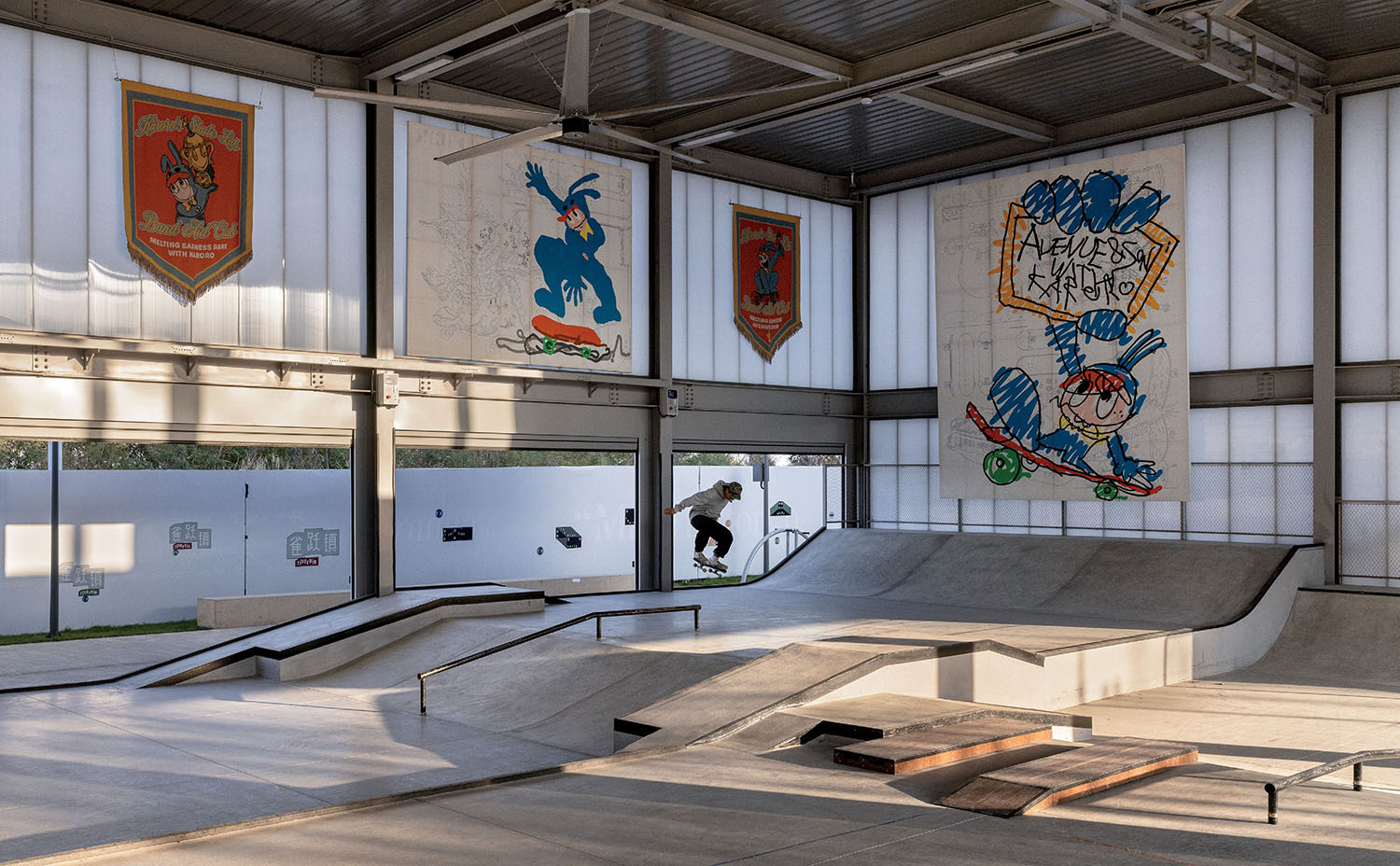
A temporary exhibition of an artist’s large-scale boarding works surrounds the indoor facility. 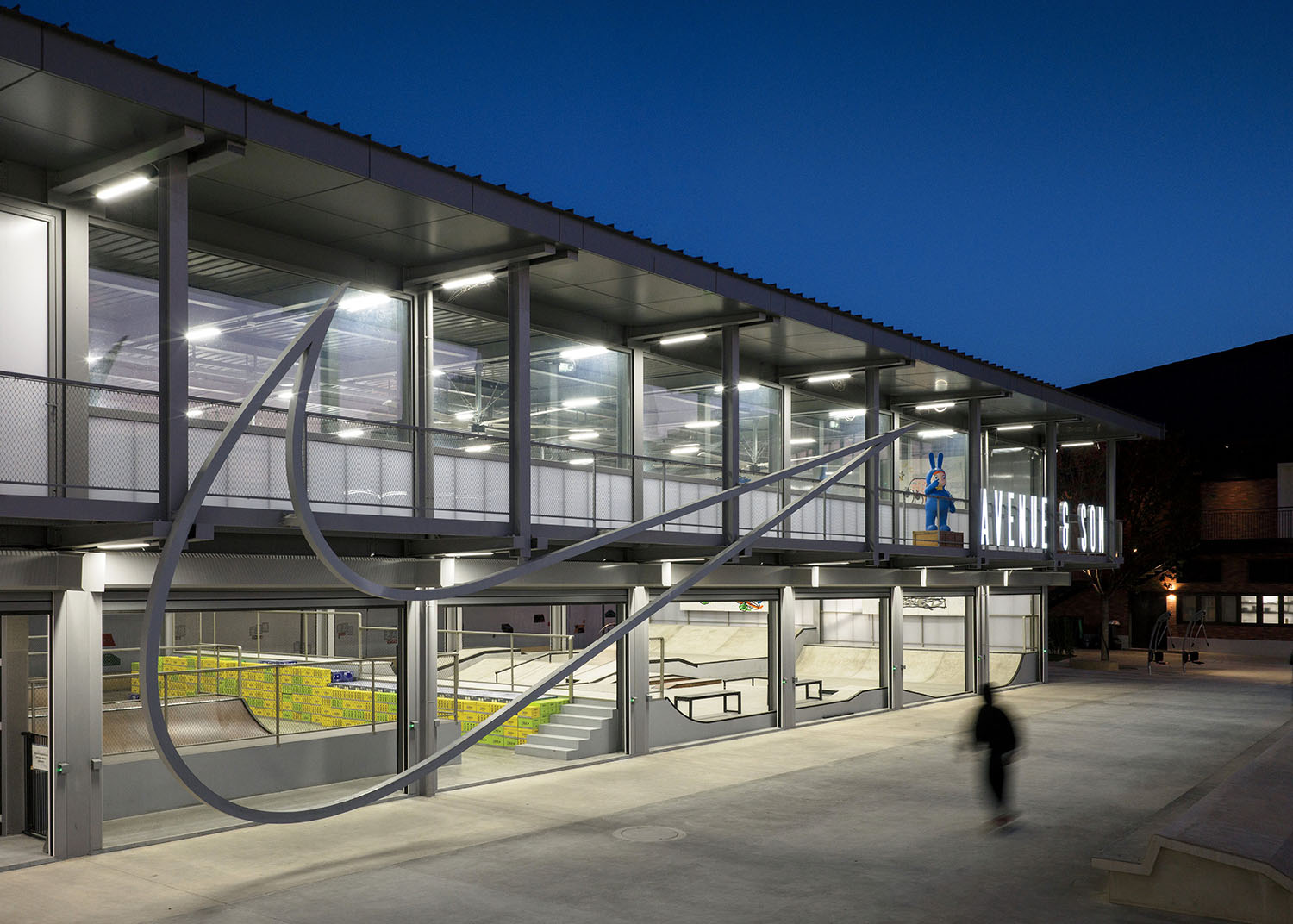
The park is supported by Nike, its logo installed across the indoor structure’s facade. 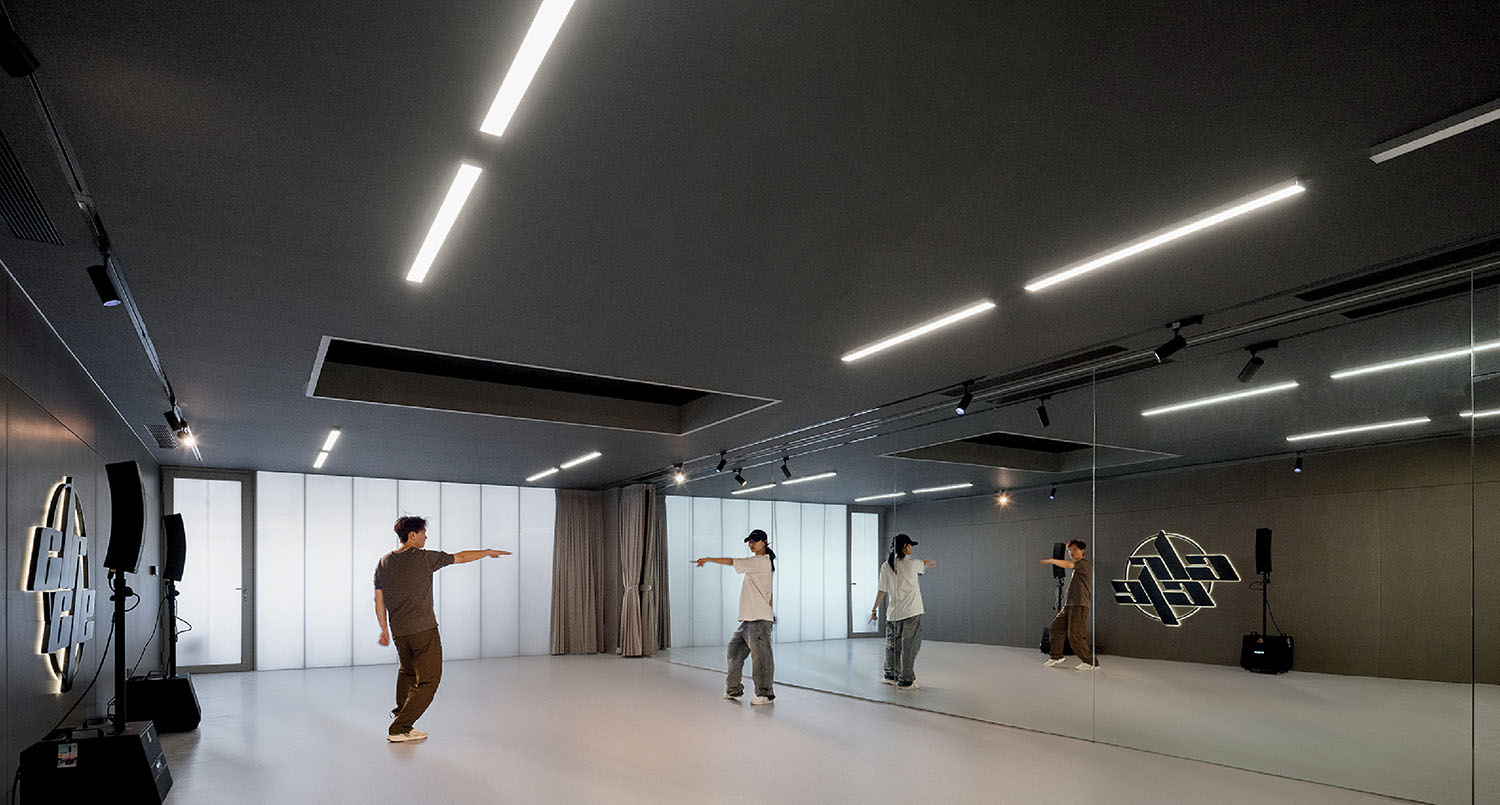
Its second floor houses a rubber-floored dance studio. 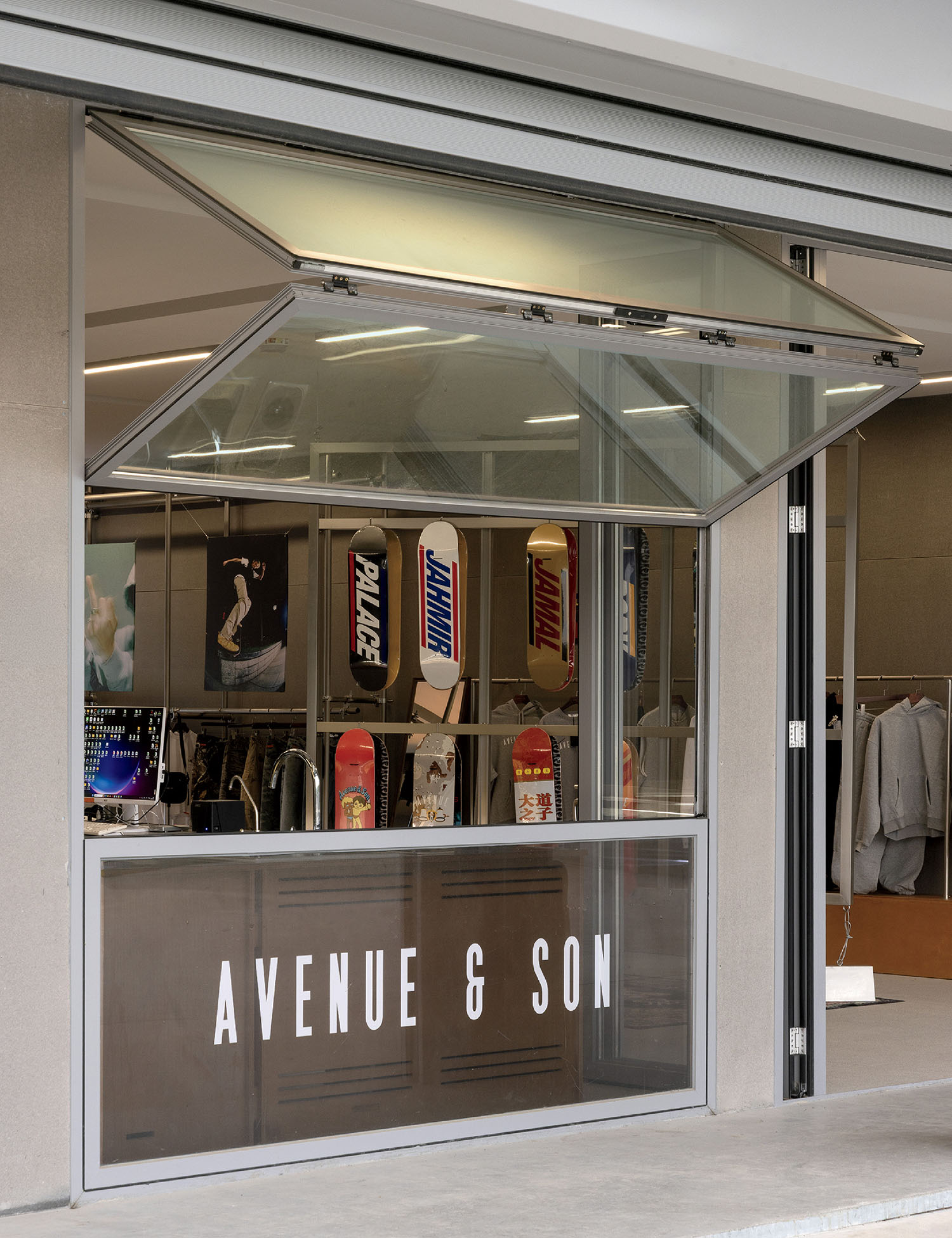
A folding window allows skaters to roll straight up to the shop’s counter, evidence of the project’s intended fluidity.
Since opening, the venue has continued to evolve, accommodating new programming and partnerships—including a collaboration with Nike that resulted in a giant version of the brand’s “swoosh” logo installed across the indoor skate park’s front facade. A couple hundred feet from it, next to the outdoor skate pool, a separate two-story catering building can support large-scale events. “The flexibility of the site allows for themes and programs to be introduced over time,” Lin says. More recently, a dog park was added to an existing lawn.
This state-of-the-art facility reflects the momentum of China’s skateboarding culture, which continues to grow at pace thanks in part to participation in the Paris 2024 Summer games, where 11-year-old Zheng Haohao became the youngest-ever Chinese Olympian. North Coast provides a platform for top-tier local talent to compete against their international peers, while also encouraging beginners of all ages to get involved and practice their grinds, ollies, and kickflips. “Skateboarding shouldn’t feel exclusive or elite,” Lin concludes. “Instead, we hope it becomes an everyday activity that people can easily try, like riding a bike or playing badminton.” Aranya residents and visiting competitors alike have everything they need here to shred and pop.
PROJECT TEAM
HOU JINWANG; HUANG YONGLIANG; ZHANG JUNBIAO; LI MIN; FANG YING: VARIOUS ASSOCIATES.
read more
Products
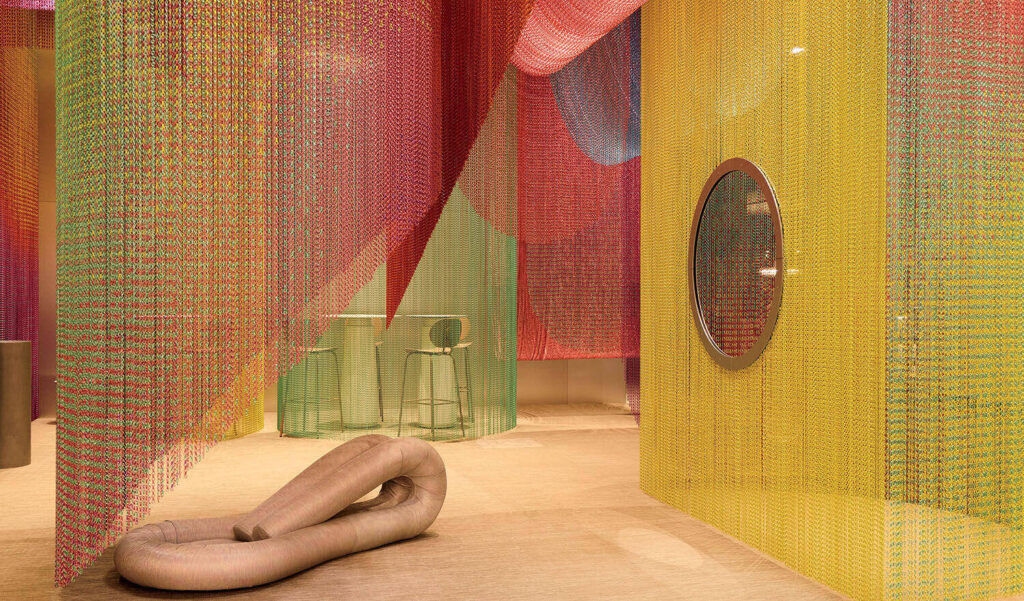
Kriskadecor Marks 100 Years of Chain-Link Innovation
From its humble beginnings, KriskaDecor’s aluminum chain systems have evolved into highly customizable solutions for interiors, architecture, and more.

Products
Alvar Aalto’s Savoy Vase Goes Global at 90
Iittala marks 90 years of Alvar Aalto’s iconic Savoy vase with six iridescent editions inspired by the distinct architectural character of global cities.