
June 18, 2026
A Community-Minded School Reinvigorates An Italian Village
Like many rural Italian villages, Isnello has long grappled with depopulation and economic stagnation. Even the school—an out-of-scale, five-story concrete slab from the 1950s on the edge of this Sicilian mountain town with fewer than 1,500 residents—had to be closed for structural reasons, forcing the children to attend classes elsewhere. But when COVID-related funding became available, it was decided to build a new pre-K through middle-school complex, a scheme envisioned as a catalyst for “social, cultural, and environmental regeneration, capable of restoring a sense of centrality to the community,” says architect Marco Alesi, coprincipal of AM3 studio, which helmed the project.
“We started by talking to everyone in the town, which was simple because it’s so small,” Alesi continues, outlining a campaign of door-to-door, classroom-to-classroom, and subsequent online conversations. Roberto Corbia, an urban planner specializing in community-driven regeneration, helped structure the process, establishing a framework for civic dialogue rarely seen in municipalities this tiny. Children drew their dream school; parents and teachers described what the old building lacked and what the new one should include; and townspeople articulated what they hoped Isnello could become. The resulting Istituto comprensivo Luigi Pirandello was conceived not so much for them as with them—a facility shaped by collective authorship, where the architects acted less as form givers and more as interpreters of local aspirations.
AM3 Studio Creates A School In Isnello, Italy That Fosters Civic Dialogue
The demolition of the old school—“a giant wall” blocking the end of the village from the valley below, as Alesi puts it—became an opportunity to rethink not only the building but also the town’s relationship to its rugged setting. AM3 broke the mass into a joined pair of smaller, two-story volumes totaling 18,300 square feet that are partly sunk into the hillside, opening up views toward the Madonie Mountains. “The architecture engages in dialogue with the landscape, interpreting its colors and light, and settling into Isnello’s fabric with a measured, contemporary presence,” firm coprincipal Cristina Calì observes. In that spirit, the jagged terrain is echoed by the ground floor’s sawtooth lintel line, a charming detail inspired by a child’s drawing in a participatory workshop. And the broader environmental palette—earthy clays, forest greens, sky blues, even the maiolica tilework on nearby church spires—is transmuted into the multihued aluminum slats that clad the facades in gradient bands of color, a shimmering skin animated by the shifting sunlight.
-
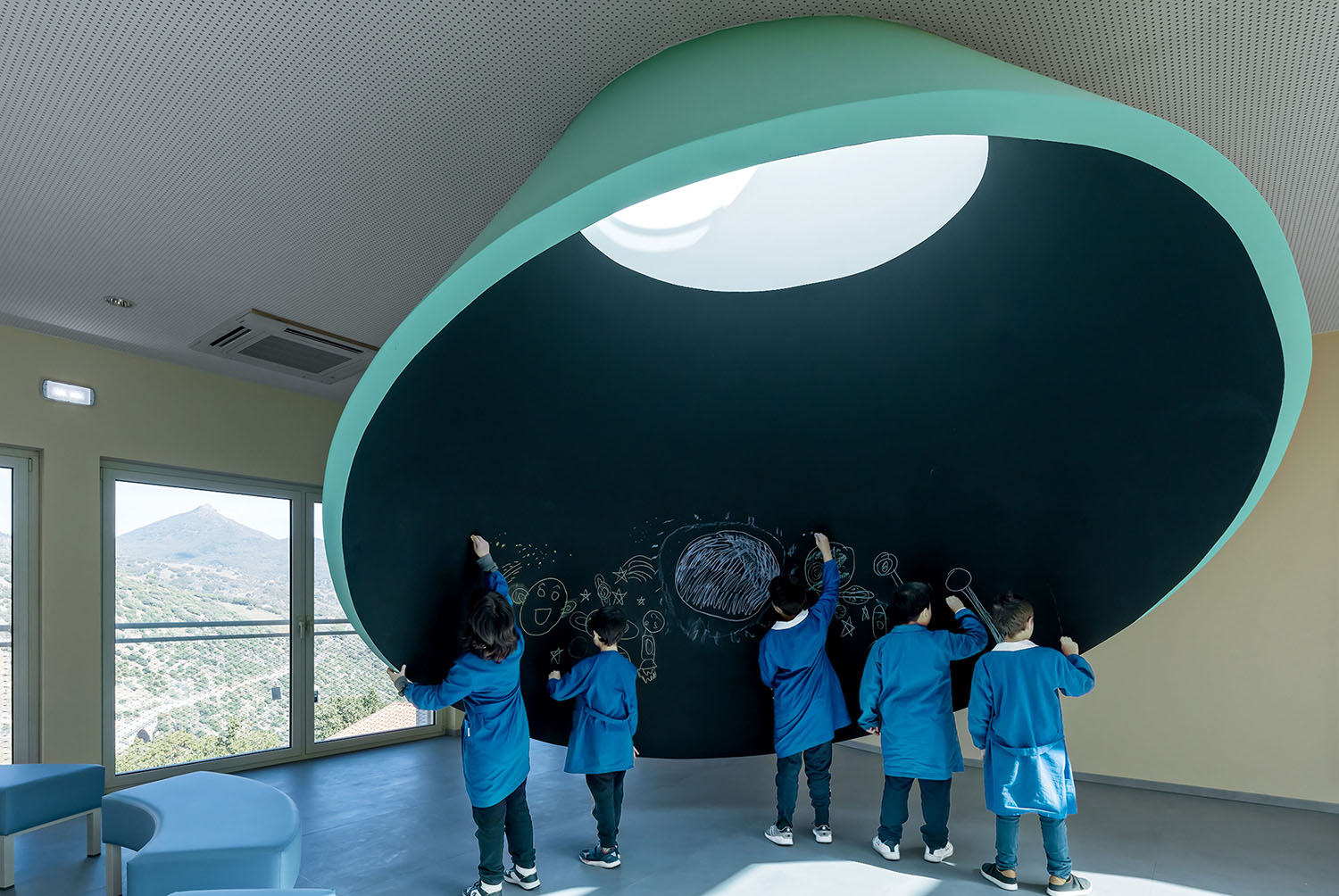
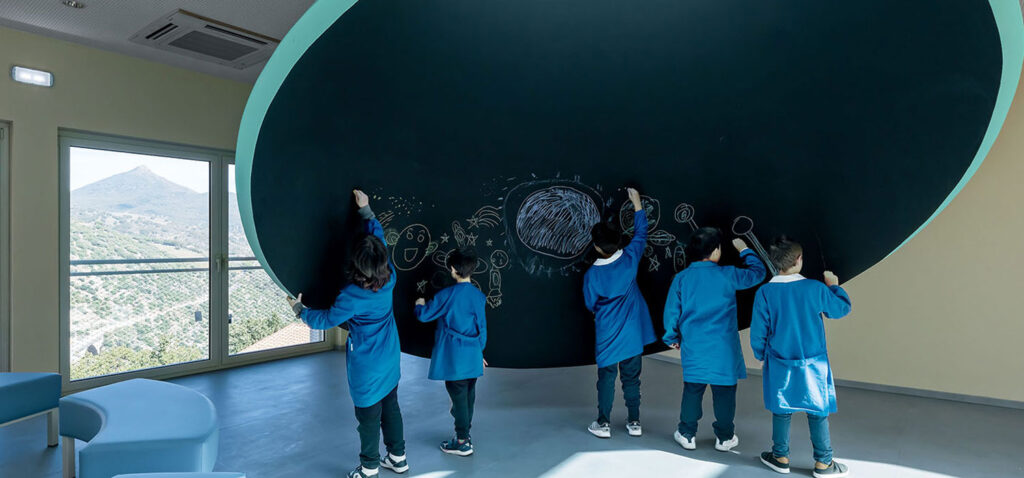
Images inspired by the celestial view through the oculus can be sketched in chalk on the black-painted interior surface. -

Panels of multicolored powder-coated aluminum slats clad the facade. -
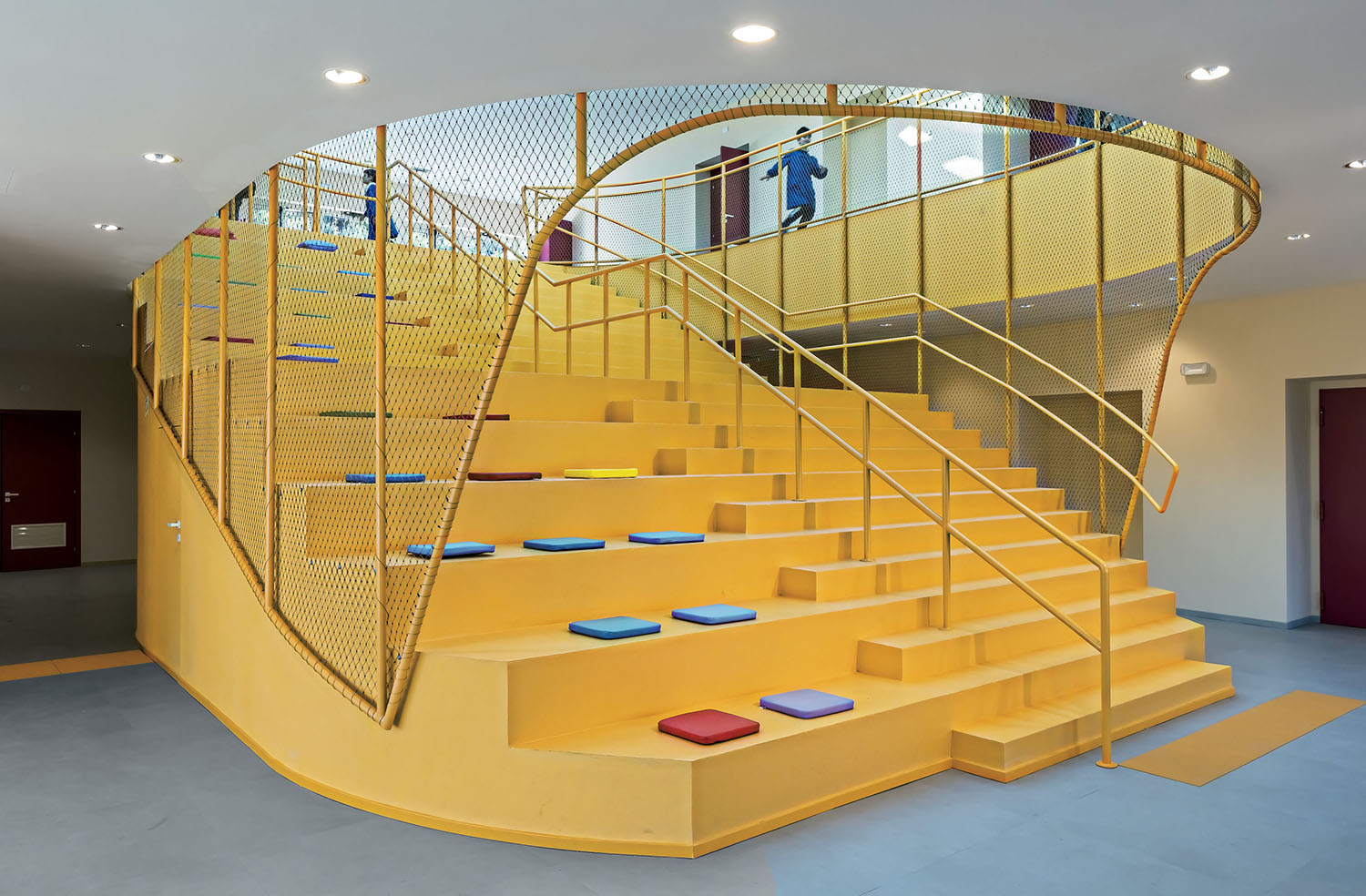
A freestanding block of cast-concrete bleachers finished in epoxy resin connects a ground-floor gathering space dubbed the Agora, with the open area above. -
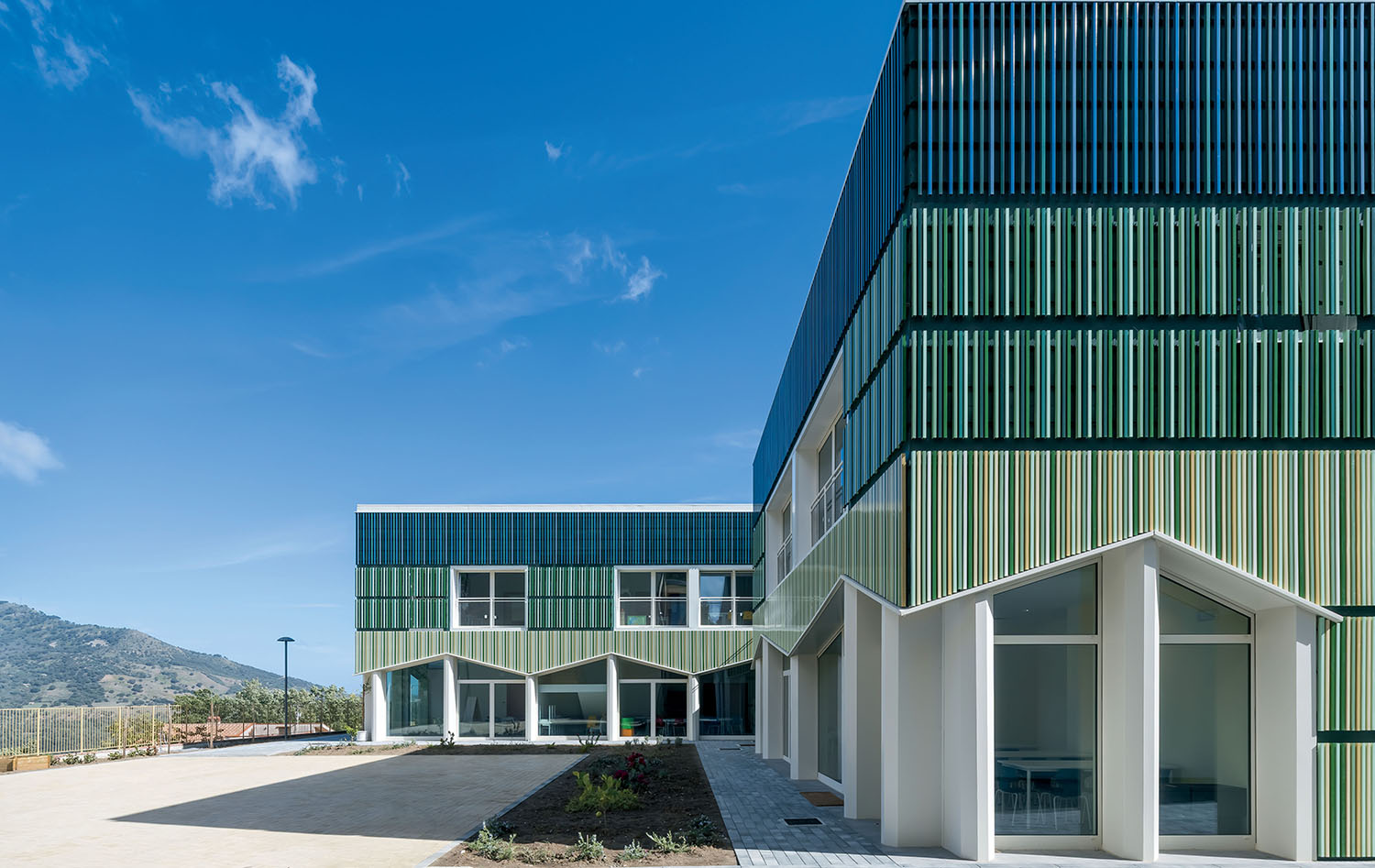
The hues of the striated paneling ascend from earth through vegetation to sky. -
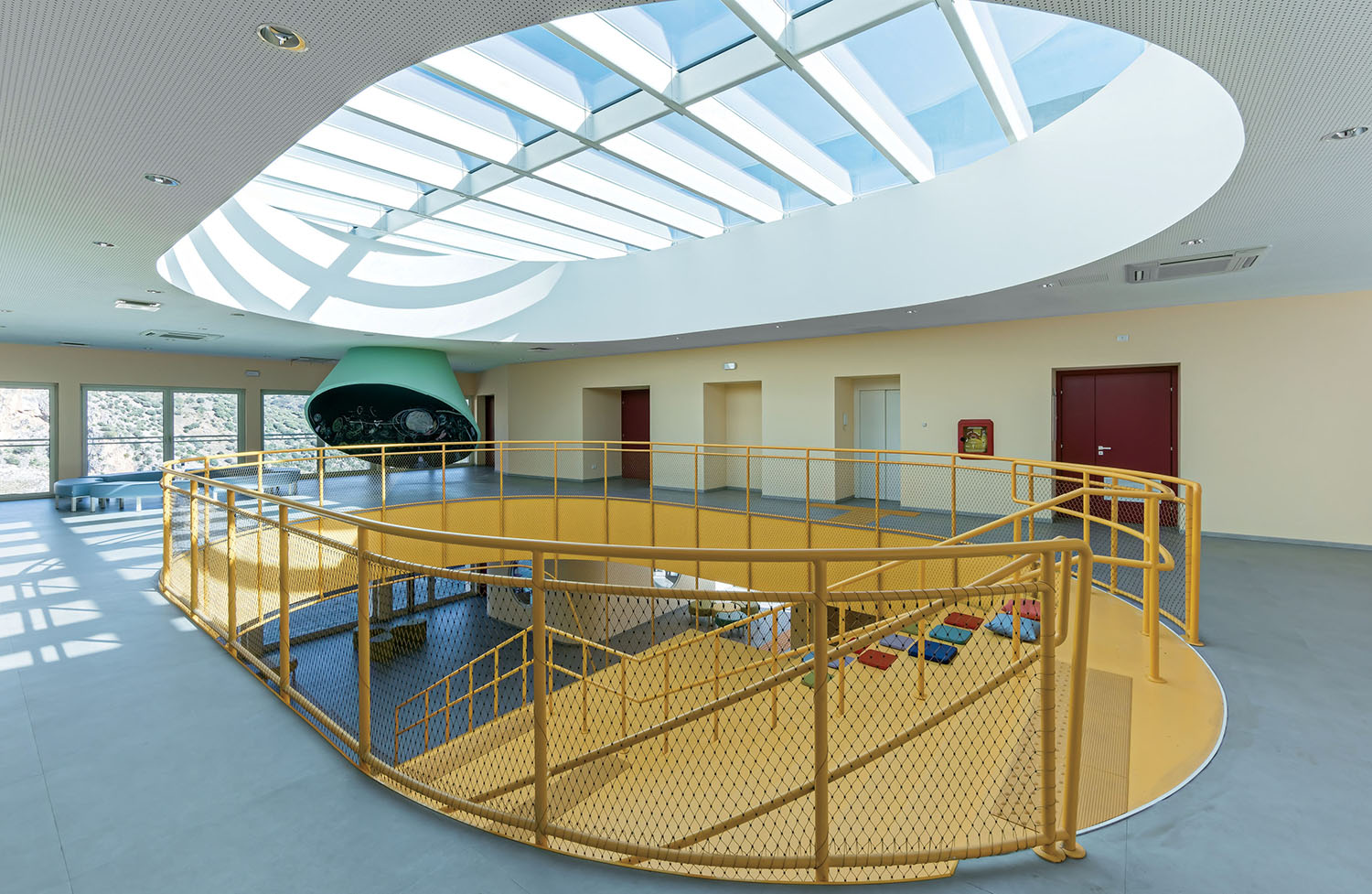
Surrounded by steel‑mesh guardrails, the bleachers’ stadium shape is echoed by the large skylight above.
The School Design Centers A Sense Of Play
A similar radiance seems to warm the interior of the larger volume, emanating from a monumental set of freestanding solar-yellow bleachers at the center of an open space dubbed the Agora. “It’s like a piazza with stairs,” Alesi explains, “a place where people sit, talk, assemble, put on performances—where life happens.” The mini cast-concrete version of Rome’s Spanish Steps rises through a stadium-shape void to the equally open space above, topped by a vast skylight. The steeltubeandmesh guardrail enclosing the stand resembles a football helmet, adding to the sense of safe fun, while the Cave—a child-size grotto tucked under the rear of the structure and included at the pupils’ explicit request—provides a private retreat for secret meetings and quieter games. It’s an example of what AM3 coprincipal Alberto Cusumano describes as “architecture that teaches—not only through study but also through places, light, and relationships.”
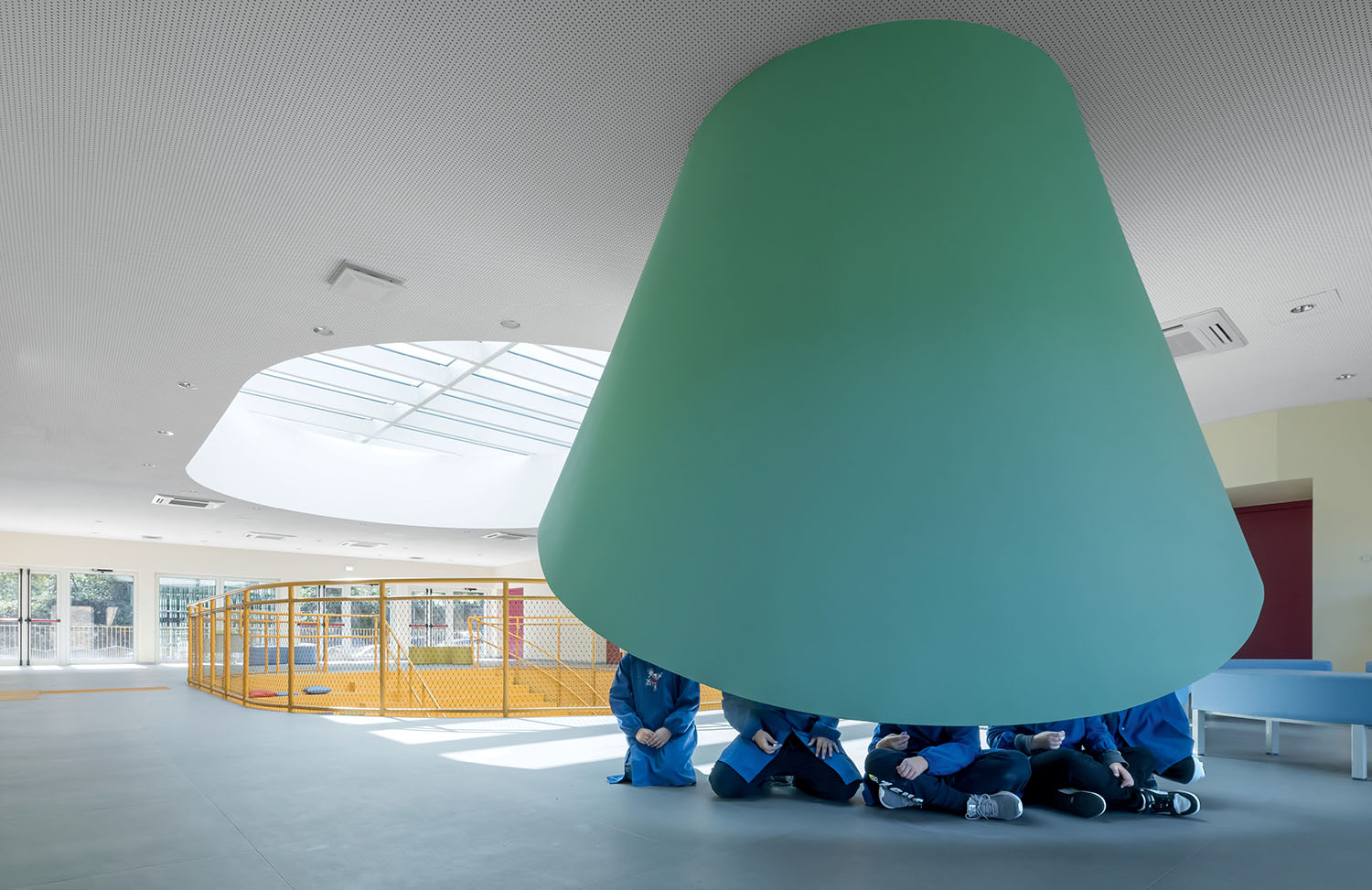
The purposeful fun continues upstairs near the skylight, where a giant green cone descends from the ceiling at a jaunty angle, its lower edge nearly touching the floor. Framing an oculus with an unimpeded view of the sky, it serves as an astronomical observatory under which students cluster, sketching planets and constellations in chalk on the black-painted interior or lying on floor cushions to simply gaze upward in wonder. Isnello’s skies are among Europe’s clearest, where the Milky Way appears startlingly detailed to the naked eye—a fact underscored by the presence in town of the GAL Hassin International Center for Astronomical Sciences. “The idea for the cone came early in the project,” Alesi remarks, noting that in it, elements of play and study, nature and technology converge, and that it also links the school to the neighboring center.
-
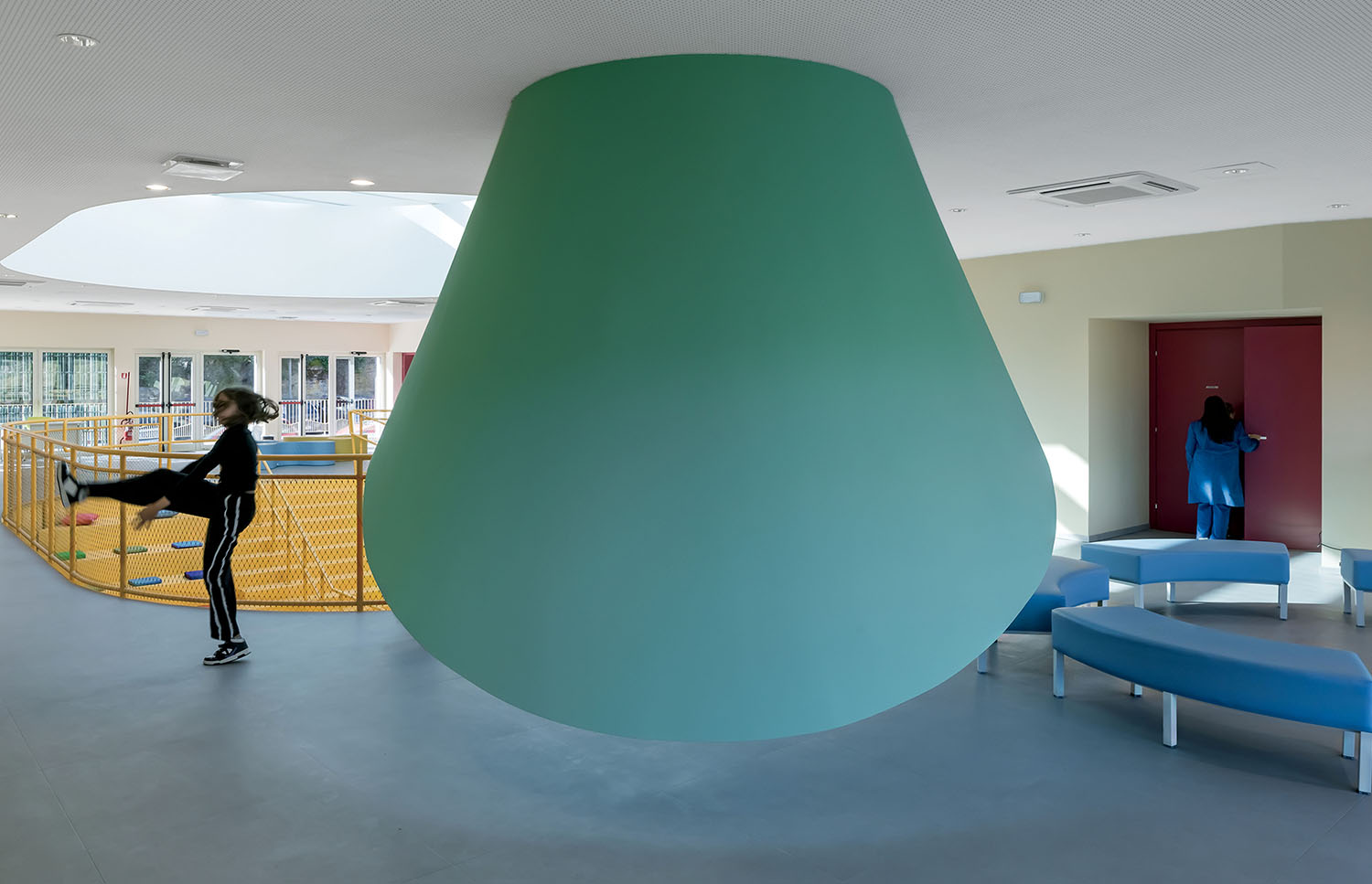
Perforated gypsum ceiling tiles help tame acoustics in the large space, where the flooring is vinyl tiling, as it is throughout. -
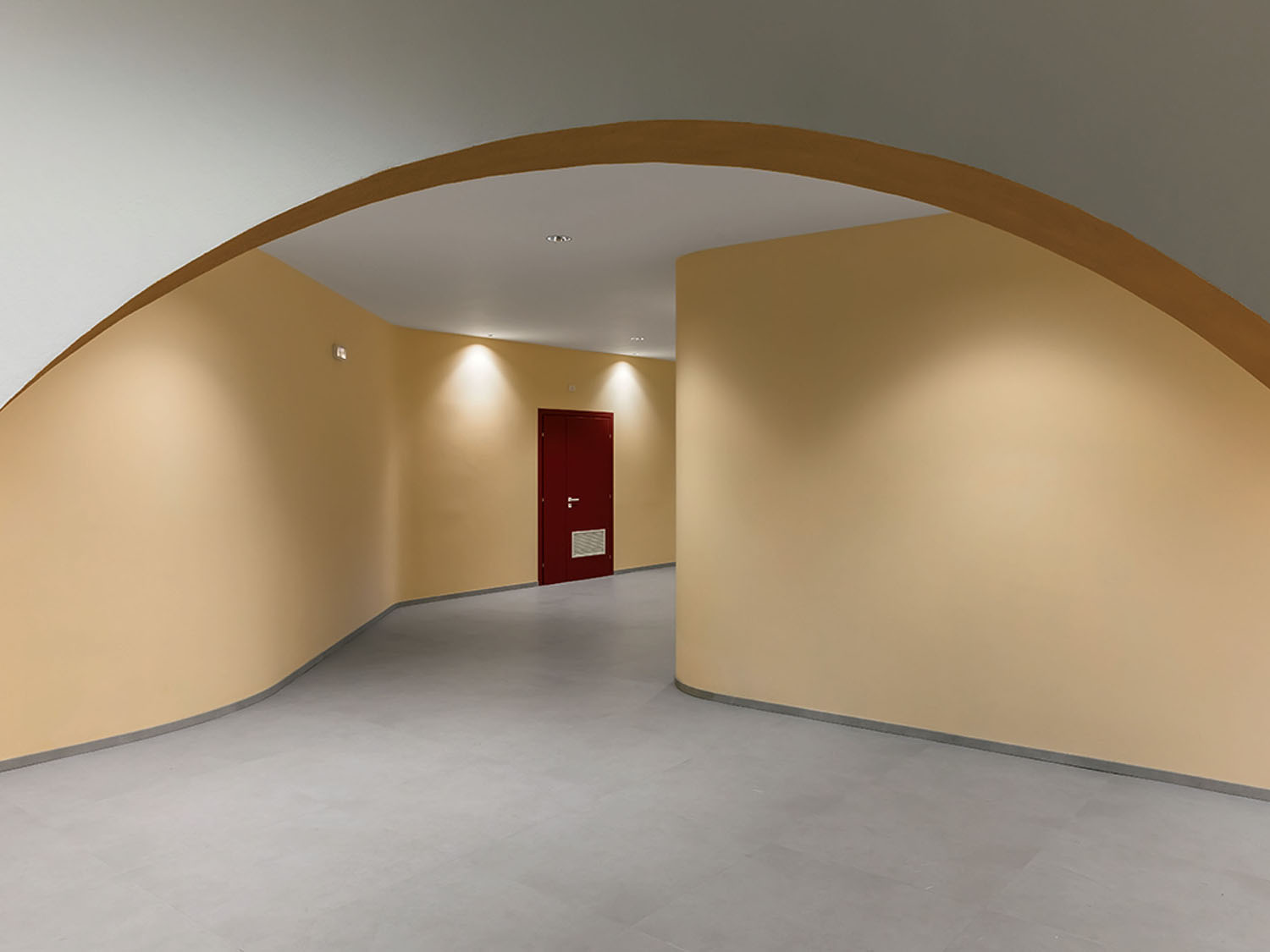
A curving corridor leads from the back of the bleachers to the ground-floor canteen. -
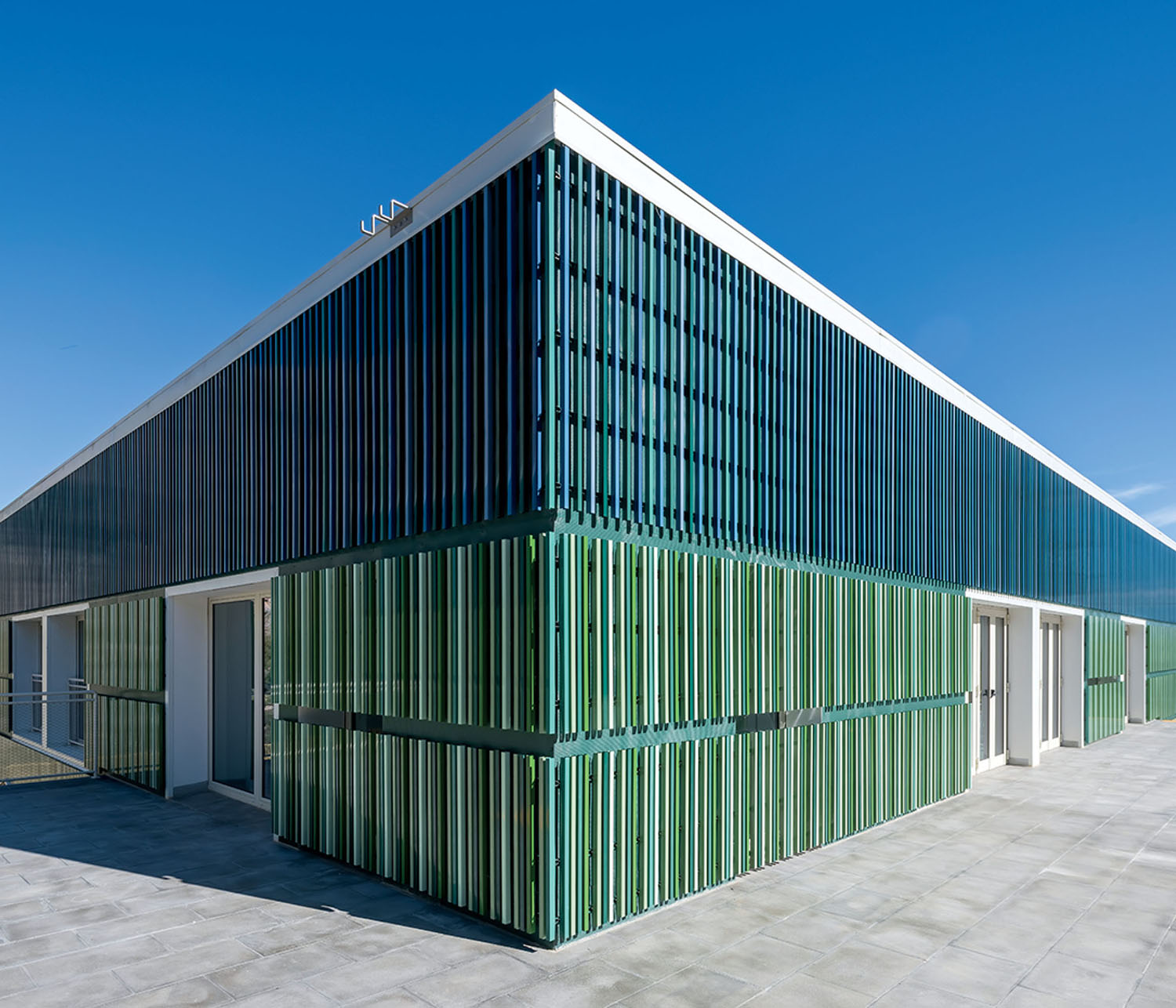
The rear of the building is partly below grade, so it appears to be a single story. -
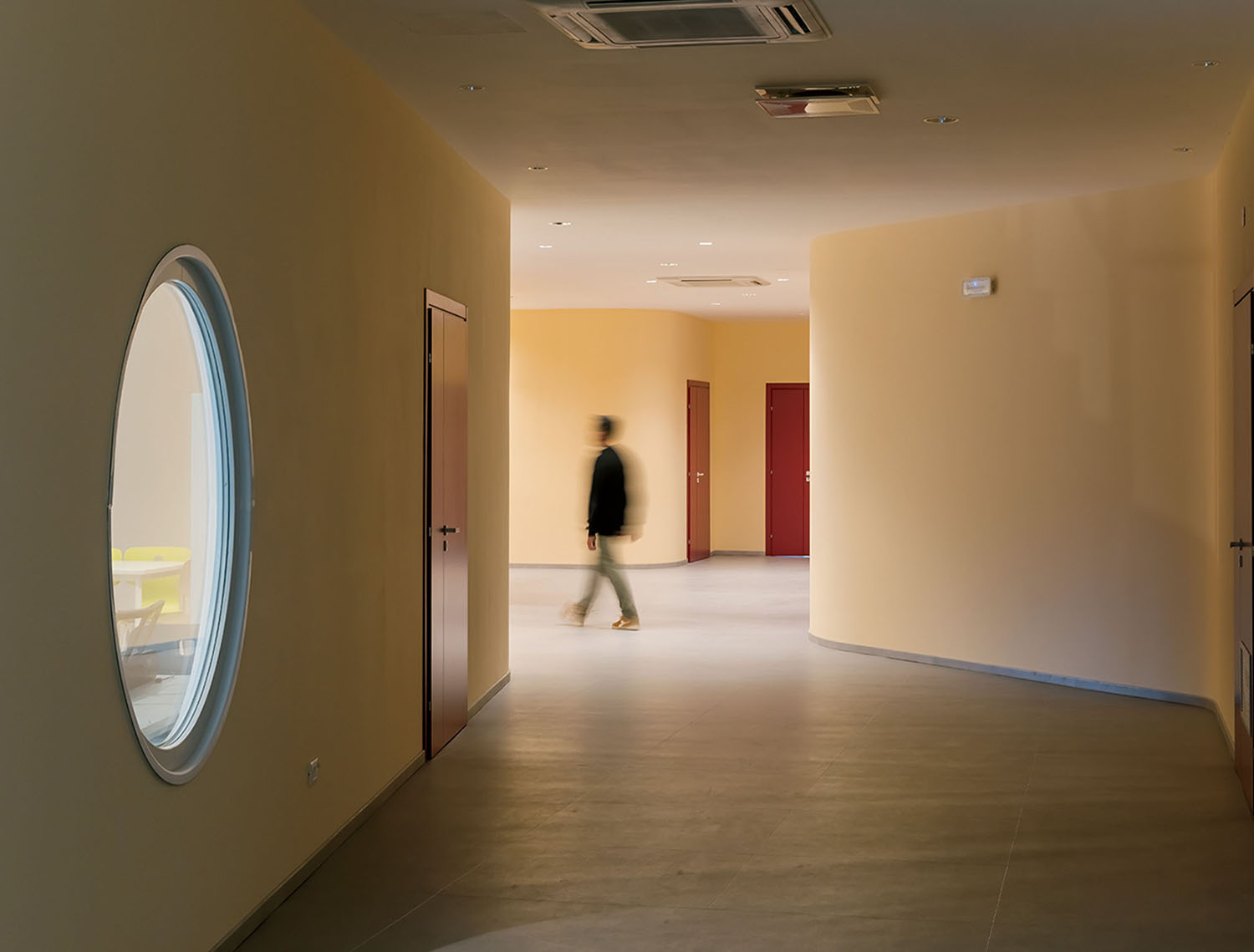
A large porthole in the music room wall helps light the corridor.
A Sustainable Path Forward
Arranged around the open core, classrooms on both floors “are lightfilled spaces designed to move beyond the traditional model of frontal teaching and to encourage encounter, movement, and shared activity,” Calì says. Furniture rooted in Montessori principles allows teachers to reconfigure layouts quickly. Large windows frame the valley, turning the landscape into a constant pedagogical presence. The art room, perched at the corner of the upper level, enjoys the widest panorama—a deliberate choice, Alesi confirms, because “it was the perfect place for children to draw the world they see.” Downstairs, the cafeteria doubles as a teaching kitchen and community space, used on weekends for gatherings and by the astronomical center for informal lectures.
The building consumes nearly zero energy, powered entirely by electric and renewable systems; it’s also the first school in Sicily to achieve LEED Gold certification. For Alesi, sustainability is inseparable from community: “A school is a place for talking and learning,” he says. “Comfort is not only temperature—it is light, acoustics, the clarity of communication.” So the building also functions as a civic center where generations meet—where older residents teach traditional crafts in afternoon workshops and children learn to cook, where townsfolk hold events and the sky itself becomes part of the curriculum. It’s a delightful irony that an institution named after the Sicilian dramatist famed for exploring the slippery nature of identity is helping give Isnello a renewed sense of self.
-
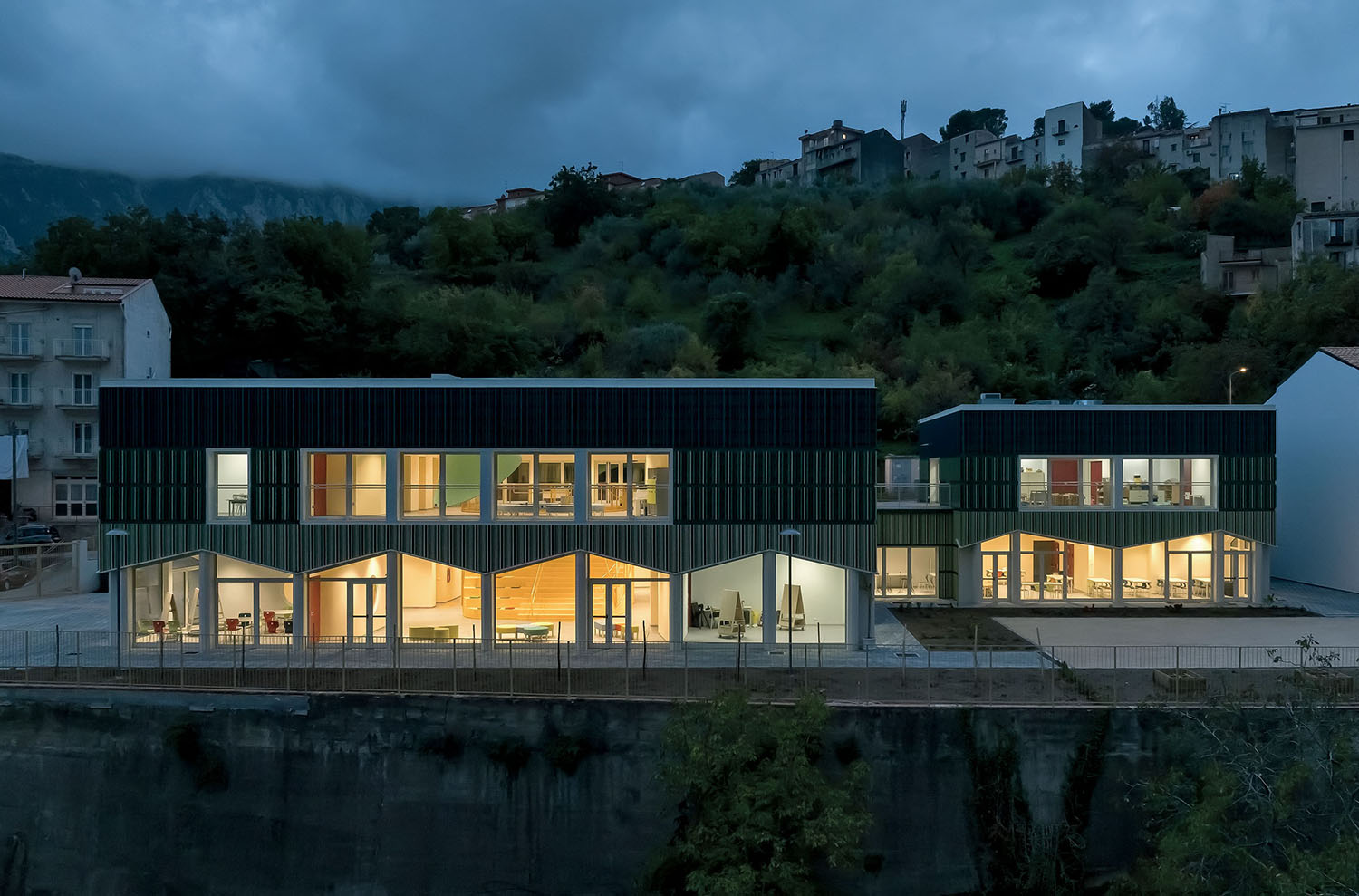
Comprising a pair of linked volumes, the two-story, 18,300-square-foot school also serves as an after-work community center, so in the evening it is often lit like a lantern at the edge of town. -
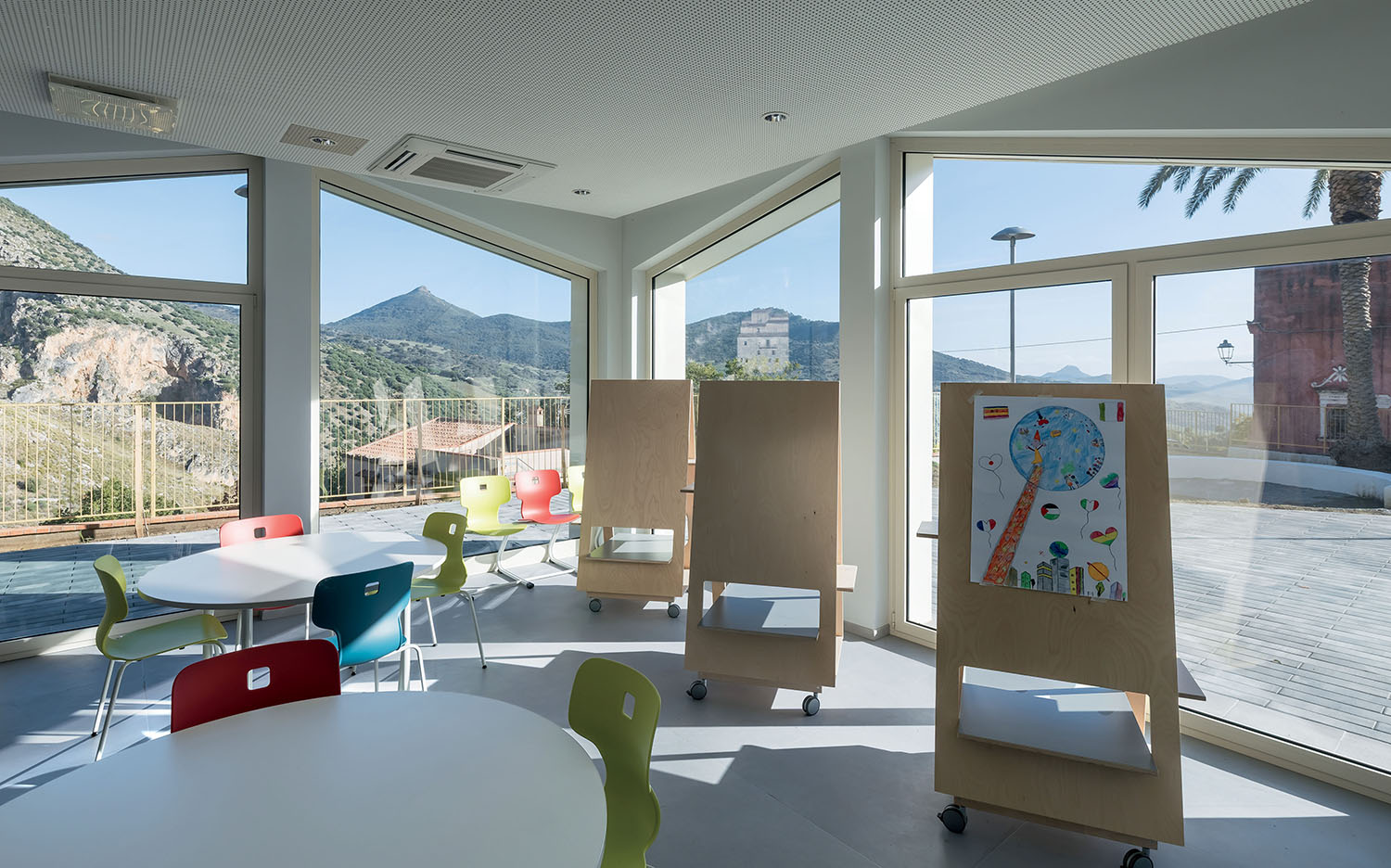
Overlooking the surrounding Madonie Mountains, the art room is outfitted with Montessori-inspired, lightweight furniture for maximum flexibility. -
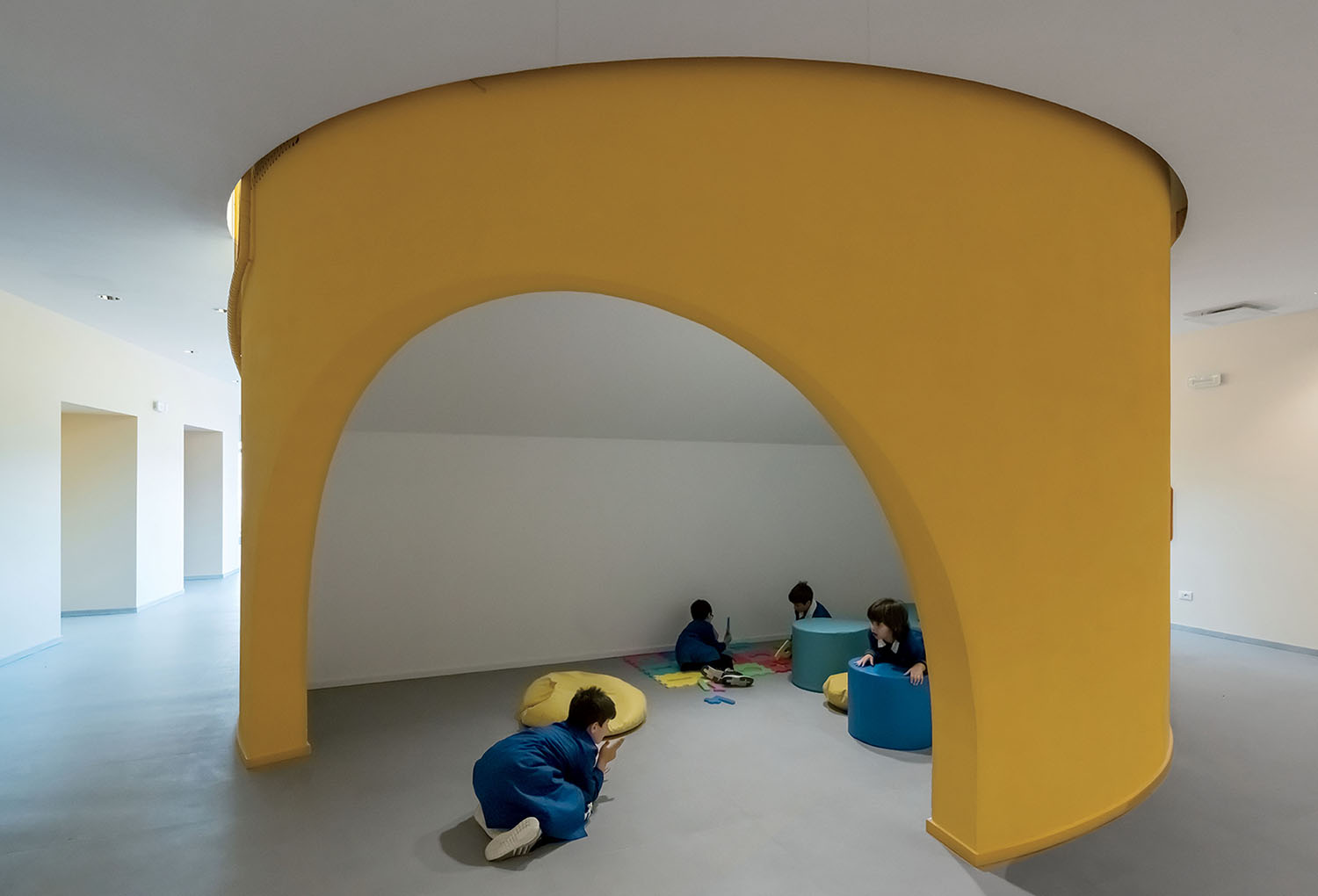
At the children’s specific request for a secret, private space of their own, the grottolike Cave was carved out under the bleachers. -

Seen at night through the skylight, the steps glow like an incandescent egg yolk in the darkness.
PROJECT TEAM
FILIPPO LUPO: ARCHITECT OF RECORD. SUMS ARCHITECTS: LEED CONSULTANT. TMS ENGINEERING: STRUCTURAL ENGINEER, MEP.
PROJECT TEAM
FILIPPO LUPO: ARCHITECT OF RECORD. SUMS ARCHITECTS: LEED CONSULTANT. TMS ENGINEERING: STRUCTURAL ENGINEER, MEP.
- No tags selected
read more
Projects
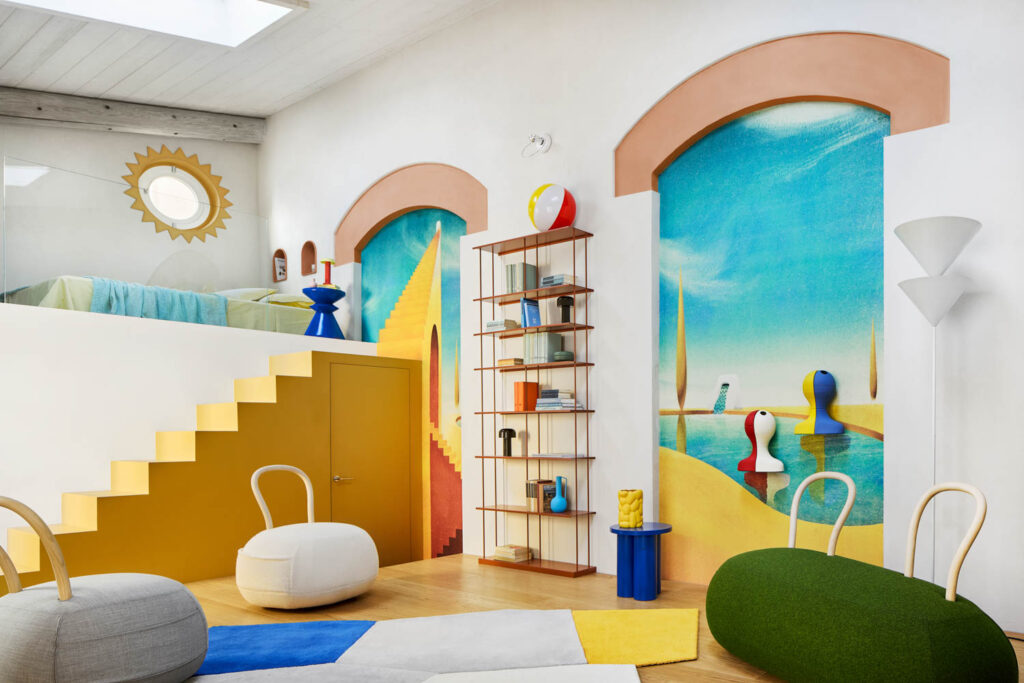
A Milan Storage Unit Transforms Into A Meditative Home
Giovanni Muzio’s arching 1930s La Triennale di Milano inspires an artful 570-square-foot Milanese apartment designed for travelers exploring the city.
Projects
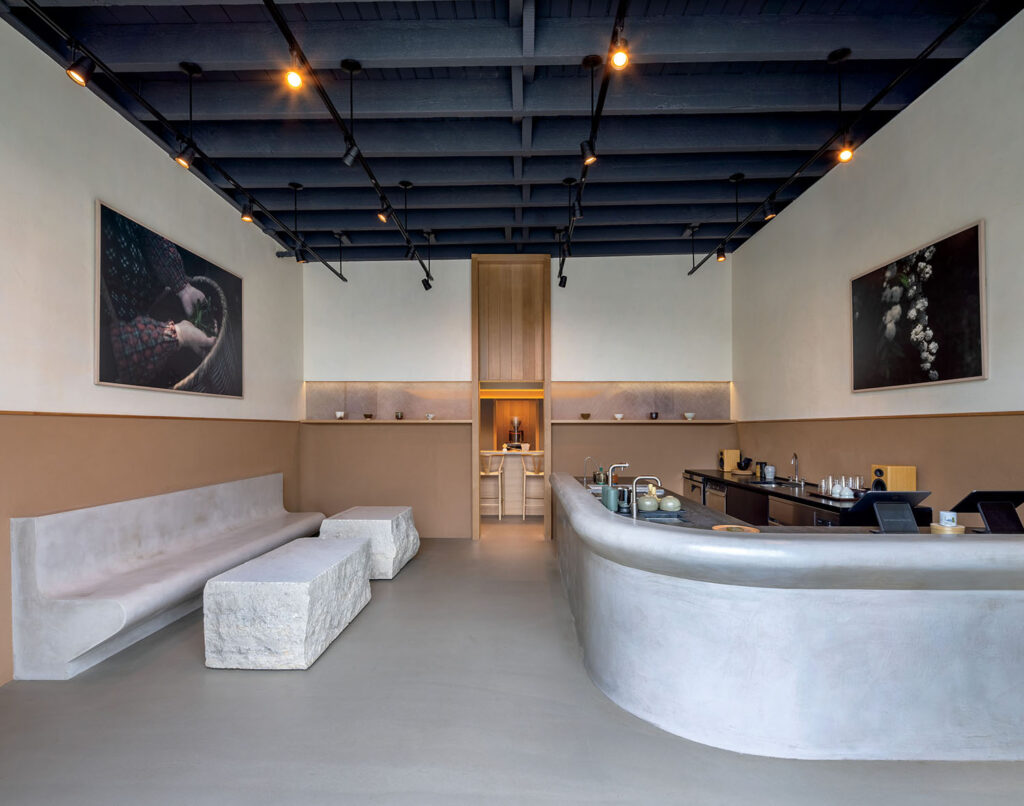
This Brooklyn Café Is Dedicated To The Art Of Matcha
Michael Tower Architecture creates a tactile, minimalist matcha café for Japanese tea brand Kettl in Brooklyn, balancing warm materials with clean-lined Japanese design.
Projects
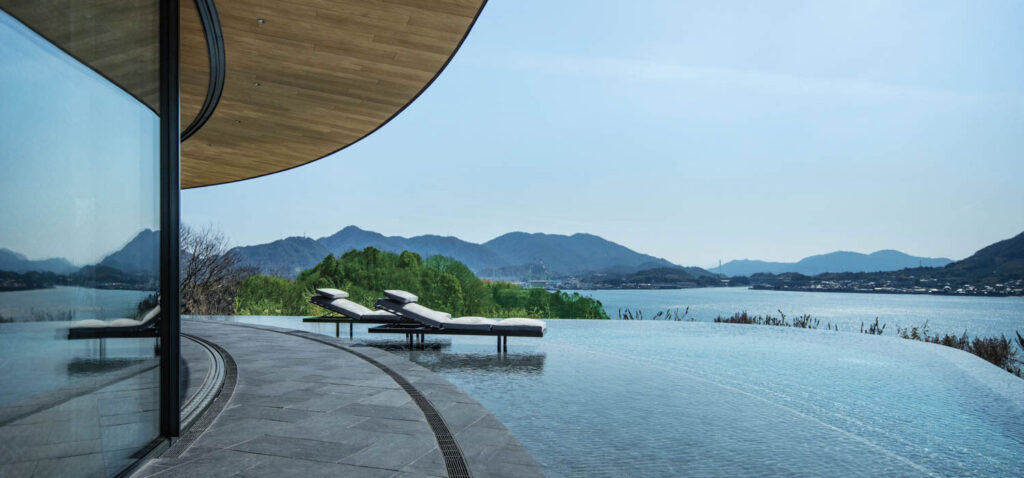
BIG Designs A Serene Villa Complex On Japan’s Sagishima Island
The latest architecturally unique timeshare property by Not a Hotel is a serene and sublime villa complex on Sagishima Island by BIG-Bjarke Ingels Group.