
Kelly Wearstler Designs Best In Class Steakhouse For Alpine Resort
The fashionable French winter resort enclave of Courchevel has long balanced Alpine adventure with unapologetic luxury—its wealth of impeccably groomed pistes rivaled only by the select group of hotels awarded the country’s rare palace designation. Among them is L’Apogée, a 53‑key ski-in/ski-out property opened in 2013 with interiors by Joseph Dirand Architecture and Interior Design Hall of Fame member India Mahdavi. When global dining brand Beefbar recently partnered with the Oetker Collection hotel to relaunch its restaurant, Los Angeles-based designer Kelly Wearstler received what she describes as an “out‑of‑the‑blue” phone call to reimagine the 3,750‑square‑foot space—marking her European hospitality debut with a client team she deems “best in class.”
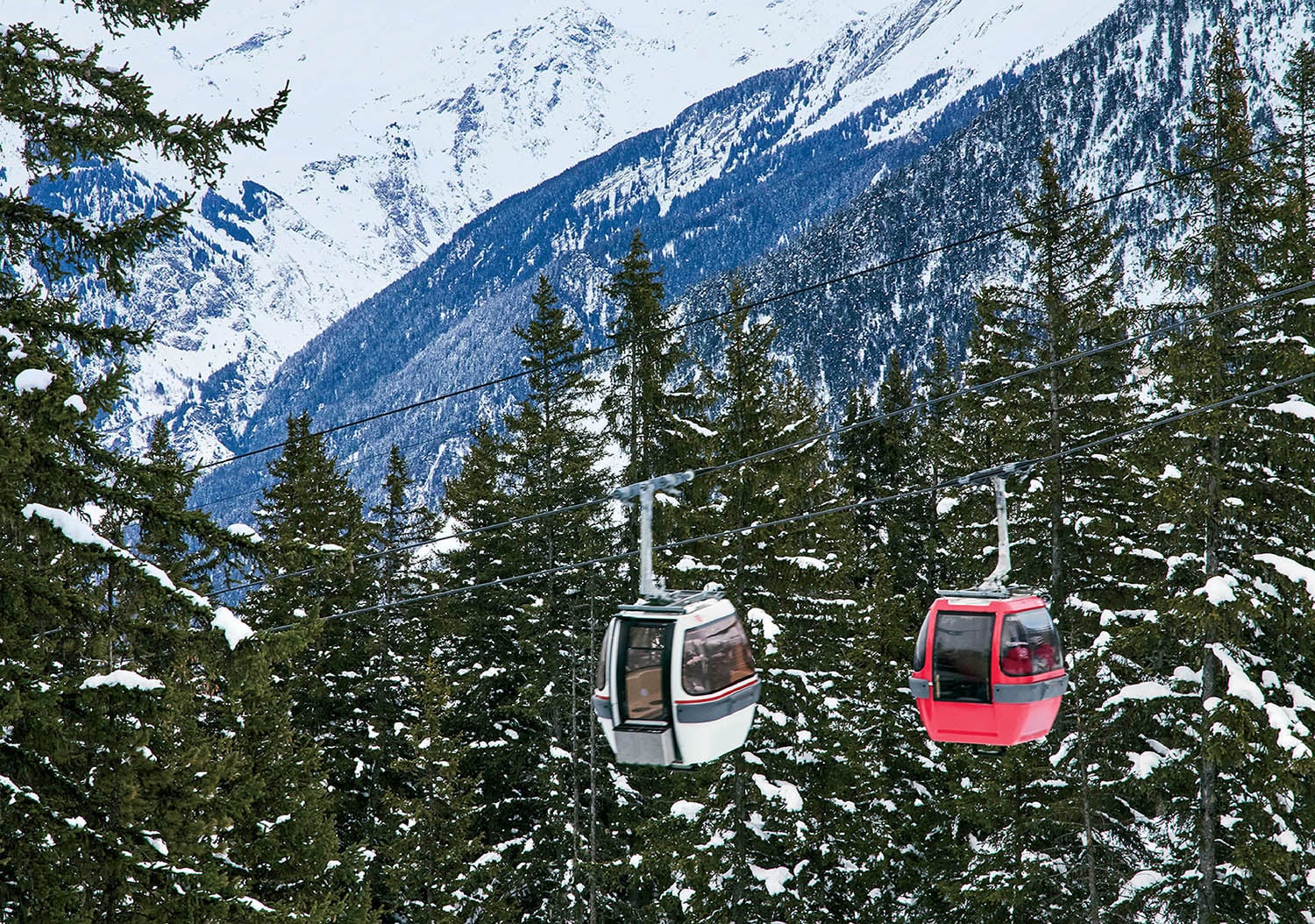
“It was a gut renovation—nothing left,” the CEO of her eponymous firm continues. For what’s now called Beefbar Courchevel, Wearstler’s purview spanned everything from art curation to consulting on staff uniforms and operational details, familiar territory given her extensive hospitality portfolio for brands such as Proper, Viceroy, and Four Seasons in the U.S., Riviera Maya, and Anguilla, not to mention her own furniture, tabletop, and accessories collections and collaborations with Ann Sacks, Farrow & Ball, Georg Jensen, and, just announced, Edelweiss Pianos. Although constrained by a tight year‑long deadline, Wearstler began with research: “We toured the town—hotels, restaurants, après‑ski spots—to understand the Courchevel vibe,” she recalls. She also immersed herself in the surrounding landscape, its sculpted peaks, dense spruce and fir forests, and crisp mountain light. Operational realities added another layer of complexity. “The hotel is only open four months of the year,” she notes. “So I had a delicate balance of creating something warm and cozy but definitely luxurious.”
Designing Beefbar, An Upscale Steakhouse
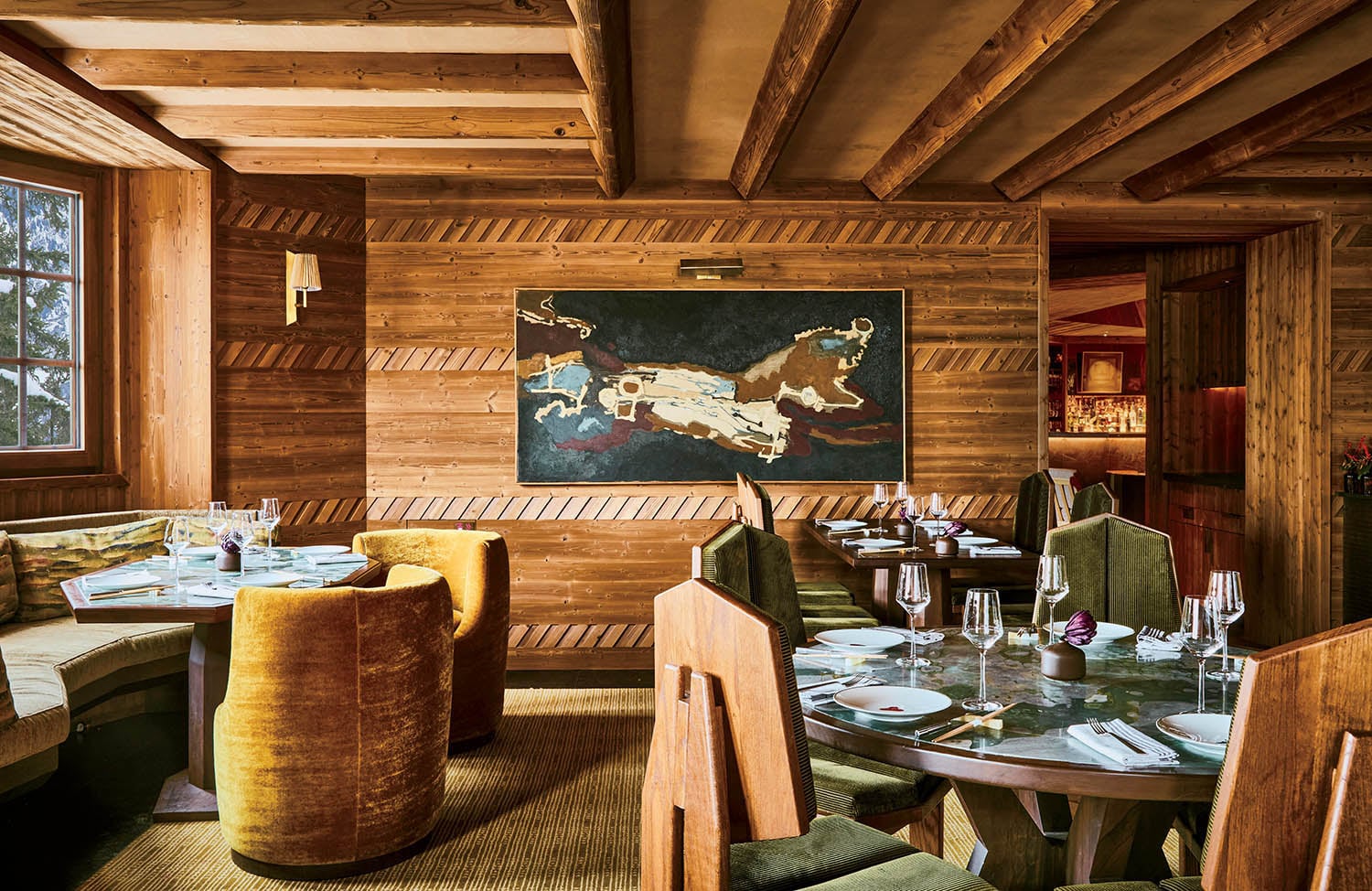
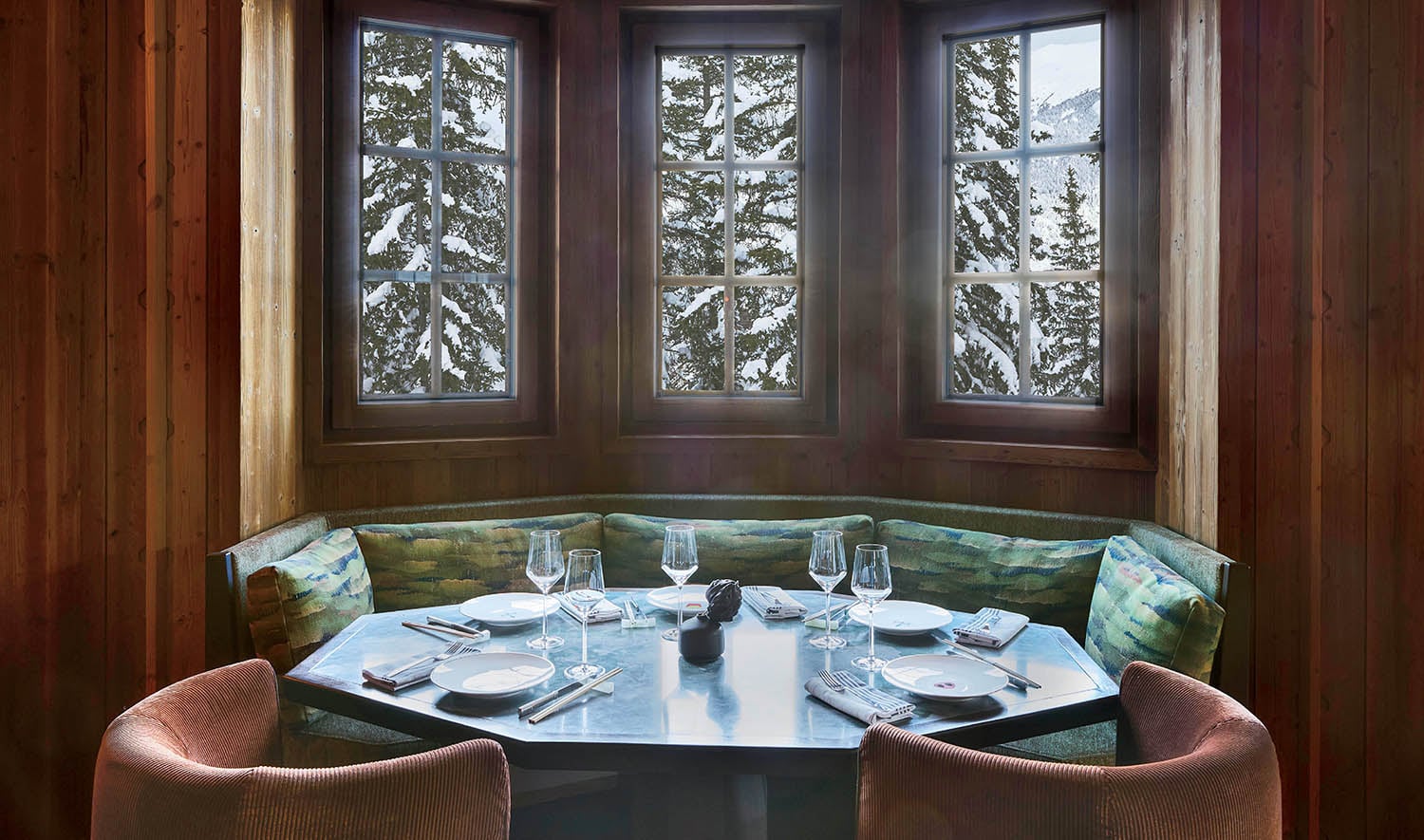
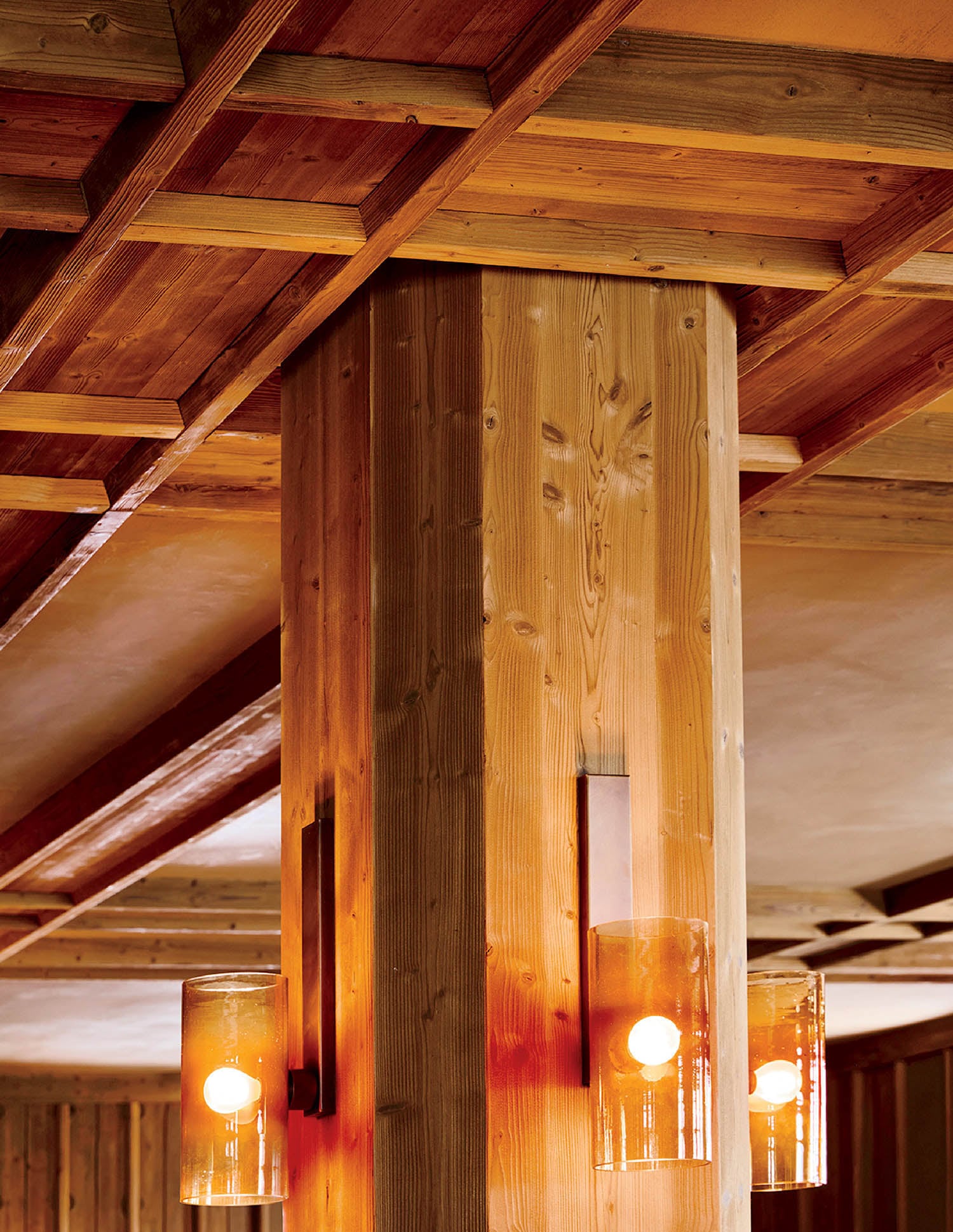
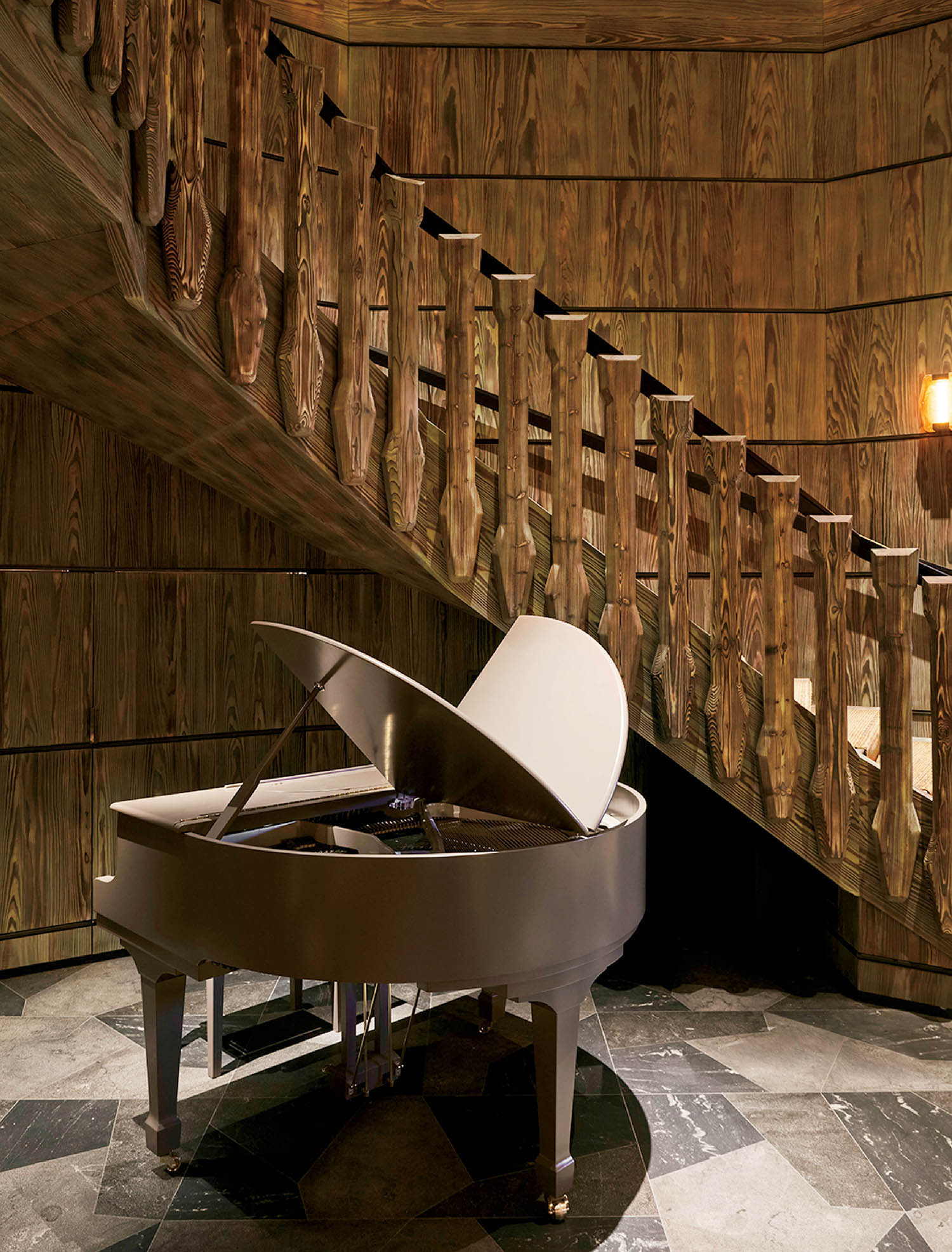
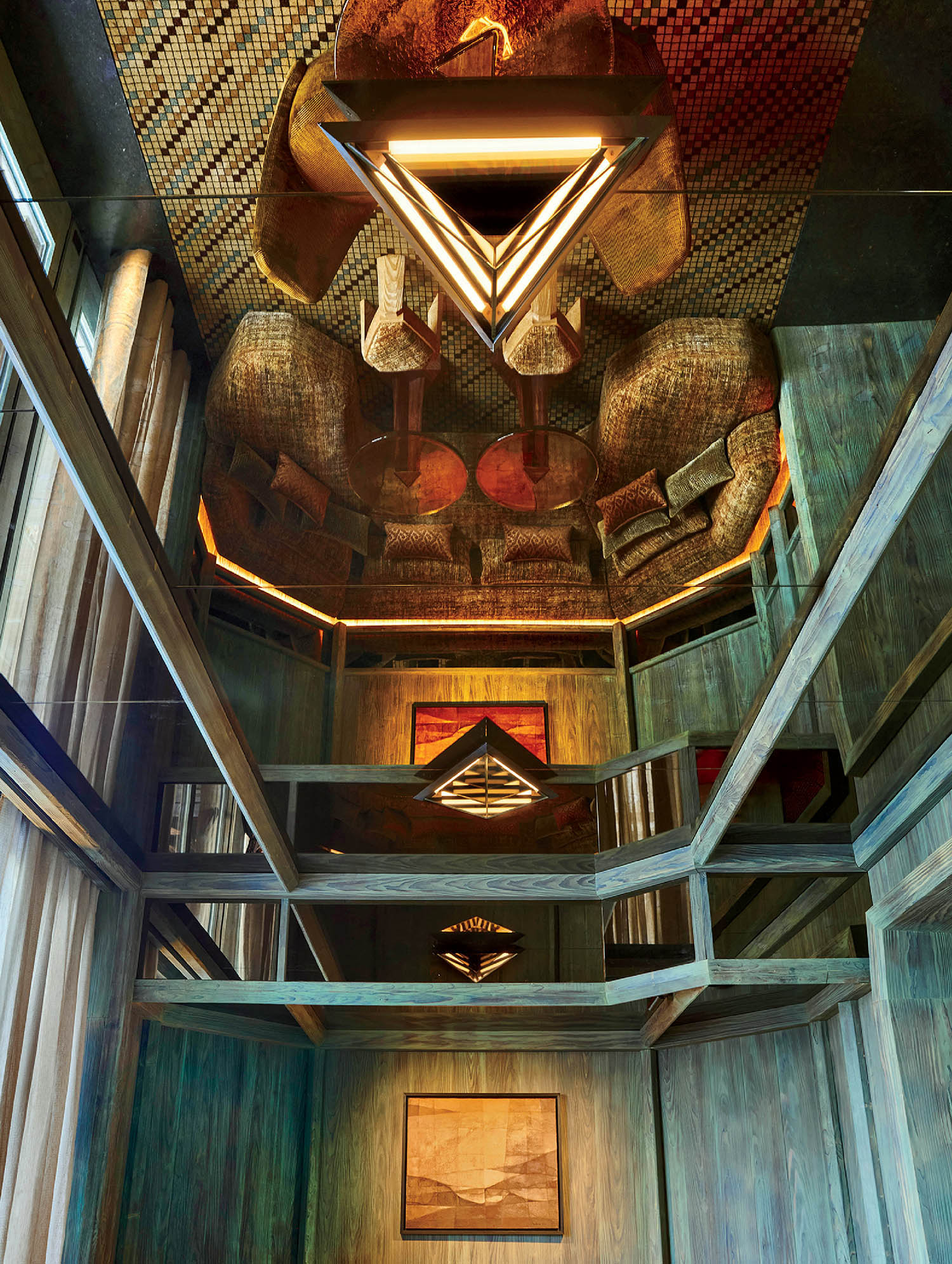
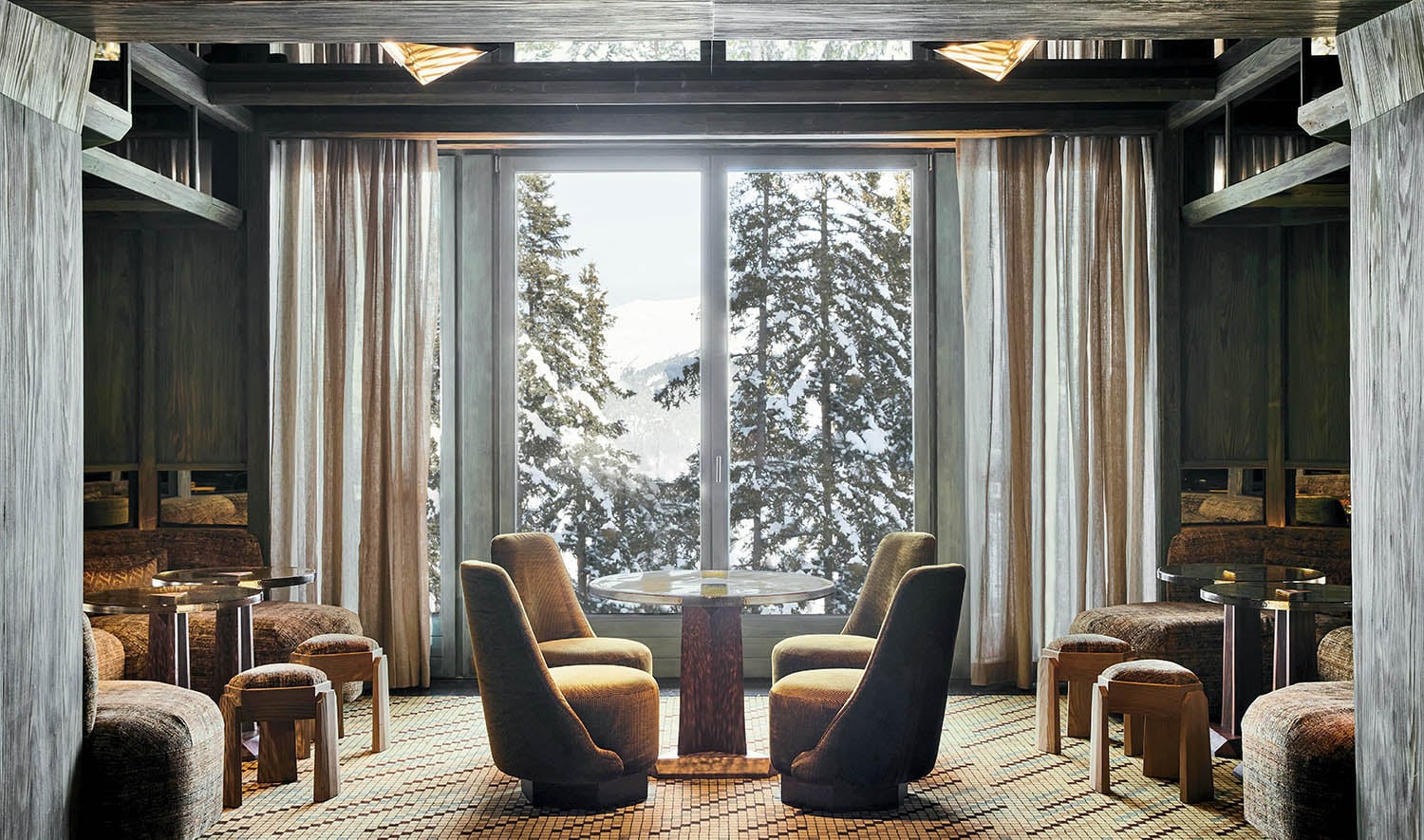
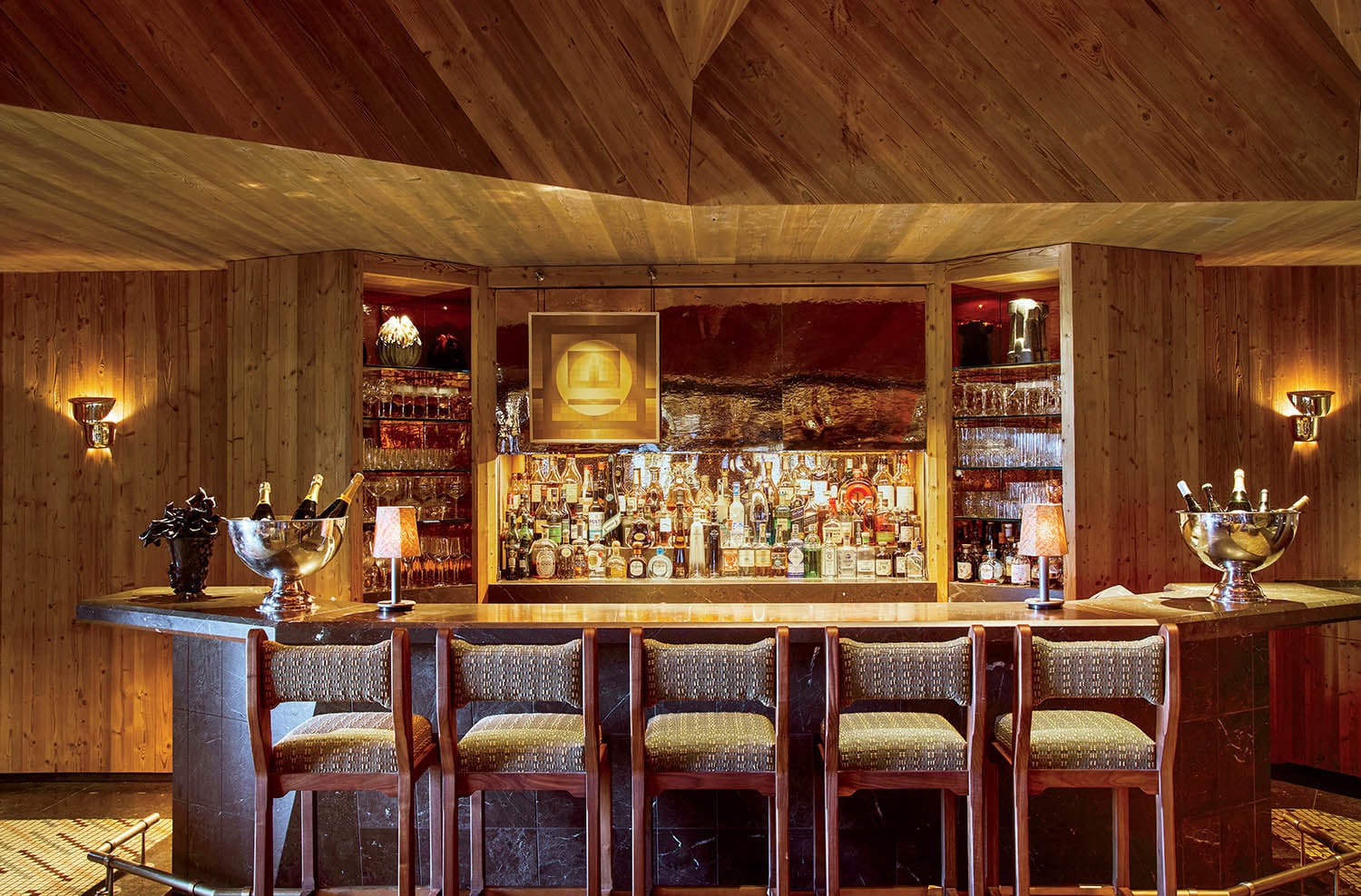
“Alpine brutalism” became Wearstler’s thematic lodestar for both construction and decor. At first glance the term reads as an oxymoron, but the designer approached the movement with a subtlety that sidestepped the blocky concrete typically associated with it. Instead, she translates its angularity into timber—exposed beams and paneling that wraps nearly every surface, ceiling included—and into the interlocking configuration of spaces. The roughly T-shape plan unfolds from a double-height octagonal entry anchored by a baby grand piano and approached from above via a stairway whose gutsy balustrade nods to the overarching theme. From this point, the sequence flows through the central bar and on to the elegant salon, its mirrored ceiling and verde‑tone walls setting a soigné feel. Two dining rooms—dubbed East and West—flank the enfilade. The five spaces are distinct in character, yet all are unified by expansive glazing that ties the interior to the Alpine landscape. The result is unmistakably Wearstler: bold, sculptural, and attuned to place.
“I’m known as a free-spirited chameleon,” she acknowledges, “inspired differently by every project, adapting to the client vision, the architecture, the history, and the program for each.” Yet certain threads run through her work, whether residence, hotel, or shop. She is undeniably daring, following no one’s footsteps but her own. Her love of big gestures, strong color, and unexpected juxtapositions creates a constant kaleidoscope of visual discovery. Minimalism is rare—a one-note solution rarer still in Wearstler’s world. Her lavish, layered style has even earned pop-culture recognition: She was once the answer to a clue on the game show Jeopardy!
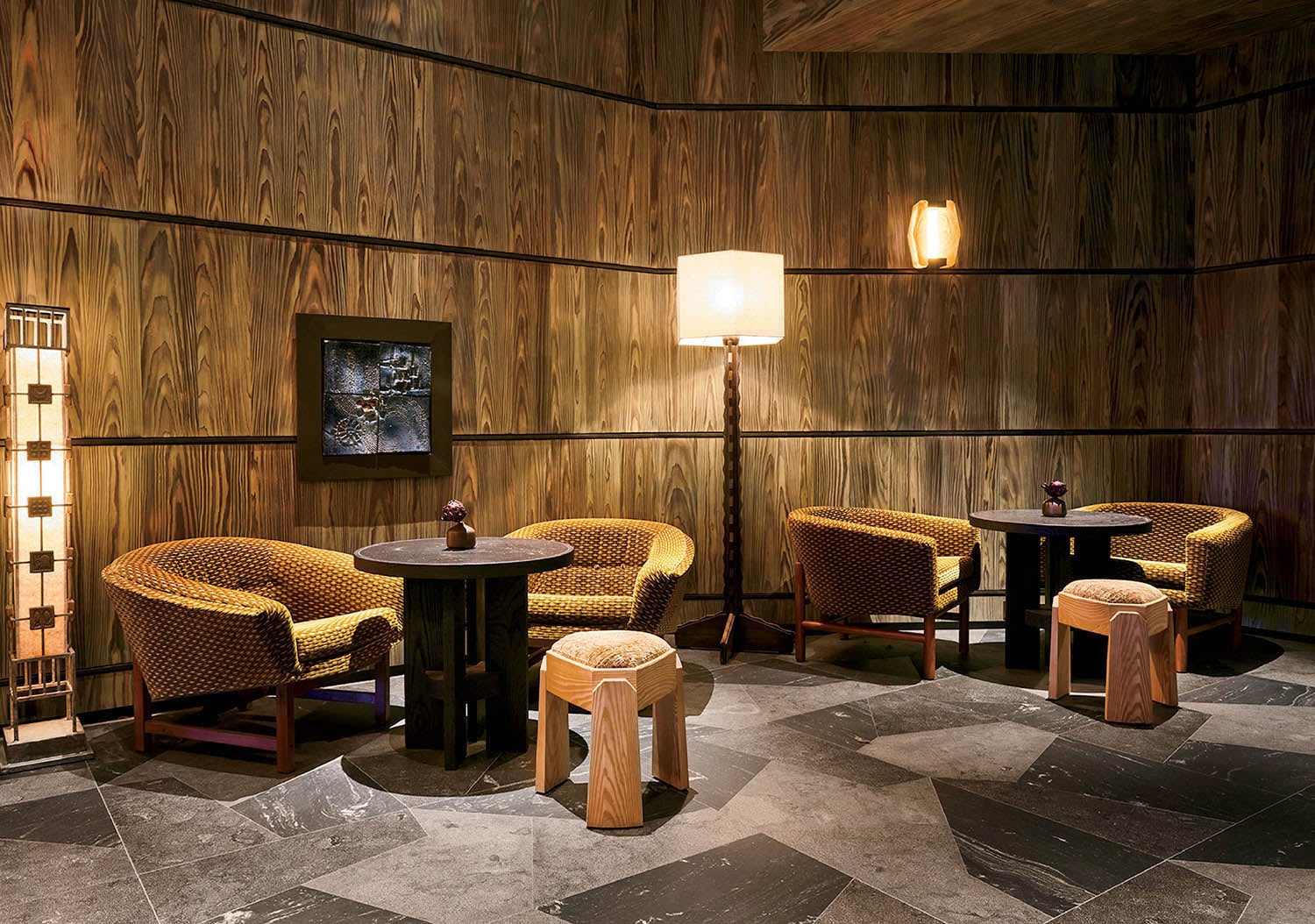
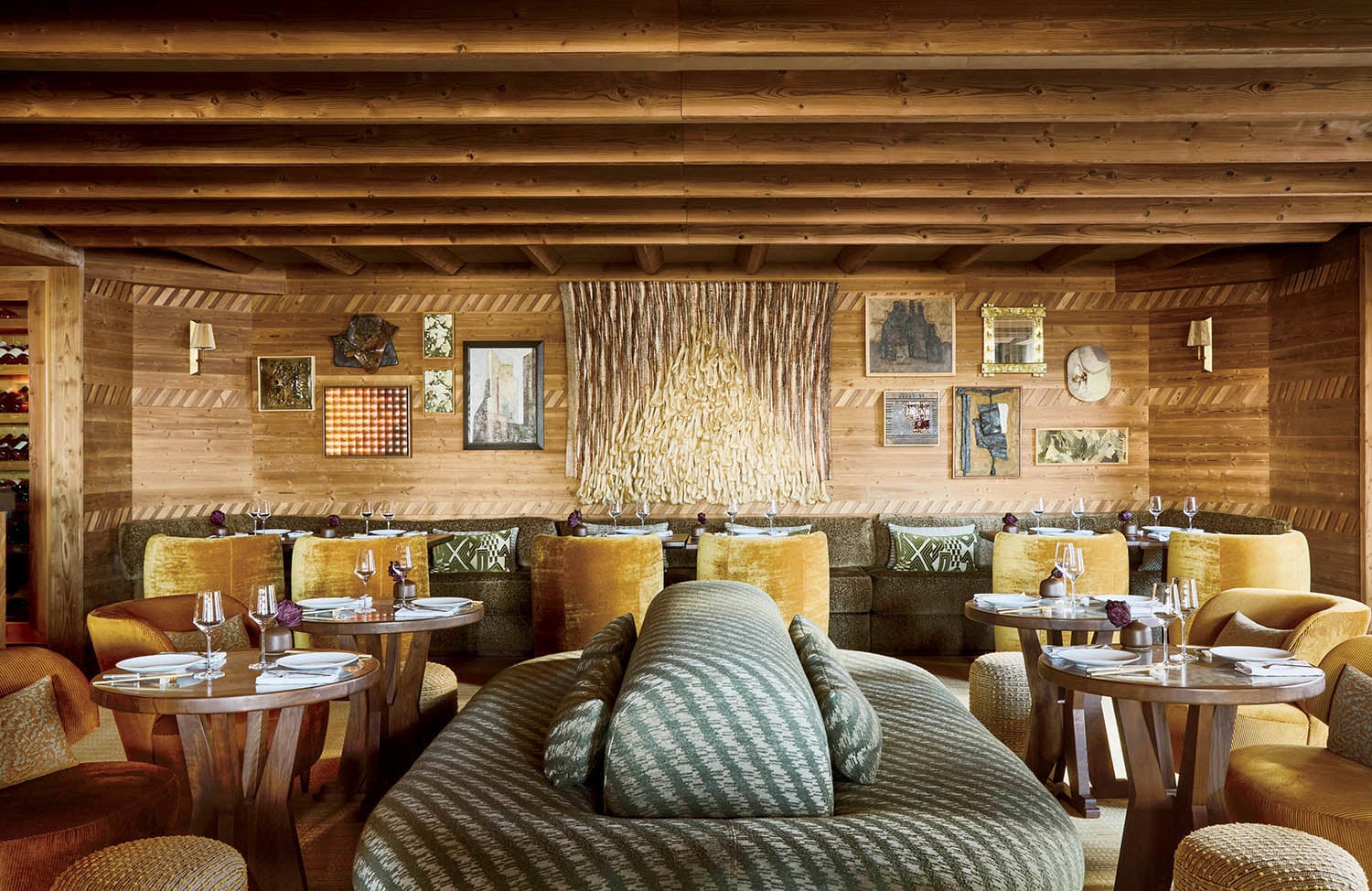
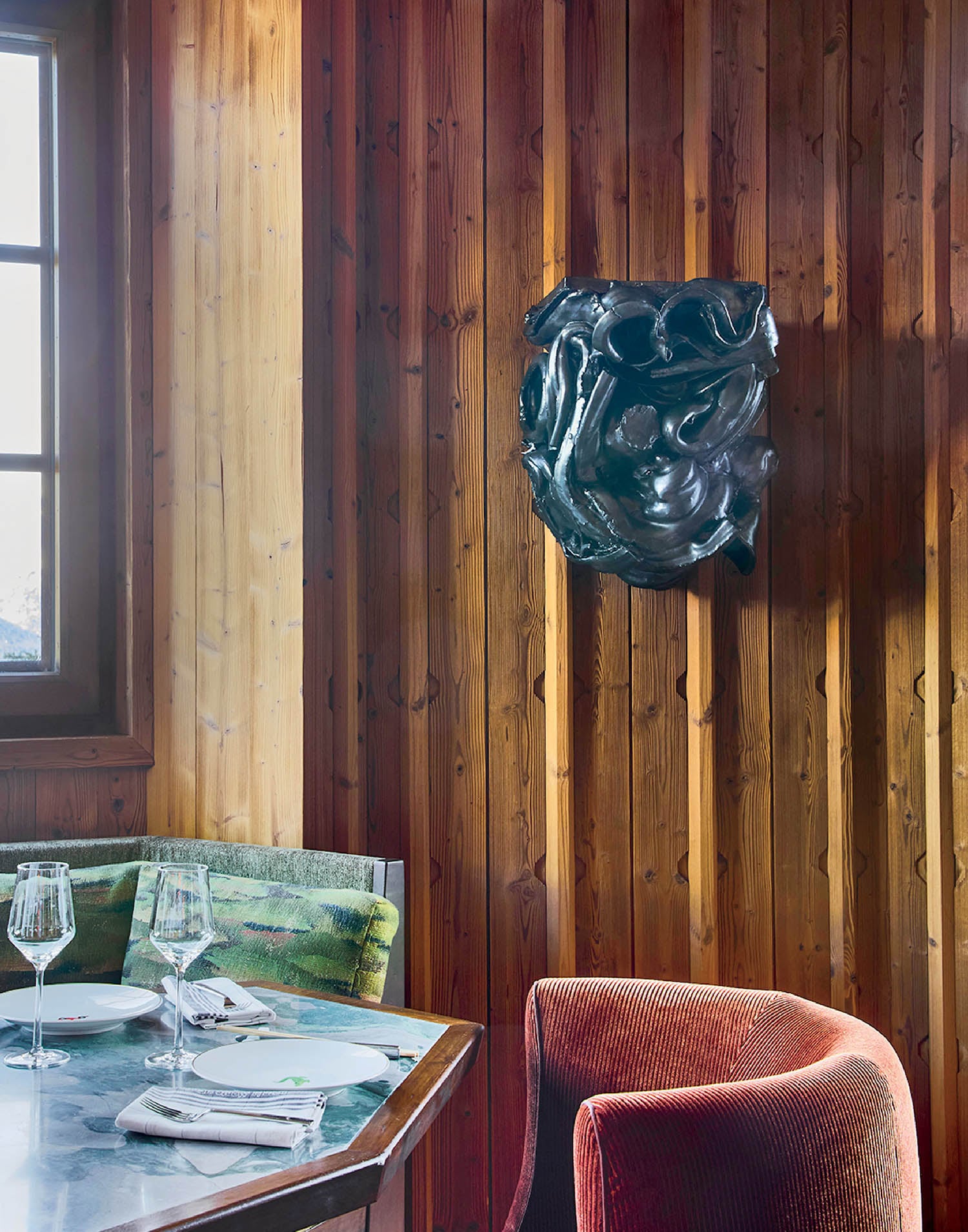
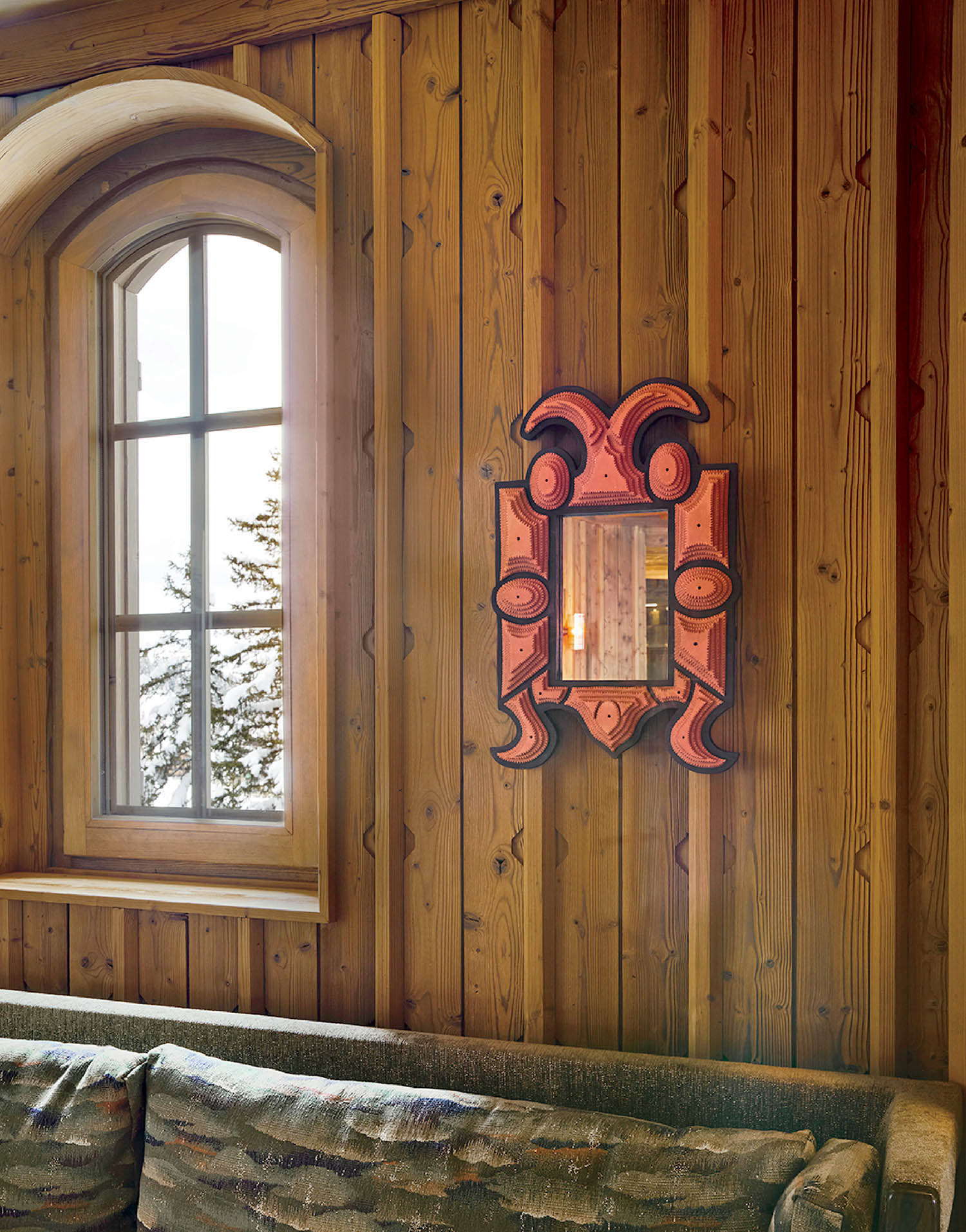
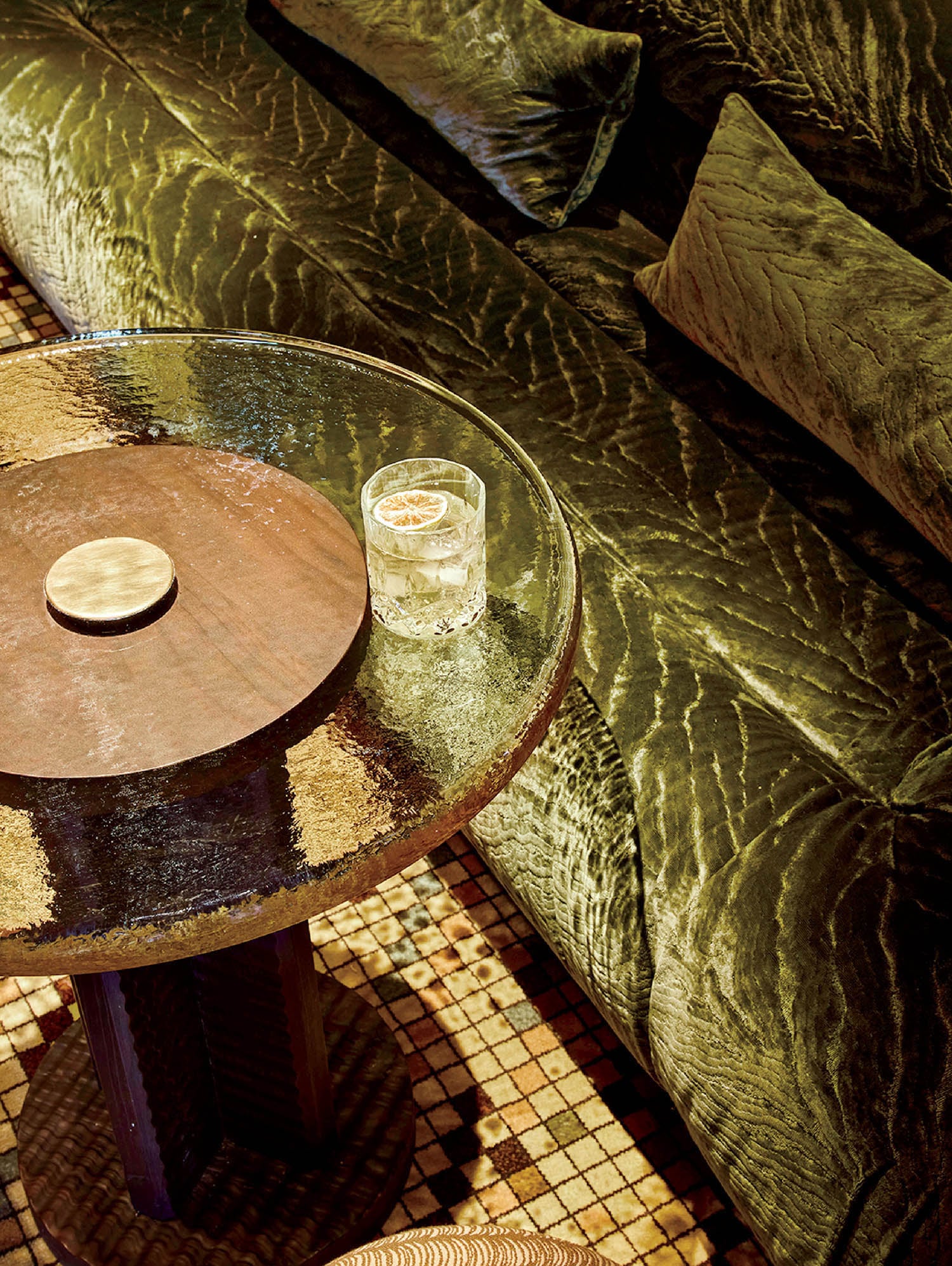
That dense layering defines L’Apogée’s interior landscape, beginning with the inviting envelope of various local timbers, the wood in each space given its own distinctive finish. Granite and other stones deepen the composition, while Wearstler’s signature lively hues manifest in a palette of verdant shades tempered by charcoal, burnished ochre, and garnet. Characterful furnishings, still another hallmark, range from vintage to contemporary. Older pieces include a 1950’s cocktail table by Dutch furniture designer and mosaic artist Paul Kingma in the bar; the neighboring side table, a textured ceramic drum, is a new commission from the Portuguese studio Project 213A. Sourced through market-combing across Europe and long-standing dealer relationships, the striking array is supplemented, naturally, by pieces of Wearstler’s own design. Prime examples include the double-sided sofa at the center of the West dining room; Italian cast-glass tables in the bar and salon; and custom banquettes and rugs throughout.
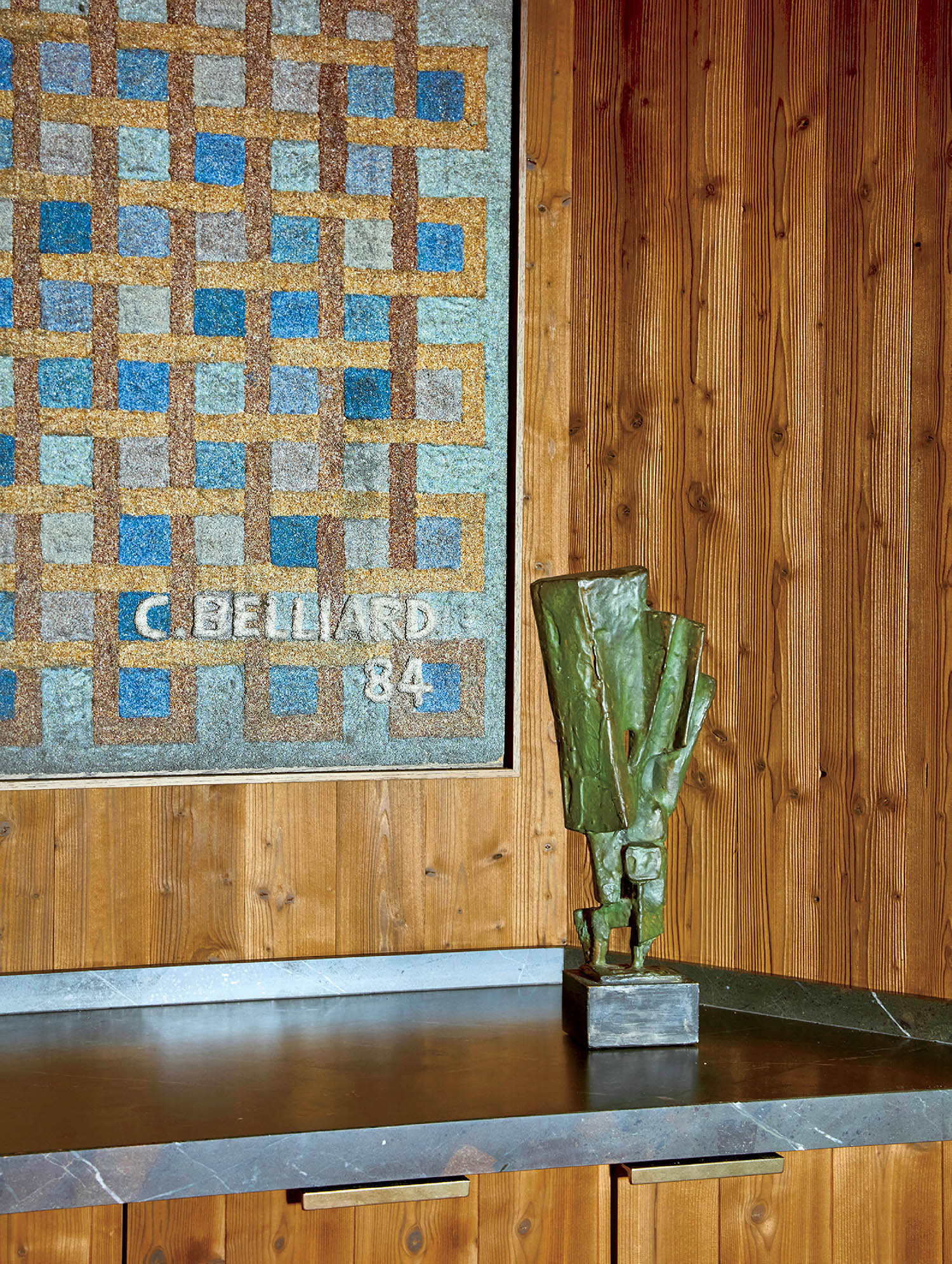
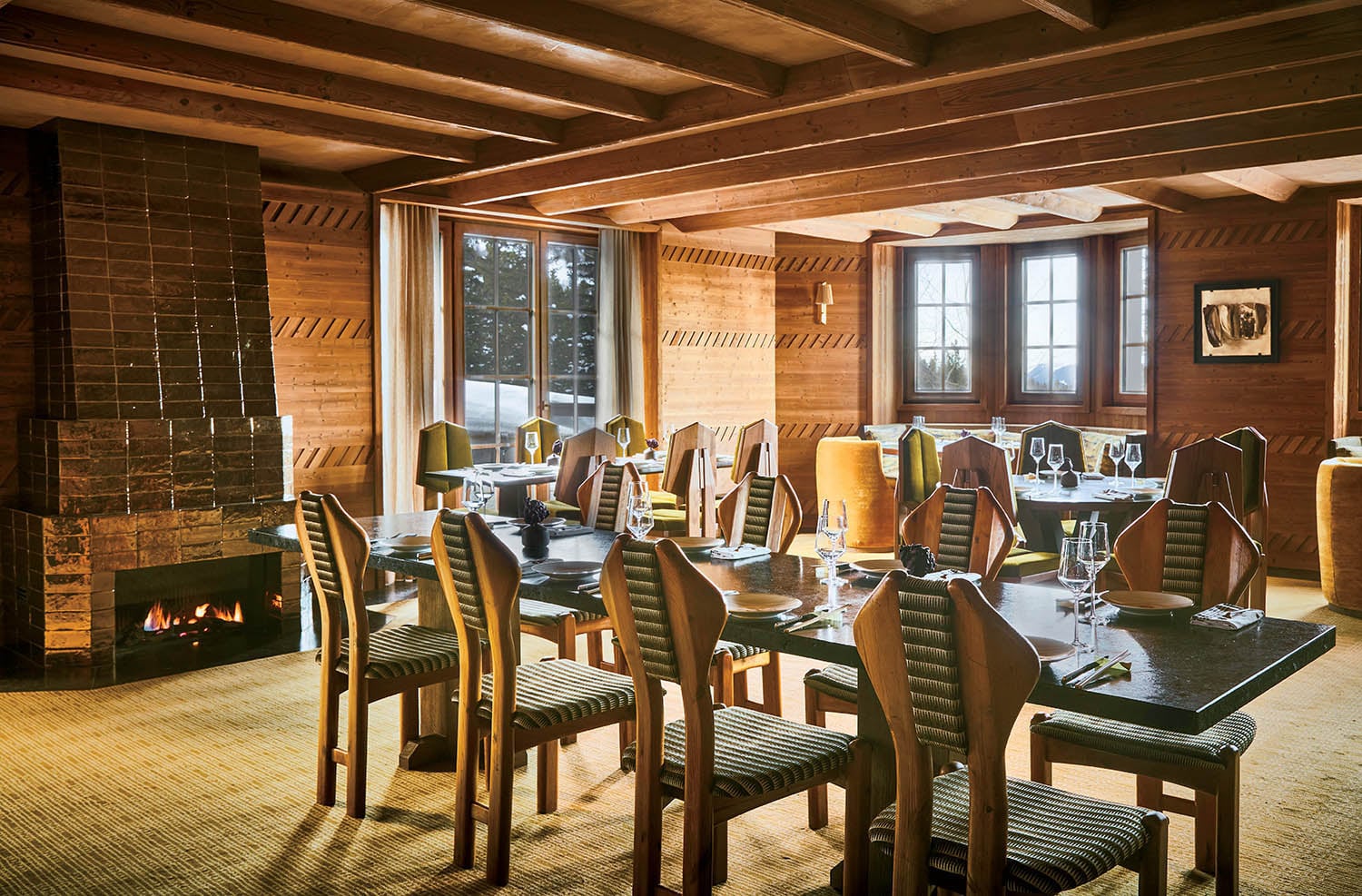
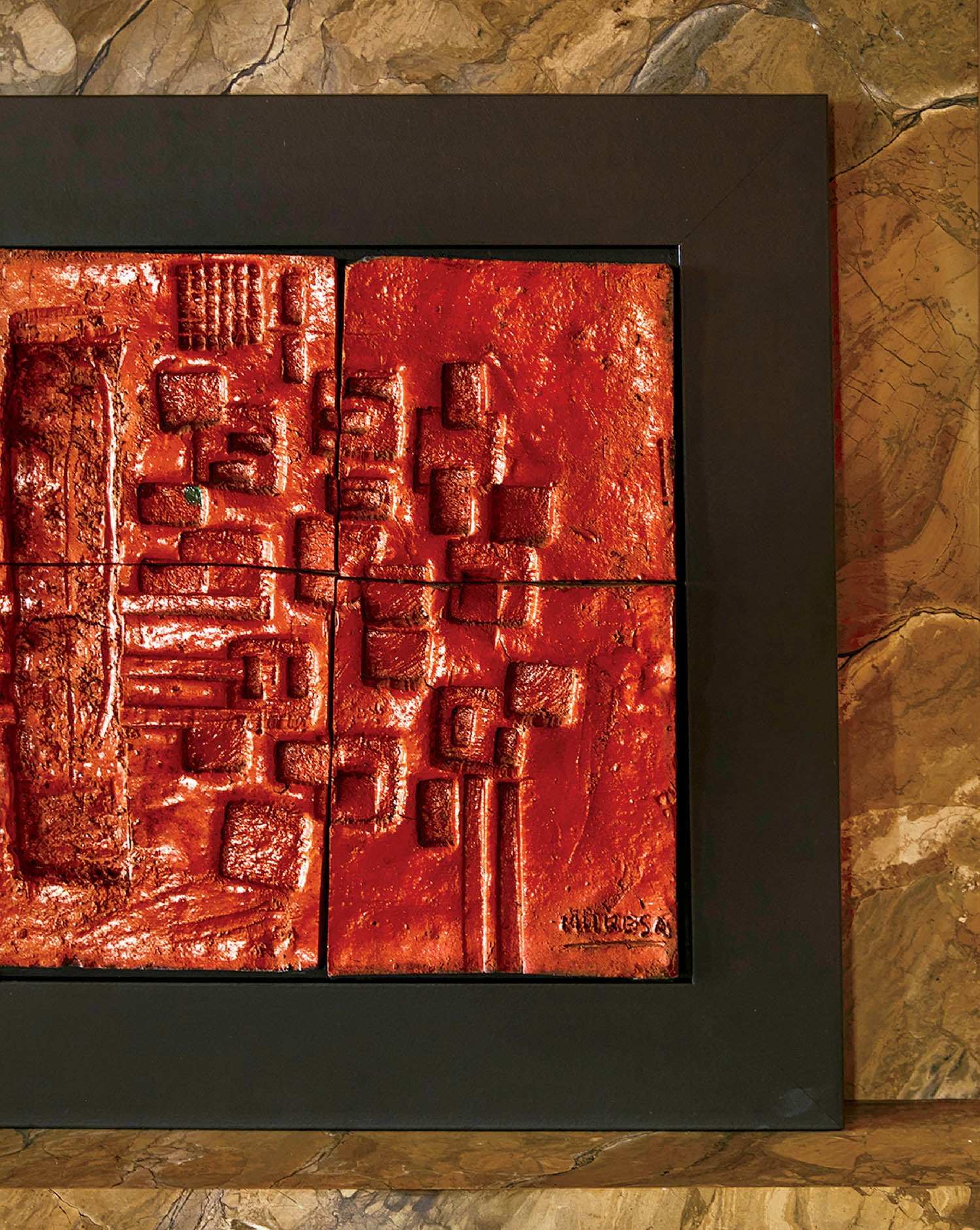
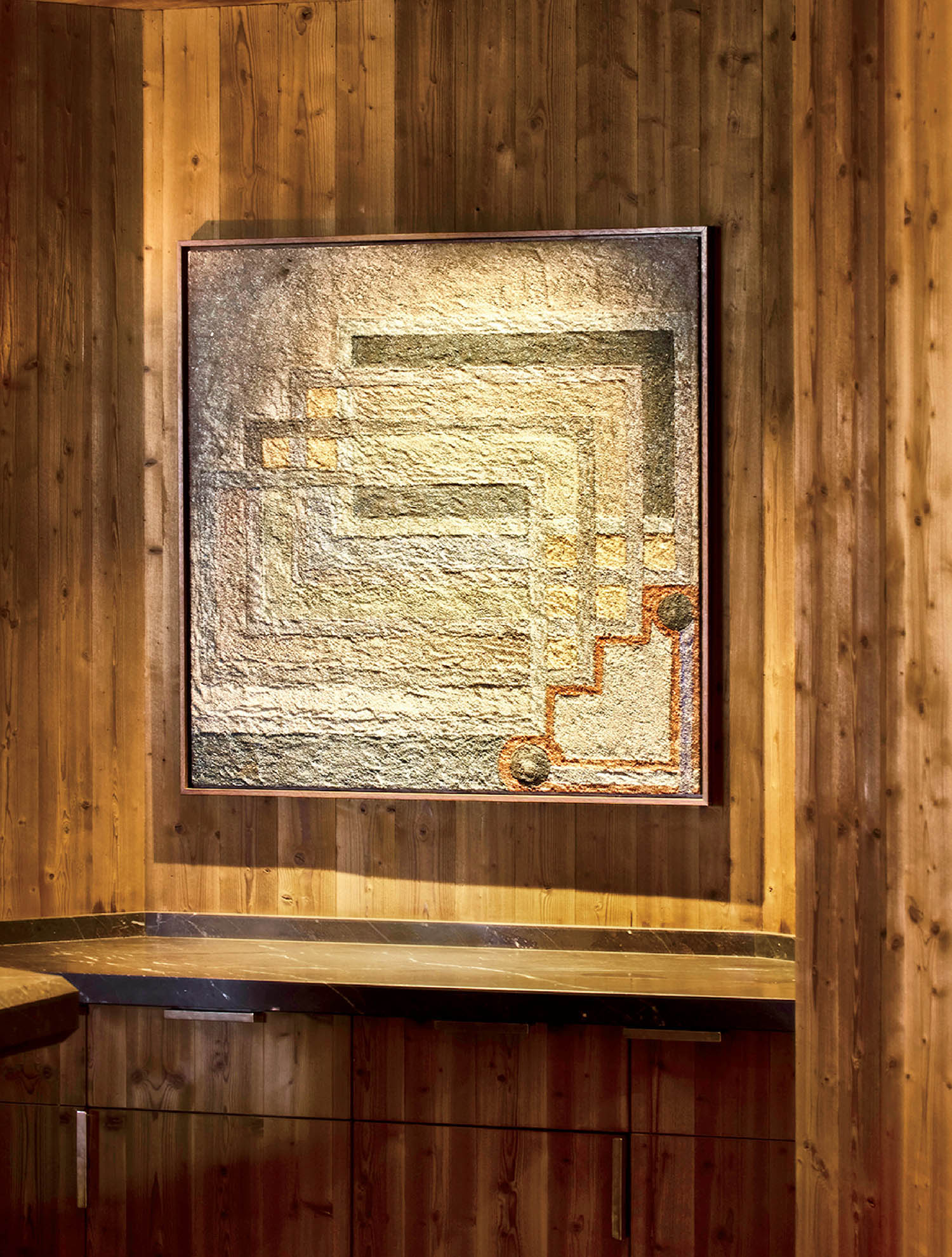
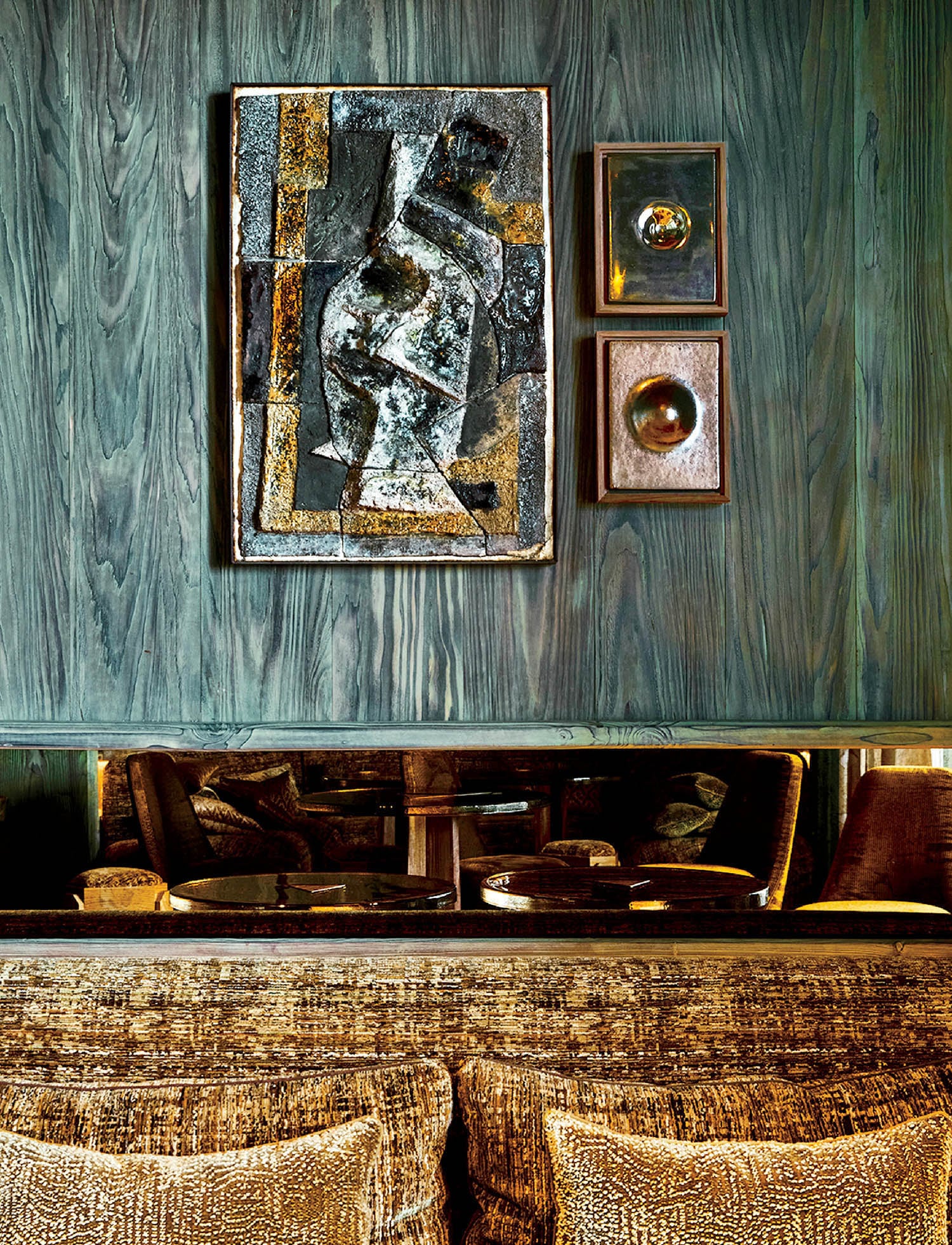
Art, both curated and commissioned, is ever present. Encompassing every medium, the works are primarily European—Wearstler might epitomize American design, but her eye is resolutely cosmopolitan. It’s evident in the West dining room’s cedar-paneled gallery wall, a salon-style display that crisscrosses the Continent with generous inclusivity: a glazed ceramic panel by the Catalan Pere Noguera, a leafy collage by the Swedish Lars Bergander, and an abstract townscape by the Swiss Henry Meylan form part of the constellation surrounding a hirsute natural-fiber tapestry from the 1970’s by the French duo Ginette and Daniel Taggart.
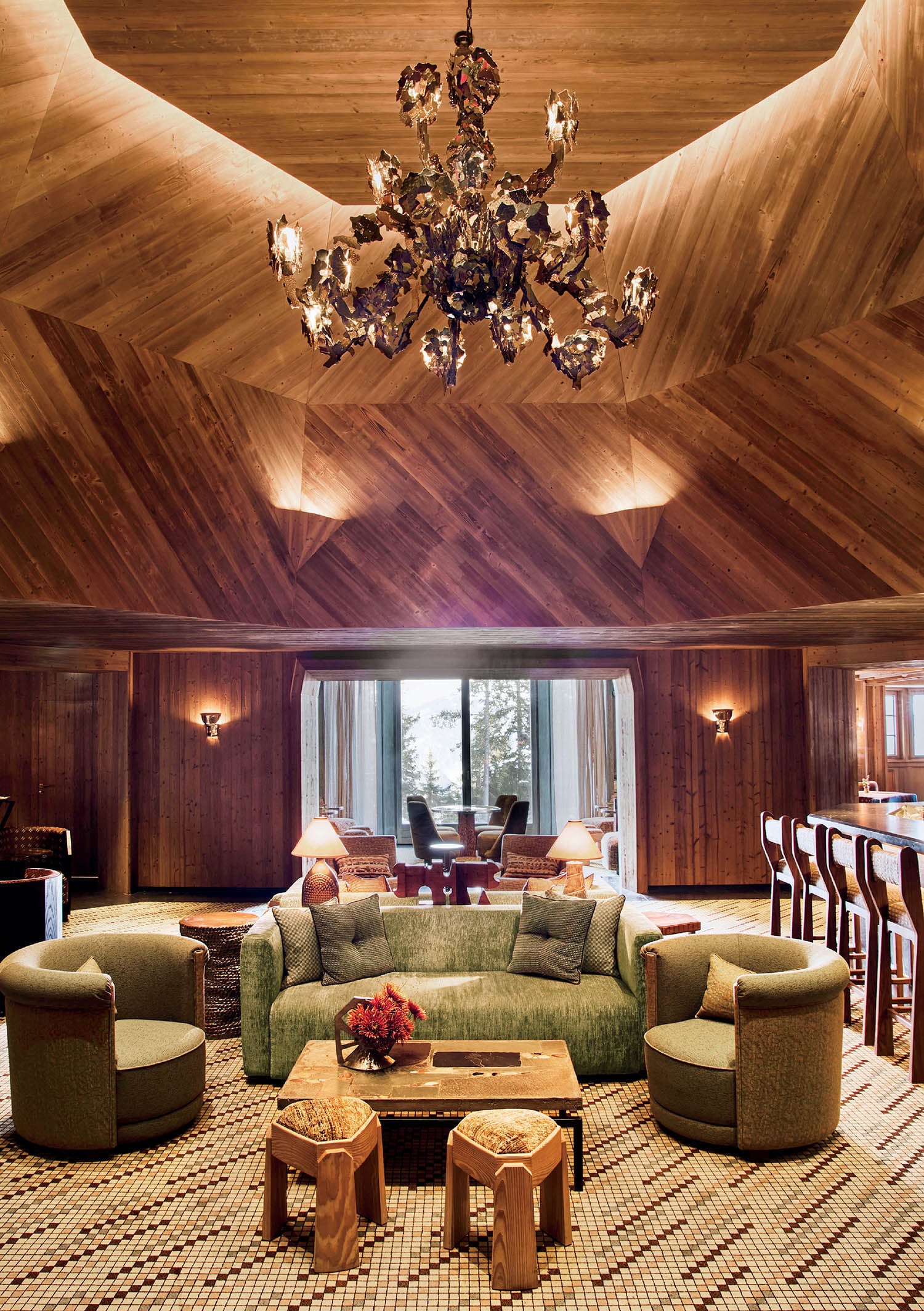
But it’s another commission—a monumental chandelier by Parisian artisan Nathalie Ziegler—that perhaps embodies Wearstler’s “Alpine brutalism” best of all. Comprising shards of blown glass that encrust its arms like jagged green and brown ice crystals, the sculptural fixture hangs at the center of the double-height bar—a darkly glittering form that evokes both the mountain setting’s craggy splendor and the winter playland’s ineffable glamour. True to the designer’s ethos, it refracts the familiar through an energizing new lens.
Explore Kelly Wearstler’s Design Details For Beefbar
PROJECT TEAM
TORI SANDER; GRAHAM MOORE: KELLY WEARSTLER STUDIO. STUDIO ARCH: ARCHITECT OF RECORD.
PRODUCT SOURCES
FROM FRONT LEE JOFA: SOFA FABRIC (WEST DINING ROOM). LE MANACH: OTTOMAN FABRIC. PIERRE FREY: UPHOLSTERY FABRIC (EAST DINING ROOM), BARSTOOL FABRIC (BAR). NATHALIE ZIEGLER: CUSTOM CHANDELIER (BAR). MODERN METIER: SCONCES. PROJECT 213A: CERAMIC SIDE TABLE. KARIN SAJO: VINTAGE SOFA FABRIC. EDELWEISS: PIANO (ENTRY). ROSIE LI: CEILING FIXTURES (SALON). CLAREMONT: UPHOLSTERY FABRIC (SALON).
read more
Projects
John Lautner’s Beverly Hills Office Building Gets A Sustainable New Life
In Beverly Hills, BA Collective adapts a rare mid-century office building by John Lautner into environmentally sensitive headquarters for climate-focused investment firm Angeleno Group.

Projects
Art Nouveau And The Vienna Secession Reinterpreted
In a Vienna apartment, Yana Molodykh channels the spirit of the Vienna Secession through sweeping curves, bespoke details, and artful touches.