Elkus Manfredi Designs Dynamic Life Science Campus
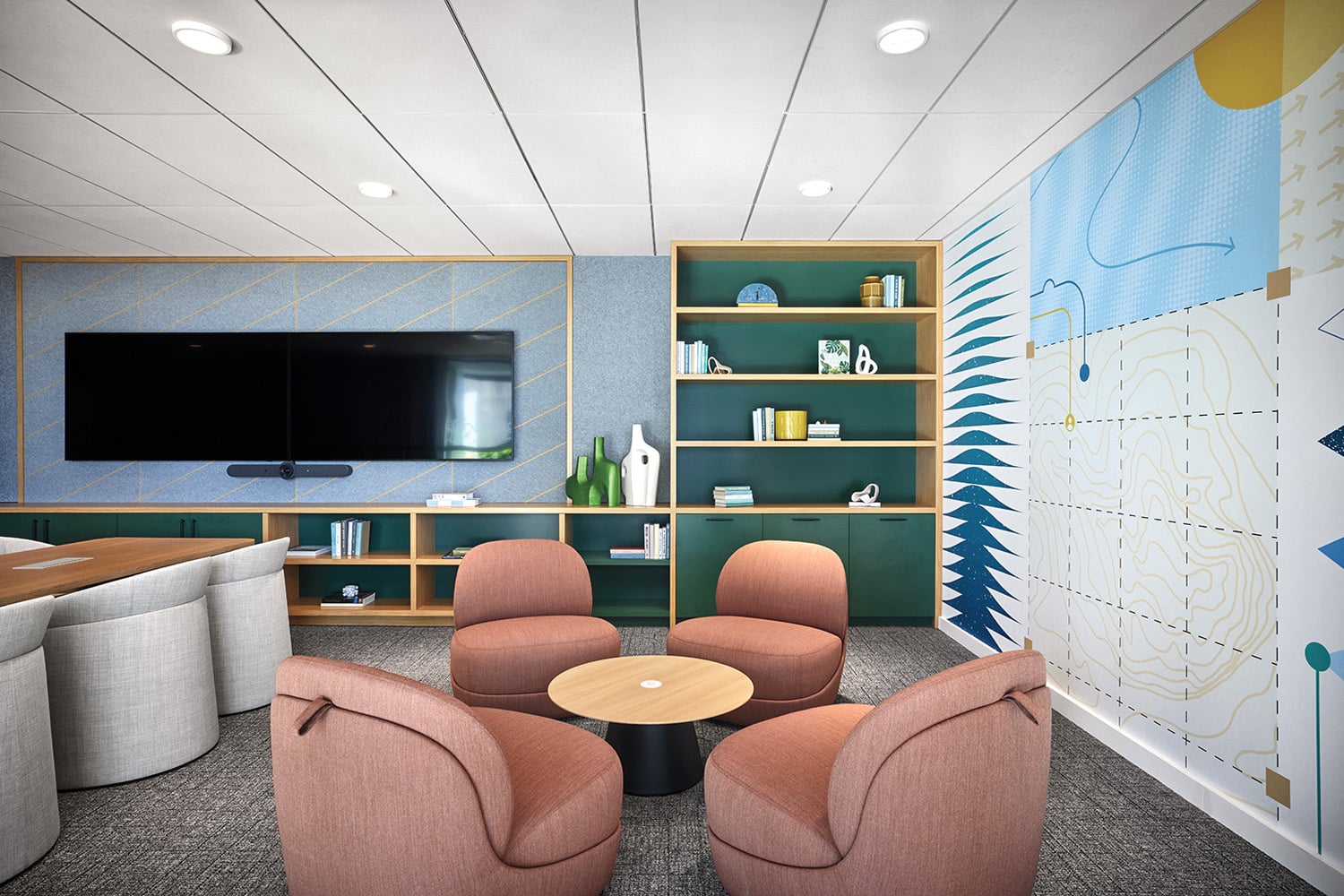
a blue and green office area

Elkus Manfredi Architects Designs Dynamic Life Science Campus

66 Galen Street, Watertown, Massachusetts

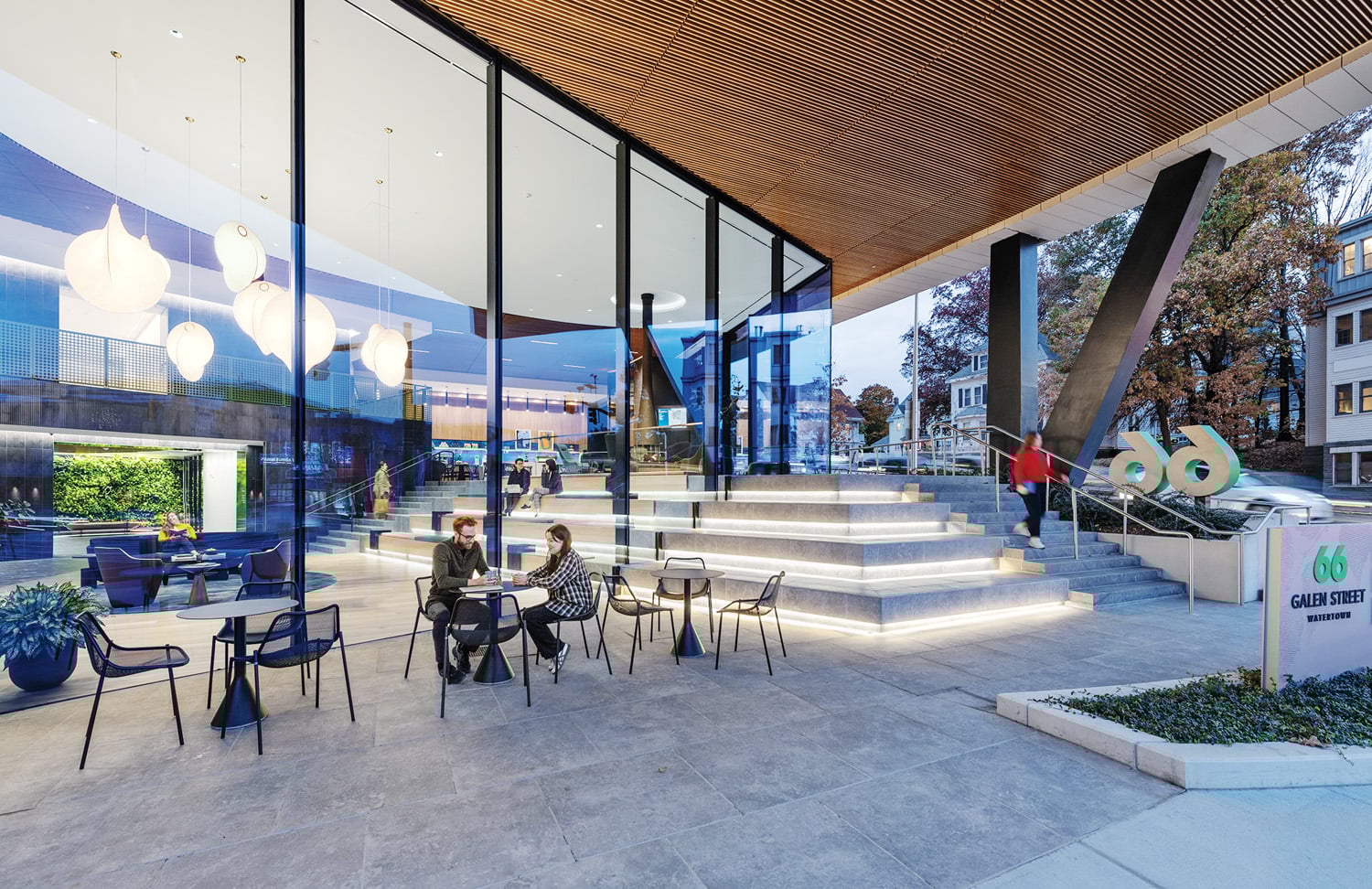
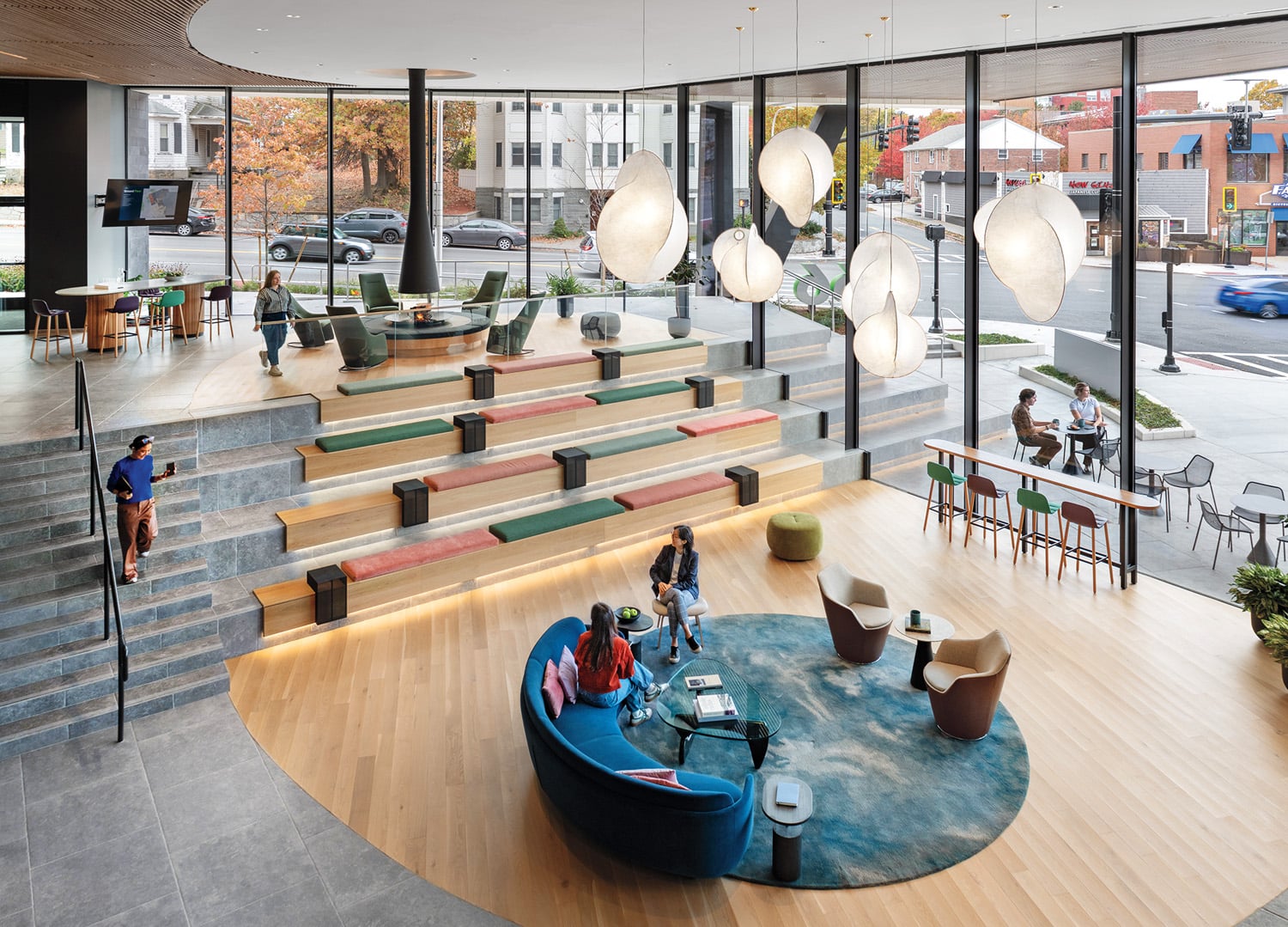
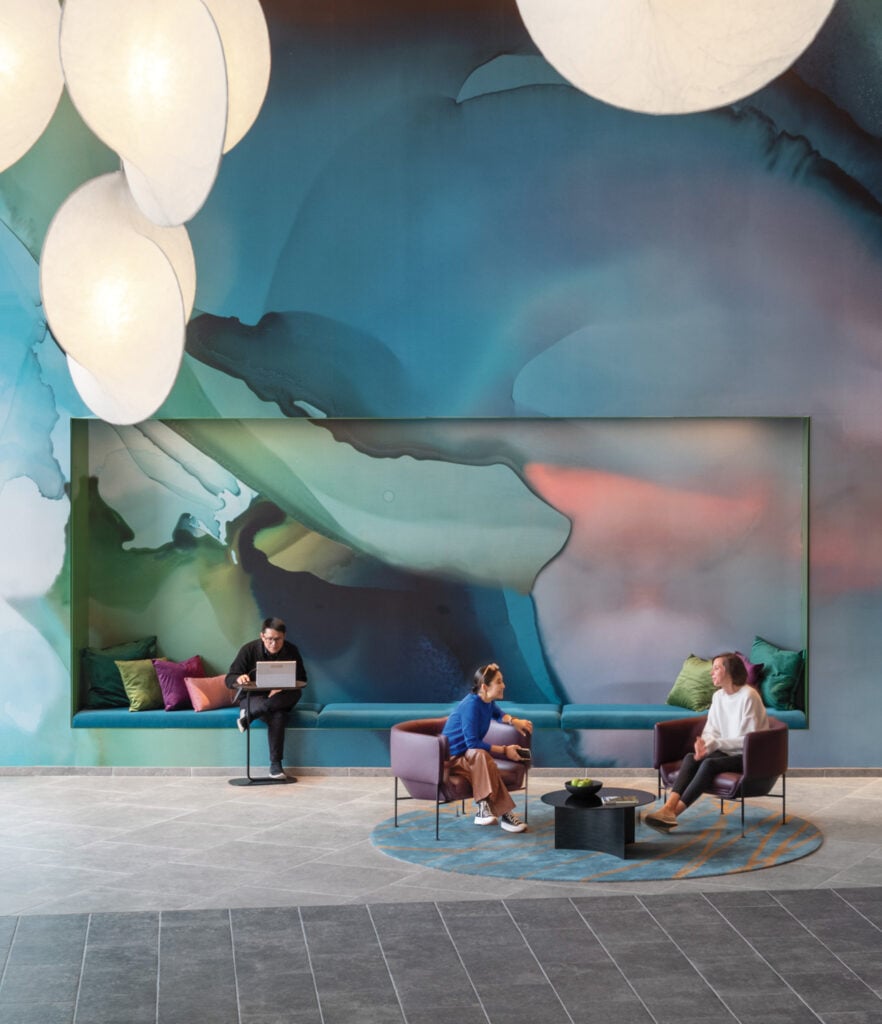
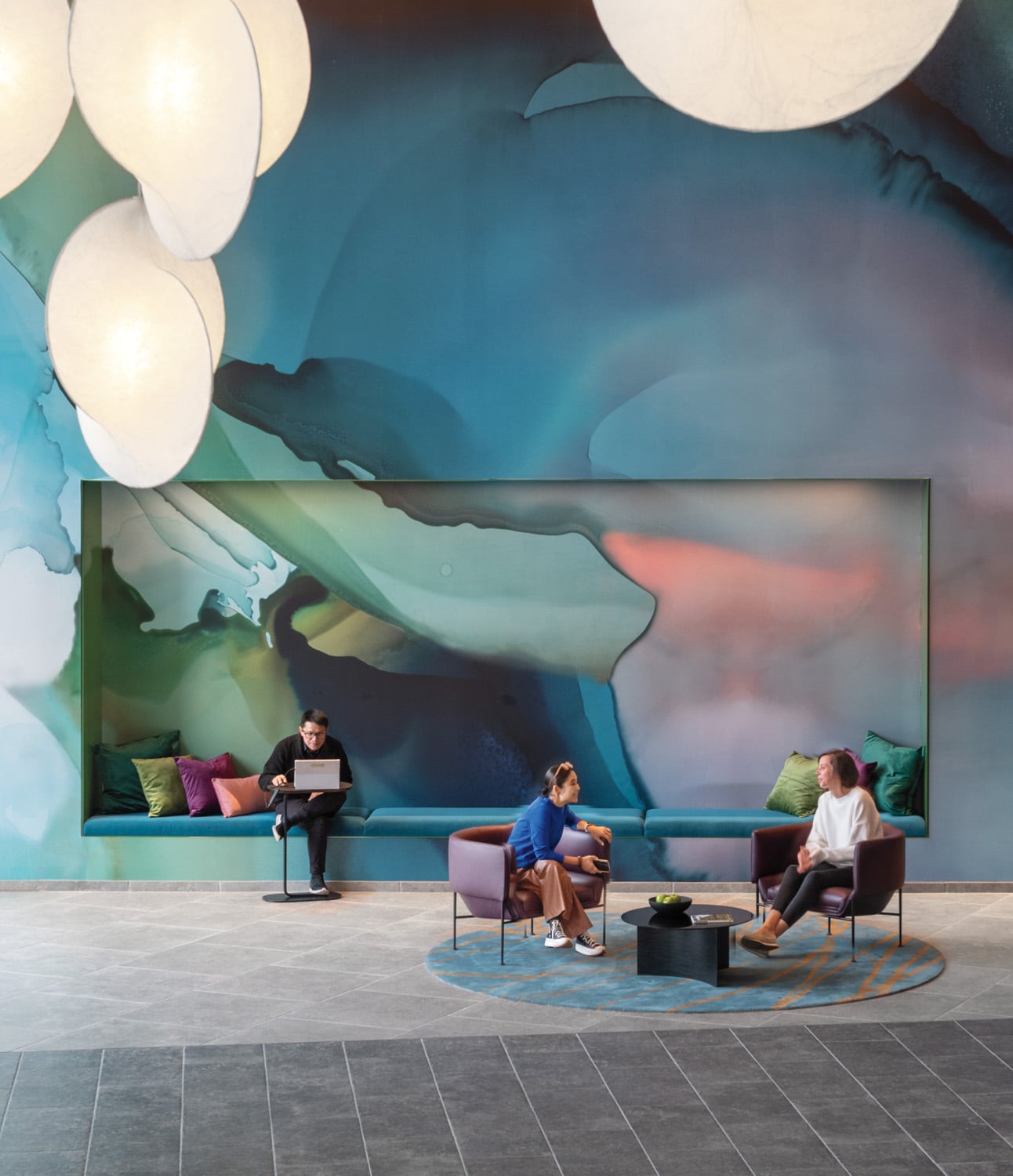
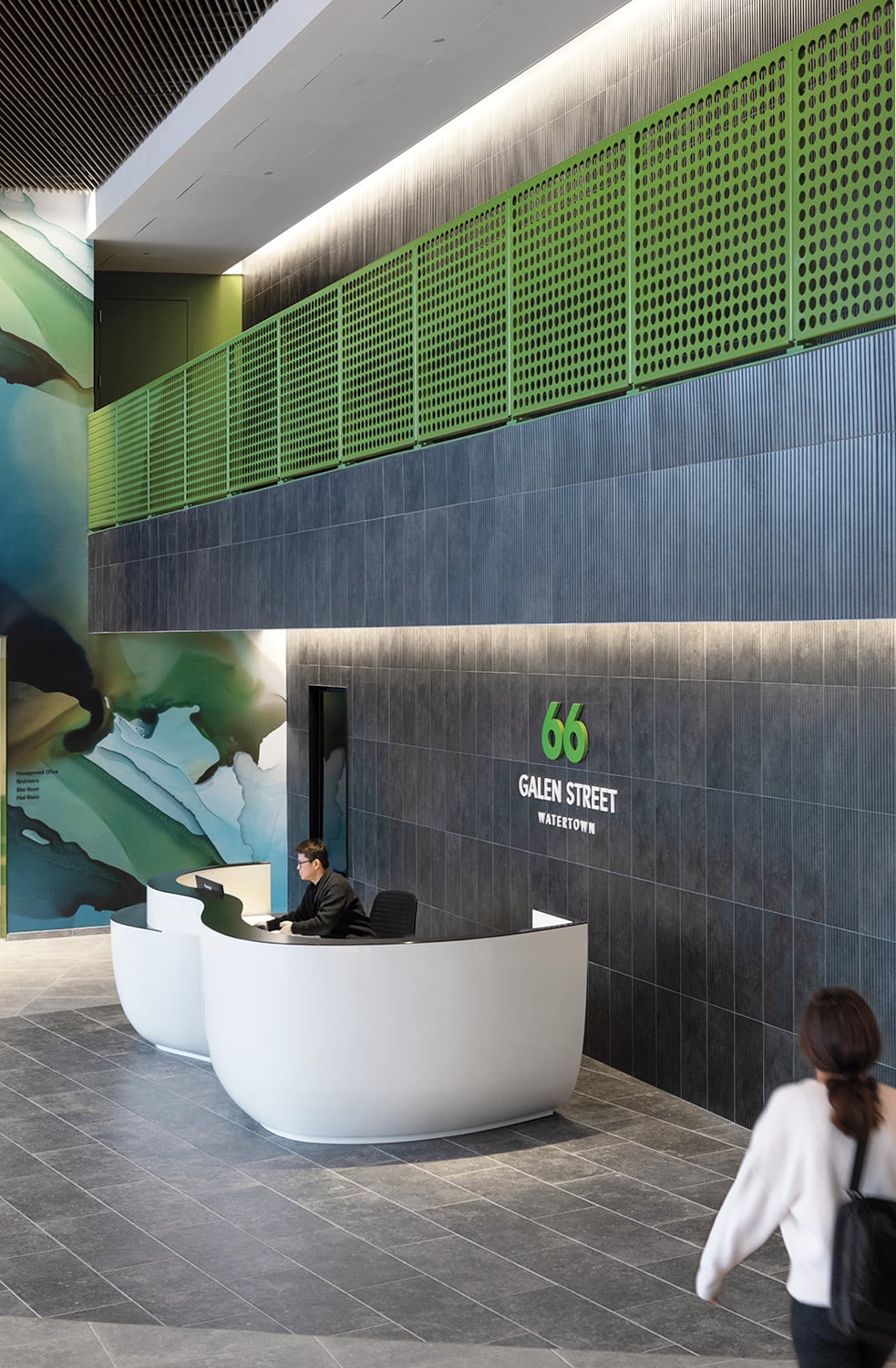
An underutilized site just steps from the Charles River has been transformed into a community-connected life science campus, where innovation is echoed in both the architecture and interiors. Elkus Manfredi Architects designed the 225,000-square-foot lab facility to offer flexible, wellness-focused spaces that draw inspiration from multifamily housing and contemporary workplaces. The building introduces a crucial connective urban element to a once unnavigable neighborhood, with nearly 40 percent of the site dedicated to open space and pathways linking major transit options. From the lobby, bleachers pierce through a double-height glass facade to become public-facing exterior seating, creating gathering spaces both inside and out. An expansive interior wall is washed with large-scale watercolor-style graphics that evoke movement and progress. A recessed section of this wall forms a cushioned niche for casual work, while circular rugs define intimate seating areas for informal confabs. Stretched-fabric light fixtures are suspended at varying heights overhead, complementing the abundance of natural light that floods in through glazing. With a suite of high-performance design strategies and integrated renewable energy features—including a rooftop solar array and EV charging infrastructure—the building is as considerate of the environment as it is of its users and the Watertown community at large.
read more
SmithGroup Designs Its Own Future-Focused Workplace
sitting area with gray and cream armchairs in smithgroup office

SmithGroup Designs Its Own Future-Focused Workplace

Firm’s own office, San Diego

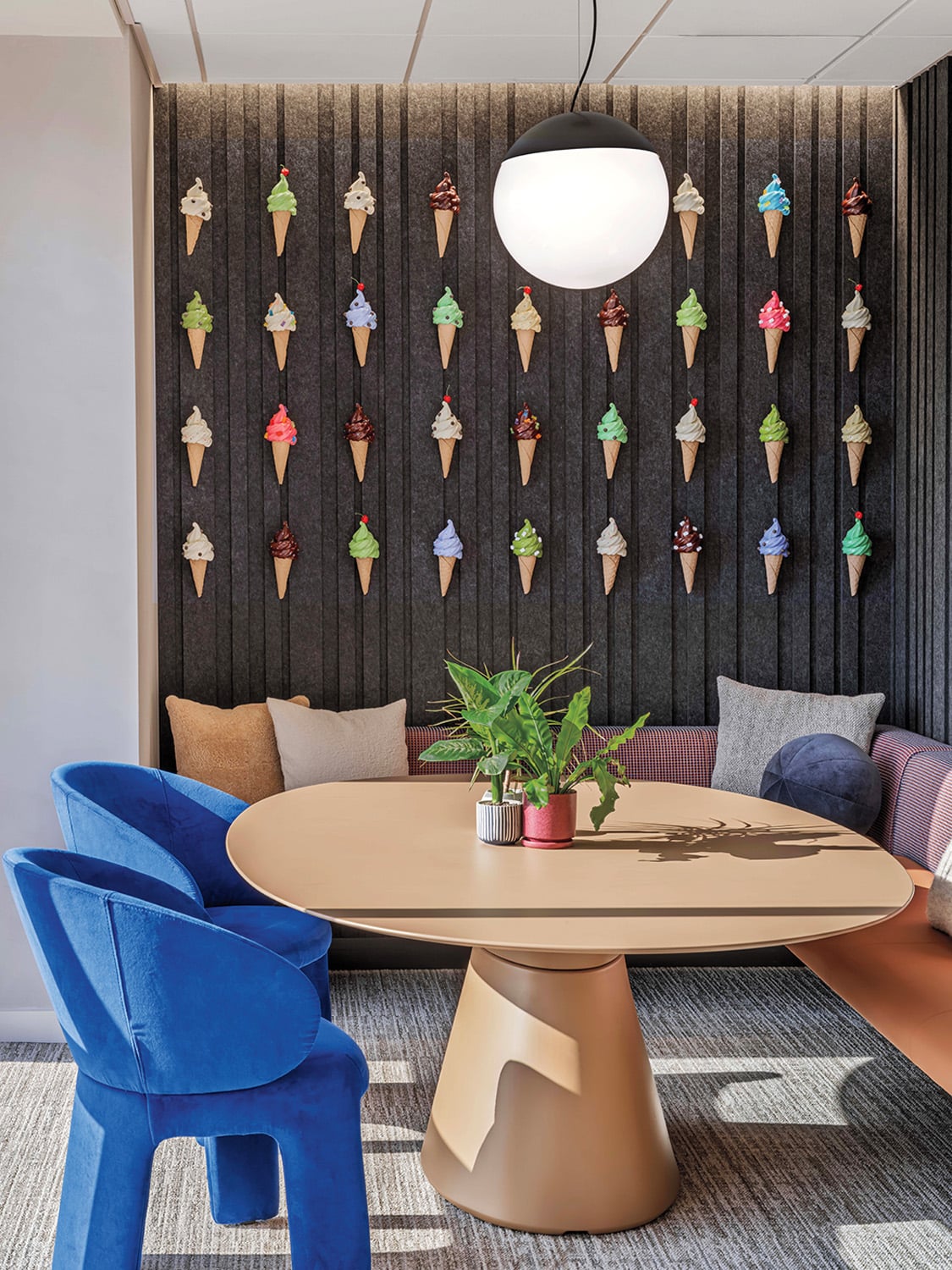
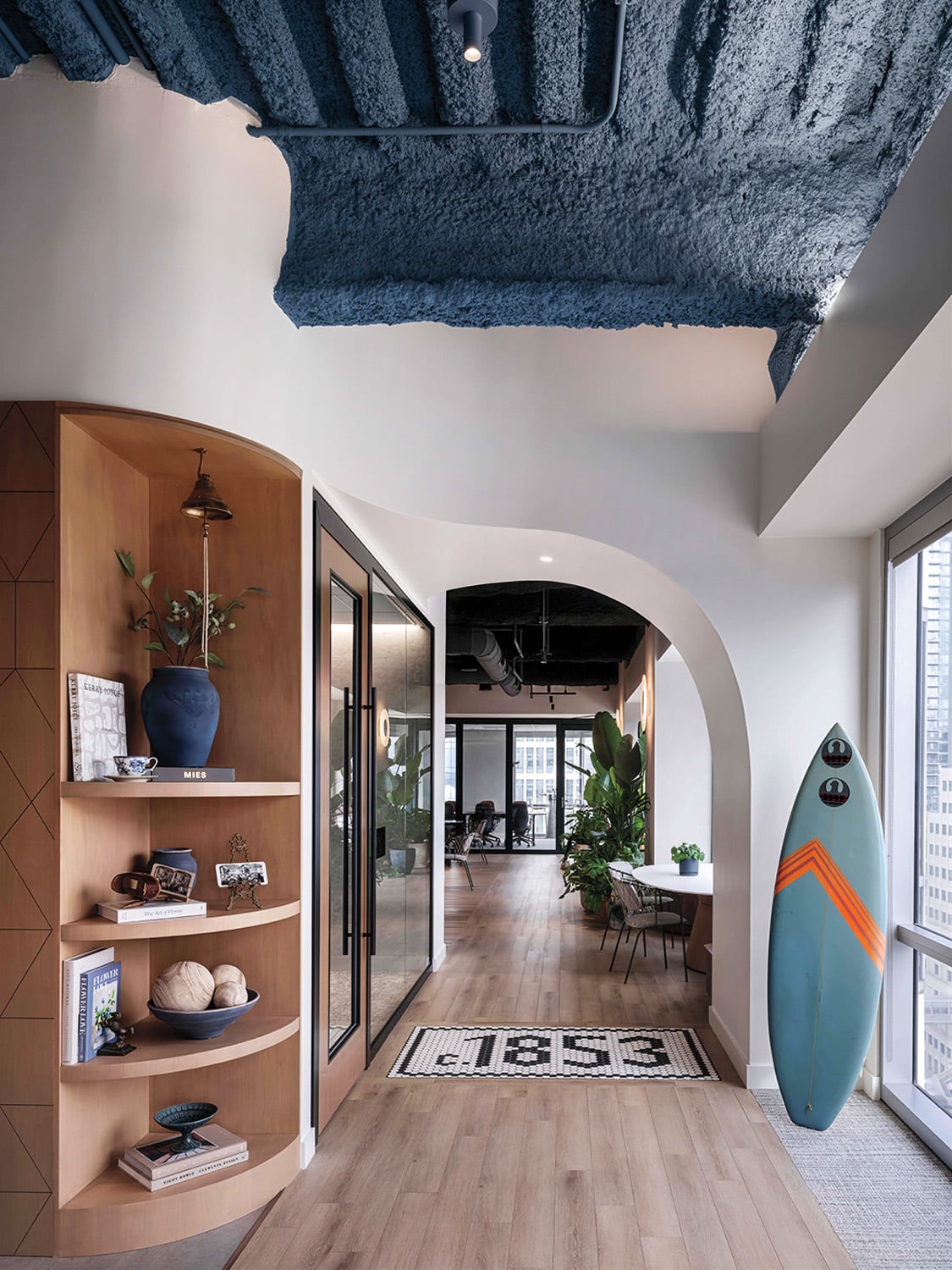
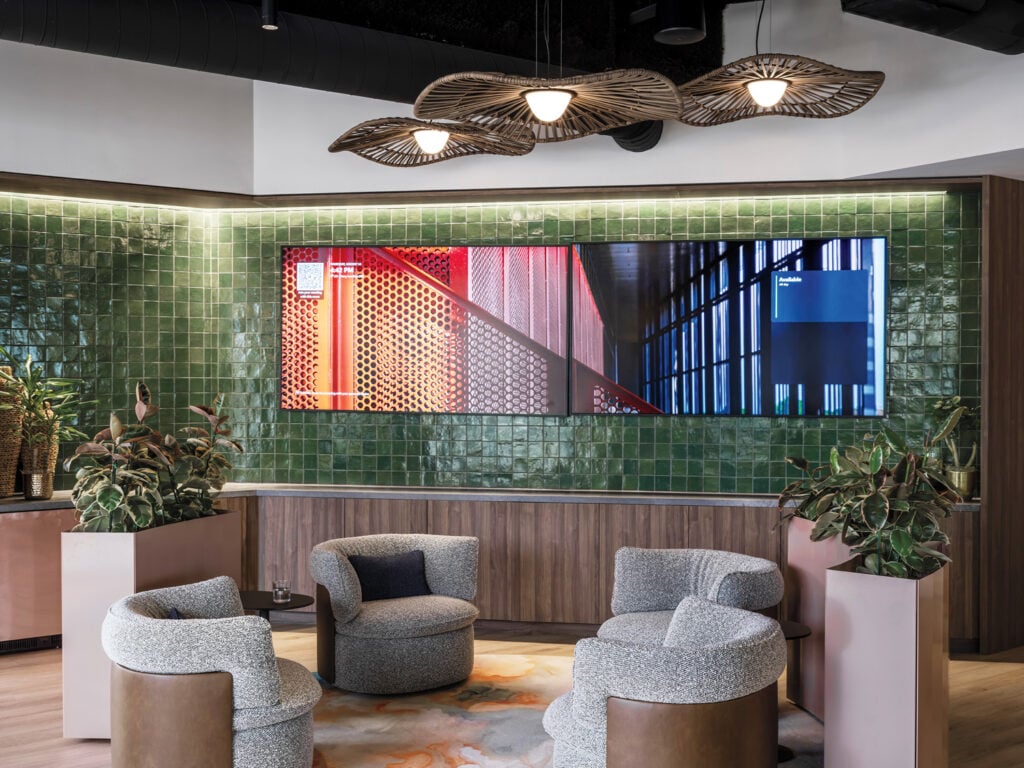
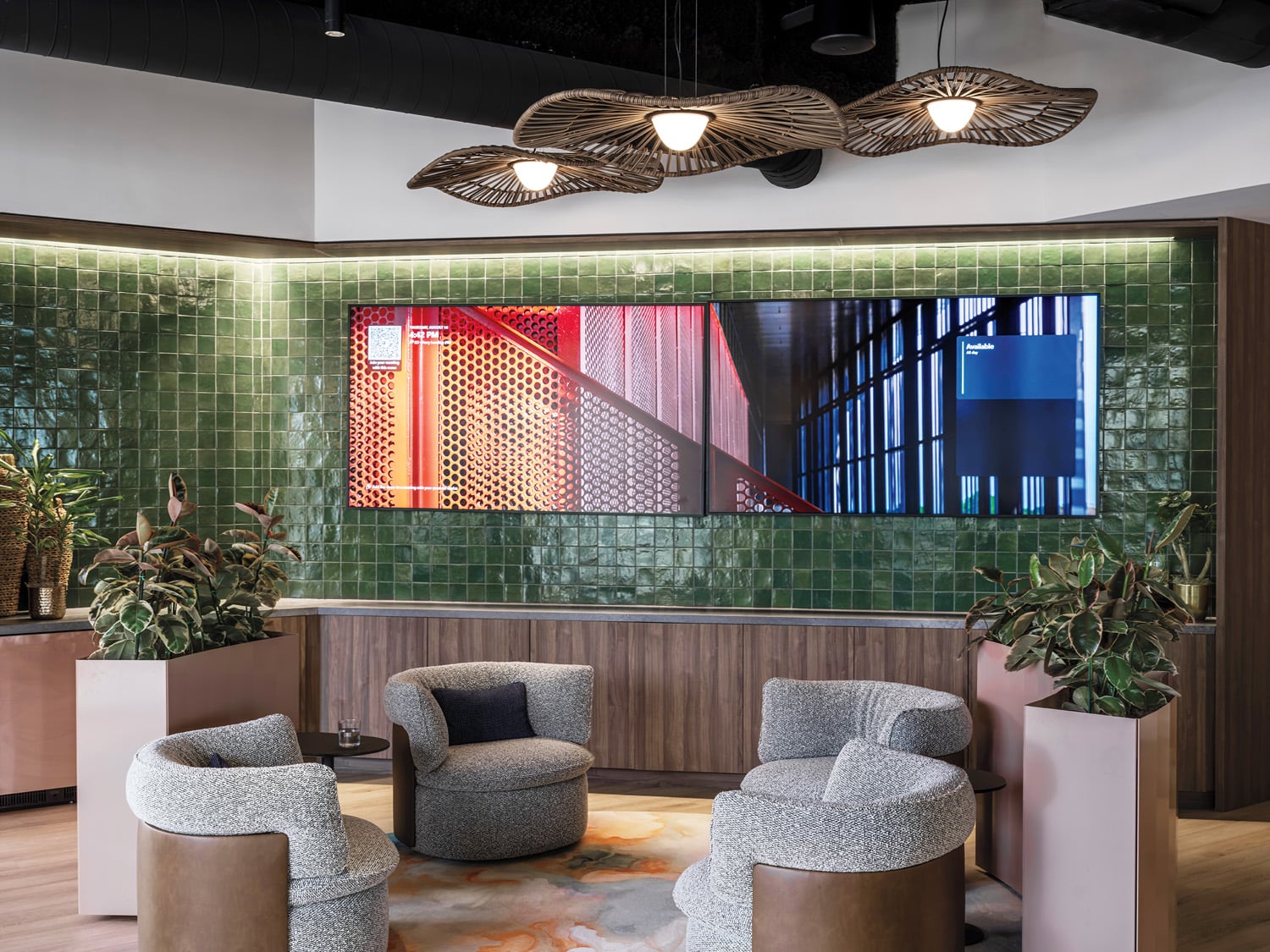
You could argue that a studio’s best project is its own. With intimate knowledge of operations and a vision for the future, the endeavor invites boundary-stretching solutions and process innovation. Such was the case for SmithGroup’s new San Diego workplace, one of 20 throughout the U.S. Spanning 8,060 square feet on the 18th floor of a downtown waterfront tower with bay views, it is supremely tied to place yet references the firm’s widespread legacy. To wit: A blue-toned exposed ceiling demarcating primary circulation alludes to the famed Coronado Bridge, while a floor mosaic cites the year of SmithGroup’s founding (1853!). Various artwork and objects suggest other office sites or personal touches, such as a painting of ice cream cones depicting the staff’s favorite flavors.
The workspace proper prioritizes adaptable, multipurpose zones, easily accommodating 35 to 55 employees without architectural changes. Key to implementing that plan was a shift from desk-dominated layouts to open spaces for both individual concentration and collaboration. Every seat—from high tables to banquettes—is ergonomic, with access to power outlets. Proof of concept? Within its first six months, weekly attendance was at 75 percent, surpassing previous averages, and more than 650 external visitors were hosted, cementing community connections.

read more

A New York Pied-à-Terre For A Fun-Loving Family
dining area with lighting fixture over table

A New York Pied-à-Terre For A Fun-Loving Family

Residence, New York

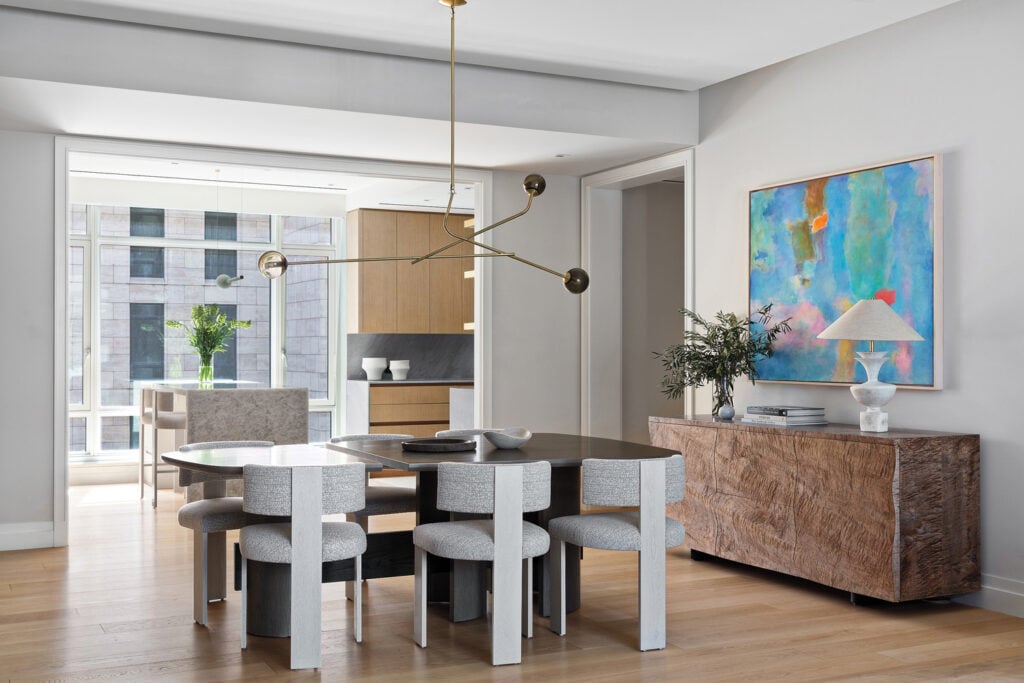
The vertically integrated firm tackles design at every scale, from master planning and architecture to interiors, product, and branding. Several of those practice areas came into play at this 2,540-square-foot pied-à-terre for a fun-loving family, a repeat client for whom Workshop/APD has also completed houses in Palm Beach, Florida, and on Nantucket, Massachusetts. Like those homes, “Everything here needed to be effortless and comfortable and show off the client’s incredible style and art, but also serene and visually calming, a refuge from the city’s chaos,” interiors principal Nicole Ficano says.

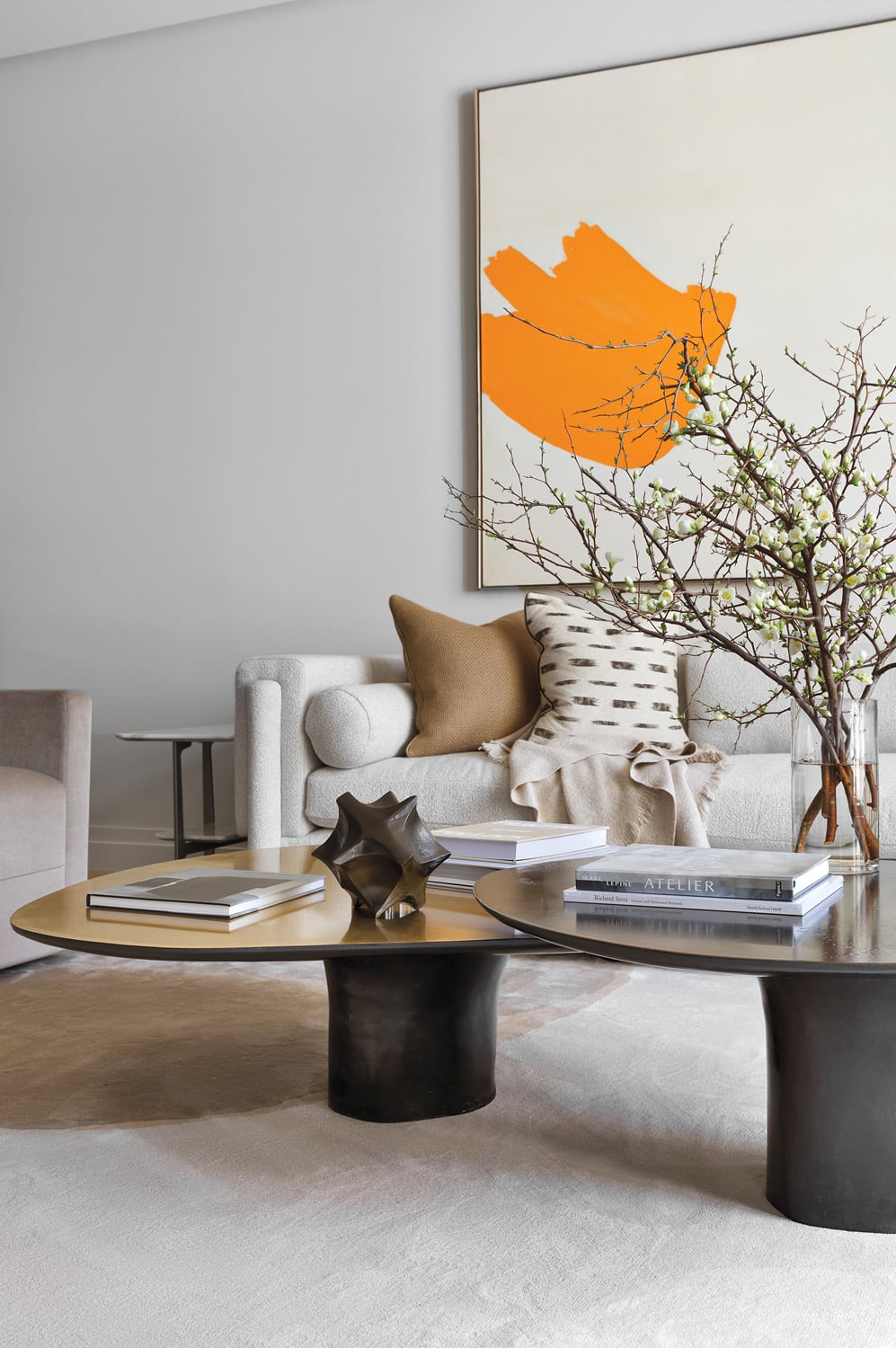
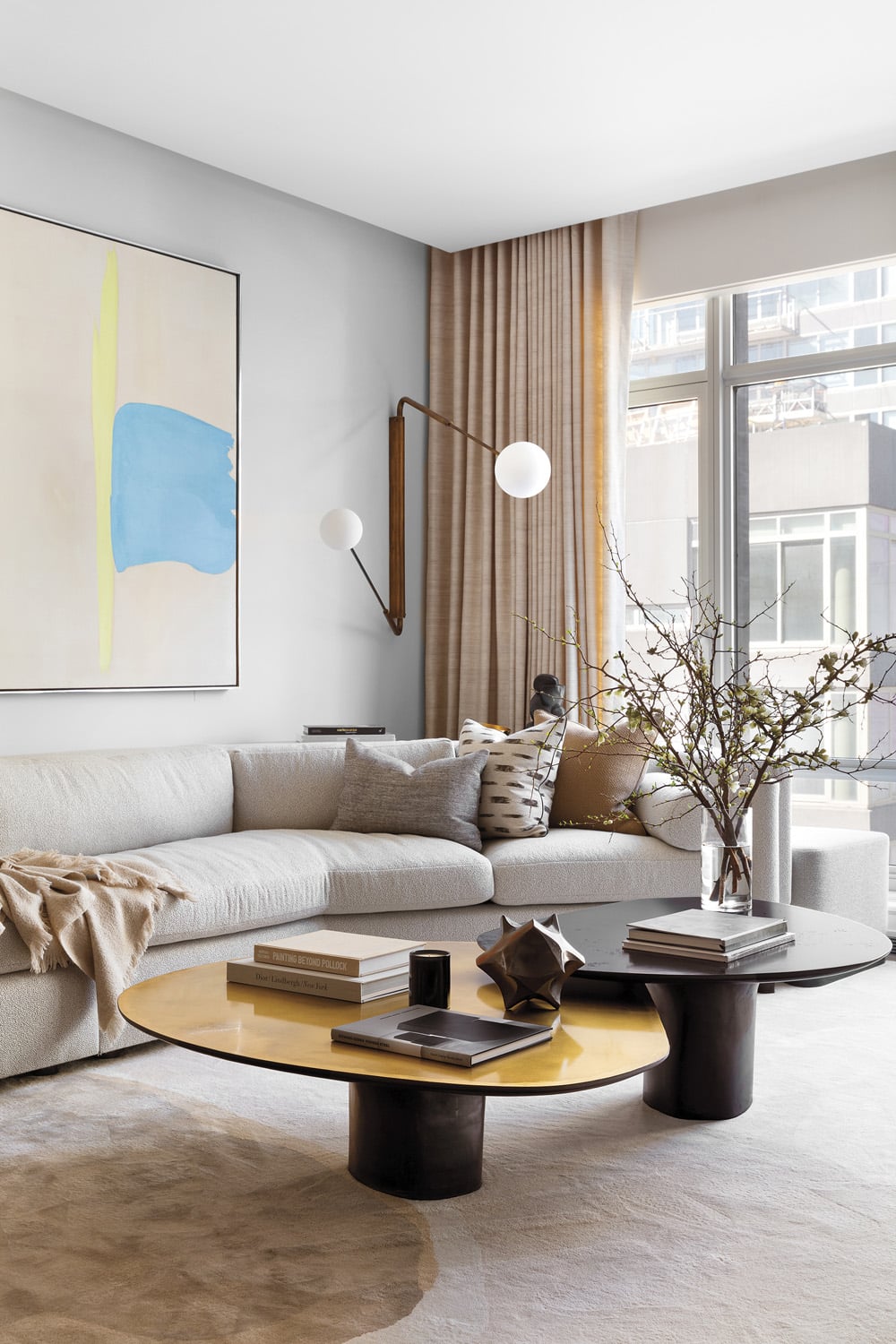
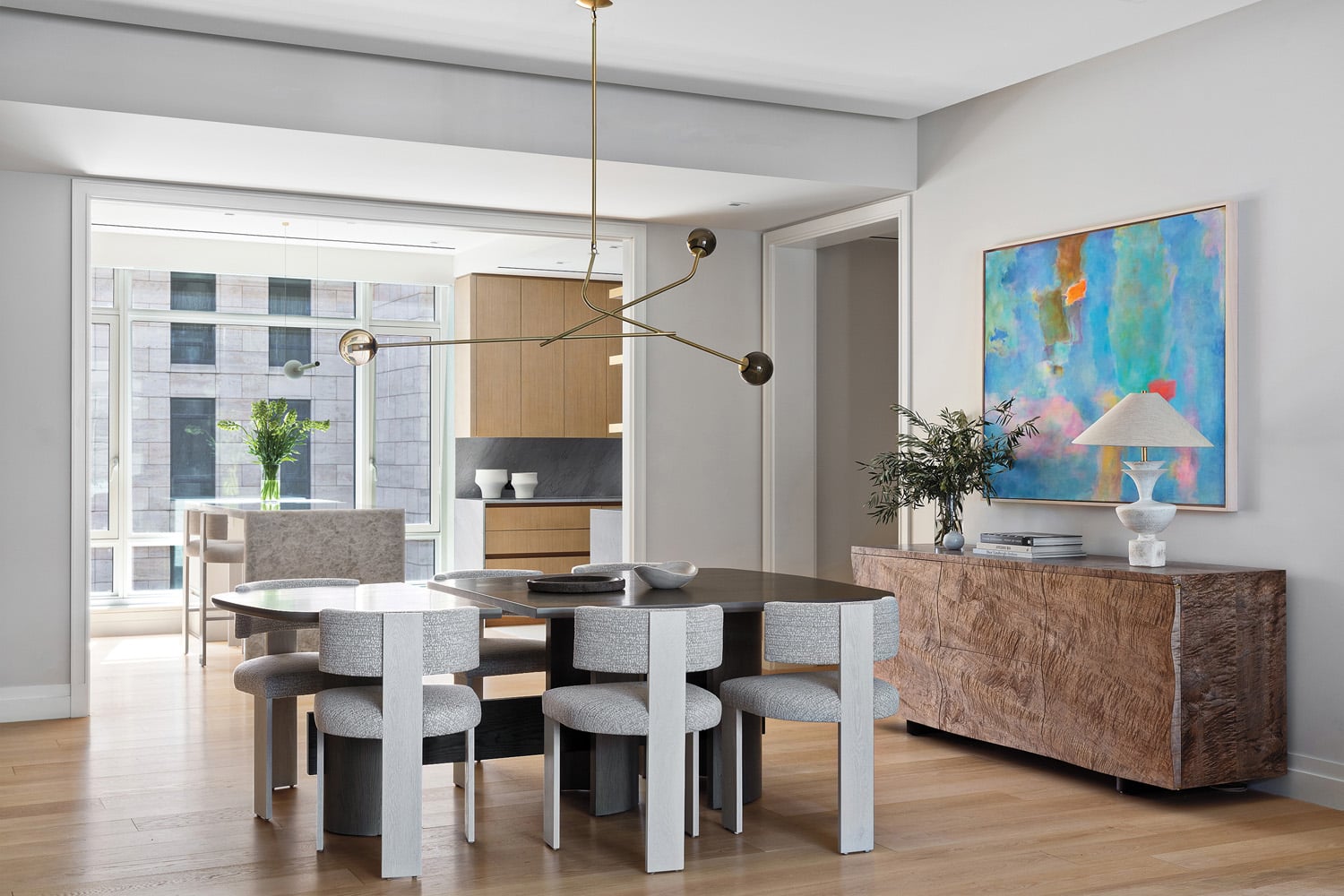
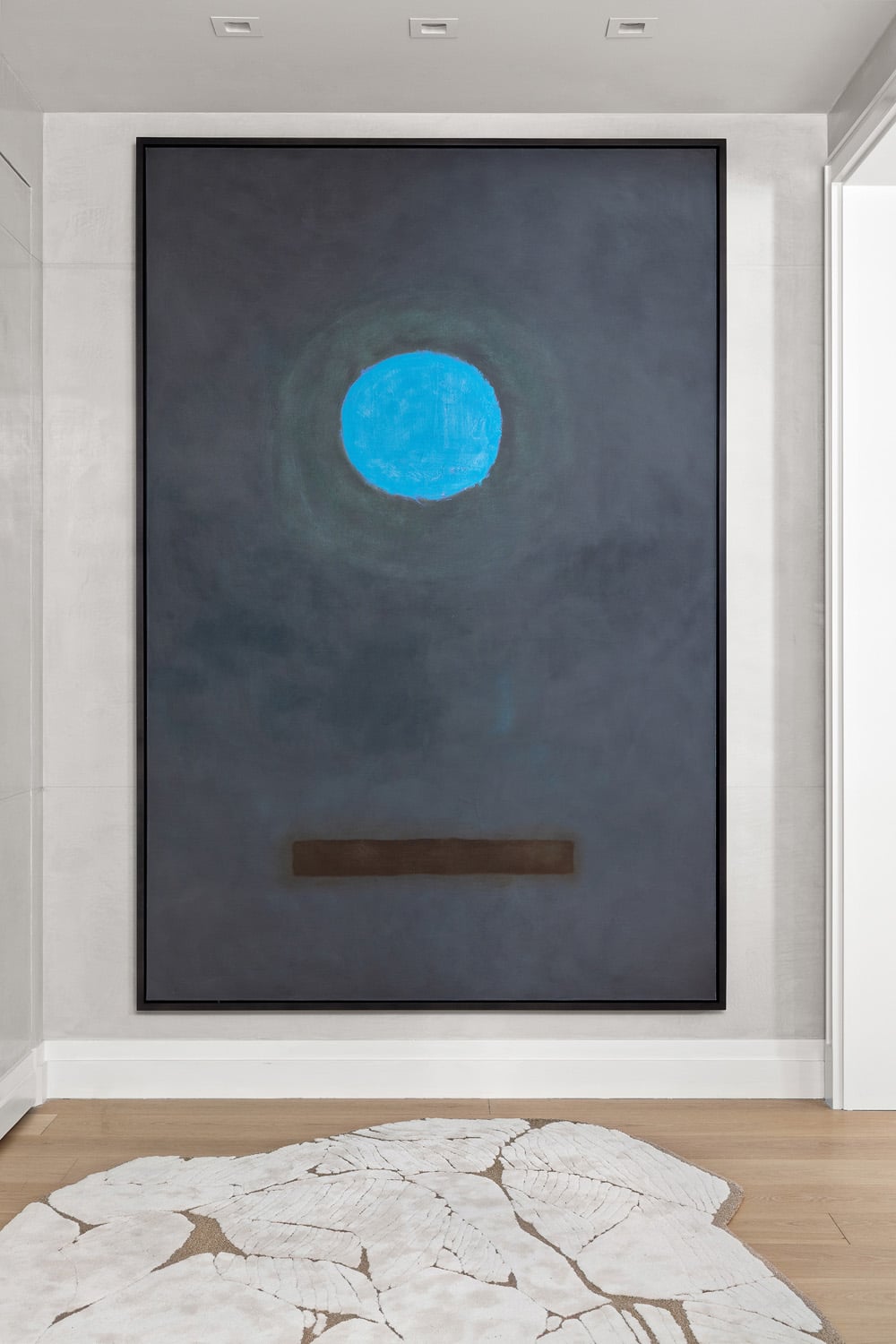
In a relatively new TriBeCa tower, the three-bedroom apartment centers on the foyer and its large-scale Adolph Gottleib painting, with the eat-in kitchen off to one side and the living-dining area, library, and bedrooms to the other. With no architectural interventions needed, efforts were focused on a facelift: electrical and lighting alterations, building in copious millwork, and installing contemporary furnishings, many by local artisans, around blue-chip art pieces. The latter is evident in the dining area, where an Esteban Vicente oil on canvas gently colors the sophisticated neutrals of Workshop/APD’s custom Partis table, Nina Seirafi’s Gary chairs, and a figured-maple Payette credenza by Token, and the living area’s Friedel Dzubas Color Field acrylic above Egg Collective’s Howard sofa. Angular pendant and sconce fixtures by Neri&Hu and Paul Matter add a dose of urban edge.

read more

DoorDash’s New York Flagship Is Inspired By The City’s Energy 
colorful office area in doordash workplace

DoorDash’s New York Flagship Is Inspired By The City’s Energy 

DoorDash, New York

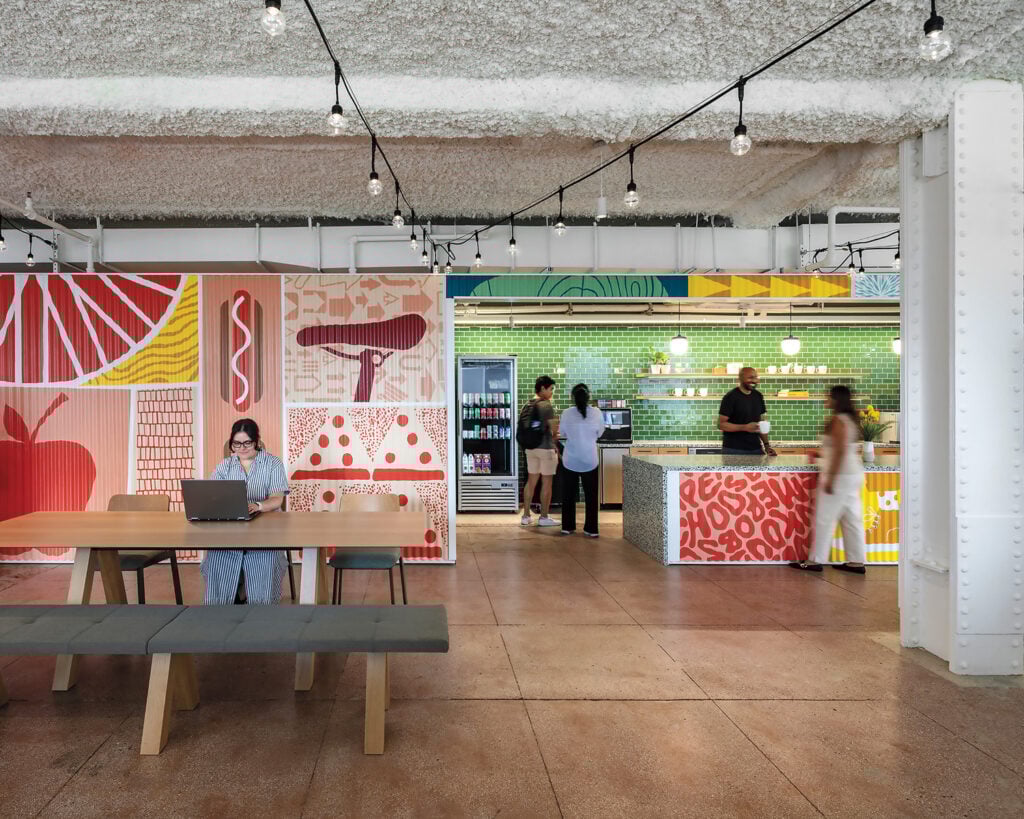
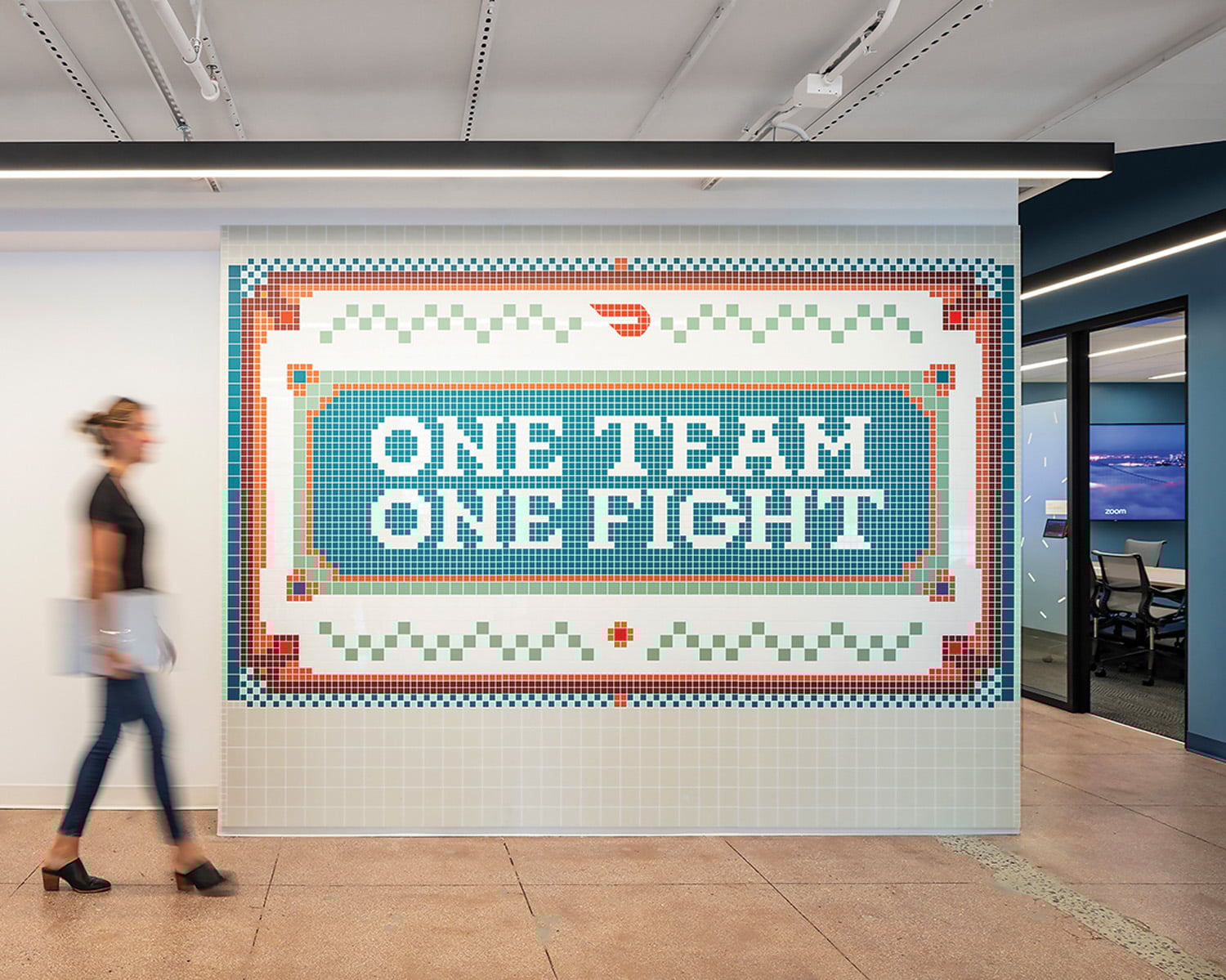
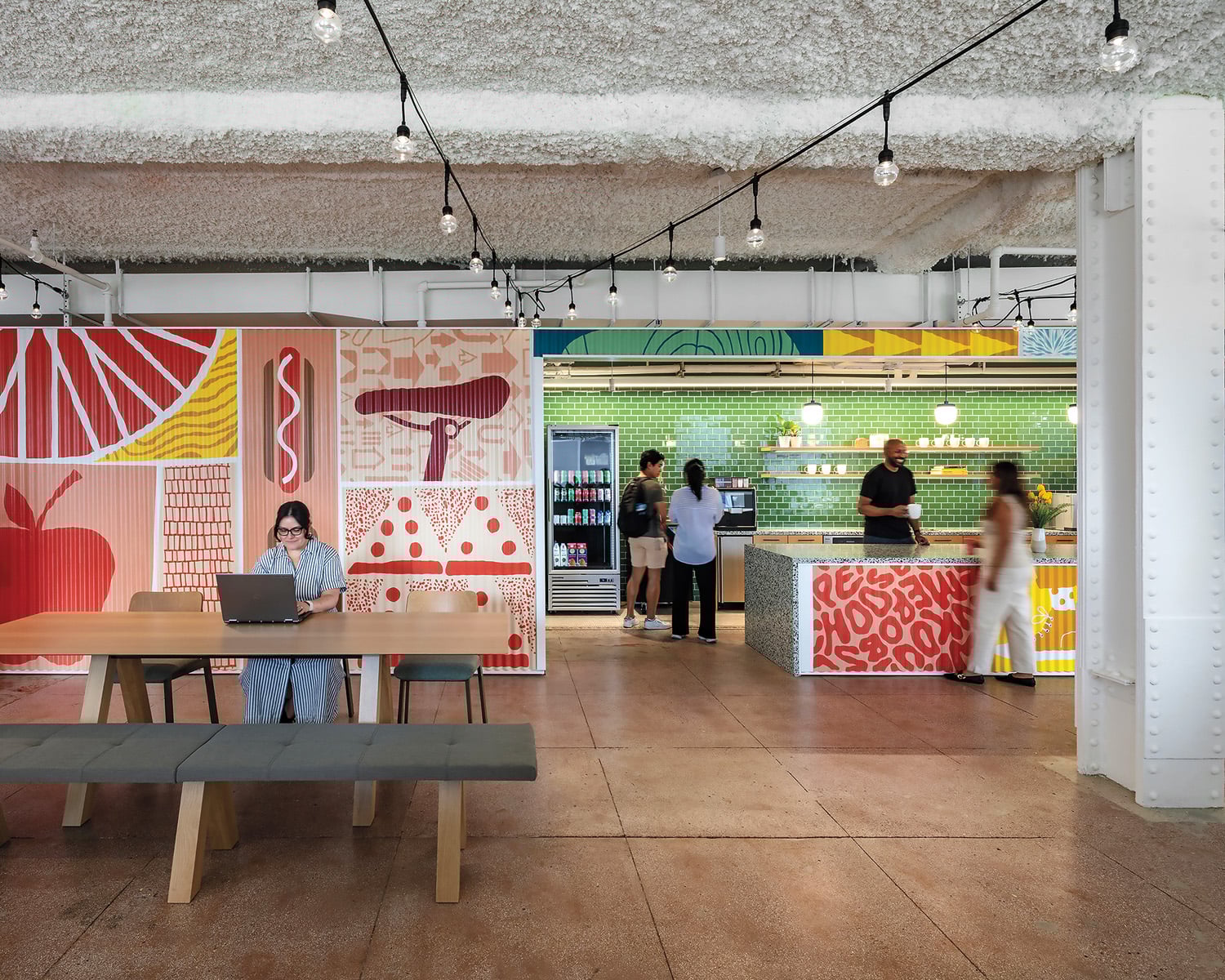
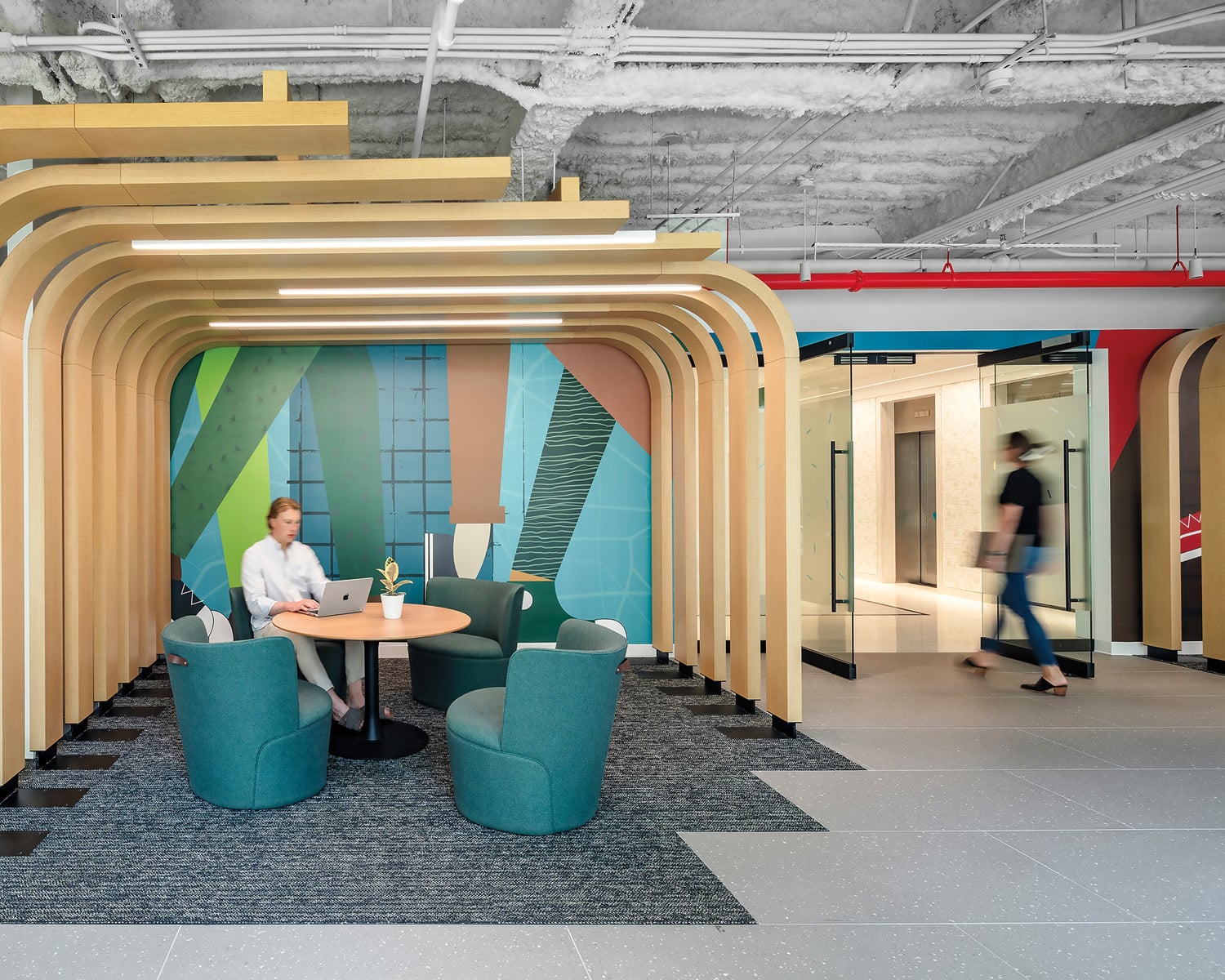
The delivery drivers who deftly weave around New York’s street grid day and night are an integral part of the urban fabric. It’s no wonder, then, that the DoorDash flagship was conceived as a tribute to the Big Apple’s energy, rhythm, and neighborhoods. HKS translated the identity of each of the city’s five boroughs into distinctive “neighborhoods” within the tech company’s 36,800-square-foot office, with color-coordinated graphics and architectural gestures inspired by NYC landmarks—stadiums, bridges, pocket parks—aiding with wayfinding. Moving through the dynamic workspace is meant to feel like traversing the island itself, passing scaffolding-esque canopies over communal tables and dark metal trims around glazed meeting rooms that echo the facades of skyscrapers. Hyper-local references—a hand-painted mural evocative of bodega signage, a mosaic nodding to subway-tile typography—further connect the space to Gotham’s identity. In the cafeteria, popular foods are illustrated in bold hues across walls, while lime-green subway tiles behind the service station add another metropolitan spin. Together, these elements create a fitting hub for the team that connects the community with its groceries, takeout, and everyday essentials, while also celebrating the city—from its streets to its sandwiches.
read more

HLW Designs Ground-Up Headquarters Celebrating Software Company’s 20-Year Milestone
office hallway for wix

Wix Celebrates 20 Years With New Headquarters 

Wix, Tel Aviv, Israel

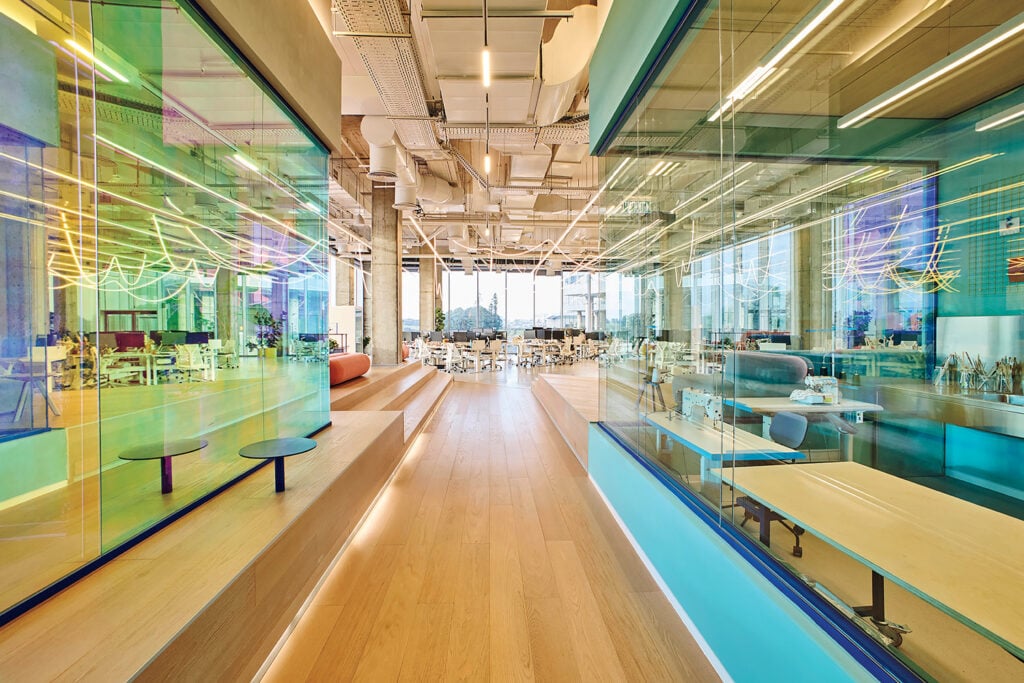
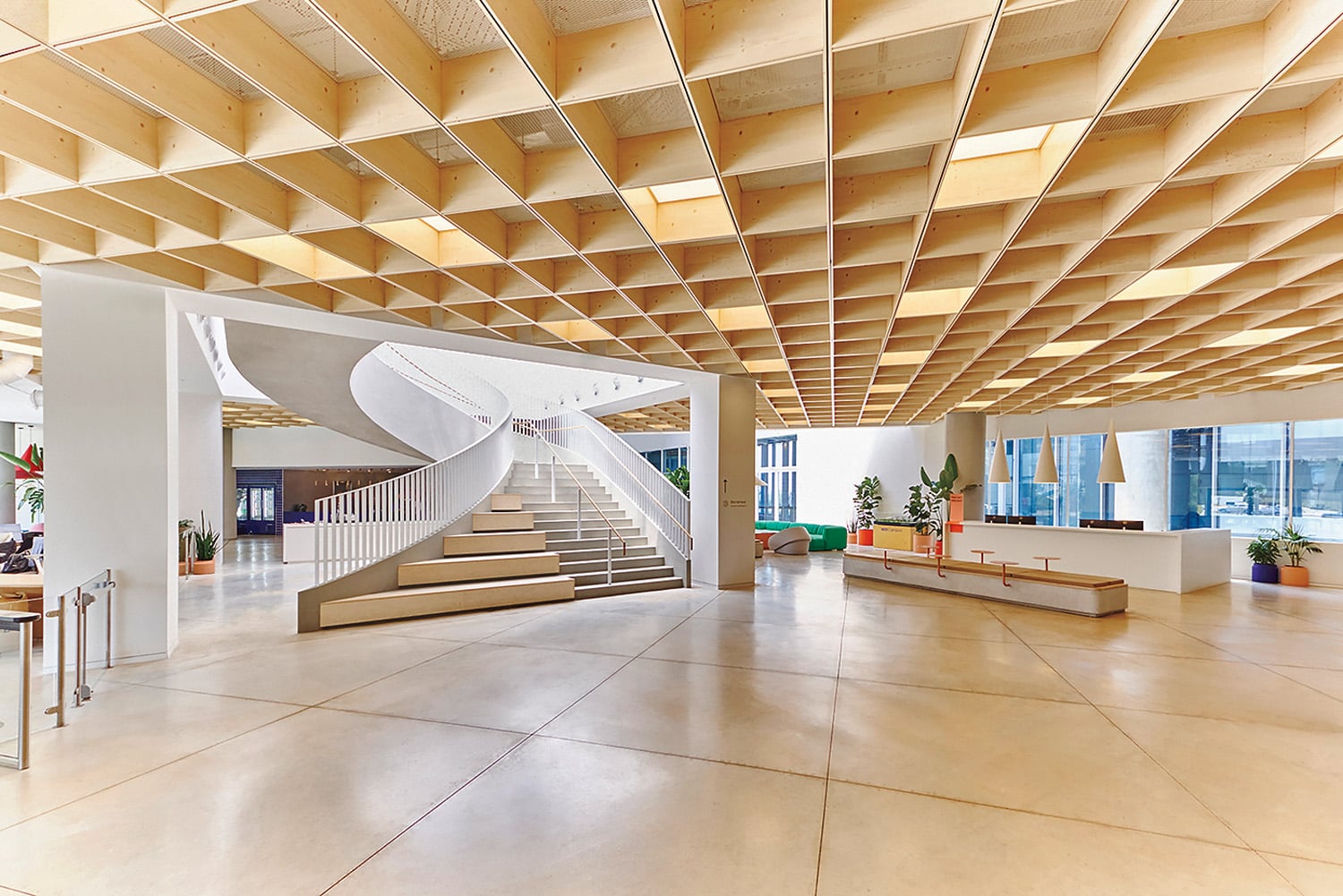
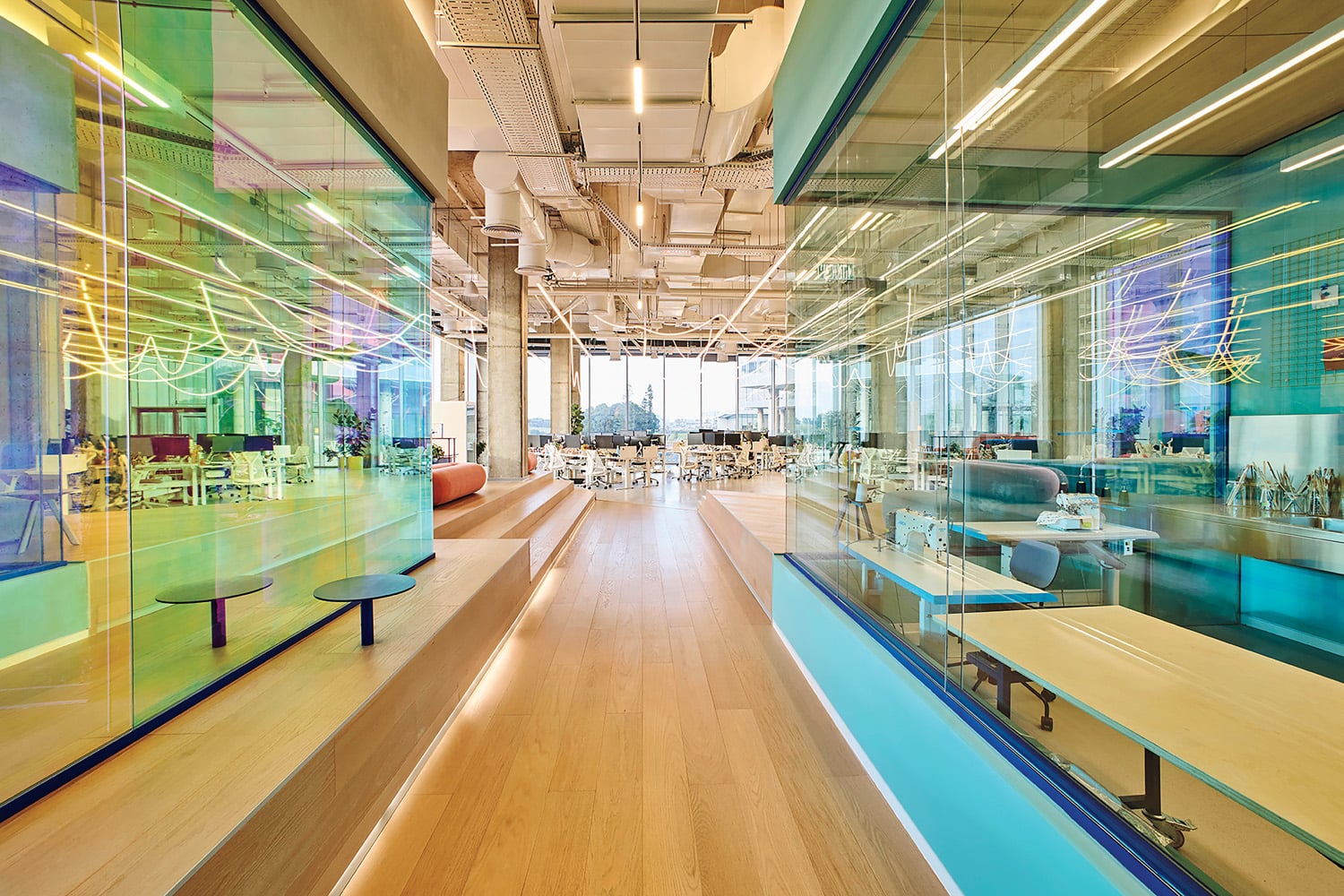
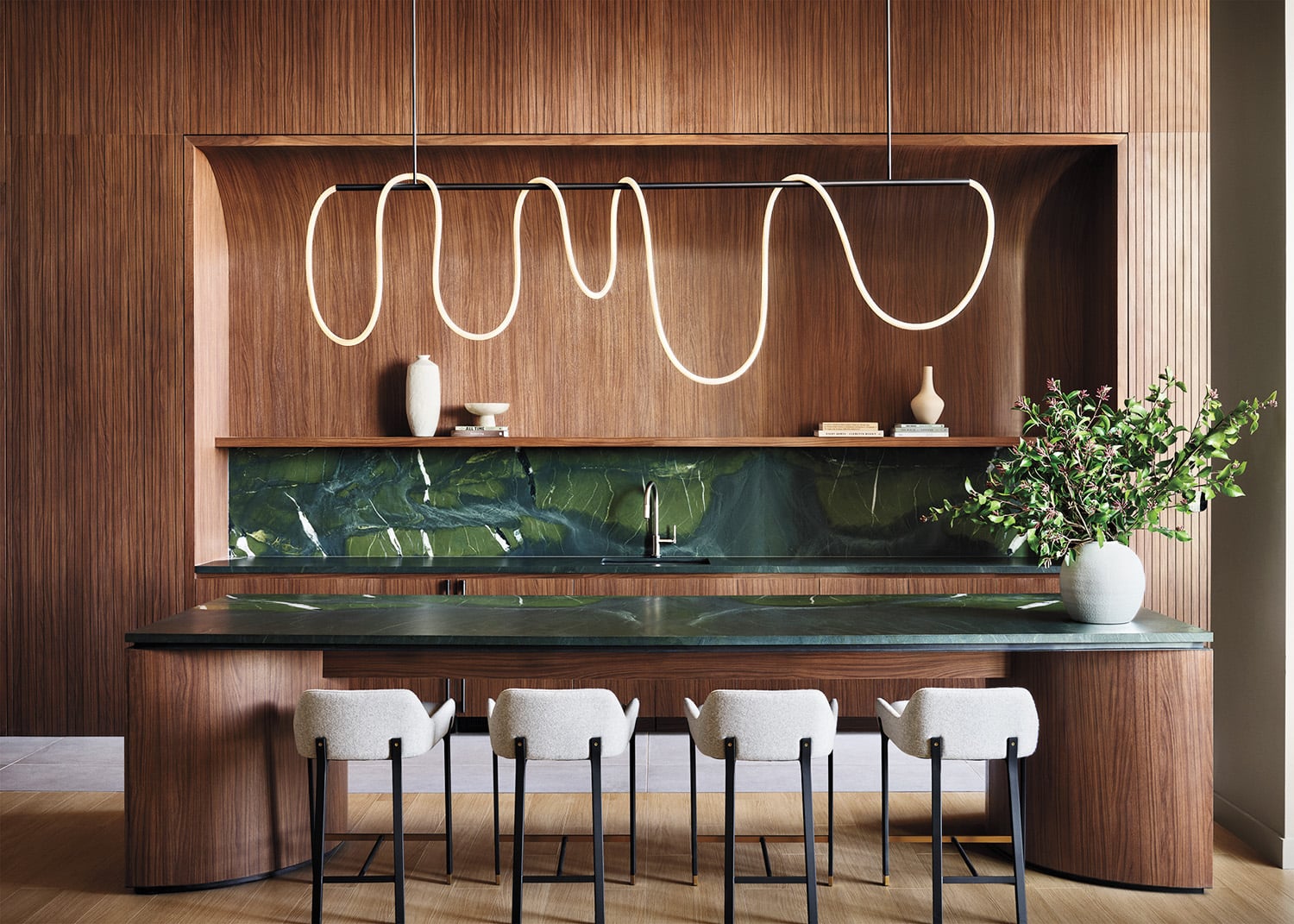
The software company just turned 20 years old, and its ground-up headquarters by HLW not only befits its longevity but also reflects its innovative ethos. Replacing Wix’s former mall-based warren is a 700,000-square-foot, human-centered campus of seven, 10-story buildings organized around “Wix Streets,” an internal thoroughfare that unifies the structures and encourages collaboration and spontaneous interaction among the more than 3,000 employees. Synchronizing with the Mediterranean Sea vistas visible through ample glazing are airy interiors marked by sun-washed pastels and warm woods. In the double-height lobby, vertical baffles form a hovering timber grid and a broad stairway doubles as amphitheater-style seating. Iridescent glass panels and rope light fixtures define team zones, with swaths of recycled pulp helping damper acoustics. Modular ceilings pair with demountable partitions so meeting rooms can swell or shrink as needed, without touching infrastructure. In typical tech fashion, amenities abound, with five restaurants, vegetable gardens, maker spaces, climbing walls, and an employee-run store among the perks. Another is the durable seamless flooring throughout, making the entire workplace dog friendly.
read more

LinkedIn’s San Francisco Office Serves As A Hub For Human Connection
[erson sitting at small table

LinkedIn’s San Francisco Office Serves As A Hub For Human Connection

LinkedIn, San Francisco

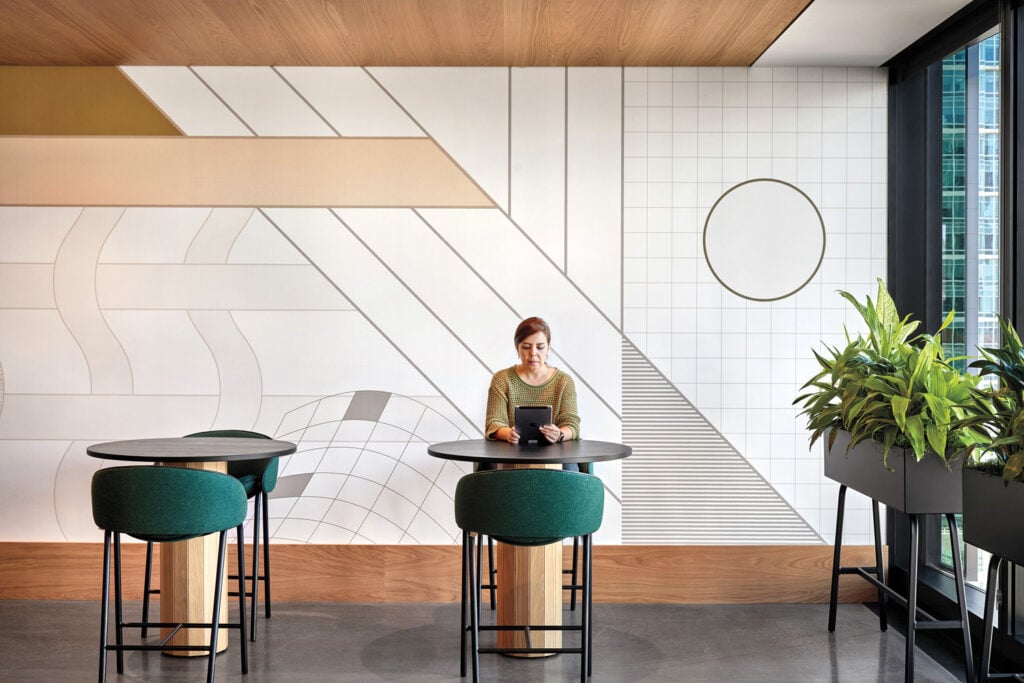
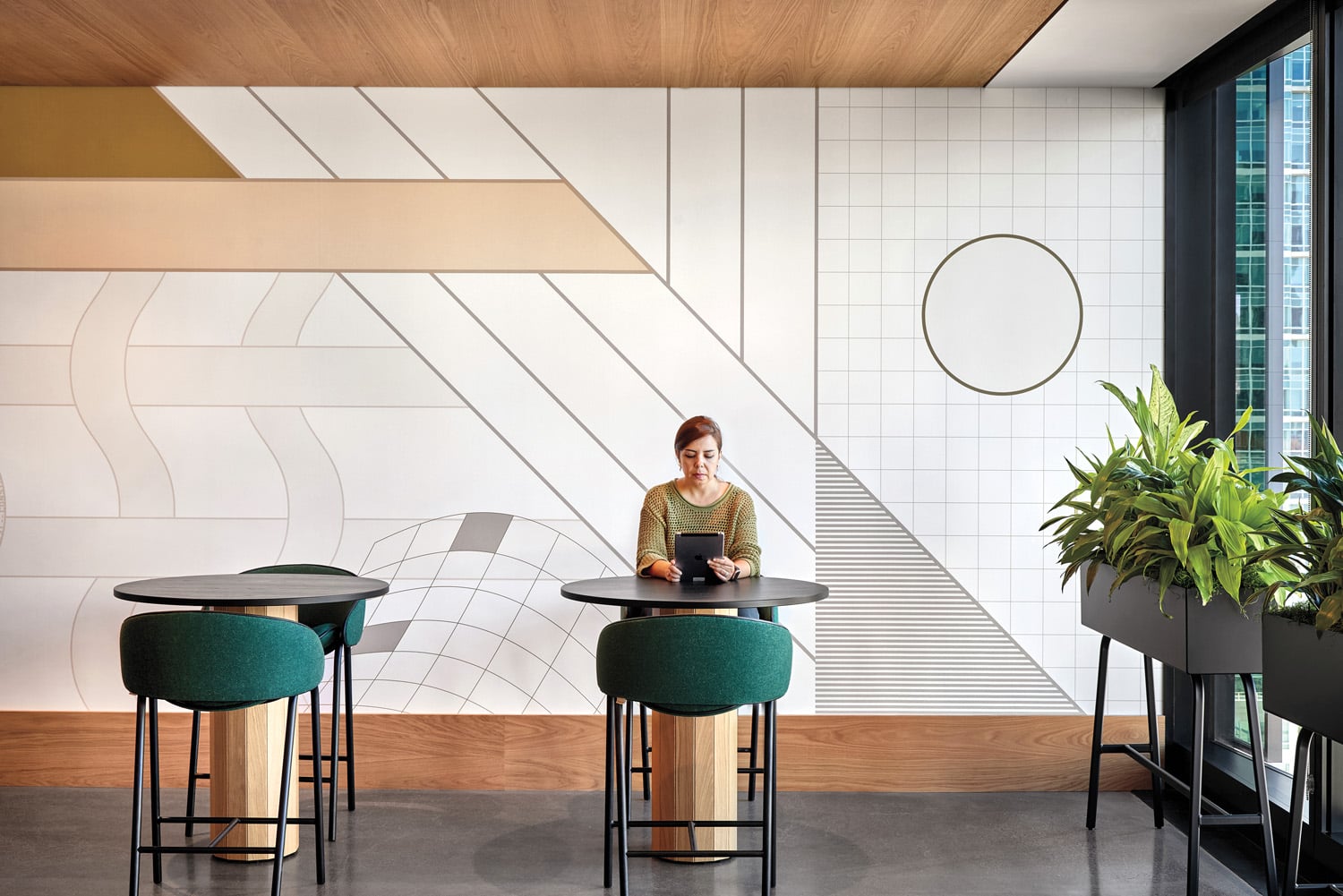
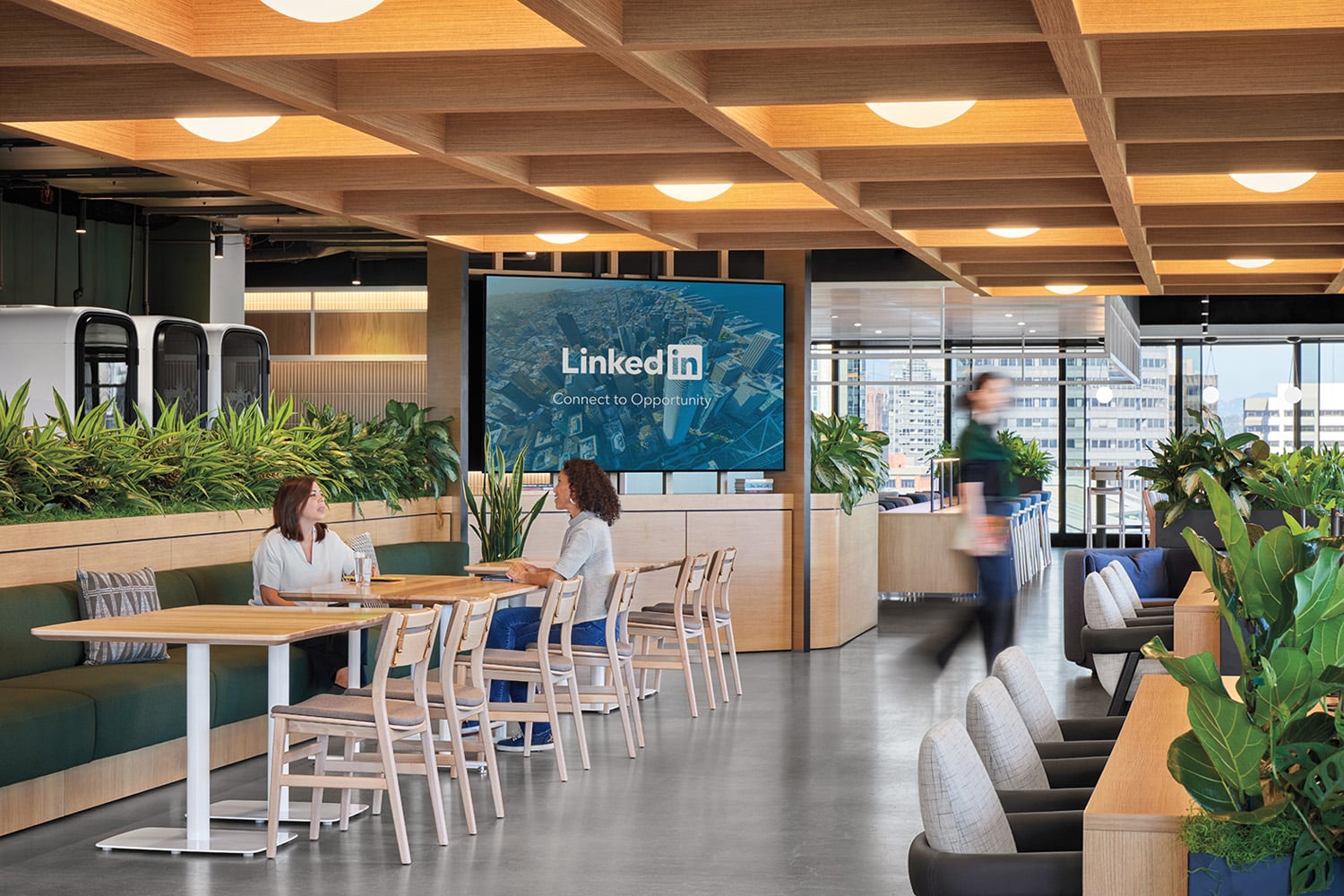
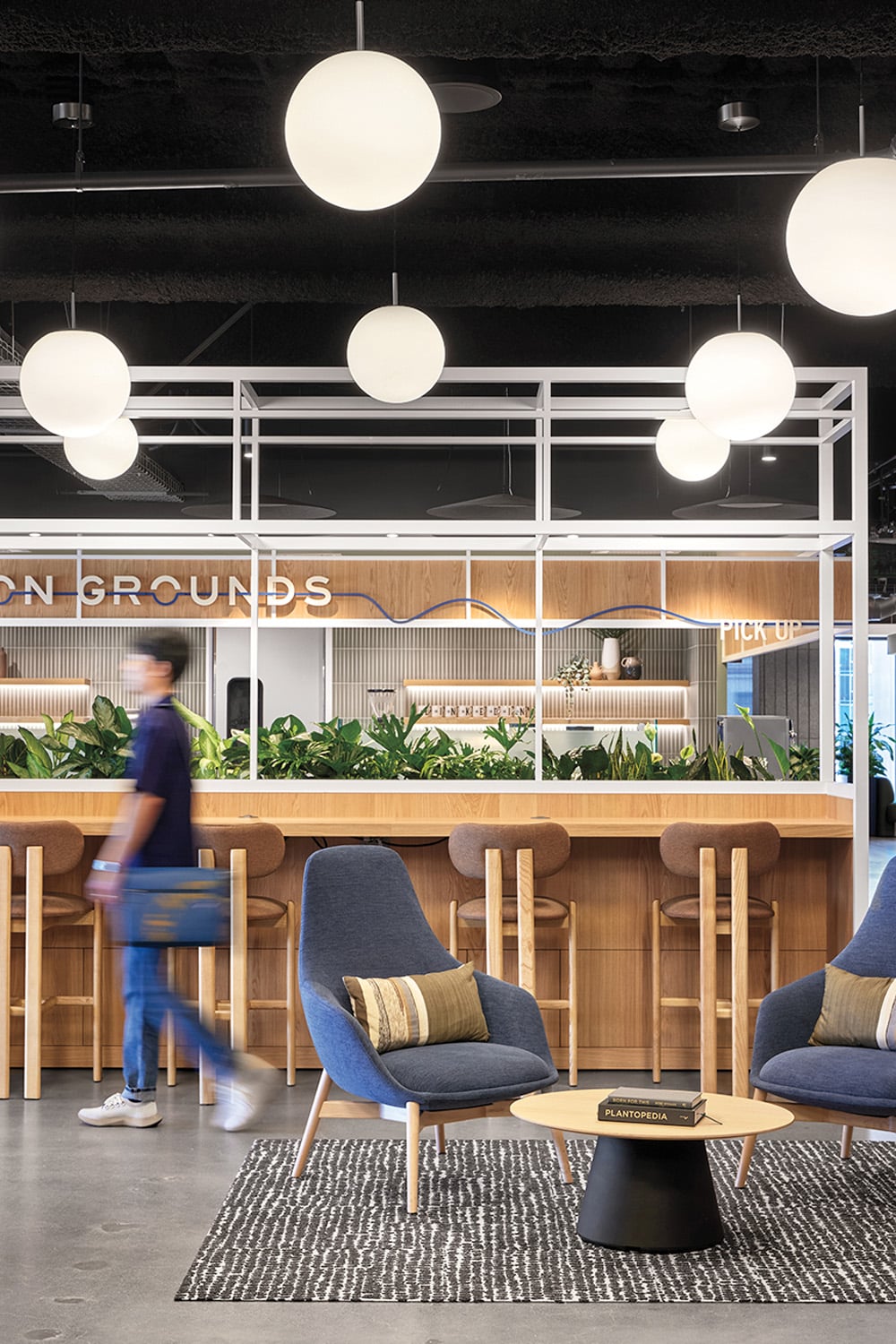
In the return-to-office era, the workplace is being reprogrammed as a platform for human contact. As the world’s largest professional social network, LinkedIn’s raison d’être is creating space for connection, and with the help of local firm Revel Architecture & Design, the tech giant recast an entire floor of its SoMa office to do just that. Located midway up the 26-floor tower, the client’s new amenity floor serves employees throughout the workday, offering flexible café- and lounge-style seating for mobile working, a host of large group meeting spaces with rearrangeable furniture, and a surf shack–inspired all-day coffee bar. Intended as a more laid-back alternative to the office’s main canteen a few floors below, the coffee hub was conceived to evoke the feel of San Francisco’s outer beach neighborhoods, where surfer culture rules and the daily pace slows. Coastal blues and greens conjure the mellow vibes of shore life, while lush greenery throughout helps bring the outdoors in. Geometric wall graphics give a wink and a nod to the shapes of the timber-frame architecture at Sea Ranch, the iconic 1960’s planned community in nearby Sonoma County. Meant as a soft landing space no matter the occasion, this amenity floor is certainly working overtime.

read more

Stantec Designs a Child-Centered Hospital Design in Lehi
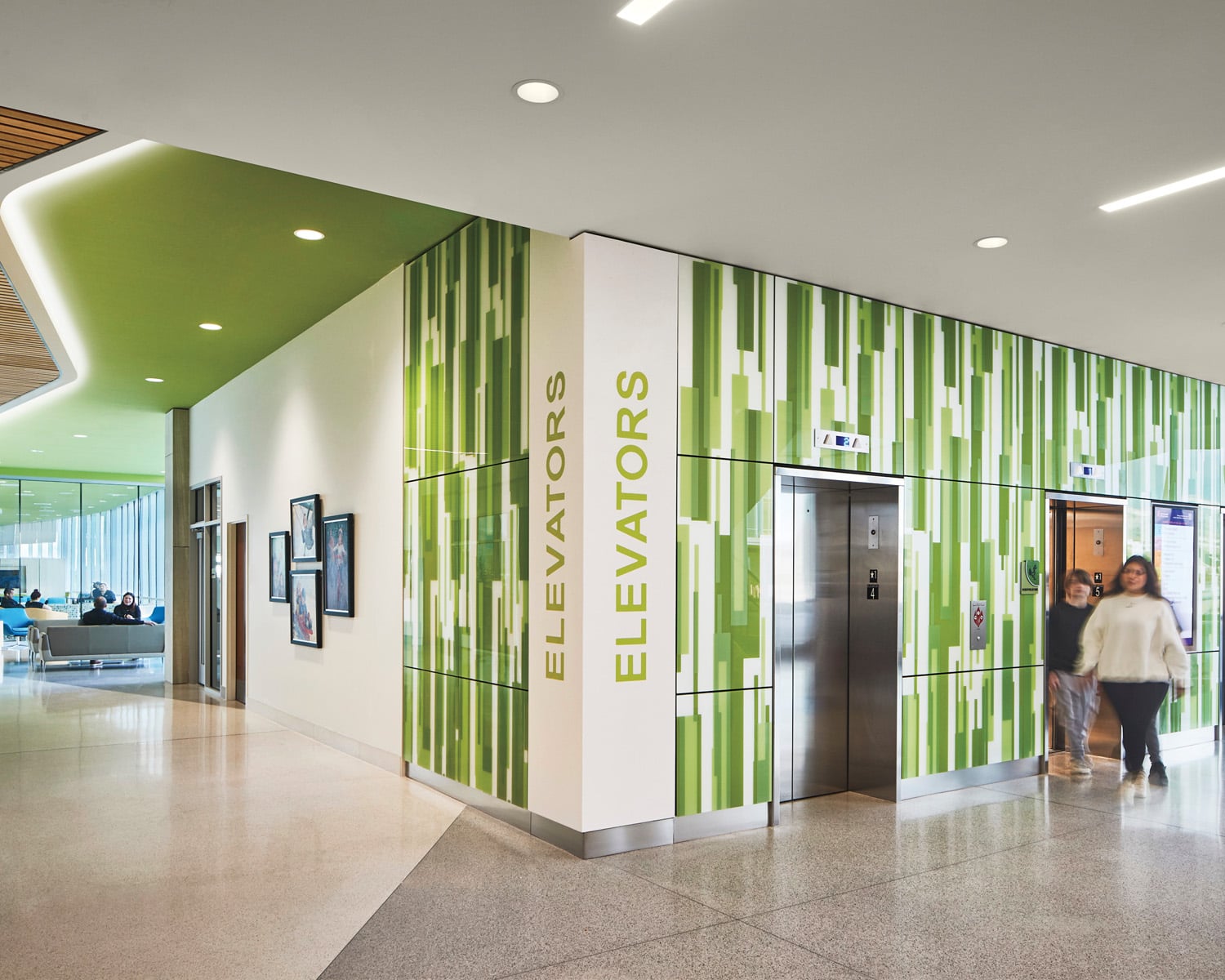
a wall mural with green base and yellow stripes

Stantec Designs A Child-Centered Hospital Design In Lehi, Utah

Intermountain Primary Children’s Hospital, Larry H. & Gail Miller Family Campus, Lehi, Utah

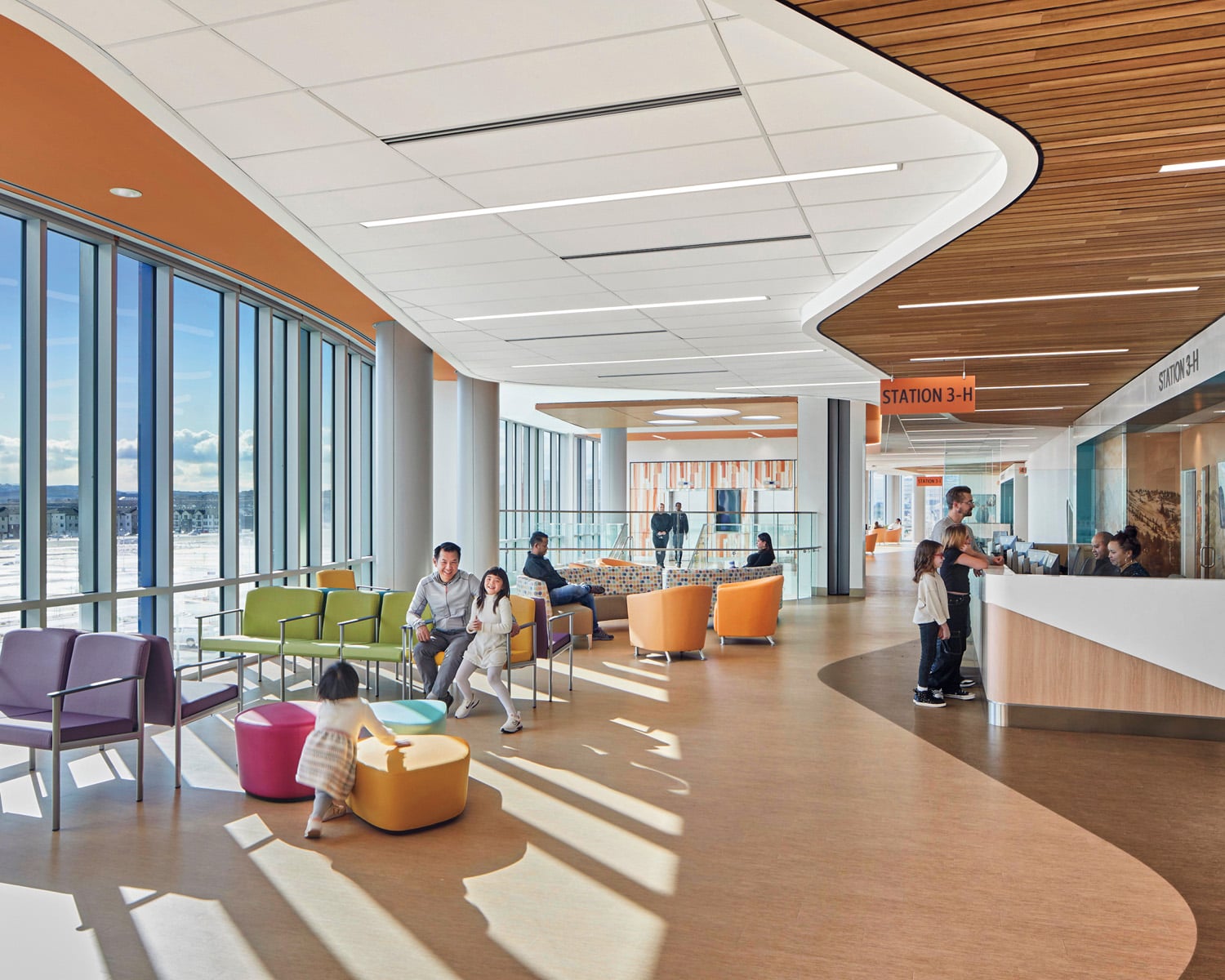
Distraction can work wonders with kids, turning a stressful moment into a silly one. Never is it a more important tool than in a healthcare setting, whose tubes and alarms can be downright scary. For this 486,000-square-foot pediatric hospital, Page, now part of Stantec, worked with VCBO Architecture to harness the power of positive distraction in turning its five floors into places of discovery and adventure. The team gave children engaging things to focus on, making them more relaxed when they see a doctor—and helping them heal.

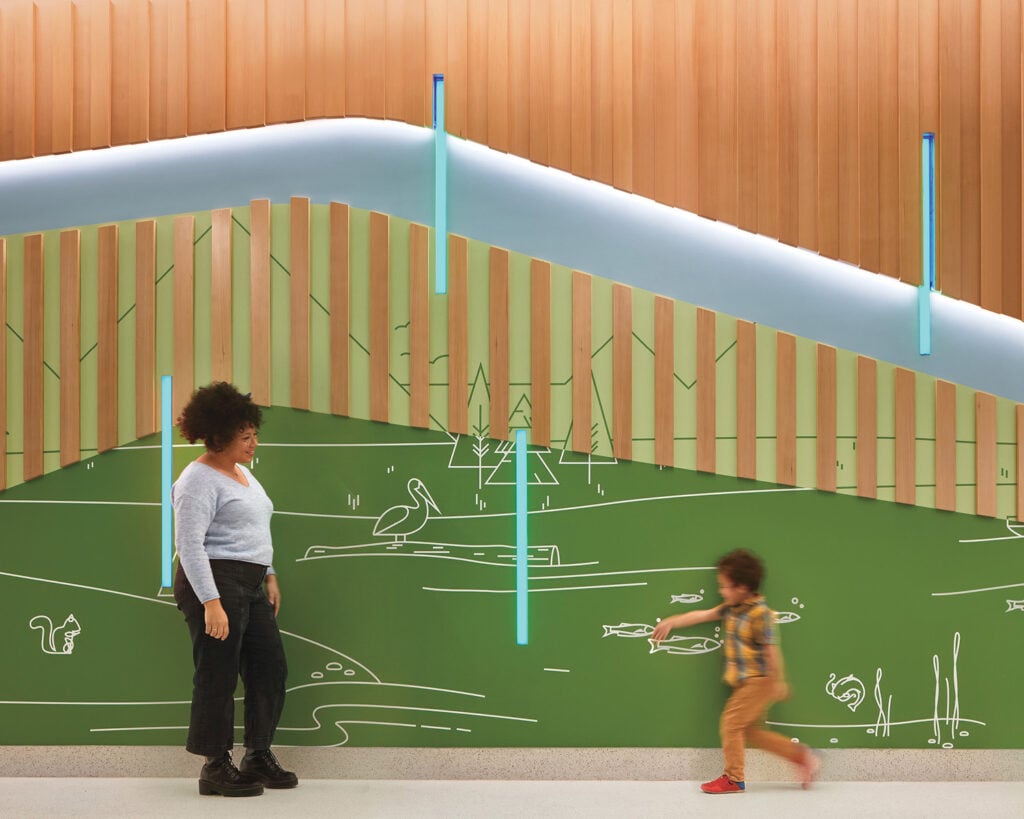
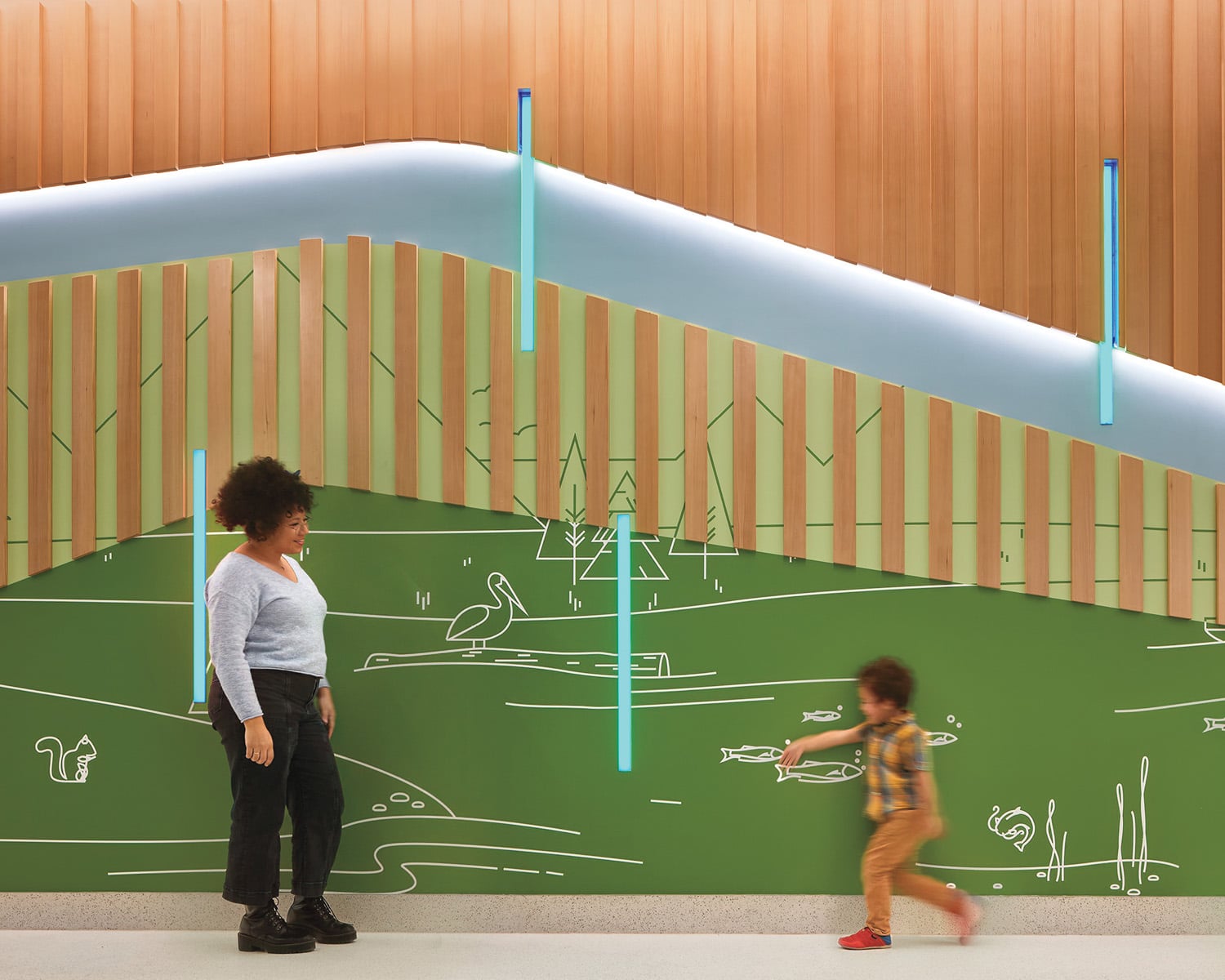
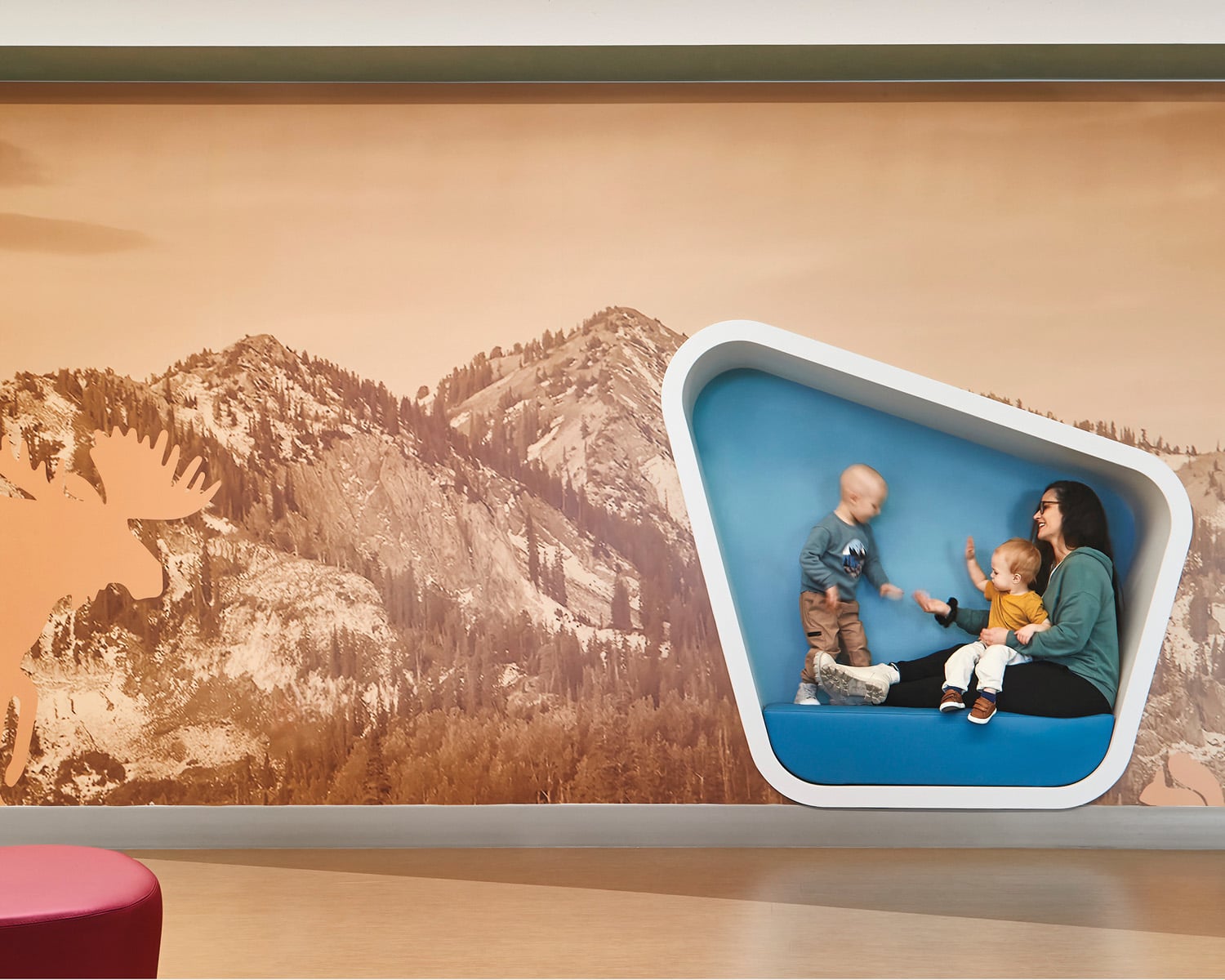
Taking inspiration from Utah’s natural landscapes, each floor became an immersive environment with distinct hues, images, and surprises. Realistic graphics on the walls of the Alpine level reflect the surrounding mountains, as do custom padded seating nooks in the waiting area. On the Space floor, an astronaut-themed MRI room lets kids pretend they’re climbing into a space shuttle instead of a foreboding piece of medical equipment. Elsewhere, zinc inlays of fish or paw prints in the terrazzo floor serve as creative wayfinding and moment of playfulness for kids looking down. Even a walk to the cafeteria becomes a game, with colorful motion-activated light strips that intensify and diminish as people walk by.

Editor’s note: See more standout projects from our Top 100 and Rising Giants of Design.

read more

Stanford University’s Computing and Data Science Building Redefines Campus Connectivity
office area with red chairs

Stanford University’s Computing And Data Science Building Redefines Campus Connectivity

In Northern California’s Silicon Valley, ideas move at the speed of code. Stanford University in Palo Alto is furthering this progress with its new Computing and Data Science building, which functions more like a connective network than a standalone object. The 167,000-square-foot CoDa, as the coeds call it, is by Seattle-based LMN, which, ranking 141st among Interior Design’s Rising Giants, specializes in large-scale, sustainable, and community-focused civic, academic, and mixed-use projects that redefine urban infrastructure—and this project follows suit.

Both client and architect believe in “collaborative innovation,” that tech and data science are enhanced with the liberal arts, and CoDa expresses this ethos of cross-pollination. In addition to providing much-needed office and study spaces for Stanford’s engineering school, CoDa’s classrooms also serve all seven of the university’s schools, including the humanities. “The idea was to bridge these sciences to other academic disciplines on campus, and, ultimately, the outside world,” LMN principal Stephen Demayo explains.

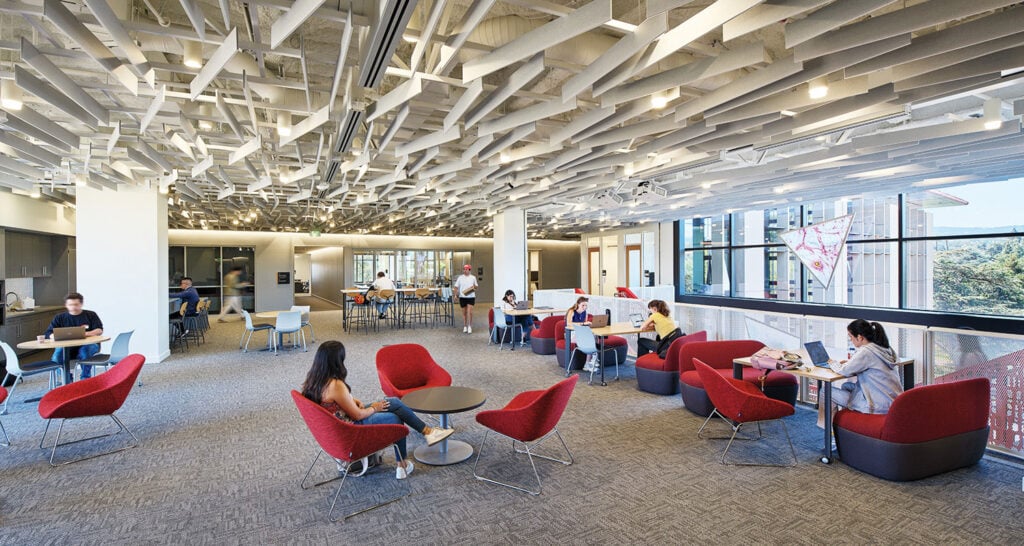
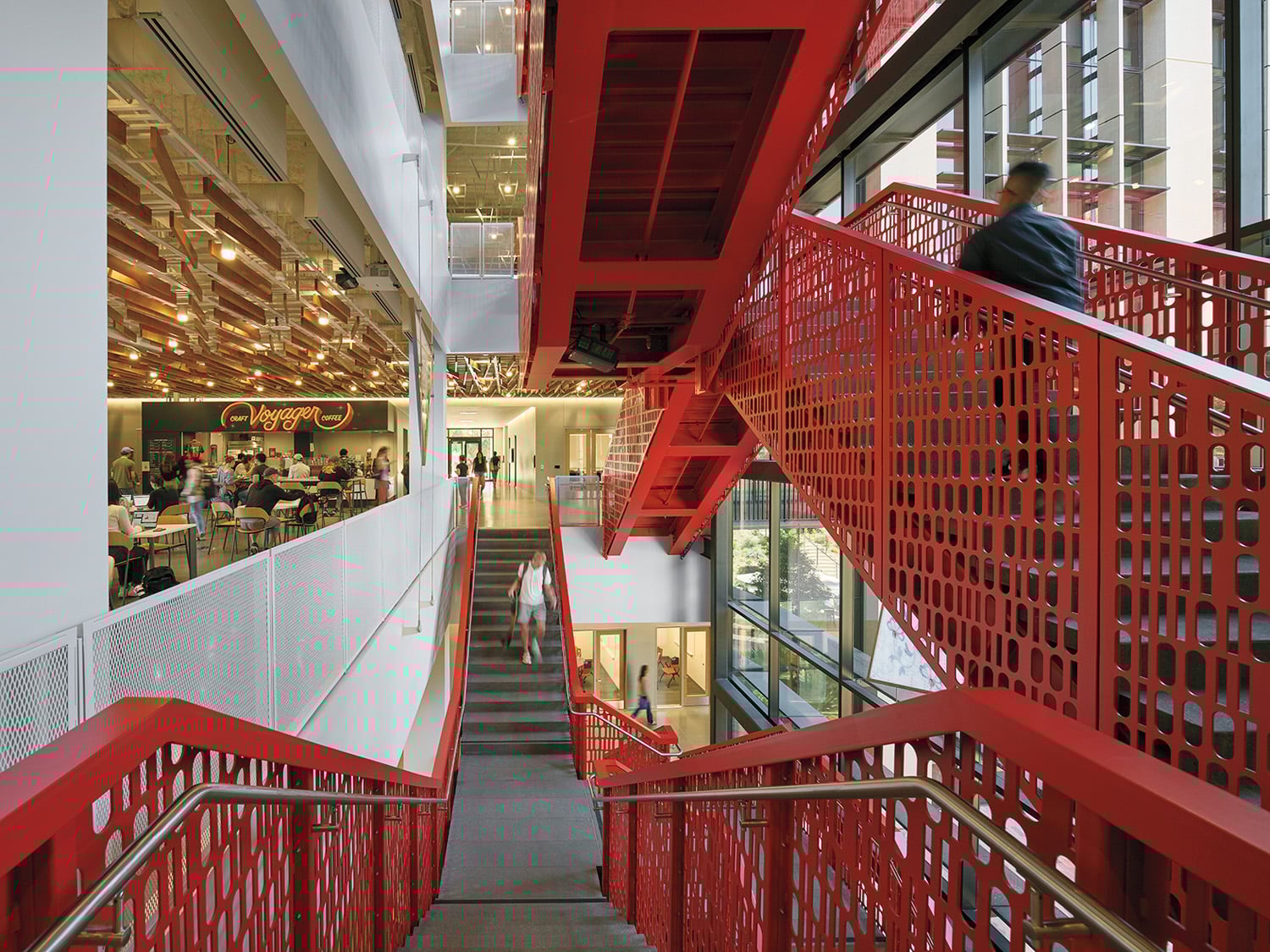
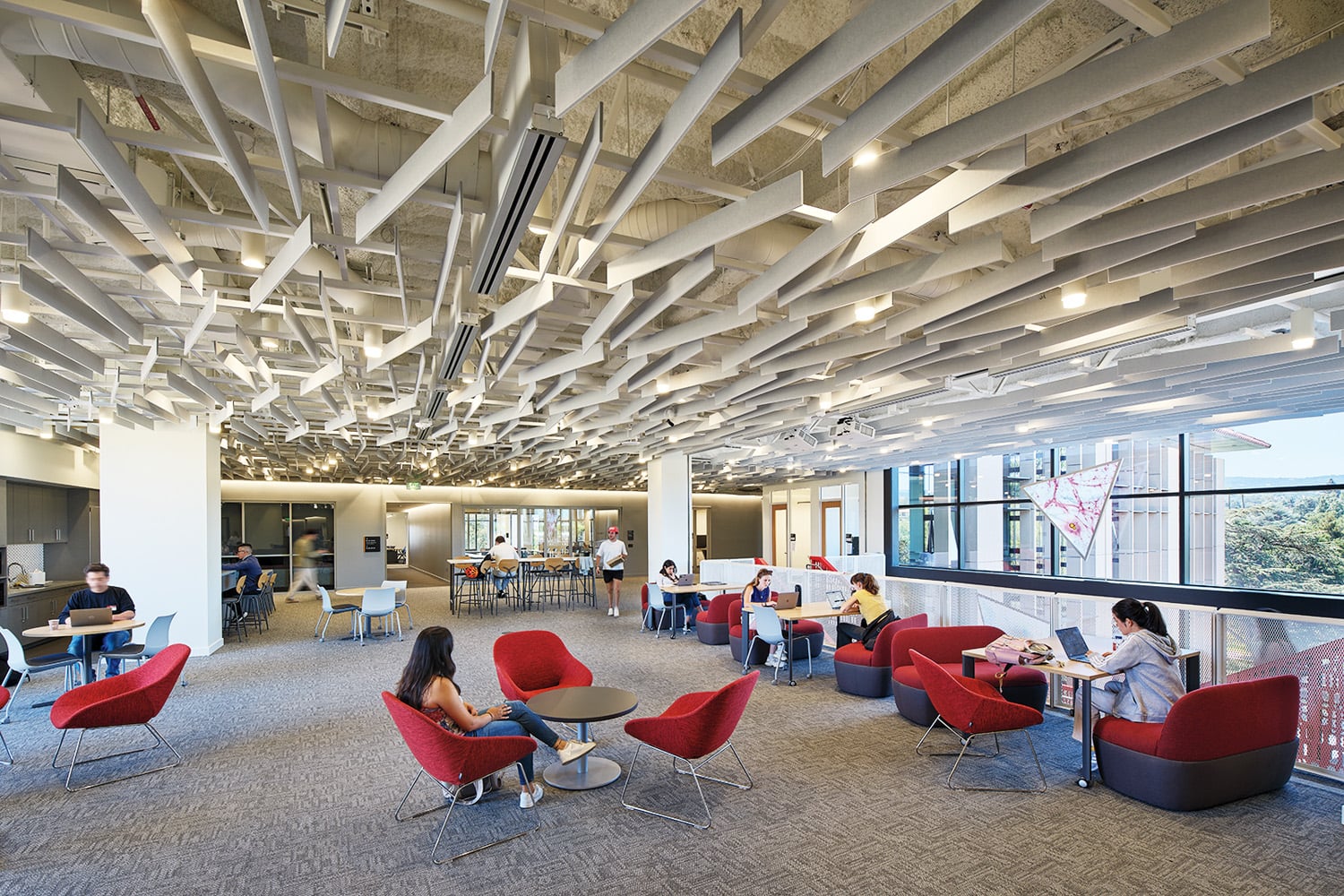
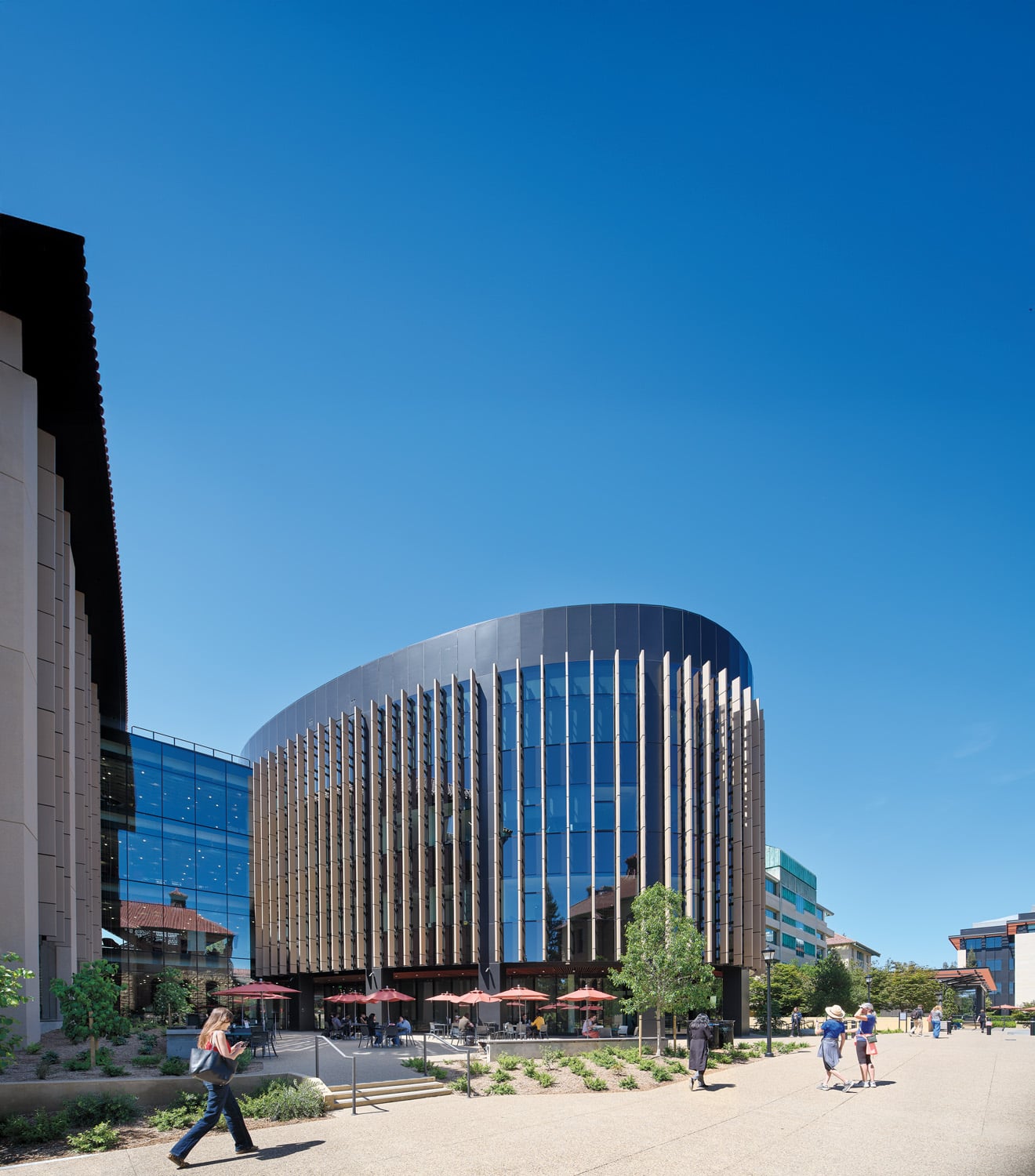
A feature is the central “mixing” chamber containing a precast-concrete stair that spans the structure’s five floors. The pattern of its perforated-aluminum balustrades, which have been powder-coated Stanford Cardinal red, was devised from 8-bit binary code, nodding to computer language while revealing views of adjacent lounges. Acoustic felt baffles above those lounges introduce movement, suggesting the flow of ideas between people and subject matters. Outside, the ovoid form engages a busy campus thoroughfare, its vertical terra-cotta fins fittingly doing double duty: referencing the materiality of the campus’s historic architecture and providing shade from the California sun.

read more

Inside A Residential Hub In Charlotte’s Historic South End

Inside A Residential Hub In Charlotte’s Historic South End

Linea, Charlotte, North Carolina

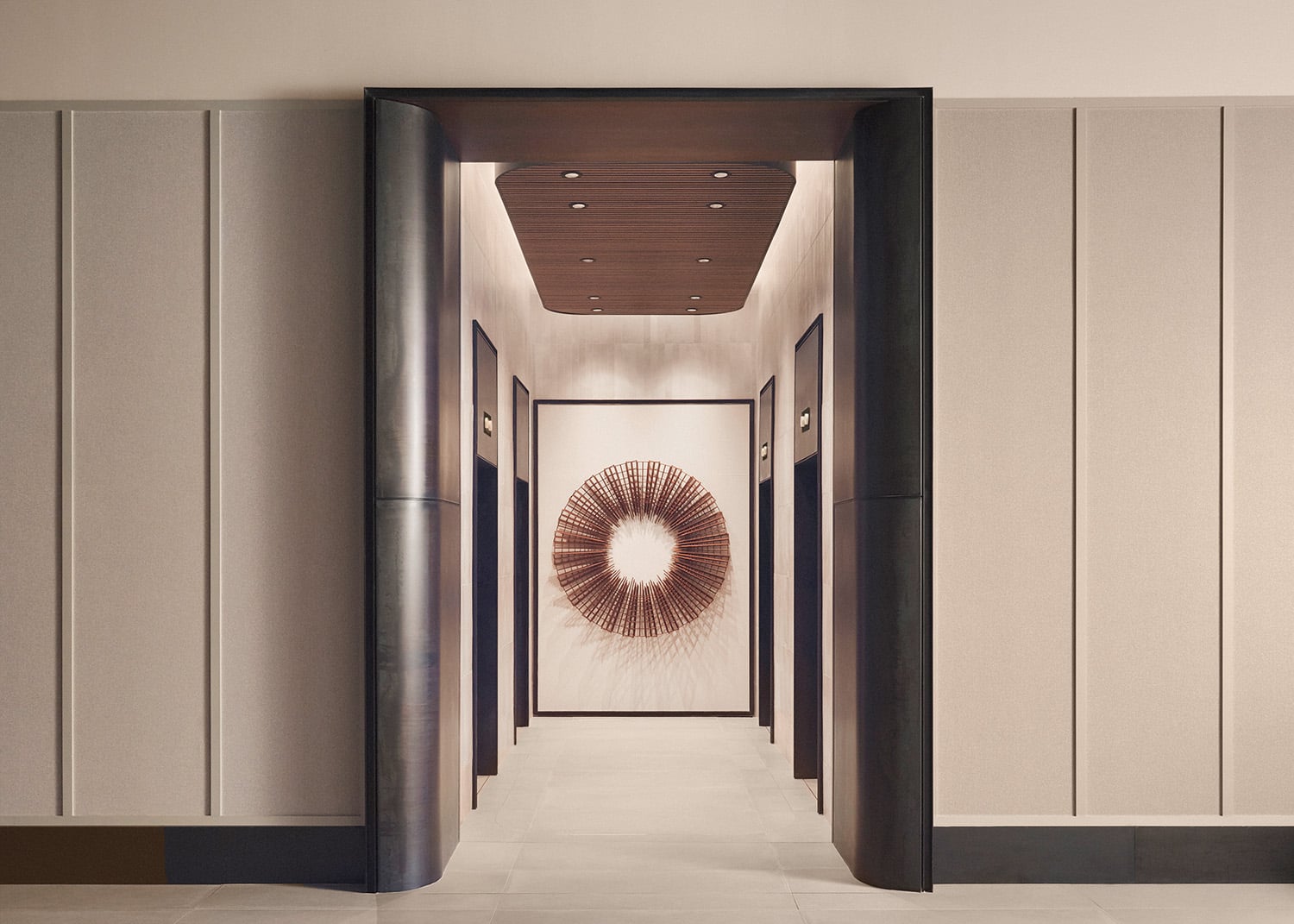
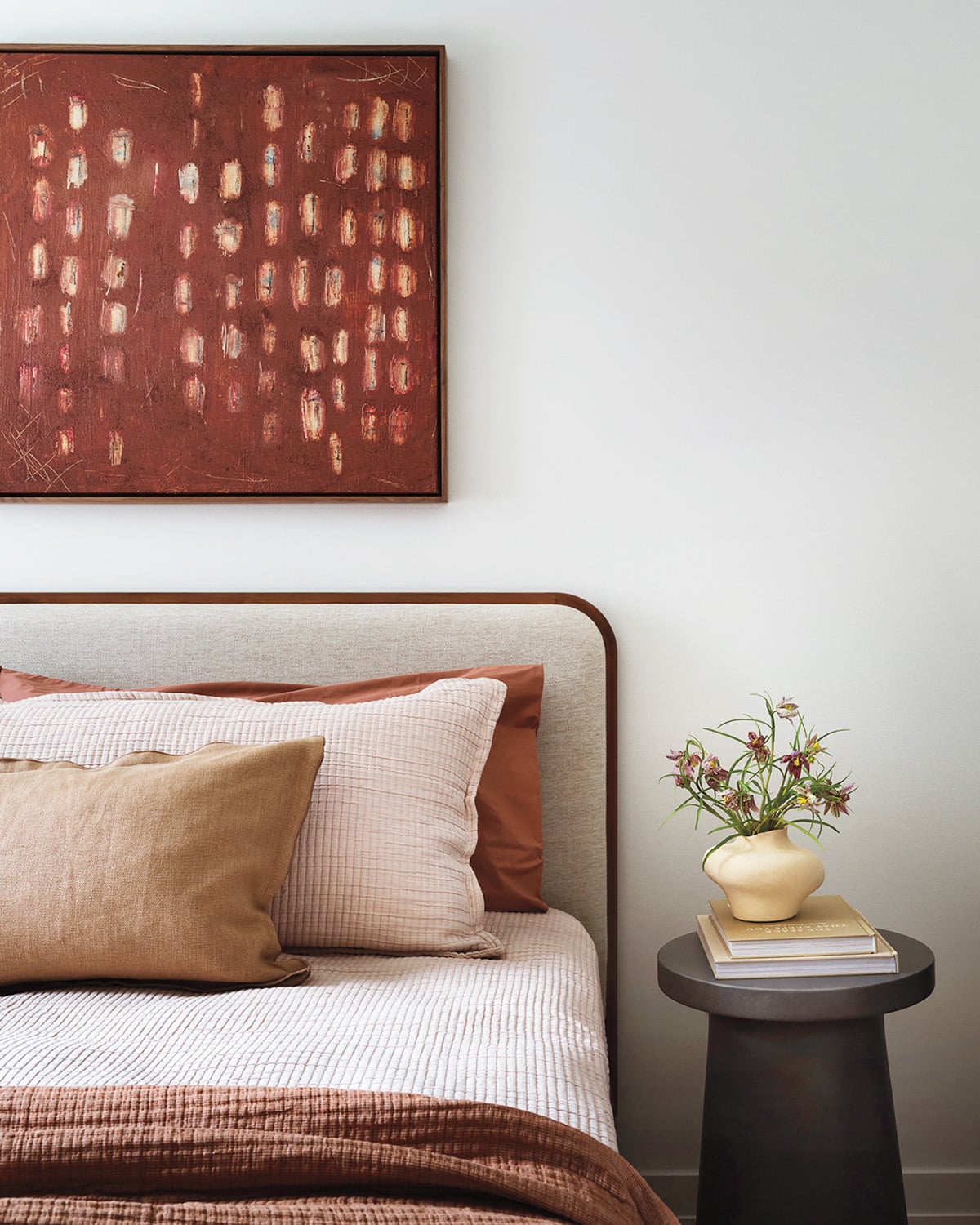
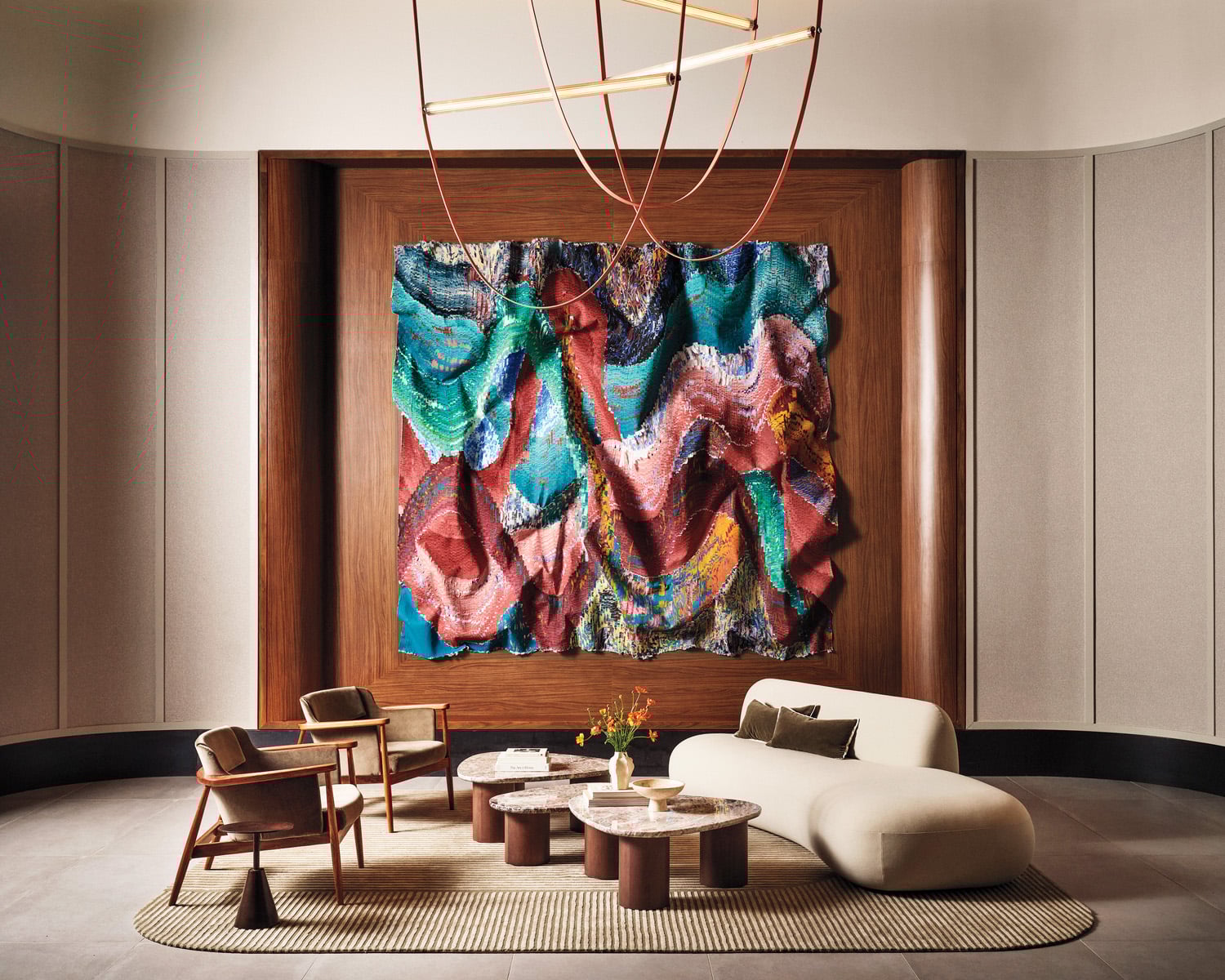
This 370-unit luxury residential development by Fogarty Finger fosters connectivity. Located in the city’s South End, a creative hub that was once a locus of textile manufacturing and millwork, the property abuts the Charlotte Rail Trail, sits close to a light-rail stop, and connects by way of a skybridge to a new luxury office tower with ground-floor retail and dining destinations. The interiors are similarly rooted in place and community, with numerous tenant perks and a decor that draws from the area’s rich history. In the lobby, woven textures and warm tones prevail, juxtaposed by quietly industrial elements: See the gray terrazzo reception desk, walnut-framed furniture, and soothing, neutral-tone fabrics. Art from local makers also makes an appearance, such as the lobby’s Eruption Series (2024) by Kenny Nguyen, a mixed-media piece made from dipping silk in marbleized acrylic paint and mounting it to canvas. The earthy hues continue into the apartments themselves, which range from studios to three bedrooms, some with private work/study nooks. The 23rd floor, with jaw-dropping city views, is devoted to amenities, including a coworking space, game room with LED rope–lit bar, moody sound lounge with a community record collection, and an outdoor pool.

read more

From Convent To Chic Retreat: Inside OTJ Architects’s Historic Hotel Conversion
bright and airy hotel lobby
Photography by Trent Bell.

From Convent To Chic Retreat: Inside OTJ Architects’s Historic Hotel Conversion

Visitation Hotel Frederick, Maryland

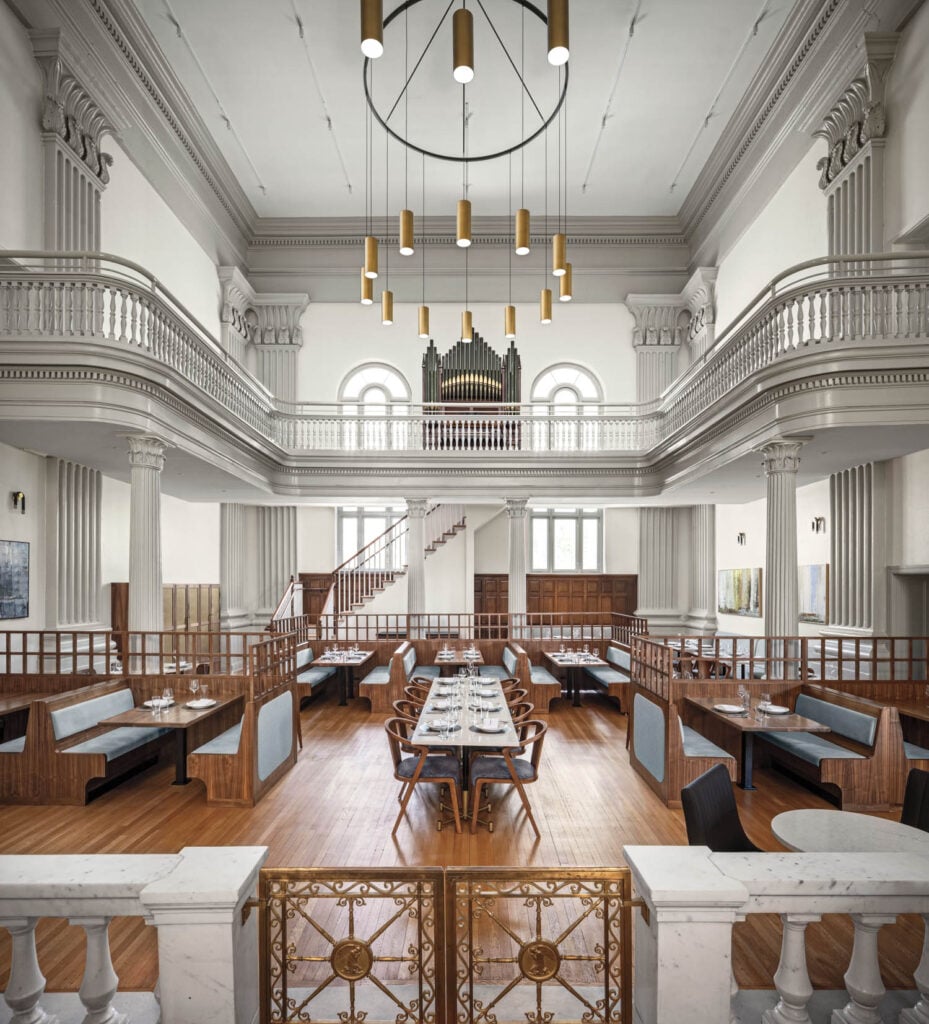
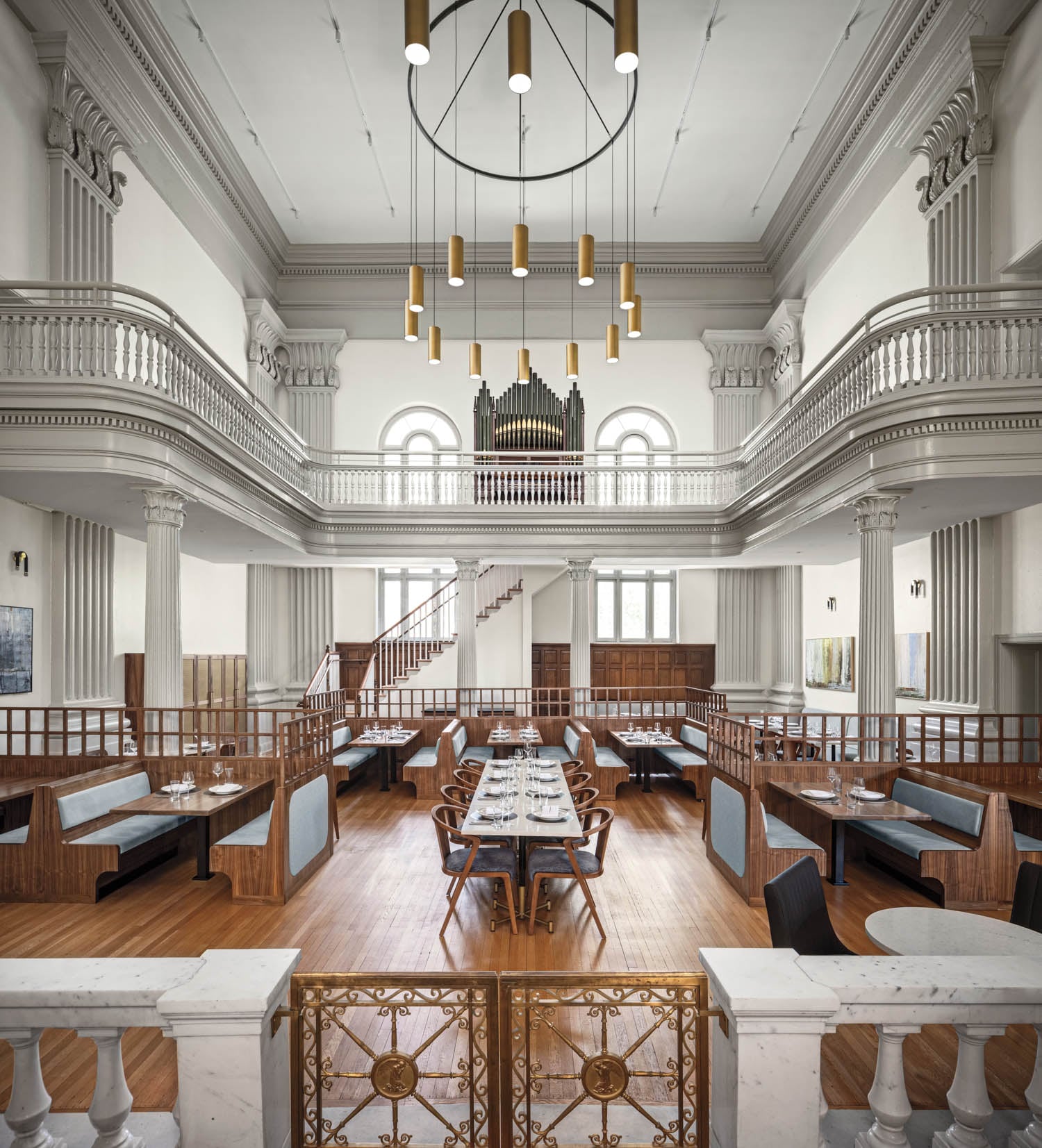
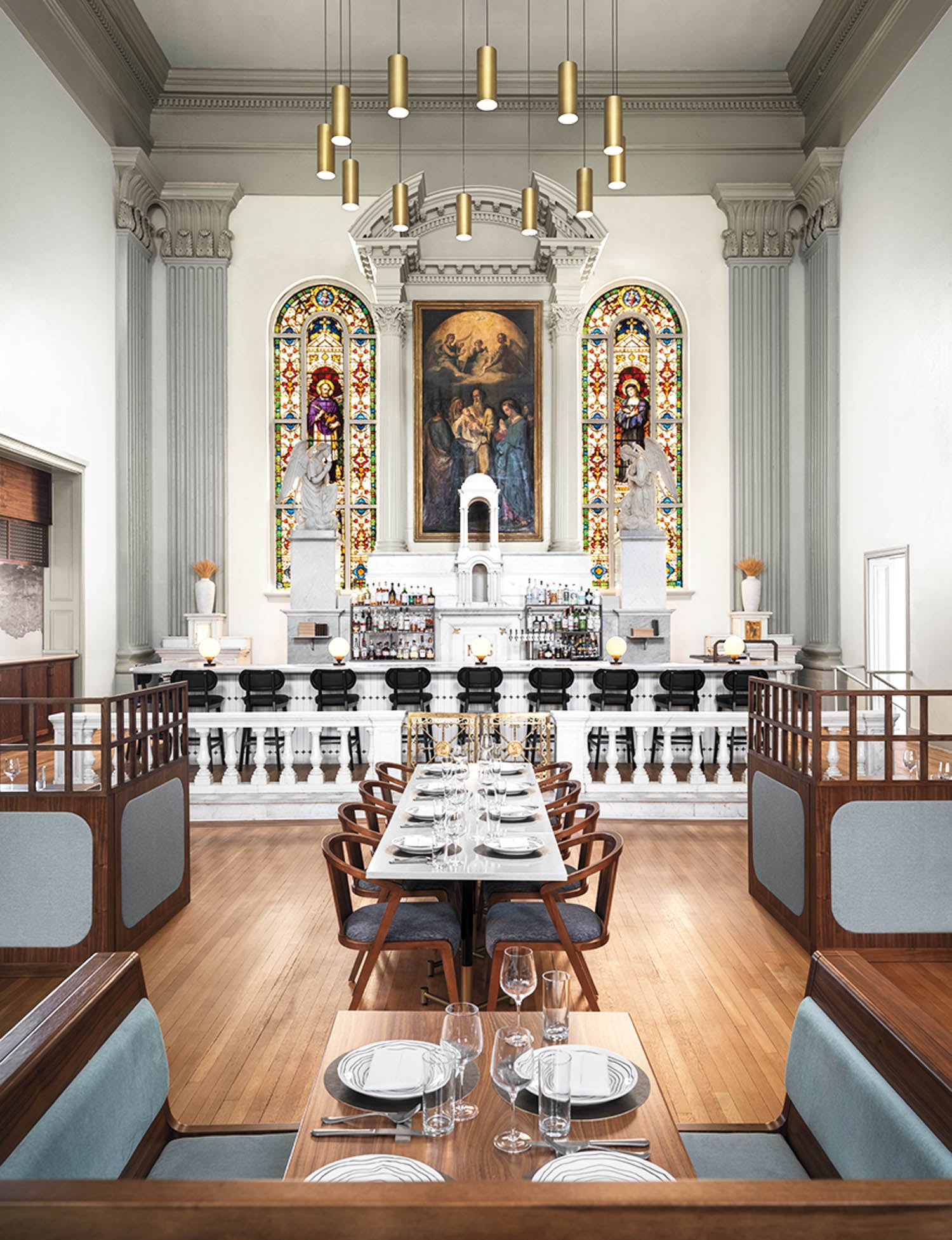
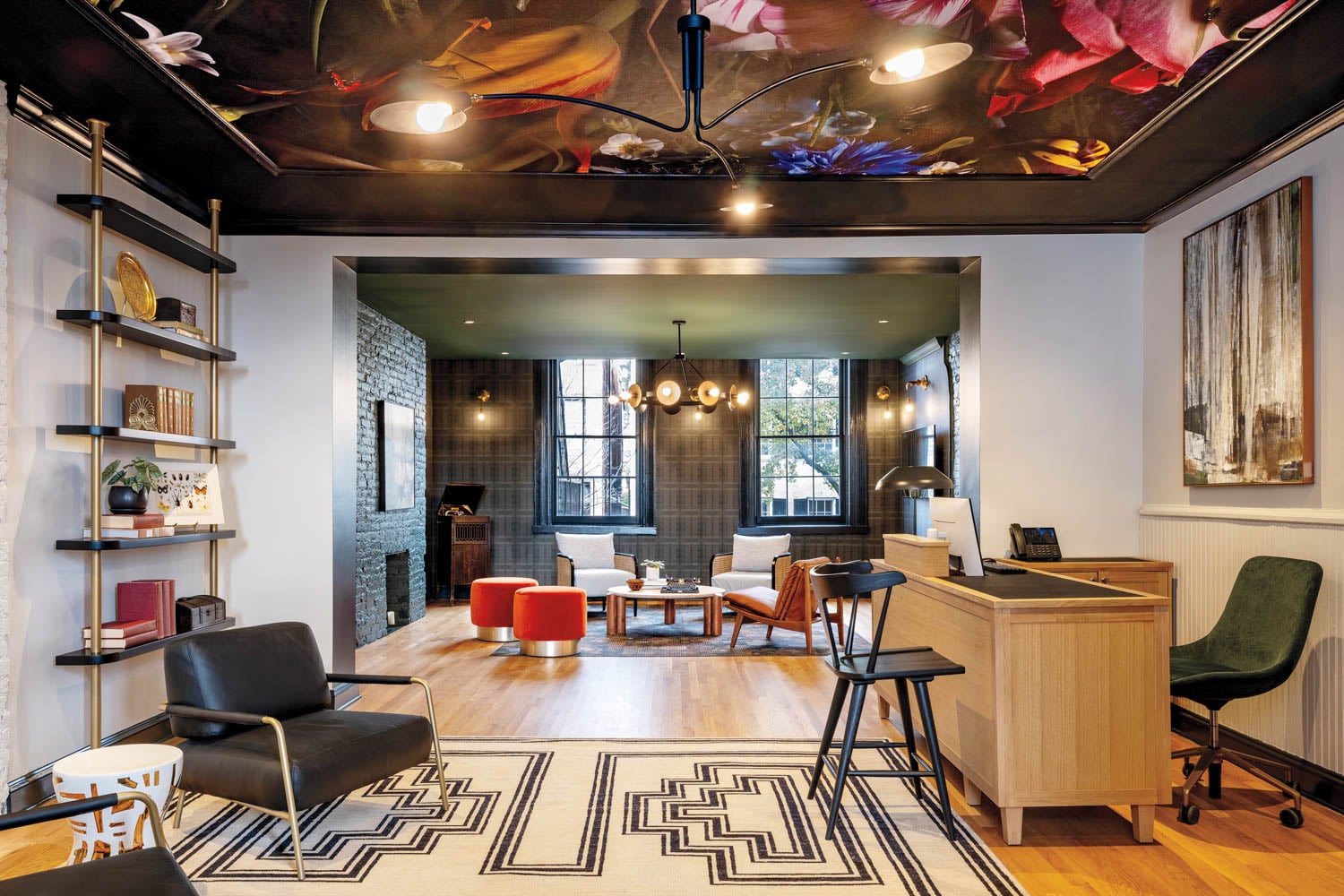
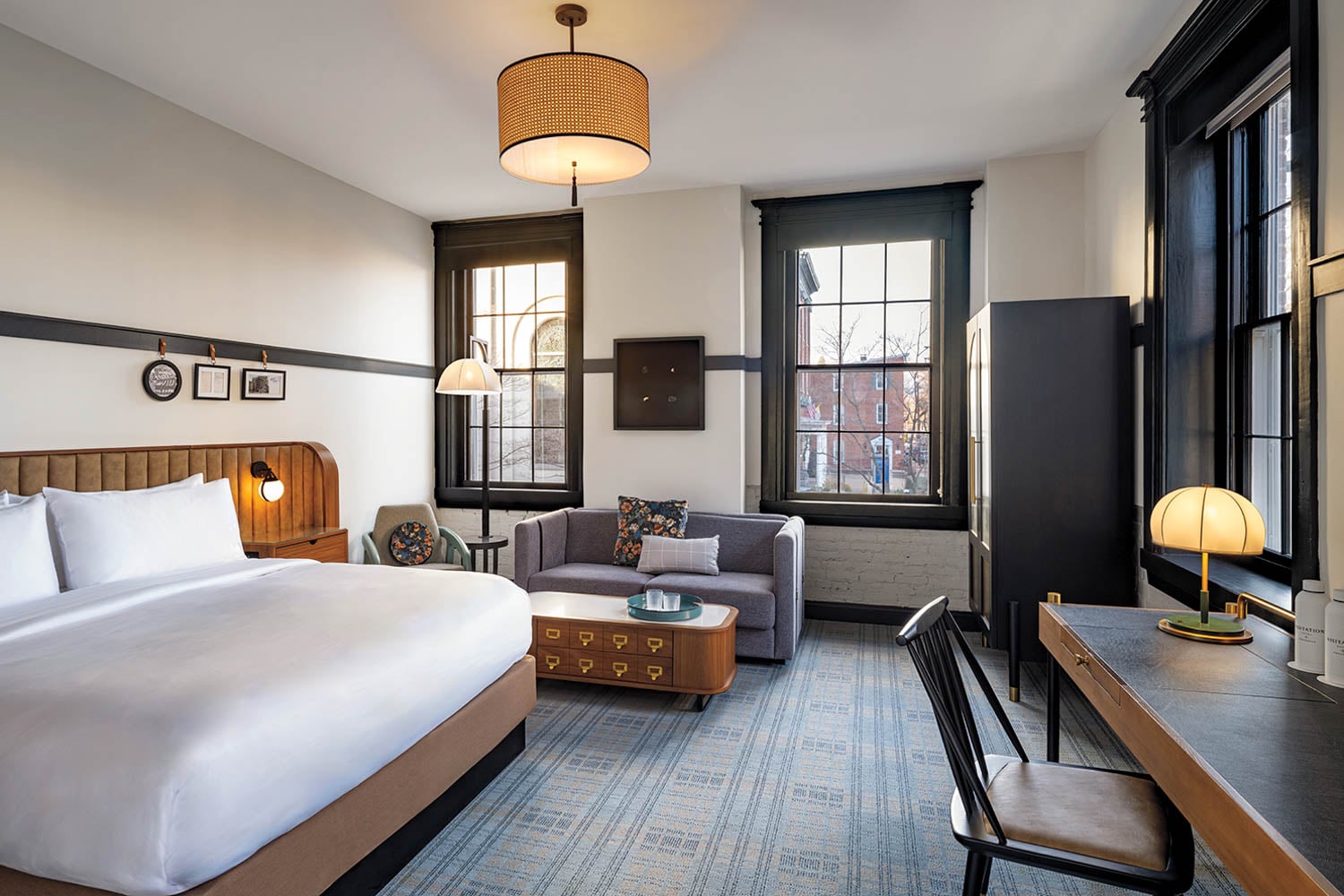
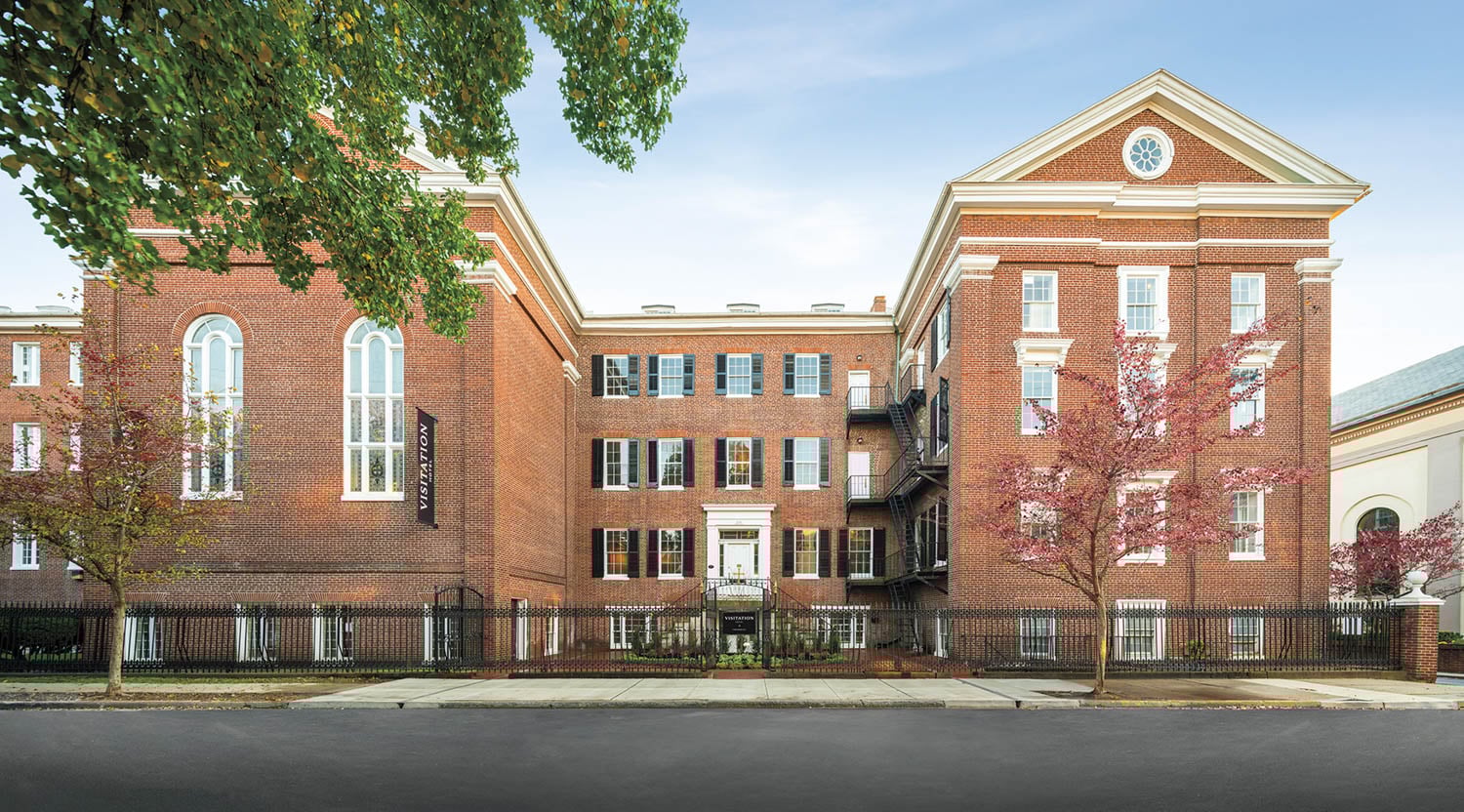
Habited nuns and white-socked schoolgirls once traipsed the halls of this 1820’s Catholic convent and academy. Now, it’s a 65-key boutique hotel where guests can dine on steak and wine in the deconsecrated chapel. Wye Oak Tavern is said restaurant, a modern American venue by celebrity chefs and Frederick, Maryland, natives Bryan and Michael Voltaggio, and its restored shell is a sight to behold—tuned to perfection by OTJ Architects with the help of church officials and historians. The original marble altar, featuring statues of kneeling angels, was reimagined as a bar surveyed by soaring, painstakingly preserved stained-glass windows. In what was once the nave, dining banquettes recall pews, and tubular brass-finished chandeliers allude to the balcony’s untouched pipe organ. Guest rooms and communal lounges convey a sense of restrained luxury aligned with the strict austerity of the original convent and schoolhouse, but with a cosseting twist. Of note are the more than 250 objects uncovered during the renovation, such as a 19th-century green-glass medicine bottle, displayed throughout for guests to enjoy. For those who would like to stay long-term, the redbrick complex also houses 25 condominiums ranging from 1,500 to 2,500 square feet, all single-level and conceived to appeal to empty nesters.

read more

It seems we can’t find what you’re looking for. Perhaps searching can help.