
10 Questions With… Amina Agueznay
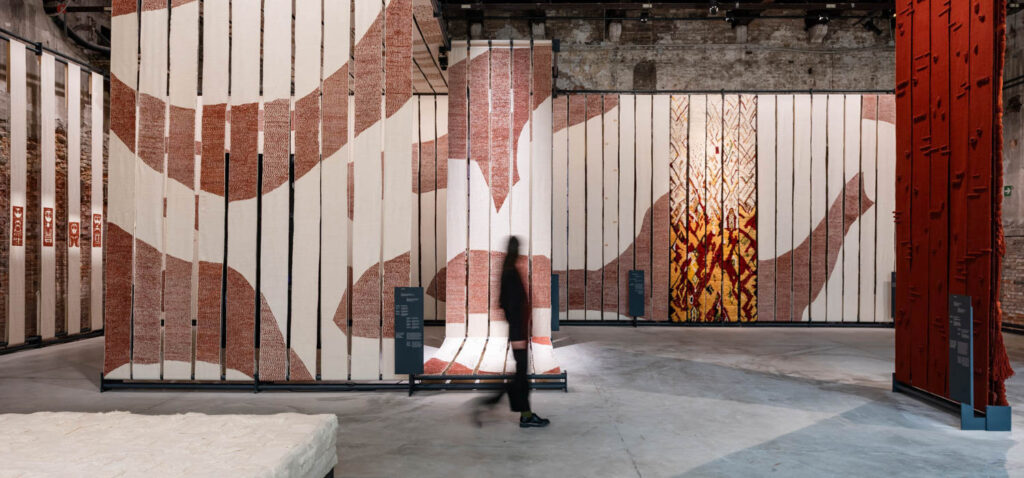
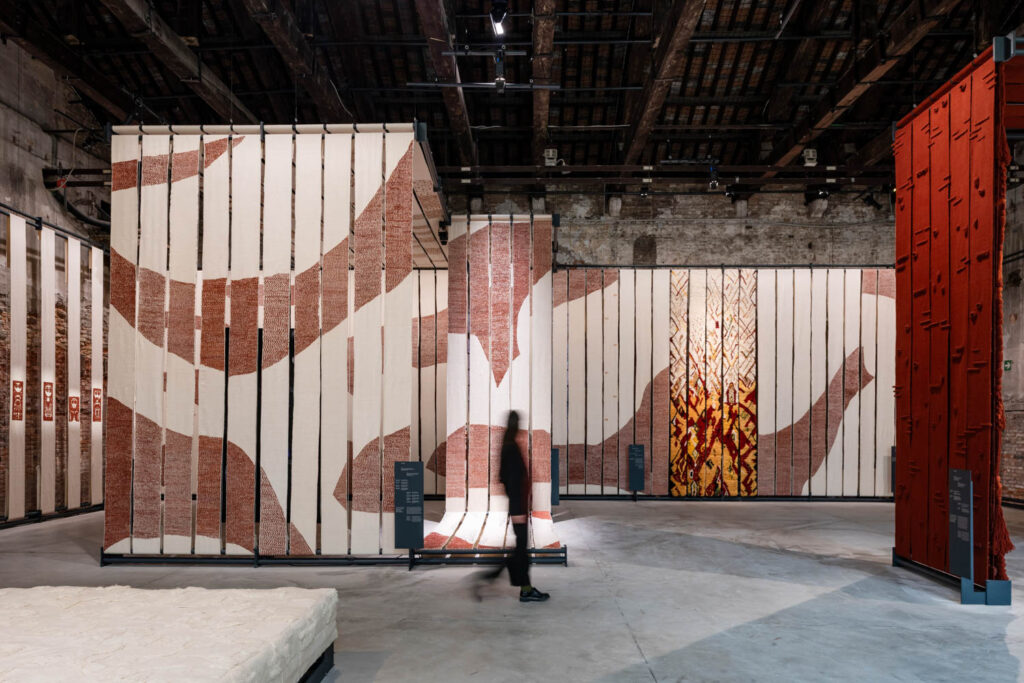
This past May, what may be considered the most important work yet of multidisciplinary Moroccan artist Amina Agueznay opened as part of this year’s Venice Biennale at the Arsenale’s Artiglierie. Titled Asǝṭṭa—the Amazigh term for ritual weaving—the site-specific work represents Morocco’s debut national pavilion at the event.
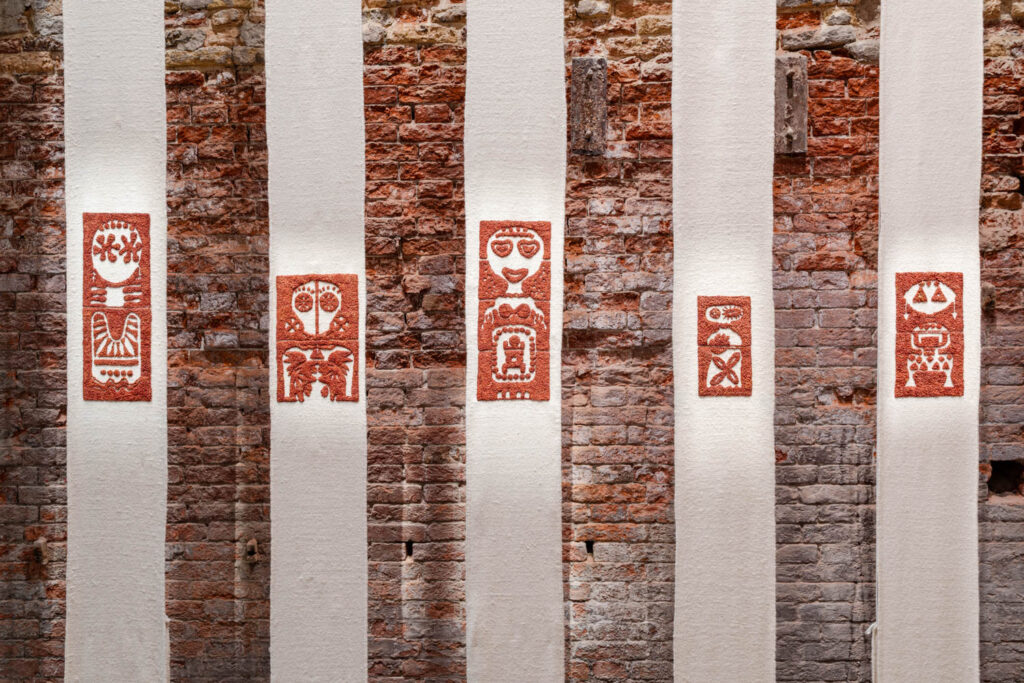
The monumental 300-square-meter installation, made in collaboration with 166 Moroccan artisans from across the country’s regions, is described as exploring the transmission of traditional craftsmanship and shared memory. Curated by Meriem Berrada, the project also bridges the gap between traditional craftsmanship and contemporary art.
Agueznay trained and practiced as an architect in the United States for over a decade before relocating to Morocco in 1997 to research traditional craft practices. For over three decades, she has worked across design, architecture and craft, supported by extensive field research and workshops with artisans, and has won awards, including the 2024 Norval Sovereign Art Prize, which celebrates the work of artists from Africa and its diaspora. Agueznay’s work has been exhibited in Morocco and around the world, including at the Ford Foundation (New York), Red Seas Museum (Jeddah), Haus der Kulturen der Welt (Berlin), Centre Pompidou-Metz, and Museum of Contemporary Art Al Maaden (Marrakech).
The project by Morocco at the Biennale also includes a video presentation that shows the behind-the-scenes of how the installation Asǝṭṭa came together. Of note, pieces in the installation honor the work of Amina’s mother, Malika Agueznay, a modernist artist and a member of the influential Casablanca Art School.
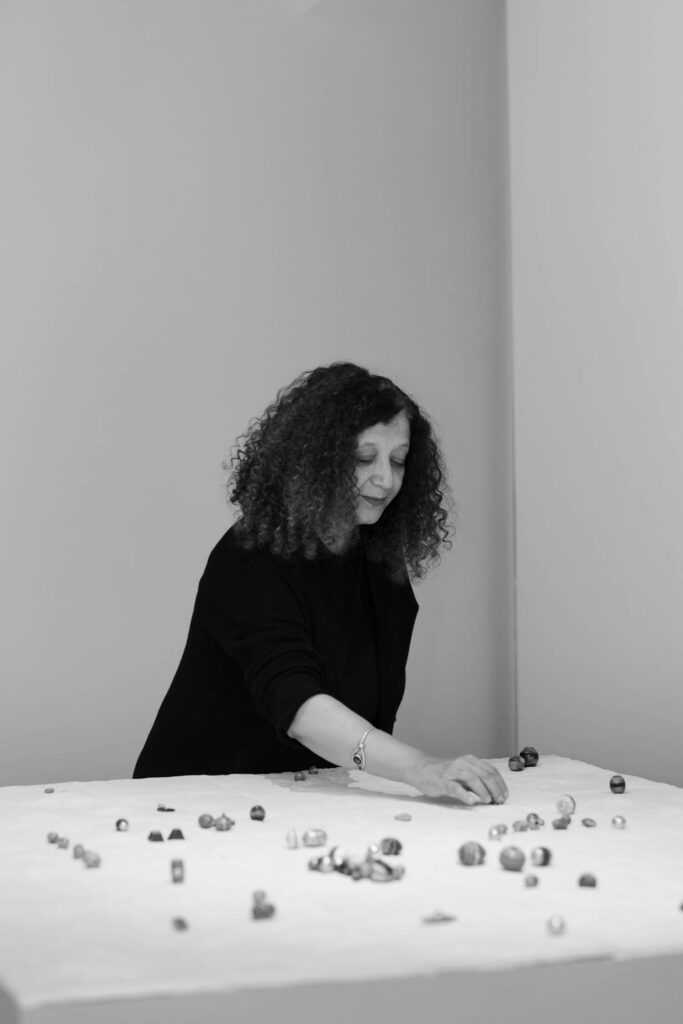
Interior Design asked Agueznay about her practice, the Asǝṭṭa installation and her representation of Morocco at this year’s Venice Biennale.
Interior Design: You studied and practiced architecture in the United States and then moved back home to Morocco. What inspired that decision?
Amina Agueznay: I like to think that I trust my instincts. When I think back on that decision, what I remember most is the desire for immediacy, for tactility. You can’t hug a building. As a child, my mother often brought me to souks and artisans’ workshops in southern Morocco. I listened to her conversations with people, and it was clear that she had great respect for craft. These memories were very formative for me.
ID: What was the pipeline from being a practicing architect to becoming a multidisciplinary artist?
AA: These things are very connected—architecture, design, research, and contemporary artistic practice. When I first returned to Morocco, I wanted to shift the scale of my work to the body, designing sculptural jewelry pieces and seeking out people who could help me realize my designs. At the same time, I conducted government-sponsored research in different regions, working with artisans to document their craft and designing workshops to encourage innovation. The artisans—I think of them as keepers of knowledge—and the materials I engaged with inspired my own contemporary practice. Each encounter I have, individually, moves my practice forward.
ID: Your work, in many ways, merges architecture, design, craft, art, archaeology, and extensive research. What’s the experience of breaking down all of these categories or boundaries if you will in your practice?
AA: Respectfully, I don’t really think about boundaries. I’ve been an architect, an artisan-creator, and now a practicing visual artist. The archaeological aspect comes naturally, from my own life experience—my own family, and the family I have built over the years.
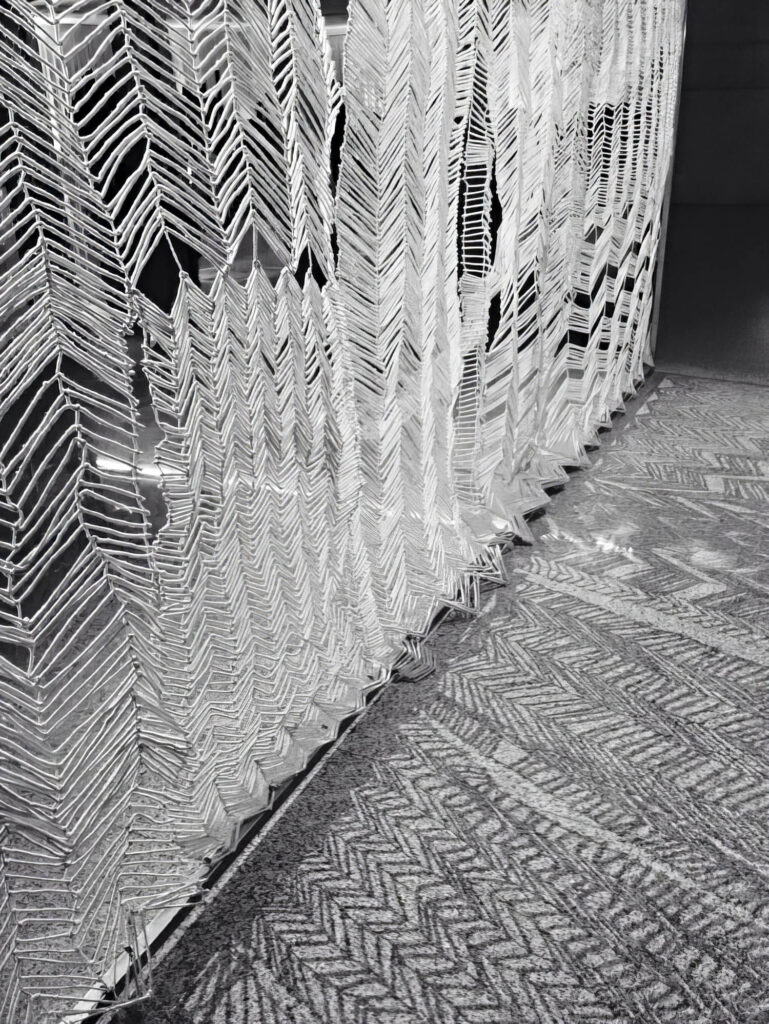
The actual creative process begins with spatial concepts: from point to line, line to plane. Scale, matter, and, most importantly, trust. I trust the hand, the collaborative process, the communication among people who share their talents.
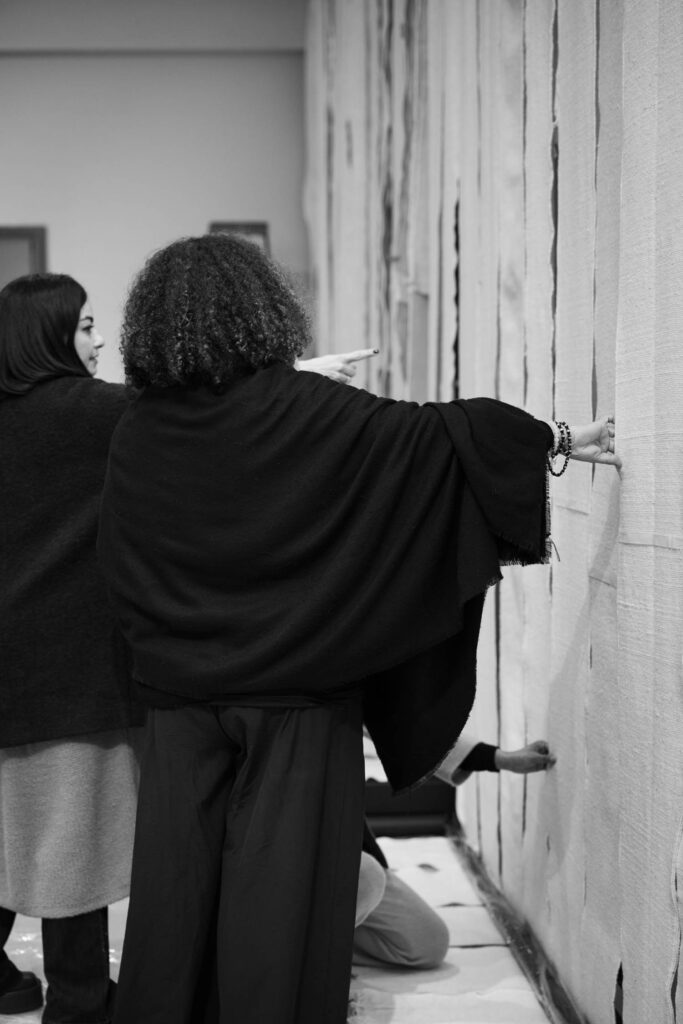
ID: You’ve said in previous interviews that you learn from the artisans you work with in the field and via workshops. What’s something you’ve learned during this process that is not necessarily about work, maybe a life lesson?
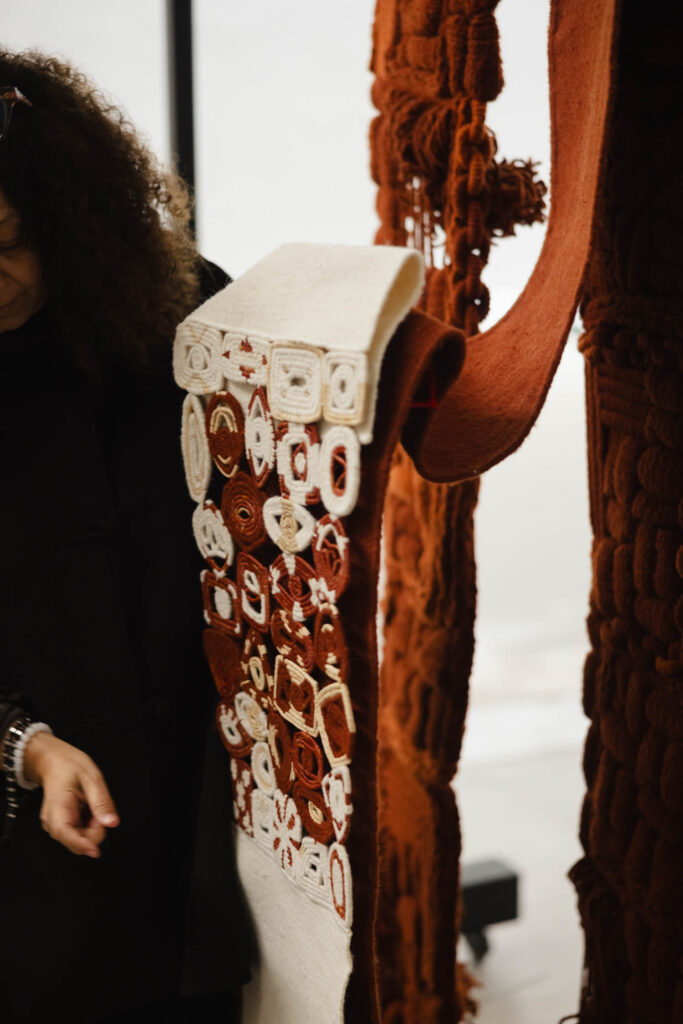
AA: That’s the thing—working with people in their space is really building community. The sense of community comes before the work, so it’s all about learning from each other. It’s a two-way street; you might think you’re empowering someone and suddenly you realize that they are empowering you! I’ll give you an example: there’s a woman named Bahija who showed something she had made, a rug, the first rug she ever wove. It’s her own autobiography, all the challenges she has faced, and she translated these things into the weave. So I asked her to scale up the piece and now it’s part of Asǝṭṭa. It’s her life, and she shared it with me.
ID: Thirty years into your practice, you have your biggest role yet, representing your country for its first national pavilion at the Venice Biennale. What’s that like?
AA: Every project, whether intimate or monumental, requires the same commitment. It’s about serving the project. This is the largest-scale project I’ve done to date, and so we built a fantastic production team to meet the challenge of inhabiting the Arsenale.
What is truly meaningful to me about this particular Biennale is Koyo [Kouoh]’s curatorial statement. It resonates with everything I have done and hope to do—the words she chose, words like portals, oases, these are titles I have used in the past for my own works. She speaks of generosity and hospitality. This is what I feel when I am in the company of makers, in communal spaces, and what I hope visitors will feel when they enter Asǝṭṭa.
ID: The Installation showcases the diversity of Morocco’s artisanal traditions. Can you talk a bit about the decision to do that?
AA: I would correct you, if I may. The installation showcases the diversity of makers, of the keepers of knowledge. The evolution of modern and contemporary art in Morocco has been very much influenced by visual interpretations of traditional craft objects. My interaction with artisanship is very different—I’m not interested in the object; I’m interested in the human beings who make objects.
My approach to making is not identitary in nature, in the sense that this work is authentically Moroccan. I sometimes work with artisans from other cultures, as part of an artistic residency, for example. I seek out individuals who are makers, or keepers of knowledge, and if there is a real connection between us, we express our mutual curiosity. We share space, we communicate, and then we begin our collaborative process. This installation is about family, community, shared experiences. The installation welcomes you like a sanctuary.
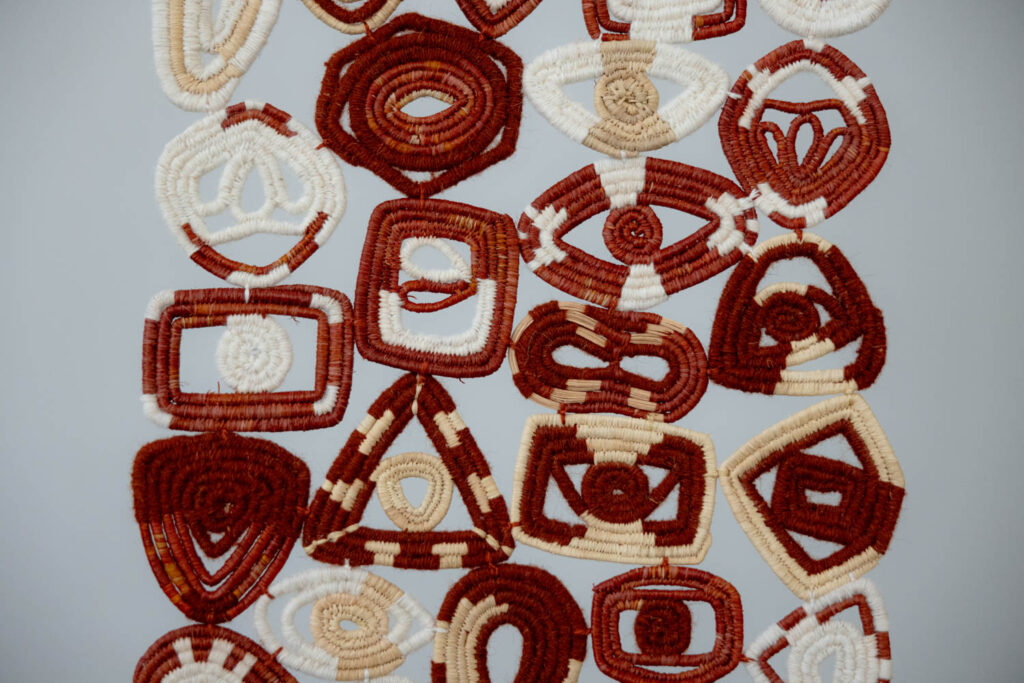
ID: Can you describe what the experience was like for you working with over 160 artisans on the installation?
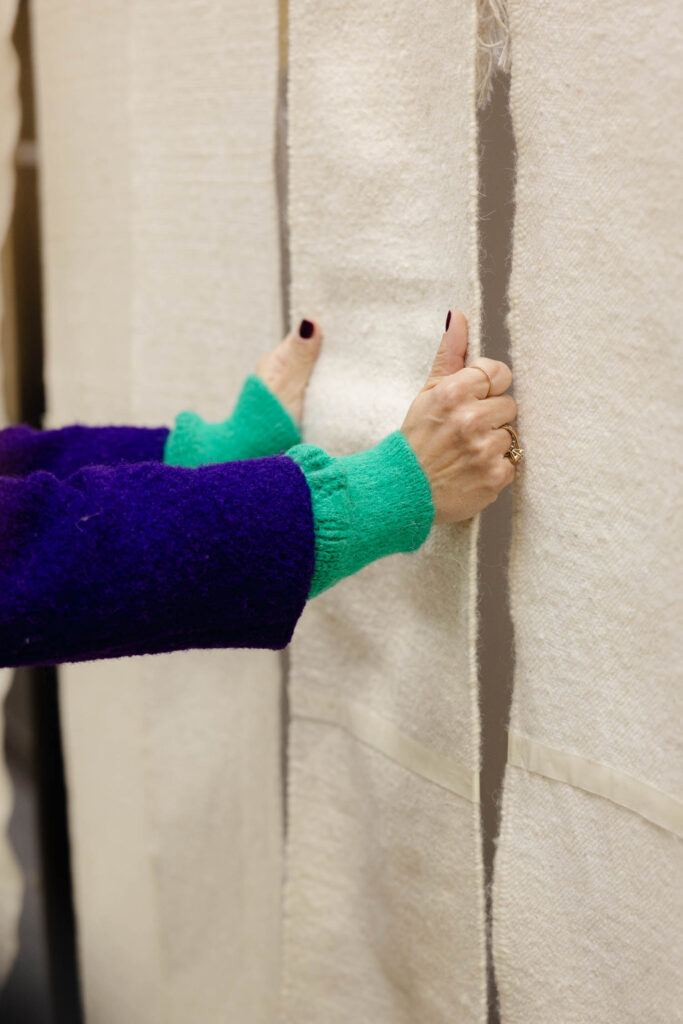
AA: Incredible, no? The number sounds a bit crazy but different makers use different methods, and the installation required a variety of techniques and materials. A weaver doesn’t cast silver or embroider in raffia, for example. I would describe this dance of 166 partners as a marathon version of my usual process. I travel around Morocco – to towns in the Atlas Mountains, the Souss Massa, or along the Atlantic coast—to see people, and we spend hours imagining possibilities. We share photos and drawings, they show me samples of their craft, and we get to work exchanging ideas. I configure the scale to the Arsenale, and I compose. I usually think of myself as a conductor, but sometimes I like to be a musician, too. We are a very big orchestra!
ID: You mentioned in a previous interview that you strive for excellence rather than perfection. Did it all work out as you wanted?
AA: I absolutely did, and why? Because I have a wonderful curator who empowered me to fully explore my thinking process, deep into intangible stories and meanings. We followed the idea all the way through, whether it resulted in success or failure but at least we tried, and that was fabulous. Having a fantastic team at every level, and seeing 166 artisans pour their energy and commitment into this… it all comes down to commitment. You know, where there is commitment, there is excellence. To me, this is an immersive piece that engages many senses: there’s the tactile, the sense of smell, as well as what you see and hear. It is a living membrane, made up of different modules created by artisans with truly fantastic energy. This is what I want the visitor to feel – the energy of the handmade, and the power of the human gesture.
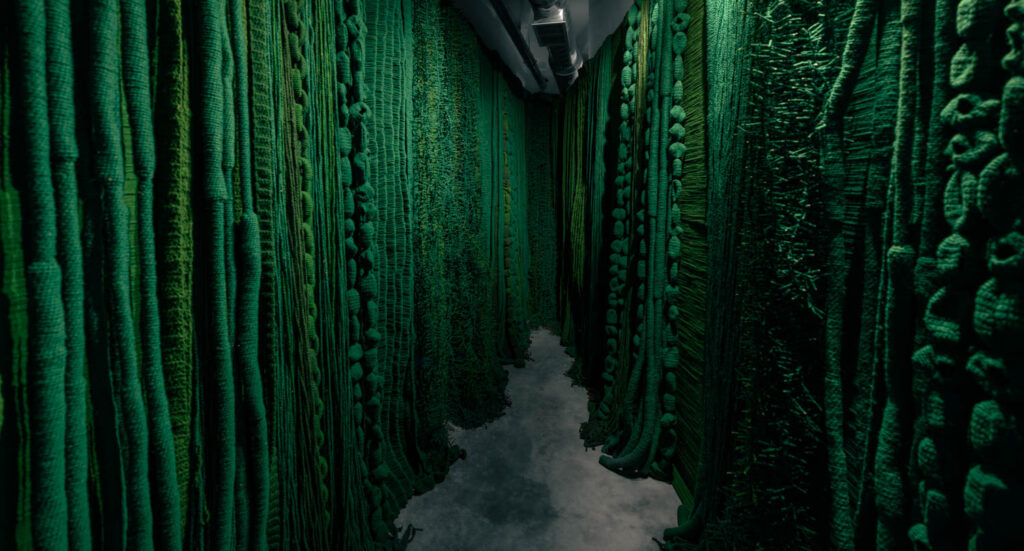
ID: How would you define success in terms of how you want people to feel when they visit the installation?
AA: To me, this is an immersive piece that engages many senses: touch, smell, sight and sound. It is a living membrane, made up of different modules created by artisans with truly fantastic energy. This is what I want the visitor to feel—the energy of the handmade, and the power of the human gesture.
ID: Your passion for keeping Moroccan craftsmanship alive through generations shines through in your practice and conversations. Why is that legacy important to you?
AA: Transmission is important. Everyone has something to express, and if we can help them find an outlet for their creative process—that keeps craft alive. There are two ways to do that: some keepers of knowledge carry forward the forms and techniques that were transmitted to them by their elders, while others innovate, creating new iconography. Both are fine.
read more

DesignWire
Designers And Manufacturers On The Move: September 2026 Edition
Interior Design‘s latest On the Move includes must-know industry promotions and hires, like Perkins&Will’s strategic move to expand its design capabilities.
DesignWire
10 Questions With… Artist and Designer Conie Vallese
From sculpture and ceramics to glass, textiles, and furniture, Conie Vallese embraces a multidisciplinary practice shaped by curiosity and creativity.