
10 Questions With… Sculptor Aminata Mboup
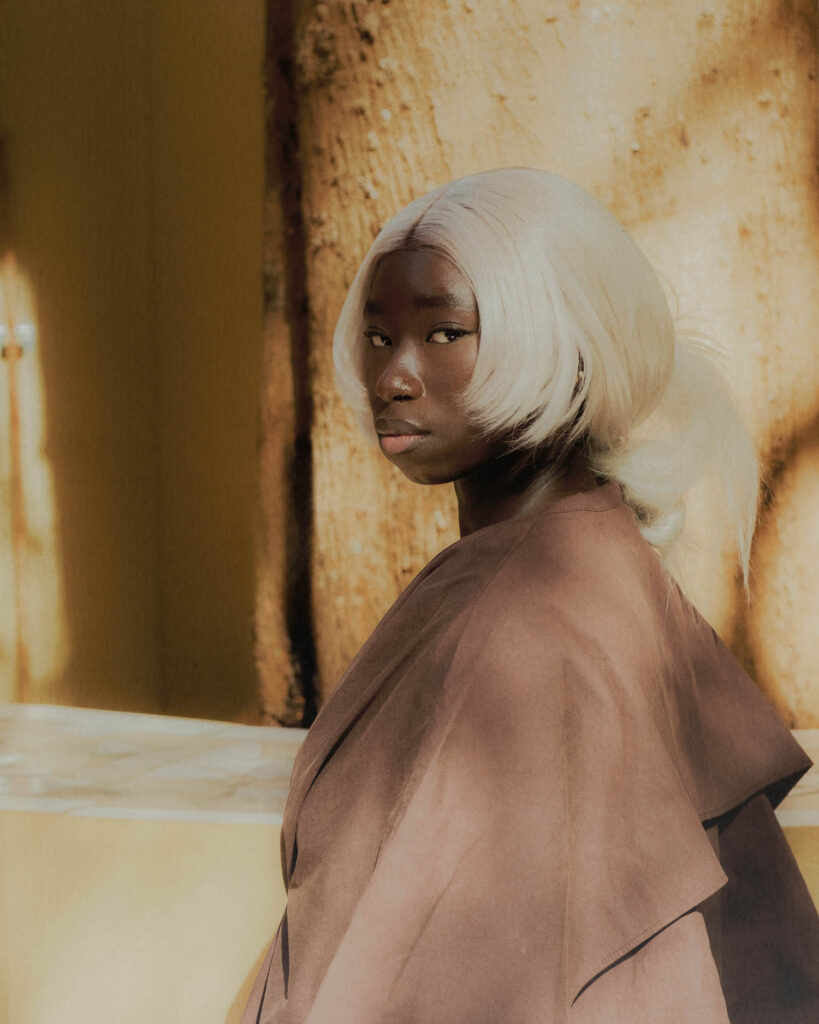
There is a quiet spiritedness in the artistry of Aminata Mboup. It could be found in the process videos she posts on Instagram: her hands moving through clay, smoothing its surface; her scalpel working slowly, patiently, until the material begins to take form, becoming something whole and functional. Perhaps that spiritedness does not come from the process itself, but from the forms her objects take, or from the depth of what she intends them to hold.
Mboup is a Senegalese sculptor whose exposure to sculpture and its many forms only began a few years ago. Speaking to her one evening in September, she tells me about growing up in Senegal and the conservatism of her upbringing. As the first artist in her family, she was expected to pursue a more conventional, corporate life. But curiosity became its own kind of compass, leading her towards experiences and disciplines she had not encountered growing up, and eventually towards an artistic career she began professionally in 2023.
There is something beyond the usual grit of an artist in Mboup’s practice. Perhaps it is her intuitiveness, or the way she speaks about her work with the same attentiveness with which she makes it. Perhaps it is the research. She moves fluidly between disciplines: literature, music, medicine, philosophy and fashion, another field through which she has become known.
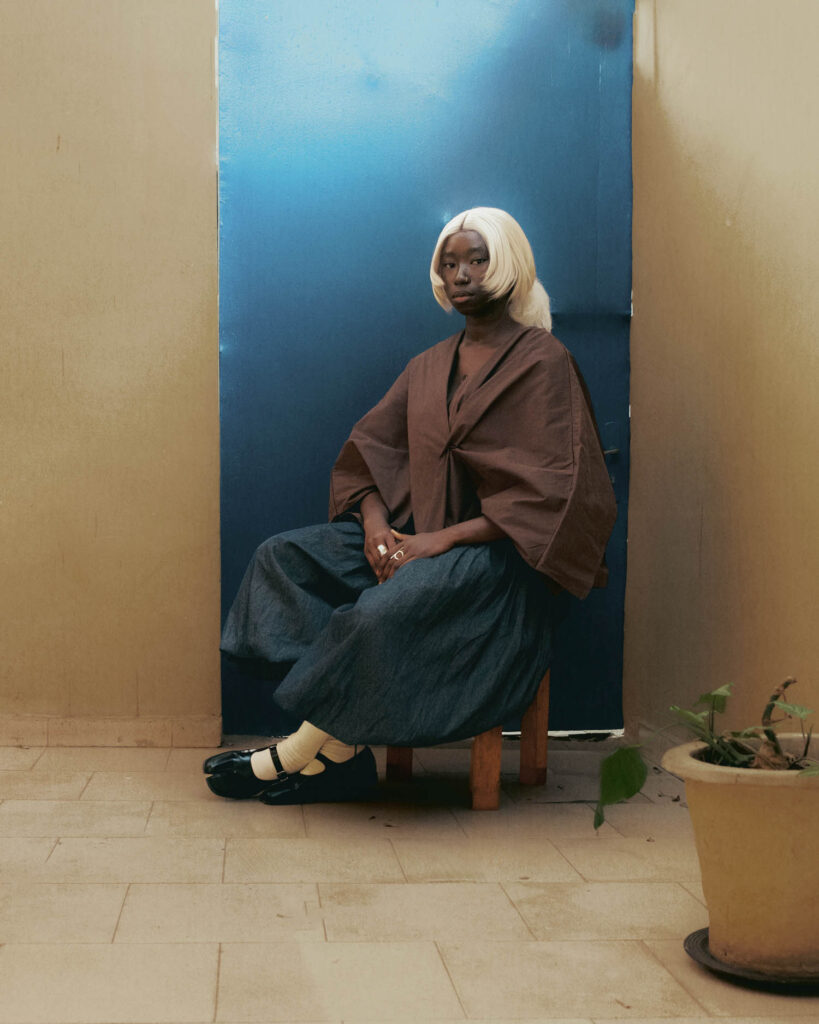
Her practice is equally expansive in material, moving between concrete, metal, clay, wood and 3D forms alongside other materials she hopes to explore and master.
Mboup’s sculptures are often characterised by a kind of figurative maximalism, particularly in her recurring use of faces. In Was I Myself, or One of My Mothers, she explores the complicated inheritance between mother and child. Inspired in part by the film Saint Omer by Senegalese director Alice Diop, which considers the biological exchange between mother and child during pregnancy. The work became an examination of her own relationship with her mother and the striking ways in which they continue to exist within one another.
This sense of inheritance runs through much of her thinking. Mboup finds comfort in the writing of James Baldwin, draws inspiration from the American ceramicist Woody De Othello, and writer Felwine Sarr whose work she admires for its understanding of how conversations happen and how spaces are shaped through social relationships and engineering.
Aside from the many moments spent researching, Mboup is turning her attention towards bronze and aluminium, developing a series of vessels while also exploring metalwork and 3D sculpture. Interior Design sat down with the sculptor to discuss her practice, fluidity between disciplines, and approach to materials.
In Conversation With Aminata Mboup
Interior Design: How did your career as a sculptor begin?
AM: I would say my career started professionally around 2024. Before that, I trained in ceramics and worked extensively with clay from 2021 to 2024, specifically in Montreal, where I received my training. From there, I began moving towards a very specific cultural practice centred around materials: learning different shapes and forms, understanding how materials come together, and seeing how they can create sculptural forms that enter into conversation with my understanding of ancestral practices and feelings. As I continued developing my practice, it gained more recognition, and people began identifying with the work.
ID: Your work feels like a reflection of your cultural symbols and art. What was your upbringing in Senegal like?
AM: I was born and raised in Senegal. I think it can be artistic depending on who you are, the family you come from, and what you have access to. My parents aren’t particularly artistically driven or interested in art, so I’m actually the first artist in my family. Art wasn’t something I was pushed towards or something I had the opportunity to experience early on as a space in which I could see myself and grow. I had to push myself to continue enjoying the things I enjoyed, to discover and learn, and to find ways to keep myself motivated. I think when you come from a household where your family can sometimes be the stepping stone for all your dreams and ideas about what your life can become, the absence of that representation can make you think there is only one linear way to live.
That was my experience. It took a lot of personal courage to go against the norms I had been taught. I grew up in a very corporate, career-focused environment. There were rules about how you should dress, whether you could have colorful hair, what kind of makeup you could wear, and what kinds of clothes were considered appropriate. It was a very traditional and conservative upbringing. It was also a very religious household, so sculptural work wasn’t something that existed around me. There were no sculptures in our home. Even the traditional masks we have in Senegal weren’t there. It took curiosity, and a willingness to push myself, to discover these things and learn about them independently, outside of school and outside of the home.
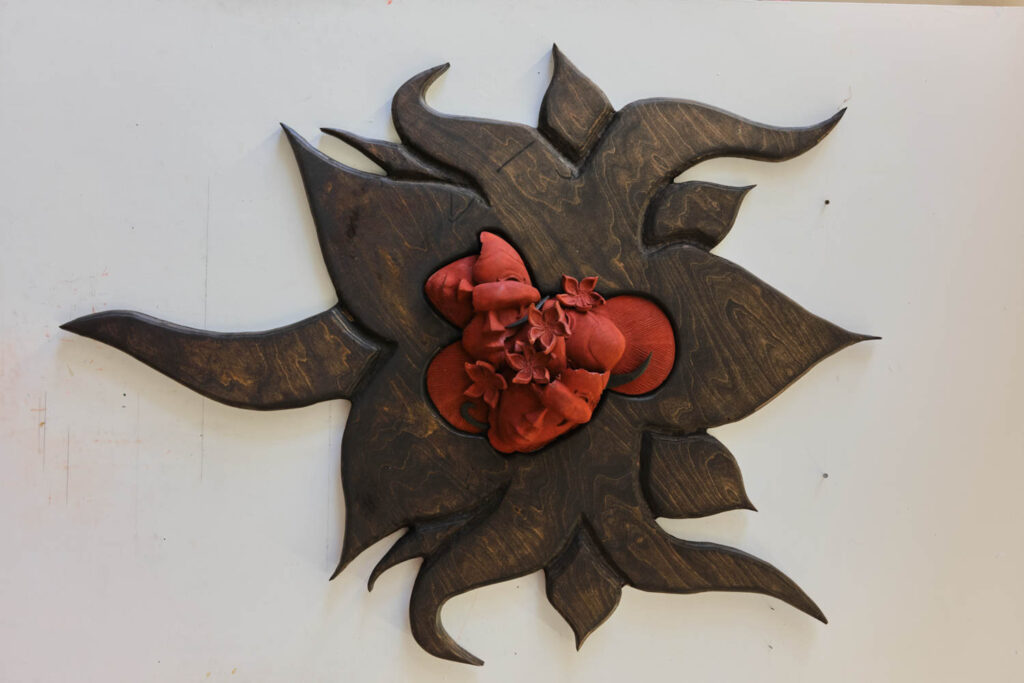
ID: When did you begin actively looking for cultural objects and forms that connected you to your roots?
AM: It really started when I began decorating my own home after moving to Canada for my studies. I wanted to find ways to make my home feel closer to Dakar. I think our definition of home and our definition of who we are is often centered around the place where we grew up. That’s why I often say we’re not necessarily from a culture; we are from a memory and from a place at the intersection of space and time. When I was going back home, I would go shopping, visit the artisanal village and speak with artisans, designers and artists there. That’s when I began seeing more of the sculptures that existed in Dakar. I would also encounter them in my friends’ homes and through conversations with people around me.
Those experiences pushed me towards wanting to have these objects in my own home. And once they started inhabiting my space, I realised how much of myself I felt was reflected in them. They were mirroring my experiences and my feelings. I became compelled to materialise myself through sculpture: my own feelings, but also feelings that I believe have been passed down to me through my mother, my friends and the people around me.
ID: Did you look to other artists or research materials when you began developing your practice?
AM: Mostly research materials. I have a lot of reference books and archives, particularly books where you can see objects. It’s funny because when I had already started working on some of my pieces, I discovered the work of Seni Awa Camara, the Senegalese sculptor. I immediately felt that there was a connection, not necessarily between our practices, because our work looks completely different, but in the repetition of form within our sculptures. I was intrigued by that. I wanted to understand what that repetition meant for her and what it meant for me, and I was hoping to do some kind of residency with her in Casamance so that we could talk about it. Unfortunately, she passed away this winter before I could make that happen. I recognized something in her work that I had also been doing instinctively: this repetition of the face.
It reminded me of something James Baldwin talks about: the idea that when you move through history, you realize that the things you’re experiencing aren’t necessarily foreign or new. Other people have experienced them before. I was interested in understanding what this repetition of form meant for her and what it meant for me.
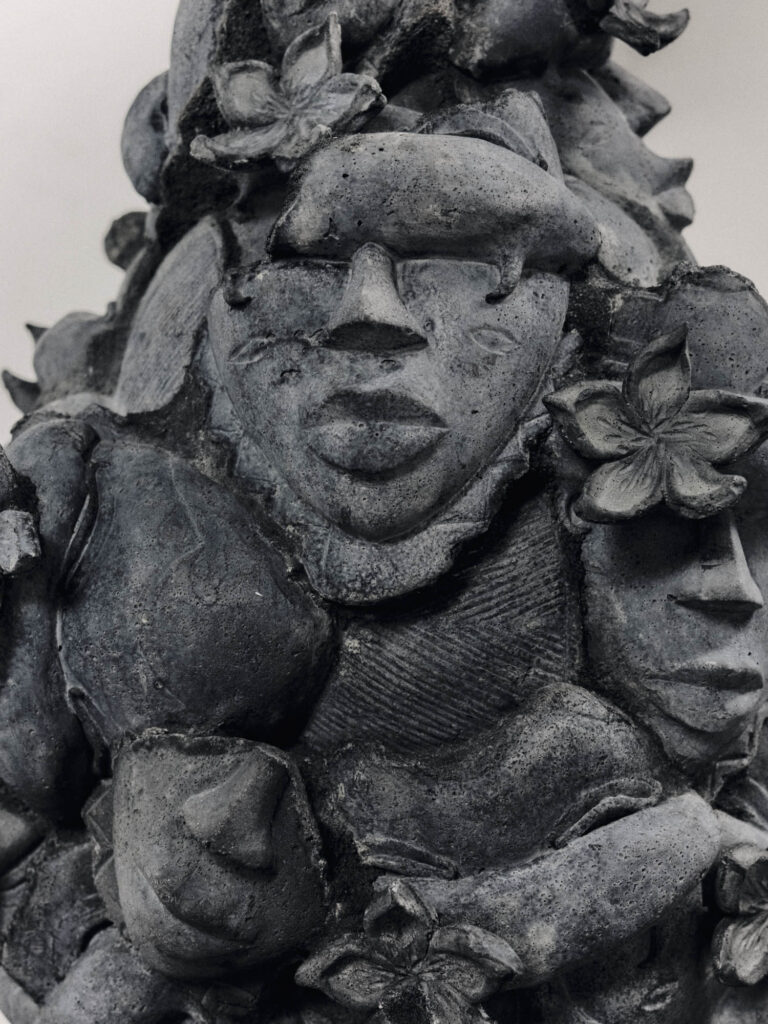
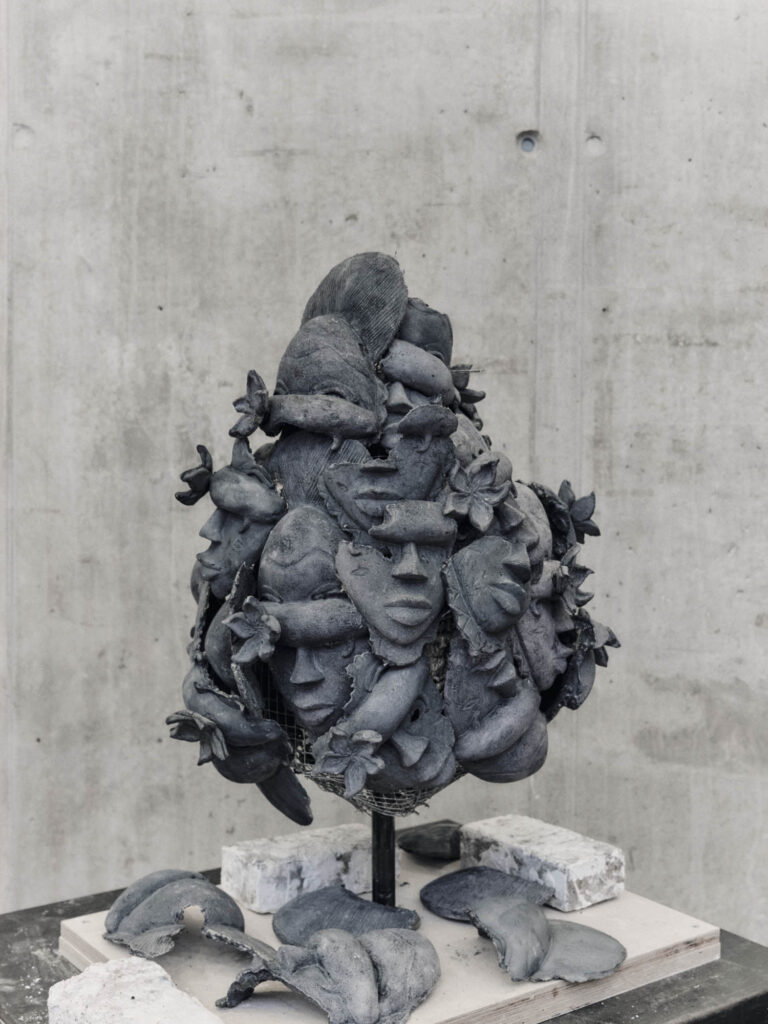
ID: There is something solemn about Was I Myself, or One of My Mothers, tell us about it?
AM: It was inspired by a combination of my personal experiences growing up and a few films I had watched. There is a film called Saint Omer by Senegalese director Alice Diop where there is a scene that talks about pregnancy and the exchange that happens between a mother and a child. When a woman is pregnant, the baby isn’t simply taking nutrients, cells and DNA from the mother. There is also an exchange happening in the other direction. The child is leaving things in the womb. Both mother and child are transformed by that relationship, even after the child is born. There are still pieces of the child that exist within the mother.
That reminded me of my own experience growing up. I often felt that I couldn’t understand my mother, even though I saw myself in her. There were ways in which we were different, but as I grew and changed, I began to realize that there were pieces of her that existed within me—and these experiences existed before us, through our parents and grandparents.
So Was I Myself, or One of My Mothers isn’t only a question about all the ways we exist within one another and echo one another, including our elders and ancestors. It’s also about the ways in which we are not entirely our own.
ID: Your work often features faces and figurative forms. Is that intentional?
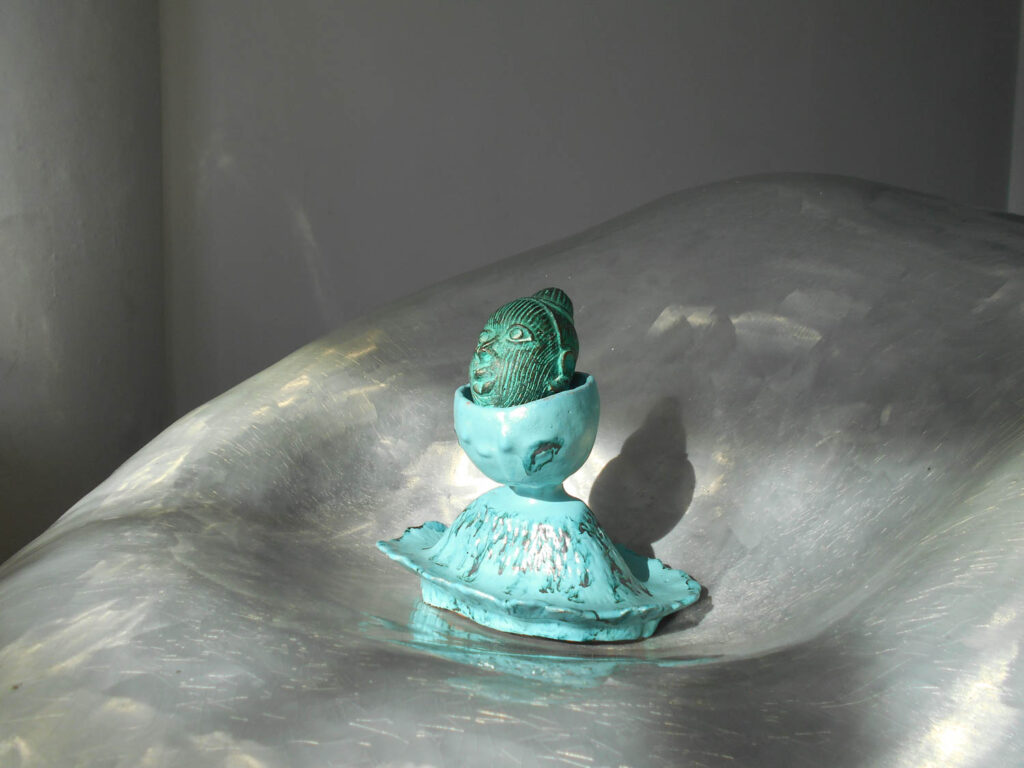
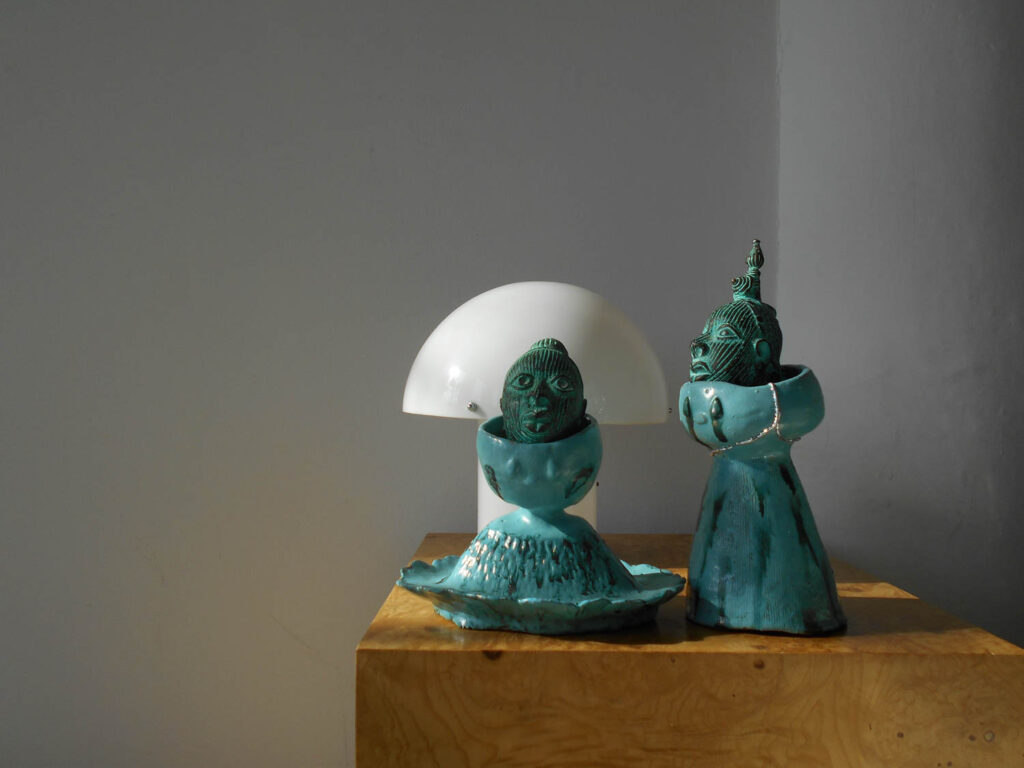
AM: Honestly, it wasn’t really intentional. It just happened. For some of the smaller pieces, like Le Fétiche Sensible—The Sensitive Relics—I initially sculpted one in Senegal in 2024. It was a ceramic piece, but it didn’t dry in time, so I couldn’t bring it back with me. When I made it, I don’t remember exactly what I was going through, but I was having a very difficult time emotionally. I felt like I was being transformed, and my feelings were simply too much. I couldn’t contain them. So I decided to make a vessel that could hold those feelings for me. I decided to make this statue and call it “Snotty” because when I cry, I’m very snotty. So I called it my crying-feelings vessel.
When I came back to Canada, I kept thinking about Snotty. I missed having that vessel with me because I felt it held so many of my feelings. Sometimes you need to have those feelings close to you to be able to dissect them. I felt like I had left a part of myself behind. So when I went back to Dakar, I decided to make a sister for Snotty because she had been lonely all that time. The second one was smaller and also reminded me of my little sister.
Those two sculptures were manifestations of a lot of feelings I was carrying. They didn’t initially have a specific or grand meaning. They were abstract. You knew there was a face because of the eyes and the glaze, but they weren’t particularly figurative. I called them The Sensitive Relics because they hold a lot of sensitivity.
ID: You started Iyekiti Studio. Was that a result of this development in your practice?
AM: Just like the sculptures, Iyekiti Studio wasn’t really my decision. People created it. My Instagram handle is Iyekiti, which means “to uplift” and “to push.” When I chose it in 2021, I was going through a particular phase in my life. I wanted to uplift myself. I wanted to push past the boundaries of what I had been taught I could do. I wanted to expand. So I summoned that idea. I thought, “This is the philosophy of life I’ll be taking on for the next few years as I pursue my practice.”
I was trying to materialize the physical embodiment of the things that felt like they were coming towards me.Then people started referring to me as Iyekiti Studio. They would say, “I saw this on Iyekiti Studio,” and I thought, okay, sure. The internet is a space where I share my art and my thoughts. I also share architecture, design, research and some of the sculptures I make, including commissions with brands. I think people began to see that space as a studio or creative house that encompassed everything I do.
ID: Have you collaborated with other artists?
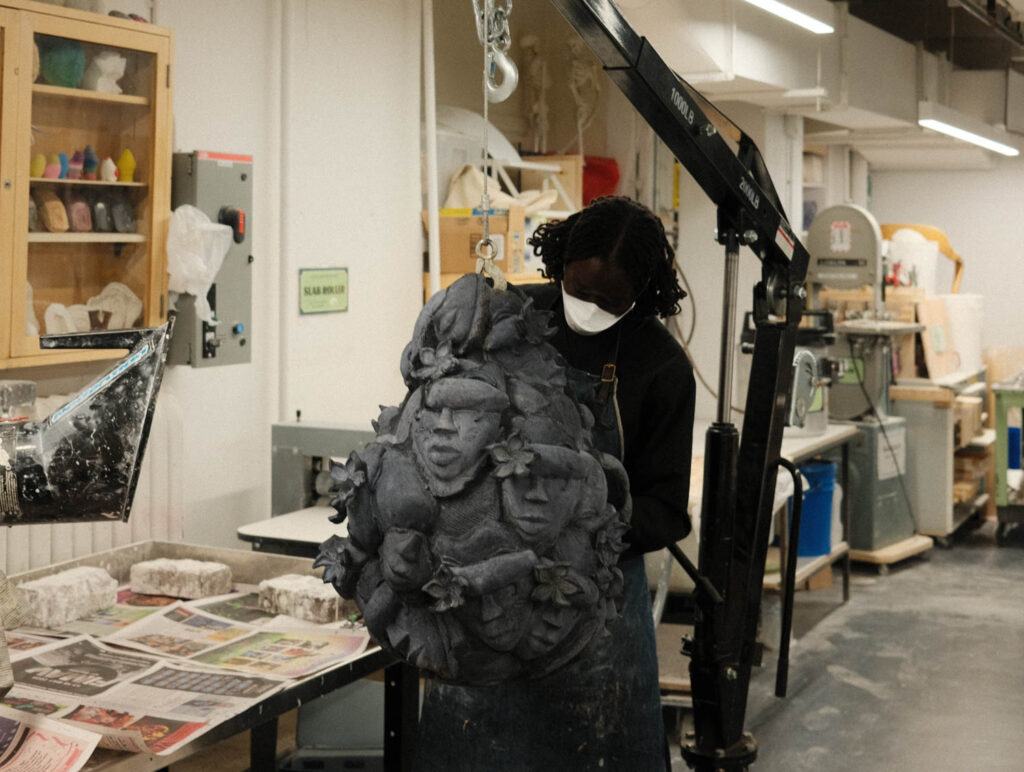
AM: I haven’t collaborated with other artists yet. I find myself to be quite solitary within my practice. I work throughout the night. Sometimes I start sculpting at 9 p.m. and work until 3 a.m. I’m someone who generally enjoys being alone and being solitary. I have friends and family whom I love and adore, but I really need to be within myself. I find a lot of confidence and stability in being with myself. Artistically, I haven’t made much room for anyone else to exist within that space with me yet because it still feels very personal. It’s emotional and personal. For now, I think my sculptural practice will remain solitary.
ID: You’re also interested in fashion. Do fashion and art influence each other in your practice?
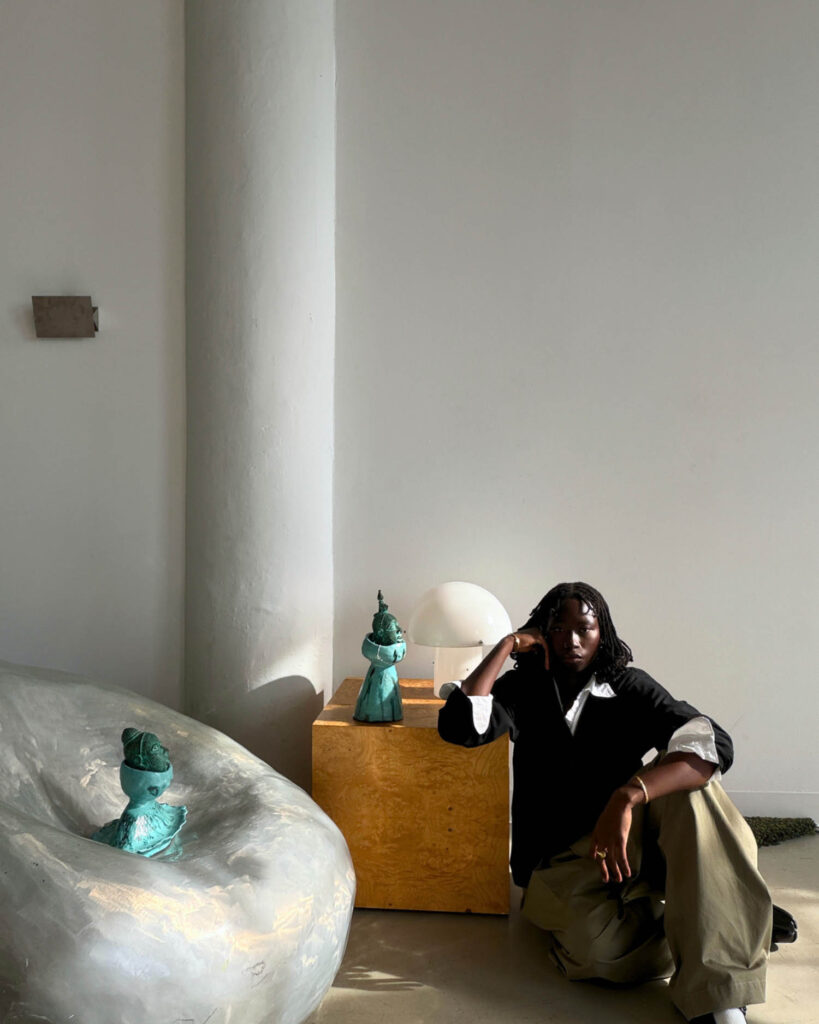
AM: I think so, and it’s funny because I never really planned for it. Fashion feels easier than sculpture. It’s just getting dressed and going outside. But I think they definitely feed into each other. When I look at a sculpture, I look at it through the same eye that I look at myself with when I’m getting dressed. Even when I was sculpting the second part of The Sensitive Relics, I wanted to create this little swoop on the side and at the bottom that I sometimes create with my own clothes.
I also watch a lot of RuPaul’s Drag Race, and sometimes I’ll see really interesting headpieces and think, “Oh, I should make that.” So I think form in general materializes itself through fashion, architecture and design. It’s all around us. We’re constantly looking at things that are shaped in particular ways, and that feeds into how I see form.
ID: Do you have any upcoming exhibitions?
AM: There is a potential group show happening in Austin, Texas, next year, but I would say it’s not yet confirmed because of the logistics involved in transporting the pieces. I would have loved to show in Dakar this year, but there are so many logistical considerations attached to transporting the work. One of my biggest strengths is also my biggest flaw: I sculpt big, and then the pieces are heavy.
I think it becomes difficult as an artist to not only be the artist, but also be the coordinator, curator and administrator. I find there can be very little support when it comes to also carrying the weight of coordinating administrative tasks. Artists often find themselves overwhelmed with having to do everything themselves. It slows us down. It means you don’t even have enough time to focus on making your art because you’re dealing with all these other things that need to happen around it.
read more
DesignWire
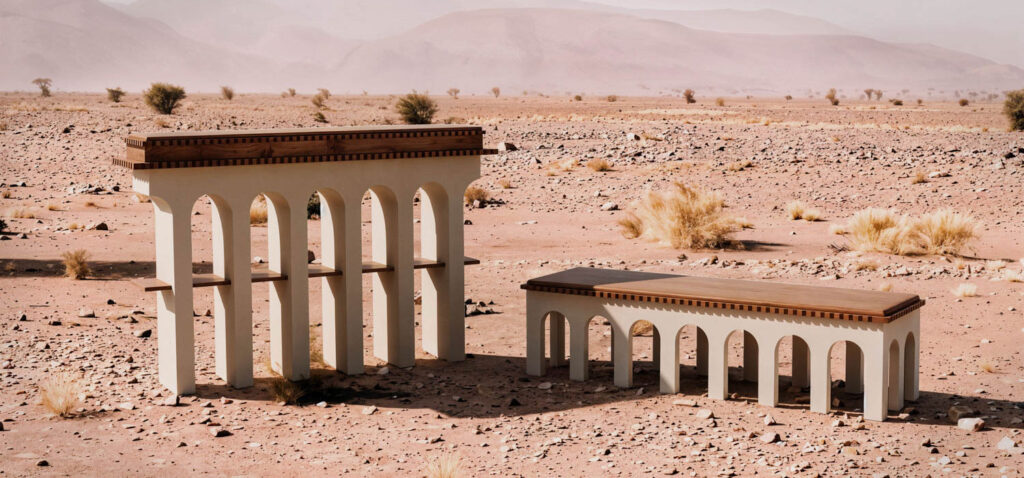
10 Highlights From Amman Design Week
Amman Design Week 2026 gathers a host of regional designers and architects under the theme ‘Accumulations.’
DesignWire
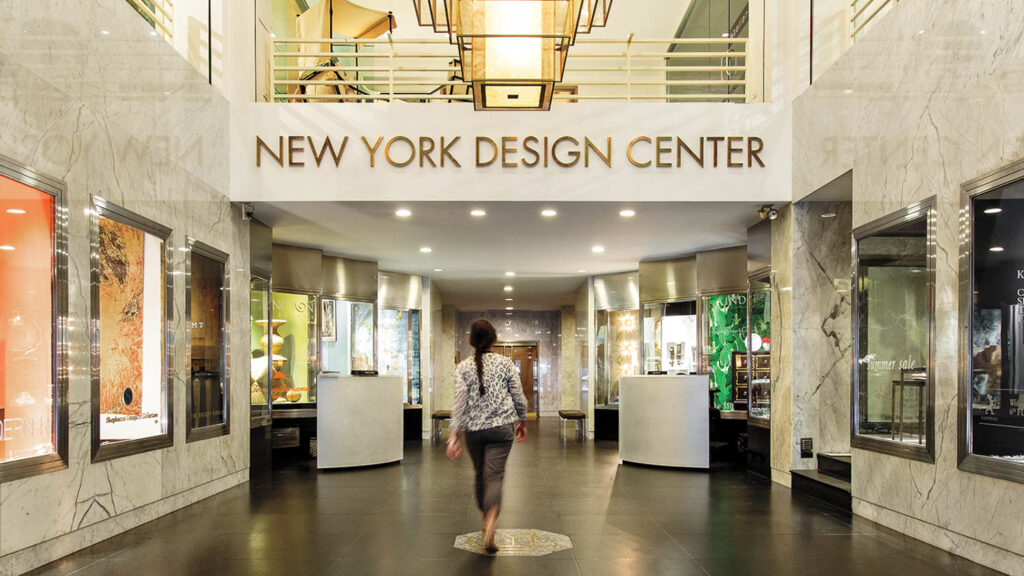
New York Design Center Marks 100 Years of Design
Celebrating its centennial, New York Design Center continues its legacy as a design destination, bringing together nearly 100 showrooms and more under its roof.