
13 Highlights Spotted At Design Week Lagos 2026
Design Week Lagos stretched beyond West Africa this year, including countries throughout the continent and the wider diaspora, marking one of many highlights of the festival, which ran until October 25, 2026 at the National Theatre in Lagos. Now in its eighth edition, this year’s fair featured five pavilions, including Francophone, Lusophone and diaspora presentations, which created space for different design traditions and perspectives to meet.
Beyond bringing these voices together, the festival asked: How can African designers turn the continent’s wealth of materials, knowledge and creative talent into products and industries that can compete globally? Under the theme “Making a New Africa: From Material to Market,” Design Week Lagos explored what it takes to move from raw materials and craftsmanship to product development, manufacturing, branding and market access.
The curatorial program was led by Chicago-based designer Norman Teague, founder of Norman Teague Design Studio, alongside Nana Biamah-Ofosu, Ousmane Mbaye and architect Júlio Rafael who curated products from more than 100 designers spanning furniture, textile, lightening, architecture and industrial designs.
Speaking about this year’s cross-border importance, founder Titi Ogunfere said: “We are a continent blessed with extraordinary natural resources, materials, talent and creativity, yet so much of what we use every day is designed and manufactured elsewhere.” This observation speaks to the wider ambition of Design Week Lagos: To consider how Africa can build on what it already has. “For me, Making a New Africa is about recognising the enormous potential we have on this continent and asking ourselves what we are going to do with it,” she added.
From dome-shaped installations to architecture-infused fashion designs, take a look at notable works spotted at Design Week Lagos 2026.
Top Picks From Design Week Lagos 2026
Bloom Against Violence by Studio Contra
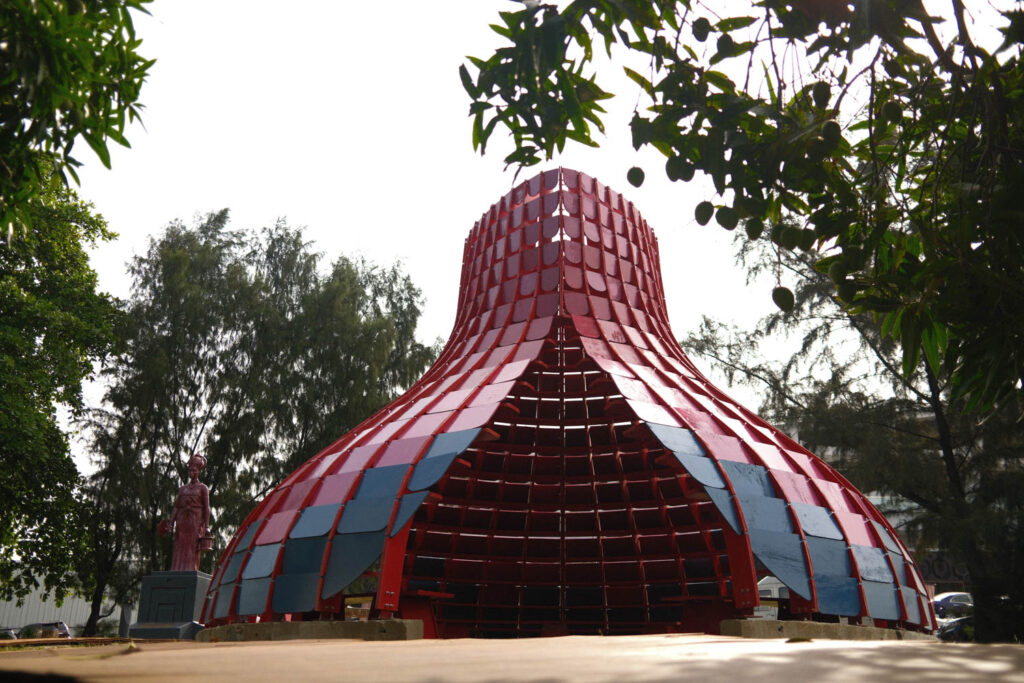
What does it mean to have an interrupted childhood? That was my first thought when I encountered Bloom Against Violence, a pavilion by Studio Contra at this year’s festival. Perhaps one of the most striking designs on display, its sculptural, dome-shaped structure invited curiosity, leaving everyone wondering how it had been conceptualized and constructed. But beyond its visual appeal, the pavilion made me think about why we need more designs like this, not simply as public installations or decorative objects, but as spaces that can spark conversations, encourage questions and offer new ways of understanding difficult realities. I found myself thinking about the role design could play in shaping a child’s imagination, creating room for curiosity and giving form to questions that childhood, too often interrupted by violence, should have the freedom to ask.
Sùúrù by Oshinowo Studio
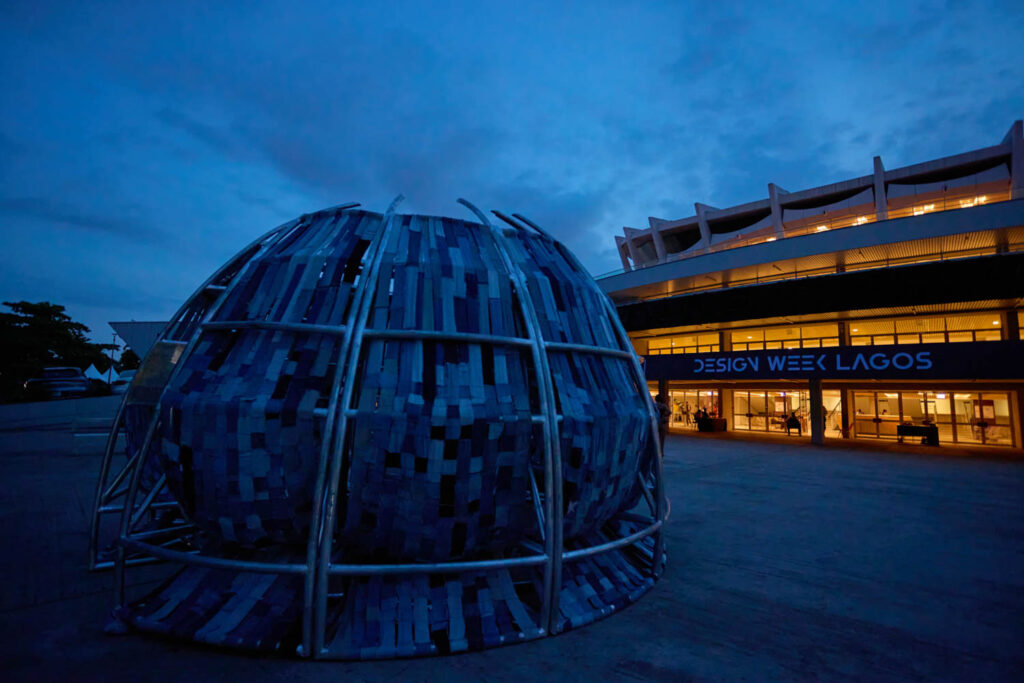
Suuru means the Yoruba word for patience and is a pavilion designed by Tosin Oshinowo of Oshinowo Studio as a temporary shade for rest, reflection and conversation. I found it particularly compelling how the structure became more than a physical space, it hosted conversations about design, sustainability, life, death, family, succession and prosperity. Oshinowo brought together materials such as denim and galvanised steel which made the pavilion eye-grabbing not just for its scale but its color. It offered a simple invitation to pause and look up at the sky.
EKANDEWA, a collaboration between Studio Lani × House of Assemblies (HOA)
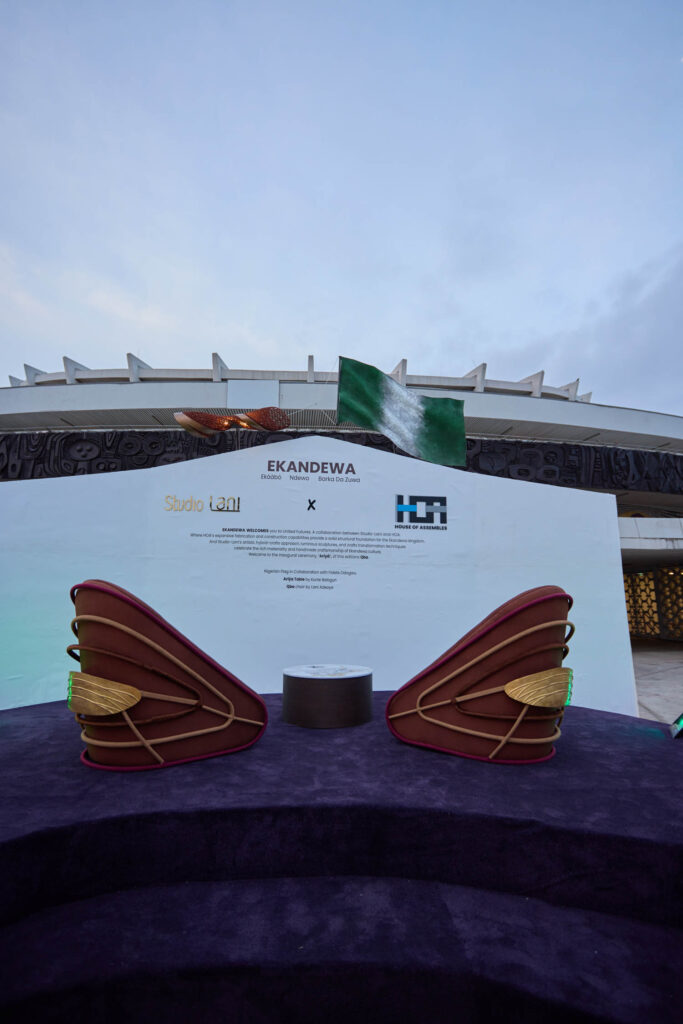
A collaboration between Studio Lani and House of Assemblies (HOA) which brought identity in conversation with design, the installation draws on the material culture of the imagined Ekandewa kingdom and includes sculptural lighting and furniture. Beyond its physical presence, Ekandewa sets the stage for Ariya, the inaugural ceremony of this edition’s Qba, creating a space for gathering, exchange and collective celebration.
Demas Nwoko: A Living Legacy
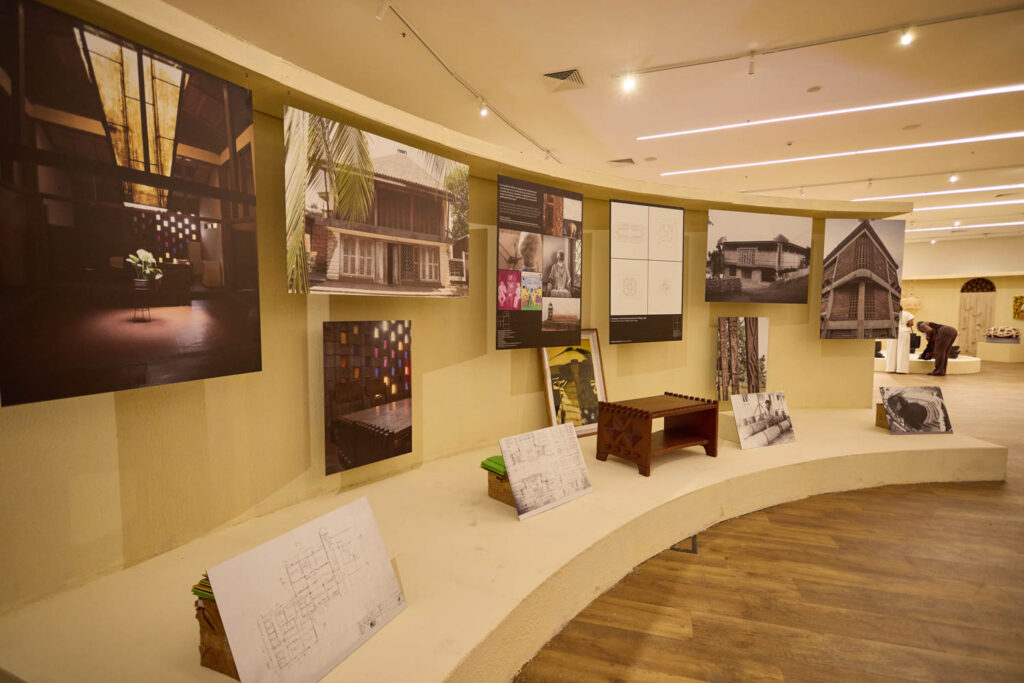
One of the highlights of this year’s festival was the recognition of Demas Nwoko’s work and artistry as an architect, artist, designer, maker and thinker. Titled Demas Nwoko: A Living Legacy, the exhibition traced his practice across several decades, bringing together architecture, art, design objects and cultural thought to show how these disciplines have remained deeply interconnected throughout his career. Selected material from his acclaimed Venice Architecture Biennale presentation formed part of this broader portrait, highlighting his enduring contribution to African architecture and design. Presented in the year he turns 90, the exhibition also placed Nwoko’s body of work in dialogue with a new generation of African designers and makers. It was a meaningful opportunity to encounter the full creative legacy that continues to shape how we think about design and the possibilities of African modernism.
Special Project curated by Myles Igwebuike
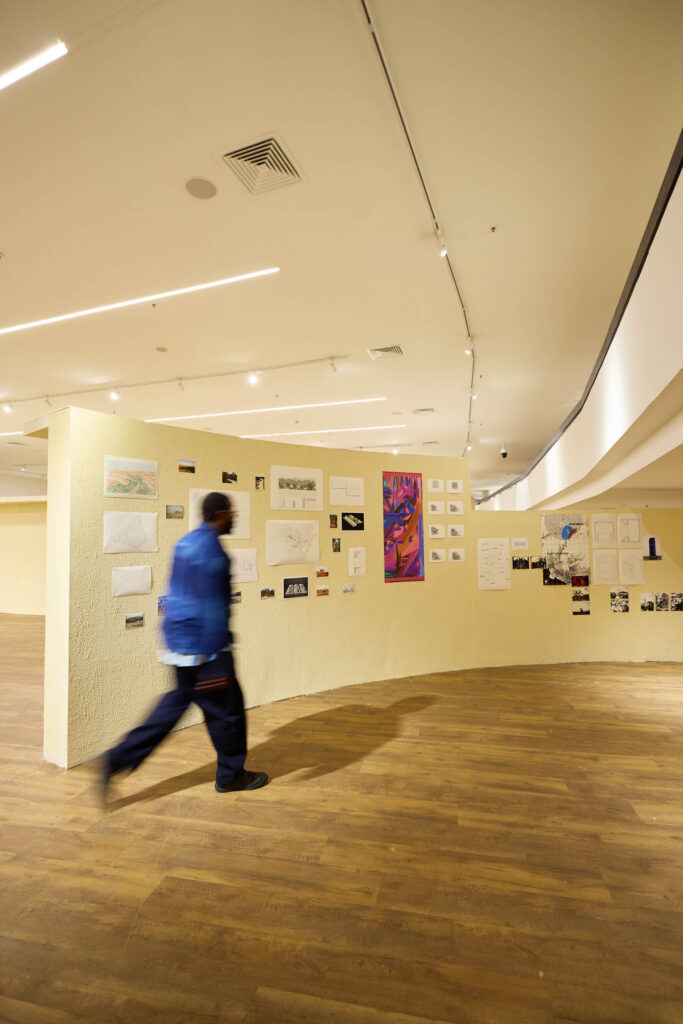
There was also an exhibition dedicated to the future of education. Curated by Myles Igwebuike, it brought together six researchers from the Architectural Association, the Royal College of Art, Yale School of Architecture and Harvard Graduate School of Design, each pursuing alternative ways of thinking about space, place and the built environment. Their work examined the relationship between land, buildings and streets, and the histories, memories and communities that shape them. Moving between vernacular construction, contested land, archival research and speculative approaches to settlement, the exhibition asked whose knowledge informs how we build and whose histories are allowed to shape the future. Inspired by Felwine Sarr’s Afrotopia and its call for an “active utopia,” the exhibition proposed a future imagined and built from within, rather than measured against models developed elsewhere.
Ijapa Chair by Ajayi Kehinde Gabriel
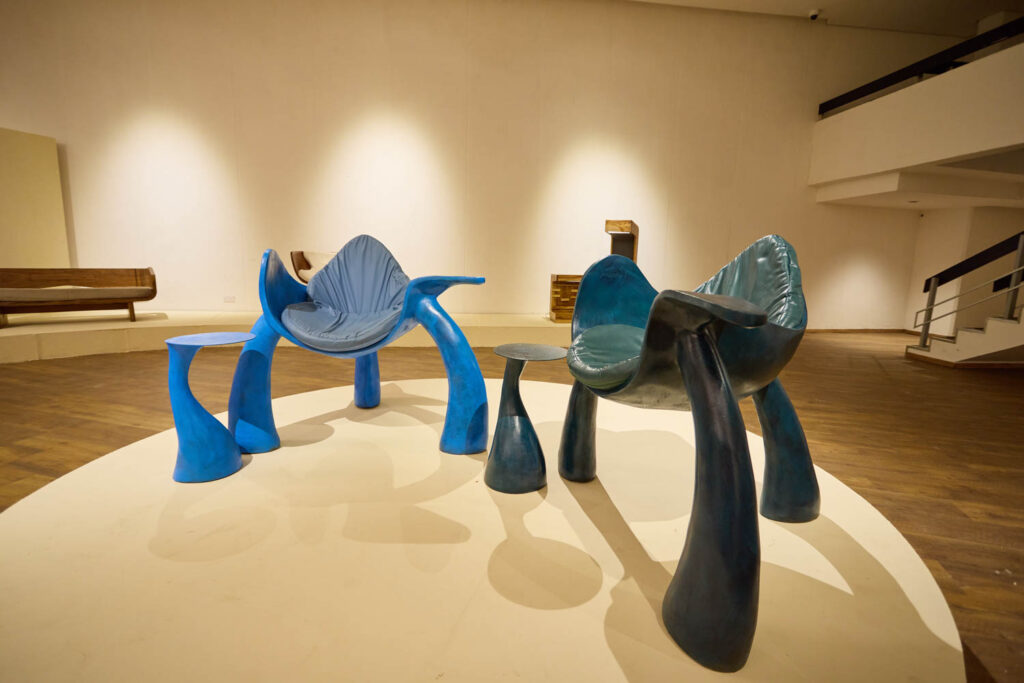
This chair is inspired by the movement of a tortoise with its deep, bowl-like form that feels almost like a place of retreat. At the same time, its thick, sweeping silhouette, and asymmetrical legs move away from the rigidity of conventional geometry. The structure’s three-legged stance and elongated wing armrest suggest movement, as though the chair were caught mid-stride. Made from concrete, steel reinforcement framework and microcement, it brings an unexpected materiality to a form that feels organic. The chair offers an intriguing study in biomimicry, balancing the tortoise’s protective shell with a sense of fluidity, groundedness and comfort.
Tubali collection by Alia Baré
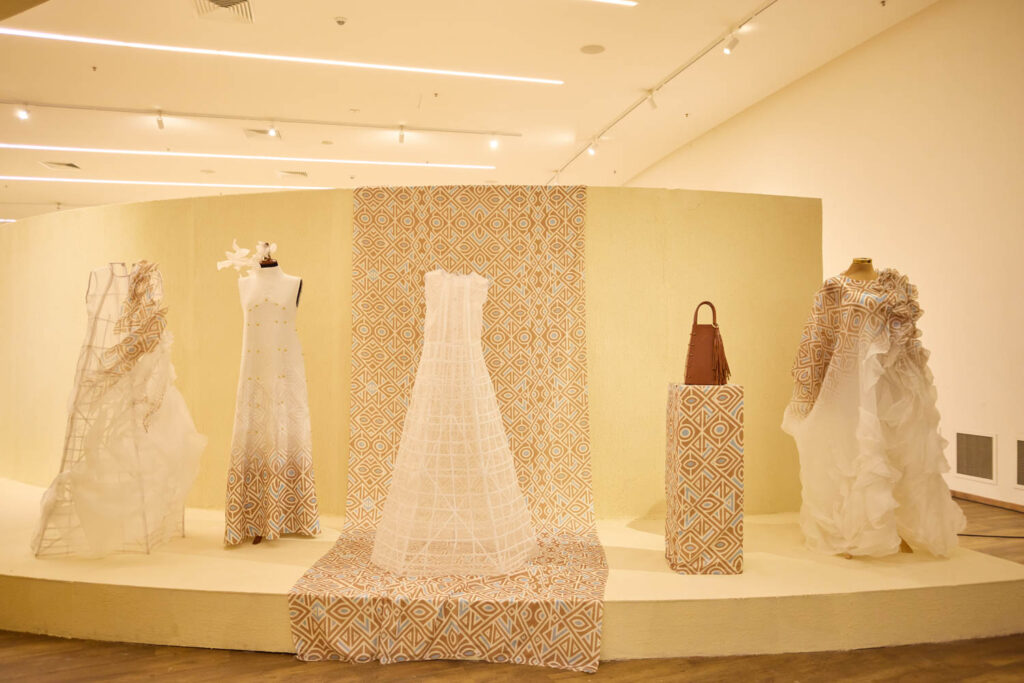
Fashion and textiles also found a place at this year’s festival, where Nigerien designer Alia Baré explored the intersection of architecture, cultural heritage and material experimentation through Tubali. Inspired by Hausa architecture across northern Nigeria and southern Niger, where her family roots lie, the collection felt like a personal attempt to preserve a tradition that risks fading. The collection featured the architectural forms of traditional Hausa mosques, including the projecting beams which found their way into the garments and accessories.
Karaktár Collection by Djakou Kassi Nathalie
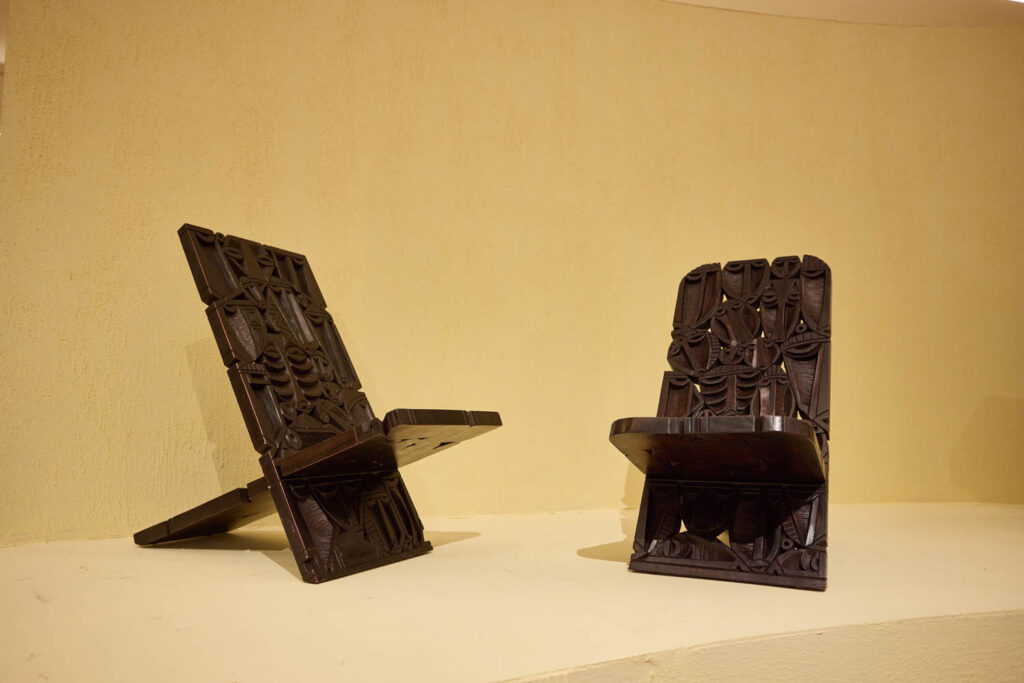
These alluring chairs are crafted from Nigerian sapele mahogany and feel like a meeting point between furniture and symbolic craft. Design details include geometric patterns, delicate cuts, and relief carvings inspired by African ceremonial masks, which transform the hardwood surface into something resembling a sculptural canvas. The carved facial expressions carry a sense of ancestral memory, while the precision of the markings offered striking elegance.
Ijoko Ore Collection by Abiola Diana Makinde
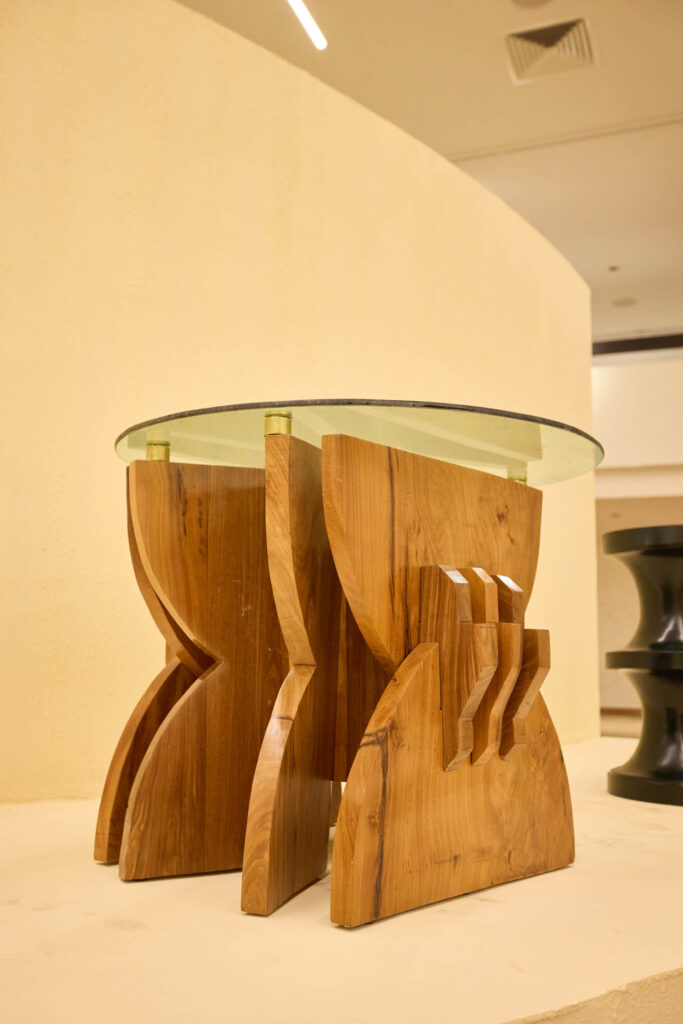
A collection that speaks to the quiet intimacy of hairmaking: two sisters, one seated to have her hair done and the other standing to braid it. It captures a familiar scene from African sidewalks and living rooms, where hair-making is mostly seen as a ritual of care, and conversation. Beyond this tenderness, the collection brings together different elements of Yoruba culture, from the structural language of the traditional comb to the rhythms of the ìlù àrù and gángan talking drums. I found this hybridity especially compelling, as the works translate the gestures and sounds of hair-making into functional objects. It’s crafted in walnut, wood, glass and brass.
Amo: From Earth by Ezekiel Osunlana
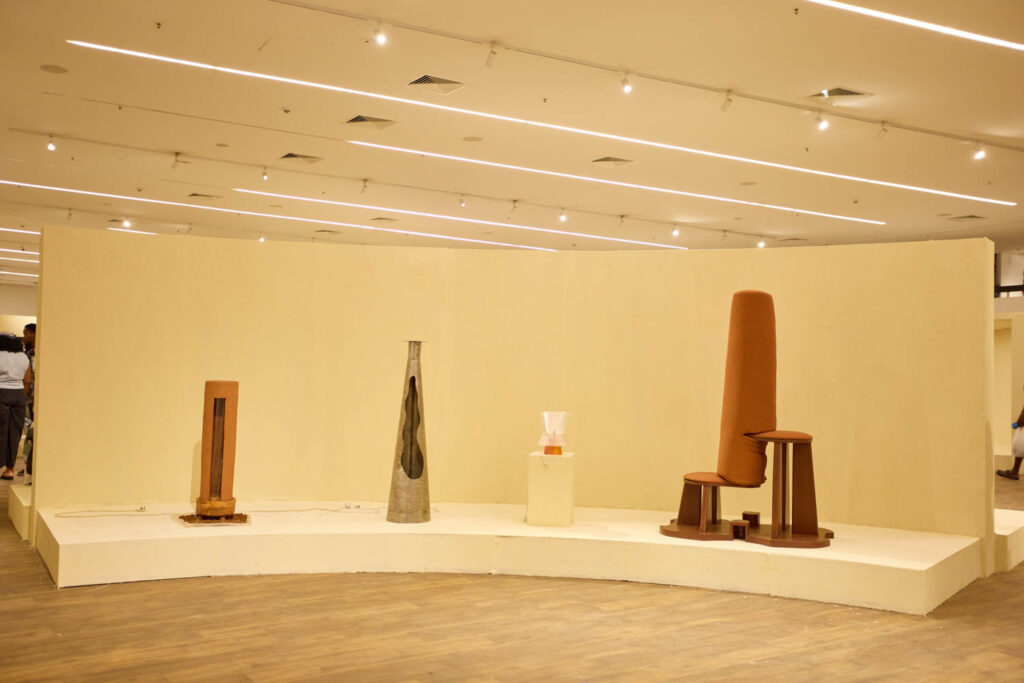
This presentation explores the longstanding relationship between African material culture and the earth, drawing on traditions that span architecture, technology and everyday objects, from building techniques to oil lamps and fireplaces. The floor lamp revisits older materials and technologies without abandoning a contemporary design language. There is something grounding about the idea of working with the earth and the designer offers this quiet reflection in the piece, especially around ancestral architectural knowledge and how they can inform contemporary design.
TIBI stool by Larry Tchogninou and James Langford
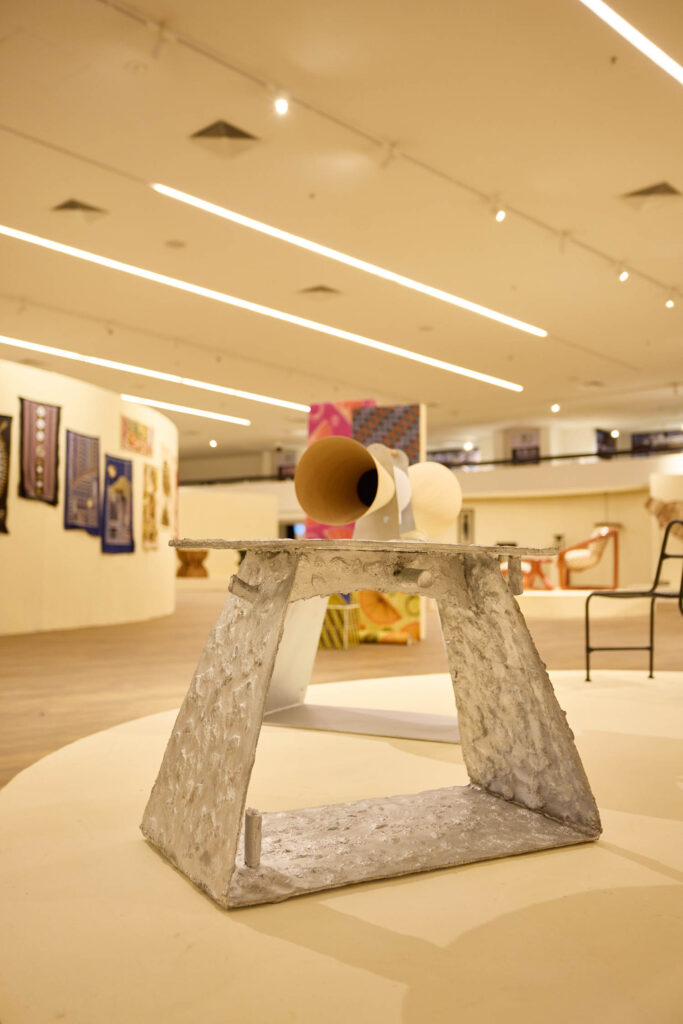
Designed for the TIBI retail store in Cotonou, it reminded me of the ceremonial seats associated with precolonial West African kings and traditional rulers and I found it interesting how the piece retained something of that regal presence despite being reinterpreted through sand-cast aluminum. Its slender, rounded seat, angled supports and broad base give it a sculptural quality, while the open centre keeps the form from feeling too heavy, offering an example of how contemporary design can revisit the past without losing cultural resonance.
Leve_Leve Collection by Le Brimet
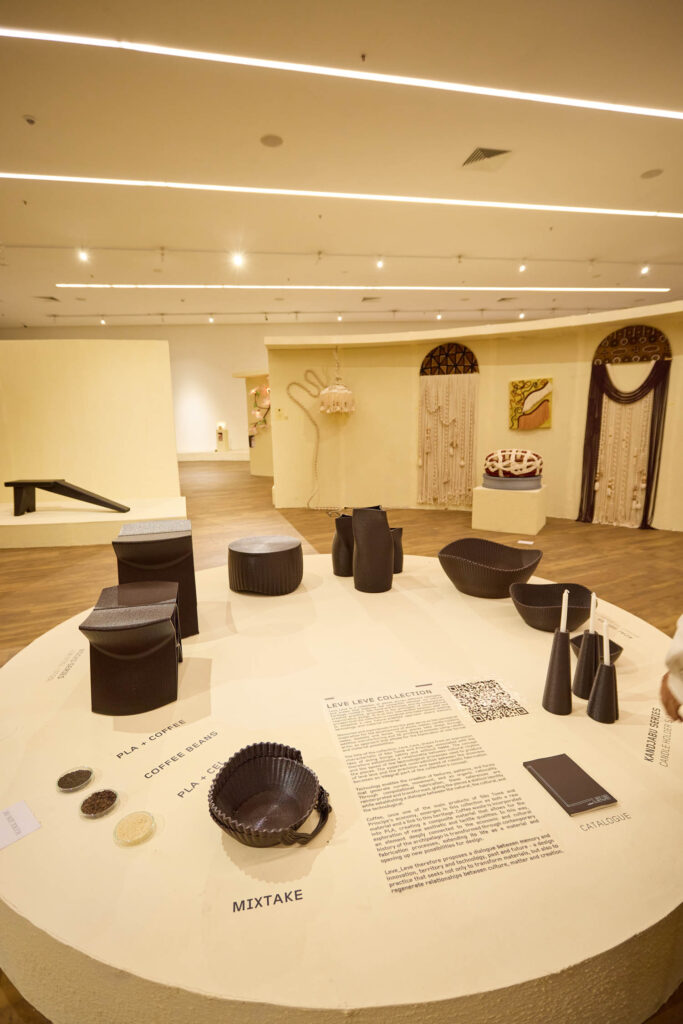
Exploring the relationship between São Tomé and Príncipe’s cultural heritage and contemporary design through a collection of stools, tables, lamps and other objects, Leve_leve draws on personal memories and natural references. The collection uses robotic arms and 3D printing to translate cultural influences into organic forms, textures and patterns.
Its title comes from an expression associated with doing things calmly and without haste in São Tomé and Príncipe, creating an interesting contrast between an unhurried cultural rhythm and the precision of robotic fabrication. Coffee, once central to the archipelago’s economy, also informs the collection materially. It also incorporates coffee waste into PLA bioplastics which the designer transforms using the material tied to the region’s history into a resource for contemporary, regenerative design.
Osà Eko Tuntun by Sara Bologna in collaboration with MitiMeth
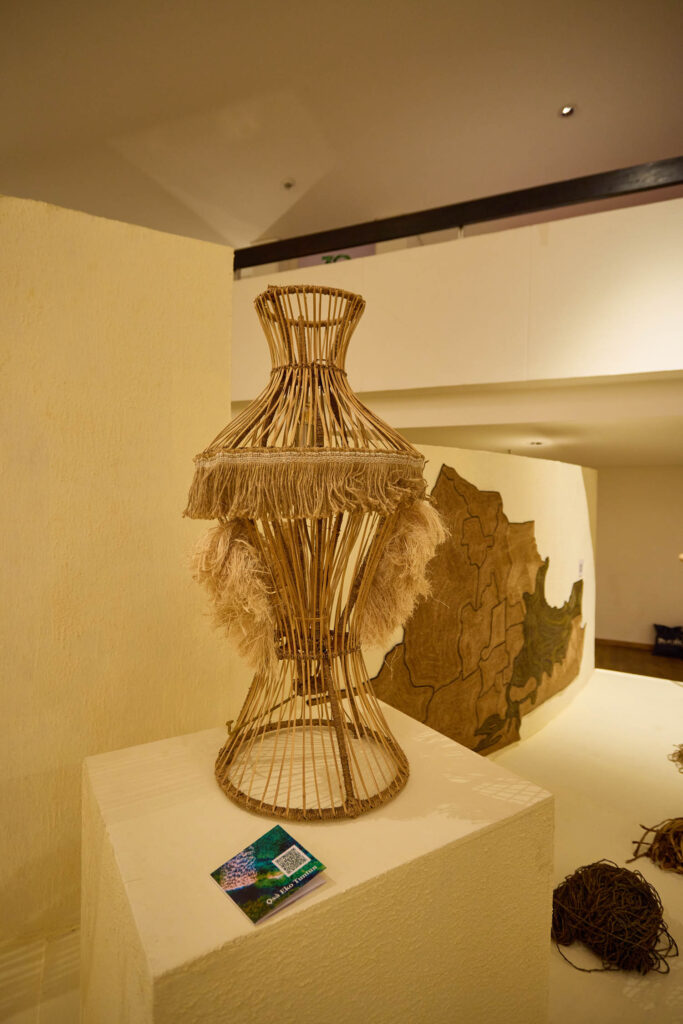
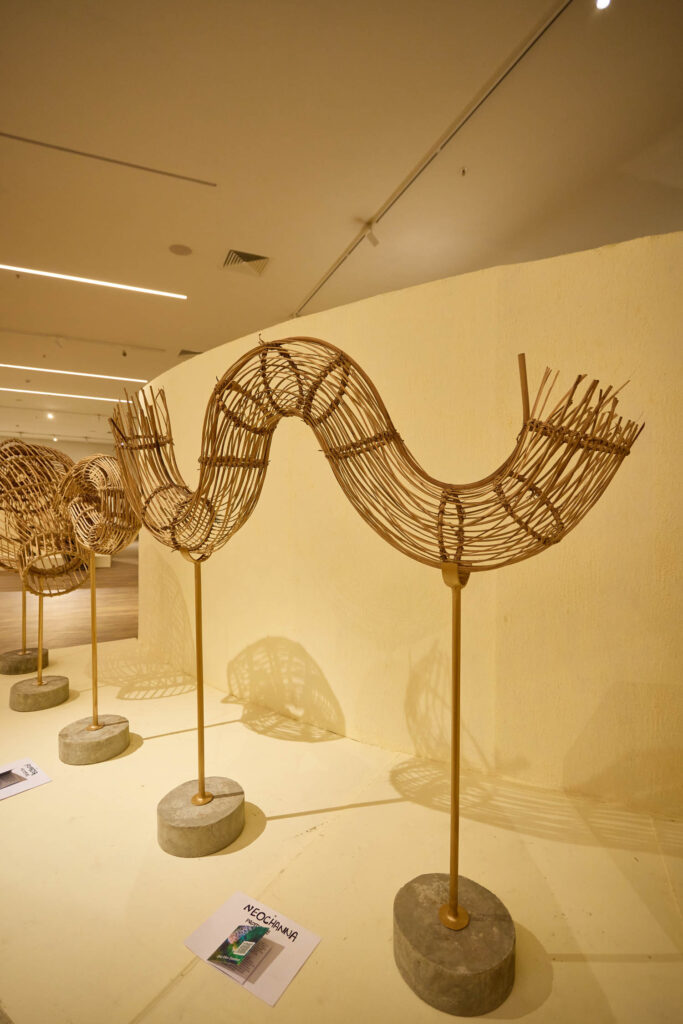
Osà Eko Tuntun, Yoruba for “New Lagos Lagoon,” was another attention-grabbing design at the exhibition. There was something mysterious about its lighting forms, which felt almost otherworldly while remaining deeply connected to the landscape and craft traditions of Lagos. Developed by Italian designer Sara Bologna in collaboration with MitiMeth, the project transforms water hyacinth harvested from the Lagos Lagoon into handcrafted lighting objects, combining it with raffia, bamboo and rattan. Drawing on traditional fish-trap weaving techniques and the knowledge of local artisan fishing communities, the project turns an invasive plant threatening biodiversity and livelihoods into a material for contemporary design.
read more
DesignWire
Cersaie 2026 Reveals The Next Evolution Of Tile Design
From sculptural 3D textures to oversized slabs, this year’s Cersaie showcased the latest innovations shaping the future of tile and bath design.
DesignWire
What To Expect At BDNY 2026
Boutique Design New York (BDNY) will feature immersive spaces, talks by industry leaders, and show-stopping exhibits by more than 700 brands from 55 countries.