
10 Questions With… Artist Lizzie Gill
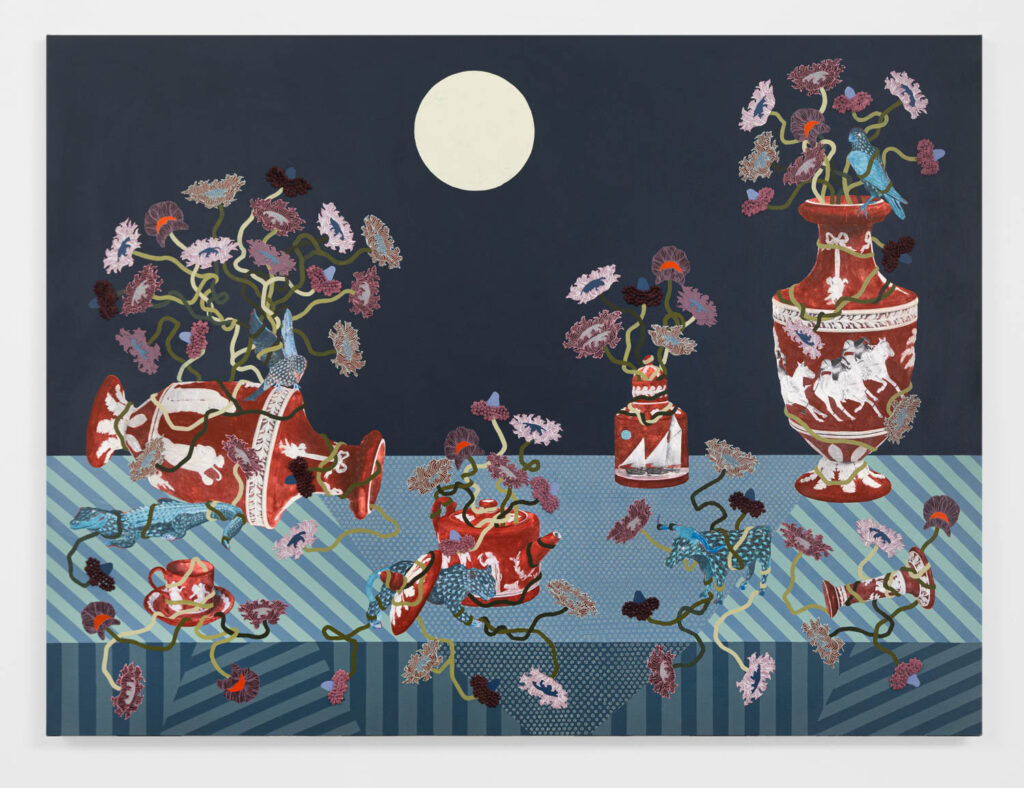
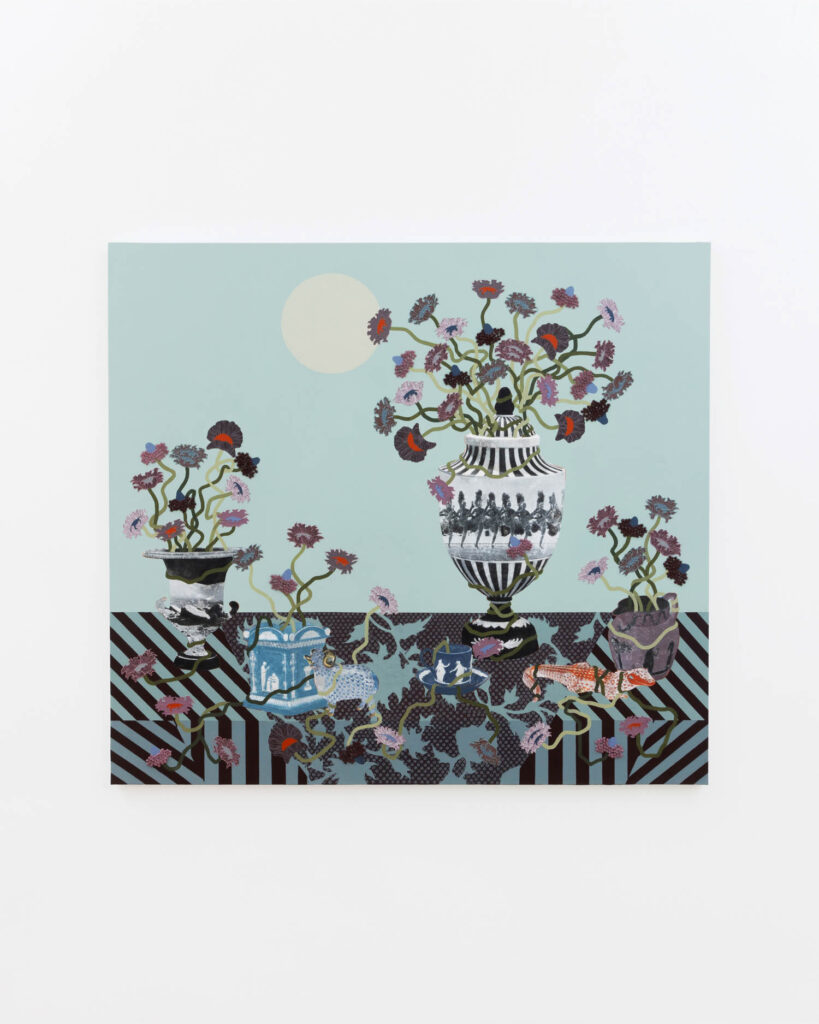
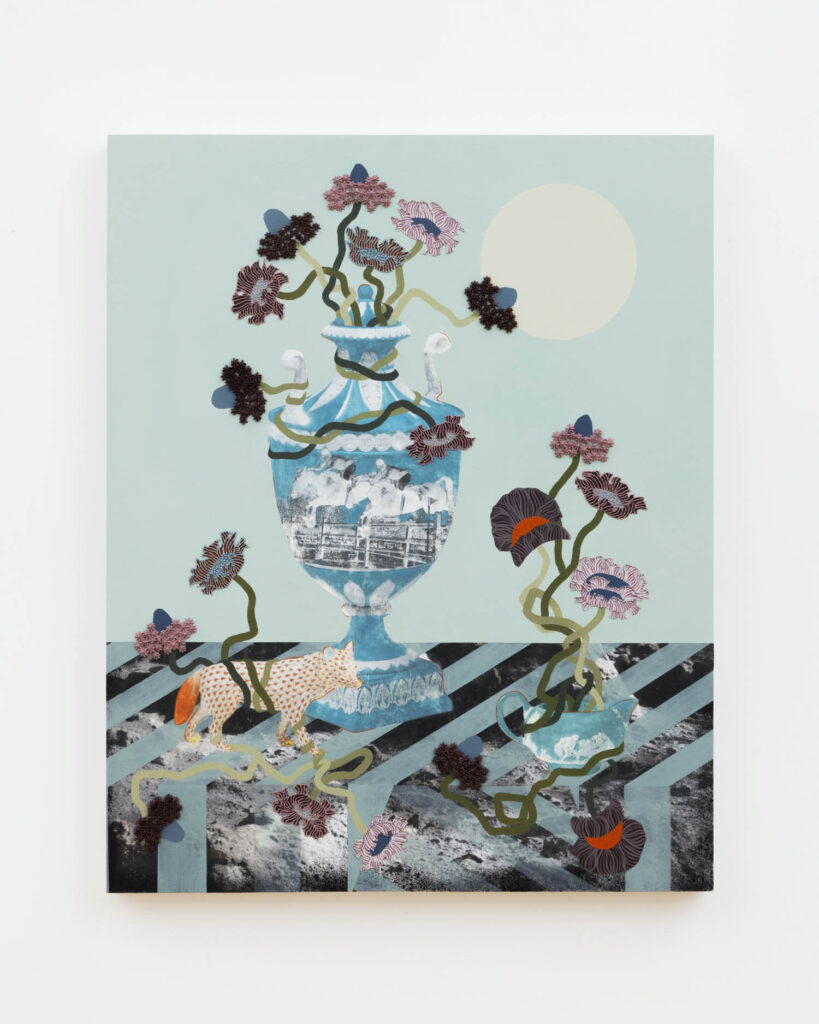
Artist Lizzie Gill paints contemporary still lifes incorporating floral elements with ceramic and porcelain objects. To inform these compositions, she sources imagery from museum collections and publication archives. Her work touches on themes of domesticity, private collections, and corporality. Gill’s oeuvre has been influenced by her family, including its heirlooms, and she is expecting her work to shift by becoming a mother herself.
Lizzie Gill was born in 1989 in New York City, and she is now based in Sharon, Connecticut. The artist has presented over a dozen solo exhibitions and numerous group exhibitions throughout the U.S., from New York to San Francisco. She has had residencies at the Vermont Studio Center and elsewhere. Her work is held in public and private collections, including The Bunker Artspace in Palm Beach, Johnson & Johnson, and Fidelity.
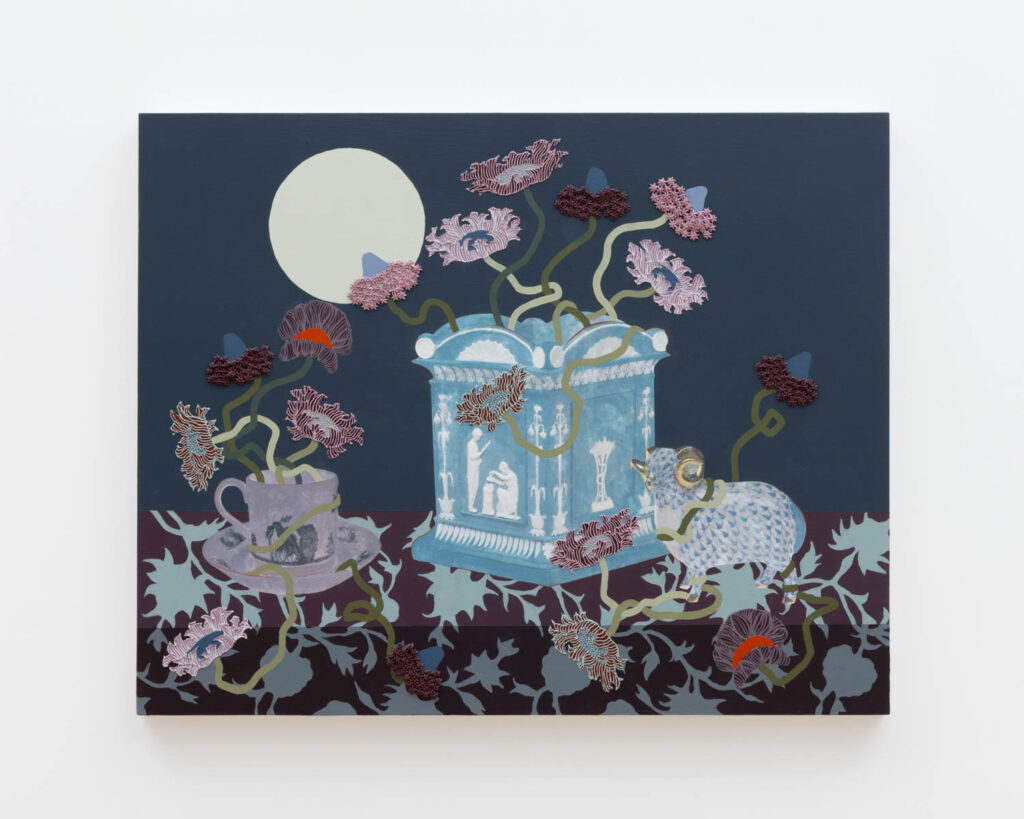
She will present a solo exhibition of recent work at HESSE FLATOW in Manhattan from September 9 through October 24, 2026. The paintings on view incorporate marble dust emulsion with acrylic paint and an image transfer process; she uses a pâtisserie tool to pipe the marble dust emulsion onto the surfaces of the works. Her work is also currently included in the Aldrich Contemporary Art Museum’s Decennial, which features artists who live and work in Connecticut, on view through January 10, 2027 in Ridgefield, Connecticut.

Interior Design spoke with Lizzie Gill about her process, drawing inspiration from museum archives, and her appreciation of porcelain figurines.
In Conversation With Lizzie Gill
Interior Design: How did you get started as an artist and how has your career evolved?
Lizzie Gill: I got started by working temporary jobs in auction houses and galleries to better understand the industry I wanted to enter. Eventually, the studio practice I maintained on the side became a fulltime commitment.
ID: You are based in Connecticut. How does location affect your work?
LG: I live in a very rural area of Connecticut. My studio is nestled in a hillside, on the other side of an Audubon sanctuary. Bird life and flora and fauna have increasingly made their way into my compositions.
My studio is in a converted 1860s farmhouse, which I absolutely love. We kept the old floors so you can still see where the rooms were originally divided in the eyebrow colonial house. It’s a big open space where I can make a mess, which is essential. I have large rolling tables that hold the paint and ephemera I need to work. I prefer to work early in the morning.
ID: How do you consider or reference museum archives and early 20th century publications?
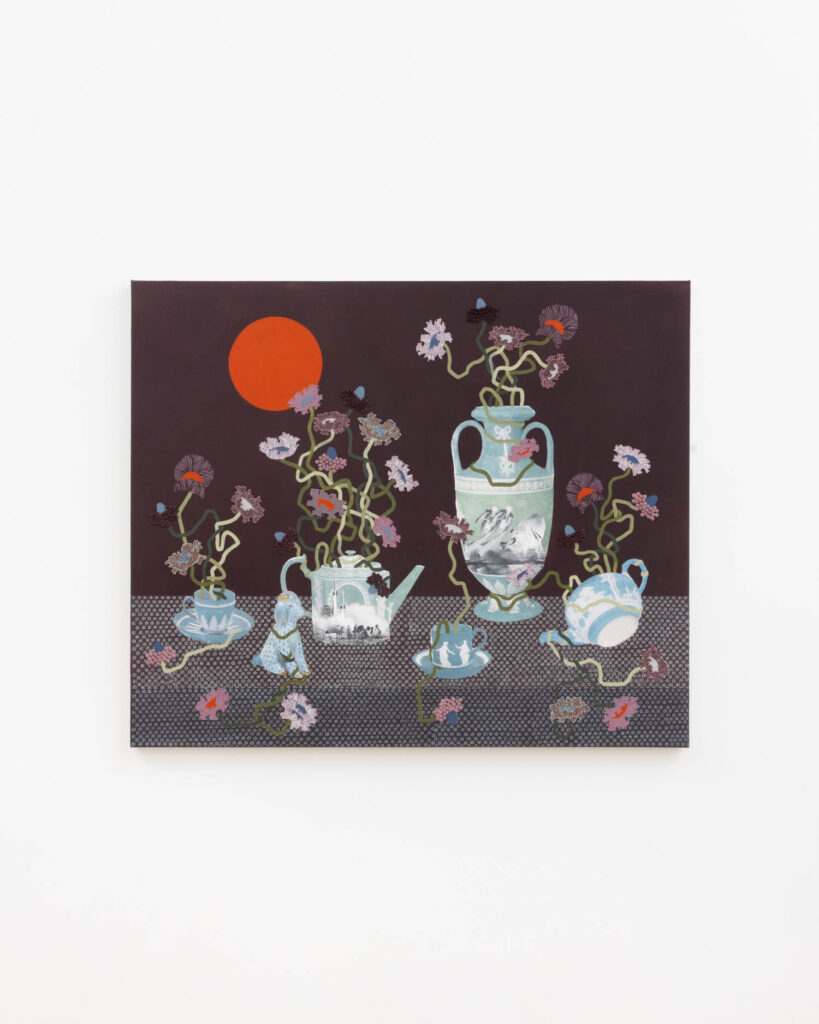
LG: The vessels I use in my still life compositions are often sourced from museum archives. And the dynamic imagery within the vessels that often replaces the neoclassical scenes is sourced from mid-century publications and textbook references.
ID: Your still life paintings feel unusually active, even pulsating in a certain way. How do you choose the objects you depict and do the objects feel alive at all while you’re working?
LG: They do! I feel the colors and textures create a vibration within the painting. There’s this movement, but also a stillness I strive to achieve in the overall image. So there is a stillness to the chaos. I choose the objects based on composition and feel as well as art historical context and history regarding the juxtapositions and themes I weave into the works.
ID: And can you tell us how you chose those objects, including porcelain animals and antique ceramic wares?
LG: The porcelain Bertrand figurines were collected by my mother, and they are a reference to her. They used to sit in a vitrine at the end of our dining table, so they were ever present in my childhood and growing up. Sometimes I would be allowed to open the cabinet and delicately handle my favorite ones.
ID: Your work is being exhibited alongside other CT artists in the Aldrich Museum’s Decennial. Are there other artists included that you feel you are in conversation with in any way?
LG: The room where my work is exhibited is thoughtfully curated by Amy Smith-Stewart and Caitlin Monachino and the artists all share themes of object memory, materiality, ephemera, childhood and lineage. Artists such as Scott Carrillo Azevedo explore these themes by reconstructing lost family histories through painting.
ID: What work are you most excited about showing at HESSE FLATOW in Tribeca this September?
LG: I have sculpture works I’m currently investigating in my studio. It will be an interesting contextual evolution for the themes I discuss in my paintings.
ID: How has your understanding and use of color changed (or stayed the same) over the years?
LG: I love color. It’s one of my favorite parts of the painting process. Over the years my colors have become more muted. This is both to reference early colonial house colors (interior and exterior) as part of the historical layers to the work and to build calm into the complexity of the compositions.
ID: Can you tell us about how domesticity, heirlooms, and ideas about matriarchy have informed your practice?
LG: Cleaning out my childhood home had a profound effect on me. Going through those family objects, from treasures to trash and delineating them as such, really began to inform my practice. I found exploring the ideas of generational inheritance, both physical and psychological, a meaningful thread to explore as an artist.
ID: What’s next for you, or what are you most excited about reaching toward?
LG: Motherhood is an exciting new evolution in my life. I’m excited to see how this change will affect my place in my work. It often centers around matriarchy, but as my experience / lens as a daughter. So I am interested in that context evolution as a mother myself in my artistic practice.
read more
DesignWire
10 Questions With… Clarisse Merlet
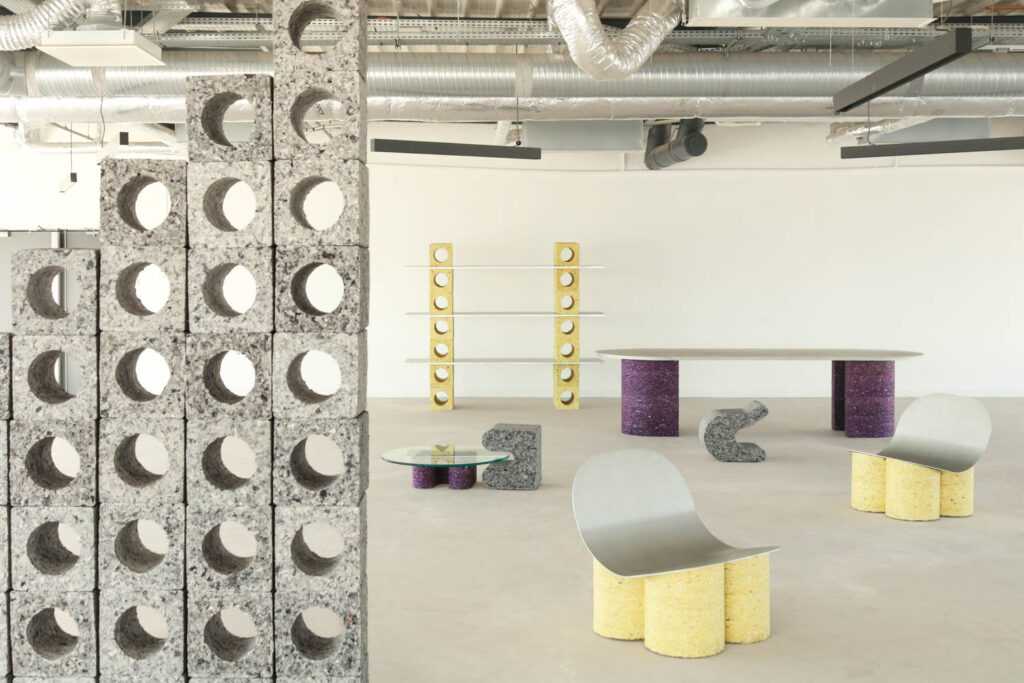
Clarisse Merlet, founder of Paris-based FabBRICK, is transforming discarded textiles into colorful architectural materials, pushing the medium with bold forms.
DesignWire
11 Top Picks From Feria Hábitat València 2026
Highlights from Feria Hábitat València, which featured over 1,200 exhibiting brands spread across 110,000 square meters of exhibition space.