
10 Questions With… Budiman Ong
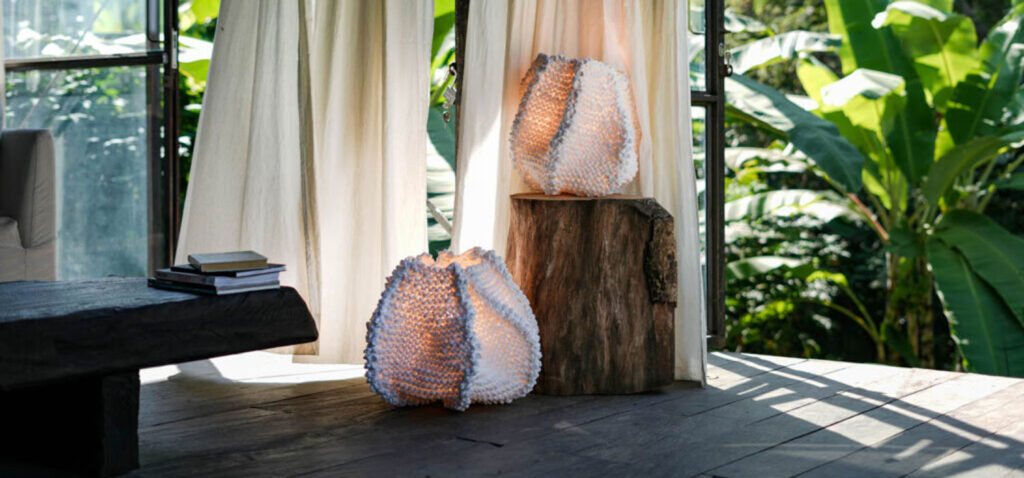
Bali-based Budiman Ong founded his own lighting atelier Ong Cen Kuang (OCK) in 2008 in a bid to create products that foster a more emotional and sensorial connection between the designer, the maker and the owners of the final product. He takes organic, simple and not always obvious materials such as banana fibre paper, copper wire, zippers and brass and experiments with them, revealing unexpected qualities and creating hand-crafted pieces that range from the intimate and domestic to the monumental and theatrical. In 2022 he co-founded craft and design festival Jia CURATED alongside fellow designers Rudy Winata and Yang Yang Hartono.
Interior Design sat down with Budiman Ong a few days before the start of this year’s edition of Jia CURATED and chatted about the upcoming five-day festival, why Ong Cen Kuang is an atelier more than a brand, the company’s first outdoor lighting collection and why he has worked with zippers for the past 18 years and doesn’t think he will stop any time soon.
In Conversation With Budiman Ong
INTERIOR DESIGN: You went to Scotland fresh out of high school and ended up staying seven years, eventually doing a degree in Applied Arts at Grays School of Art in Aberdeen. What was that experience like?
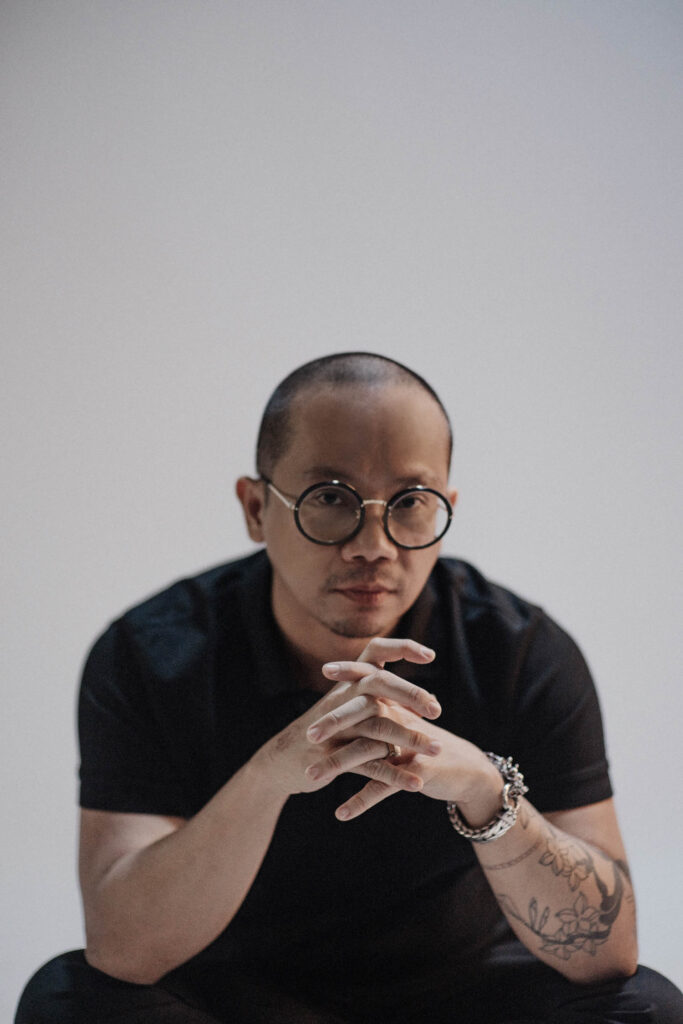
Budiman Ong: It was my first experience overseas after graduating high school and it opened up a lot of opportunities for me, and built my confidence as I am quite a shy and inward-looking person. I’m from Kisaran in Sumatra and it is such a small place that I didn’t even know there was such a thing as product design. First, I did English as a foreign language and then after that various small courses such as graphic design, introduction to color and even a course on cake decoration. Eventually I did a foundation course in art and design, which led to a degree in what they called 3D design. The college had very good ceramics, metal, glass and textile workshops and offered us a lot of freedom to explore our own interests. I soon realised I was really into material investigations and making and the final year I focused on lighting. As the only Asian student doing the course, I was quite different from everyone else but being different is a good thing at art school.
ID: You launched your own lighting brand Ong Cen Kuang in 2008 after working for six years at high-end jewellery designer John Hardy. Why did you want to branch out on your own and launch your own lighting atelier?
BO: I have always done things intuitively. Working for a company is not the same as working for yourself because you are bringing other people’s ideas and philosophies to life. I worked in the special projects department at John Hardy, which oversaw lifestyle and merchandising. They did special one-of-a-kind lifestyle or home decor collections for VIP clients. When I decided to leave, it was quite sudden. I was sent to Maison & Objet in Paris in 2008 to see what opportunities there were for the brand to expand its lifestyle collections, in Europe in particular. Once there I saw that there were so many other things I wanted to do! I came back, gave them my notice and three months later I started Ong Cen Kuang.
ID: Your first collection as OCK was ALUR, which was also your first ‘zipper’ collection. Can you tell me about your fascination with the humble zipper and what it says about your approach?
BO: I was looking for a material that was different. I started with zippers because Bali is a destination for the fashion industry and there are a lot of small ateliers that make fashion items using them so it is a very common material—but it’s not at all common to use them in lighting. My fascination is rather with the quality of light they can create and how they can be transformed, than the object itself, which is just fabric and plastic for the ‘teeth.’ If you have one zipper, it’s quite soft. But as soon as you stitch a few together there is a sort of rigidity and tension, a push and pull. A lot of the way I work is about observing things and curiosity and asking where the material will take us next rather than looking at the final form. For me, the most important thing is how the material behaves. I like to let the material control the result.
ID: On a similar note, you are a big fan of enabling buyers to interact with your lamps, physically and literally.
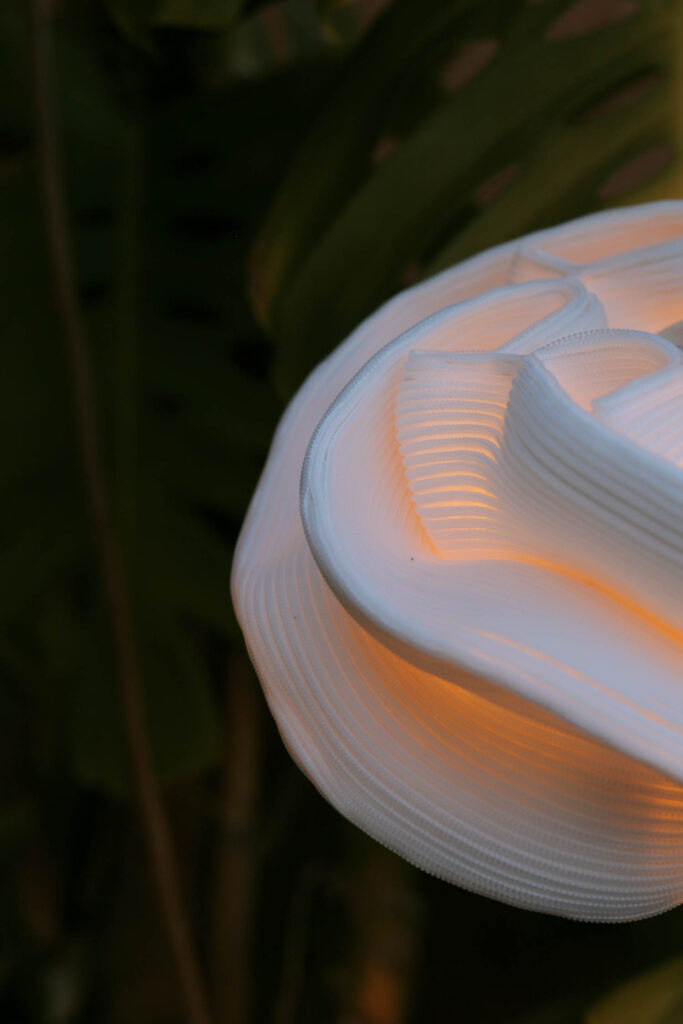
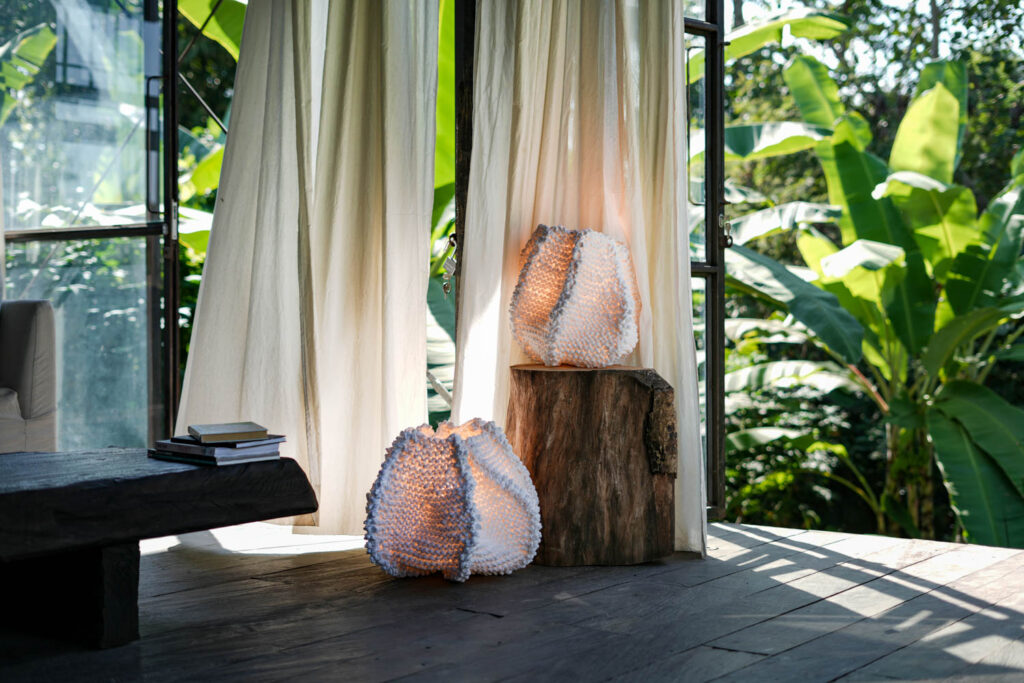
BO: We always encourage the owners of our lights to shape and play with them. It’s something I am a little obsessed with! It’s about building an emotional connection between the piece and the person using it, which in turn becomes a connection to the artisan that made it. Jamur is the strongest example. It is a light woven out of copper wire on a circular loom where the person who buys it creates the final form. But all of our Alur or zipper range can be washed in a machine if it gets dirty and when it is dry you need to reshape it. Similarly, our Kentang light is made out of layers of handmade banana fibre paper whose undulations can be gently transformed by hand and Bunga Kertas is a series inspired by the bougainvillea where each petal is made out of wire crocheted by hand that can be shaped by the owner.
ID: You are launching Janur, your brand’s first outdoor light at this year’s Jia CURATED. Why (only) now?
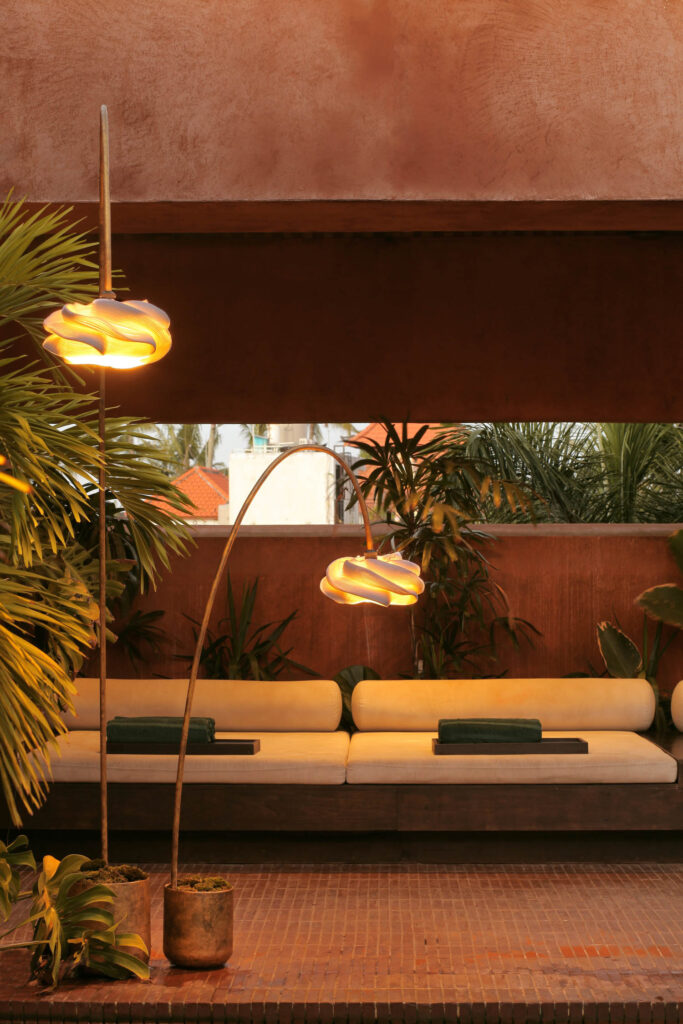
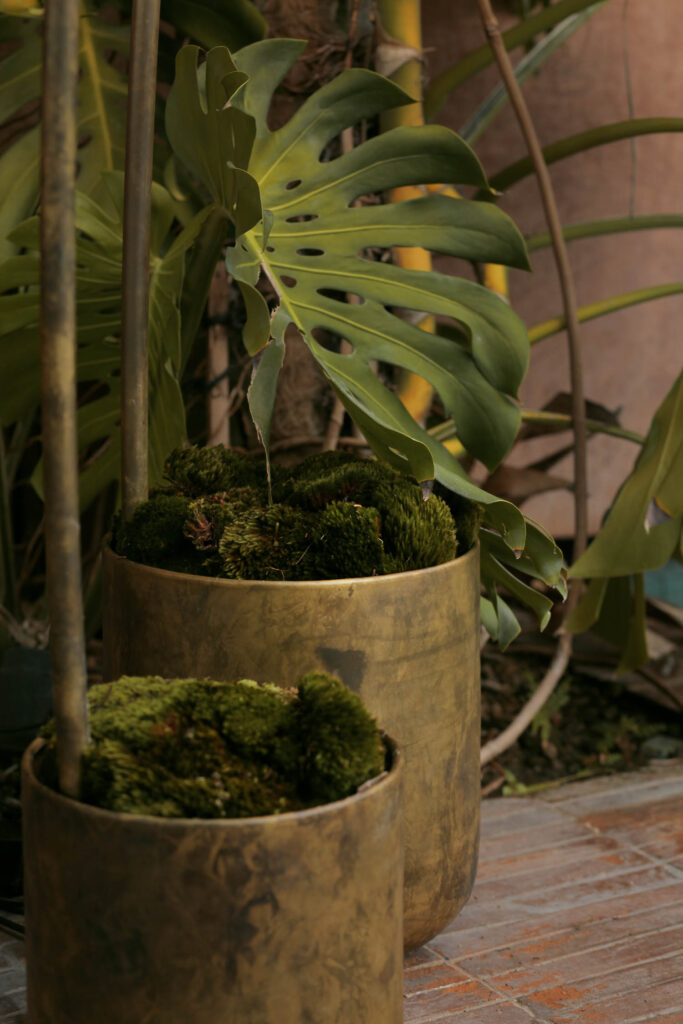
BO: I design a lot of pendants as I love them the way they can be configured differently to suit people’s needs but we are trying slowly to fill the gaps in our collection. So earlier this year we launched the Mekar table lamp in Japan and now we are looking at a different lighting topography; outdoor spaces. A lot of outdoor lighting is quite limited in design and form; it’s often quite square with no sculptural element to it. I believed we could add a new visual aspect and language to this typology. The collection includes two pendant lights and two standing lights. The standing lights sway slightly with the wind and have a slender stem and a base that doubles up as a plant pot made out of oxidised brass, which will age nicely over time. Like all our lights, it works with a standard bulb you can buy off the shelf. We sell our products all over the world and there is no point having a light you can’t find the bulb for.
ID: The artisans working in your atelier are a major part of your lighting story. Tell me more about them.
BO: We call ourselves an atelier because 95% of our lights are made in house by a team of almost 40 artisans. Only our Rajut collection is partially made elsewhere as it is made using a traditional Indonesian knitting technique from Sumba, an island in eastern Indonesia. When we look for new artisans, we don’t look so much for existing skill sets as a certain mindset that is open to learning new skills, because that is the way we work and the way I design. I teach them to crochet, to knit, to make a loom because this is where my expertise comes in, but they are the ones who then take over and make the final products. Working with new skills and materials gives them a sense of purpose and ownership and all our lights come with a maker’s card signed by the artisan.
ID: You like to explore different materials, such as banana fibre paper, brass, metal wire, zippers. Is there any other material you are looking to work and experiment with?
BO: Banana fibre is a material I still want to explore further and create new textures with as I know we haven’t uncovered its full potential. I started working with it over ten years ago and at that time the market wasn’t quite ready for it but now the market is more sophisticated in Indonesia. They look for different things and appreciate local brands and designers and natural materials.
Another material I want to start experimenting and working with is ramie; it’s an ancient fibre made out of a grass like substance, almost like a linen. It’s a material that uses less water and the weather in Indonesia is ideal for it. A friend got some yarn samples from central Java and we want to start pushing this new language.
ID: Jia CURATED, the design festival you launched in 2022 with Rudi Winata and Yang Yang Hartono, starts on 13th of August and has moved from the abandoned theme park it was held in over the past two years to Pengemback Beach in Sanur on Bali’s eastern shoreline. Why the change? And how will it fit into this year’s theme of ‘Nature Weave’?
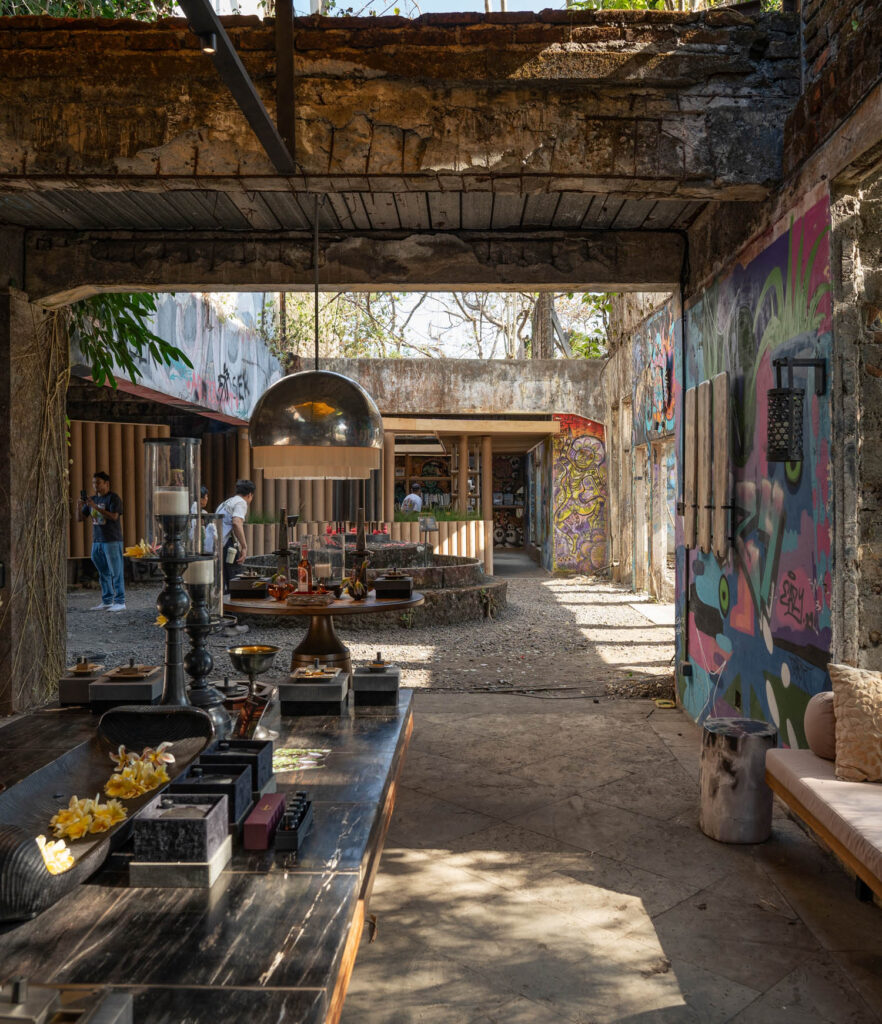
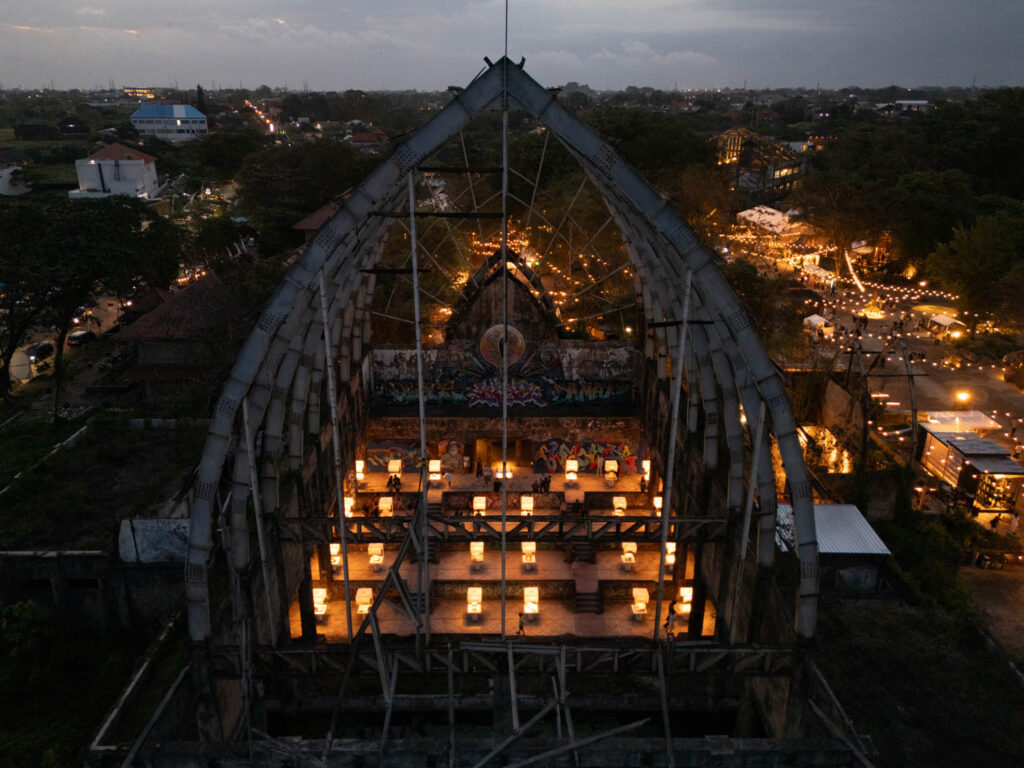
BO: We were never going to be in one place forever but I think we were the victim of our own success because people suddenly saw the potential of the abandoned park with its beautiful crumbling buildings, carvings and graffiti so it is being developed. We always knew it was going to happen, it just happened sooner than we expected. We chose the theme ‘Nature Weave’ because it has a very visual quality to it and also because we wanted to look at the environment as a whole, not just humans. For this year’s festival we found a location that fits perfectly with the theme as it’s on the beach and framed by a pine forest on one side and a mangrove forest on the other. The pavilions are woven into the trees and our talks will be held on both sides of a small estuary river, with the speakers on a platform on one side and the audience on a platform on the other bank.
ID: What are a couple of strands or projects at this year’s festival that are of particular interest?
BO: This year we have a new programme called ‘Project Benih’ that brings together artisans, manufacturers and designers from Indonesia, Taiwan and Japan. The idea was initiated by Shikai Tseng and Jin Kuramoto, designers from Japan and Taiwan respectively, who attended last year’s festival. They saw that making is still quite affordable in Indonesia and they could see a narrative which we couldn’t because they came with fresh eyes so we paired them with Indonesian artisans. This year we created a programme to do the same on a bigger scale. Nine designers will show one of their core products, the one people most associate them with, while 13 Indonesian artisans and manufacturers will present the materials and techniques they work with. The designers will then choose a ‘making’ partner and have one year to work on the products, which will be showcased at next year’s festival in Bali but also go to Japan and Taiwan as a touring exhibition. We see this as a way to create cross-cultural exchange and long-term collaborations across Asia. If we can expand the programme into other countries, it can become something sustainable
ID: Every year at Jia CURATED you have a guest country you turn the spotlight on to with an exhibition by a guest curator. This year it is the turn of the Philippines. Can you tell us more?
BO: The Philippines has always been on our radar and it’s a place with so many designers. There is so much talent there, especially in material explorations. They are very skilled with palm leaves, banana fibre and seashells and the quality of the work is high. When we started Jia CURATED we knew we wanted to involve designers from Southeast Asia and Asia more widely as the idea has always been about building our community with those that are closest to us geographically. It makes sense in terms of logistics and ease of travel as this is where the products are being made and bought. Our past guest countries include Singapore and Taiwan and ext year it will be Australia’s turn, because they too are close to us.
read more

DesignWire
Designers And Manufacturers On The Move: September 2026 Edition
Interior Design‘s latest On the Move includes must-know industry promotions and hires, like Perkins&Will’s strategic move to expand its design capabilities.
DesignWire
10 Questions With… Artist and Designer Conie Vallese
From sculpture and ceramics to glass, textiles, and furniture, Conie Vallese embraces a multidisciplinary practice shaped by curiosity and creativity.