
10 Questions With… Clarisse Merlet
Clarisse Merlet, a French architect and the founder of FabBRICK, has always possessed a deep passion for exploring new ways of designing and building. Before launching her studio, she developed a concept for architectural bricks made entirely from discarded textiles. Founded in late 2018, the FabBRICK studio is based in Paris’s creative 19th arrondissement. Handcrafted and produced exclusively in her Parisian workshop, the material stands out for its vibrant colors, rich tactile texture, and its architectural potential. In 2025, the studio reached a new milestone by expanding into sculptural design and free-form shapes, pushing well beyond its traditional brick format.
Interior Design sat down with Clarisse Merlet to discuss FabBRICK’s exhibition at CURATED Brussels. In an intimate conversation, she speaks candidly about the excitement she feels when exploring purely sculptural design, the influence of her family of creators and inventors, and what the future holds for her company.
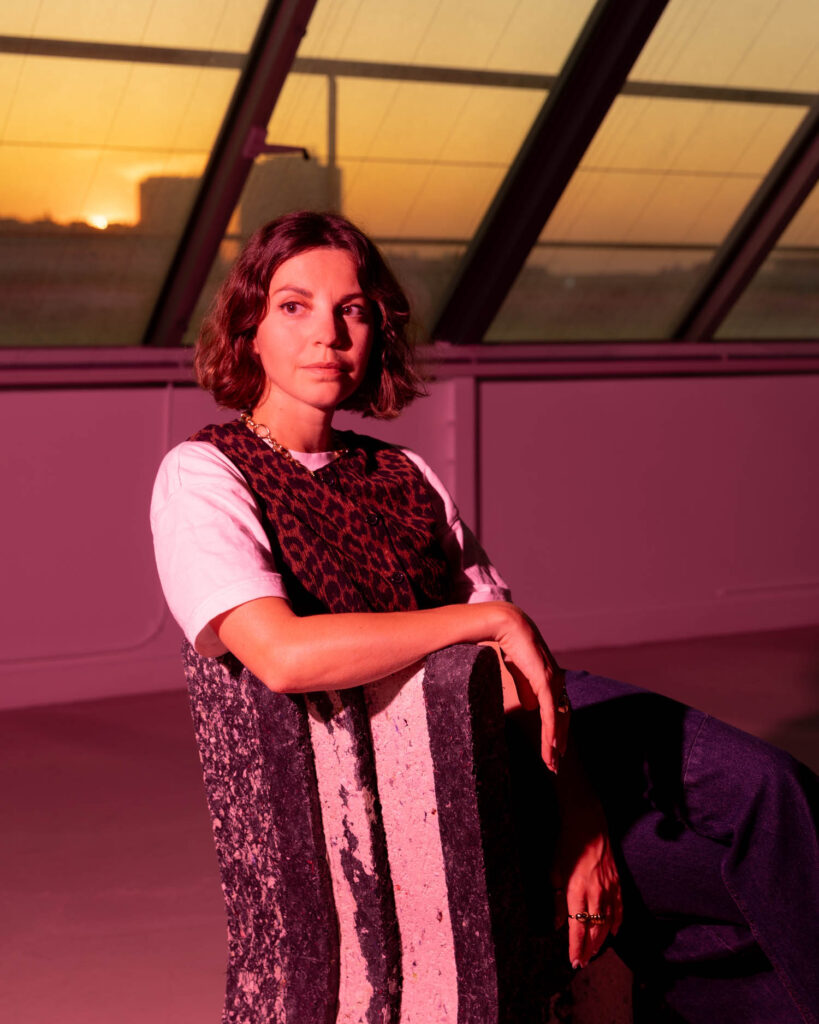
In Conversation With Clarisse Merlet
Interior Design: Can you share a bit about your journey and how it laid the foundation for FabBRICK?
Clarisse Merlet: My path started in La Roche-sur-Yon, Vendée, where I was born. I studied fine arts for three years in high school, then moved to Paris to spend three years earning a bachelor’s in Fine Arts from Paris 8 University. I then spent five years studying architecture, completing my bachelor’s at ENSA (École Nationale Supérieure d’Architecture de Rouen) and my master’s at ENSA Malaquais in Paris. I have loved creating and imagining things for as long as I can remember. Looking back, these two disciplines—fine arts and architecture—laid the foundation for FabBRICK.
Fine arts taught me to look at forms, colors, and emotions, while architecture taught me to think about space, materials, and how people experience their surroundings. FabBRICK was born somewhere at the intersection of those two worlds.
ID: Was the environmental aspect central to the concept from the very beginning?
CM: I was lucky to grow up in a family of makers and inventors. From a very young age, I was surrounded by people who could create or repair things out of almost nothing. My father knew how to fix all kinds of machines, and my mother made most of my clothes herself. Honestly, as a child, I don’t think I even realized that you could just buy something new. For me, never throwing anything away and always trying to find a new use for it was completely normal.
When I started looking for a material for the future, I naturally turned to what was already around us. I didn’t start from a purely ecological mindset; I simply thought it made sense to work with a material that was already there and available in large quantities. It wasn’t until I founded FabBRICK—a few years after creating my first prototype—that I began to articulate the environmental aspect of the project. But for me, it was never really about making an ecological statement. It was simply the most logical thing to do.
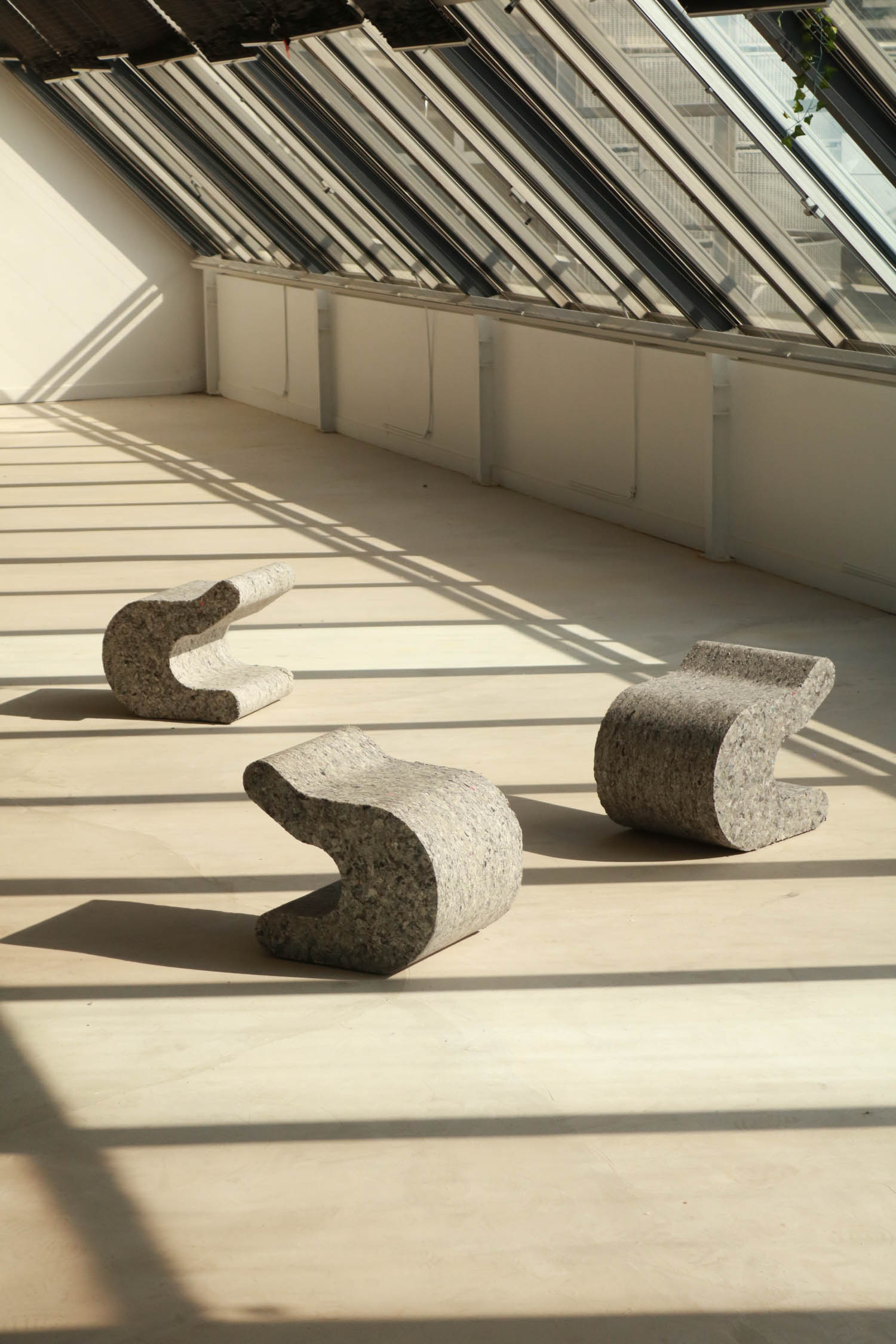
Tabouret T15 gris. Photography by Studio FabBRICK. 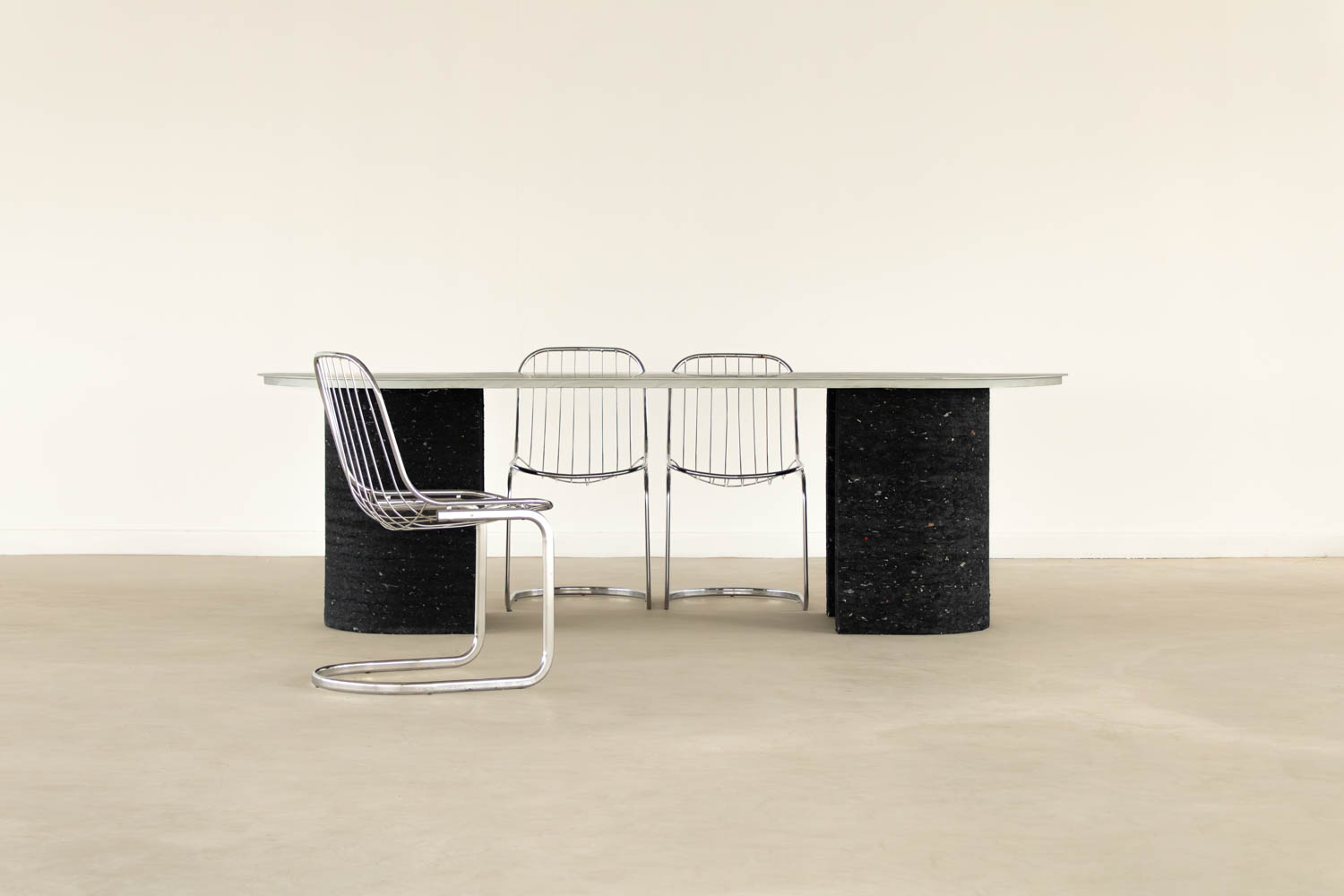
Table T60 noire. Photography by Studio FabBRICK. 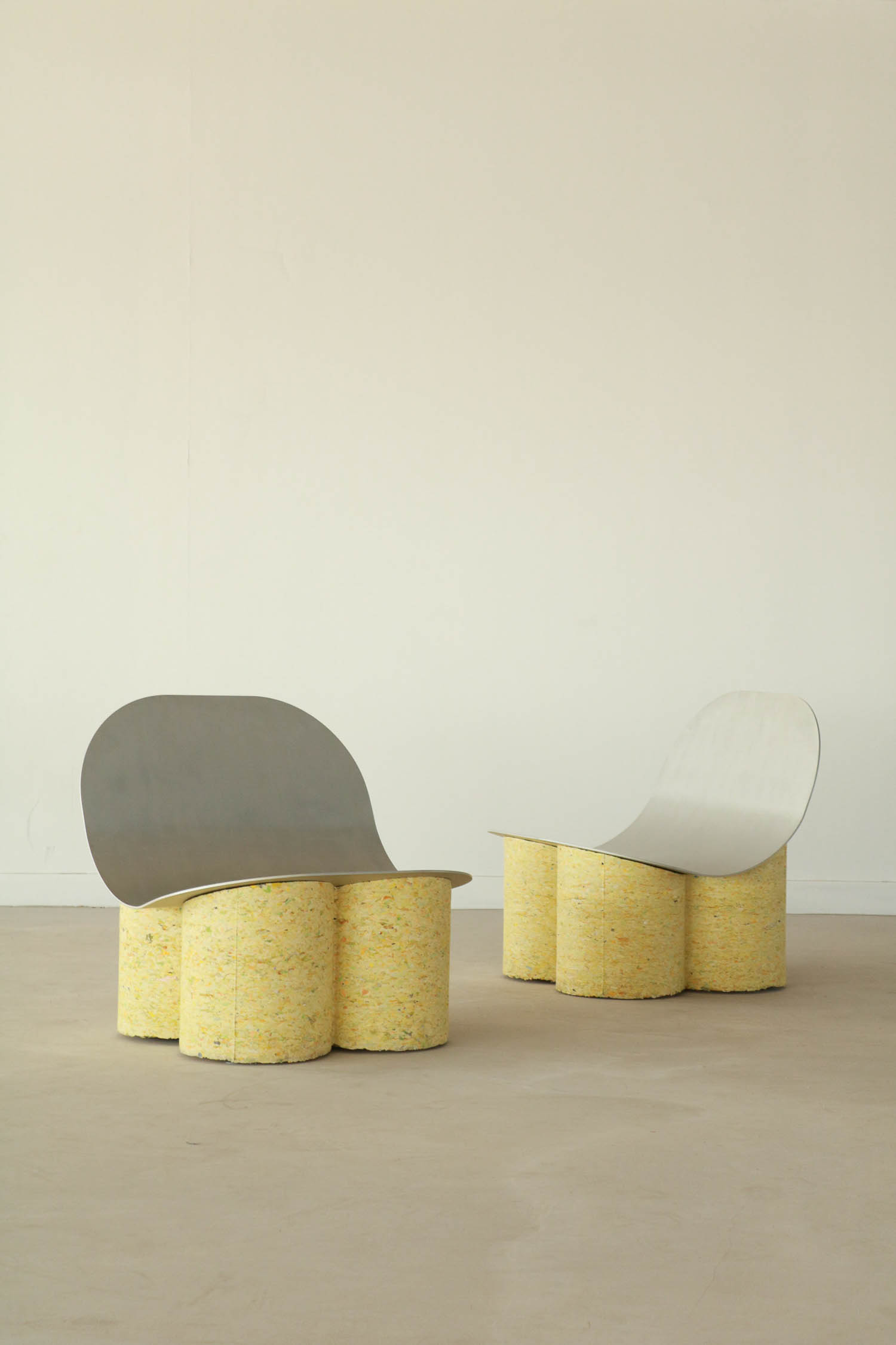
F20 JAUNE.
ID: Did you start by collecting textile waste or some other material? How has this informed your practice?
CM: Interestingly, I didn’t start with textiles. I began with cardboard because I noticed how much of it we were throwing away, and I wanted to find a way to turn it into bricks. During my first year of my master’s degree in architecture, my professor gave me a challenge. He basically told me: “A brick made of cardboard is interesting, but cardboard is already recycled very well in France. We don’t really need another solution for it. Find another material.”
I didn’t have to look very far. I realized that a huge volume of textiles was already in circulation, driven largely by the scale of the textile industry. So I decided to explore that material instead. About a week later, I came back with my first textile brick… and it worked. That was in October 2016. So that first brick is almost ten years old now, and I still have it. It’s been with me ever since.
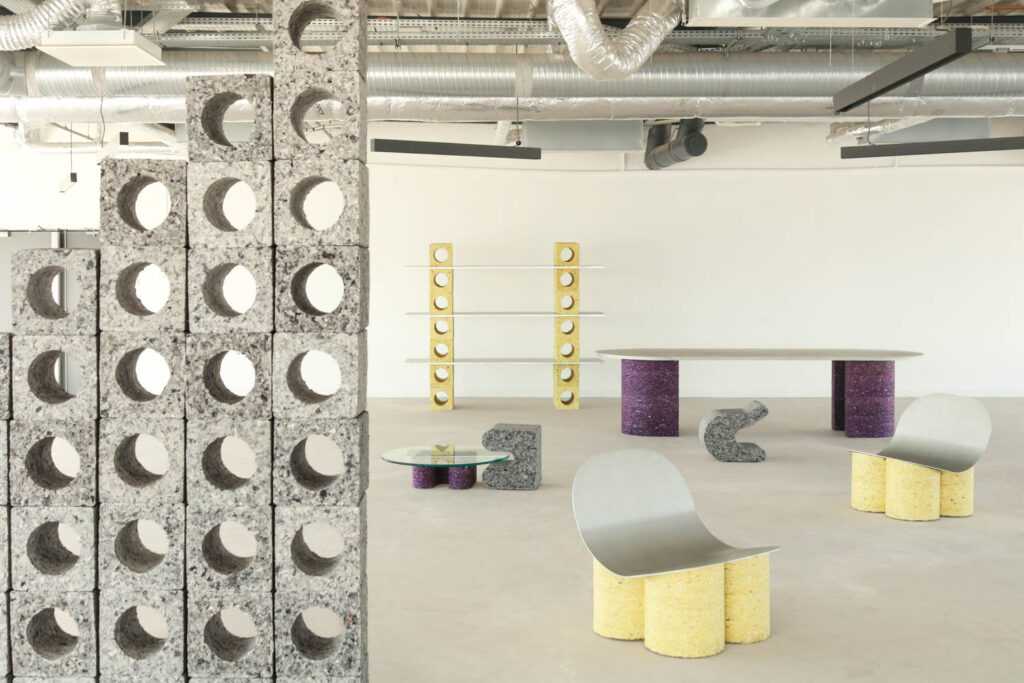
ID: What did the nouvelle pierre collection, launched in 2025, mean to you?
CM: Our greatest achievement in 2025 was, without a doubt, our “nouvelle pierre” collection. We began working on it in late 2024, spending time creating a large number of sketches and developing our ideas from scratch. We even conceived prototypes to test each new shape and color combination before finalizing the collection for Paris Design Week in September 2025.
I felt very proud to guide my team through such a lengthy creative process and, most importantly, to give them the time they needed to properly develop their ideas. The collection turned out magnificently and was wonderfully received when it was unveiled. On a personal level, it also marked the fulfillment of one of my dreams: exhibiting my own collection of artistic pieces in a beautiful Parisian gallery.
ID: What was it like to explore sculptural design and free-form shapes for the first time last year?
CM: It was probably the most exciting moment of my career so far. For eight years, I had been focused on making “bricks”, but I always knew the material was capable of so much more. I simply hadn’t had the time to explore it because of our intense workload. So, in 2025, I started turning down projects that didn’t truly inspire me in order to create the time and space needed for new forms. I also wanted to give my design team the freedom to work on something purely experimental.
I gave them a very specific instruction: they weren’t allowed to think about how their ideas would be manufactured. I didn’t want the material or our existing techniques to limit their imagination. I wanted them to sketch everything they could imagine—strange, ambitious, even impossible forms. We could always figure out the production process later. I wanted us to design pieces that were desirable, that moved people, that made us feel something. It was an incredible experience. The whole team was so happy at the opening, and I can’t wait to start working on our second collection.
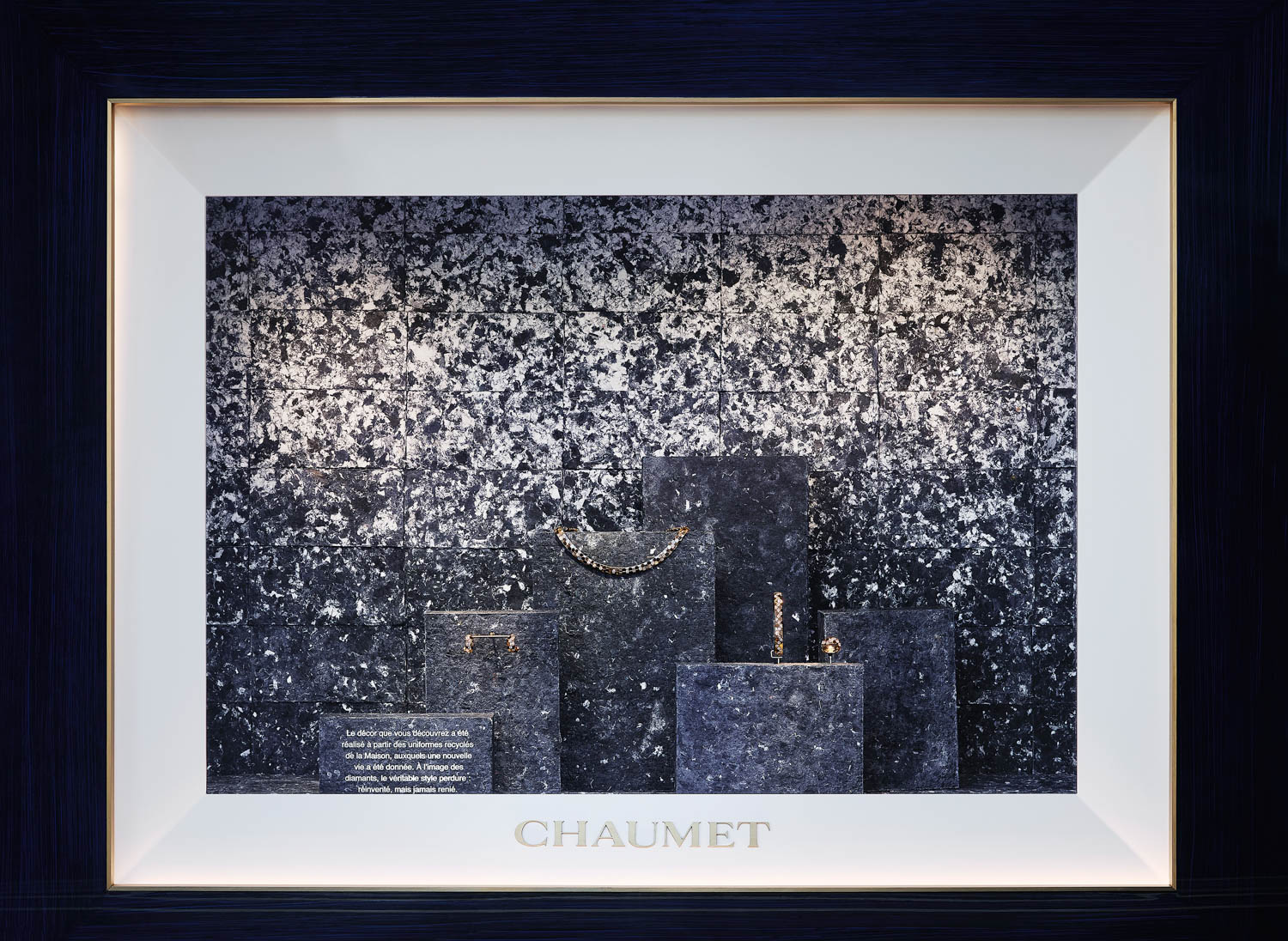
The Chaumet boutique window display on Place Vendôme, featuring custom installations by FabBRICK. Photography courtesy of Chaumet. 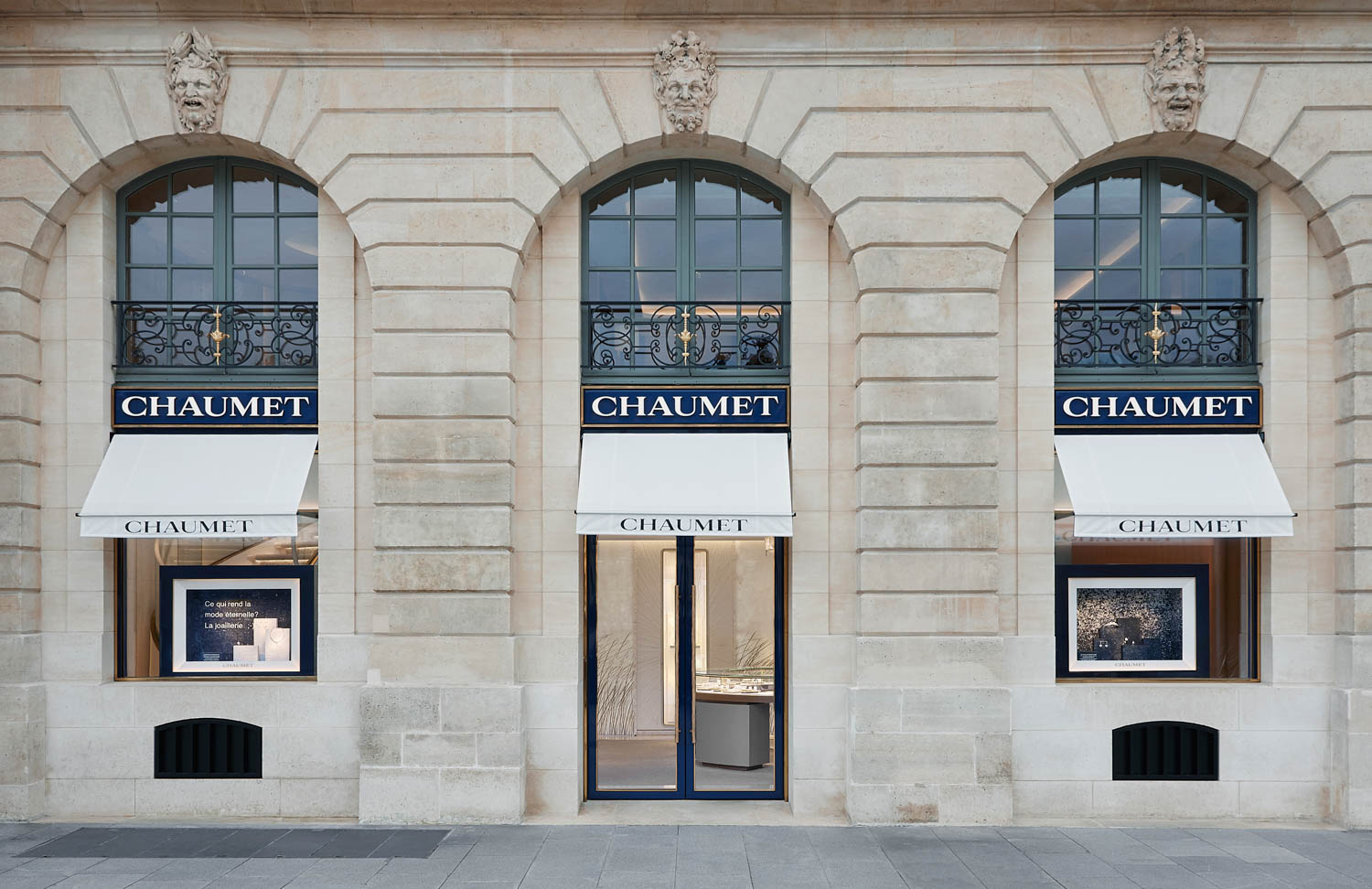
The Chaumet boutique. Photography courtesy of Chaumet.
ID: I’d also like to hear about some of your major recent works, like the installations for the new Manhattan offices and the displays for the Chaumet boutique. How did those collaborations come about?
CM: One of my main goals with FabBRICK has always been to collaborate with luxury houses. I want to create objects that are truly desirable and demonstrate that high-end design can be crafted from materials that already exist. So when Chaumet reached out to us to design their store window displays on Place Vendôme, it felt like a dream come true. What made the project even more special was that we were able to create the pieces using the boutique’s old sales staff uniforms. We transformed their navy blue suits and white shirts into beautiful pieces for the boutique. Convincing a luxury house to work with its own discarded fabrics in such a stunning setting was incredibly meaningful to me. When we finished the installation, I stepped outside the boutique and saw FabBRICK inside, reflected against the Place Vendôme. I burst into tears.
The Manhattan project was another major milestone for us. We were contacted by some American architects who had discovered our work on social media, and we collaborated on four large-scale mural installations for the new headquarters of a major American company in Manhattan. The project as a whole is still ongoing, so I haven’t seen the final result in person yet. I really hope to travel to New York soon to see it with my own eyes.
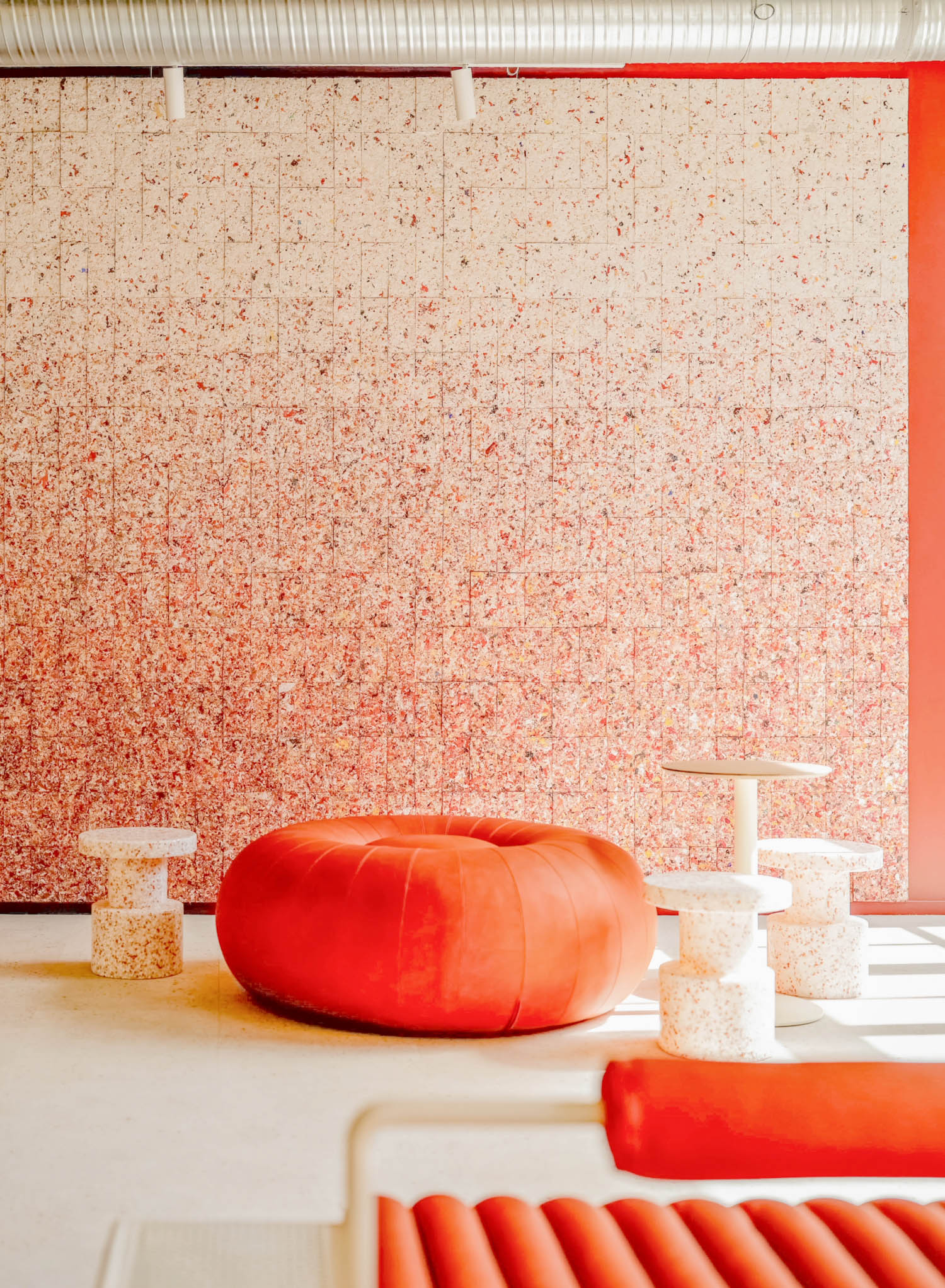
Vallee. Photography by Benoit Linero. 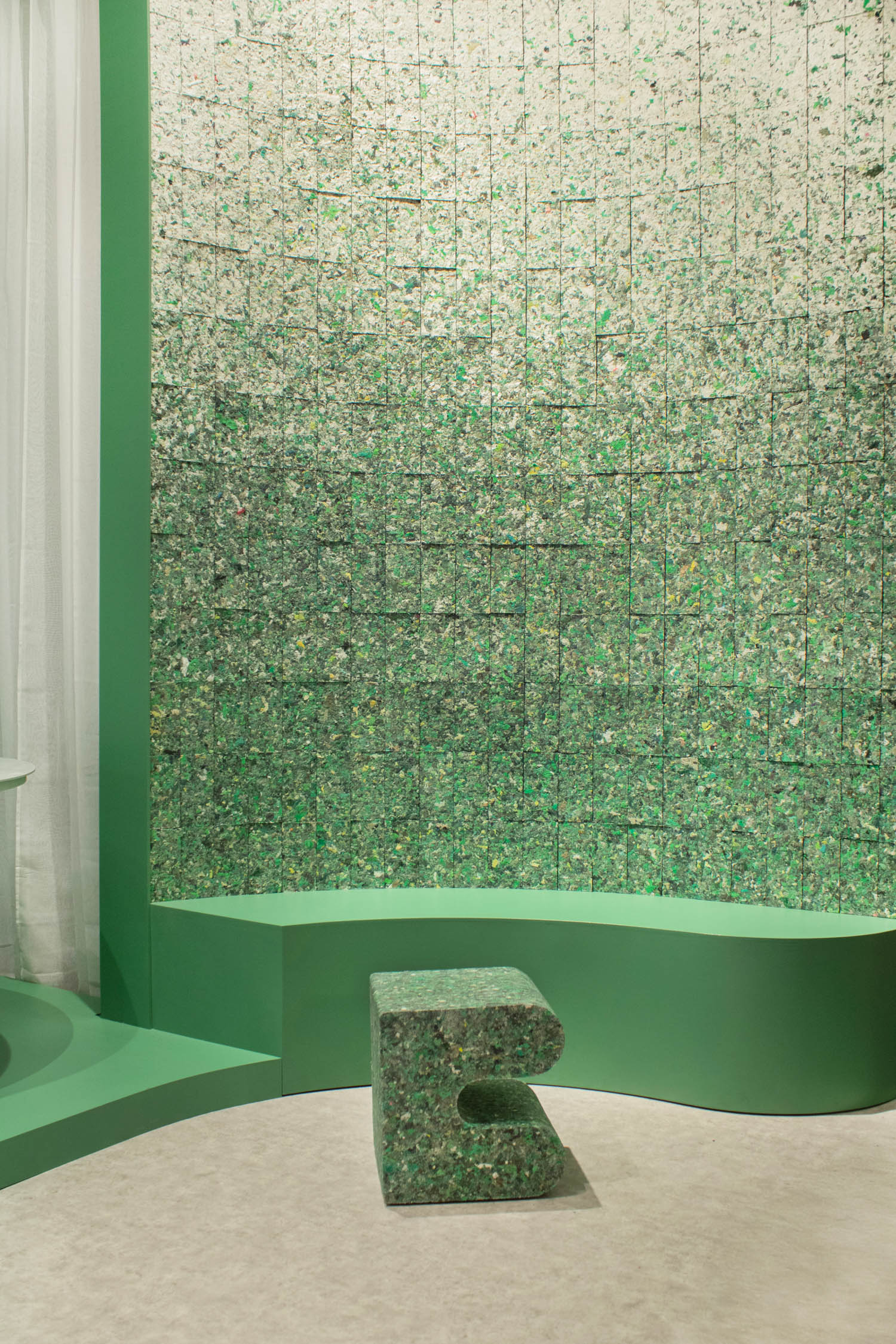
Green Wall. Photography by Clarisse Merlet. 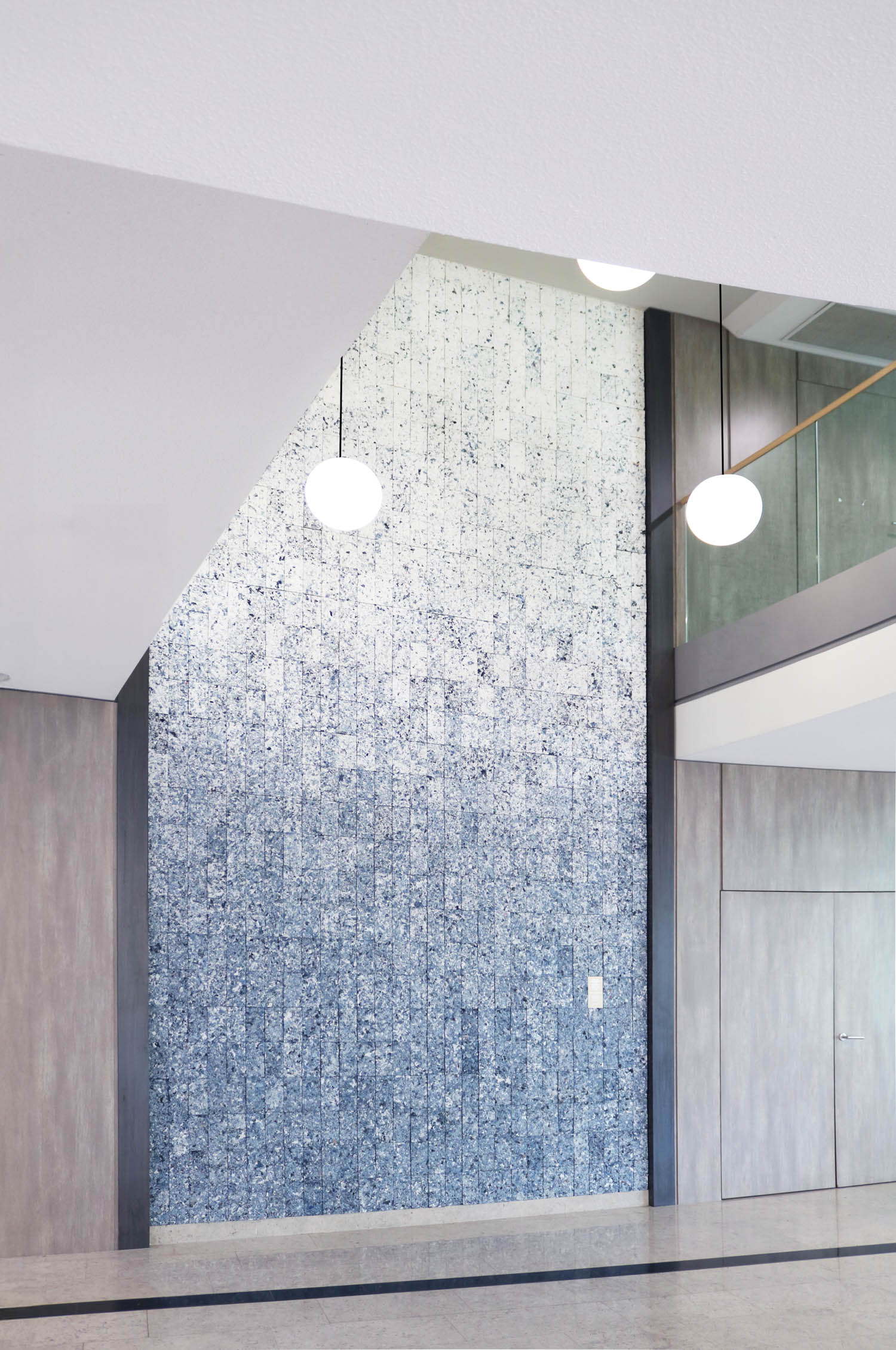
Cathedrale. Photography by Studio FaBBRICK. 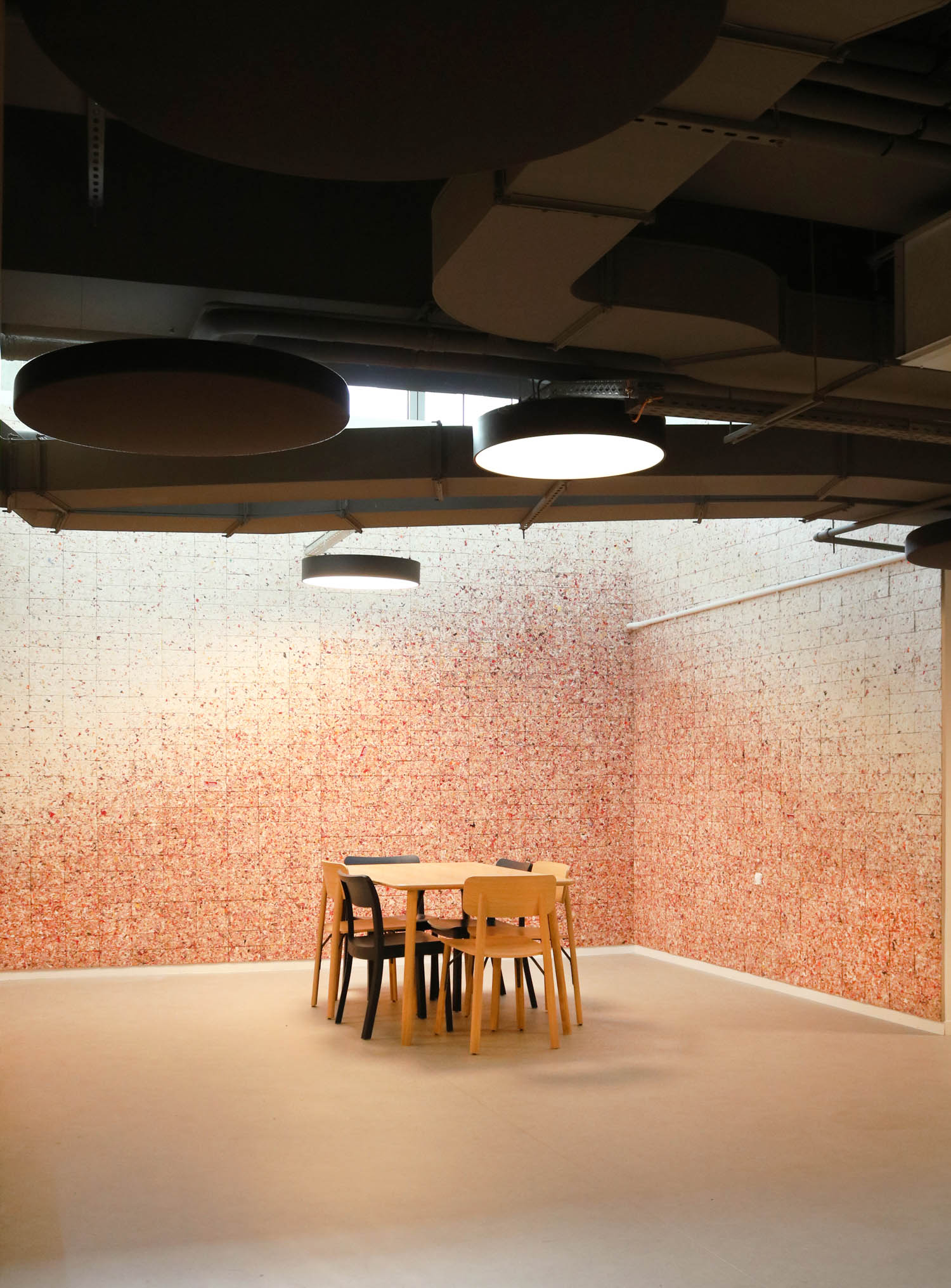
La Vague. Photography by Clarisse Merlet. 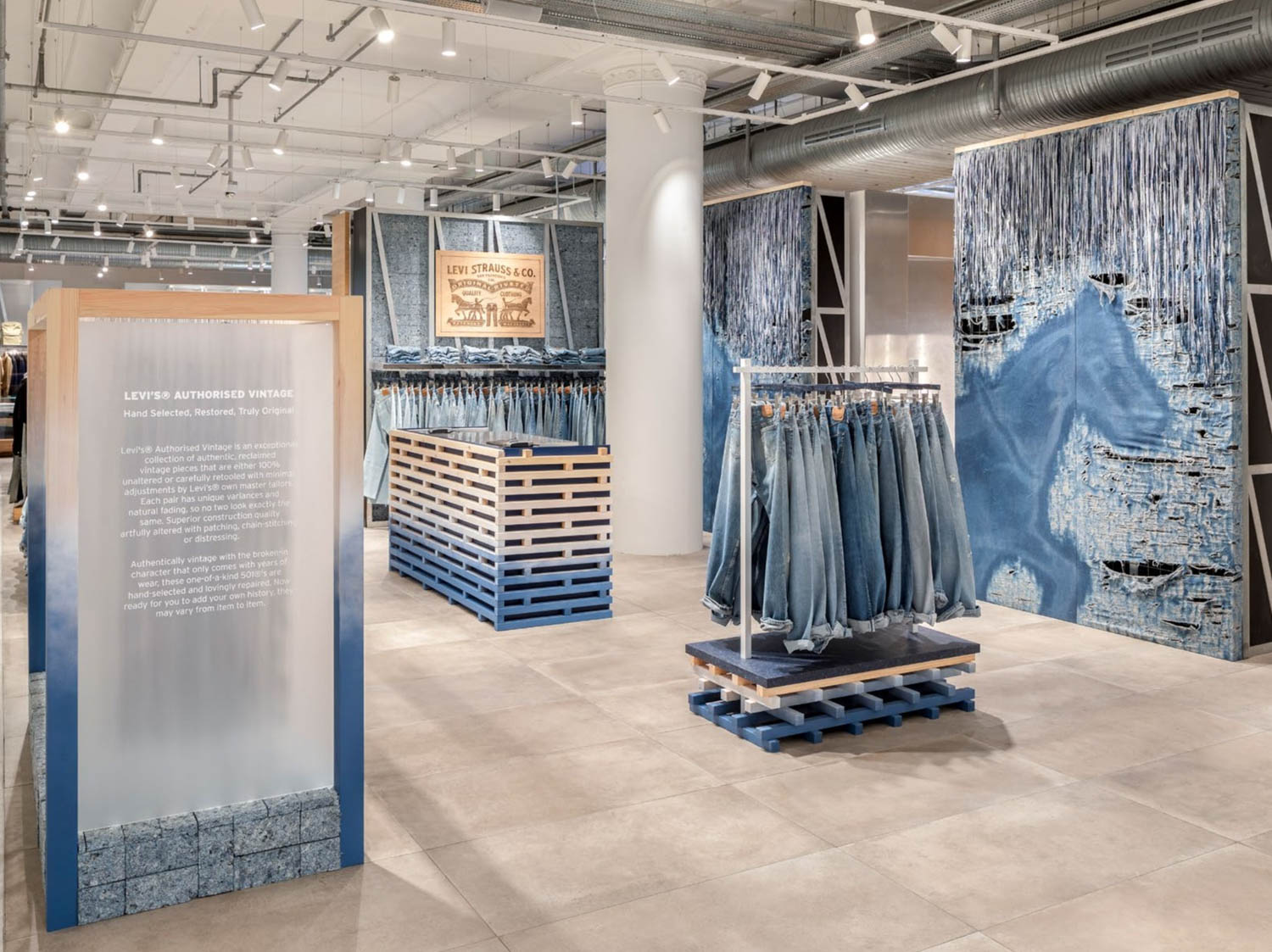
Pop Up Levi’s. Photography by Seen Studio.
ID: You exhibited for the first time at CURATED Brussels. Could you tell us about the work you showcased there, and the inspiration behind it?
CM: At first, we planned to show existing pieces from our showroom, but that idea frustrated me. Lionel Jadot, the exhibition’s curator, brings a very specific vision to his selection and places a strong emphasis on craftsmanship, so I was eager to create something specifically tailored for the show. The challenge was that we already had a large number of client projects to manage, so creating a completely new installation seemed almost impossible.
The concept for these small floral columns had been on my mind all summer, but we only had three weeks left before the exhibition. During my lunch break, I built a new mold and made a prototype to show my team that it was actually achievable. As soon as they saw the first prototype, they were won over by the piece’s aesthetics and poetic quality. We immediately began sorting our fabrics by color, working with shades of beige, light green, ochre, brown, and dark green to represent different geological layers.
The installation covered about 10 square meters, featuring between 20 and 30 of these small floral columns. I hope the final result conveys a sense of a field or a landscape… this may end up being the most poetic installation we’ve ever created.
ID: The installation you presented at CURATED Brussels features a new mineral-inspired marbled pattern that has been in development at your studio for several months. Could you tell us about that process?
CM: We’ve been developing a technique for several years that allows us to create a marbled effect—or one similar to rammed earth—simply through a very meticulous selection and combination of fabric colors. In fact, we’d never used it before in a finished piece, and this year we’ve finally decided to showcase it.
For our standard bricks, the fabric is compressed into molds using a semi-automatic press. However, in the case of our sculptural pieces, everything is done by hand. For this particular work, we drew inspiration from traditional rammed earth construction techniques, but we replaced the earth with compressed fabric. We manually compact the fabric in wooden molds, which allows us to create virtually any shape we want.
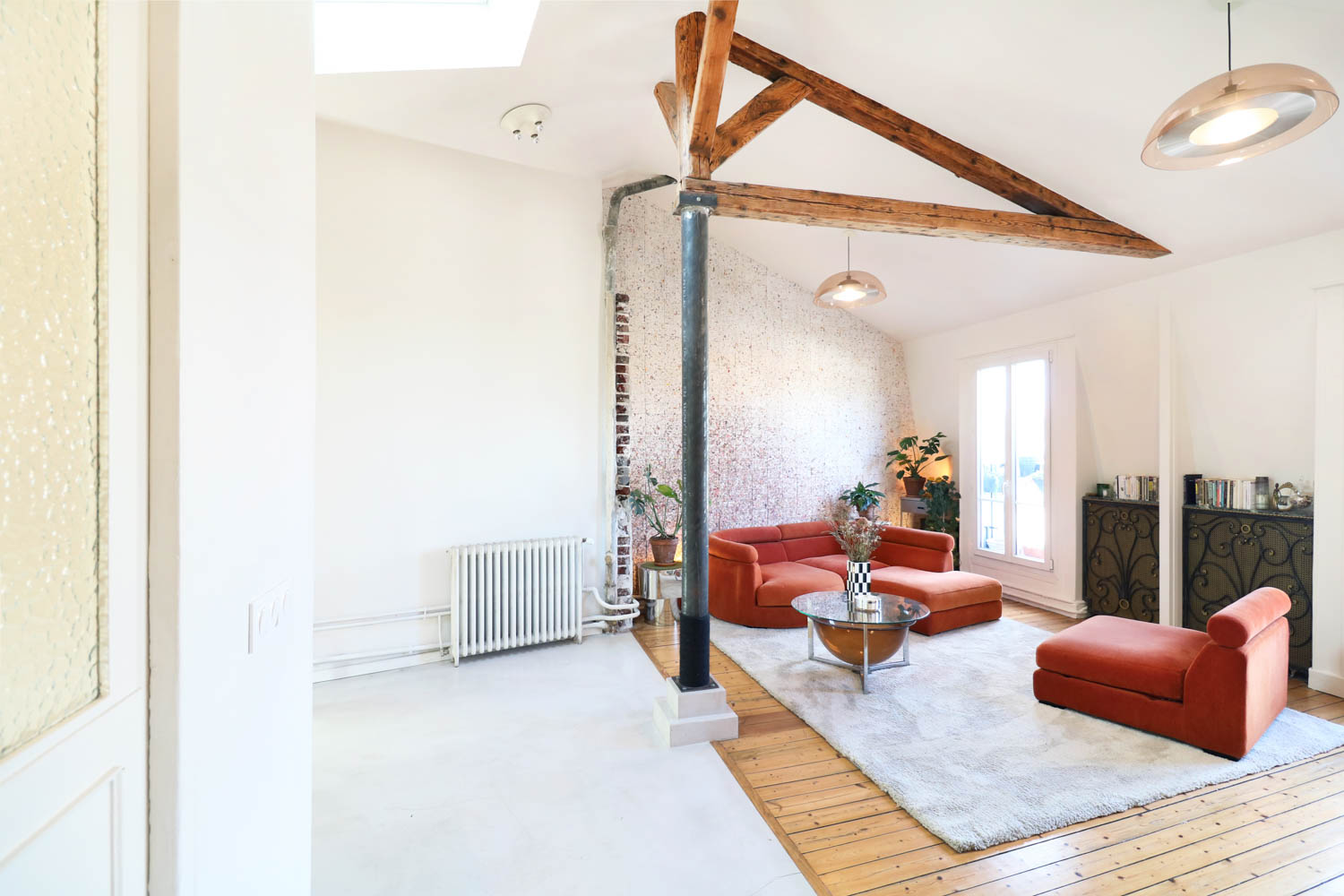
Apartment Clin project by FabBRICK. Photography by Clarisse Merlet. 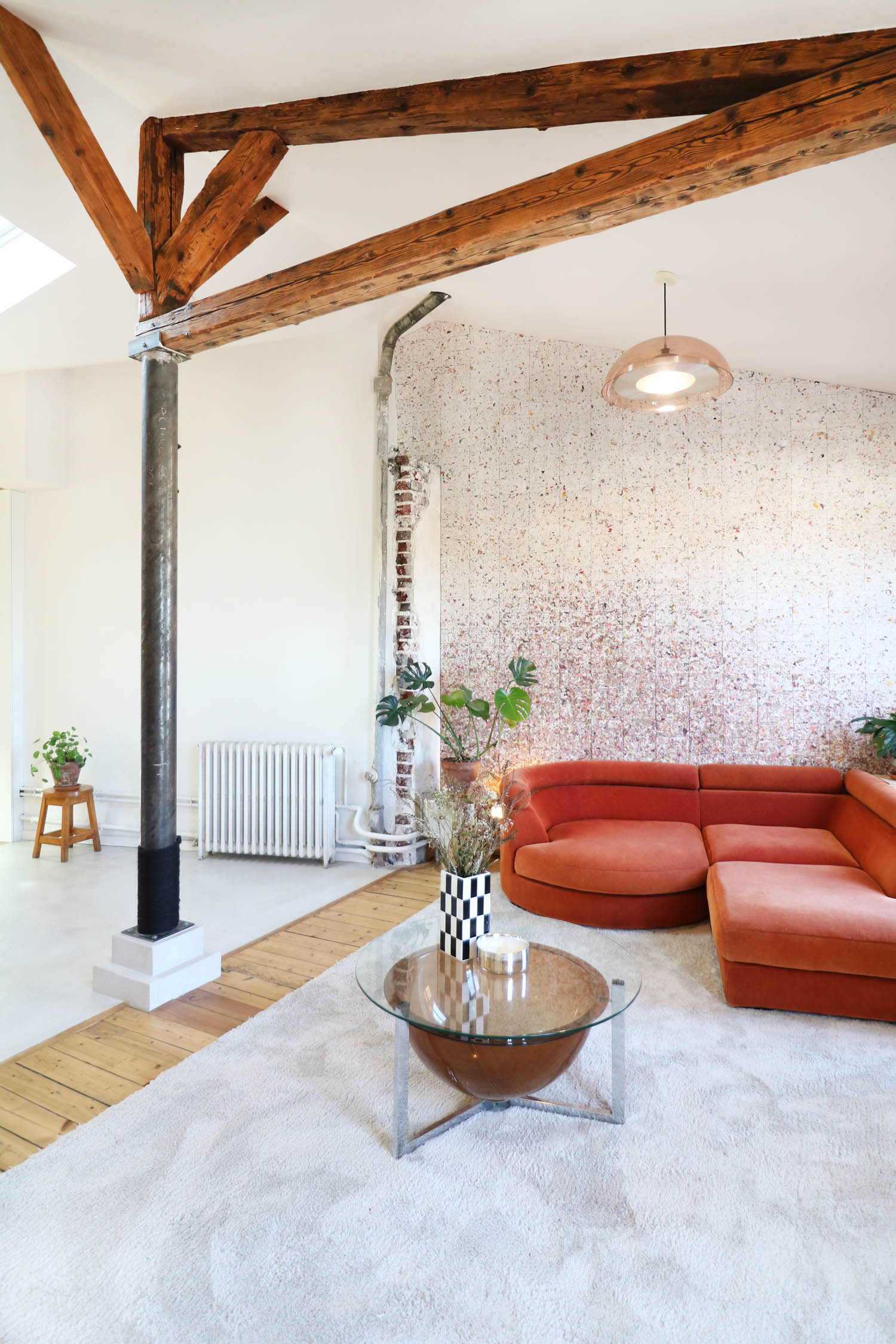
Apartment Clin project by FabBRICK. Photography by Clarisse Merlet. 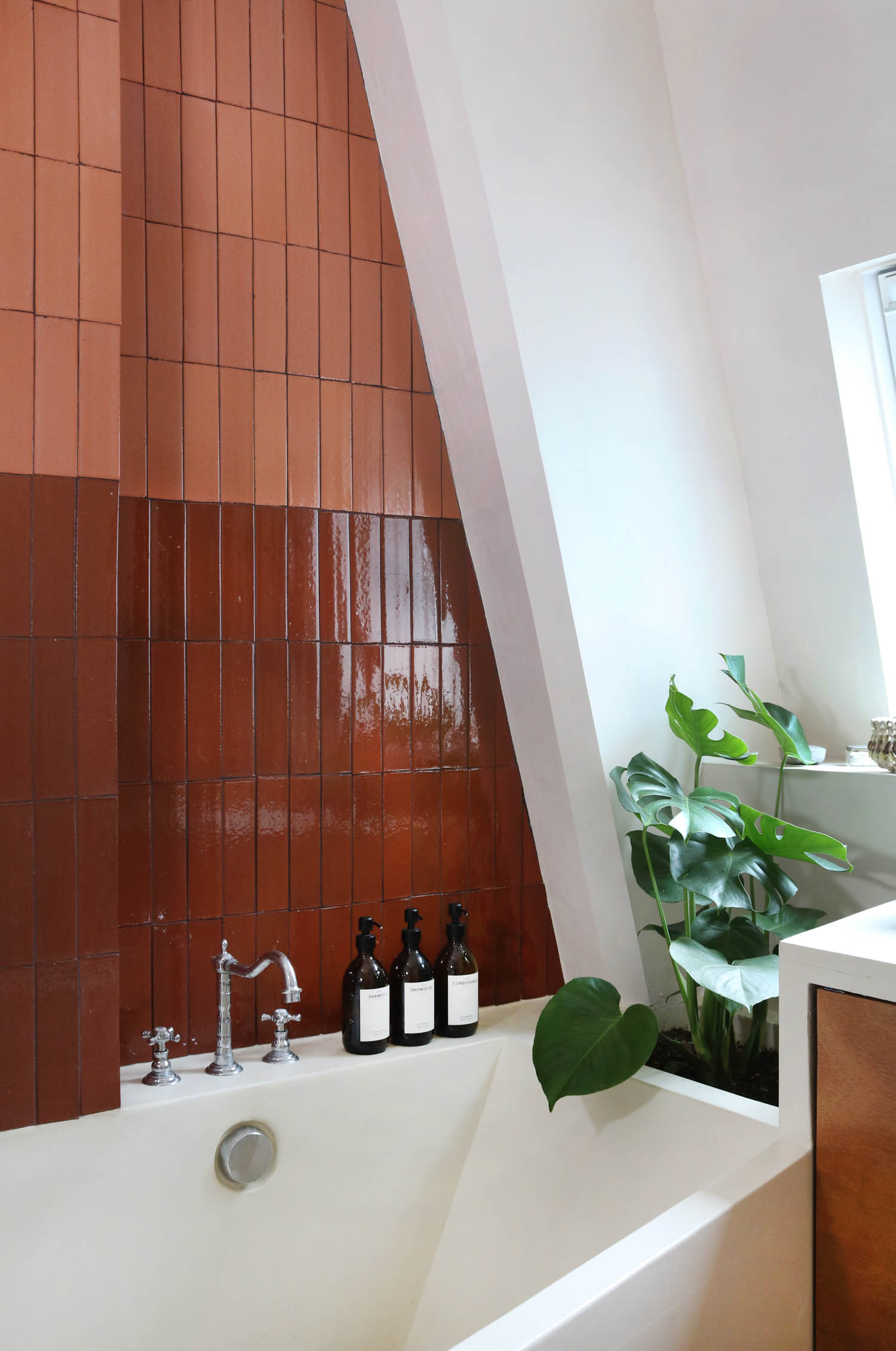
Apartment Clin project by FabBRICK. Photography by Clarisse Merlet.
ID: Speaking of new developments, you’ll soon be offering full-service interior design. What excites you most about this, and how does it relate to the principles on which FabBRICK was founded?
CM: In 2024, I bought an apartment in Paris and completely redesigned the interior myself. At first, I thought it would be easy, because I had always watched my father do this kind of work. In the end, the project took me a year and a half. I felt incredibly proud of the result. And more importantly, I realized that the whole process was exactly what I love to do: searching for ideas, designing, creating things, fixing things up, decorating, finding vintage pieces, and bringing everything together cohesively. Since then, my sisters and I have also inherited our parents’ house, and I’ve started working on that space as well. Now, every time I see a space and its potential, I can’t help but imagine a different layout, new colors, new furniture, and a completely new atmosphere.
I started discussing this with the team, and now, later this year, we’re going to officially launch comprehensive interior design services. In addition to our decorative bricks and sculptural design pieces, we’ll be able to guide clients through the entire process: from the design concept and material selection to project management and final delivery. I’m really excited about this new direction. I feel like it fits perfectly with who I’ve always been and with the way FabBRICK has evolved. For the first time, I truly feel like I’m building a company that reflects who I am, surrounded by an incredible team.
ID: What can we expect from FabBRICK in the future?
CM: We already have several client projects scheduled for 2027, 2028, and even 2029. It seems crazy to me—I’ve never had projects planned so far in advance. I think it’s partly because our projects are getting bigger and bigger. Last year, a typical project usually involved between 1,000 and 2,000 bricks. Now we’re increasingly working on projects that involve 10,000 bricks or more. I hope you’ll soon start seeing FabBRICK bricks everywhere you go.
One of my dream projects would be to create the set design for fashion shows. I’d love to see a runway made entirely from fabric scraps from the collection being showcased on it. To me, there’s something incredibly cohesive and poetic about that idea. And, of course, we’re also going to start working on our second design collection, together with Théo Robert, our head of design at FabBRICK. We make a great creative duo, and I can’t wait to see what we can create together for this upcoming collection.
read more
DesignWire
11 Top Picks From Feria Hábitat València 2026
Highlights from Feria Hábitat València, which featured over 1,200 exhibiting brands spread across 110,000 square meters of exhibition space.
DesignWire
Designers And Manufacturers On The Move: September 2026 Edition
Interior Design‘s latest On the Move includes must-know industry promotions and hires, like Perkins&Will’s strategic move to expand its design capabilities.