
10 Questions With… Cofounders Of Between the Walls
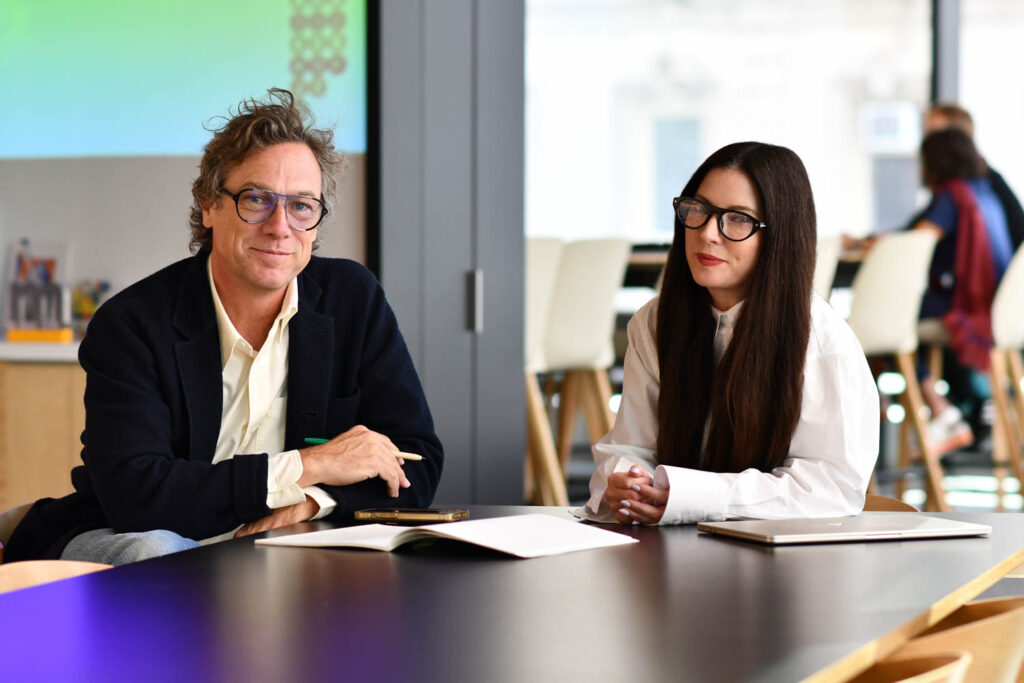
Andriy Anisimov and Victoria Karieva founded their interior design firm, Between the Walls, in 2019 after Anisimov approached Karieva as a private client. Over the last several years, they have approached projects in Ukraine and elsewhere with a commitment to integrating a site’s history and existing materials. Their international portfolio includes residential and commercial projects, as well as offices. A collaborative approach grounded in a deep respect for clients has helped fuel growth since their founding, and the duo is focused on continued expansion, despite the challenges of active war.
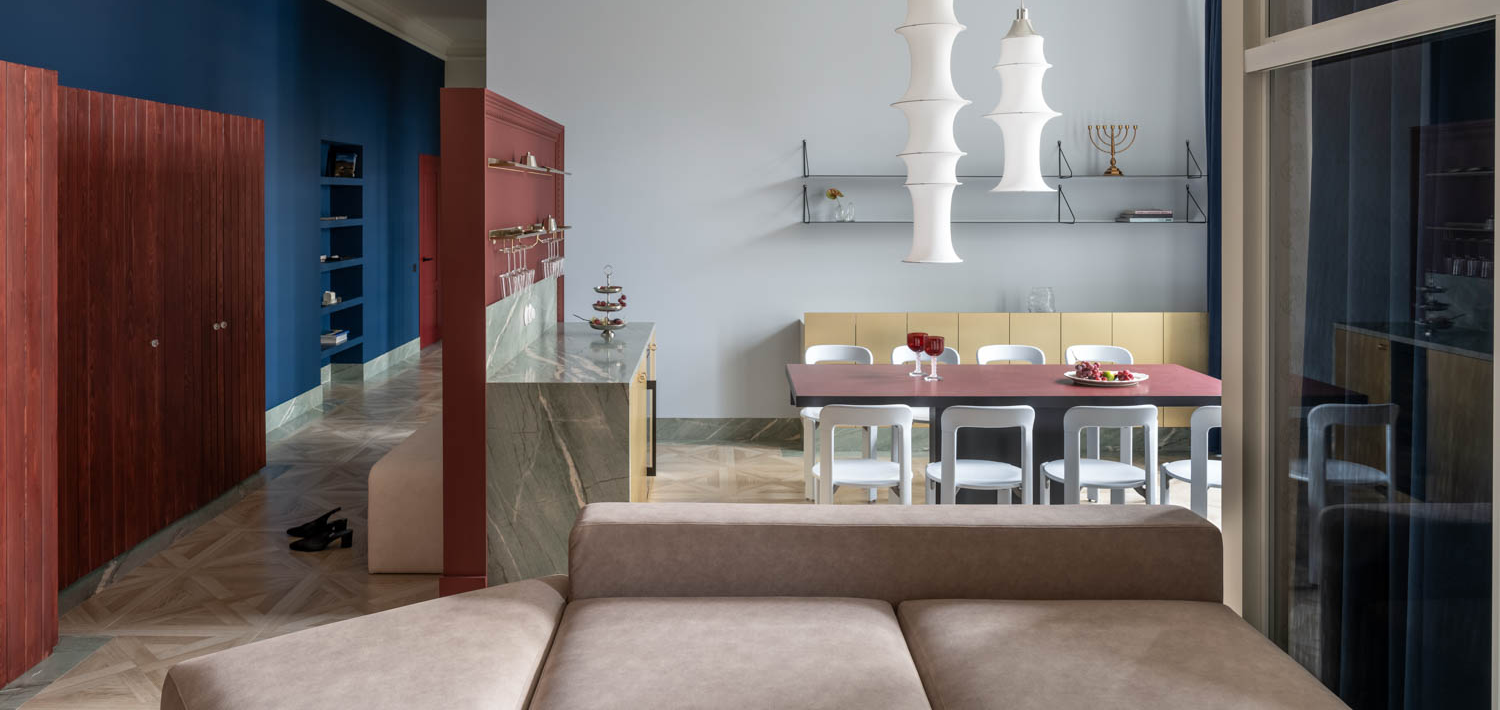
The studio’s approach includes deliberate combinations of vintage and contemporary elements. “The modern pieces gain soul from their historical counterparts, while the vintage elements feel fresh and relevant in their contemporary context,” explains Karieva. Likewise, they consider each project’s color palette with care. “Each color choice becomes a thread in a larger narrative, connecting the space to its history, its community, its purpose, and its users’ emotional needs.”
Interior Design speaks to Andriy Anisimov and Victoria Karieva about their portfolio of projects, their use of existing materials, and their hopes for the future.

How Founders of Between the Walls Thread Fresh Narratives Into Their Designs

Interior Design: What are your backgrounds and what drew you to interior design?
Andriy Anisimov: Our backgrounds are quite diverse. I had never worked in interior design before—I had launched several startups that weren’t successful, but they gave me valuable experience in building businesses and developing company processes. Victoria Karieva, my business partner, is a professional basketball player who spent years building her athletic career while simultaneously studying design. After working at other studios for years, she developed her own vision and approach. We met when I came to Victoria as a client, and we immediately found common ground in developing the project. We worked comfortably together and became friends.
ID: When did you decide to start your firm?
AA: My family decided to invest in real estate. We started looking for a designer, and Victoria was recommended to me by chance as a specialist. That’s how we met. At that time, I was working in real estate and had access to our target audience. After completing my order, I began recommending her to others and bringing her clients. Like many business stories, at some point the demand grew so much that we decided to try building a business together. That’s how it all happened in 2019.
ID: It’s quite difficult to run a design firm. If you add an active war into the challenges, it seems almost impossible. How have you kept going over the last few years?
Victoria Karieva: Running a company in today’s [environment] is undeniably challenging. Ukraine is currently facing the most difficult conditions for construction and business development in this sector. Yet, simultaneously, we feel deeply about this country, and these are people capable of creating extraordinary things and experiences. We have a team, we have people for whom we bear responsibility, and we have the ambition to build an international business.
This vision serves as our North Star, giving us the strength to seek new projects, endure unprofitable months, and keep moving forward. Over these 3 1/2 years of war, we’ve witnessed remarkable growth in our projects and the quality of our work. This progress inspires us with the conviction that we will overcome everything. The resilience we’ve discovered within ourselves and our team, combined with the incredible creativity that emerges even in the darkest times, reminds us why we chose this path and why we continue to believe in the future we’re building.
ID: Your firm has worked in Ukraine and all over the world. How does location and local culture influence your work?
AA: Ukrainians are essentially Europeans, so we share many cultural similarities with our international clients. However, we’ve noticed interesting differences in how business relationships develop across different locations. When working with clients outside Ukraine, we tend to spend much more time getting to know each other personally: discussing life, sharing stories, building genuine connections before any contracts are signed. The relationship-building process is more deliberate and extended.
In Ukraine, particularly now, everything moves at a different pace. Everyone has limited time, deadlines are always pressing, and there’s an urgency to everything. We’ve adapted to working in conditions where delivering a new project takes anywhere from three to five months with realization because businesses simply cannot afford to wait longer. We’re constantly challenged to implement the best solutions with the highest quality under these compressed timelines. Of course, it’s quite individual. These varied experiences have made us more adaptable designers, capable of delivering exceptional work regardless of timeline constraints or cultural context.
ID: You’ve said your firm is dedicated to combining elements that may first seem inconsistent. Can you tell us about that?
VK: We’re drawn to contemporary design, but simultaneously, we have tremendous respect for old objects and their histories. Whenever there’s an opportunity to restore something and give it a second life, we embrace it wholeheartedly. The modern pieces gain soul from their historical counterparts, while the vintage elements feel fresh and relevant in their contemporary context.
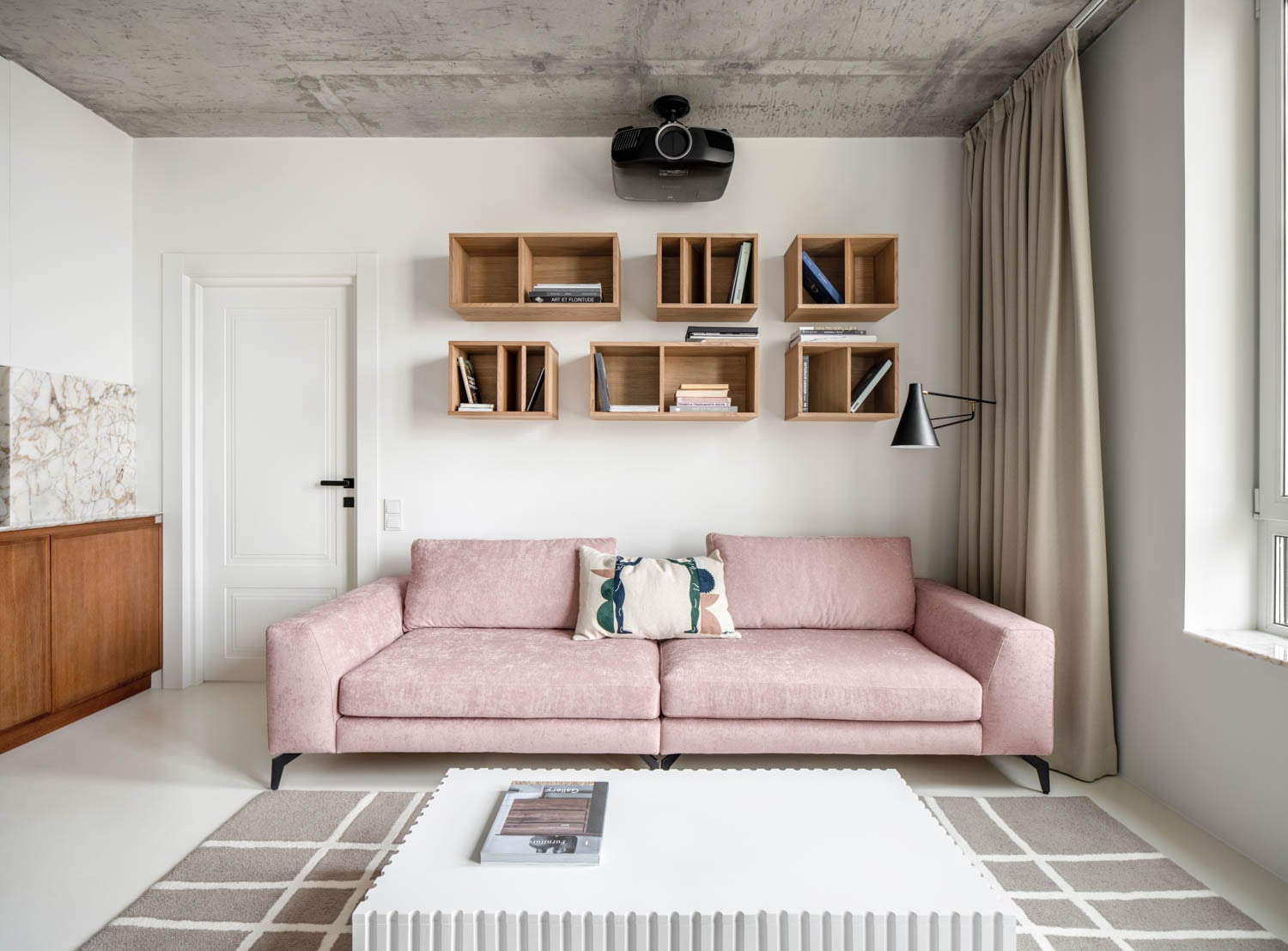
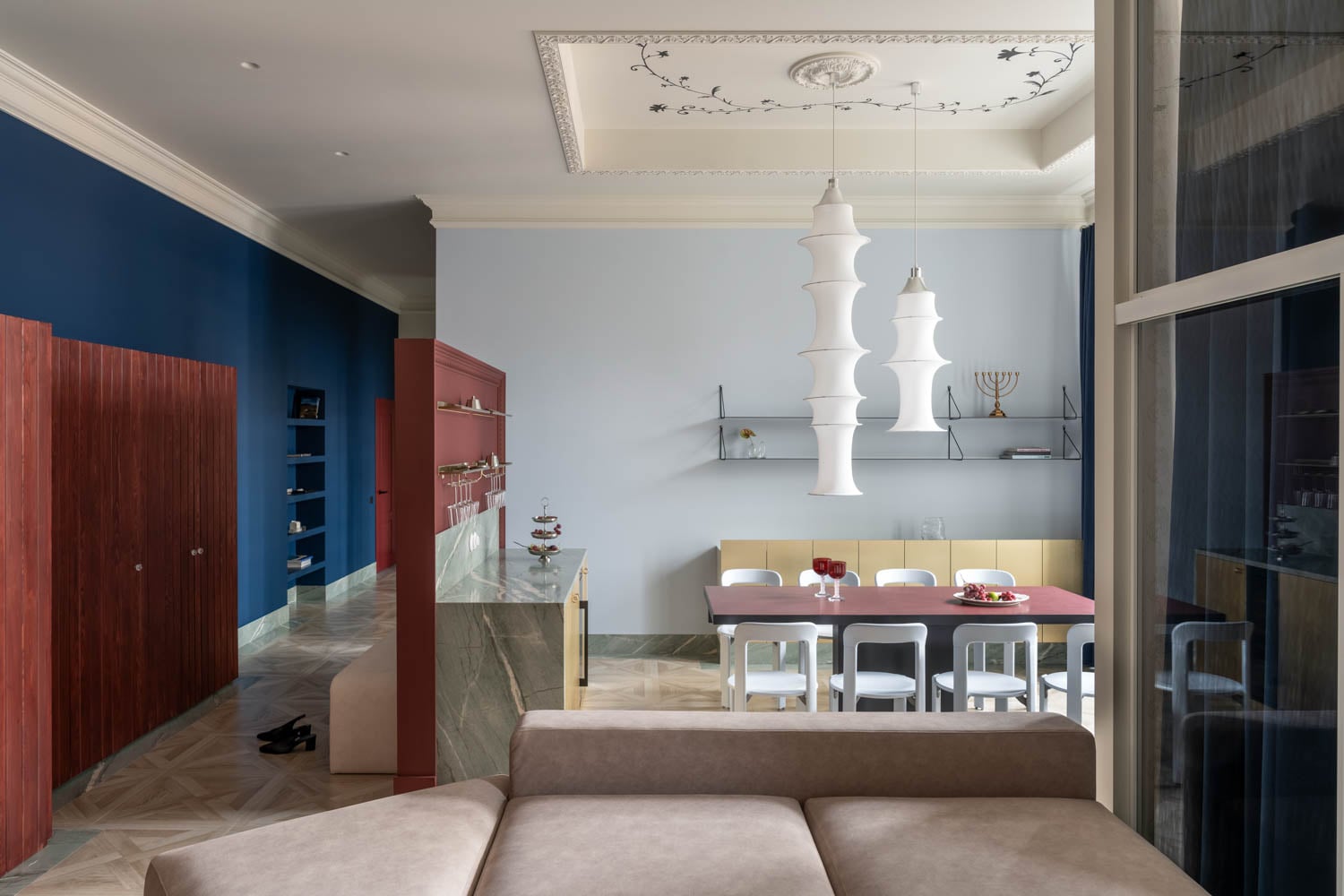
On our Old&New residence, which embodies this philosophy in its very name, we integrated cutting-edge contemporary solutions with classical doors and traditional baseboards, while deliberately leaving the ceiling in raw concrete. This intentional contrast creates the entire concept—it’s something that stays with you, something that has meaning beyond mere aesthetics.
ID: And color is used in distinctive ways as well. How did you approach and consider color in your most recent projects, including Bon Bouquet Cafe?
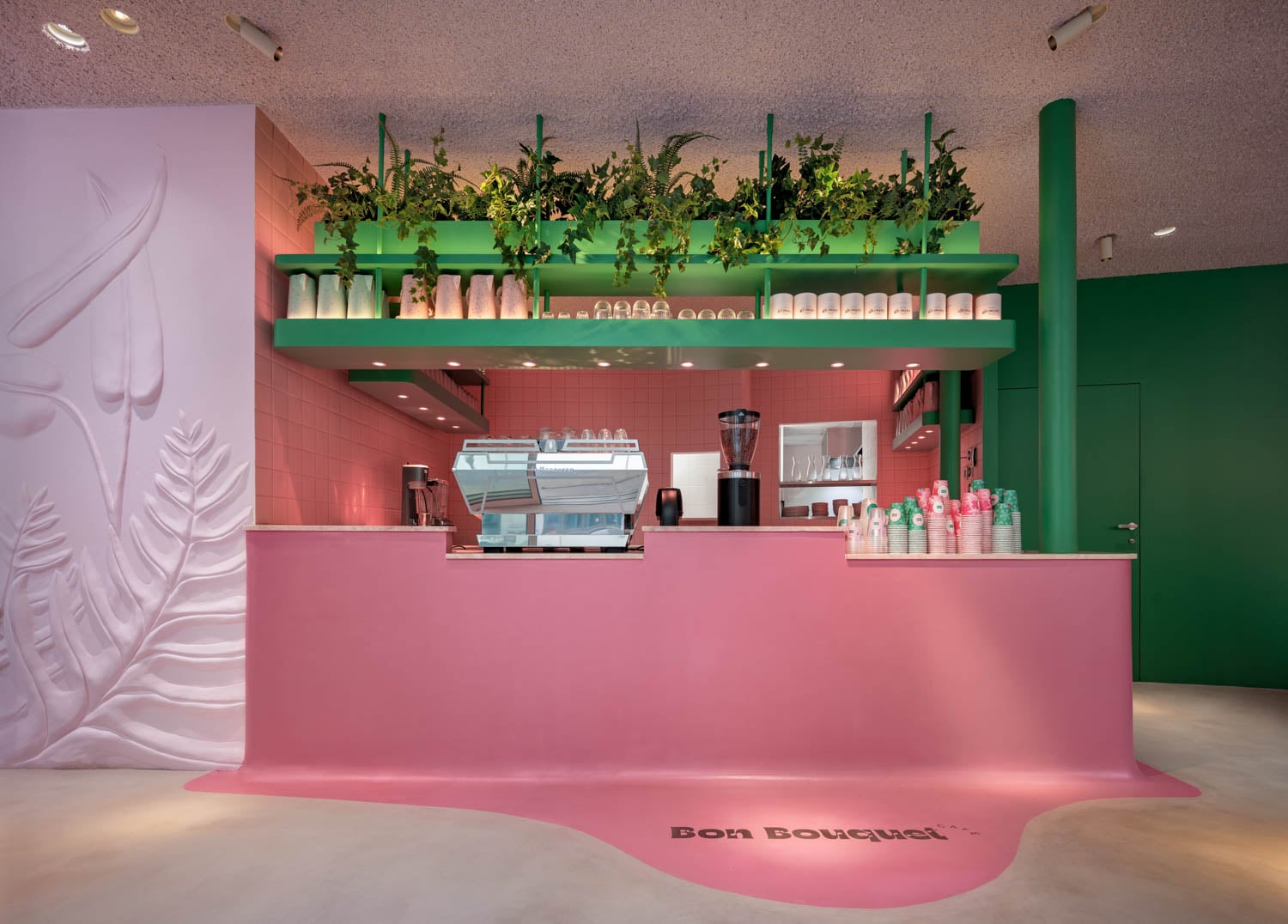
VK: Color is always an integral part of the concept we develop based on multiple layers of meaning and context. We consider what the space is, what existed there before, and what story we want to tell. For the Bon Bouquet Cafe, we delved deep into our client’s business concept and vision. They wanted to create a space for Parisians seeking an escape from their daily work routine—somewhere that would transport them to the tropics, to Bali. Understanding this desire for escapism and tropical fantasy became the foundation for our entire color story, informing every hue and tone we selected.
ID: What is your most recent residential project and how did you balance your vision and the client’s requests/needs?
AA: Our most recent residential project is DM House, and I have to say, this was one of those rare instances where we had almost no revisions throughout the entire process. We achieved what I’d call a perfect match with our clients on virtually every aspect of the design. Of course, this level of harmony doesn’t happen by chance, and it’s certainly not always the case. We’ve developed a comprehensive process to ensure alignment before we reach the final visualization stage. We always conduct deep research into our clients’ stylistic preferences and lifestyle needs.
Before presenting any final visualizations, we go through several stages of collages showcasing different materials, colors, textures, and furniture brands. This collaborative exploration allows us to understand not just what they like, but why they like it, and how they actually live in their spaces. The key is recognizing that our role isn’t to override the client’s vision, but to elevate it and give it sophisticated expression while ensuring it works functionally and aesthetically in the space.
ID: You have brought residential inspiration to more commercial work, including the Mislad office. Can you tell us about how you aimed to create comfort in that office?
AA: With Mislad, we set out to create an office that people genuinely want to return to. Our goal was to design a space that people would actually be excited to go to each day, and I believe we achieved that. The office features non-traditional zones alongside the functional work areas. Yes, there are dedicated workspaces that offer flexibility—in some rooms, the tables are mobile and can be reconfigured as needed. But we also integrated a fantastic kitchenette area and a large, comfortable sofa where team members can sit, relax, and even play PlayStation during breaks. The kitchenette functions as a relaxation zone where people can unwind, a casual space for small talk and spontaneous conversations, a presentation area for client meetings when needed, and a venue for more informal negotiations or discussions.
ID: And what were your themes and inspirations for the Papaya showroom in Kyiv?
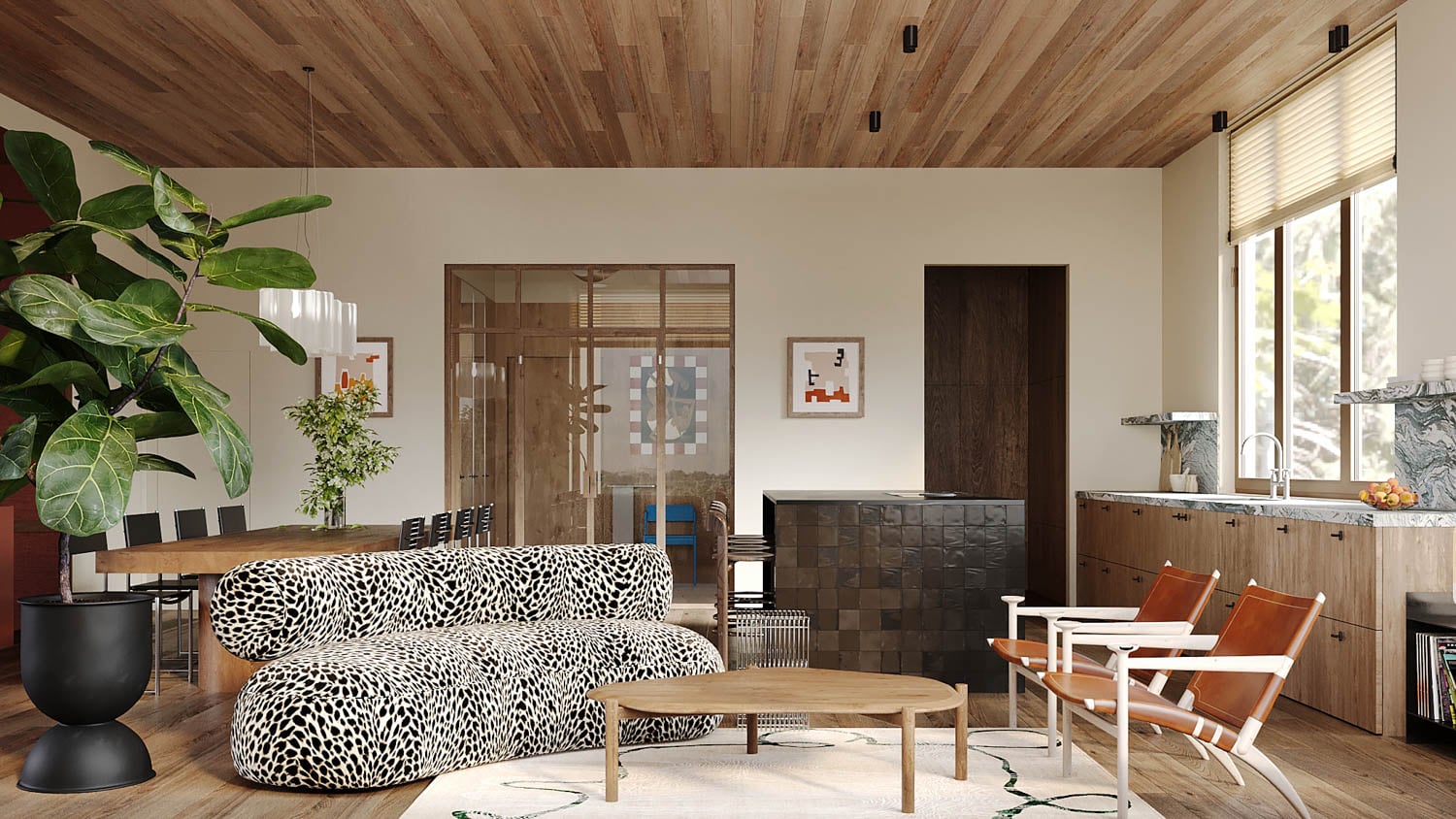
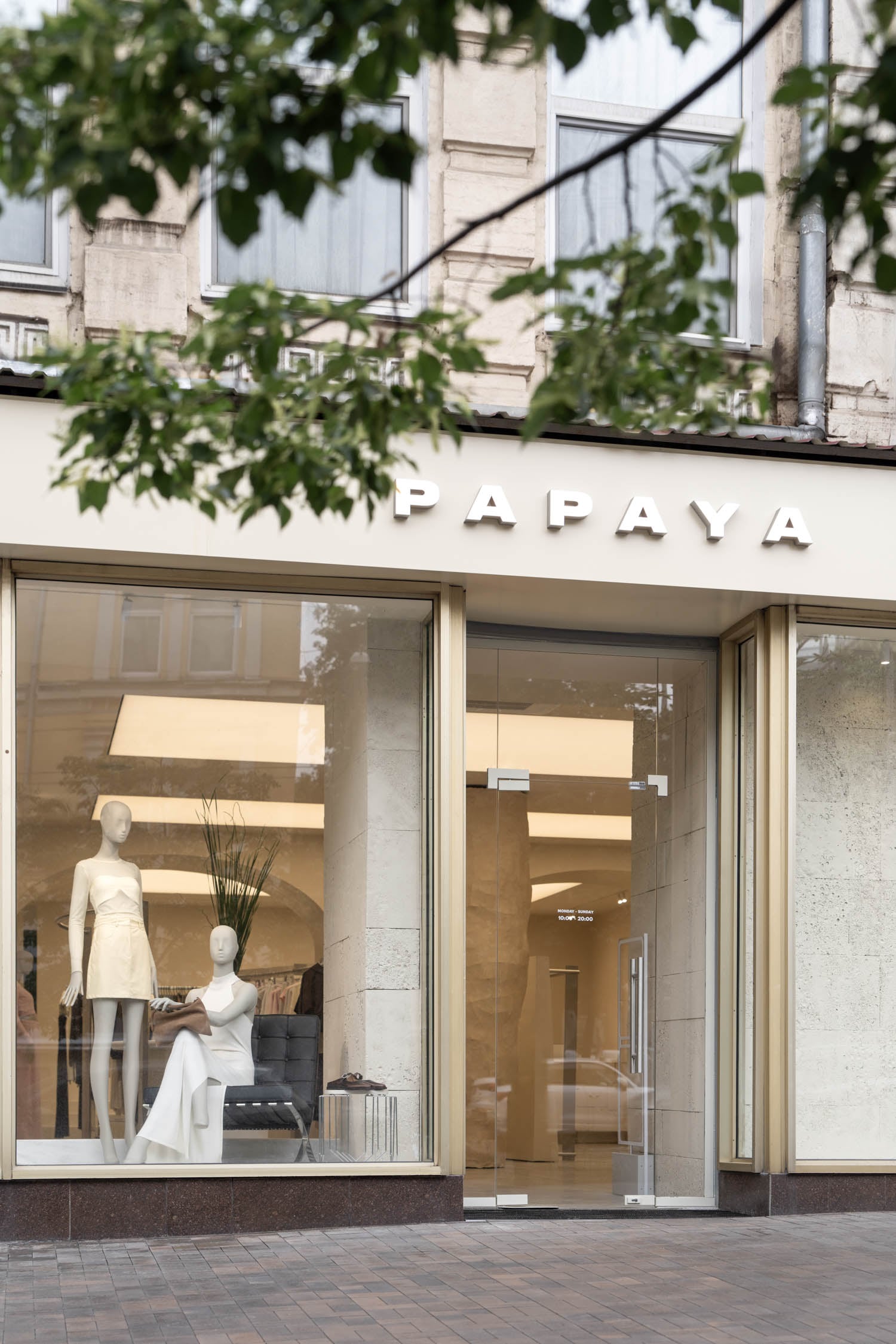
VK: When we entered this space, we took time to truly understand what already existed there. Following our philosophy of respecting the past, we were determined to preserve the shell rock that we discovered. We enhanced it with contemporary elements while maintaining its natural character. Our approach was to let the existing materials tell their story. We found fragments of the original shell rock and complemented them with natural stone from the Rivne region, creating a dialogue between different eras while maintaining material integrity. Rather than imposing our vision, we listened to what the space wanted to become, allowing its history to guide our contemporary intervention.
ID: What projects are in the works for you, and what types of projects would you like to see your firm do more of?
AA: It’s remarkable how varied our current workload has become. We’re working on three restaurants simultaneously, several residential projects, including one in Paris, which is particularly exciting for us, and multiple apartments in Kyiv. Beyond that, we have offices in progress, showrooms under development, and we’re even working on a hotel project.
Looking ahead, we’d love to see more international projects come our way, and we’re particularly eager to take on additional residential work. While we absolutely love our commercial projects—they challenge us creatively and allow us to experiment with bold concepts—we haven’t had as many residential commissions lately, and those are projects we’re genuinely passionate about creating. Residential projects allow for a different kind of intimacy and attention to detail that we find incredibly fulfilling.

read more
DesignWire
Designers And Manufacturers On The Move: September 2026 Edition
Interior Design‘s latest On the Move includes must-know industry promotions and hires, like Perkins&Will’s strategic move to expand its design capabilities.
DesignWire
10 Questions With… Artist and Designer Conie Vallese
From sculpture and ceramics to glass, textiles, and furniture, Conie Vallese embraces a multidisciplinary practice shaped by curiosity and creativity.