
10 Questions With… Designer Myles Igwebuike
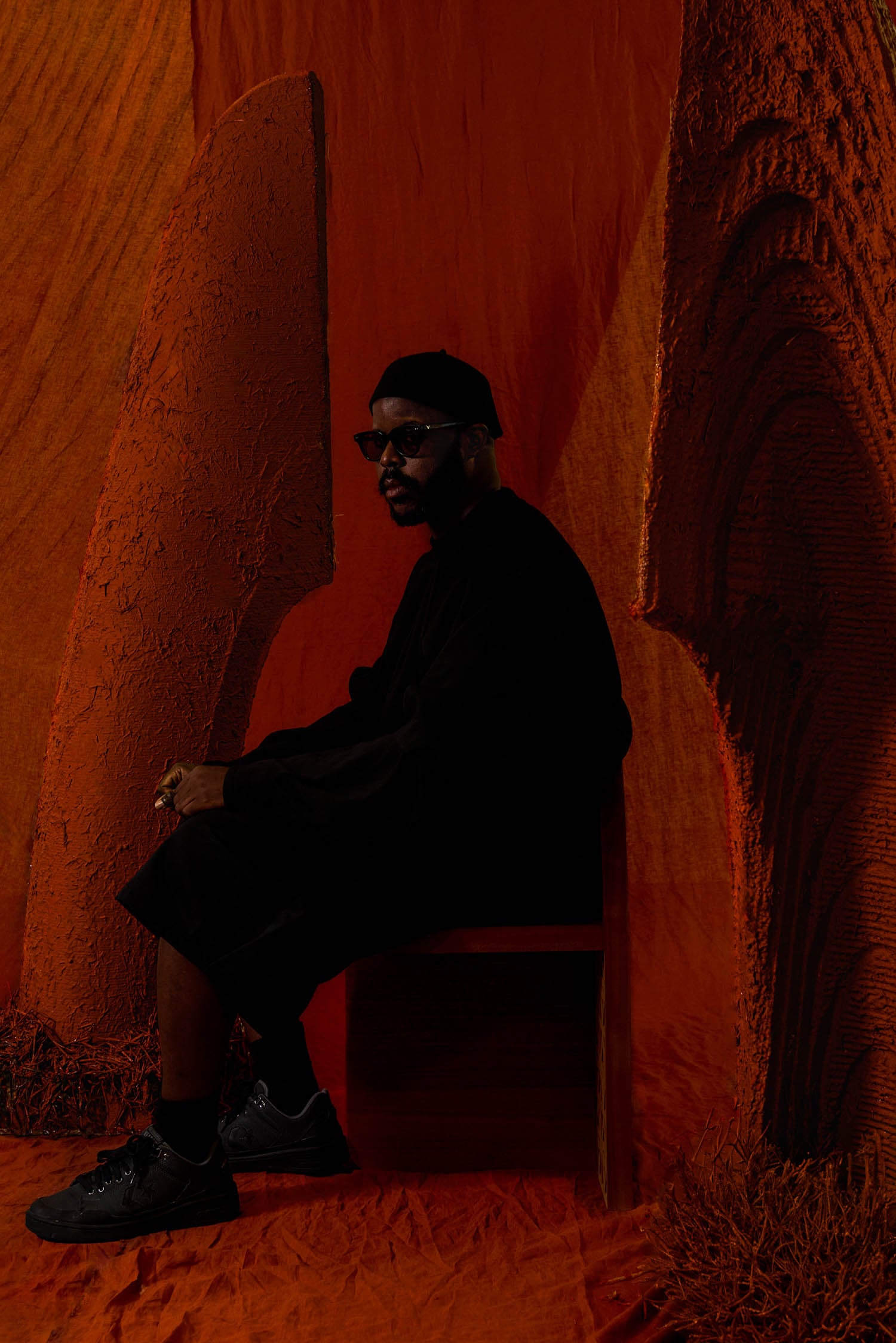
Designer Myles Igwebuike‘s creative vision reveals why he has quickly made a name for himself in the industry. Igwebuike sees his well-crafted design practice as a poetic system of survival, a way of listening to the invisible and giving it form.
Born into a Royal family, Igwebuike grew up between the United States and Nigeria. He initially pursued a degree in international economics, but it was always clear to him that design offered a way to ask questions through materials, to tell stories without relying solely on words. One source of inspiration for him is the kola nut, a sacred fruit in Igbo culture.
Igwebuike founded Nteje Studio in 2021 and uses the space to collaborate directly with artisans from southeastern Nigeria. His practice embraces co‑design as an ancestral methodology: he harnesses local materials and traditional craft techniques, reimagining them in his work. This year, he was also the curator behind the Nigerian pavilion at the London Design Biennale.
“It feels like a call to hold space for more than just myself to create a pavilion that doesn’t perform culture, but activates it,” he shares. “I’m deeply humbled. This is not just an exhibition; it’s an invocation.”
Interior Design connected with the designer to speak about his practice, connection with Igbo culture, versatility with materials, and curating the Nigerian pavilion at the 2025 London Design Biennale.
How Myles Igwebuike Channels Igbo Heritage Into His Work
Interior Design: How did your journey as a designer begin, and how has it evolved?
Myles Igwebuike: My journey into design wasn’t linear; it was intuitive, born from a deep curiosity about systems, people, and space. My first degree was in Economics, which taught me to think structurally: to understand behavior, power, and how form follows unseen forces. I spent several years working across different industries—from finance to publishing to creative strategy—but design always called to me as a deeper language. It offered a way to ask questions through materials, to tell stories without relying solely on words. Over the years, this evolved into a multidisciplinary practice that moves fluidly between architecture, film, and furniture, each project an inquiry, a remembering, a proposition. My path hasn’t followed convention, but it’s been deeply intentional, moving from industry to intuition, from systems thinking to symbolic making.
ID: Describe your background and your earliest design memories.
MI: I come from a royal Igbo family, where symbolism, ritual, and spatial hierarchy were part of daily life. That early exposure shaped my sensitivity to design as a cultural and emotional language. My Catholic upbringing deepened this, sparking a fascination with cathedrals, ceremonial dress, and the theater of devotion. Raised between Nigeria, the U.S., and the U.K., I developed a fluid, cross-cultural perspective. [After studying Economics], I was accepted into an MBA program but chose instead to pursue design, where structure meets imagination and personal history could become material to create endless possibilities.

ID: How did your time at the Royal College of Art (RCA) shape your practice and worldview?
MI: The RCA was a crucible for critical reflection; it compelled me to articulate not only what I make, but why I make it. It offered a rigorous discursive environment where theory, materiality, and form were in constant negotiation. It pushed me to understand design not merely as output, but as inquiry, an ongoing, situated dialogue. Perhaps most profoundly, it instilled in me the understanding that design is an act of listening as much as it is of making; a practice attentive to context, silence, and the subtleties of relation.
ID: Can you talk about why Igbo culture is so symbolic in your practice?
MI: I didn’t adopt it, I live it. I am not of the diaspora; I was born into this culture. What compels me is the need to reposition and reframe how it is perceived beyond the extractive or exoticized lens. Igbo cosmology, with its cyclical understanding of time, its reverence for ancestors, and its symbolic intelligence, offers a design language that is both ancient and radically contemporary. It’s not just a reference, it’s a grounding. My work is a form of cultural authorship: not mimicry, but continuity.
ID: Who and what has influenced your work the most aside from your Igbo culture?
MI: James Baldwin for his clarity. The architecture of Lina Bo Bardi. The experimental tactility of Isamu Noguchi. I also return often to Demas Nwoko, Francis Kéré, and Mariam Kamara, whose practices navigate cultural continuity and architectural imagination with grace and urgency. And then there are quieter, more intimate influences: my grandmother’s kitchen altar, where objects became vessels of memory; and the atmosphere of a weathered shrine, where presence is felt before it is named.
ID: You started Nteje Studio to convey the important message of your practice. Tell us about it—what inspired you and the beautiful works you’ve been doing with it?
MI: Nteje Studio was born from a commitment to create boldly and authentically, designing from a place that honors our ancestors while envisioning new futures. Named after my ancestral hometown, Nteje serves as both an anchor and a guiding light for the studio’s vision. Beyond translating Igbo symbology into furniture, film, and space, Nteje Studio is dedicated to empowering Southeastern Nigerian artisans and providing them with sustainable financial opportunities and creative agency. Our work embodies cultural memory in form, but also nurtures a living community of makers, bridging heritage and innovation with social impact at its core.
ID: What does “divergent thinking as a survival strategy” look like in your practice?
MI: It means being a confident dreamer—choosing intuition over convention—even when the path isn’t popular. In my practice, survival is tied to imagination: refusing the narrowness of dominant frameworks and embracing complexity as a form of clarity. Divergent thinking resists the linear. It welcomes contradiction, fluidity, and ancestral logic. In the studio, that looks like designing with both ritual and software, prototyping ideas that feel improbable but necessary, and creating work that honors multiplicity because survival for me is not just about enduring but transforming.
ID: You work across multiple materials (wood, textiles, metals). Do you choose the medium that best resonates with the story you want to tell?
MI: Without question. Materials are never neutral; they carry memory, association, and affective weight. I turn to wood when invoking legacy or ancestry; its grain feels inscribed with time. Textiles lend themselves to softness, intimacy, and the tactile registers of care. Metal, by contrast, brings a sense of resistance, endurance, or monumentality. The material must be in dialogue with the emotional and conceptual architecture of the work; otherwise, it risks becoming mere surface.
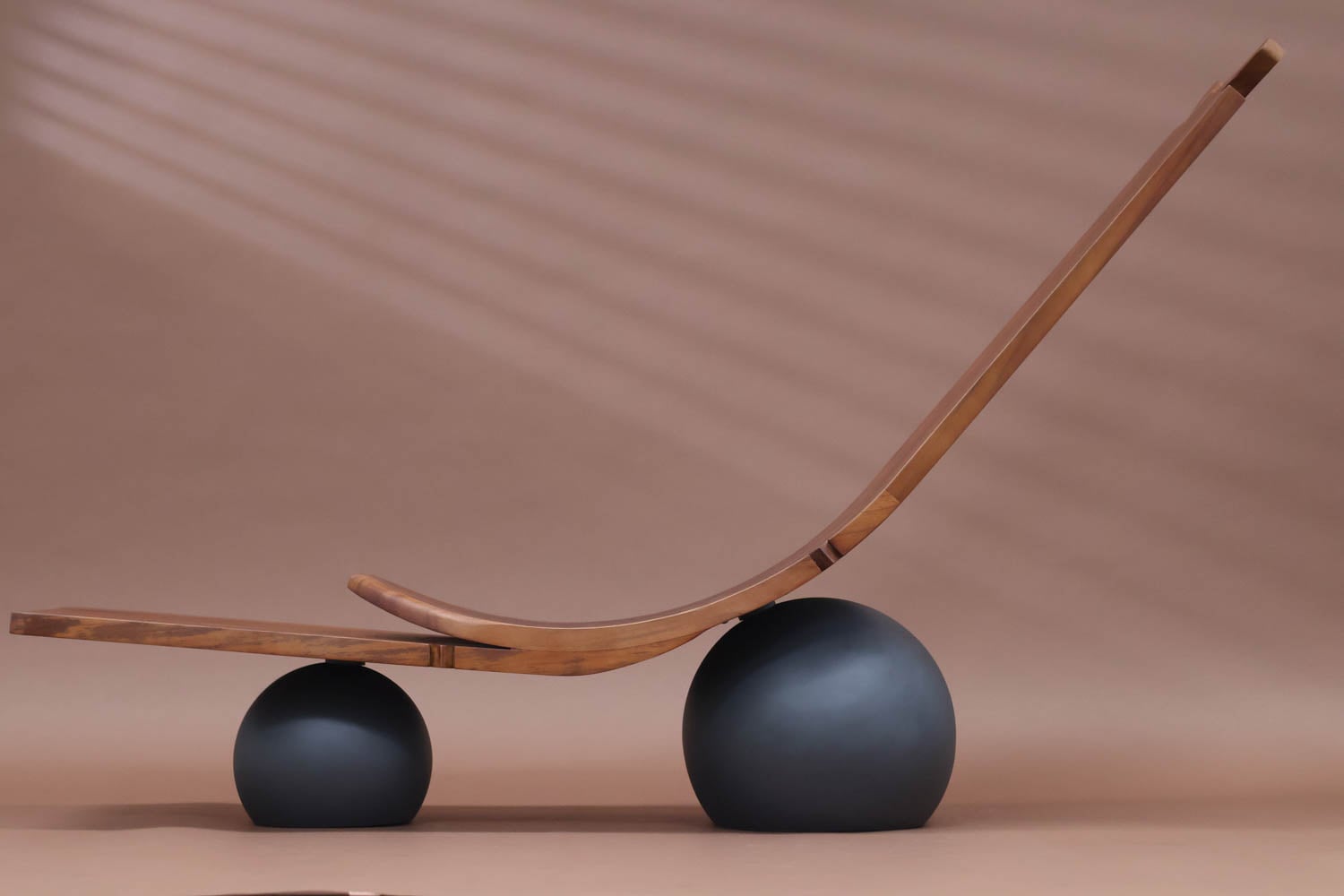
ID: I’d also like to hear about your major works—like the Oji Sofas—how did that come about?
MI: The Oji Sofas emerged from a sustained inquiry into the kola nut ritual in Igbo cosmology, a ceremonial act grounded in offering, dialogue, and reverence. I was interested in how design might not only reference this practice but actively embody its ethos. The form became a kind of spatial philosophy: the curvature gestures toward collectivity and embrace, while the sculpted recesses echo the ritual handling and division of the nut. It’s not simply a piece of furniture; it’s a proposition, a modular site for communion, negotiation, and presence, all held within the paradoxical language of the Oji itself.
ID: You curated and designed the Nigeria Pavilion at the London Design Biennale. Tell us about the work you have done. What’s the inspiration and the process?
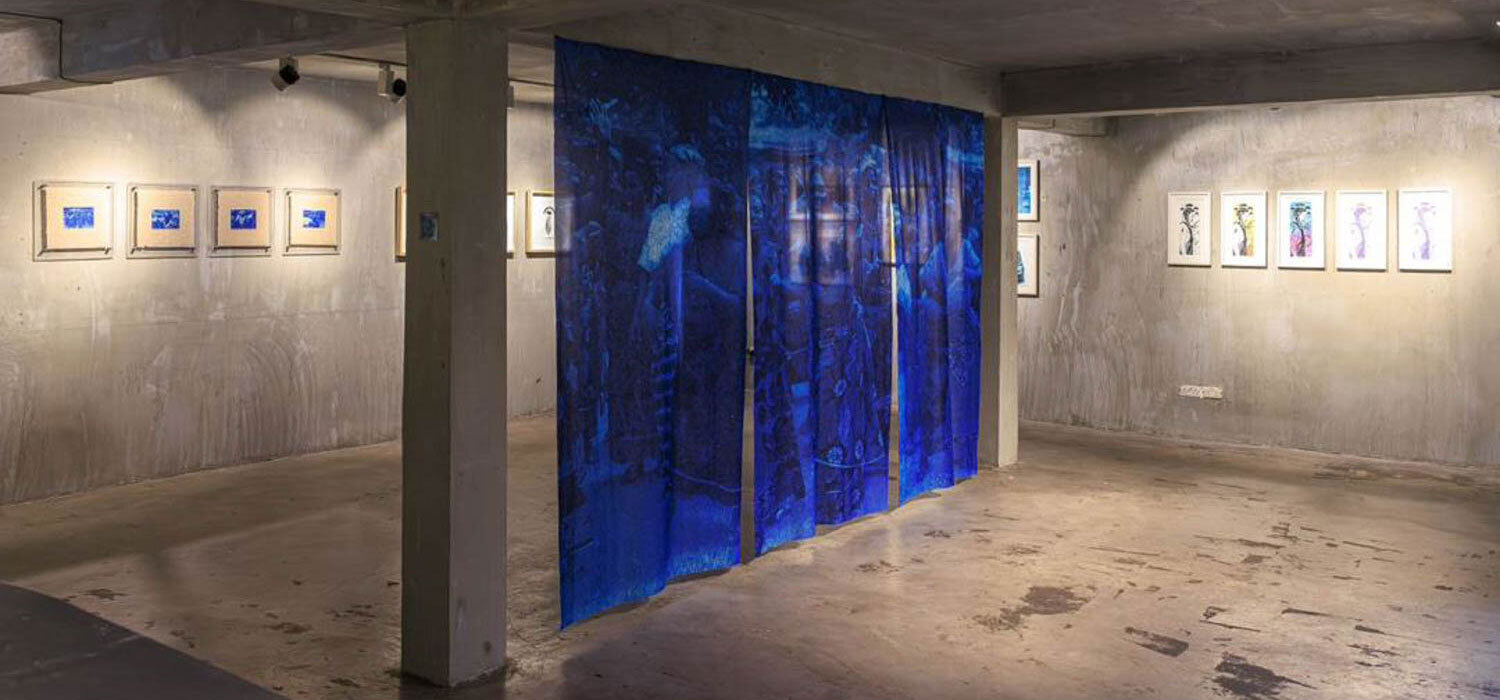
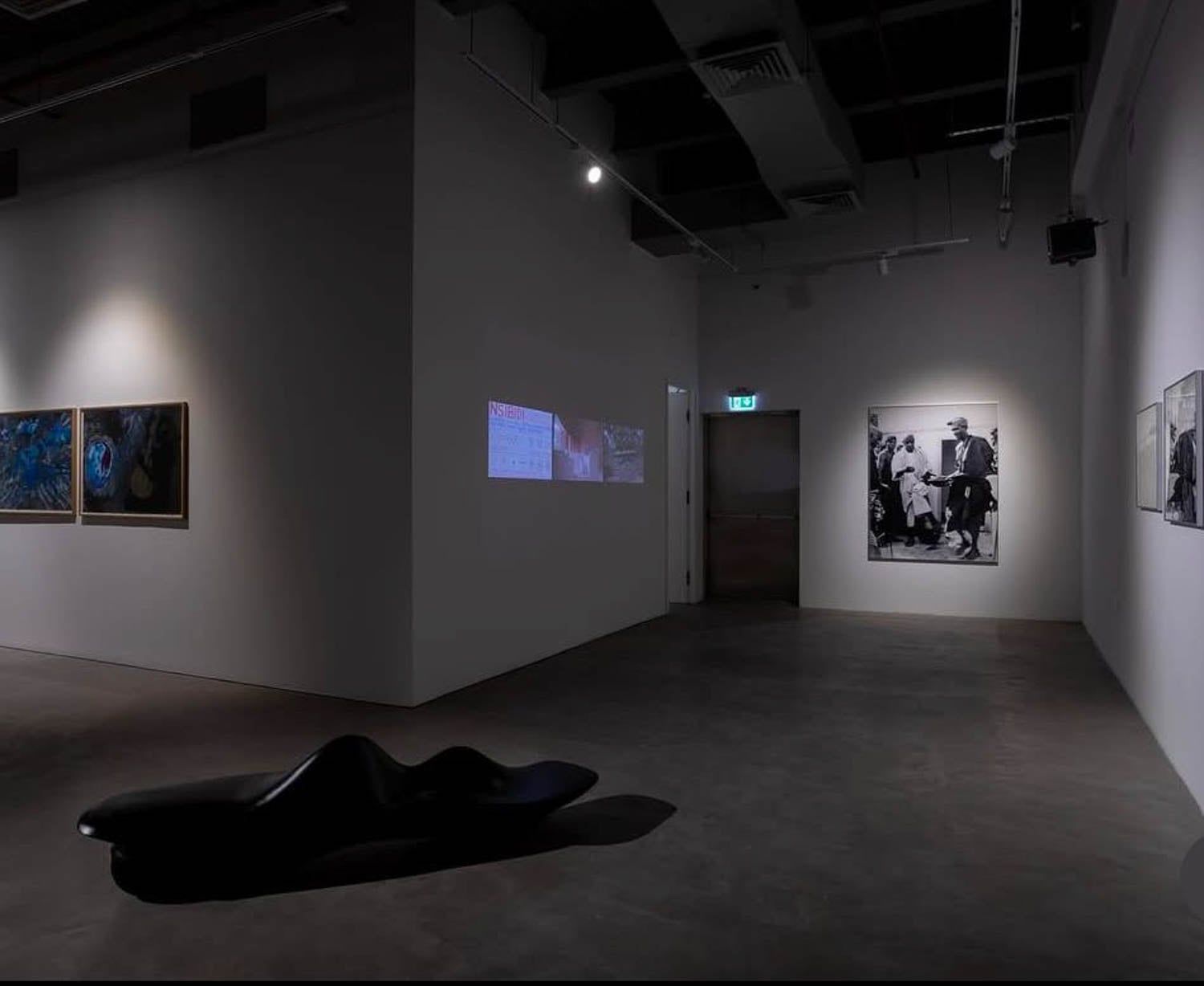
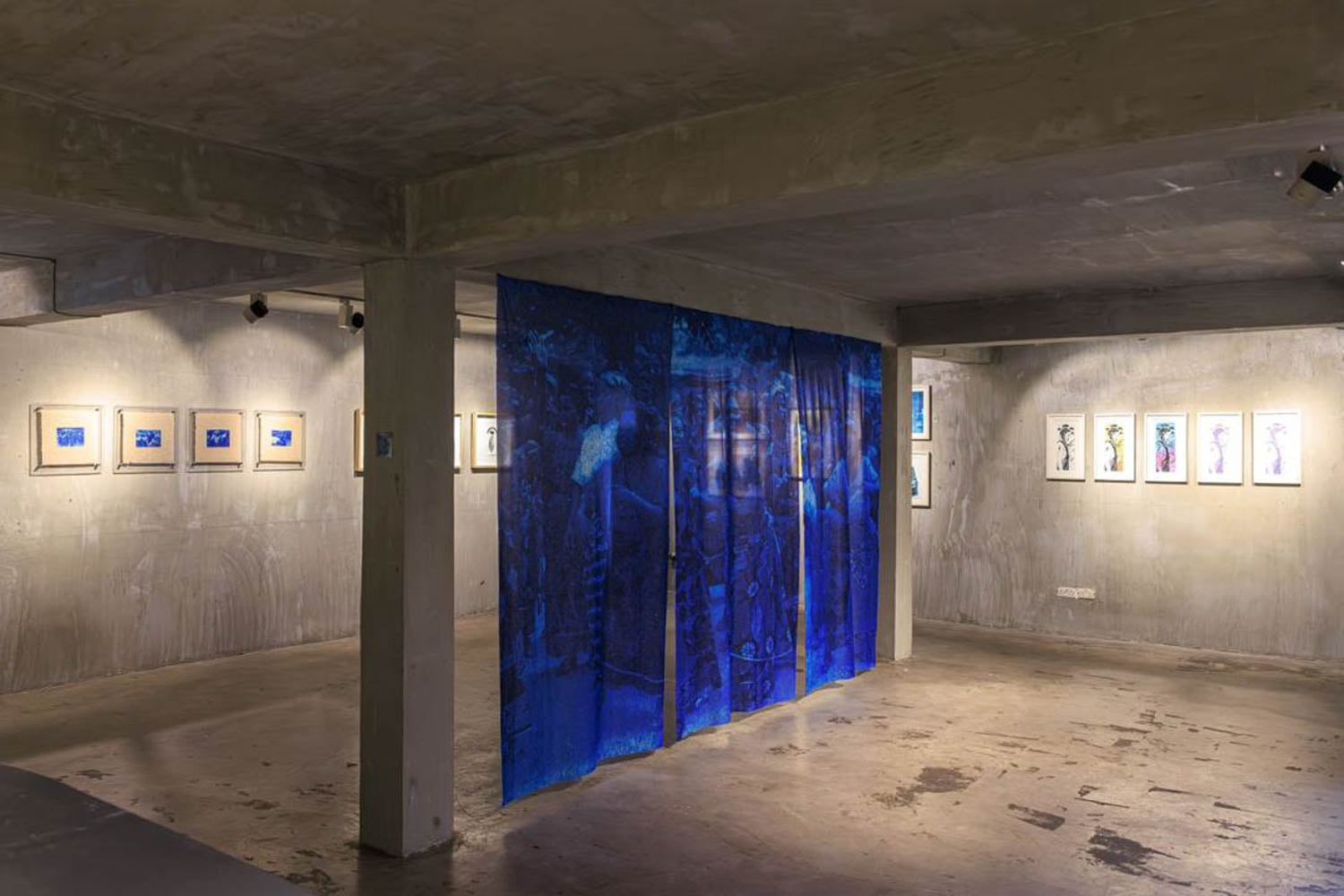
MI: The Nigerian Pavilion articulates a dialogue between digital technology and traditional manual craft, approached through a place-specific, culturally embedded lens. Centered on Lejja, a constellation of 33 villages in southeastern Nigeria, widely regarded as the world’s oldest known iron-smelting site, the pavilion engages this ancestral landscape not merely as backdrop, but as active epistemology. Grounded in extensive field research, the curatorial team undertook a cartographic and ethnographic inquiry: tracing networks of makers, decoding the symbolism embedded in collectively produced objects, and charting the deep heritage of material culture rooted in the region. This process foregrounds indigenous systems of knowledge transmission, technique, and spiritual practice. The pavilion itself unfolds as an interactive installation.

read more

DesignWire
Designers And Manufacturers On The Move: September 2026 Edition
Interior Design‘s latest On the Move includes must-know industry promotions and hires, like Perkins&Will’s strategic move to expand its design capabilities.
DesignWire
10 Questions With… Artist and Designer Conie Vallese
From sculpture and ceramics to glass, textiles, and furniture, Conie Vallese embraces a multidisciplinary practice shaped by curiosity and creativity.