
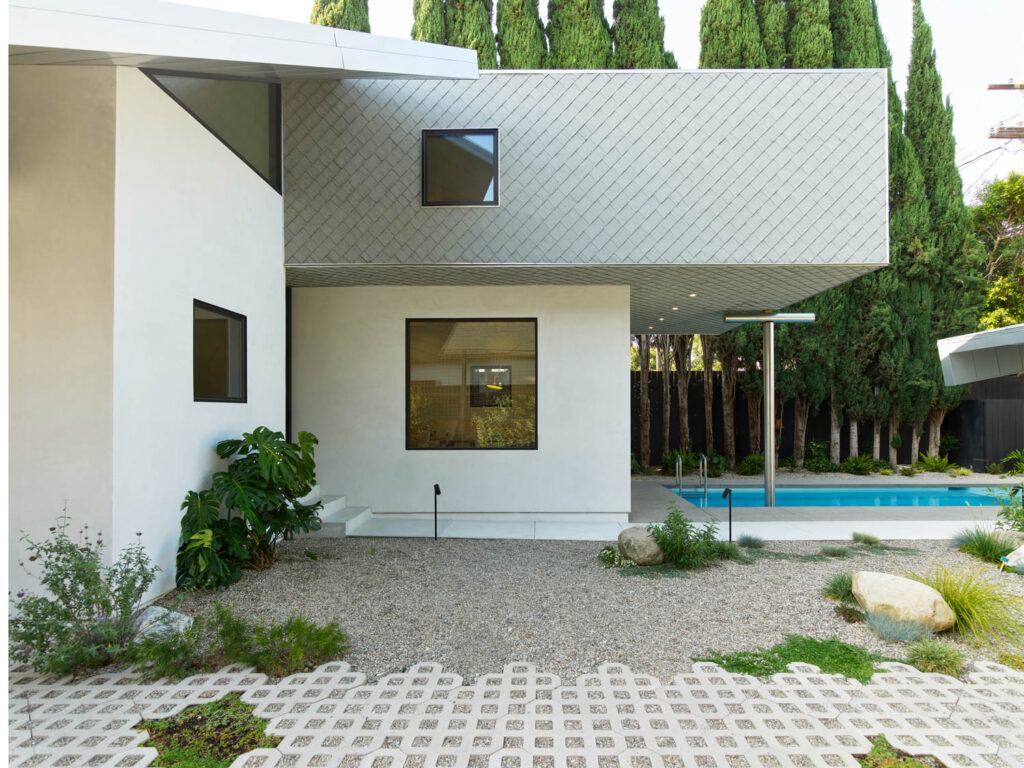
10 Questions With… LADG Co-Principals
Benjamin Freyinger and Andrew Holder are co-principals of LADG (The Los Angeles Design Group), an architecture firm they founded in 2004. Their shared vision is rooted in Los Angeles, but they say their “ideas apply everywhere.” Recent projects include homes in L.A. and elsewhere, the Airliner bar and restaurant in L.A., an exhibition at LACMA, and Assembly: Construction, Empathy, and the Light-Framed Box, a book published by Routledge in 2025.
In March this year, their Visage Brut installation debuted at the Coachella Valley Musica and Arts Festival in California. LADG has been honored with numerous awards, including Progressive Architecture Awards, the 2014 League Prize from the Architectural League of New York, and multiple citations from the Los Angeles Chapter of the AIA.
In addition to leading their firm, both maintain a teaching practice. Benjamin Freyinger is a lecturer at the UCLA Department of Architecture and Urban Design. Andrew Holder is the Chair of Graduate Architecture, Landscape Architecture, and Urban Design at Pratt Institute. Both are frequently guest critics at other U.S. institutions.
Interior Design interviewed the duo about their driving ethos, how they test ideas, a recent installation at Coachella, and what they hope for their firm’s future.
In Conversation With LADG Cofounders
Interior Design: What drew you both to architecture?
LADG: We both came to architecture as insider-outsiders. Andrew majored in political science as an undergraduate and intended to become an attorney, but also studied studio art. Benjamin studied art history, but worked for a while in real estate development.
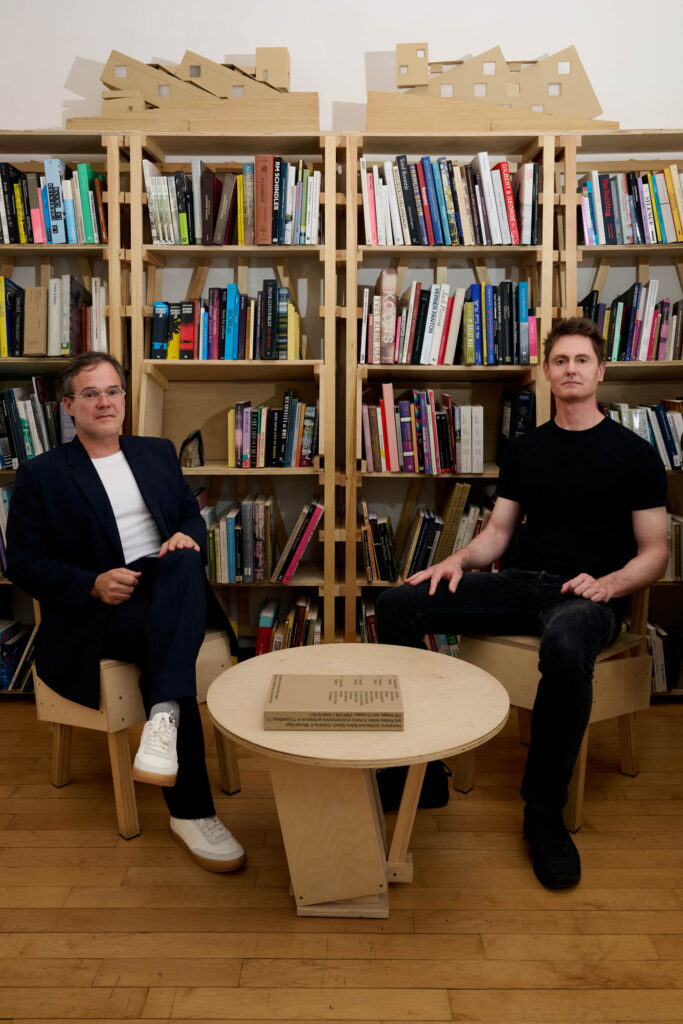
For both of us, architecture was a kind of inevitable result. For Andrew, architecture is art plus politics; for Benjamin architecture is the building plus the history of ideas.
ID: How did your firm start and what were your first projects like?
LADG: We started our firm in grad school at UCLA. We met one another literally on the first day of the master’s program, and started practicing together in our third year, even before graduating. Our first projects were both interiors. One for a retail client and one for a doctor who wanted to renovate an industrial loft in downtown L.A. At that time we were still learning the basics of the profession, but we were also incredibly earnest. The results in design were that we tended to touch everything, to focus attention equally on big and small things, and to design new and at times strange versions of every standard detail. Some of the results were quite beautiful and we still use them to this day, and others were just, well, strange.
ID: Your Visage Brut installation debuted at Coachella this year. Can you tell us more about the idea or the reference point of French painter Jean Dubuffet?
LADG: The project came out of two separate interests, one technical and the other aesthetic. On the technical side, we’ve been working for several years with a building technology company called Stud-IO. They have developed techniques for making very complex things out of standard light-gauge steel studs – the kind that are pretty much ubiquitous in any commercial construction project. We worked with them to do a demonstration project at the Boston headquarters of the software company Autodesk. Aesthetically, we’re interested in art brut, and the idea of using materials at-hand in a very direct and intentionally naive way, almost as outsiders. The artist Jean Dubuffet championed this kind of work to literally build collections of art by outsiders and untrained artists, but it seemed to us that it is useful to come at projects from the mindset of being outside the conventions of the field, even if by now we’re deep insiders. It’s a way of keeping fresh and unsettling your own habits.
Visage Brut was the combination of these two impulses. We made a totem using Stud-IO’s technological expertise not to realize complex wall assemblies in a commercial building project, but to produce an art object. It’s composed from pieces that look like they are on the verge of overtoppling, giving the appearance that we were just barely able to tame the physics of the huge heavy object. It’s the appearance of naively figuring out a compromise between objects and gravity.
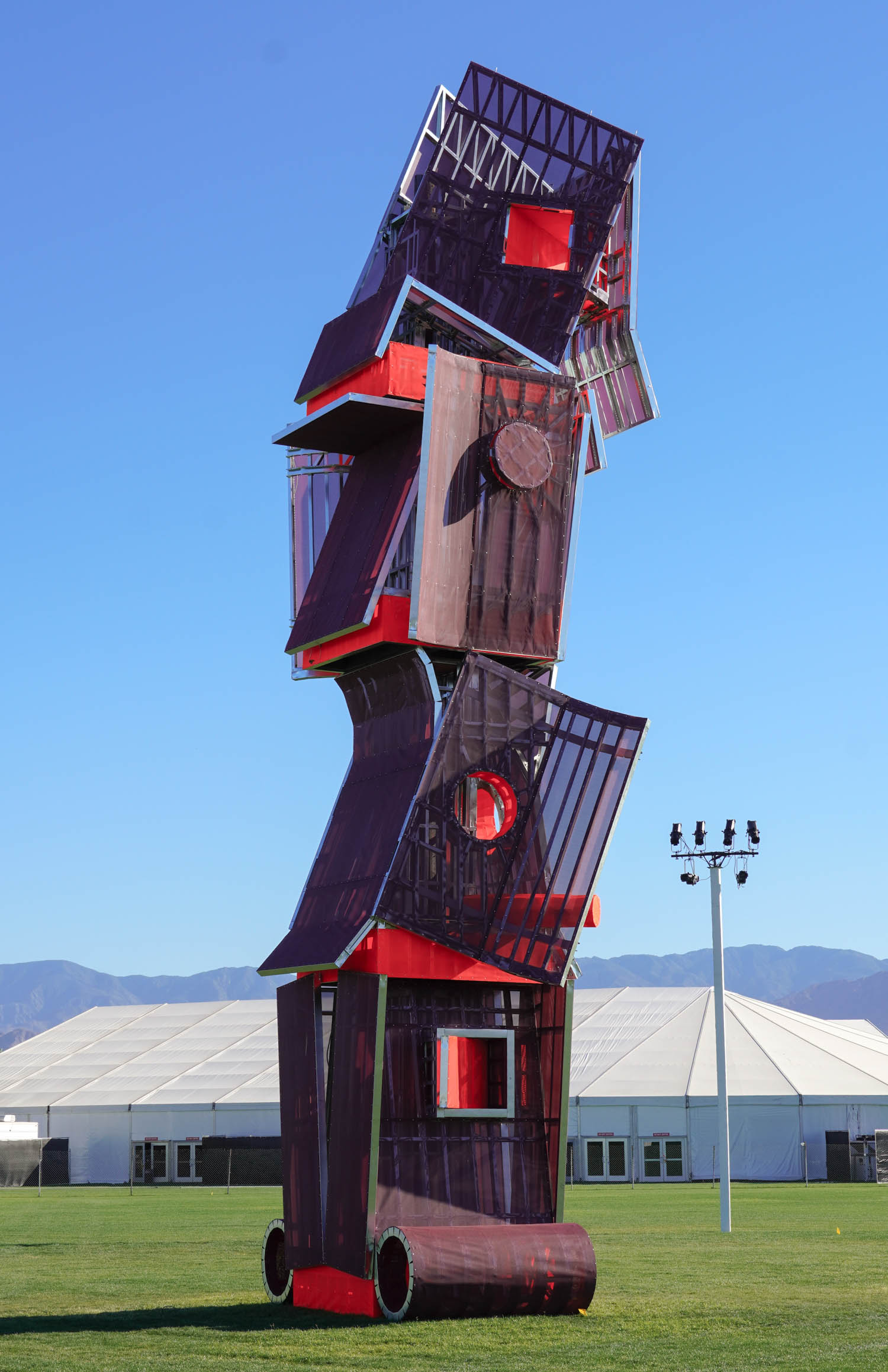
Visage Brut. Photography courtesy of LADG. 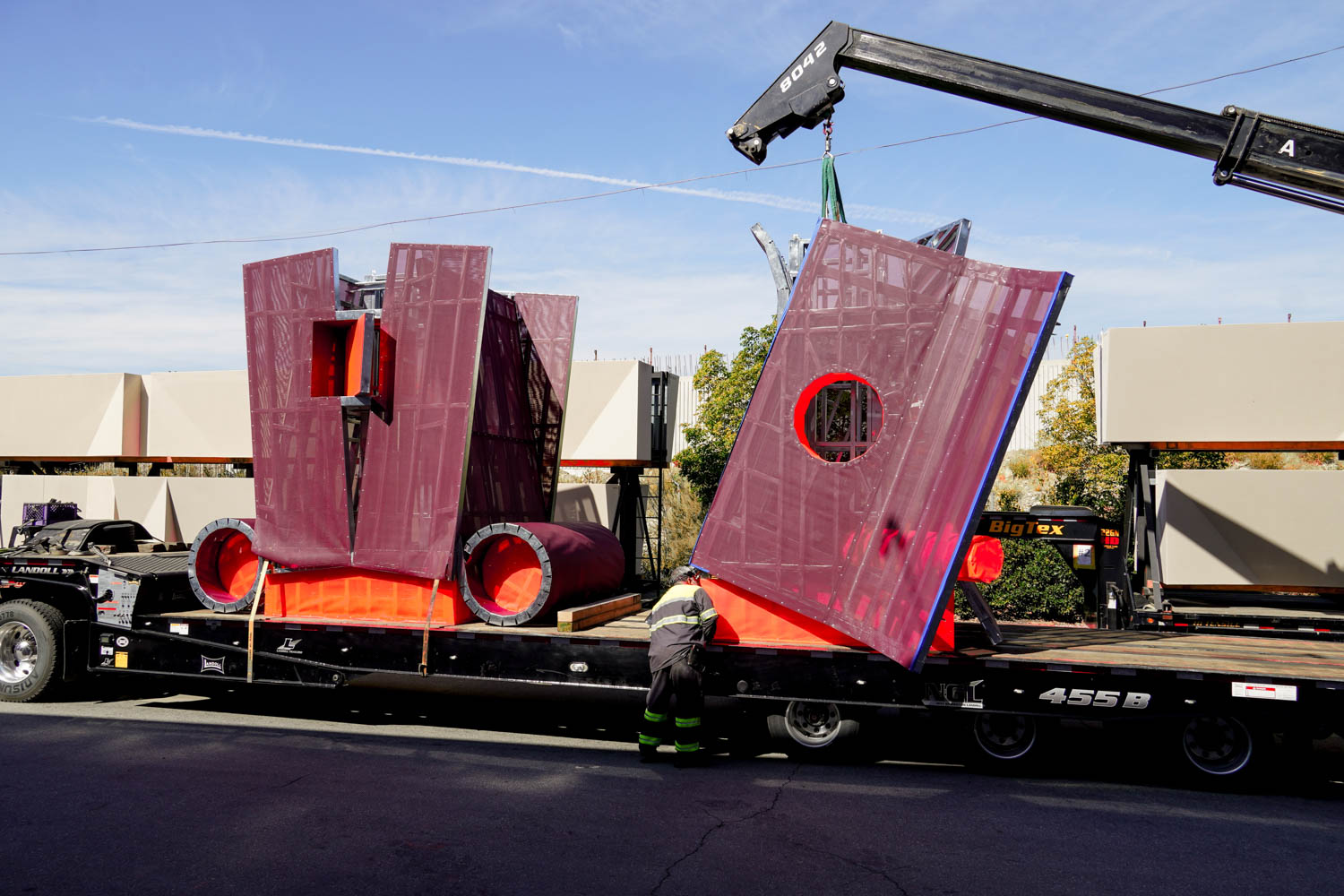
Visage Brut. Photography courtesy of LADG.
ID: What was the working process for Visage Brut and were there significant (time/budget/site) constraints?
LADG: The artist commissions from Coachella are interesting because they require you to work very quickly. We had just a few months to conceive an idea, refine, and build it. To speed up the build, Visage Brut was fabricated offsite in Rancho Cucamunga and shipped to the Coachella polo fields in sections on open-bed semi trucks. There are some beautiful snapshots of the giant, box-like heads sitting on trucks.
ID: Did previous art-focused projects pave the way for or inform your Coachella work?
LADG: Yes! We split our time between buildings and projects that look more like art. Lately, we’ve been thinking about how to do unconventional things with conventional materials. “In and Out of Boxes” at Autodesk was one of these, where we used common steel studs. Before that we were working on how to stack up commonplace but dissimilar things in a series called “The Kid Gets out of the Picture.” The piece at Coachella drew on both of those, but also introduced a new problem for us, which was how to give the totem a series of faces.
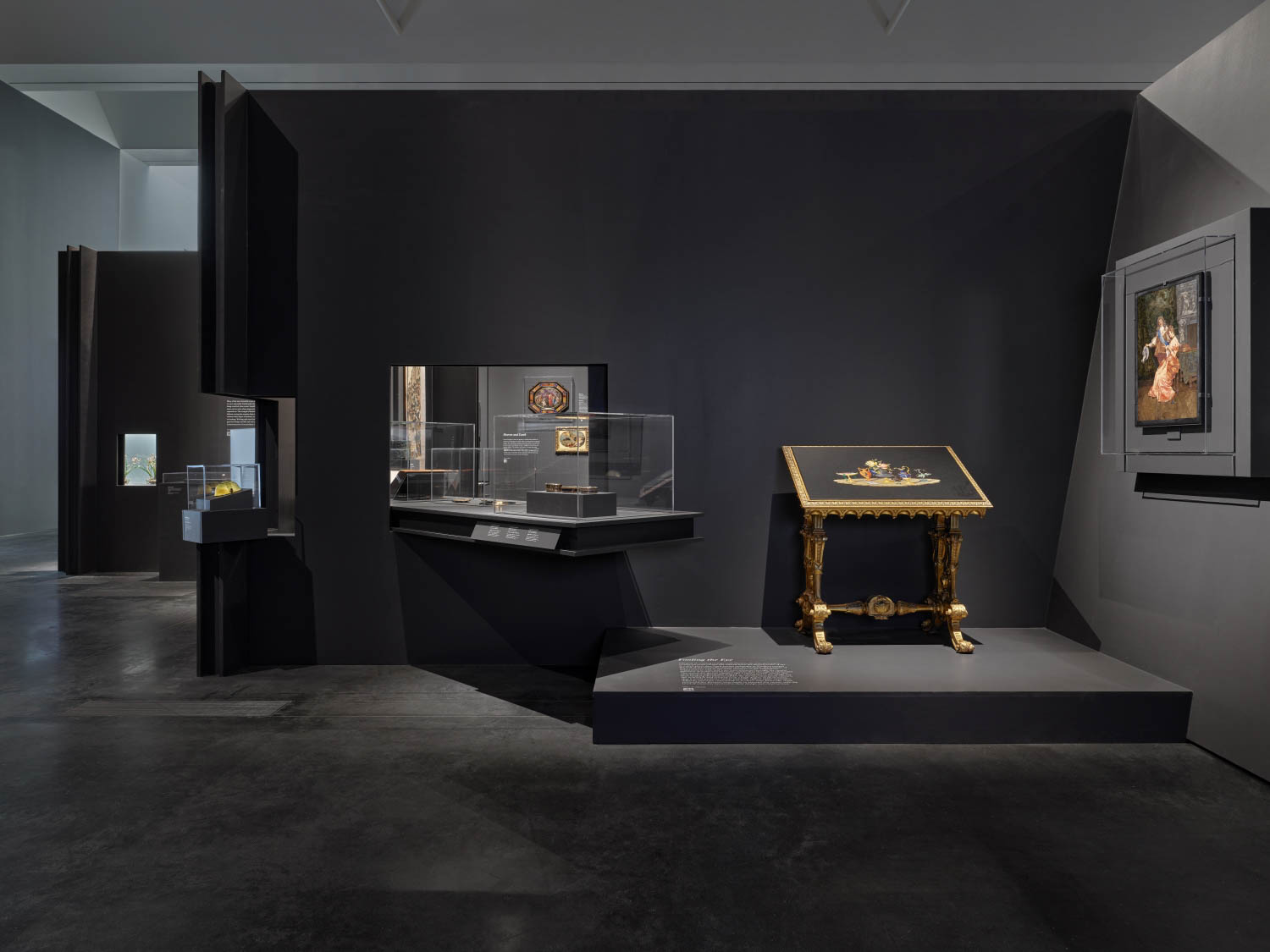
LACMA exhibition, Los Angeles, 2023. “Eternal Medium: Seeing the World in Stone.” Martin Elder/ Courtesy of LADG (The Los Angeles Design Group). 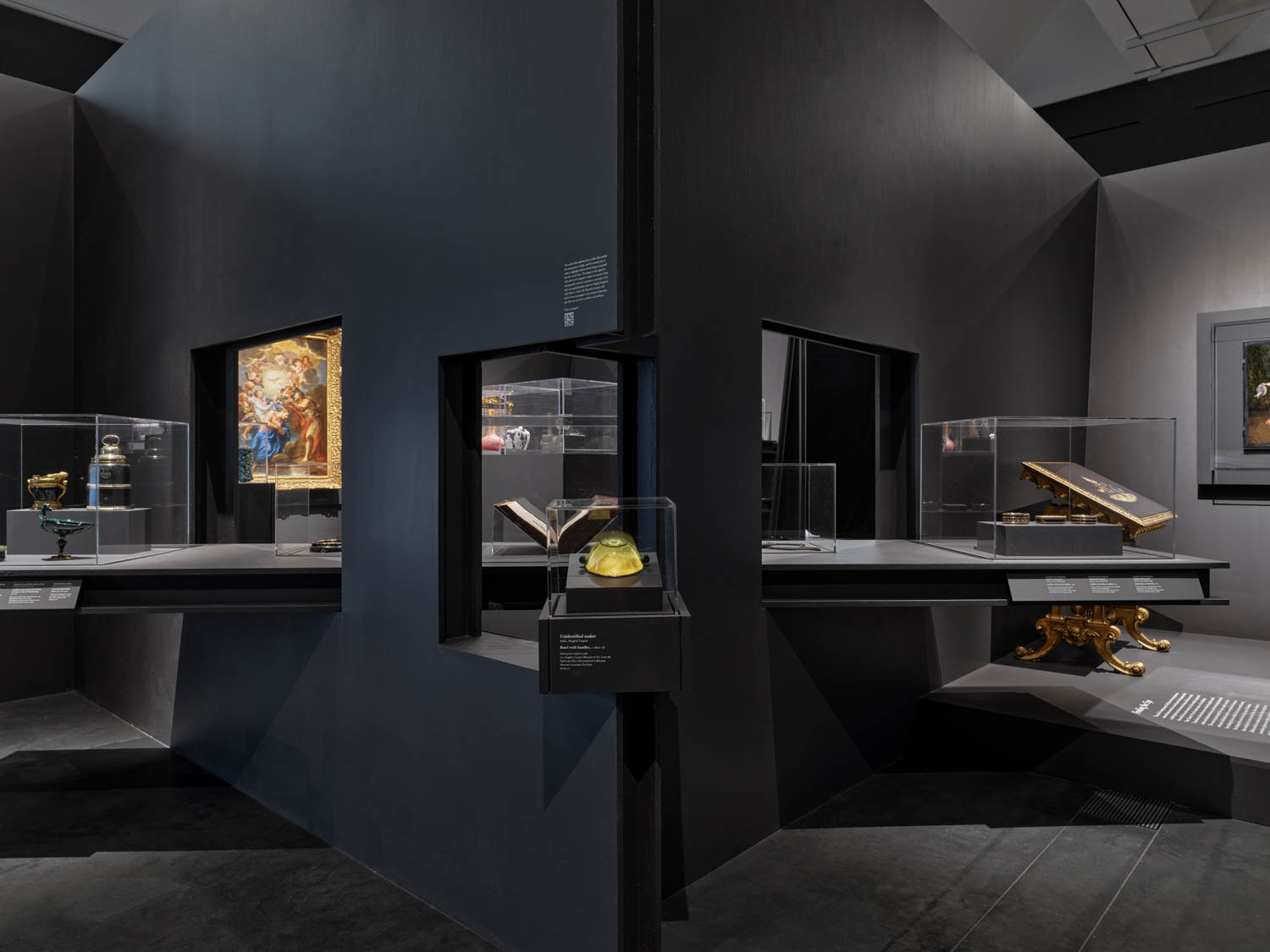
LACMA exhibition, Los Angeles, 2023. “Eternal Medium: Seeing the World in Stone.” Martin Elder/ Courtesy of LADG (The Los Angeles Design Group).
ID: Among earlier projects, you’ve exhibited at LACMA and published a book with Harvard. These are very different things than installations or buildings. Did those more intimate experiences bring out different concepts or help to focus on existing ideas?
LADG: We like to do both. We test ideas in physical built form and in writing. At the LACMA installation and in the book Inscriptions we were interested in how to maintain a “builder-ly” attitude toward design but also engage with the world of ideas and text. In a museum context, the installation has to tell a very carefully choreographed story developed by the curator in addition to being an interesting or well-constructed form. With Inscriptions we wanted to do something similar, showing how very abstract or complex ideas seem to be emerging from a literal, material attitude toward architecture and design.
ID: LADG has designed residences as well as hospitality projects including restaurants. Do you approach both types of projects with the same process?
LADG: Yes, our projects always follow the same pattern. First we sketch a series of “experiments” for the rest of the office to play out. These are open-ended, but also structured and rule-based. We make dozens or hundreds of iterations. After that, we think of our projects in stages of refinement. We take the best idea from the initial experiments and relentlessly zoom in to smaller and more difficult questions and scales.
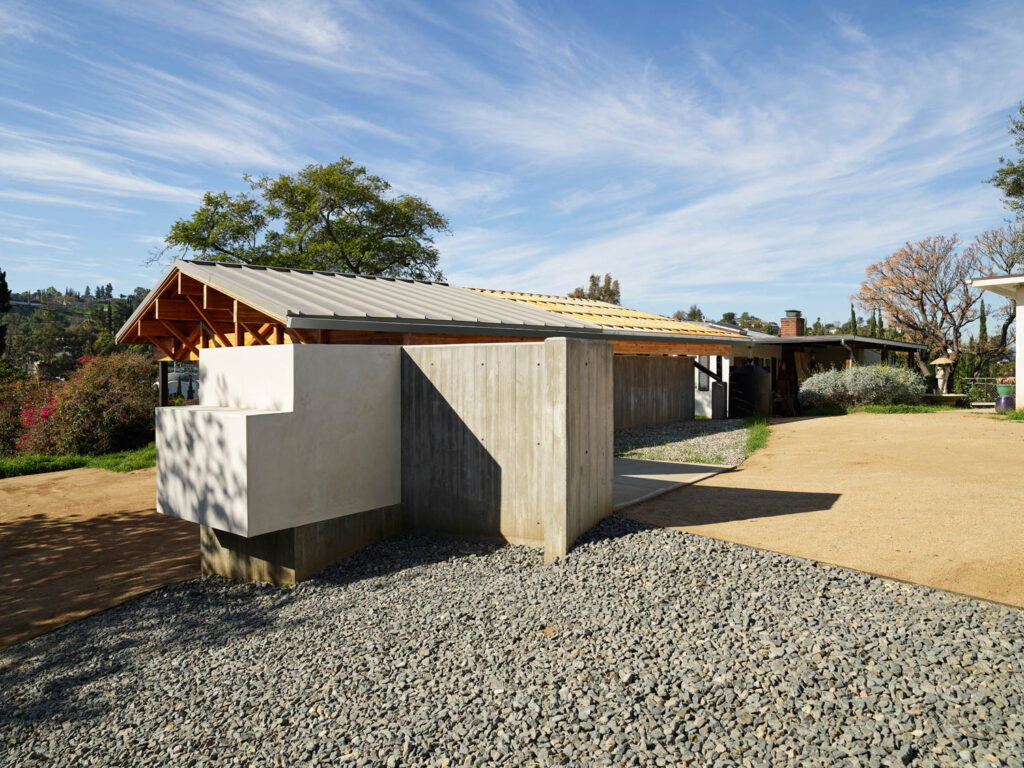
ID: The firm has completed projects in California, Colorado, Hawaii, Minnesota, New York, Oregon, and the United Kingdom. Are you bringing a slice of L.A. ethos to these different sites?
LADG: L.A. has become the point of origin for most of our work. It’s been useful for us. Aesthetically, the city is open to almost anything, so there’s an imperative to always do something new. In terms of the regulatory environment, though, L.A. is extremely tough. The City subjects new and strange ideas to extreme oversight. It’s probably the toughest and slowest of any context we’ve worked in. The upside is that it makes for a proving ground. If you can do novel things in Los Angeles, you have a good shot of making it work in other places. Ideas made here are portable.
ID: You engage in ongoing research, studies, essays, and other expressions. Anything you’re exploring that might make its way into public view in the coming years?
LADG: We’re thinking about new ways to work with earth, soil, and landscape in support of building. We have some ideas for building models of project sites that really begin with the dirt.
ID: What are you working on now and what is an ideal project you’d like to take on in the coming years?
LADG: Many houses!
We’d love to do a small museum.
read more

DesignWire
Designers And Manufacturers On The Move: September 2026 Edition
Interior Design‘s latest On the Move includes must-know industry promotions and hires, like Perkins&Will’s strategic move to expand its design capabilities.
DesignWire
10 Questions With… Artist and Designer Conie Vallese
From sculpture and ceramics to glass, textiles, and furniture, Conie Vallese embraces a multidisciplinary practice shaped by curiosity and creativity.