
10 Questions With… Lea Colombo
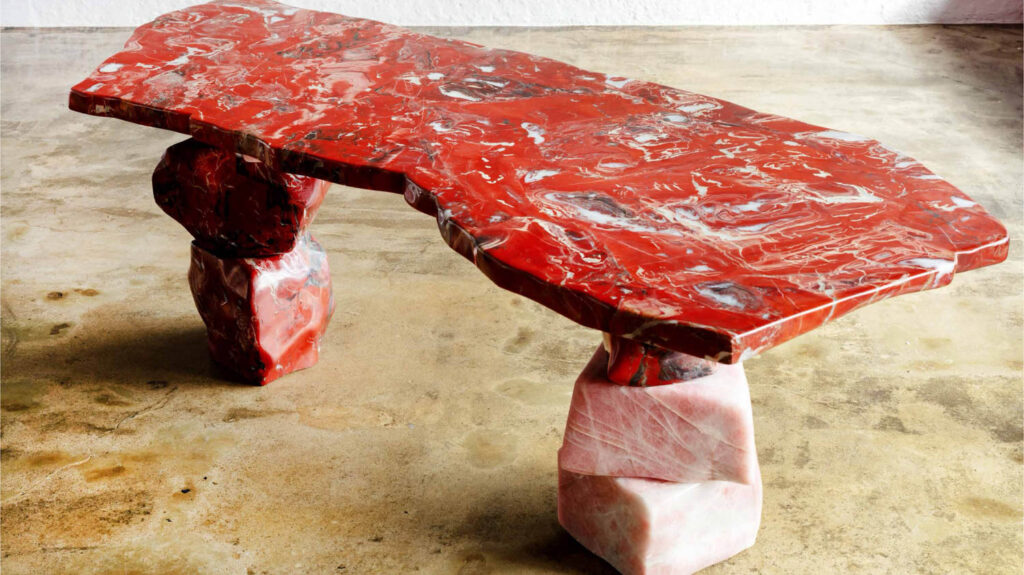
Lea Colombo’s artistic evolution began the moment she embraced total creative freedom. By looking beyond the photographic lens, the self-taught South African artist and designer unlocked a fluid practice that encompasses sculpture, collectible design, and immersive site-specific experiences. In 2021, driven by a profound urge to create physical objects, she began sculpting in red jasper—a stone native to South Africa’s Northern Cape province and Namibia. This experimentation naturally expanded into furniture design, yielding coffee tables, dining tables, and matching low stools.
For Colombo, art is pure energy. “I believe color is frequency”, she explains, noting that the materials and objects we surround ourselves with hold memories that subtly shape our subconscious well-being. Her work functions as a vibrant exploration of color, light, materiality, and form, deeply rooted in the interplay of dualities: the masculine and the feminine, grounding and expansion, softness and strength, nature and geometry.
This philosophical depth was nourished by years spent in places like New York, London, and Paris. Today, after returning to her hometown of Cape Town, she divides her time between South Africa and Milan. Here, Colombo shares with Interior Design how photography shaped her perception, how she doesn’t want her work to be limited solely to stone, and how she is staging her most holistic chapter yet.
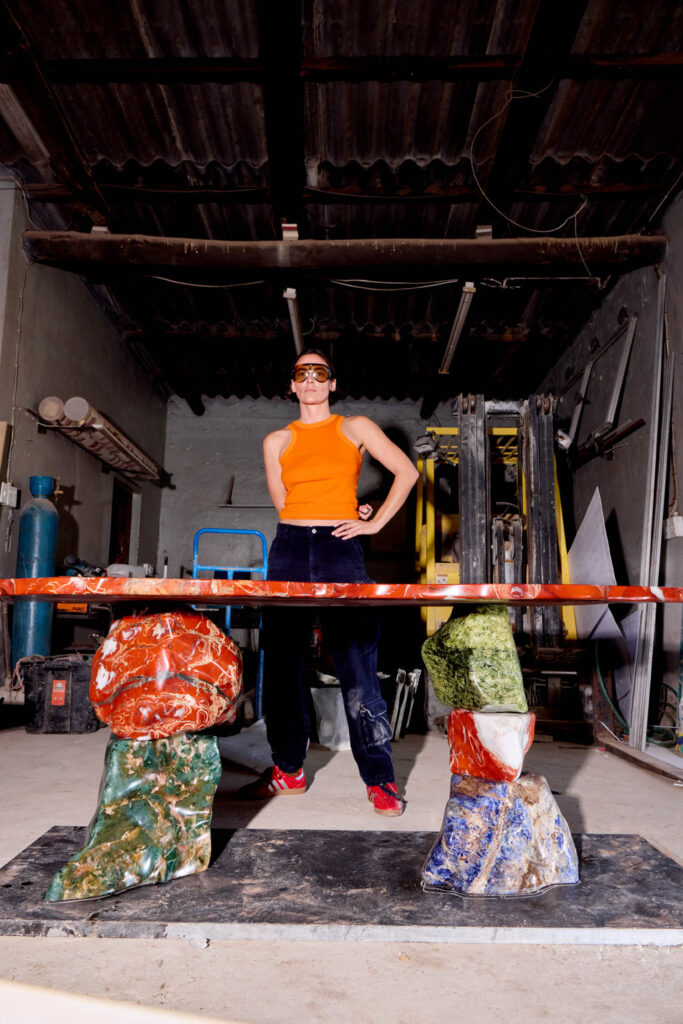
In Conversation With Lea Colombo
Interior Design: How did your artistic and design journey begin, and how has it evolved?
Lea Colombo: I started with photography. I was completely self-taught and approached it very instinctively. I began by shooting backstage at fashion shows and later transitioned into editorial and fashion photography, working for brands like Prada and Chanel. For me, photography became a way of seeing the world—expressed through color, light, form, movement, and energy.
However, I think I always knew that photography was just one piece of a much larger puzzle. Around 2021, I felt a profound urge to create physical things: objects that could be touched, moved, sat on, and truly lived with. It actually all began with a dream about a red pendulum, which led me to South African red jasper and to carving my first stone sculpture. That moment opened up an entirely new world for me. From there, my work naturally expanded into sculpture, furniture, collectible design, glass, wood, textiles, and site-specific installations. I don’t see it as giving up photography to become a designer; rather, it’s the exact same creative practice evolving into different forms. I’m still peeling back the layers and exploring where it goes. It’s fun!
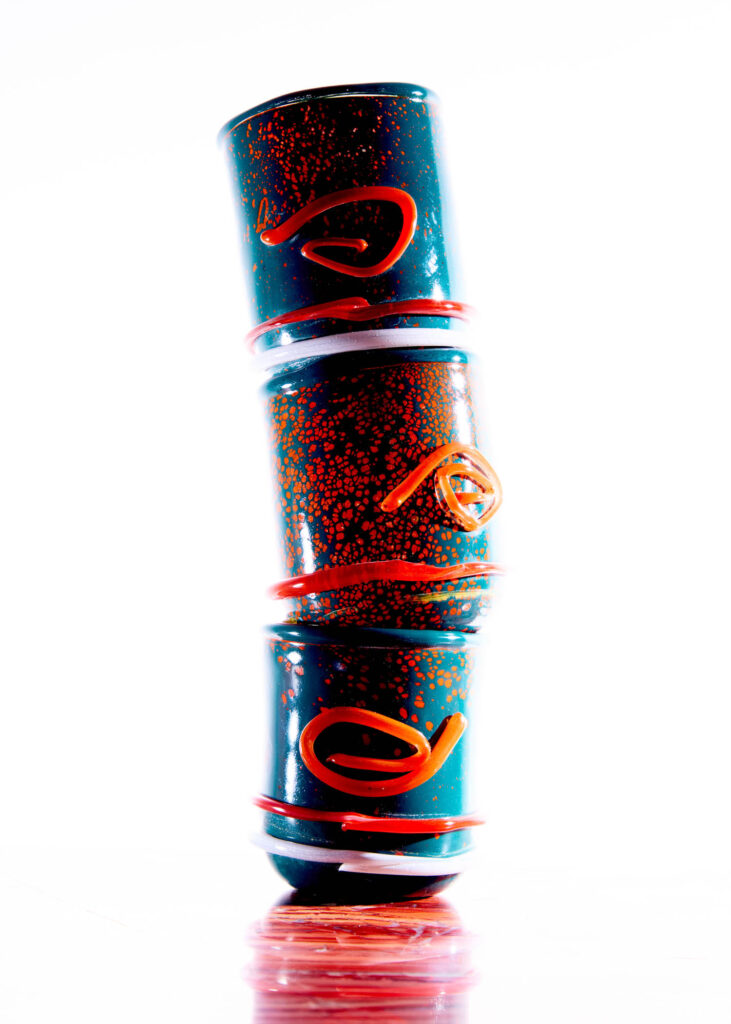
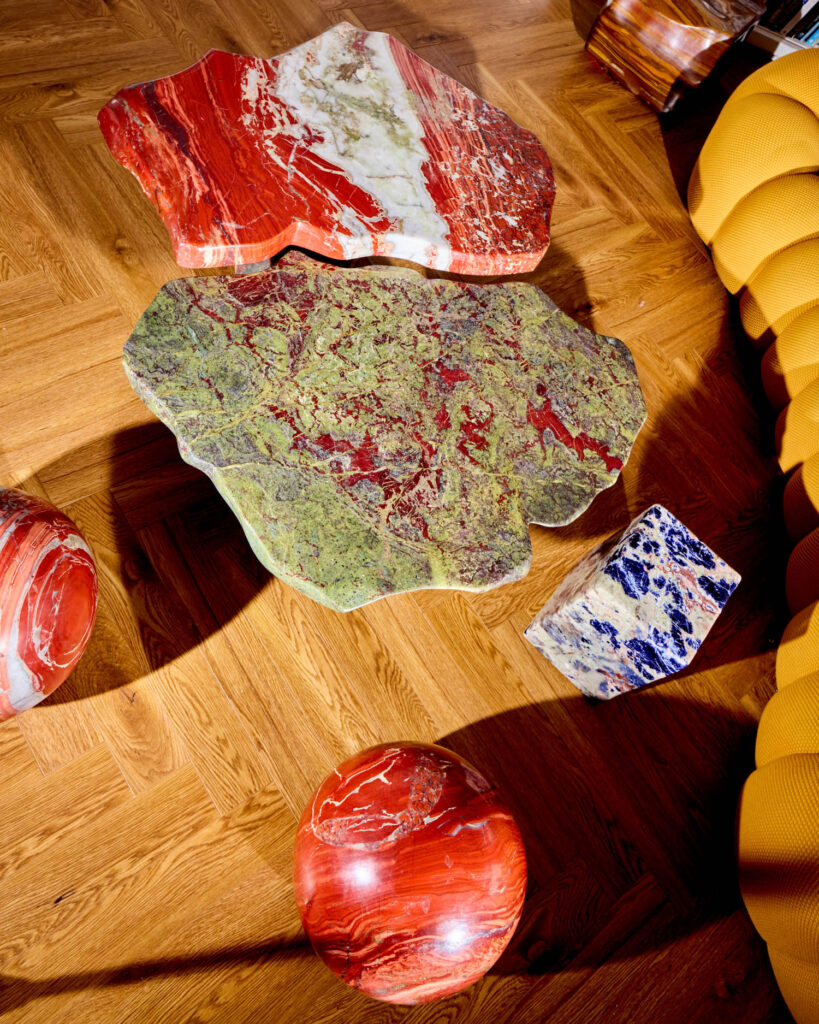
ID: You work across multiple fields, including collectible design, sculpture, directing, fashion, and much more. How do these separate disciplines cross-pollinate?
LC: For me they aren’t really separate. It’s all part of one language translated through different mediums. An idea might emerge as an image and evolve into a table, or a stone form might spark an installation, a textile, or a film.
Photography taught me how to see. Light, color, composition, negative space, proportion, tension… All of these elements are fully integrated into the way I work today. Even when I’m fabricating a table that weighs 600 kilos, I conceive of it almost as an image. How does it occupy space? Where is the balance? Where does the eye go? What happens when light hits the material? Photography has influenced the way I create objects, but creating objects has also completely changed the way I take photographs. Working with stone has reshaped my understanding of color. Working with glass has shifted how I think about light and transparency. Directing allows all of those dimensions to come together into one world. I’m interested in building universes rather than defining myself through a medium.
ID: How did your return to South Africa—after living in numerous global capitals—affect your work? And how does spending more time in Milan contribute to your practice?
LC: South Africa brought me back to myself. Here, I feel incredibly grounded. Cape Town has always been home. I spent years moving between different cities and creative worlds, which had a profound impact on me, but returning to South Africa reconnected me with nature, scale, silence, and the earth. That connection became deeply tactile through stone. Red jasper, rose quartz, sodalite, tiger’s eye, serpentine… suddenly, the landscape itself became part of my visual vocabulary. I became fascinated by what lay beneath the soil where I grew up.
Milan offers me something completely different. There’s a deeply rooted history of design and creation there. I love surrounding myself with workshops, artisans, and makers who are completely obsessed with materials and processes. It fosters a totally different kind of dialogue. I’m really drawn to the creative tension that exists between these two places. South Africa gives me the earth and raw energy, while Milan offers a distinct relationship with craftsmanship, design, and refinement—and a completely different energy.
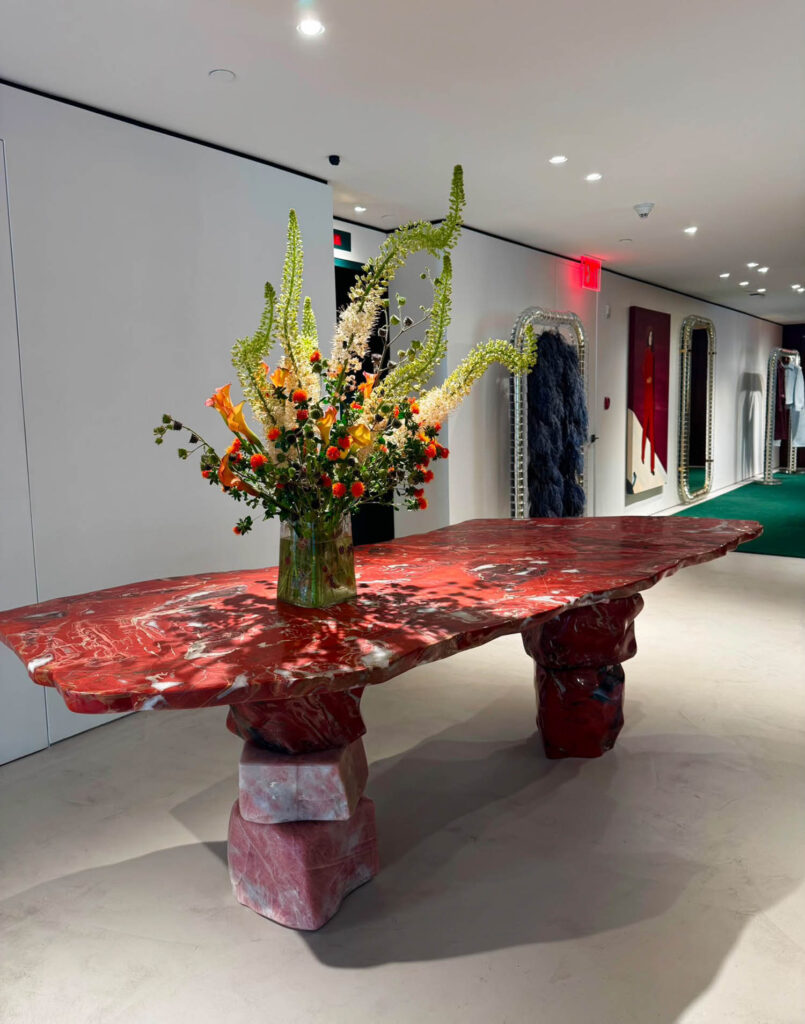
ID: Can you walk us through your collaborations with Bottega Veneta?
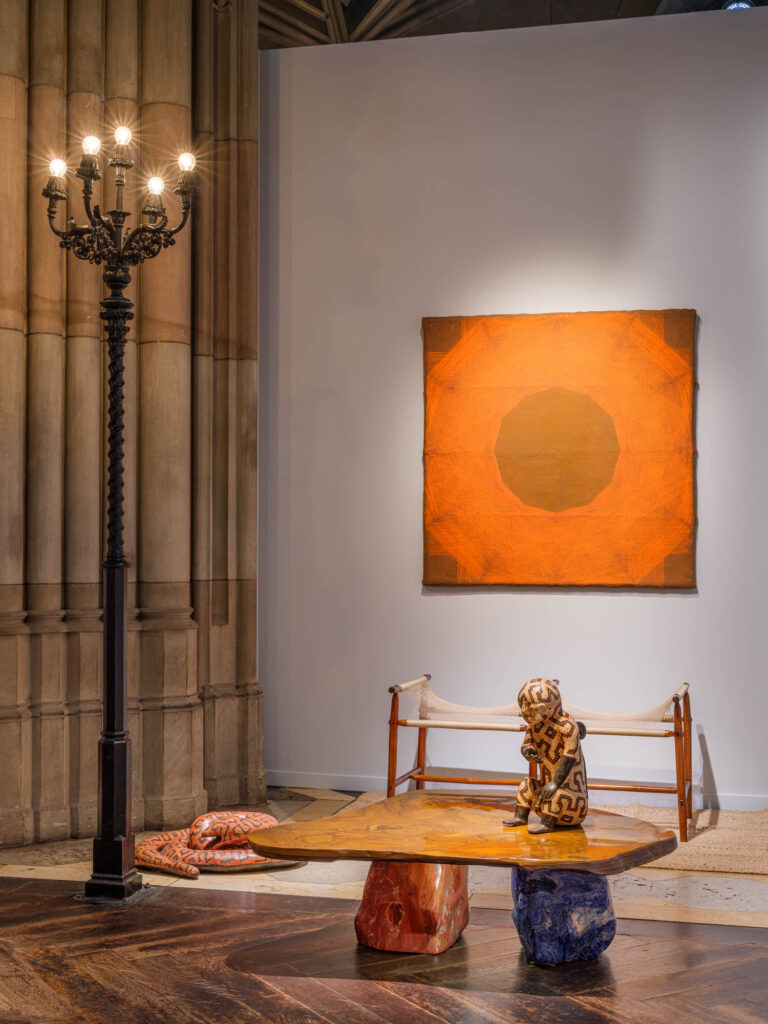
LC: My relationship with Bottega Veneta has been truly exceptional because they understood that this work is more than just furniture. My red jasper pieces entered the Bottega universe through their residency program. At Palazzo Soranzo Van Axel in Venice, a red jasper coffee table with a dragon jasper base and some stools became part of the setting, and more recently, my red jasper dining table was featured at the Bottega Veneta Residency in New York.
What I loved most was seeing how these incredibly powerful South African materials integrated into completely different architectural and cultural spaces while still retaining their own energy. There has always been a truly beautiful sensibility toward craftsmanship and materials in the Bottega universe, so the collaboration felt very natural to me.
ID: What are some of the sources of inspiration you draw on for your projects?
LC: Nature, first and foremost. Light, second. The earth, minerals, the sun, the ocean, landscapes, and the human body. But I’m also drawn to things we can’t necessarily see: energy, vibration, frequency, attraction, and balance. I’m fascinated by sacred geometry and the structures that repeat throughout nature, from atoms to planetary systems. The idea that everything is made up of relationships and energy is a concept I always come back to.
Dreams are also very important to me. Some of my most significant ideas have emerged in a very intuitive way, rather than an intellectual one.
ID: The use of bold color is a through line running through your entire body of work. Why is that?
LC: Color is everything to me. I don’t see color as a decorative element. I experience it as energy and frequency. A color can completely alter your emotional or physical relationship with a space. That sensitivity was already present in my photography, and it has followed me through everything I create. Now, I find it incredibly thrilling that instead of generating colour through an image, I can find these almost unbelievable colors within the earth. You cut open a stone that has existed for millions of years, and suddenly, there’s an electric blue, a deep red, a translucent pink, or an incredible green. Nature is far more psychedelic than anything we could ever invent. I want to bring color to the world.
ID: Whether it’s a table or a sculpture, your work possesses a sense of mystery and a fresh perspective that feels deeply spiritual and connected to the earth. I’m curious to know where this comes from and why it’s important to you.
LC: I’ve always been interested in what lies beyond what we can immediately see or explain. There’s so much mystery all around us. Energy, consciousness, nature, the universe… We understand only a tiny fraction of it all. To me, it seems incredibly beautiful—more so than frightening.
Stone makes that very tangible for me. You’re touching something that has been forming deep within the earth for millions of years. It existed long before us and will likely continue to exist long after us. I don’t want to over-intellectualize it. I’m interested in creating objects that foster a sense of connection: with yourself, with another person, with the earth, with something greater.
ID: Tell us about your process when working with materials like red jasper, sodalite, rose quartz, serpentine, and so many others. Are you open to working with different types of materials?
LC: Of course. Exploring materials is becoming an increasingly important part of my practice. I find it very exciting to allow myself to connect with the alchemy of all these elements. With stone, it always starts at the source. I love visiting the quarries and selecting the raw material before it’s been cut. There’s an element of surrender to the process because you never truly know what lies inside. Then comes the process of revelation: cutting, shaping, polishing, and engineering. Especially with large pieces, there’s a constant dialogue between what I imagine and what the material physically allows.
I work closely with master craftspeople in South Africa, and I’m deeply committed to building and developing that technical knowledge and production locally. There’s immense significance for me in creating directly from this ground. However, I never want my practice to be limited solely to stone. I’m already working with Murano glass, wood, textiles, and other materials. Each medium carries an entirely distinct energy and demands something different for me.
ID: What recent projects have taken your practice into new territory?
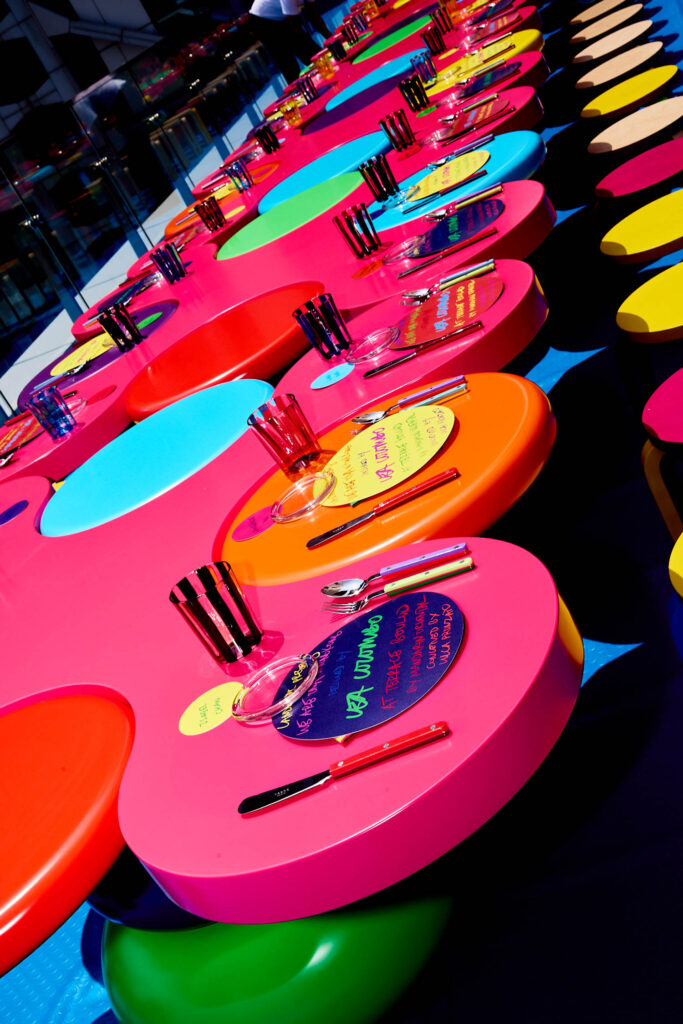
LC: This year has truly been defined by scale and the creation of immersive environments. The WE ARE ONA project in Hong Kong was significant because I developed the set design as a holistic experience, rather than simply placing individual objects in a space. The ATOM tables became part of a much larger broader dialogue involving furniture, glass, textiles, color, and the ritual of people gathering around a table.
ATOM has also expanded tremendously. At 3daysofdesign in Copenhagen, I was able to bring together stone, Murano glass, and wood, while offering a preview of my upcoming carpet collection with CC-Tapis. I love seeing the same design language translate to completely different materials. That is exactly where my work is heading now—moving beyond individual objects and towards environments, architecture, and experiences.
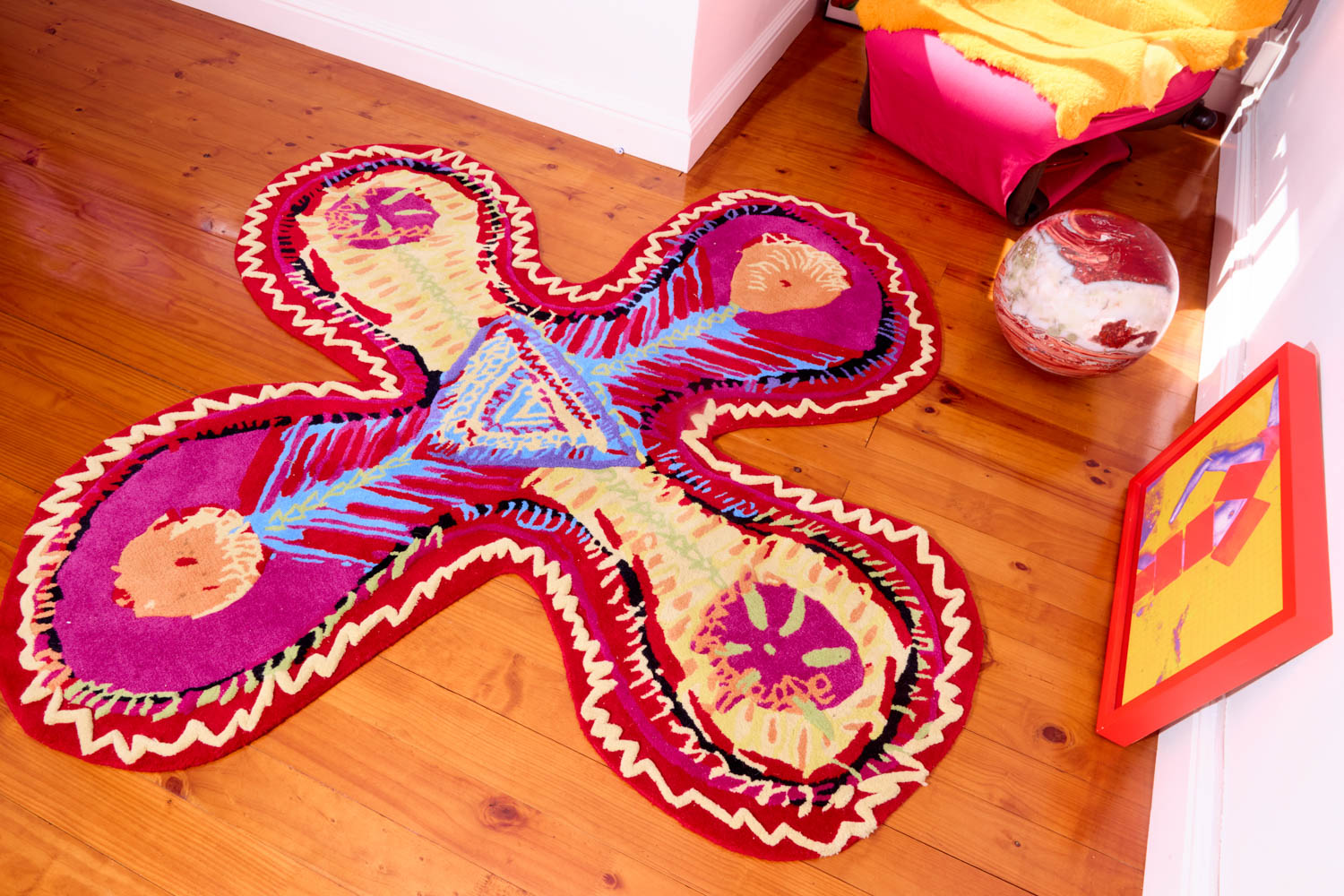
6. Lea Colombo’s collection with CC-Tapis. Photography courtesy of Lea Colombo. 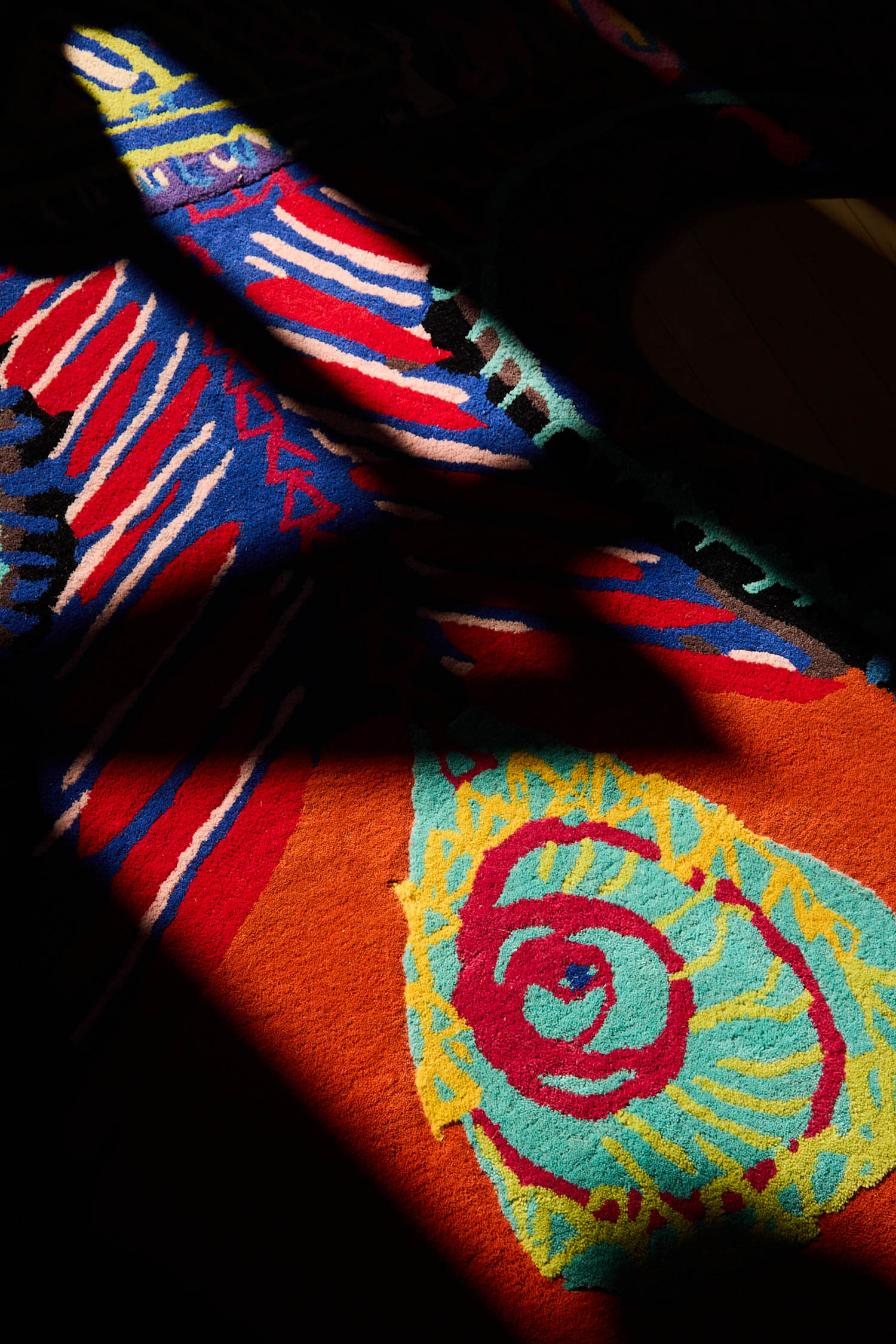
6. Lea Colombo’s collection with CC-Tapis. Photography courtesy of Lea Colombo. 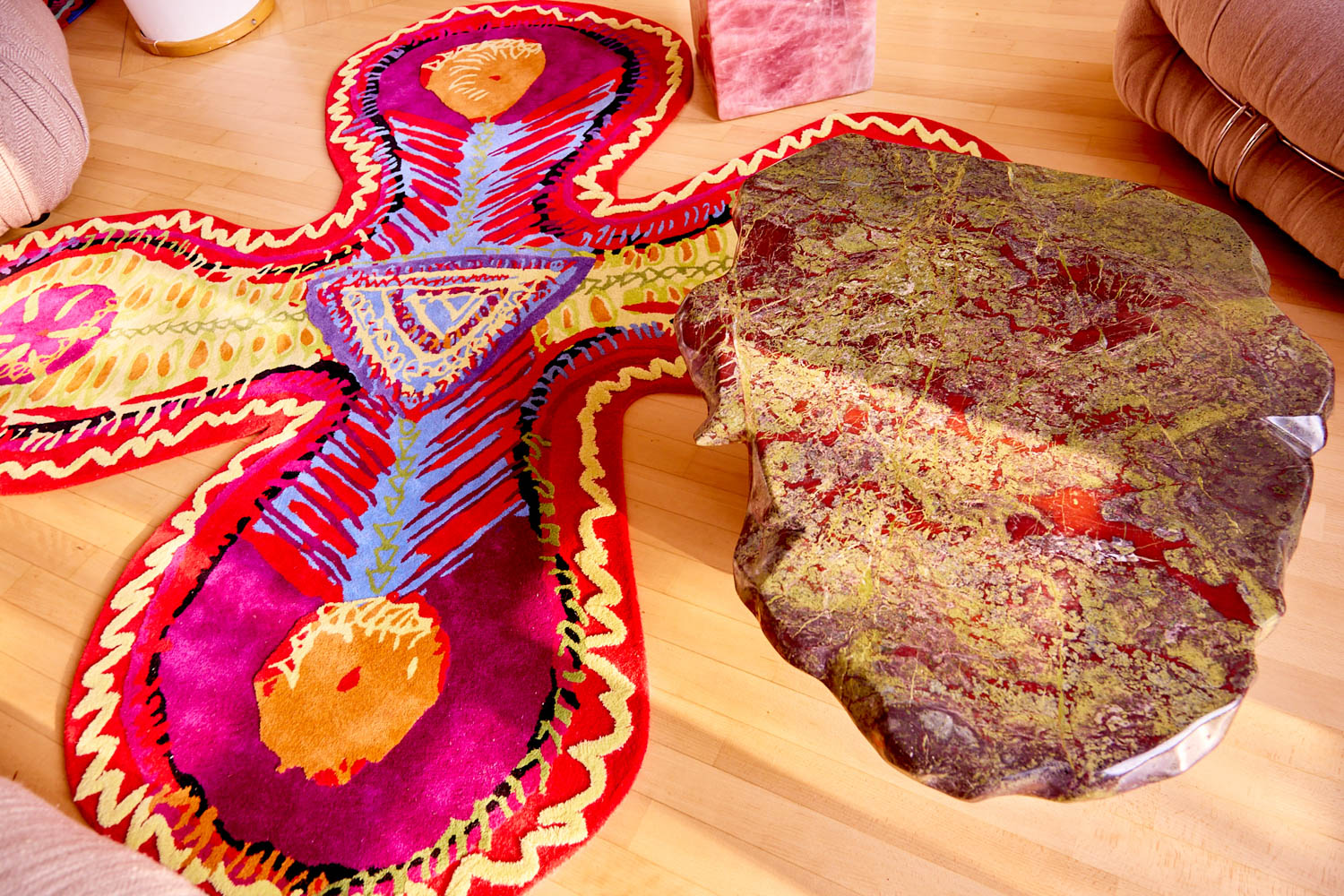
6. Lea Colombo’s collection with CC-Tapis. Photography courtesy of Lea Colombo. 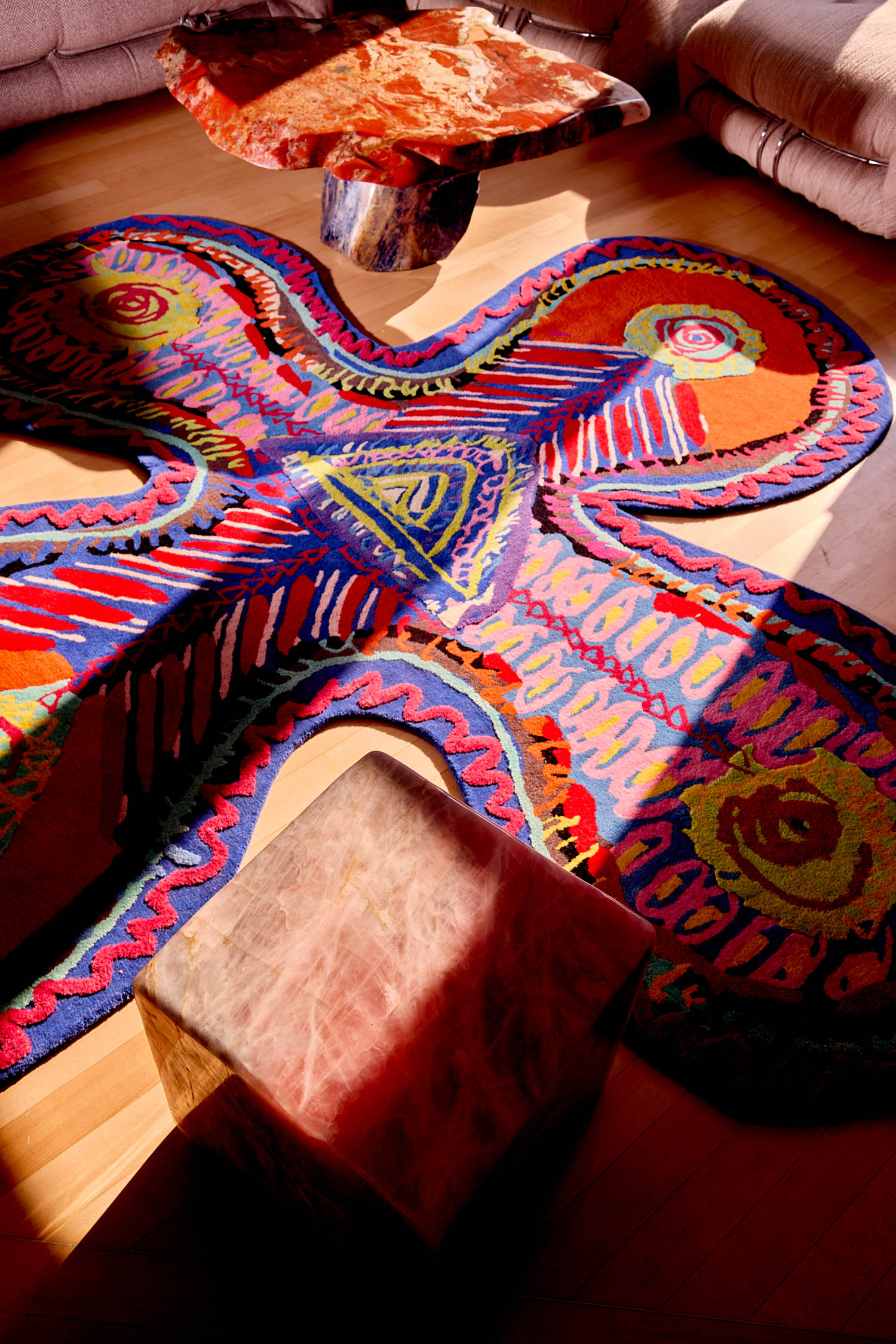
6. Lea Colombo’s collection with CC-Tapis. Photography courtesy of Lea Colombo.
ID: What are you currently working on, and what can we expect next year?
LC: Right now, I’m really interested in thinking big. Not necessarily big just in terms of physical scale, but in terms of world-building. I want to work more with architecture, interiors, landscape, and site-specific installations—spaces where furniture, sculpture, color, light, and materiality all coexist.
I’m developing an entirely new body of design works for my solo exhibition with Salon 94 in New York, debuting in September 2027. I’m exploring these energetic forms and the relationships between material, geometry and energy, working with fundamental shapes and reflecting on how they connect, balance and interact with one another. It feels like a natural evolution of my past explorations, but also the beginning of something new. My collection with CC-Tapis should also be launching soon, and I can’t wait to share it. It’s been truly exciting to translate my language of color, form, and energy into textiles and see how the work takes on a completely different materiality.
Additionally, a book is taking shape alongside this new phase of my practice, though I prefer to keep those details a secret for now. I’m increasingly interested in creating works that fall somewhere between art, design, sculpture, and experience. I have no desire to rigidly define what it is; I simply want to keep opening it up.
read more
DesignWire
14 Highlights From Dutch Design Week 2026
From a bathtub made of soap to 50 radically different chairs, discover 14 highlights pushing the boundaries of material experimentation at Dutch Design Week 2026.
DesignWire
This Exhibit Ushers In A New Era For Contemporary Arts In Uzbekistan And Beyond
Studio KO reimagines a 1912 Soviet-era tram depot in Tashkent as Central Asia’s first dedicated contemporary arts institution, which features the exhibit Hikmah.