
10 Questions With… Leo Orta
For Leo Orta, the act of making derives from curiosity and questioning, underpinned by a sustained attention to the conditions of place. As an artist-designer whose methodology unfolds far from the closed circuits of the studio and privileges of fieldwork, he has long approached design by observing how materials, techniques, and informal systems of making actually circulate—what people do with cables, concrete, mud, or ash—before deciding what an object should become. This is a stance he sharpened early on with OrtaMiklos, the duo he cofounded at the Design Academy Eindhoven with Victor Miklos Andersen, where an improvisational, performance-tinged practice, which they once referred to as “ignorant design”—deliberately indifferent to trend palettes or material orthodoxies—treated reclaimed and construction-site matter as both subject and medium, and often began with guerrilla interventions instead of finished forms.
While his collective years challenged conventional ideas of function and taste, recalling the irreverence of post-Memphis design and the conceptual experimentation of Droog, yet channeled through a more impulsive mode of making, Orta’s recent solo work carries that same investigative inclination outward, embedding it in culture, ecology, and the craft traditions that have evolved from them over centuries.
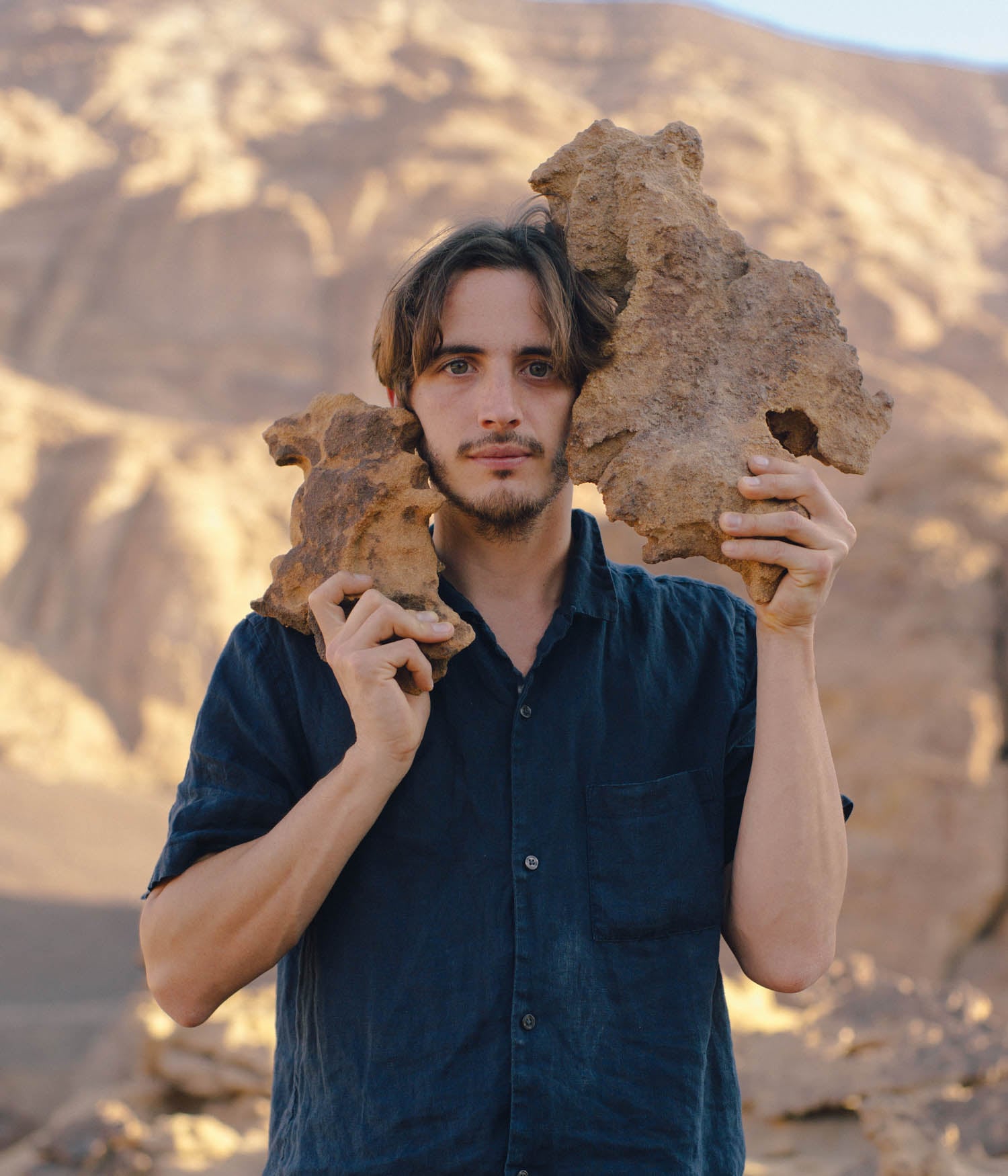
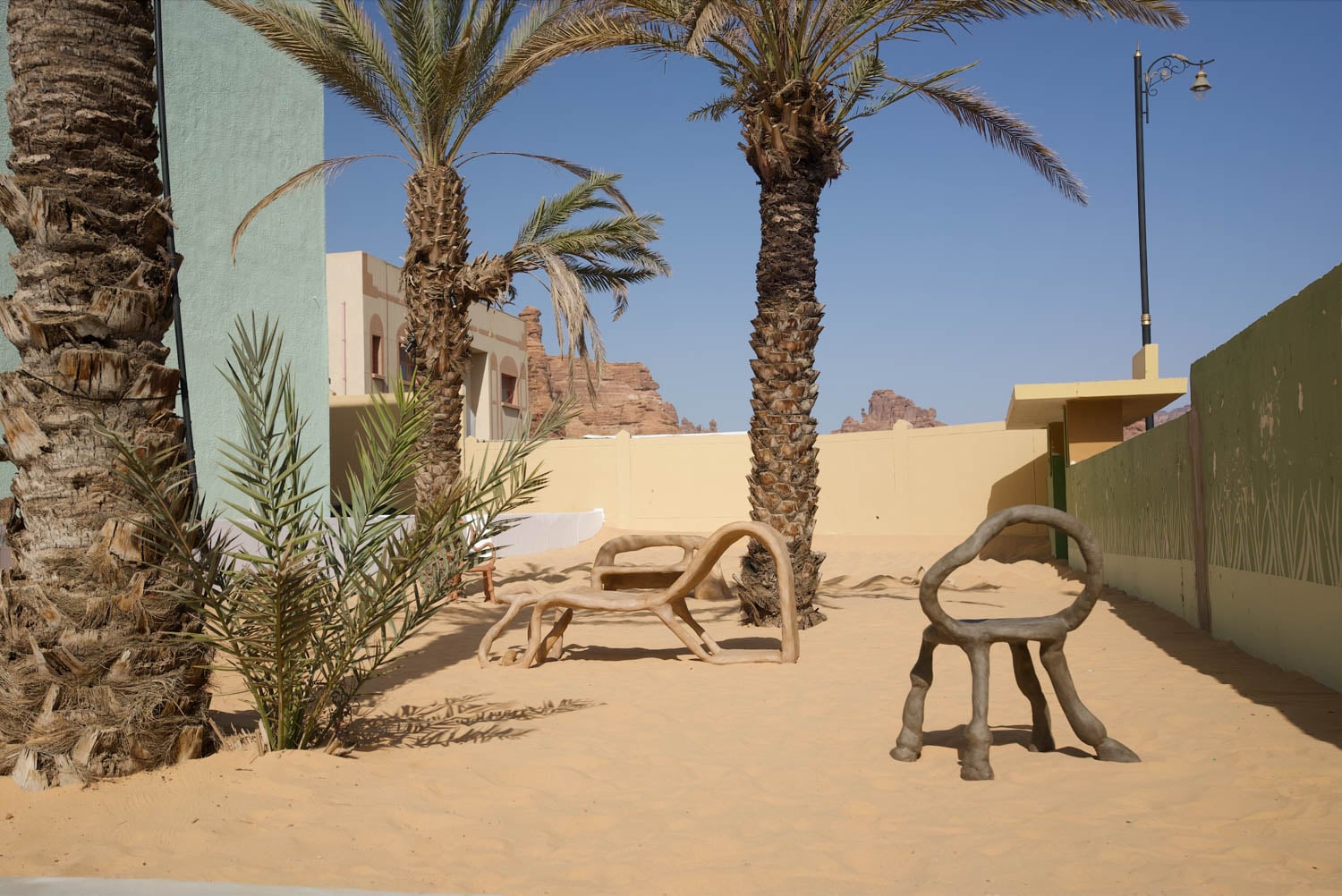
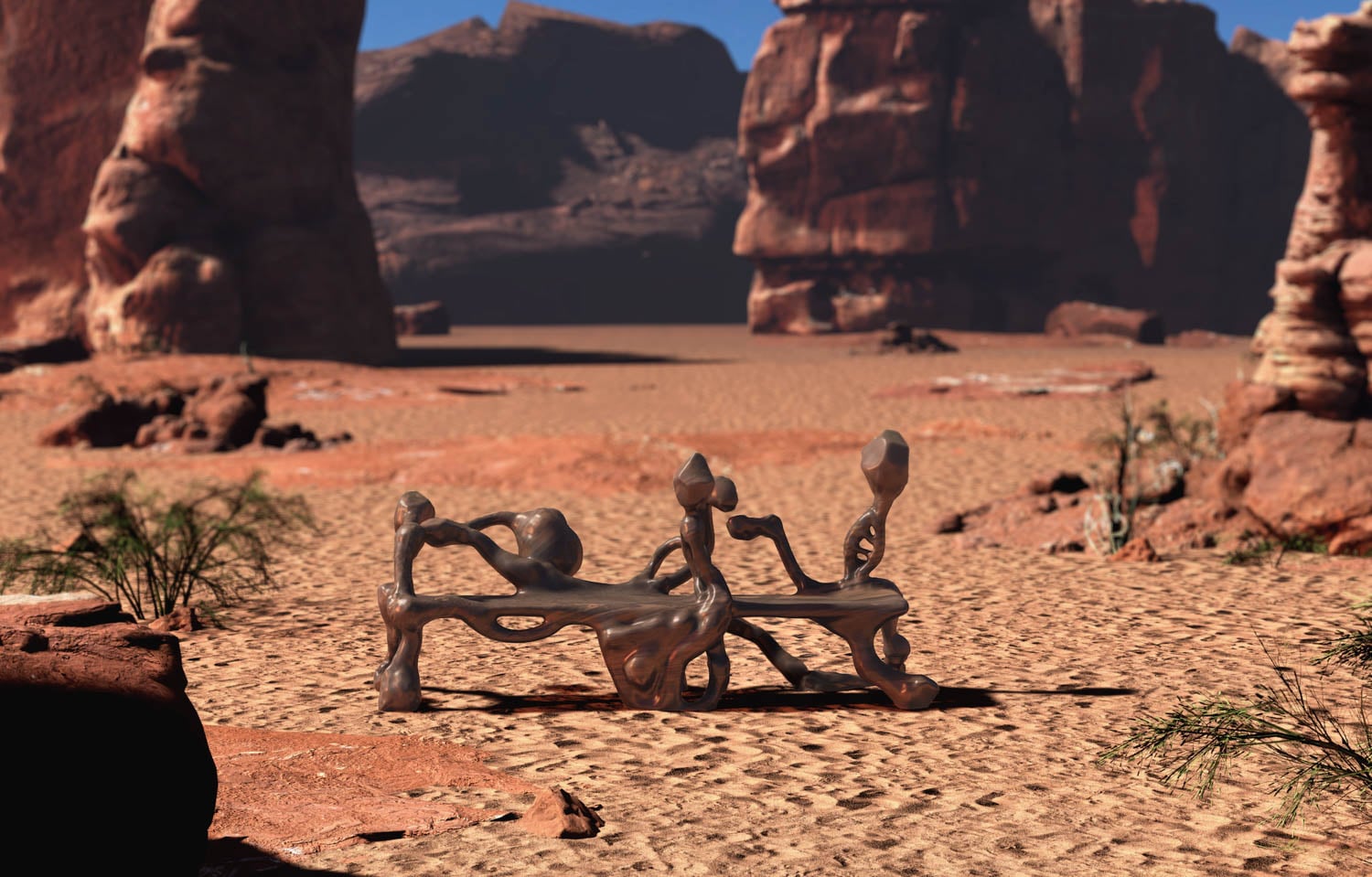
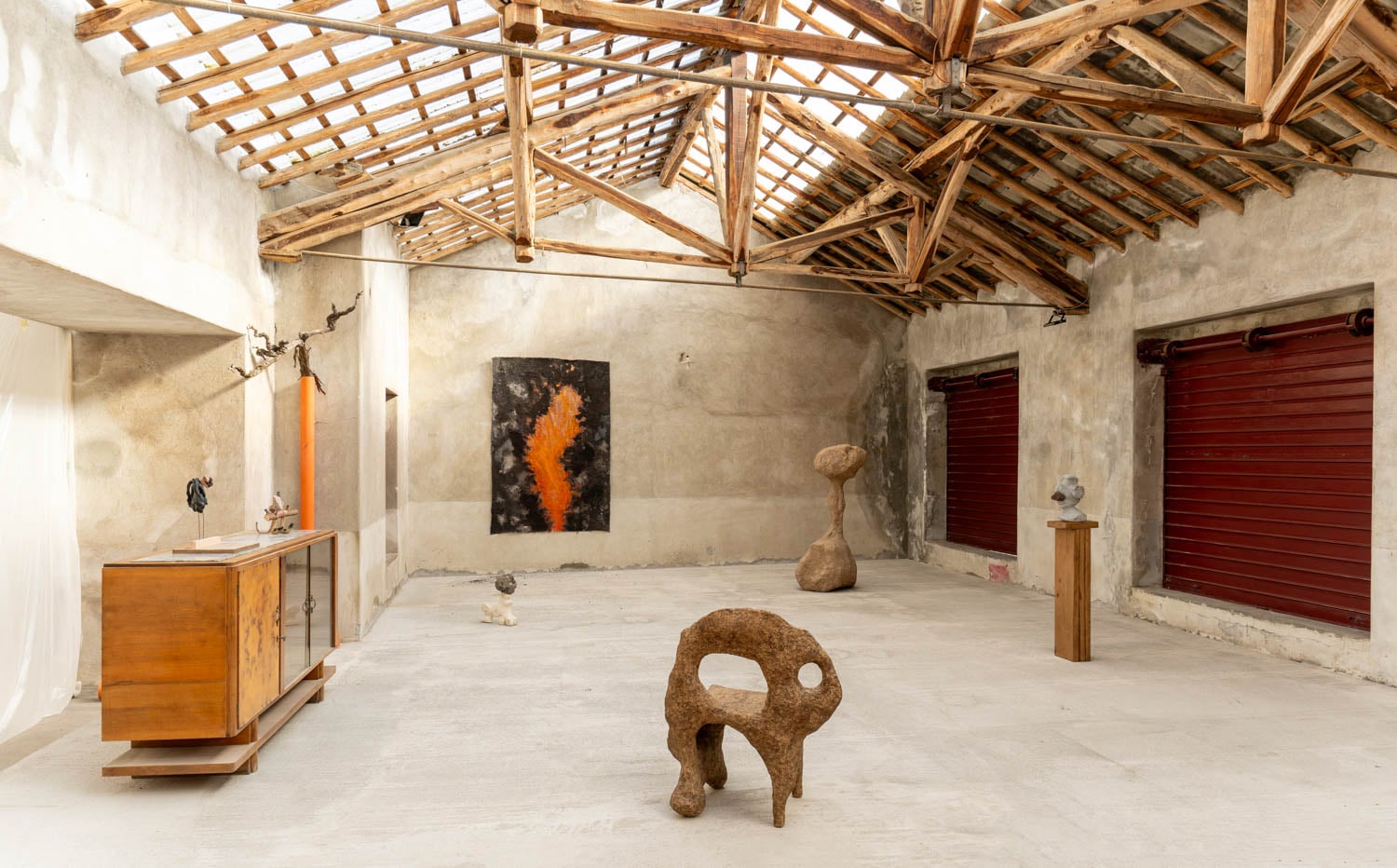
As part of the inaugural cohort of AlUla’s artist residency program, he learned vernacular techniques of adobe building and palm-weaving from local construction crews to develop Peculiar Erosions, translating vernacular construction into organic furniture. On Mount Etna, the second chapter in this evolving research into ecological cycles, he immersed himself in the mountain’s fertile and volatile landscape, where biomorphic forms and paintings register the volcano’s continual negotiation between destruction and renewal.
In conversation with Interior Design, Orta reflects on how these projects extend his long-standing interest in material transformation, considering how waste becomes resource, how process turns to form, and how context itself shapes meaning. Speaking across design, craft, and ecology, he considers what it means to work responsively with place and to let materials, in their imperfection and instability, lead the act of creation.
Leo Orta Explores Material Transformation
Interior Design: Over the years, what has kept you interested in exploring the relationship between design and art, utility and expression?
Leo Orta: At the Design Academy Eindhoven, I truly developed my interest in conceptual design. But I also acknowledge my parents, Lucy and Jorge Orta. Their practice addresses social and environmental issues, and I wanted to stay close to their values, but design became my own path—a way to create without feeling pressured to compare myself to them.
Nowadays, my practice shifts from one day to another, bouncing between making sculptures, paintings, and furniture. I like to see each of them as having a distinct function: whether to question things, enable decoration, or spark wonder.
ID: Is there an early encounter that has impacted the way you thought about making?
LO: The first moment that really shifted my way of thinking was discovering the work of the Dutch collective Droog Design. While I had been influenced by the aesthetics of the Memphis Group, with Droog, I saw a creative act that was smart and conceptually relevant.
In Do Hit Chair by Marijn van der Poll, the performative act of transforming a smooth, modern, utilitarian stool into a hammered, sculptural chair triggered my understanding of concept and performance within an object. Similarly, Tejo Remy’s Chest of Drawers taught me to look at discarded materials differently, to see how they could be rebuilt with emotion and meaning.
I often rediscover works from that period that still feel relevant today. The idea that a piece, whether in art or design, can travel through generations and conversations makes it worth creating in the first place.
ID: What drew you to industrial materials and cycles of production and waste?
LO: It happened when I came across a four-meter-high mountain of cables. I immediately knew there was something to be done with that waste. I was in the Netherlands then, and I discovered that their scrapyards had a kind of thrift-store mentality. One could buy or sell metal parts, and factories would reorganize waste by type and function.
That first encounter allowed me to see another side of consumerism and to think about material life cycles. I began weaving those cables like a spider, inspired by the woven network of our electricity-dependent society. From that impulse, I later explored construction-site waste, combining cables and polystyrene found in dumpsters.
This gesture was also a way to reveal the hidden elements within architectural spaces. My questions then were about how to bring back nobility to what had been discarded or disguised for comfort. The works that emerged during my earlier time with OrtaMiklos expressed that raw energy, transforming it into objects that questioned attention and taste around those materials.
ID: You’ve recently been exploring organic matter. What prompted that shift from working with industrial materials?
LO: A pivotal moment came when I moved back to the French countryside, surrounded by rivers, forests, and farmland. It followed a project in Eindhoven on mapping sand in relation to construction to understand the circuits it travels through and how to limit its impact via local sourcing. From there, I began working directly with materials from nearby fields. My studio was in an old paper mill, so using cellulose fibers in my furniture and sculptures made perfect sense.
Then at my AlUla residency, I encountered craftsmen renovating the old town in adobe, which sparked my interest in building organically. These experiences resonate with how, through travel, my work focuses on contextual materials and making processes. Perhaps it comes from my instinct to keep learning new languages and skills.
ID: Your recent residency continued your research at AlUla, responding to a different, but equally magnificent landscape. How did your time at Mount Etna inspire your new Terra Etna series?
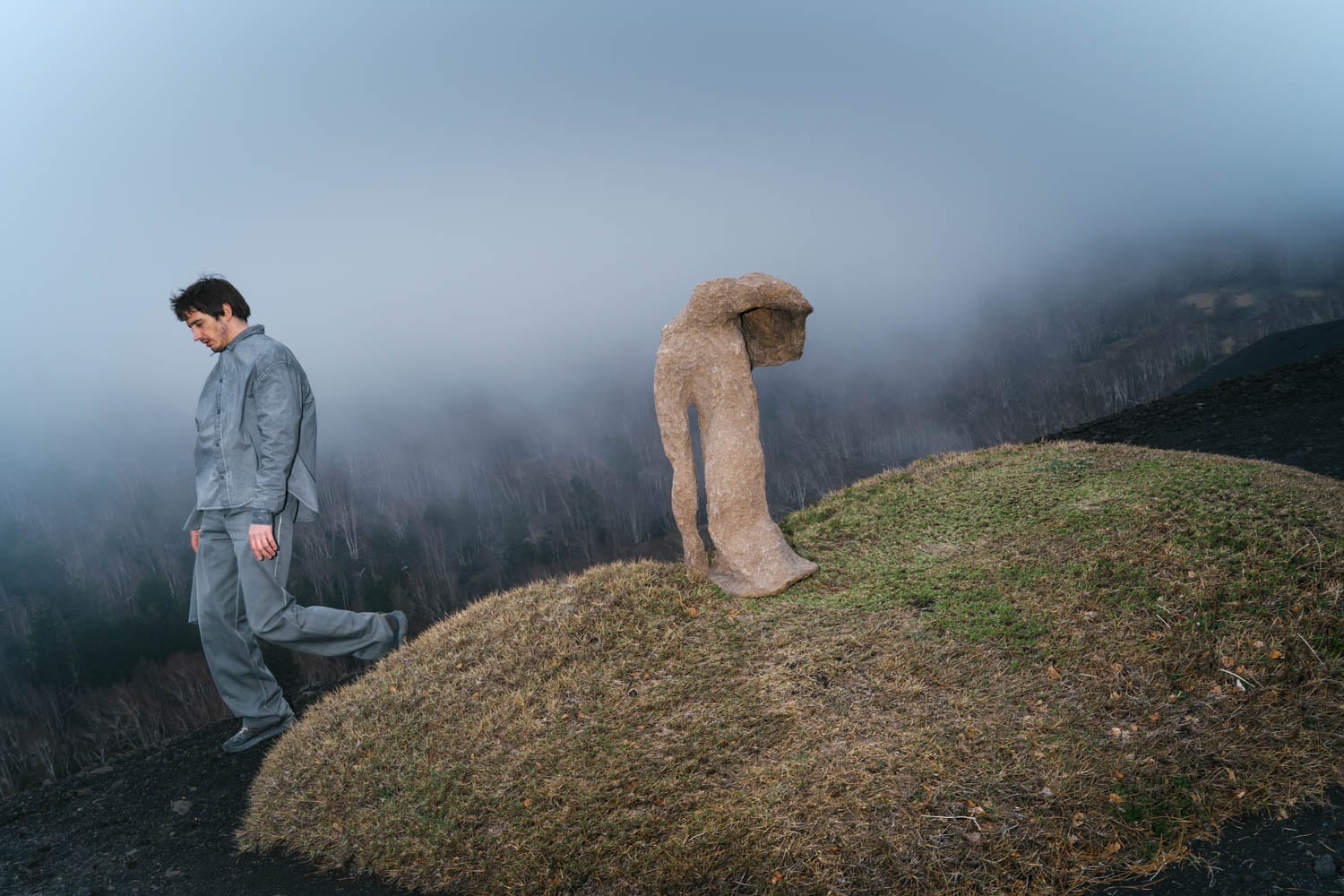
LO: The volcano felt like the perfect continuation after the desert—both hold different energies but a similar intensity. Entering these terrains of solitude reveals what kind of force emerges from them. Over three different seasons at Etna with SARP Gallery and its founder Alfio Puglisi, I immersed myself in the land, its flora and fauna. I experienced the living power of the volcano. I felt the mountain’s breathing and trembling as the source of the region’s fertility, feeding the vineyards, farmlands, and vibrant character of the people.
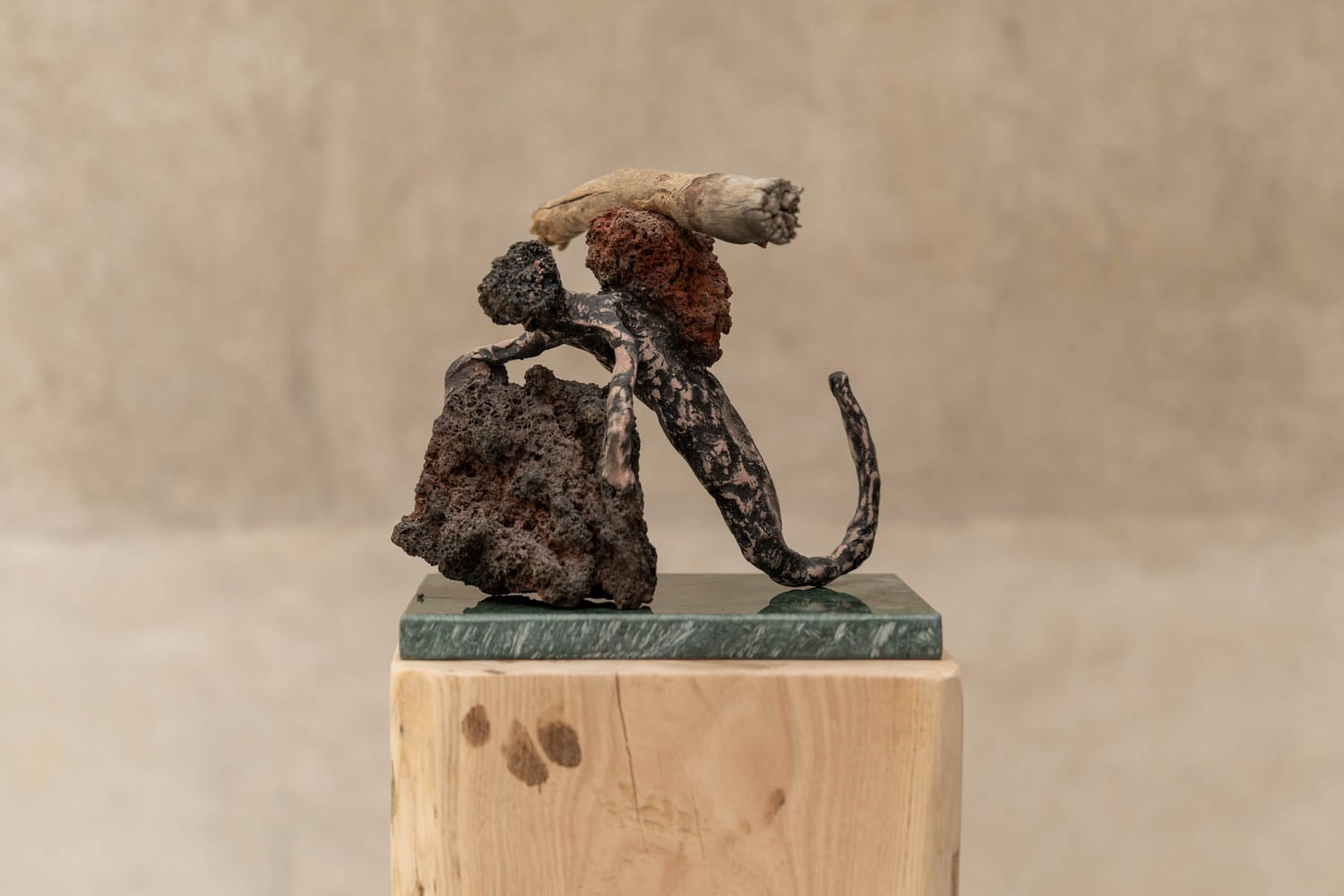
These energies had to be carried into Terra Etna. In the sculpture The Void, the figure reminds us that creation often begins where matter yields. Its raw, earthen texture evokes the volcanic crust, while its hollow interior invites us to peer into a silence charged with tension. In the Volcanic Eruptions paintings, the surfaces become active terrains. They’re composed with pigments and ashes collected directly from the volcano, with each stroke, granular texture, and flash of color translating geological movement into an emotional register.
ID: Some of your works seem like living creatures themselves, almost caught mid-transformation. Where does that playfulness come from?
LO: I see life as a constant mutation from growth to erosion; all living things evolve over time. I play with biomorphic forms as a reflection on how we are shaped by our ways of living, whether in healthy or decaying ways. As my work is often site-specific, the materials of each environment influence these transformations: A branch might become a bone, or a found rock might take on a face. These gestures often emerge automatically and spontaneously.

ID: You’ve dealt with some unconventional materials in this process. What drew you to them?
LO: I don’t necessarily see the materials I work with as unconventional, but rather as primitive—materials from another age, replaced by modern ones. I use them to reconnect with vernacular crafts like adobe, cartapesta (cellulose pulp), clay, or stone. My aim is to use them in new languages, exploring possibilities that defy conventional, rational forms. I’m inspired by the shapes and structures found in natural growth and try to mimic them in my creative process.
ID: Despite your often research-driven approach, what does it mean for you to embrace or overcome imperfections while creating an object?
LO: There is a certain beauty in imperfection, in textures that evolve naturally. A flower blooms, its leaves fall, and life cycles continue. It’s hard for me to reconcile that with the idea of permanence. It holds a contrast with the attraction of polished, machined surfaces—a paradox I often explore. I take imperfections as signs of life, like the surfaces of skin, leaves, or bark.
During an internship with an artist, we hand-carved marks onto machine-processed copper discs to restore the presence of the human hand. Since then, I’ve been searching for processes that reconnect us to the notion of homo faber, the human as maker.
ID: What’s the biggest creative risk you’ve taken so far, and what did it teach you?
LO: Creative risks often come with entering the unknown. You can expect doubts and mistakes, but they’re part of a process of learning and discovery. Traveling to a country where I don’t speak the language and having to work closely with local artisans using only the shared language of making, is for me the biggest risk, and the most rewarding. In an age where we can learn almost anything online, these in-person creative exchanges are how I stay connected to new ways of thinking and making.
ID: What’s next? Do you see these explorations continuing into other terrains and ecologies, or evolving in new directions altogether?
LO: The work is always evolving, though it tends to follow a consistent direction. I’d love to continue exploring materials such as adobe from AlUla in arid environments, for example. The work produced in Sicily will move to a new exhibition a few kilometers away to the Pietra Dolce vineyard. Here we’ll also release a short film made during my residency at SARP.
I also plan to extend my research around Etna and the energies of islands through a residency in Greece while also working with a residency program in Arles, exploring weaving traditions using natural fibers.
read more
DesignWire
11 Top Picks From Feria Hábitat València 2026
Highlights from Feria Hábitat València, which featured over 1,200 exhibiting brands spread across 110,000 square meters of exhibition space.

DesignWire
Designers And Manufacturers On The Move: September 2026 Edition
Interior Design‘s latest On the Move includes must-know industry promotions and hires, like Perkins&Will’s strategic move to expand its design capabilities.