
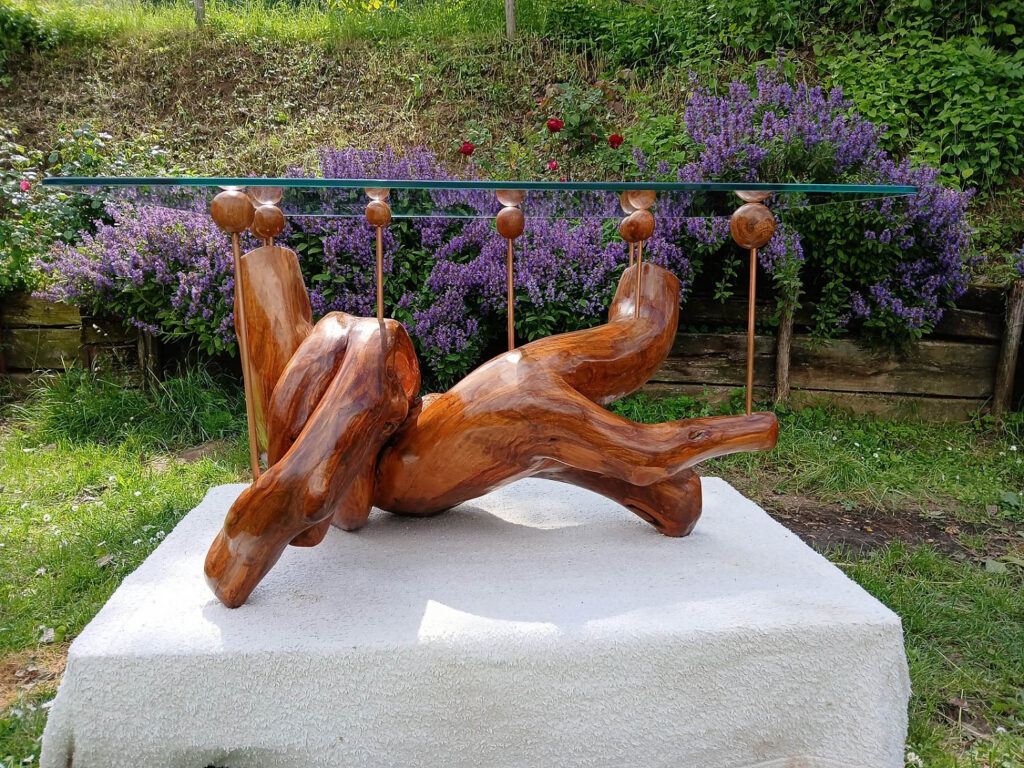
10 Questions With… Woodworker Vedran Jakšić
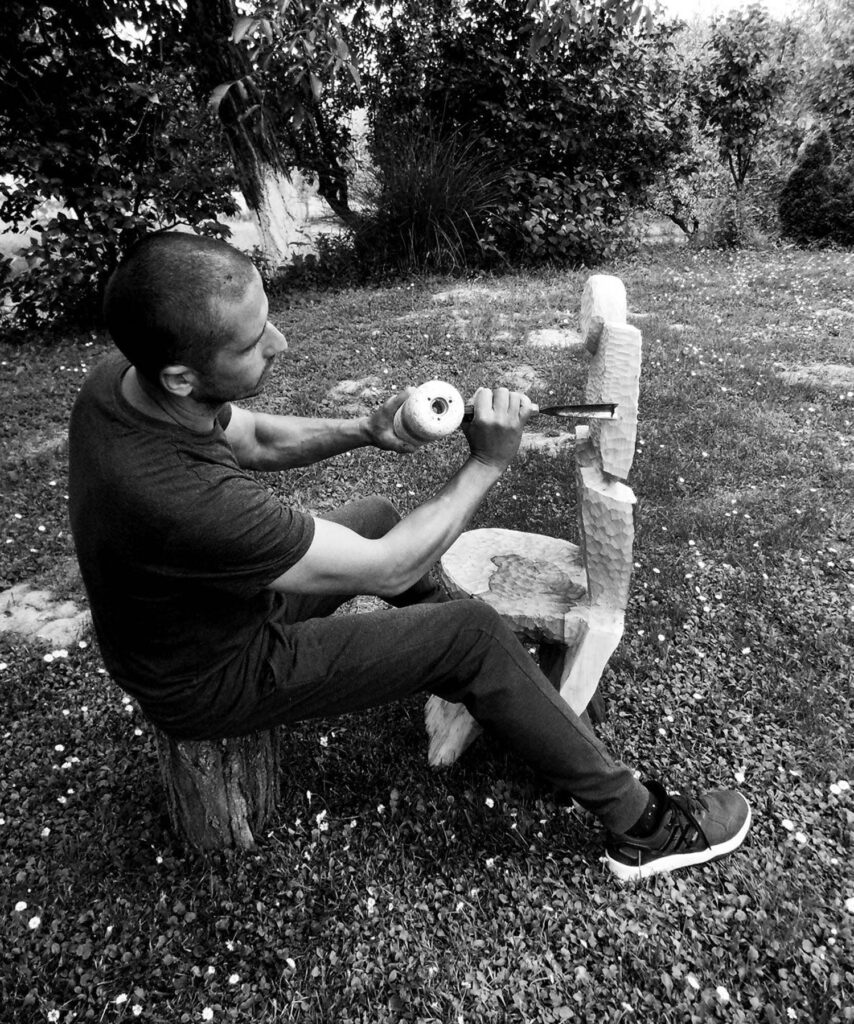
Croatian sculpture and woodworker Vedran Jakšić views wood not just as a material, but as an embodiment of emotion, memory, and movement. For him, carving wood is not simply a career path, it is a calling. His paramount need to create forms the basis behind his mindset: he says there is no better feeling than when an original wood piece comes to life based on a good sketch. Making his mark through works that capture movement in form, Jakšić fuses traditional carving techniques with a deeply intuitive aesthetic process.
Interior Design spoke with Jakšić to discuss the evolution of his creative journey, the discipline behind his craft, and the lasting significance of wood working in contemporary design.
In Conversation With Vedran Jakšić
Interior Design: Let’s start with how you discovered your passion for woodcarving, and what made you want to pursue it professionally?
Vedran Jakšić: I discovered my passion for wood carving at the age of 14. My first works were created from selected beech logs that I carried to my grandmother as firewood.
My first abstract sculptures were created with the help of a hand knife and a file. At the age of 20, I joined the Ernestinovo sculpture colony [in Croatia], where I, along with over 200 other sculpture colonies, developed my own form of expression. In my case, making sculptures is not a decision, but a need for creation, to transfer movement and feeling into wood in its final form.
ID: Wood clearly plays a central role in your craft. What is it about wood that inspires you?
VJ: My favorite game and pastime in childhood was climbing and jumping on trees in all possible ways. From the top of a tree there is always an impressive view—silence, the rustle of leaves and the gentle swaying of branches in the wind, and a feeling of peace, freedom and unity. In fact, wood found me from the very beginning. Wood has a beautiful texture, tones and durability and is created in a perfect way.
ID: Walk us through your creative process. How do you approach a new sculpture from an initial idea to the finished piece?
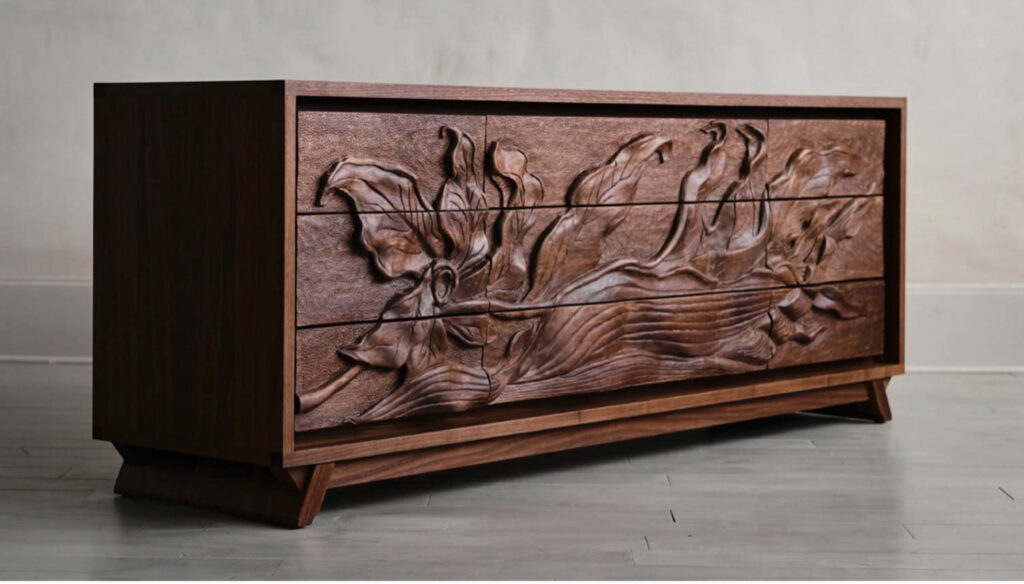
VJ: A good sketch is the best guide and stimulates the creative zeal that leads to the final form of a sculpture, a chest of drawers, a table… It is very exciting when a drawing on paper begins to be transferred into wood, into depth, when the feeling of fluidity of movement and the interconnectedness of all the details that make up the whole is transmitted.
ID: How do the characteristics of the wood contribute to your work?
VJ: I find that a strong sketch is the first step and grain, color, and texture will emphasize the sculpture itself and give it final liveliness and fullness.
ID: How have the techniques and tools you have learned evolved over the span of your career?
VJ: Through years of work, you discover the top 5 chisels with which you do everything. True evolving is born through time and experience, where the mind’s ability to see what is important and when to stop working is built. In fact, progress in quality and finding better ways to do the same job is the motivation that drives it. The ability of a person to develop and progress is unlimited—it depends on our knowledge and perseverance and lasts throughout a lifetime, and it is a wonderful gift that we have been given.
ID: You designs have been described as carrying “warmth” and “movement.” How do your sculptures interact with the spaces they inhabit?
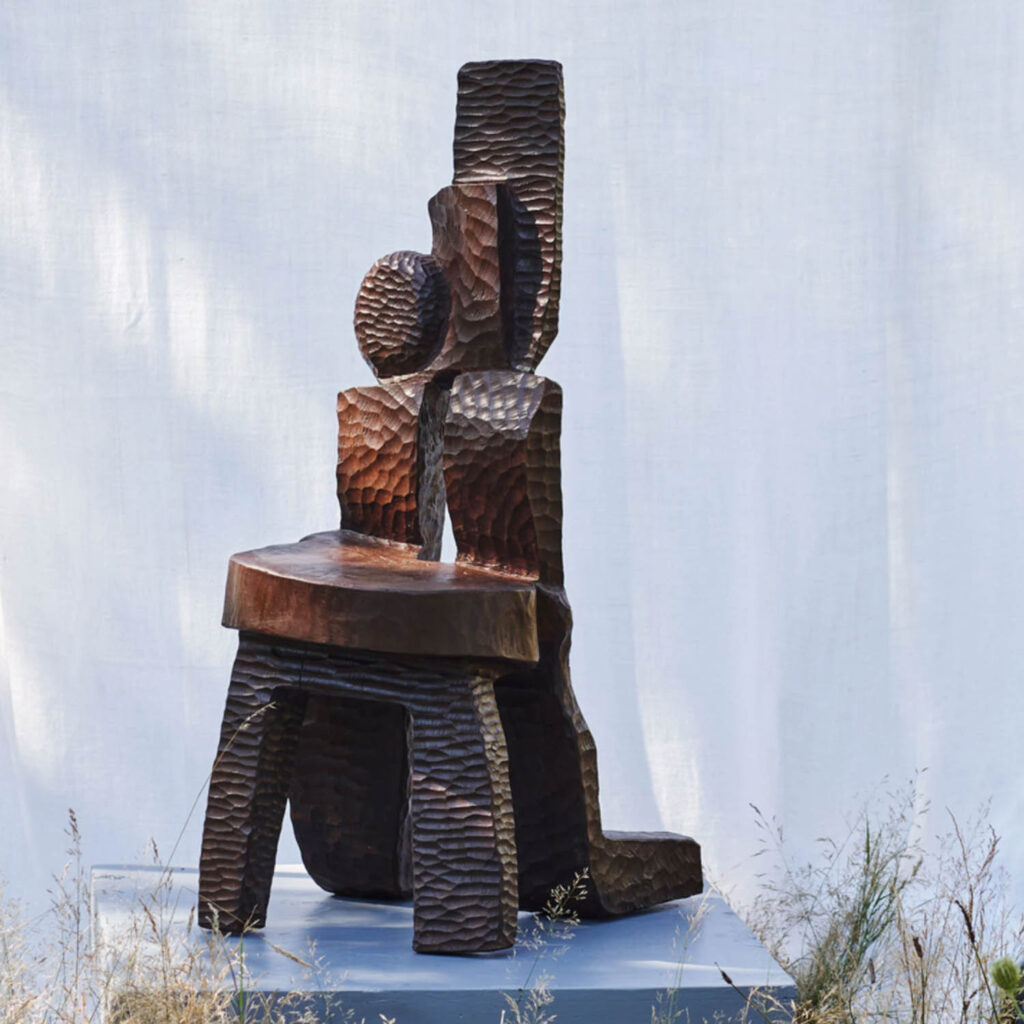
VJ: The sculptures or usable objects that I create are forms that inspire me, that are harmonious, pleasing to the eye, and that I like to see in space. Just as in music the performer transmits emotions and rhythm to the listener, so in sculpture emotions and movements are transmitted that remain permanently in the form of the sculpture and the imprint of the chisel’s strokes.
ID: What is one piece you are particularly proud of, and tell us the story behind it, both conceptually and technically?
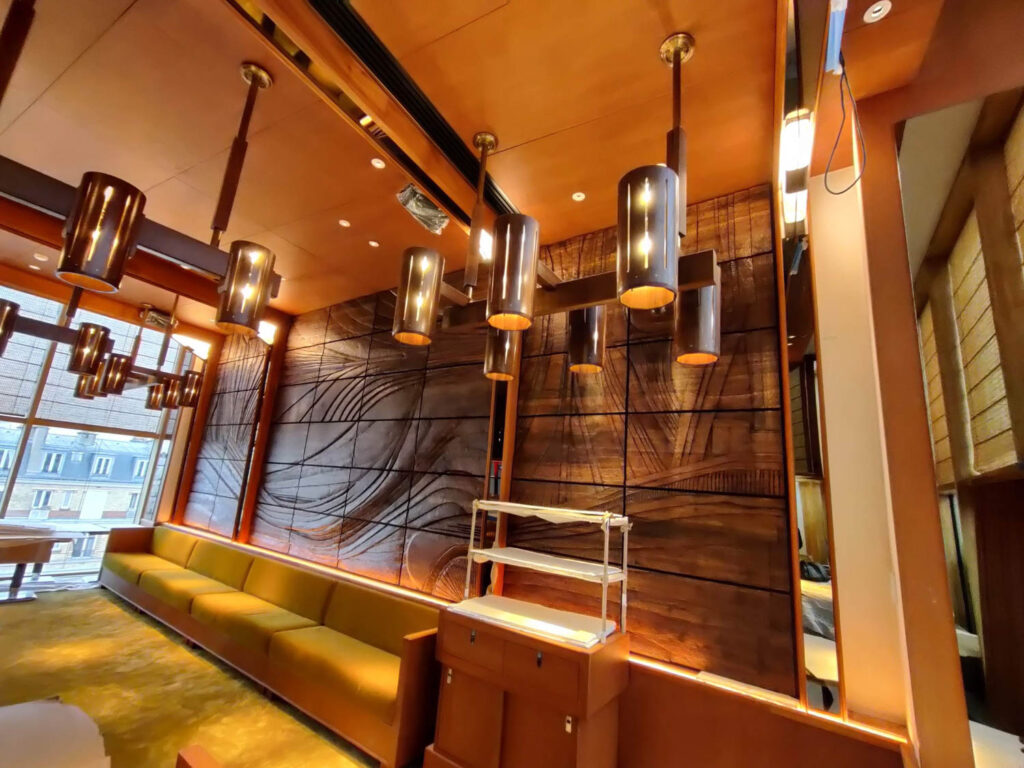
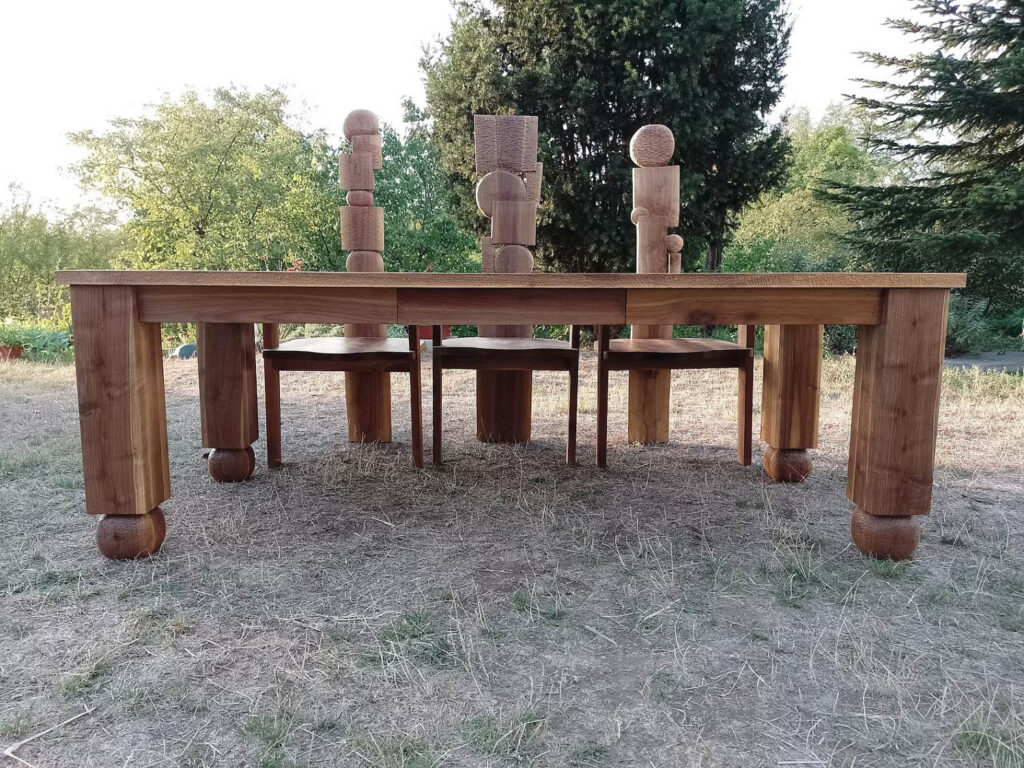
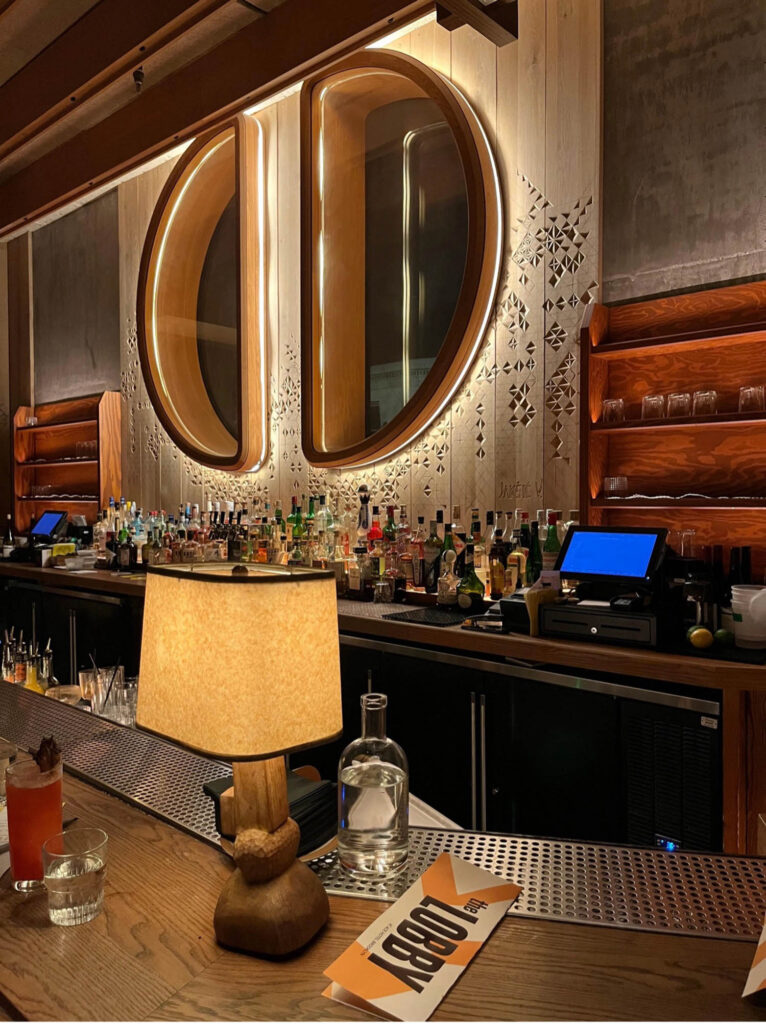
VJ: It is difficult to single out, but I would mention larger projects such as the wall relief for the Ace Hotel Brooklyn made in the technique of deep chip carvings. Here is the story: Since I live on a hill 900 meters from the road, because of the snow, I carried each oak tree (40 of them) in my hand to the workshop where I further shaped and carved them. Each was about 20kg. It was an amazing experience.
Also, the wall relief in American walnut for the Rue Legendre Hotel in Paris. The Teneresque credenza is a piece that I make every time as if for the first time. A good sketch allows me to notice new details every time—that is wonderful and there is no end to it. The author of these three sketches that I worked from is Stephen Alescha master of sketching, design and architecture and the founder of the firm Roman and Williams together with his wife Robin Stefander. Together they also created the RW Guild community of artists where I work as a woodcarver.
ID: How do you deal with creative blocks or design challenges when working on large complex pieces?
VJ: I truly enjoy large projects because I encounter new challenges. That’s where real improvement and finding new ways happen. It’s a real forging in the fire from which you become stronger and more resilient every time. I work in a modest workshop on 28 square meters where sketching, joining, making, carving, protecting the wood and finally packaging the final product and sending it out take place, so larger projects are always a nice challenge.
ID: What role do you see wood sculpture playing in contemporary design and architecture today?
VJ: I see a big role for wood sculpture in contemporary design and architecture today. It is something that makes you feel at home, where you feel comfortable and where you like to stay. Something that inspires and returns you to nature and your original roots. A place where the mind and eye rest.
ID: How has your work changed since your first carving, and what are you excited to explore next?
VJ: From my first carving until now, my experience, knowledge and understanding of life have changed. This influences the shape and form of my works, where I seek balance, a sense of harmony, to make it look as if it has always been there, to please the eye.
read more

DesignWire
Designers And Manufacturers On The Move: September 2026 Edition
Interior Design‘s latest On the Move includes must-know industry promotions and hires, like Perkins&Will’s strategic move to expand its design capabilities.
DesignWire
10 Questions With… Artist and Designer Conie Vallese
From sculpture and ceramics to glass, textiles, and furniture, Conie Vallese embraces a multidisciplinary practice shaped by curiosity and creativity.