
10 Highlights From Amman Design Week
Returning to the regional design scene after seven years, Amman Design Week is taking over the Jordanian capital for two weeks (Oct 2-17), gathering a host of regional designers and architects under the theme ‘Accumulations.’
Examining how the ordinary objects of our lives are shaped by our daily practices, from tea making rituals to how guests gather in a home. From Ras El Ain and Jabal Al Lweibdeh to Jabal Amman and Iraq Al Amir, and extending to the seaside city of Aqaba, ADW traverses different urban, cultural, and environmental conditions that shape the country, through design. Here are our top picks from the event.
Top Picks From Amman Design Week
Binayah by Abdulrahman Al Muftah and Huzaima Al Rifai
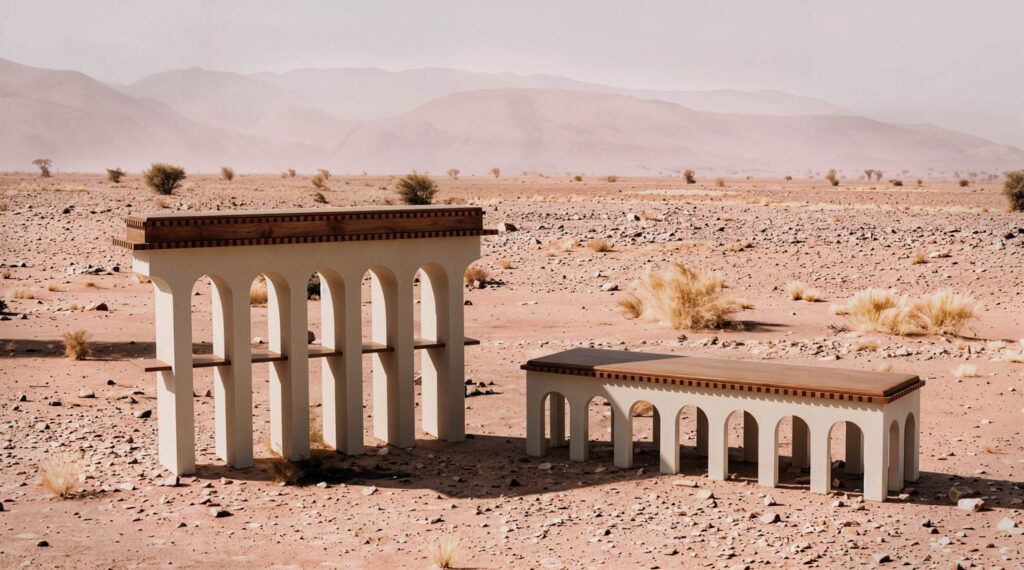
Inspired by both Amman’s layered landscapes and the vertical openings of traditional Qatari towers, ‘Binayah’ is a collaborative counter and bench set by Qatari architect Abdulrahman Al Muftah and Jordanian interior designer Huzaima Al Rifai. Exploring how furniture can function as architecture within the home, the pieces feature grand limestone archways and carved wooden tops, designed as inhabitable furniture that captures memory in the domestic space.
Badia Console by Decoration One
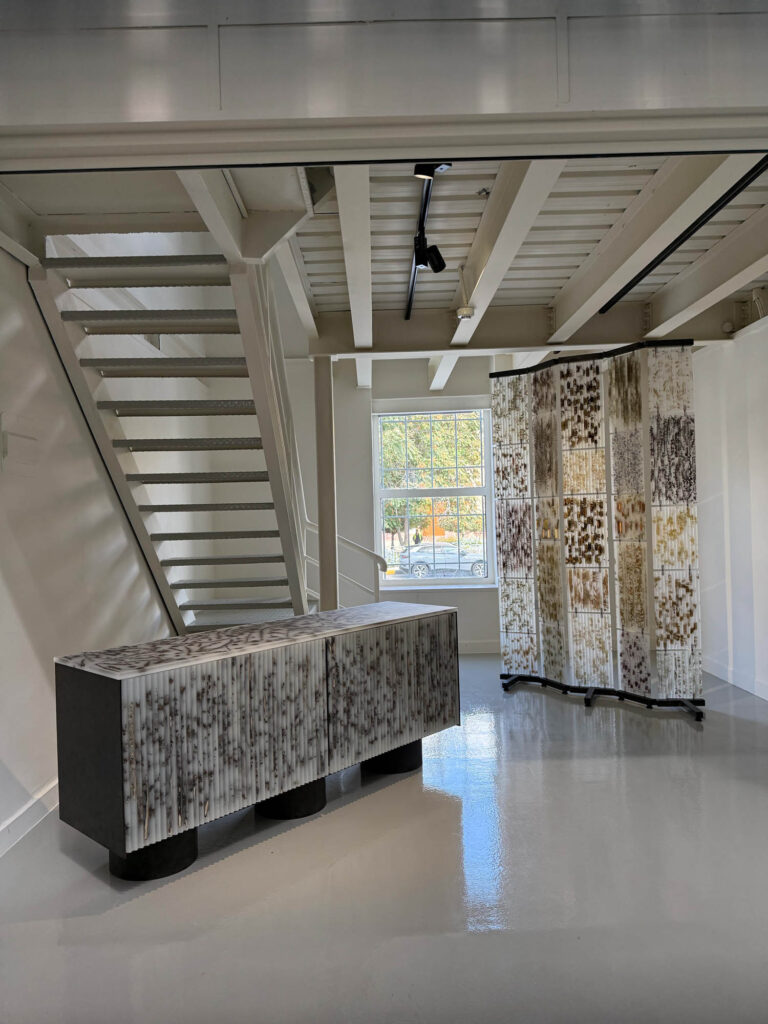
Part stunning work of natural art and part functional furniture, the Badia Console by Jordanian design studio Decoration One takes inspiration from Jordan’s deserts floral. It preserves dried native plants—such as Saq Al Hamam, Kharfeesh, and Al Awarwar—and embeds them in pale resin, their aged hues displaying the passage of time. Left with a matte finish, the paravan and console cabinet are a conservation between age-old craft rituals and contemporary design.
What Objects Remember by Aseel Alamoudi
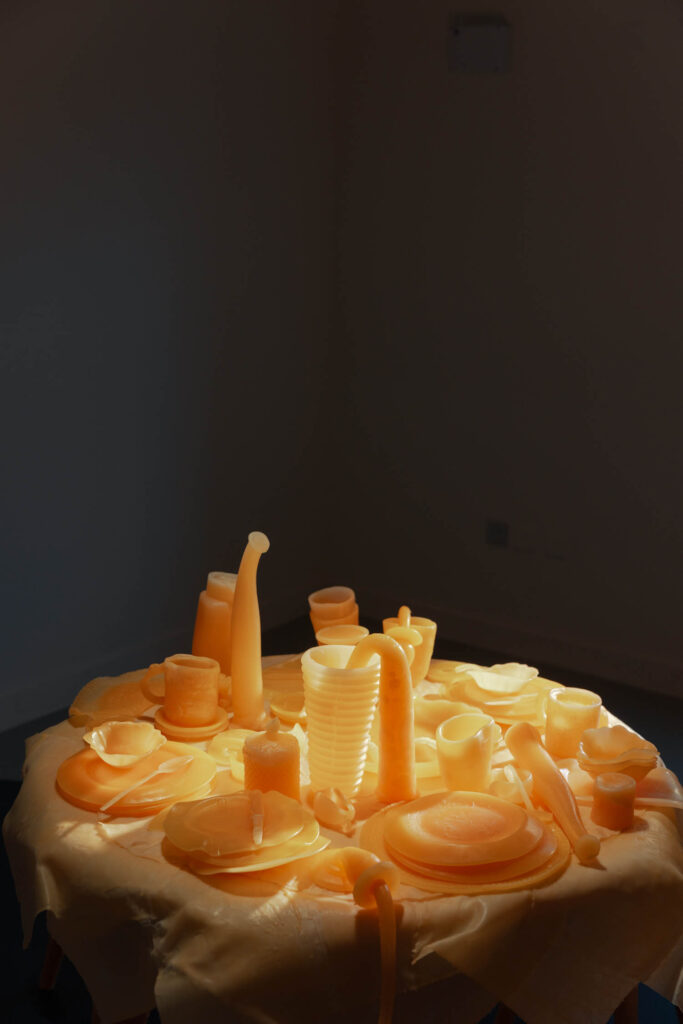
Crafted entirely from natural wax, Saudi designer Aseel Alamoudi’s installation imagines a world in which everyday domestic objects retain the memory of touch, heat, and weight. Each encounter leaves a trace or impression in the wax tableware, cutlery and decorative objects over time, subtly reshaping the objects. The pieces drawing from found objects collected over many years—coffee pots, ornate receptacles and olive oil dispensers—familiar to many regional homes and transformed by histories of use.
From Roots We Shall by Naqsh Collective
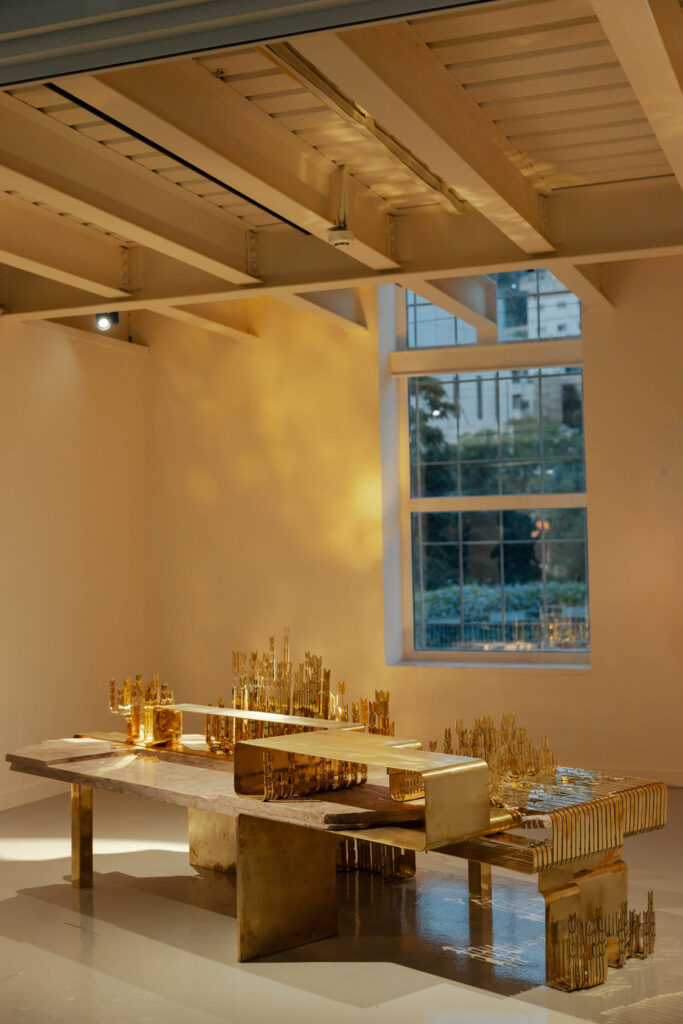
Featuring Jordanian-Palestinian design studio Naqsh Collective distinctive style, this marble and brass bench is inspired by the Madaba Plains and their abundant wheat fields. Crafted from layered stone and brass wheat stems that rise from the seat, the design embodies food sovereignty, abundance and connection to the land across generations.
The Grounded Rituals by Rihan Woodwork
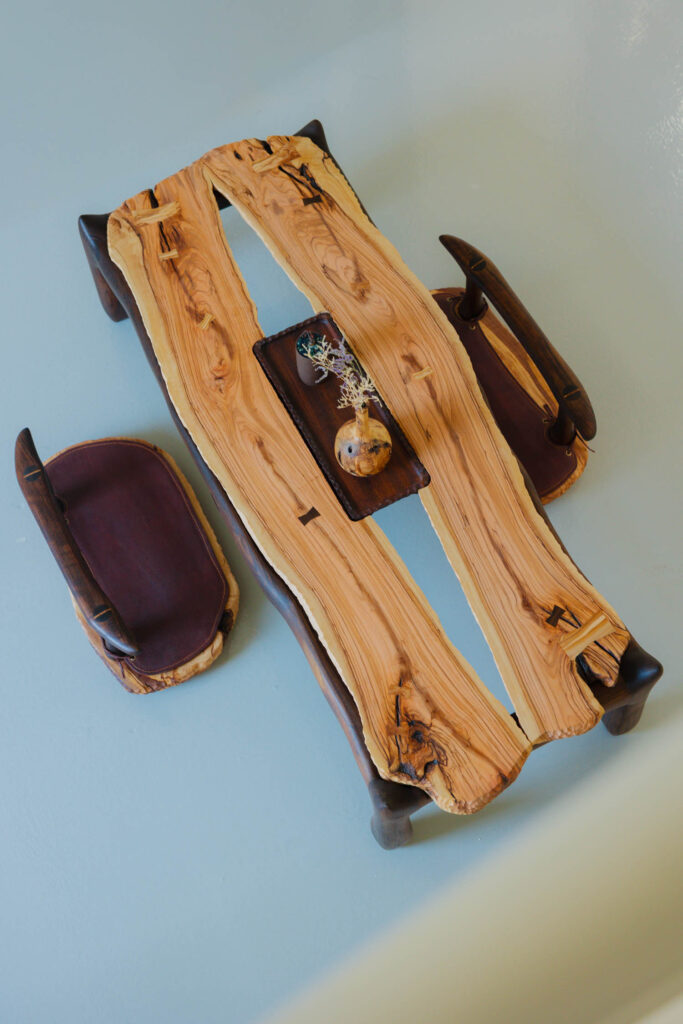
This series of furniture pieces that would fill a traditional tea room, by Jordanian carpentry studio Rihan Woodworks, are a space where design cultures meet. An olive wood tea cabinet, low live-edge table, and Tatami seating combine regional materials with Japanese joinery and wabi-sabi, resulting in a minimalist design that spotlights the beauty of the wood. The furniture invites guests to gather close to the ground for a shared ritual of hospitality.
Sufra by Raya Shaban
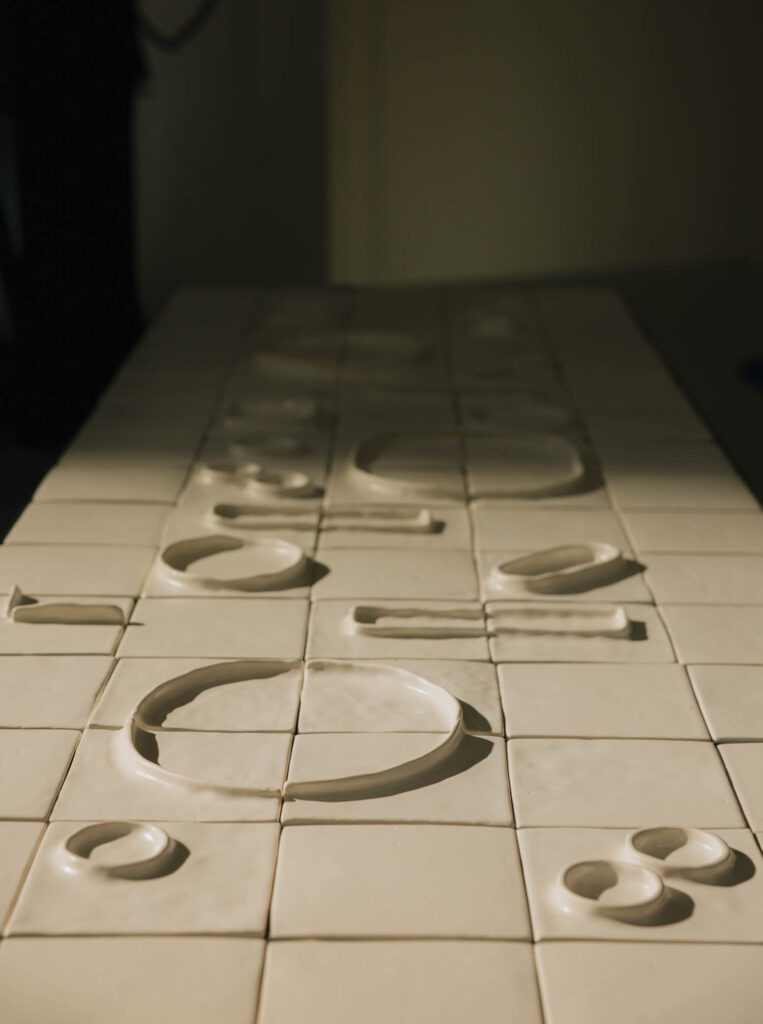
Seeking to reimagine the dining table as a landscape of gathering and sharing, rather than mere furniture, Jordanian ceramist and architect Raya Shaban’s ceramic tile table ‘Sufra’ is an ode to traditional Arab food spreads and banquet-style sharing tables. The table’s layout, placements and dishes are as much as part of the meal as the food. A grid of 80 off-white hand-molded ceramic tiles makes up the table’s surface, some with plate-shapes pressed into the clay to hold food directly, others flat, holding the space between, or outlines to show were certain things should be placed.
Cabinet of Curiosities by Shaha Raphael.
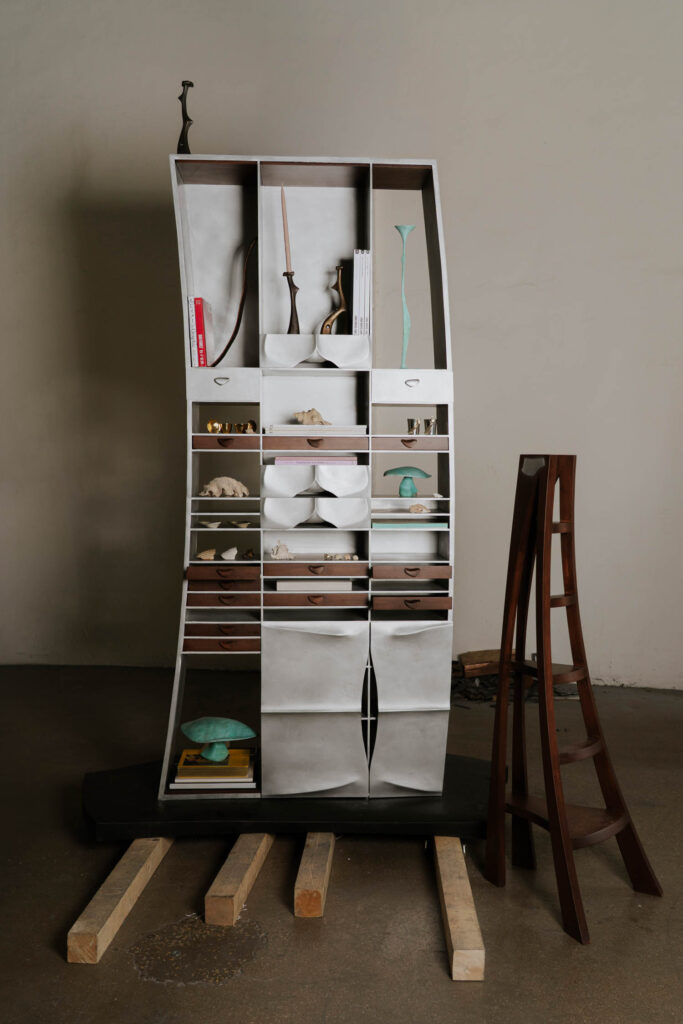
Crafted by Lebanese architect and designer Shaha Raphael, this curving trinket cabinet is inspired by natural history museum storage and is an exercise in archaeology of the self. Small drawers gather objects, prototypes, fragments, tools, and material tests from the designer’s practice, including pieces from her recent Low Tide collection of metal cast seashell cutlery, cups and design objects. The double-sided cabinet is made from an aluminum shell with dyed beech wood shallow pull out drawers, cast aluminum drawers and doors, perfect for archiving ideas and mementoes.
Small Inheritances by Lena Kassicieh
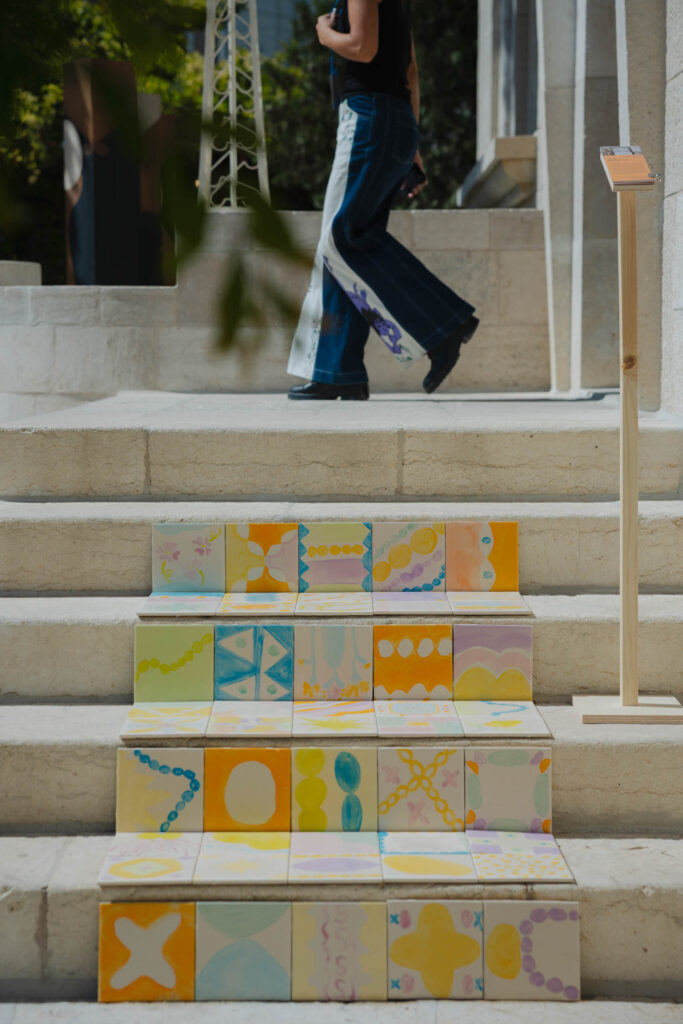
Small Inheritances is a tile-based installation consisting of 50 handmade tiles that explore original Palestinian carpet-tile motifs through the designer’s own contemporary visual language. Drawing from her family history of tile-making between Jerusalem and Amman, the work portrays inherited patterns as playful studies in color, form, rhythm, and movement.
Wahd by Salma Qatawneh
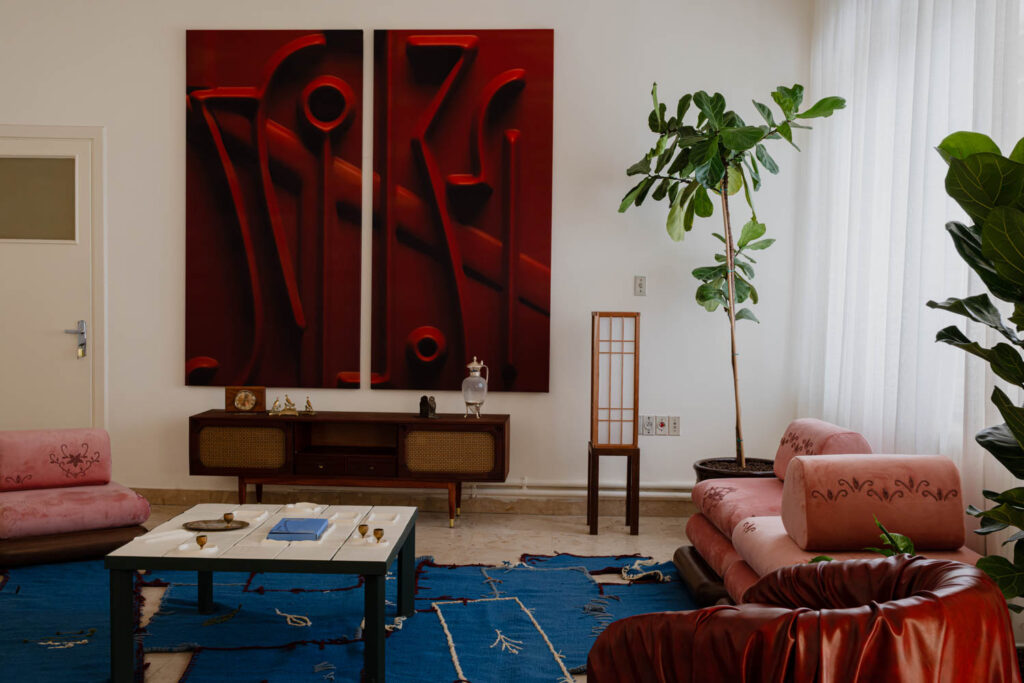
Wahd draws from portable seating traditions rooted in Jordanian nomadic and Bedouin life, where hospitality moves with people. These modular seats feature pink velvet stacking cushions that can be separated and reconfigured, adorned with Bedouin kilim patterns and madraga beadwork is reinterpreted through wood, mother-of-pearl, mosaic, and embroidery, bringing under-documented craft narratives into contemporary design.
Carobscapes by Studio Bader Sinuqrot
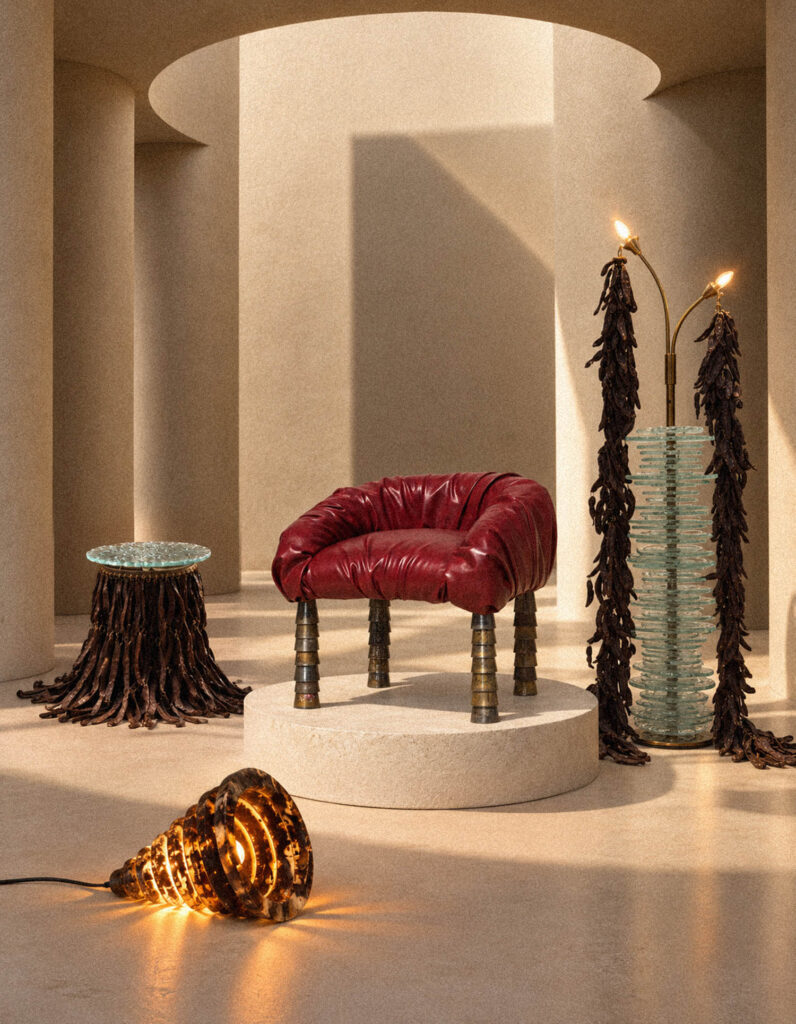
Carobscapes is a collectible design collection by Jordanian designer Studio Bader Sinuqrot, exploring the transformation of the native carob pod through repetition, layering, and assembly. Rooted in Jordan’s natural landscape, the collection of reimagines the district carob as a series of furniture, lighting, and spatial objects that exist between design and sculpture. A cascade of pods is attached to a glass side table, acting as a textured base, while strings of pods hand from a tall lamp. The red leather armchair is more subtle, with the chair’s feet resembling branches or stacked layers of carob.
read more
DesignWire
New York Design Center Marks 100 Years of Design
Celebrating its centennial, New York Design Center continues its legacy as a design destination, bringing together nearly 100 showrooms and more under its roof.
DesignWire
10 Questions With… Clarisse Merlet
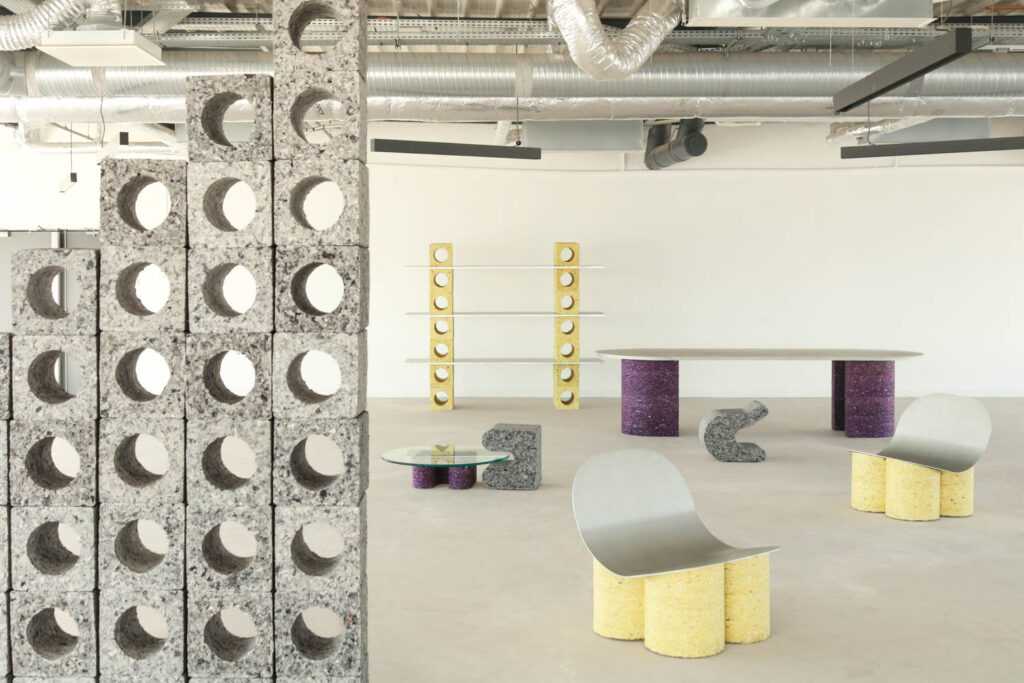
Clarisse Merlet, founder of Paris-based FabBRICK, is transforming discarded textiles into colorful architectural materials, pushing the medium with bold forms.