
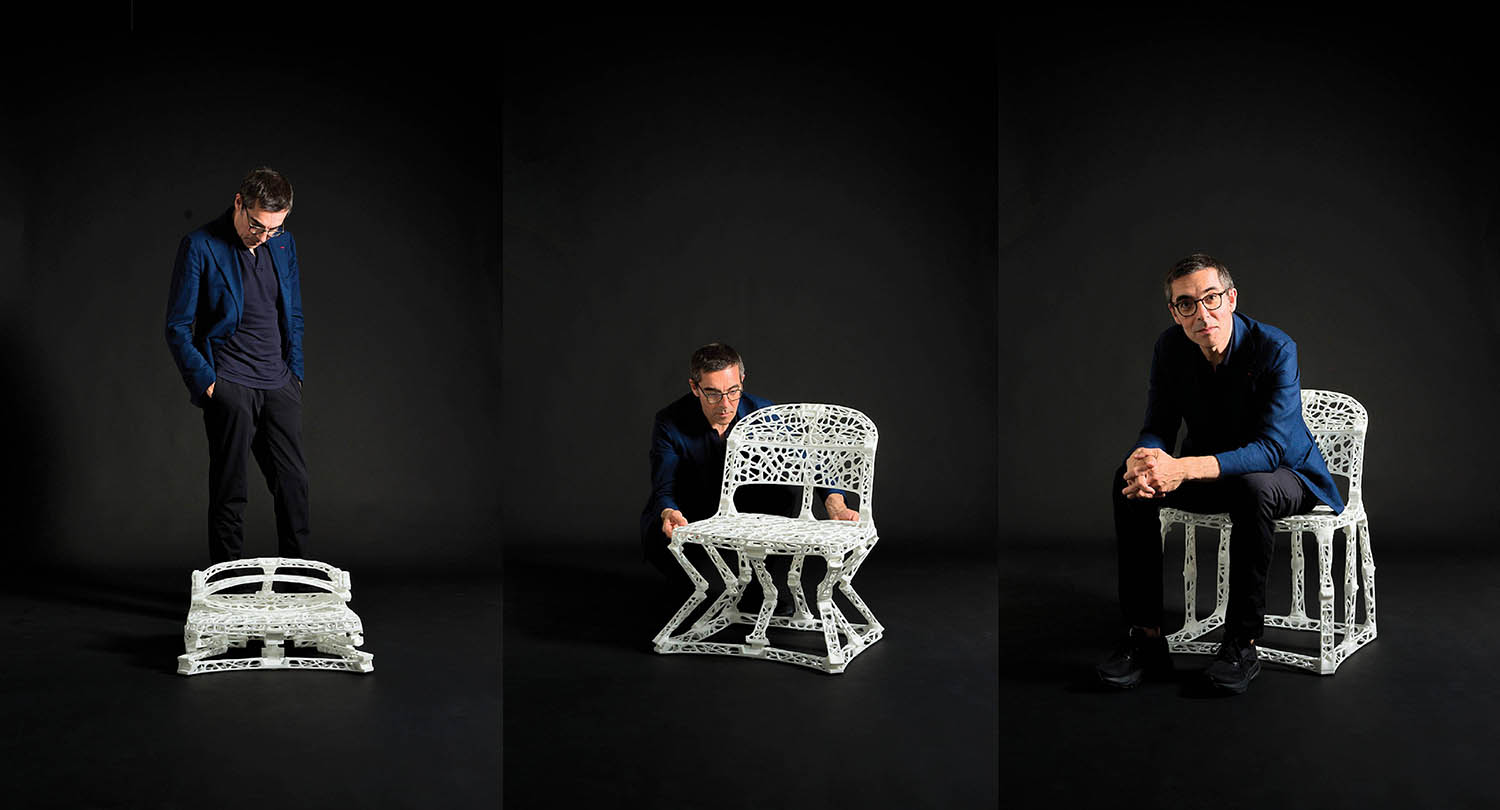
Discover the Creative Collaboration Leading to a Low-Waste 3D Chair
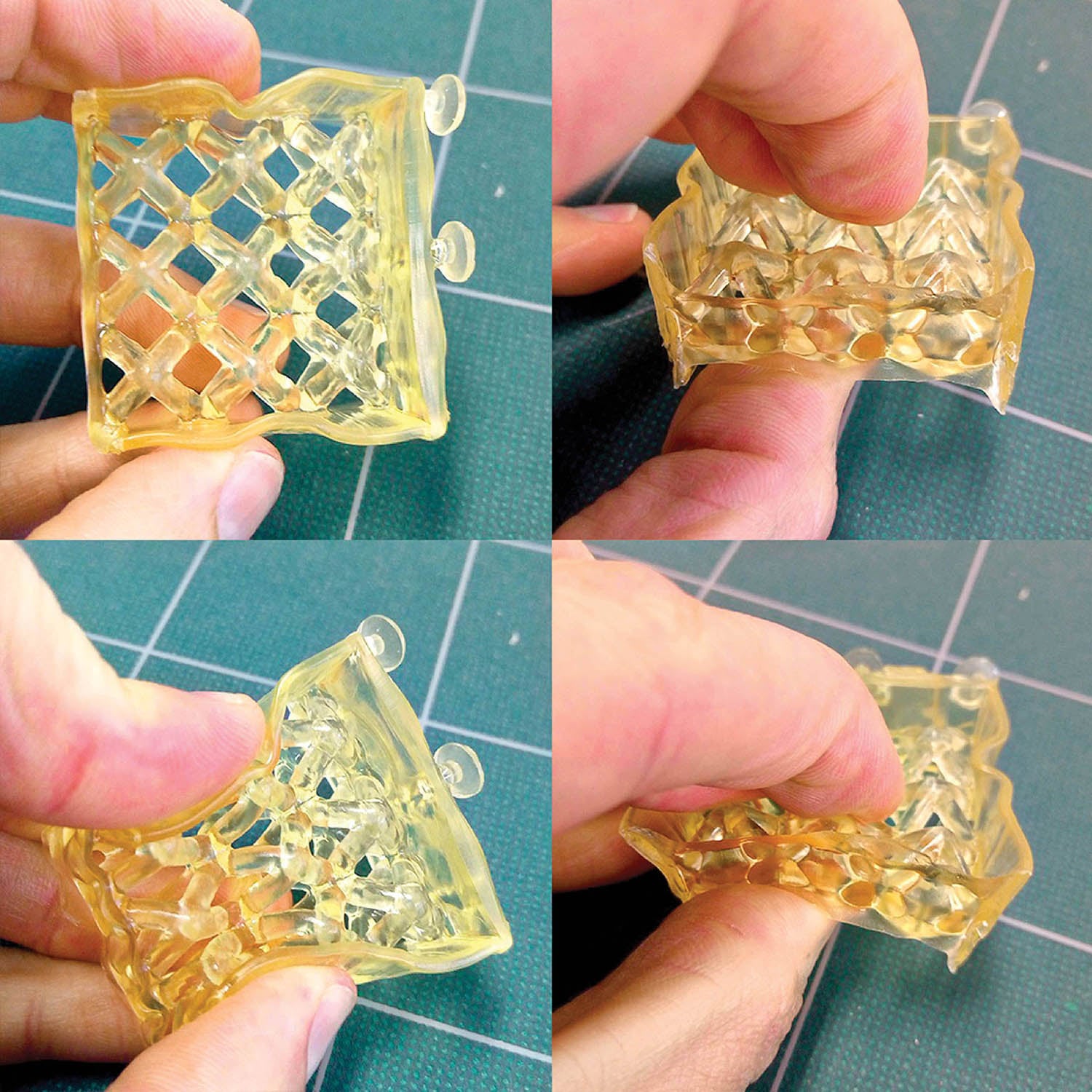
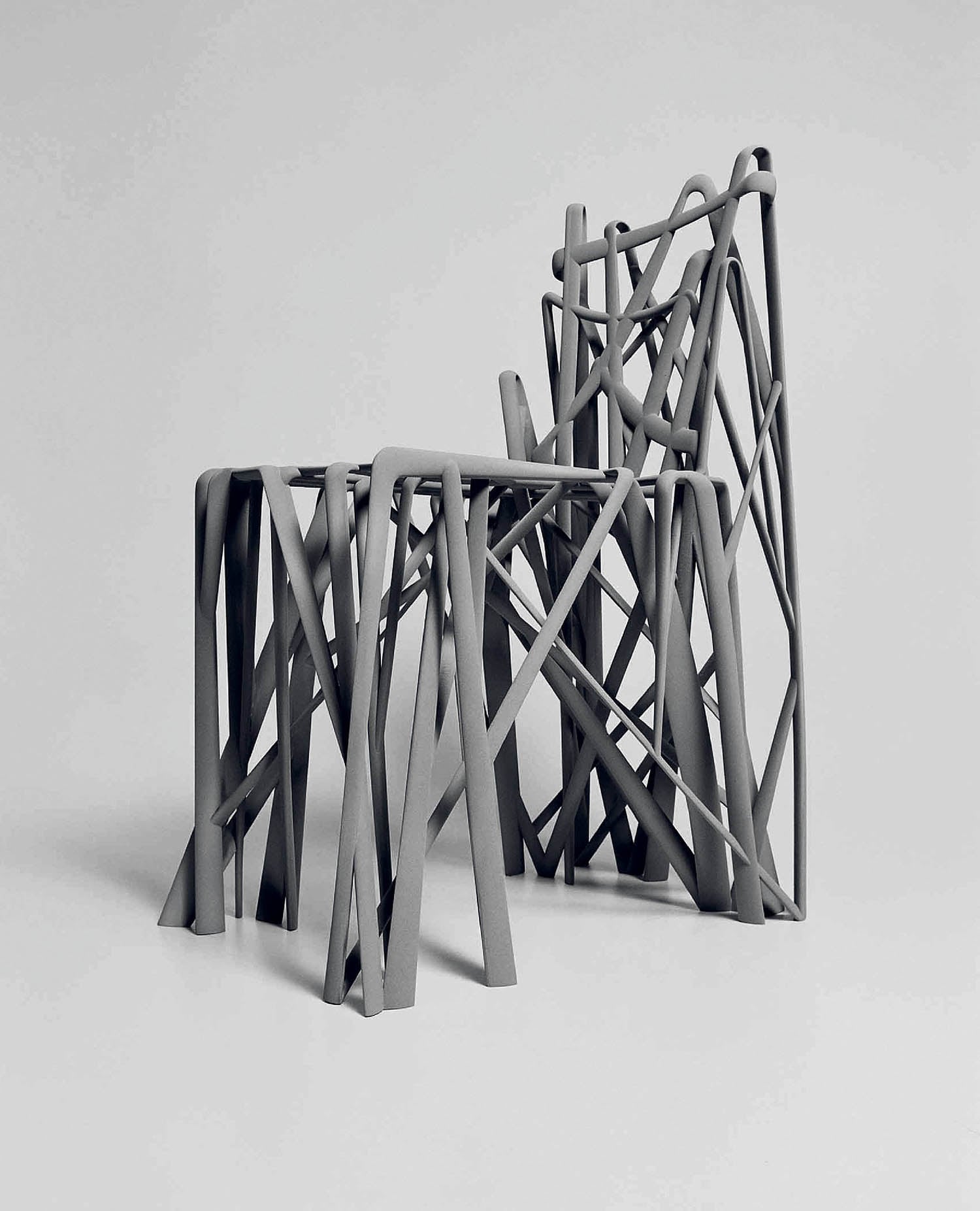
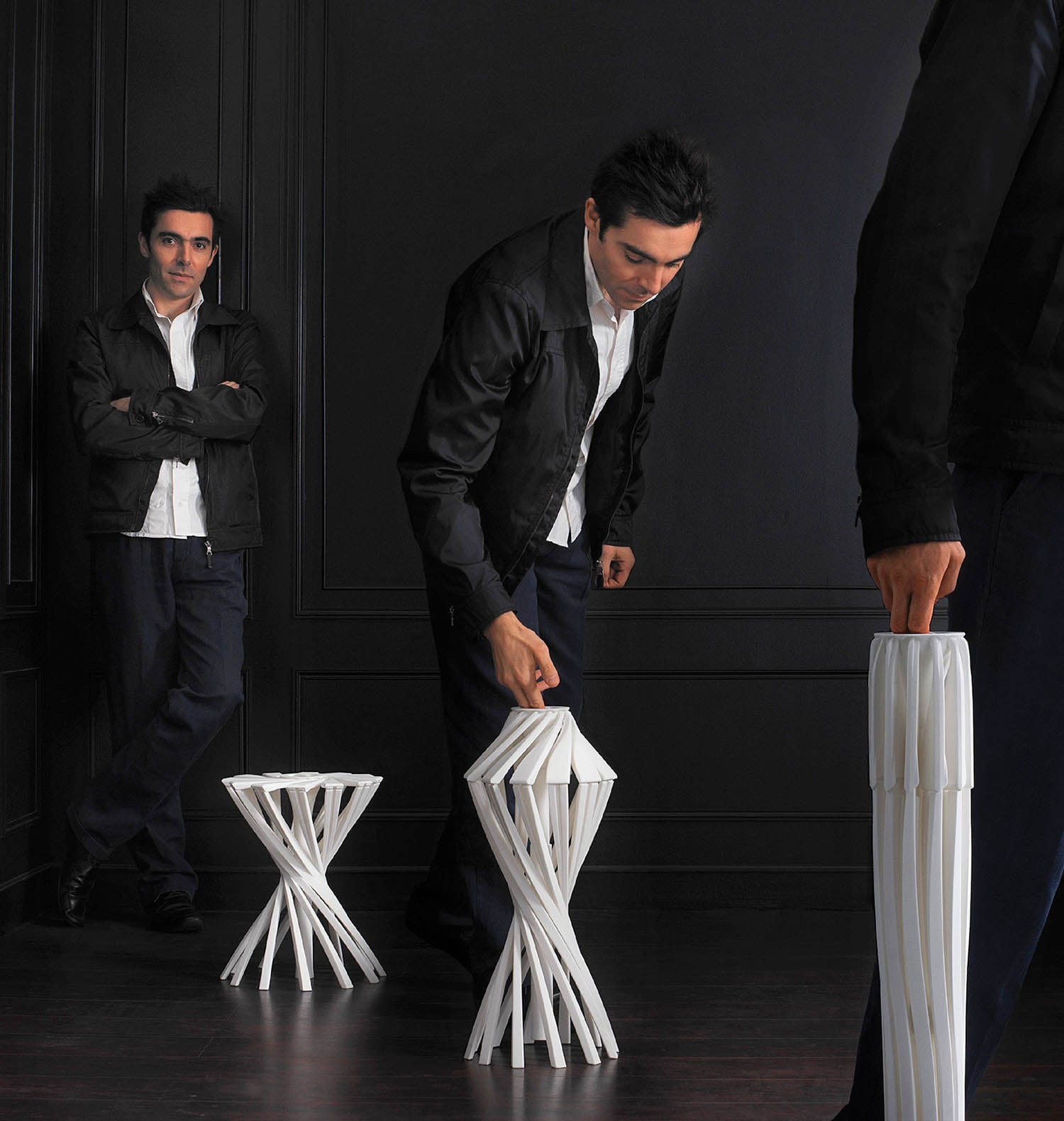
Patrick Jouin, a Paris-based designer and an Interior Design Hall of Fame member, has been at the forefront of working with 3D printing for the past two decades. He produced his first object using the technology in 2004—the Solid chair that resembles a tangle of cords. Another is the One Shot, a 2006 stool that is collapsible and has no screws, springs, or visible joints, just 35 integrated hinges.
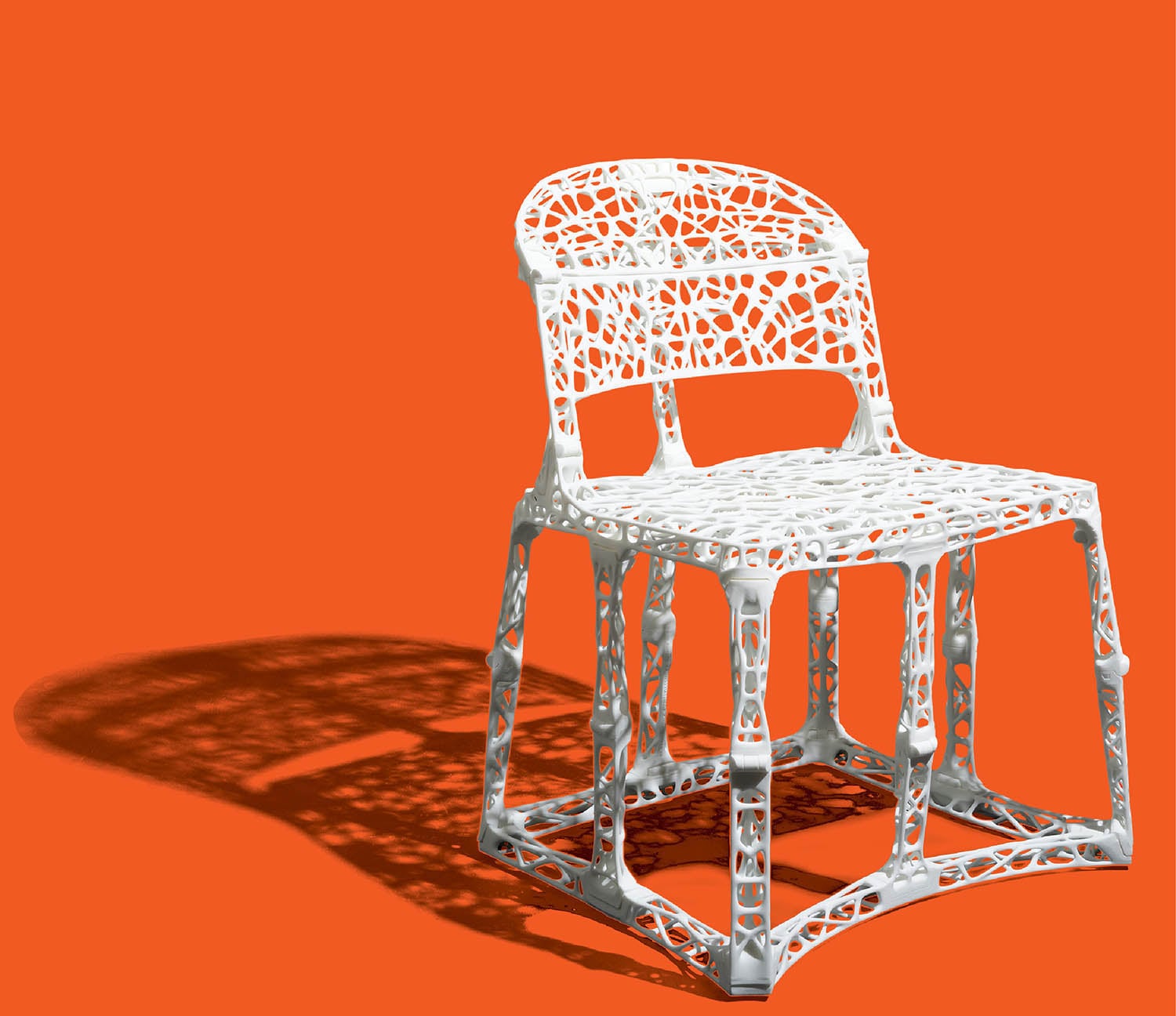
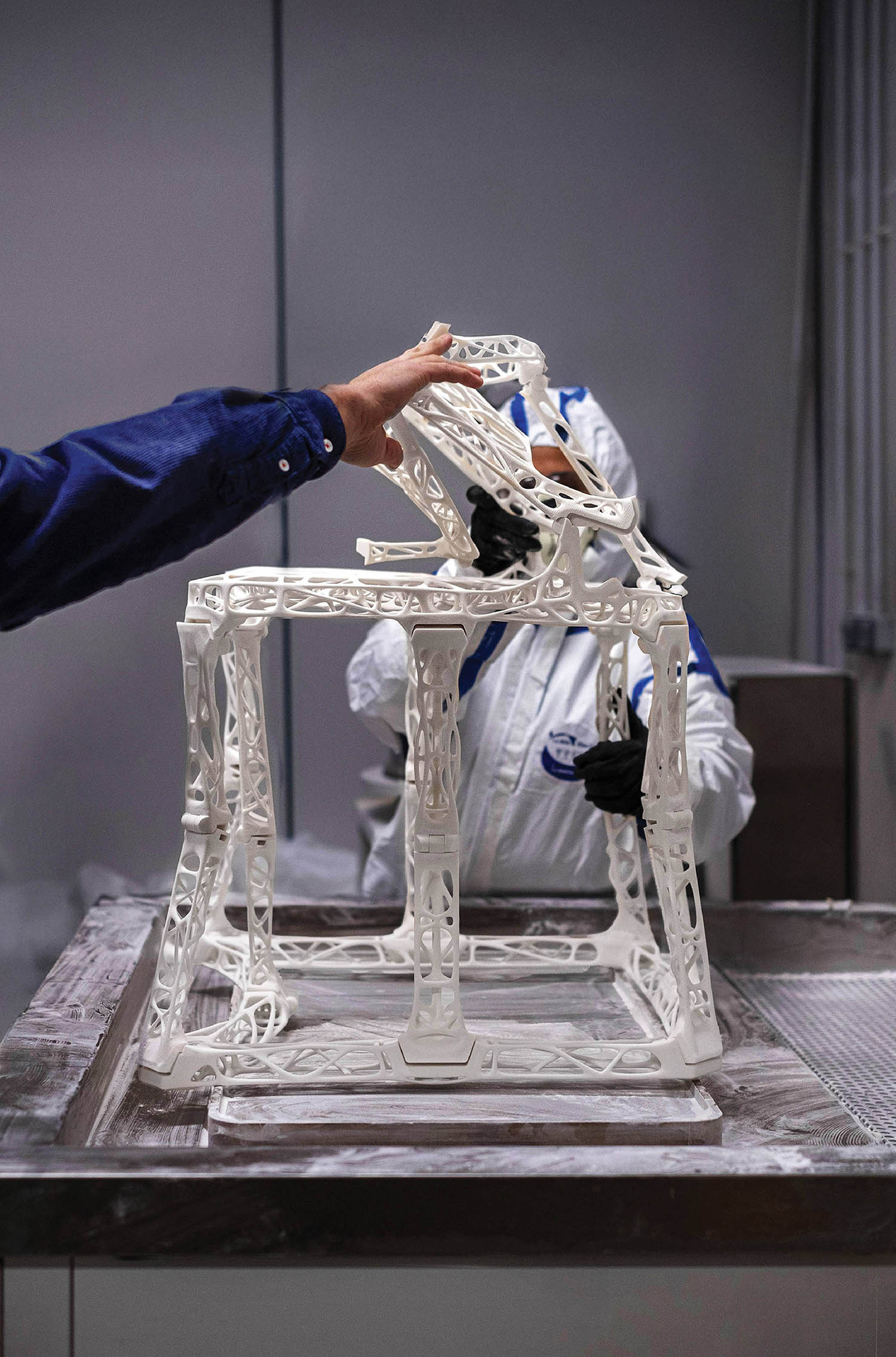
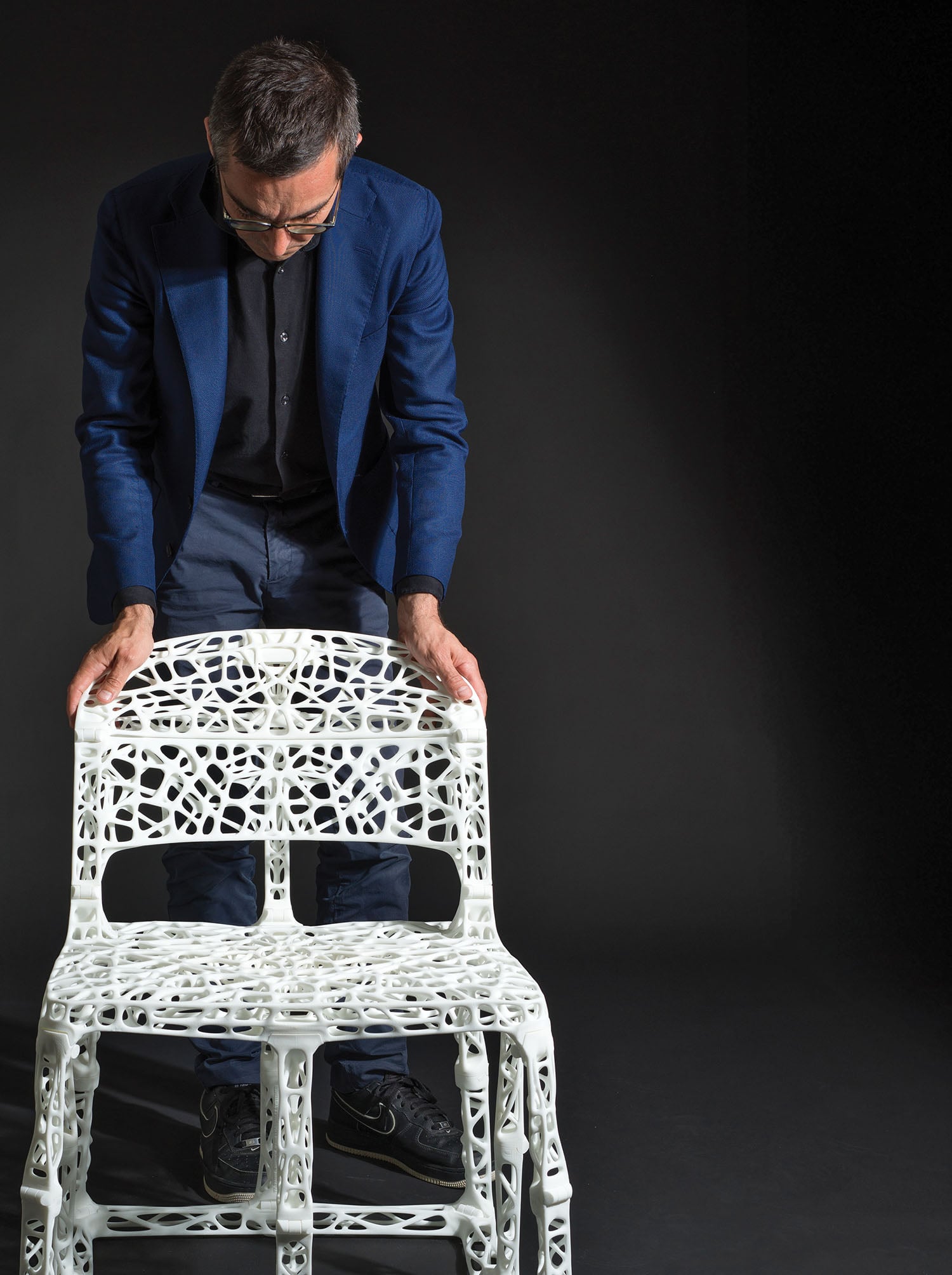
Now, Jouin has taken things further by enlisting the help of mathematics to devise a folding polyamide chair, its design based on bone-density algorithms and calculated to use the minimum amount of material. Named Ta.Tamu, Japanese for the art of folding, it weighs just over 6 pounds and takes one day to print.
It’s the result of a nearly five-year collaboration with Anne Asensio, vice president of design and innovation at French software company Dassault Systèmes, who Jouin met shortly after starting his studio in 1998, when she was working at Renault. “I asked him then, ‘How could we improve the car experience?’ That’s a magical question for a designer, to break out of a standard commission.” For Ta.Tamu, Jouin used Dassault’s computer-aided three-dimensional interactive application (CATIA) to come up with a complex design he could previously only have imagined. “It’s like designing a forest,” he says. “You can’t draw every leaf on every tree.” For Asensio, it’s the beginning of something new. “Ta.Tamu is not just another chair, it’s a concept,” she asserts. “We hope it sets an example for other creatives to follow.” Here, we learn more about the fruitful partnership between designer and manufacturer.
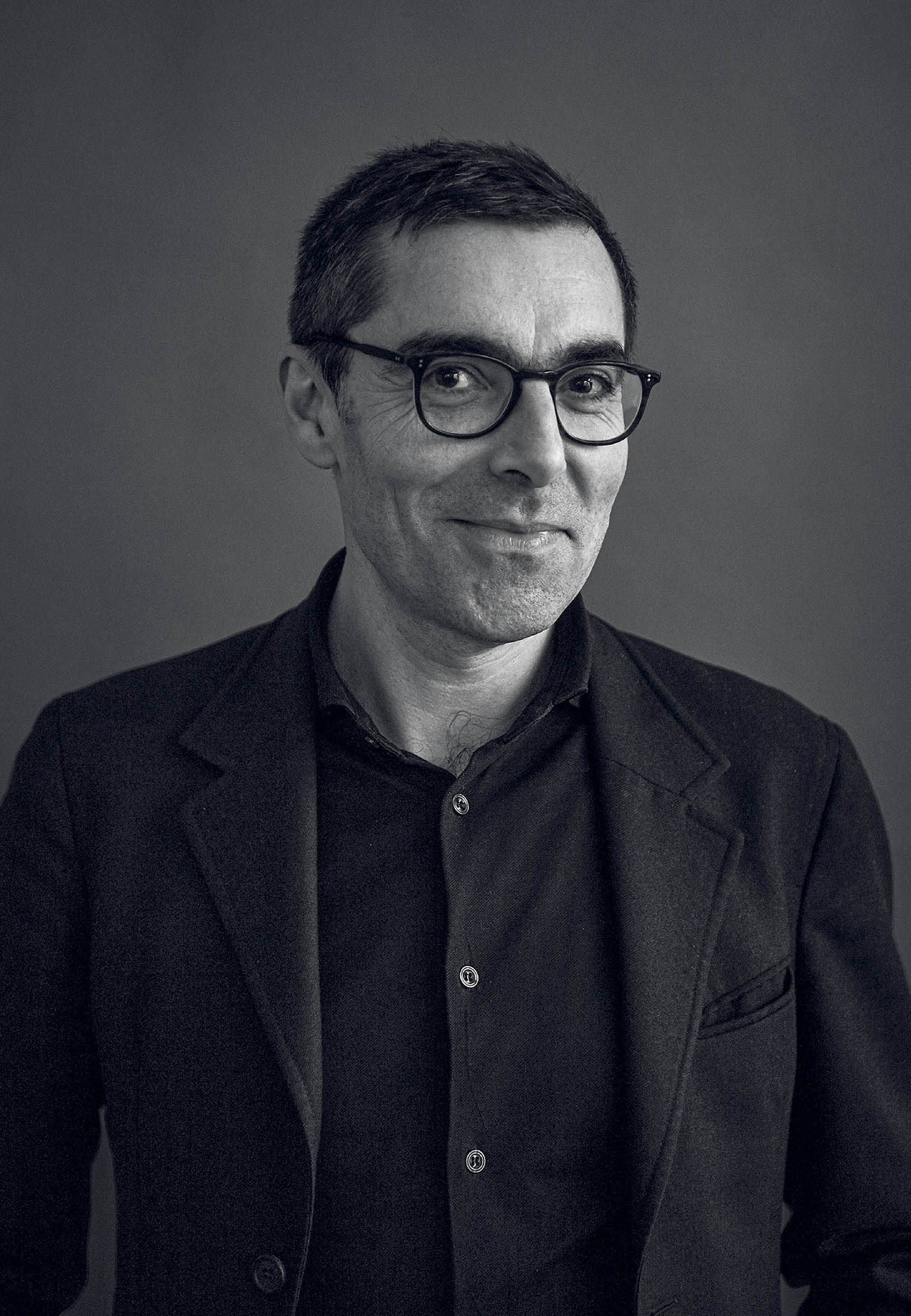
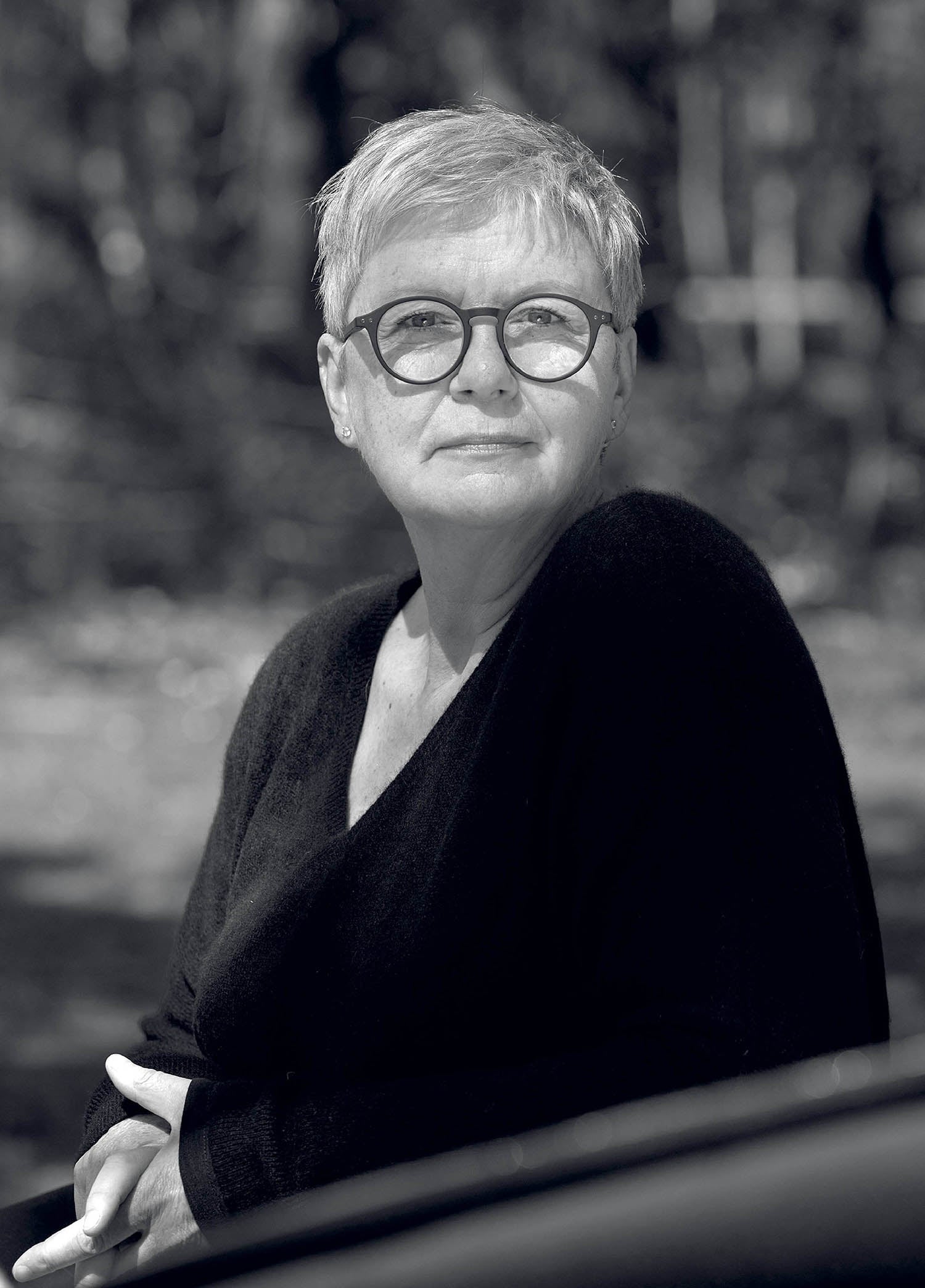
Patrick Jouin + Dassault Systèmes Team up for Ta.Tamu
Interior Design: Why have you chosen to work with Patrick?
Anne Asensio: When he and I worked on the Renault project, we were envisioning design exactly as we do today—as a lived-in art, an experience. That overlaps with what we do with Patrick today. We aim to seize all the possibilities of industry, technology, and innovation to imagine how to live better. With Patrick, we never stop, whatever the subject. He looks to the heart of a project, has an all-encompassing vision of what he wants to produce. The journey of seeing the object as a whole—in its use and over time—is something we share in common. And few designers have that.
ID: Why your interest with 3D printing?
Patrick Jouin: It allows me to make objects I could only imagine before. For example, a ball inside a ball inside a ball. No one on Earth was capable of making it. You always needed a little hole to pass a tool through. But with 3D printing, I can.
ID: How does CATIA work?
AA: It offers a language for designers, artists, and scientists to try to emulate nature. Nature always seeks what’s most accurate, most viable. CATIA integrates algorithms from the natural world, which can be based on any physical law—gravity, fractal systems, atomic density. It lets us approximate how nature would behave in arranging elements and shapes.
ID: Have other designers worked with the software?
AA: Frank Gehry used CATIA to create buildings that defy Newtonian geometry. We’ve also worked with Morphosis, Kengo Kuma, and Arthur Mamou-Mani, the latter on imagining the brick of the 21st century made from polylactic acid.
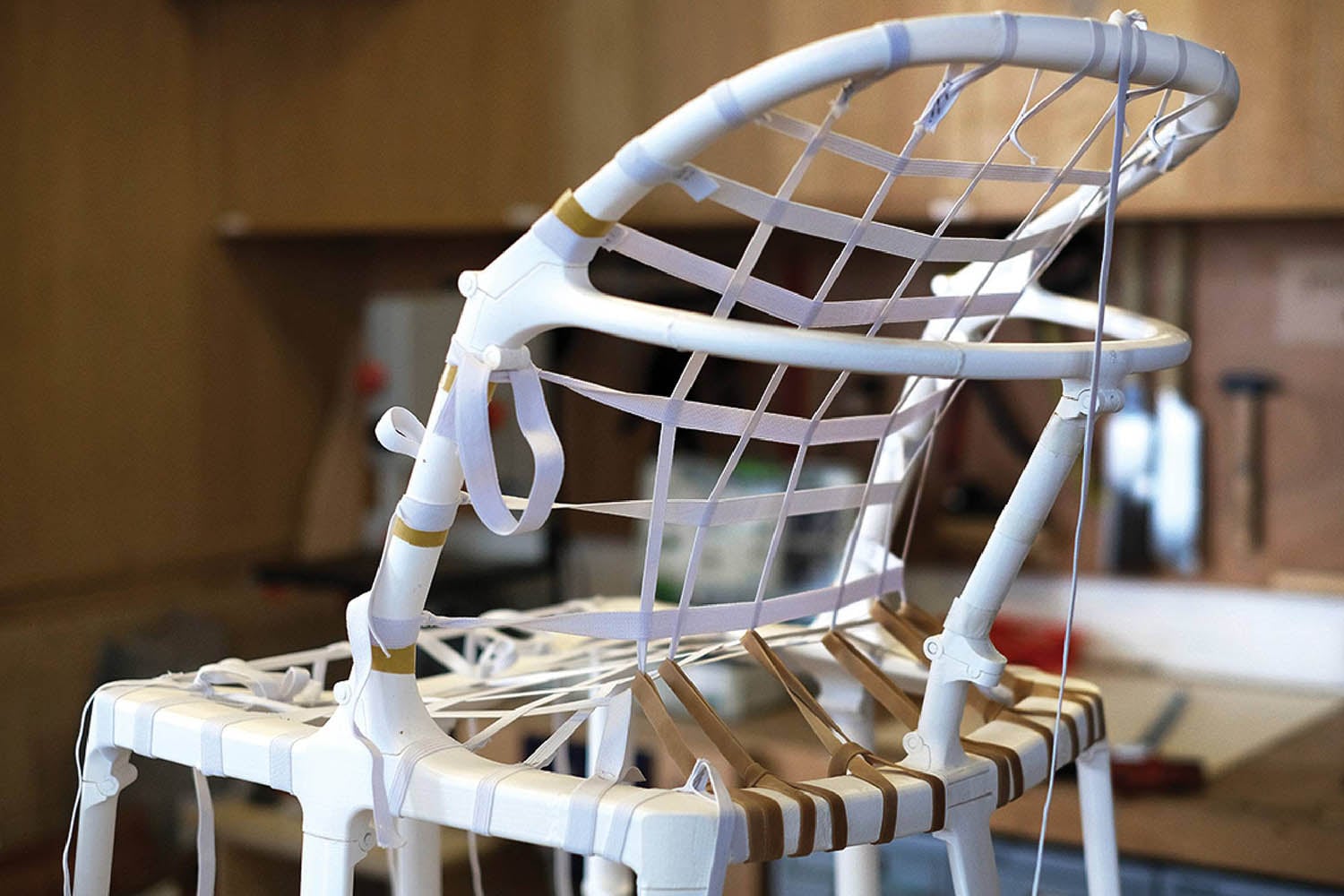
ID: How is Ta.Tamu different from other objects you’ve produced with 3D printing?
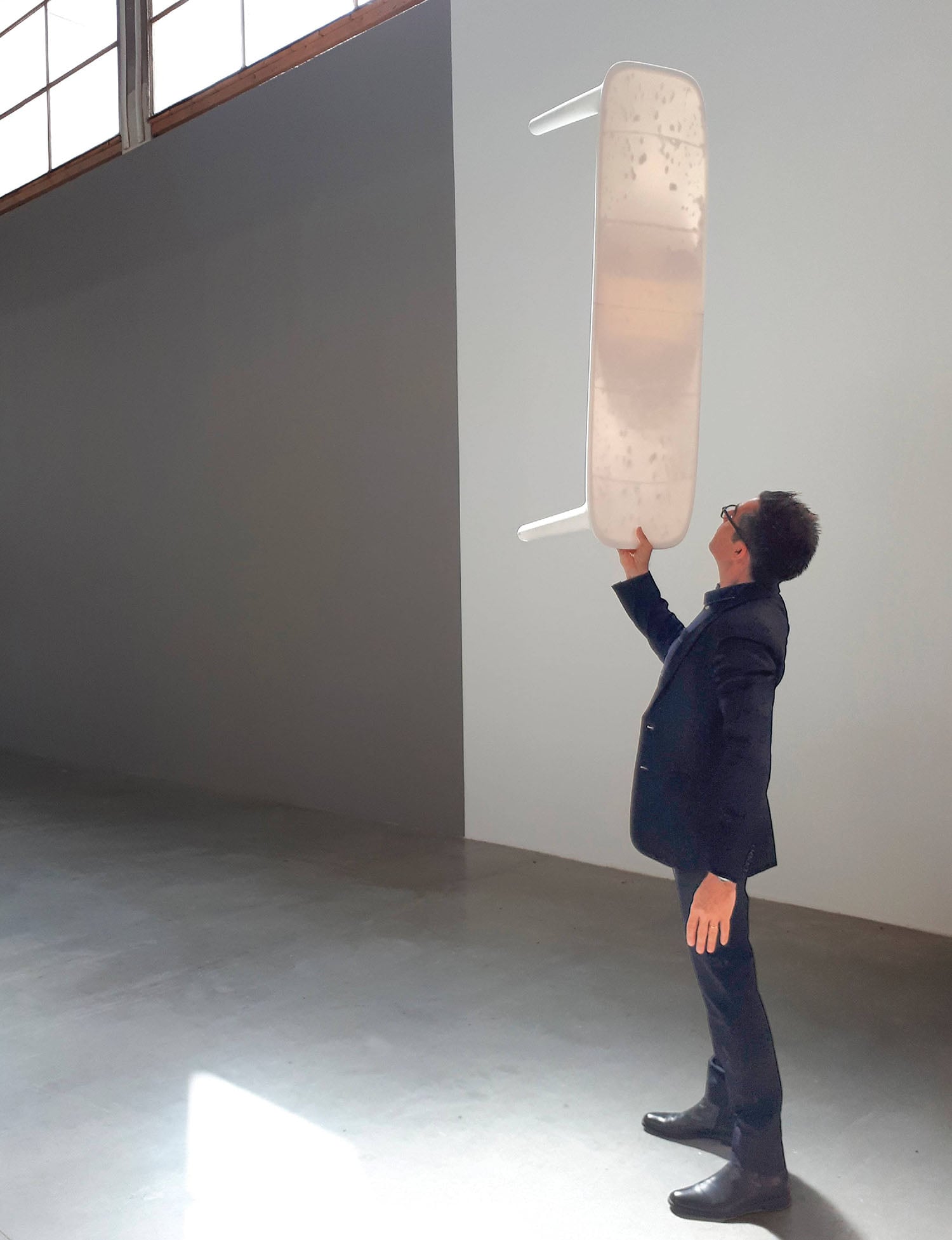
PJ: The others were created in a completely intuitive way. One of my projects—the Monolithique bench, which weighs 8 pounds but could support a person’s weight—was made without any precise calculations. Maybe I used too much material, or not enough. I didn’t know. Anne saw it and said, ‘We’re going to recalculate it using topological optimization,’ meaning it’ll have just the right amount of material in just the right place. That was the start of our collaboration—using science in the design process.
ID: Why did you choose to work with an algorithm based on bone density?
AA: That came from Patrick’s initial intuition of seeking lightness while also maintaining rigidity.
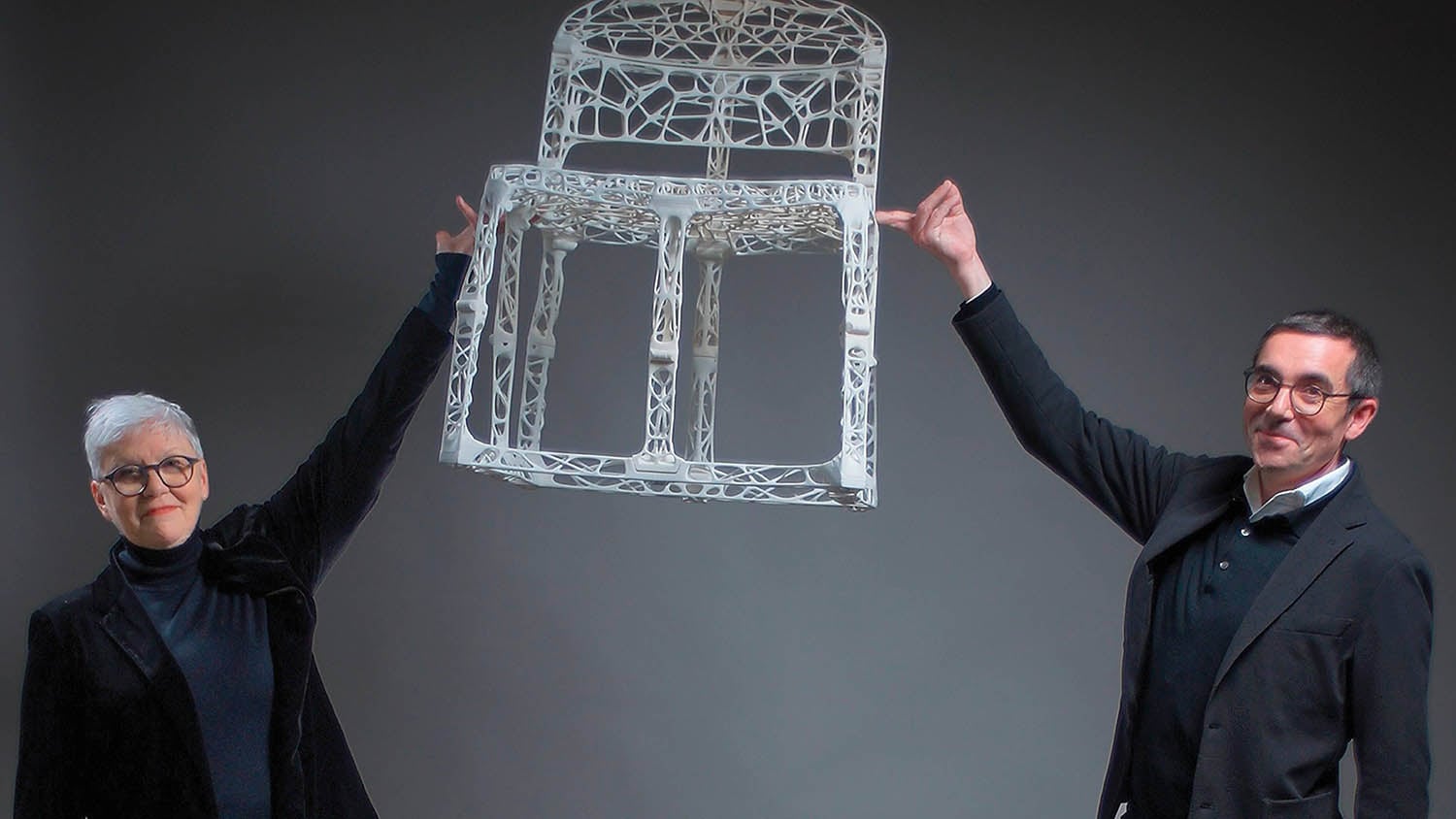
ID: What were other parameters?
PJ: I wanted to make a comfortable chair, with a curve in the backrest. It also needed to fit inside the 3D-printing machine, which is why I chose to make it foldable. And I wanted to use as little material as possible. I came up with an initial prototype, which was purely my design. Then, the DS team, the machine, and mathematical calculations took over to nibble away the unnecessary material and present a number of iterations. In the end, we picked the one we found the most interesting.
ID: How did aesthetics come into play?
PJ: We made Ta.Tamu without knowing exactly what the result would be. What I wanted was function, not style. There is no ornament. Yet, when you look at it, it’s incredibly complex. You might say it’s ultra-designed, but it’s not ‘designed’ in the conventional sense.
ID: Why was using minimal material so important?
PJ: Plastic is the result of a process for producing petroleum that has stretched over millions of years. It’s precious. I don’t have the right to use more than necessary.
AA: If a form is not purely useful, it’s waste, it’s consumerism. It has no right to exist. Aluminum is a big topic because it’s infinitely recyclable. We didn’t have the means to build an aluminum-printing machine capable of producing the chair, but it’s already being used in the aerospace industry. Some 10 billion people can’t live well if we keep producing objects the way we do today.
Explore the 3D Chair 20 Years in the Making
read more
DesignWire
10 Questions With… Clarisse Merlet
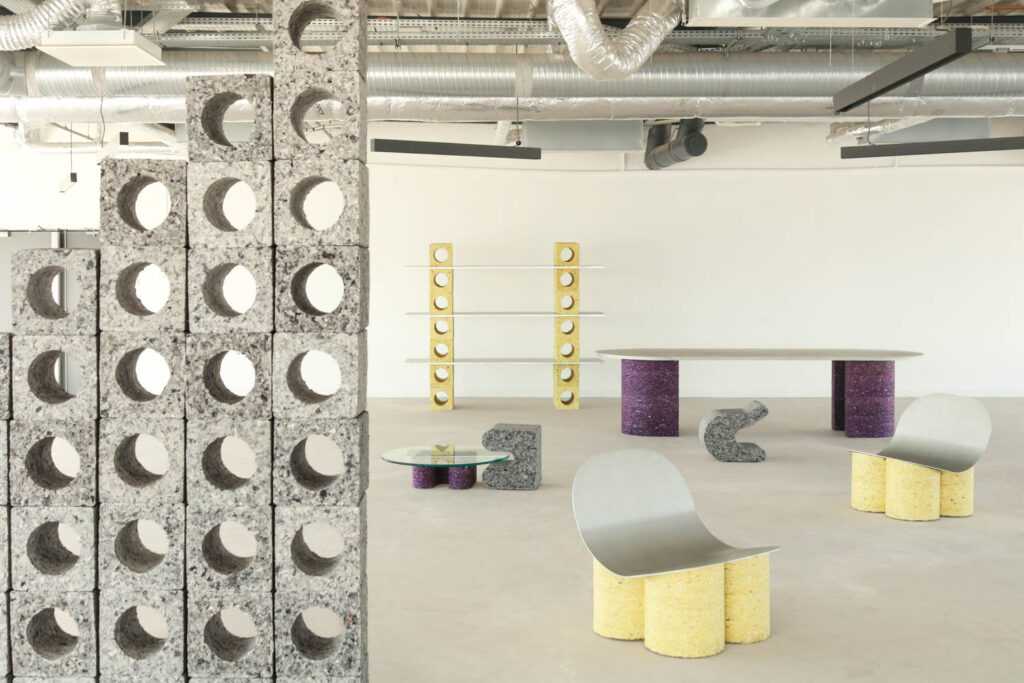
Clarisse Merlet, founder of Paris-based FabBRICK, is transforming discarded textiles into colorful architectural materials, pushing the medium with bold forms.
DesignWire
11 Top Picks From Feria Hábitat València 2026
Highlights from Feria Hábitat València, which featured over 1,200 exhibiting brands spread across 110,000 square meters of exhibition space.