
Rethinking Basketry: An Exhibit That Reframes The Woven Form
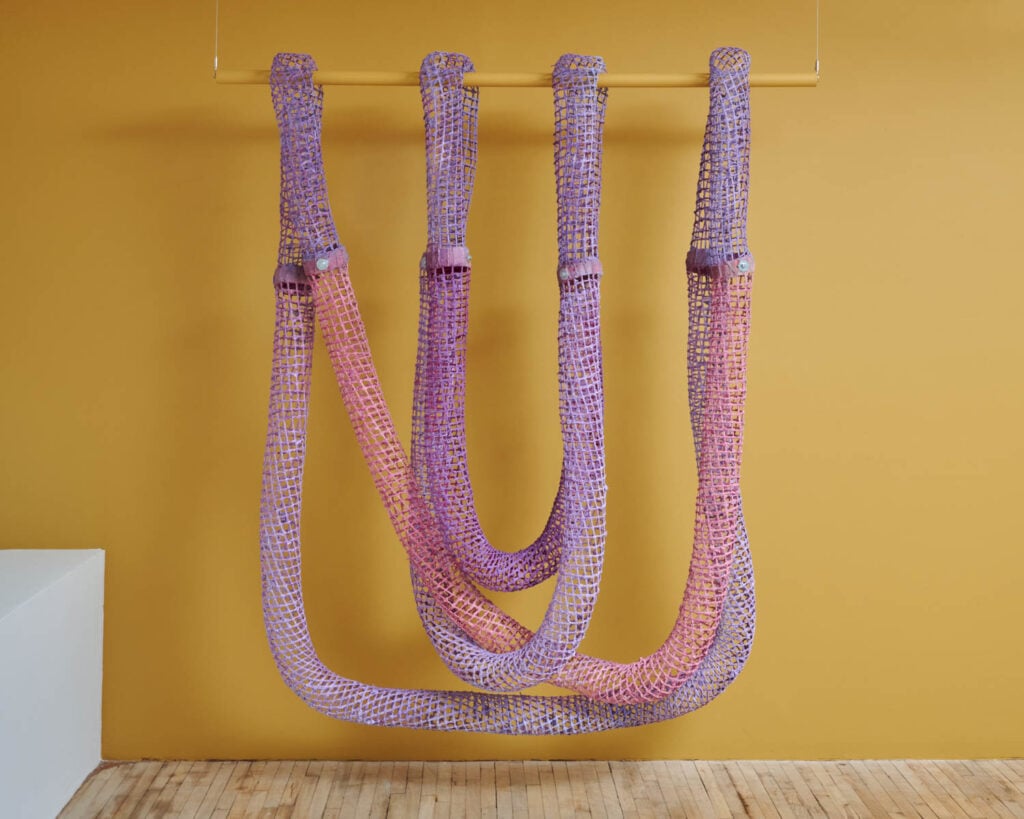
Intricately woven vessels that double as costume. Continuous loops composed largely of reed, metal, and cord. Materials caked in paint that take on a hint of iridescence from hand-extracted cochineal dye. These are some of the works on display in “Shared Ground,” a two-artist exhibition at Superhouse gallery in lower Manhattan.
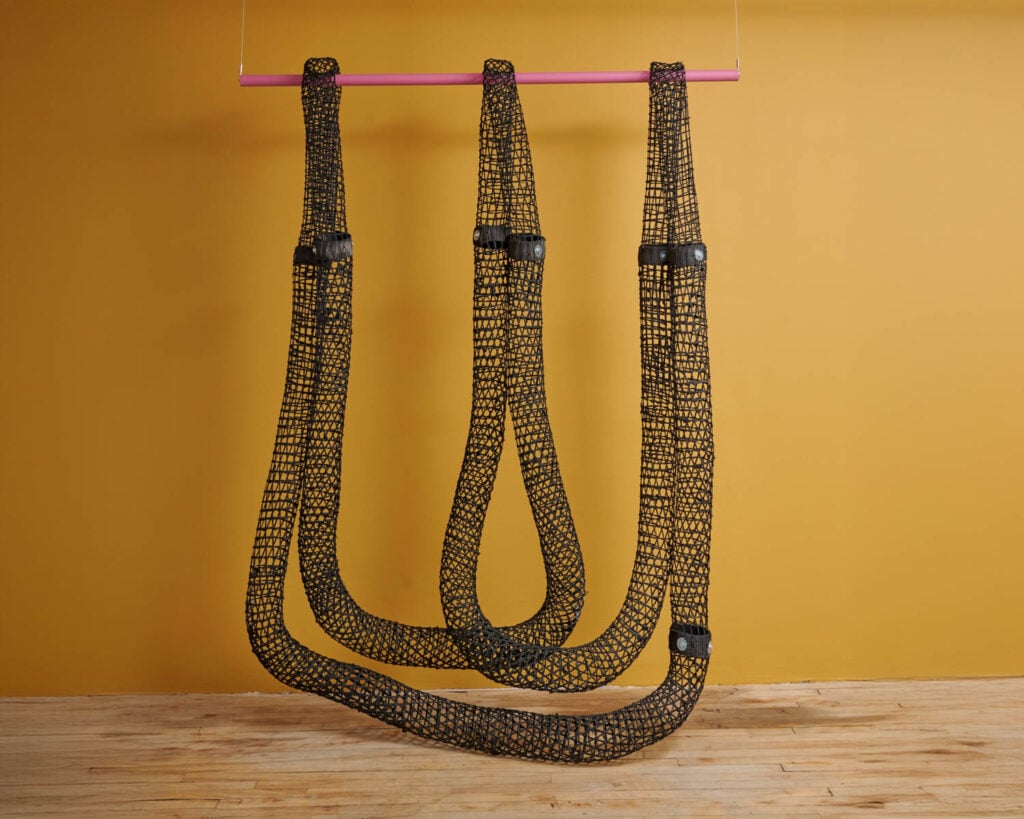
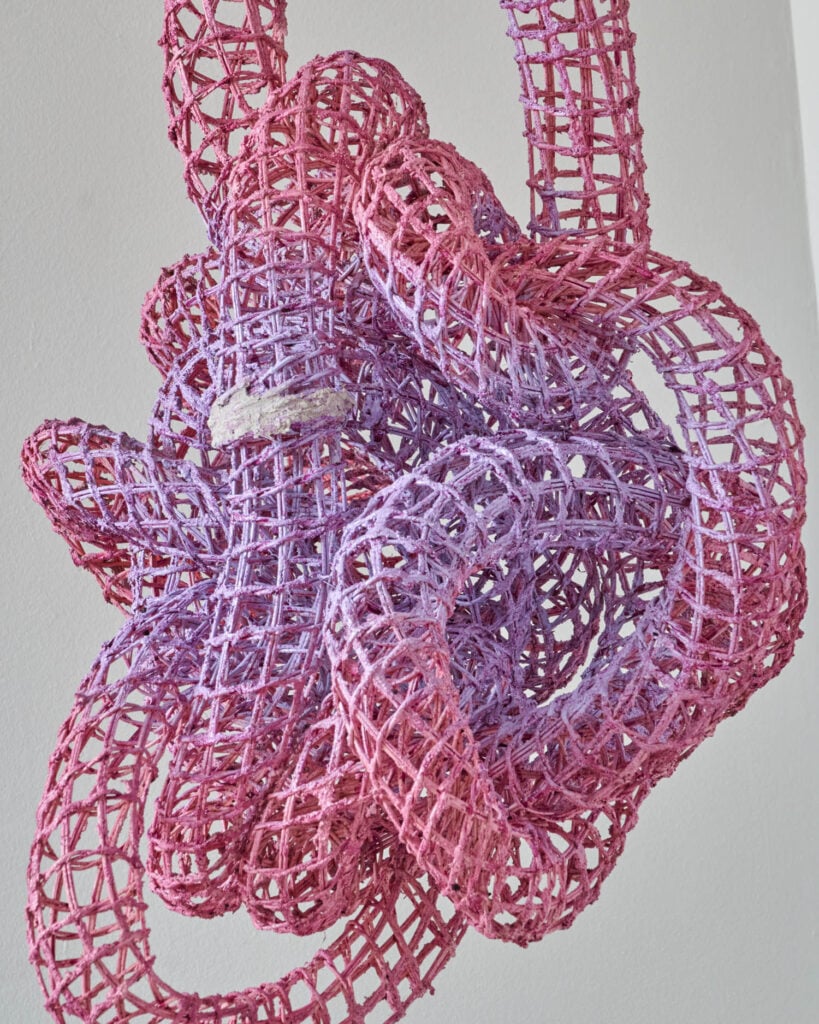
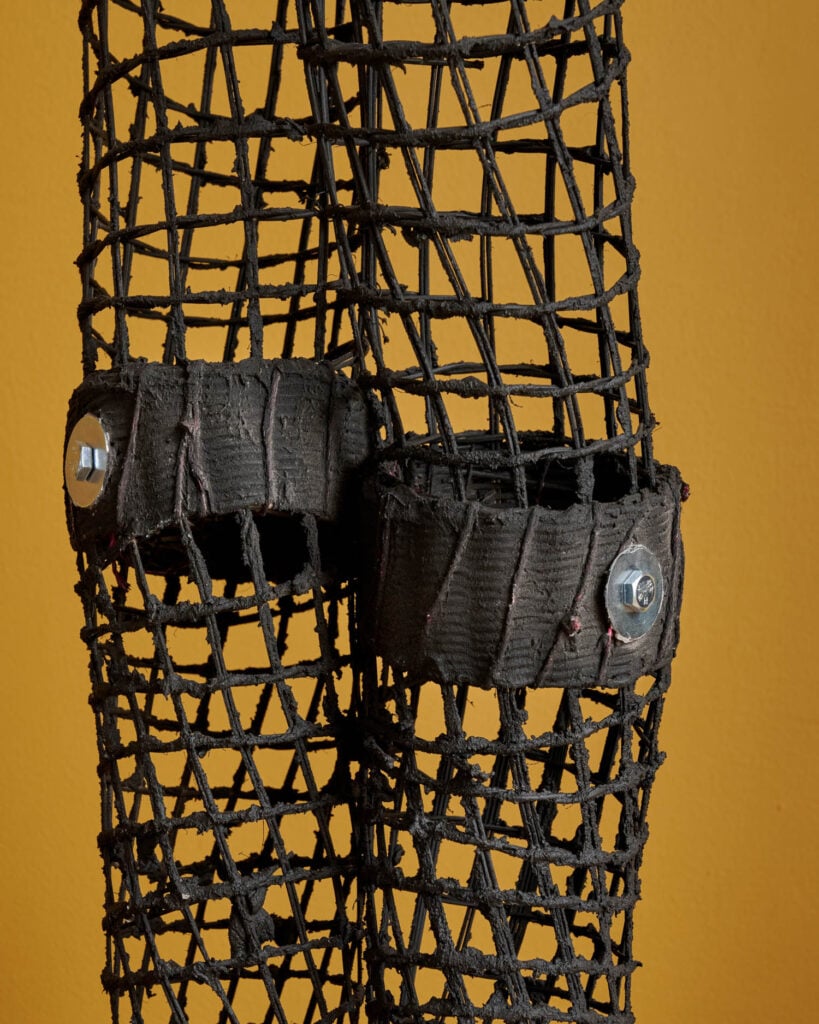
Artists Sarita Westrup, based in South Texas, and Lewis Prosser, based in South Wales, offer stories of identity and craft tradition through their woven pieces. Westrup’s tightly woven basketry, reminiscent of the pattern in chainlink fences, seem impenetrable yet delicate at once as they hang from suspended poles near the gallery’s walls. At times, she creates a layering of tubelike shapes with no apparent end or break, thick with paint, offering reflections on borders, belonging, and transformation—themes present in her life as a Mexican-American. “Her texturing through painting conceals her natural materials, adds visual weight to the forms and sometimes, as with her use of mortar, drastically shifts the character of the form, implying that it might be solid,” notes art critic and craft historian, Janet Koplos, in an essay accompanying the exhibition. Westrup’s use of cochineal ink, a vibrant red hue extracted from the bodies of insects, also connects her work to a centuries-old dye tradition.
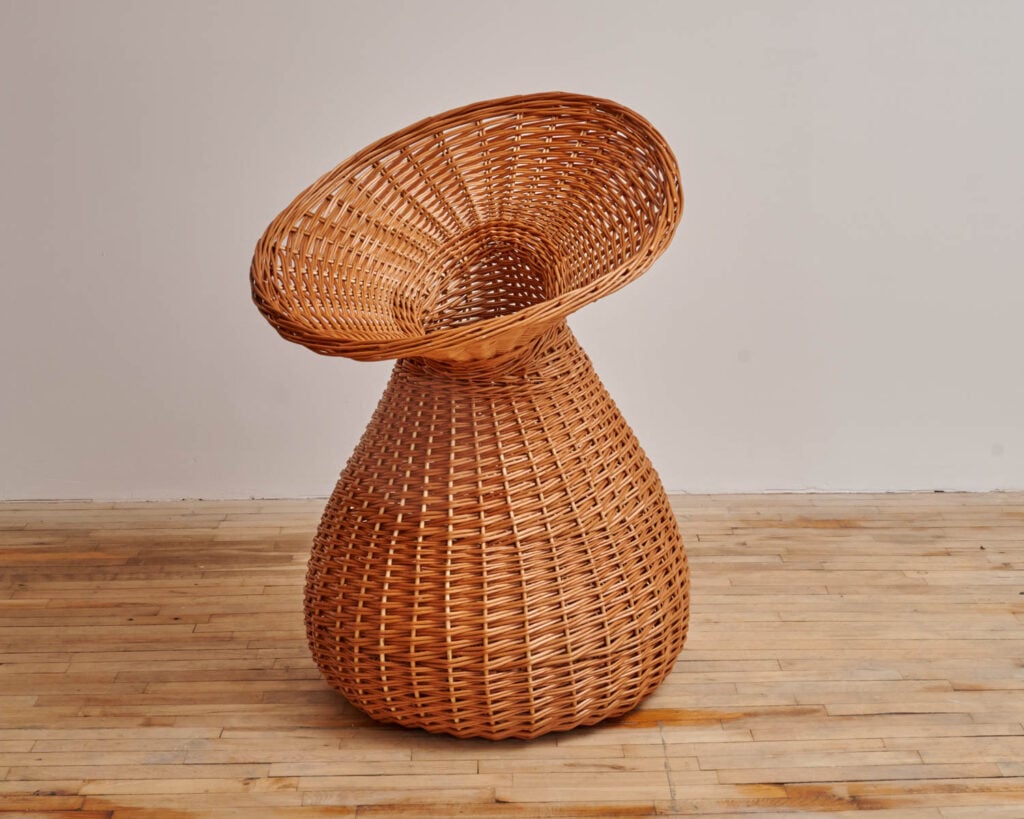
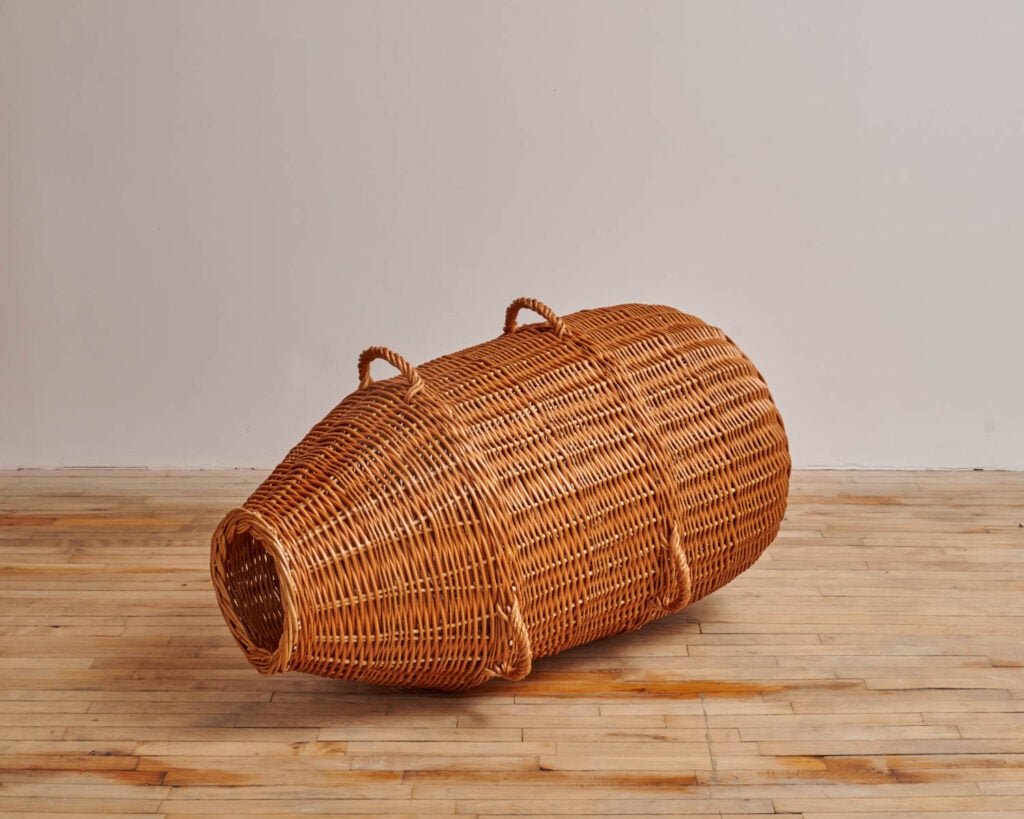
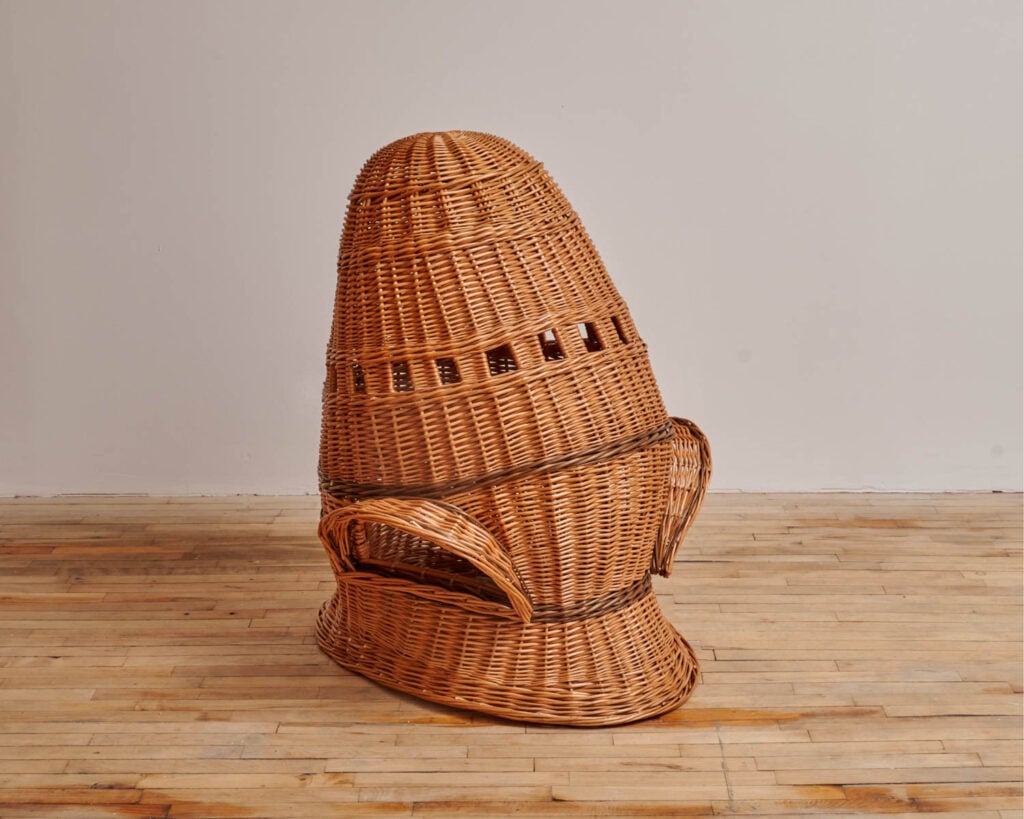
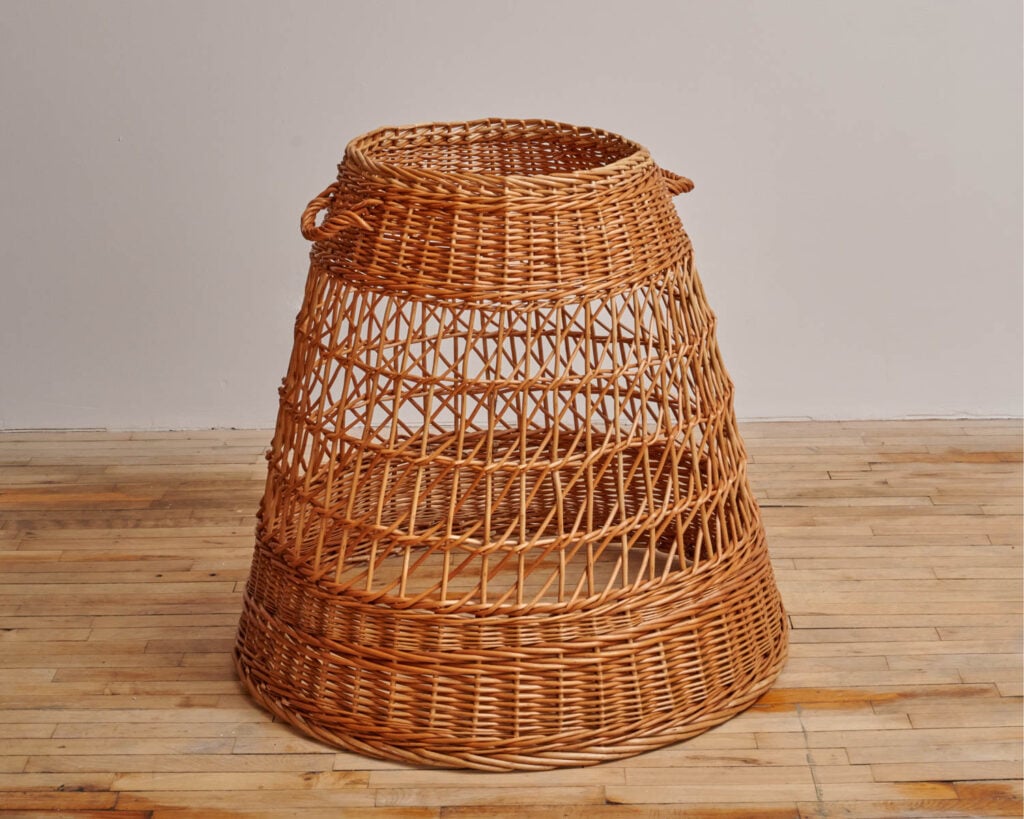
In contrast to the hanging works by Westrup, Prosser’s exaggerated forms rest on the ground as well as slightly raised pedestals throughout the space—that is, when they’re not being worn. Utilizing basketry as a sculptural language, Prosser breathes life into his absurdist objects, wearing those that resemble skirts or shields of armor in improvised performances that nod to ritual celebrations. Made mostly of willow rods, which have been stripped of their bark, and beeswax, Prosser creates vessels that invite a sense of play.
“Unlike Sarita Westrup’s works, which communicate in an almost private way with a viewer who encounters them, Prosser’s works occupy public spaces, imply stories, and encourage action on the part of the viewer, most of them related to Welsh folklore,” Koplos writes. “Prosser’s objects can be named because they represent forms in the real world that we know, even if they are unconventional in scale (like the heads which are enlarged in the same way that they are in puppetry or cartoons) or even if they are not a practical material for the use (like the shields). We still know what they are.”
Together, Westrup and Prosser show what’s possible when craft tradition meets experimentation, creating moments of connection and reflection. The show also expands on and challenges ideas around basket weaving, positioning the ancient tradition firmly in the present.
Catch the show on view at Superhouse through February 21, 2026.
read more

DesignWire
Designers And Manufacturers On The Move: September 2026 Edition
Interior Design‘s latest On the Move includes must-know industry promotions and hires, like Perkins&Will’s strategic move to expand its design capabilities.
DesignWire
10 Questions With… Artist and Designer Conie Vallese
From sculpture and ceramics to glass, textiles, and furniture, Conie Vallese embraces a multidisciplinary practice shaped by curiosity and creativity.