
September 10, 2026
Never Forget: Remembering September 11 Through Architecture
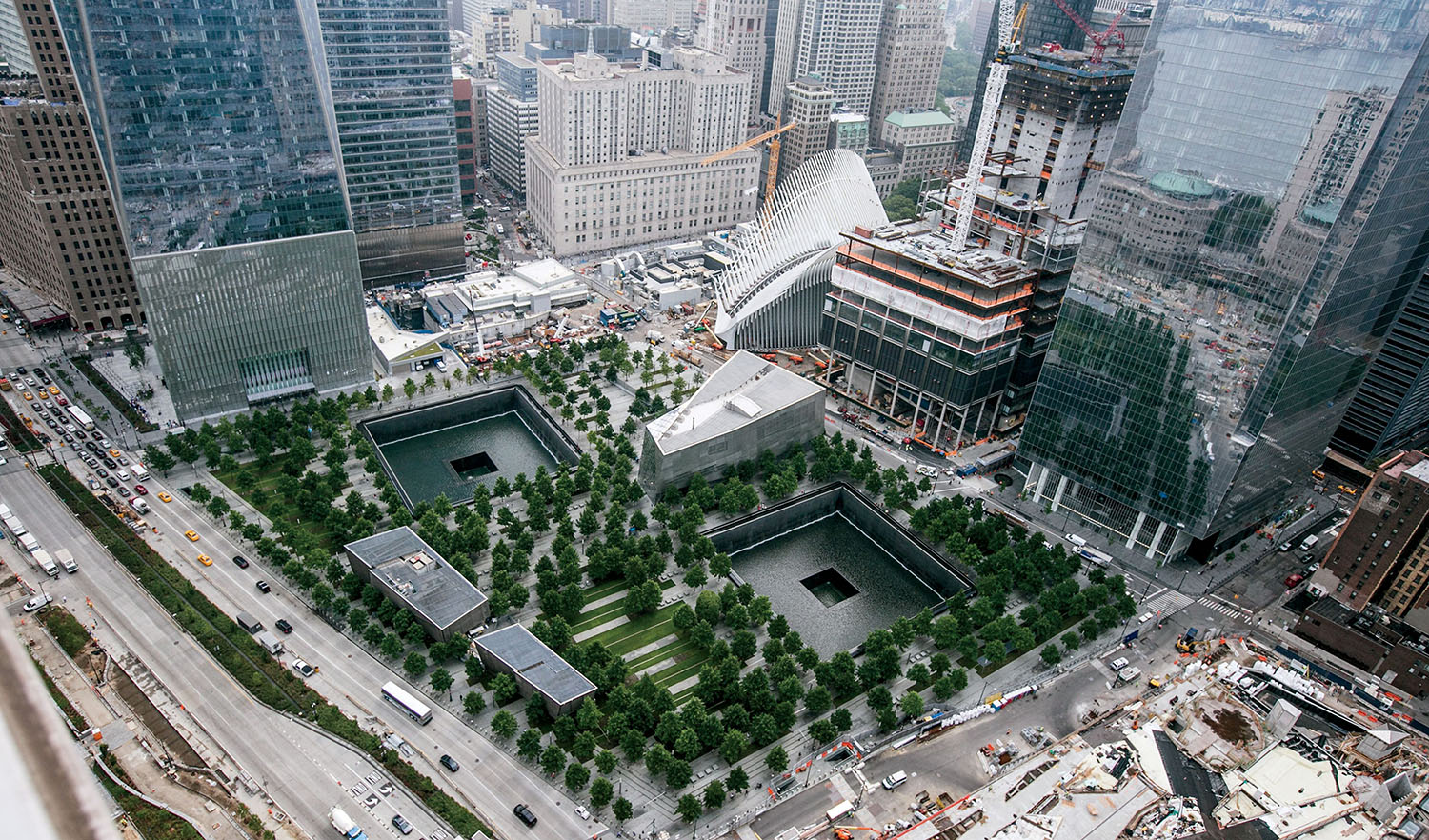
The world changed one brilliantly sunny morning in 2001 in New York: The September 11th attack on the Twin Towers at the World Trade Center was a tragedy, of the greatest magnitude, on political, personal, and historical scales. There was an architectural impact, too: When Minoru Yamasaki’s identical 110-floor skyscrapers fell, the city had to begin imagining what might rise in their place. Competitions and controversies ensued, but an international all-star team eventually came together. Today, the 16-acre site, based on an original master plan by Daniel Libeskind, includes skyscrapers by BIG; Foster and Partners; Fumihiko Maki; Rogers Stirk Harbour + Partners; and Skidmore, Owings & Merrill, and a transportation hub, named the Oculus, by Santiago Calatrava. Half the acreage is given over to remembrance: Reflecting Absence, Michael Arad’s twin voids of water occupying the tower footprints, enclosed by bronze walls inscribed with the names of victims, and the National September 11th Museum, a subterranean building by Davis Brody Bond accessed through a glass pavilion by Snøhetta. The attacks had a personal dimension for the Interior Design staff, too. Cindy Allen’s first issue as editor in chief, September 2001, was still at the printer that fateful day (see page 90 for more on this), so she and her team acted quickly, adding a black cover overlay with a letter from Allen to all of us undaunted by “the blackest day in this marvelous city’s history.”
Milestones: 25 Years
-
The 8-acre World Trade Center Memorial Plaza encompasses Reflecting Absence, a pair of reflecting pools where the two towers once stood, and the National September 11th Museum. Photography by Jin Lee. -
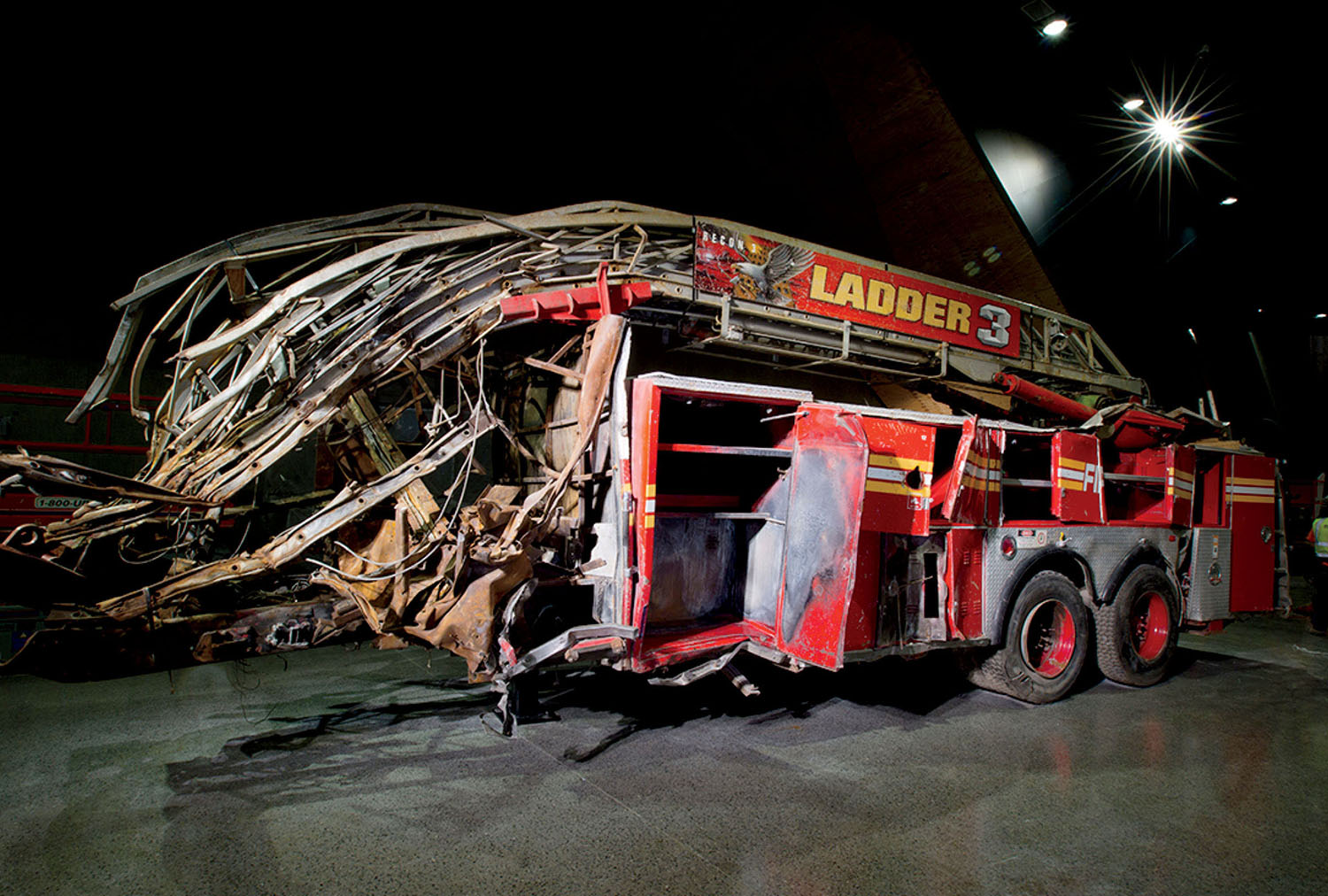
The charred chassis of a truck from Ladder 3, one of the first firefighting forces to respond, among museum artifacts. Photography by Jin Lee. -
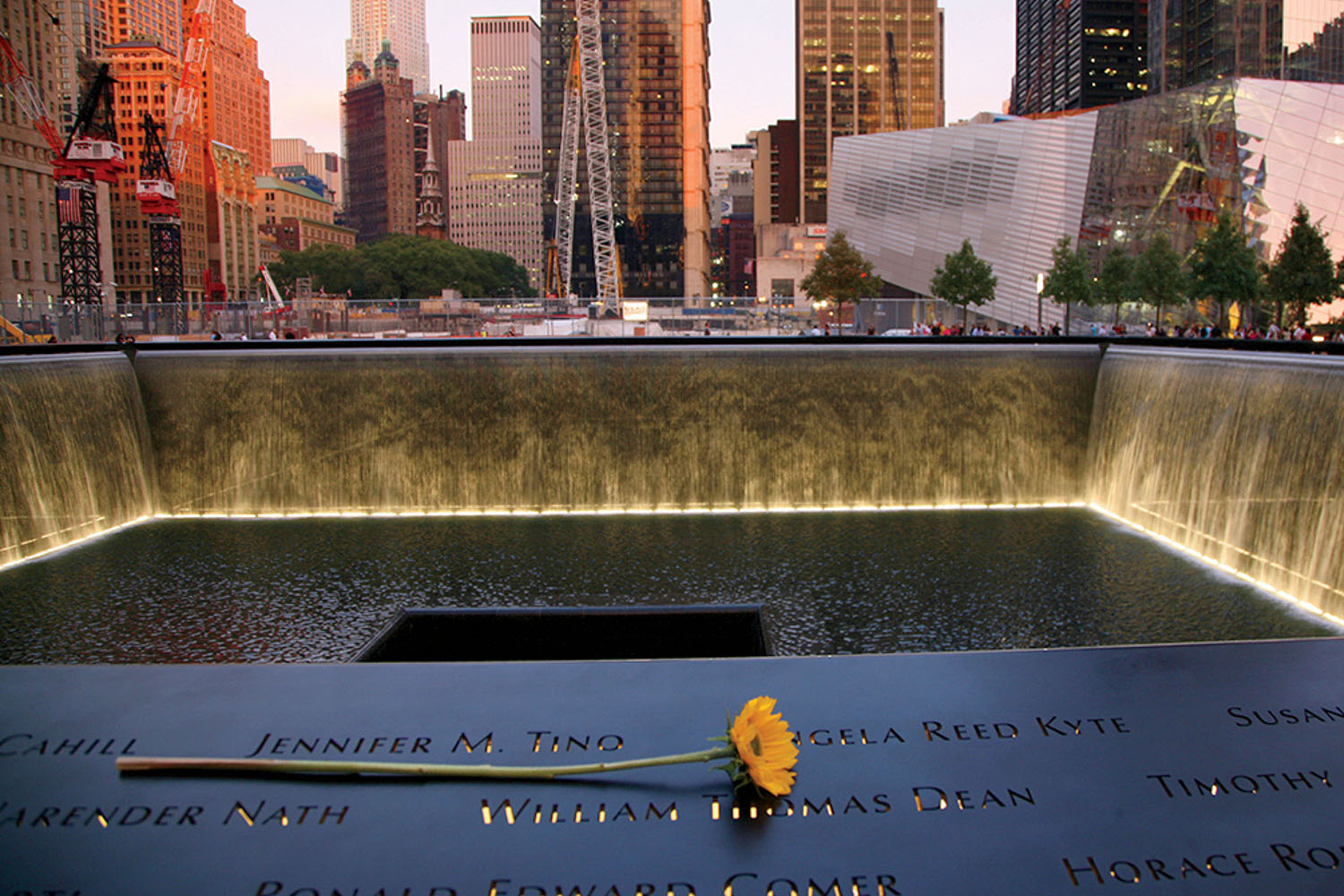
The memorial’s bronze enclosure inscribed with the names of the 2,983 victims, illuminated at dusk by soft-toned recessed interior lights. Photography by Amy Dreher. -
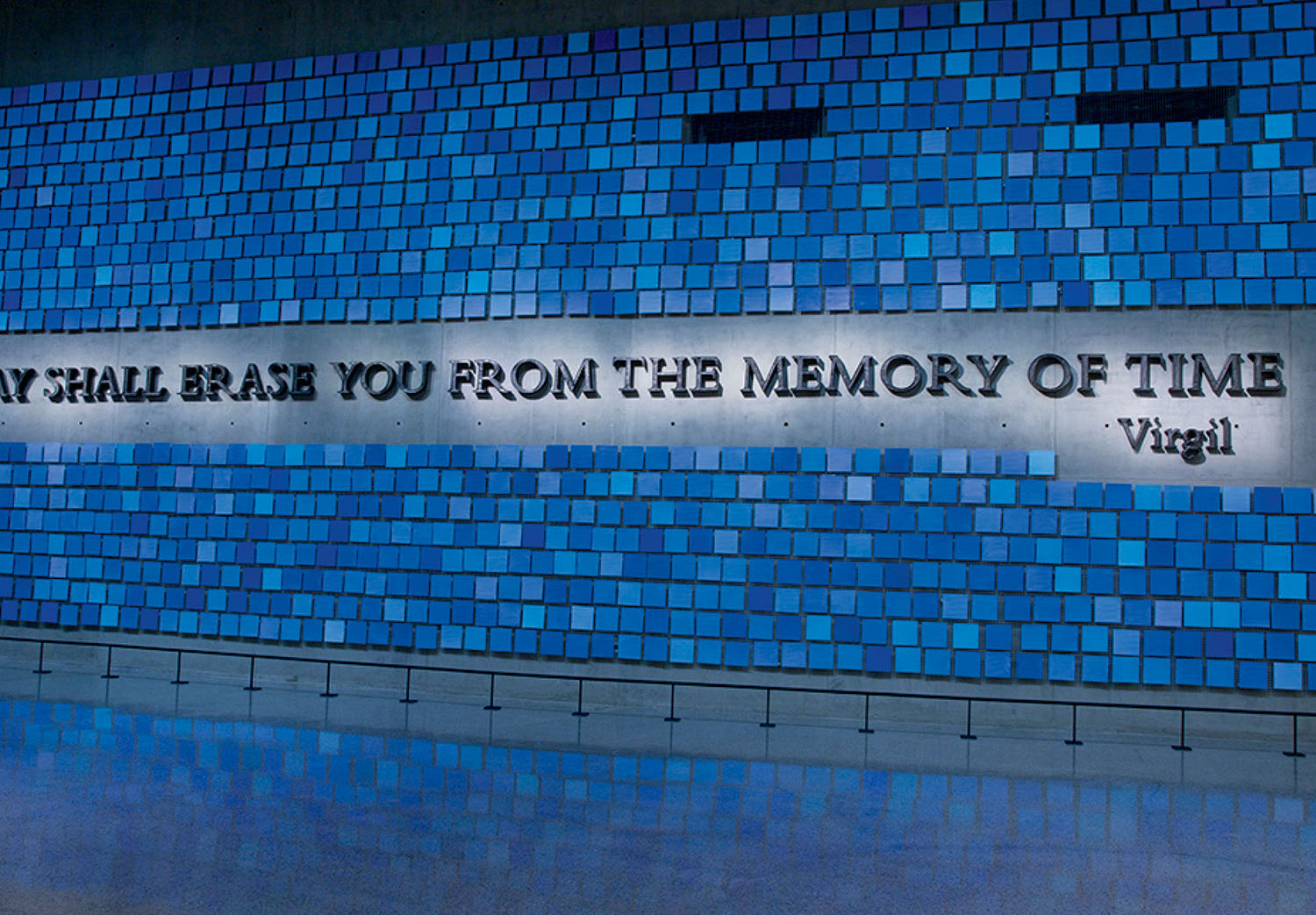
“No day shall erase you from the memory of time,” from the Aeneid by the poet Virgil, the letters forged by artist Tom Joyce using steel salvaged from the towers, on a wall in the museum. Photography by Jin Lee.
- No tags selected
read more

DesignWire
Emirates Debuts Hospitality Suite Inspired By Its Premium Aircraft Cabins At The US Open
Emirates brings the refined feel of its onboard experience courtside at the US Open with a newly redesigned hospitality suite featuring a replica A380 bar.
DesignWire
Milestones Of Design: Antoni Gaudí’s Enduring Design Vision
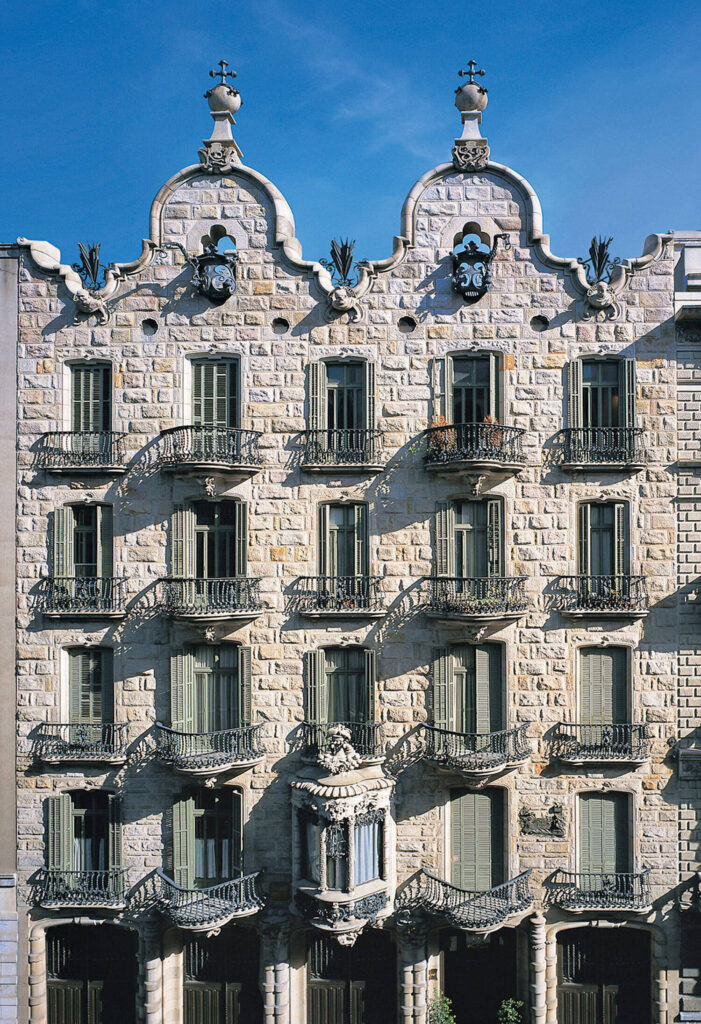
On the centenary of Antoni Gaudí’s death, BD Barcelona revisits the architect’s sculptural furniture and interior designs with a year-long celebration.

DesignWire
Milestones Of Design: Rebecca Moses On American Fashion
In a new artwork for the CFDA, Rebecca Moses reflects on 250 years of American fashion as a story of possibility, individuality, and reinvention.