
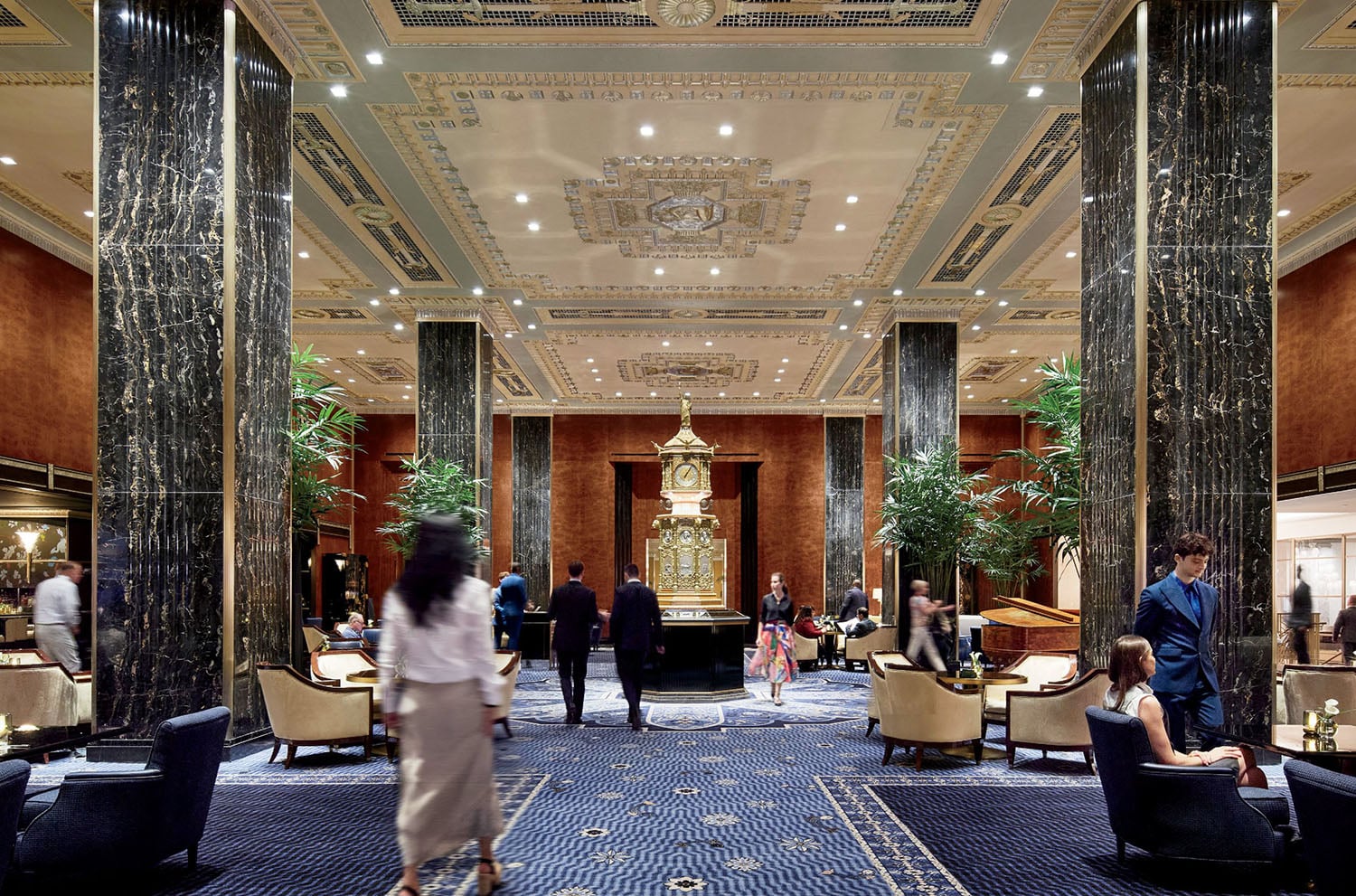
The Waldorf Astoria New York: 2025 Interior Design Hall of Fame Special Tribute
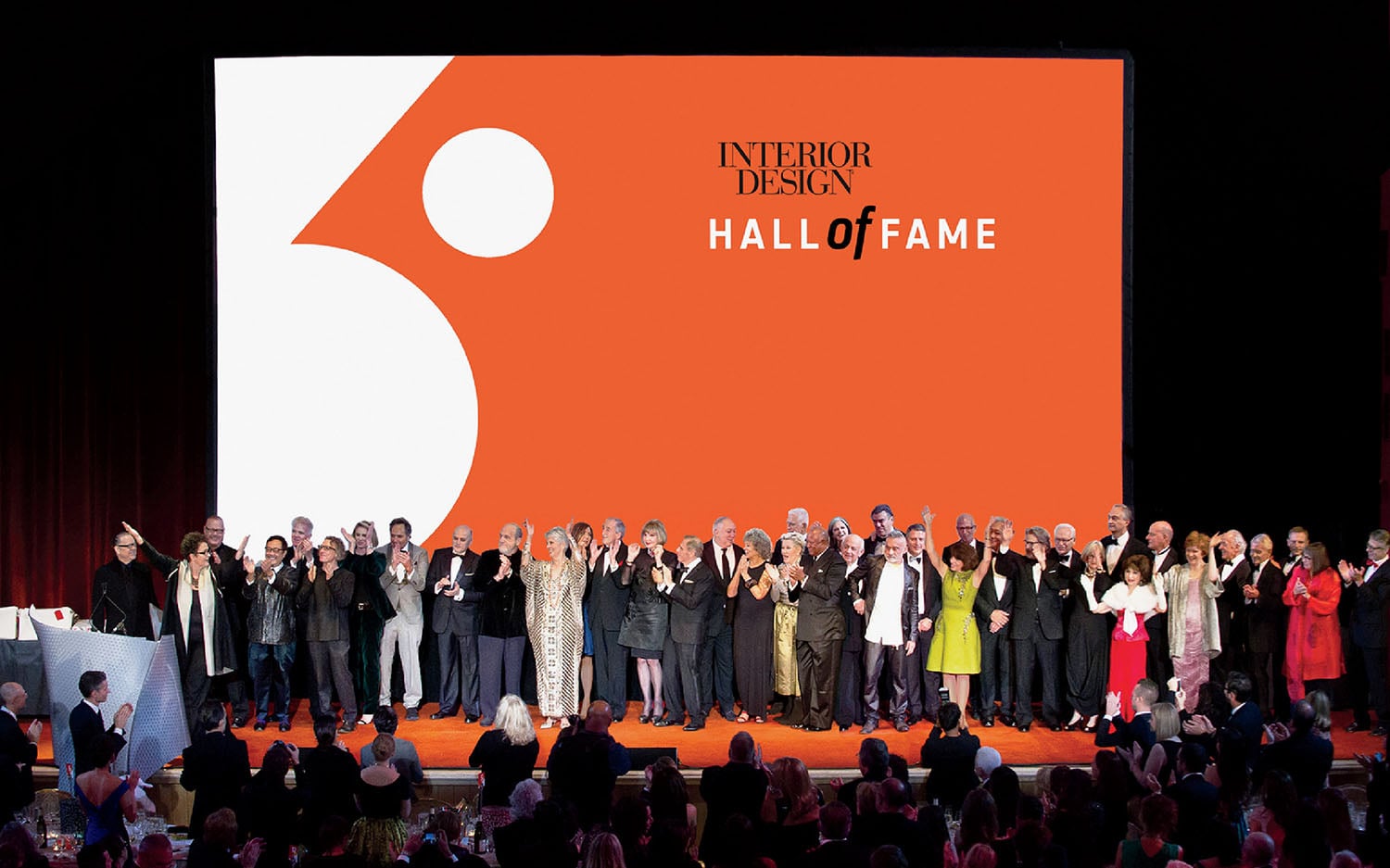
The Waldorf Astoria New York, a fixture of Park Avenue—and high society—since 1931, is a beloved character that seemingly everyone has a story about: bumping into a celebrity one day when shortcutting through the hotel’s full-block public enfilade; overnighting in one of its guest rooms on their first work trip as a young adult; meeting their future spouse on a blind date in Peacock Alley. Certainly, many in the design community (perhaps you’re one of them?) have tales of jubilating in the grand ballroom for this magazine’s Hall of Fame festivities, hosted there annually from 1985 until the Waldorf closed for renovation in 2017—and now once again, post-makeover. But the 1.6-million-square-foot, 44-story grand dame has a story of her own to tell: one of finally fulfilling design ambitions that only 21st-century construction methods and technology could unlock. At 94, she’s living her best life.
Rewind to about 15 years ago when it was determined that piecemeal remodels were no longer enough to forestall the ravages of time. Hotel operator Hilton embarked on a comprehensive master planning exercise to map out the property’s future, in the meantime tapping Interior Design Hall of Fame member Alexandra Champalimaud to refresh the Park Avenue foyer and prototype new guest accommodations, among other improvements. The full scope of the upgrades needed to bring the structure and operations up to today’s luxury hospitality standards triggered sale of the building in 2014 to a Chinese company whose real-estate holdings were later absorbed by current owner Dajia Insurance Group. The client hired Skidmore, Owings & Merrill to orchestrate everything from core reconfiguration to plasterwork conservation in a quest to reduce the key count from 1,400 to 375, double (or more) the size of guest rooms, add 372 condominium residences, and refurbish the signature spaces. “We’ve worked on many incredibly complex projects, but this is at the top,” says SOM managing partner Ken Lewis, who led the effort with design principal Frank Mahan. “Nobody really knew what it would take to get the building to where it is today.” As it turns out: about $2 billion, 10-plus years, and a veritable army of specialists, artisans, preservationists, and collaborators.

See Interior Design’s Best of Year Winners and Honorees
Explore must-see projects and innovative products that took home high honors.
Timeless Design: Inside The Waldorf Astoria New York
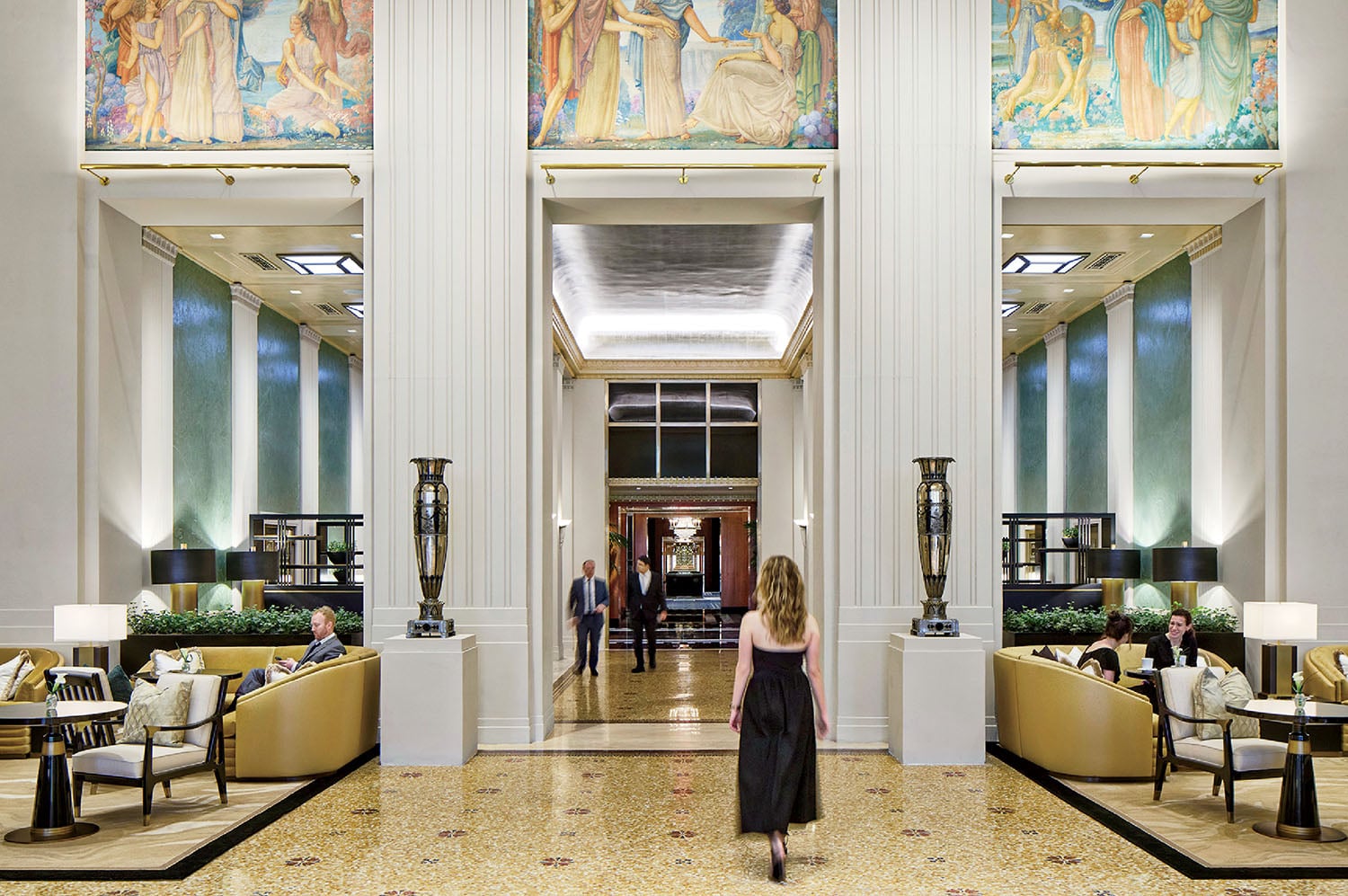
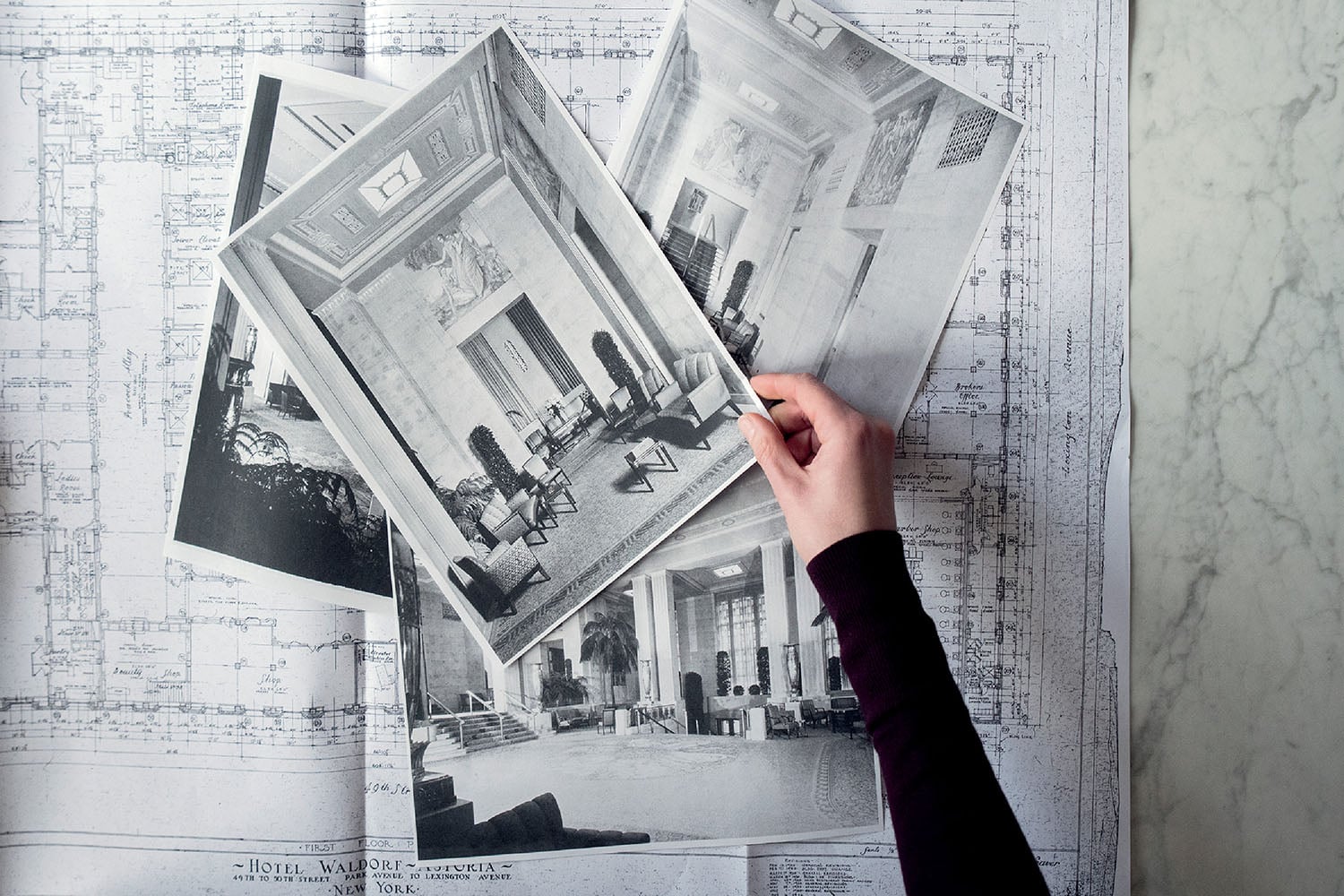
SOM also helped Hilton secure landmark designation for 62,066 square feet of interior space; that status had previously been bestowed upon the elegant limestone and masonry exterior, now sparkling clean and newly outfitted with high-performance windows matching the originals’ profile and paint color. SOM’s forensic detective work included poring through building architect Schultze & Weaver’s inches-thick 1929 spec book and the Waldorf’s own archives to decipher what was true to the ’30’s and what was a later insertion. Like any hotel, the Waldorf had been subject to iterative improvements over the decades, in some locations (e.g., guest rooms) eradicating the historic fabric, while in other places leaving behind a palimpsest of anachronisms.
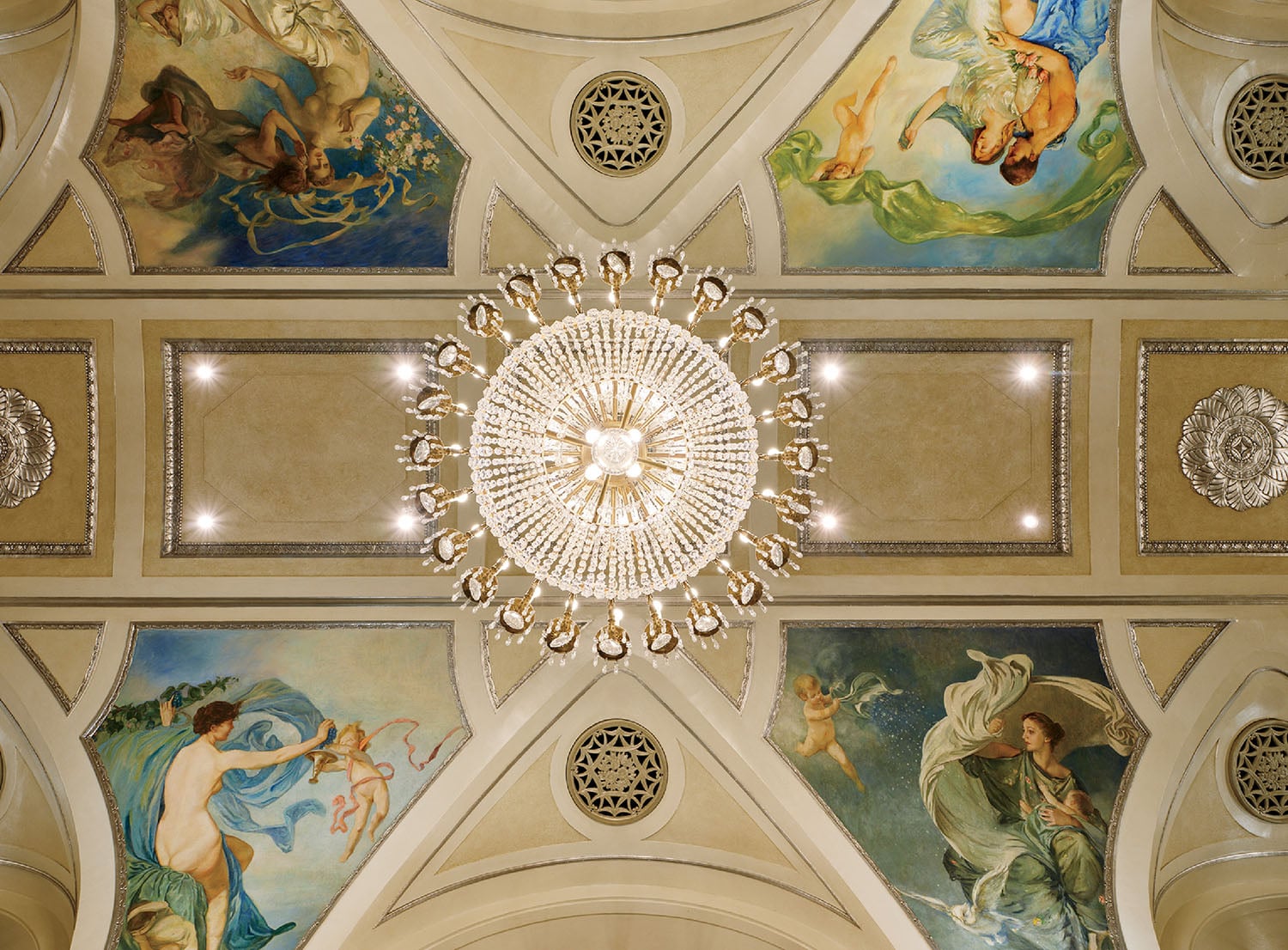
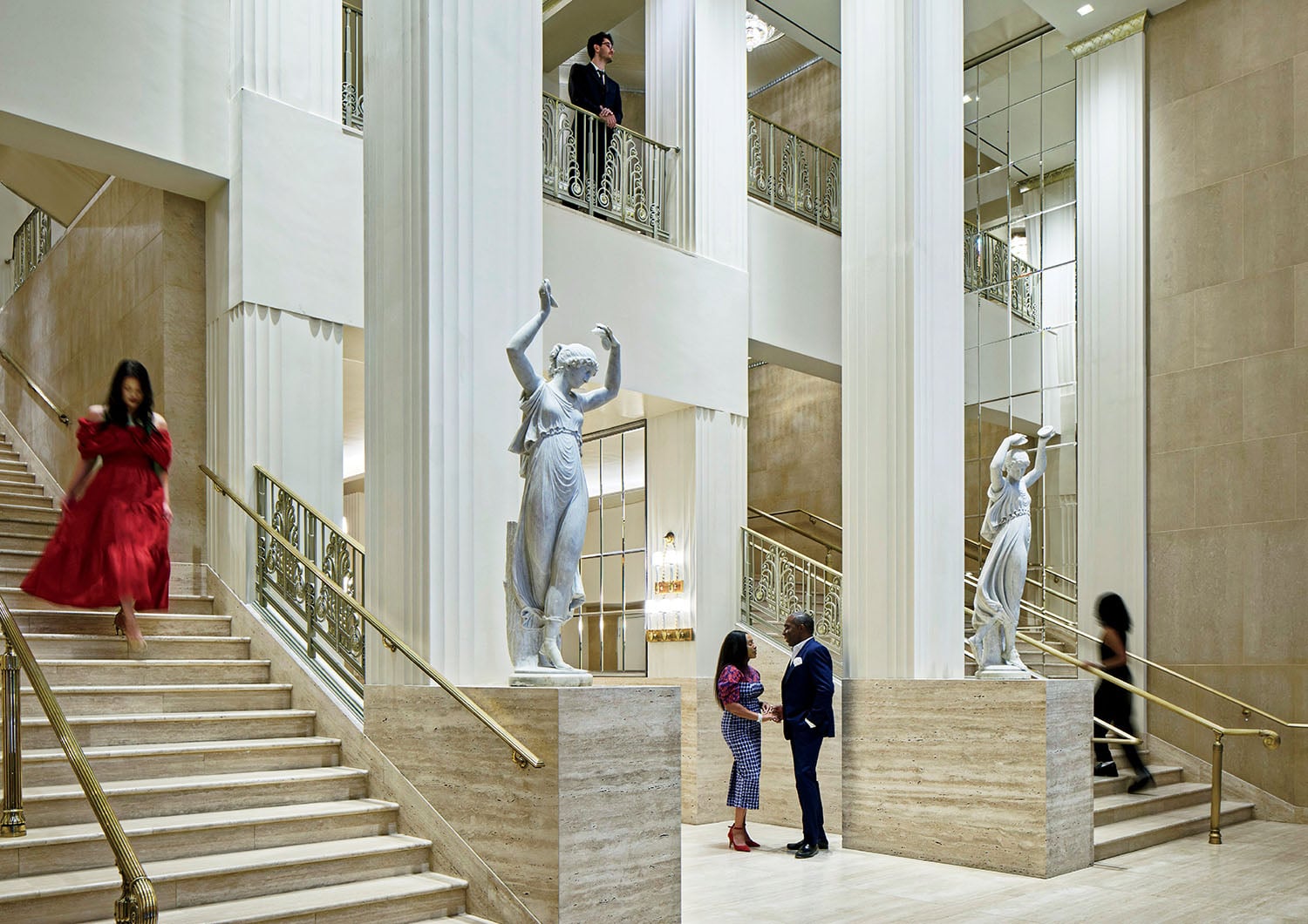
The team painstakingly restored or conserved art deco features throughout—nickel-silver metal-work, plaster ceilings, murals painted by Edward Emerson Simmons and Louis Rigal—and sourced panels of Japanese ash and gray-toned harewood to match those initially installed in the east and west lounges and the silver corridor, respectively. Mechanical equipment that had encroached into the Lexington Avenue foyer were removed to gain Park Avenue foyer’s coved ceiling and redesigned the grand ballroom’s overhead plane from one tier, as built, to the intended three, enhancing the floating quality. “It’s not about preserving everything in amber,” Mahan says. “It’s about breathing life into a building such that it can continue to be a vibrant and contributing citizen to the city.”
The Waldorf Astoria New York Features Modern Updates
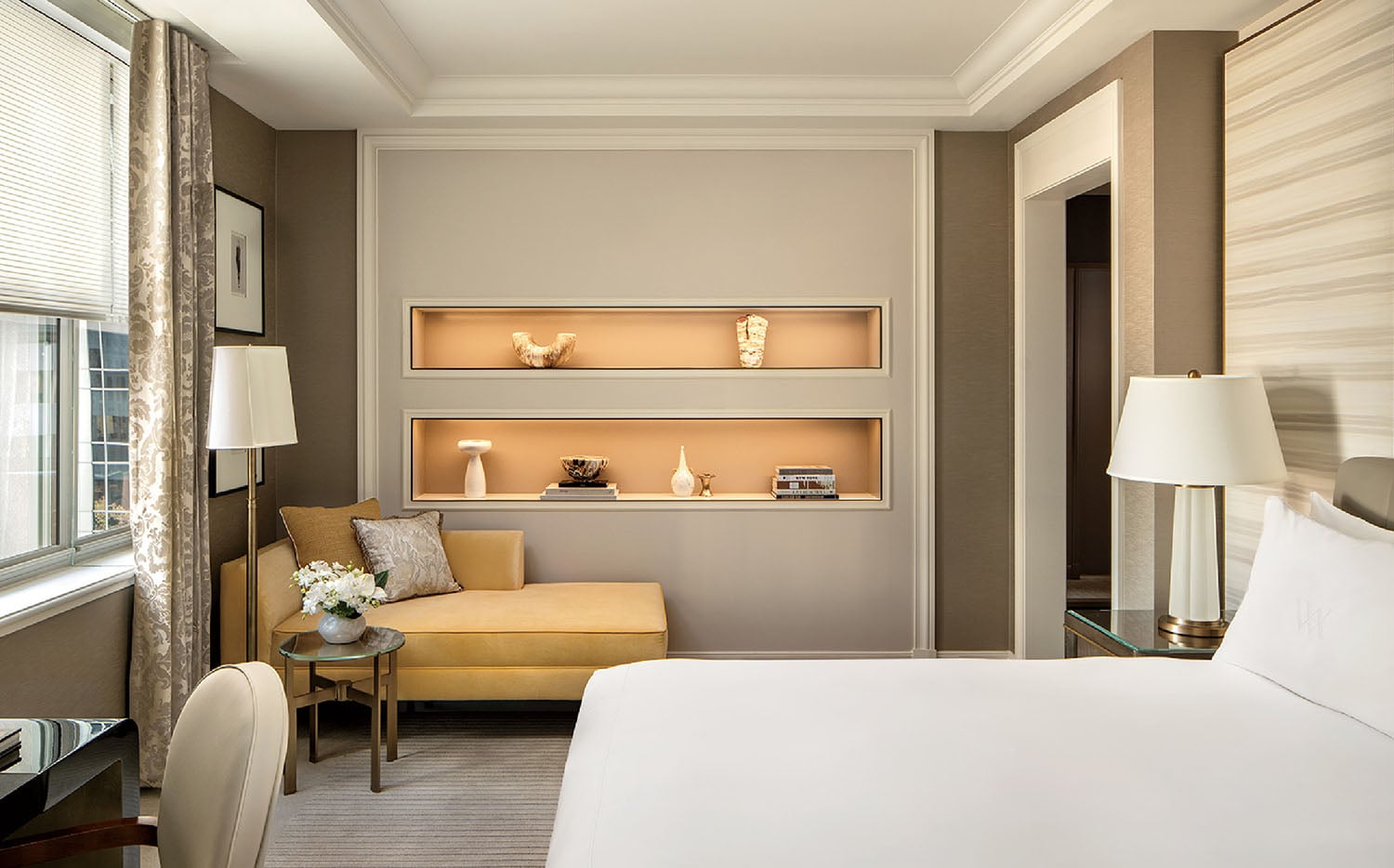
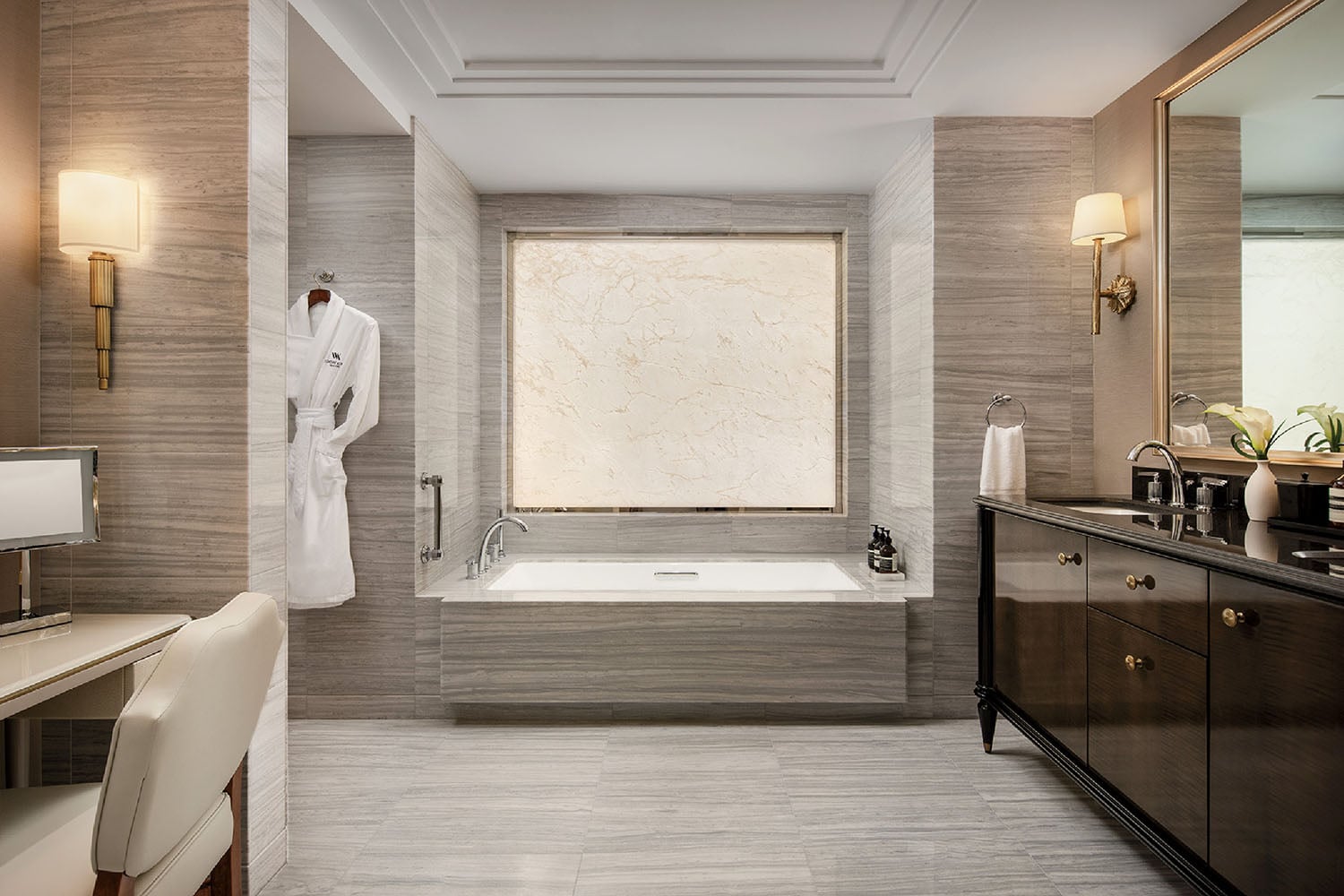
Pierre-Yves Rochon, entrusted with the interior design of the hotel’s public areas and guest accommodations, adopted the same attitude, with deco-inflected furnishings and finishes that reflect the coloration, materiality, and vibe of period features but are not overly deferential to the past. “Pierre-Yves and his team deserve a lot of credit for inserting their design into the historic envelope and making it all work together,” Traxler says. “What you see is a symphony of existing and conservation pieces and new insertions that blend in. It’s hard to tell where one leaves off and the other begins.”
Rochon, who was just inducted into the Hall of Fame, explains that “respecting the Waldorf’s heritage and DNA” meant acknowledging its forward-thinking roots: “It was a very contemporary design when it was built in the 1930’s”—aesthetically and in terms of both service and amenities, with radios and air-conditioning in every room. Catering to today’s audience is a more intimate arrival sequence. The original port-cochere was reworked into two separate ones for condominium residents and hotel guests; the latter leads directly to a new lobby, dubbed the library lounge, one flight up. This reconfiguration allows celebrities, dignitaries, and others to discreetly ascend from car to check-in to elevator to suite, bypassing the grand spaces that have become, over the decades, a de facto extension of the cityscape, should they desire.
Design Details Honor The Waldorf Astoria’s Heritage
Hilton’s David Oswald, VP of architecture and design for luxury brands, likens the hotel to a sort of interior designers’ hall of fame. “Every signature space and the guest rooms were done by different designers and firms over many decades; it really was a collage of talent,” he notes. This tradition continues today, with the roster expanding to include Wimberly Interiors, which designed the ground-floor Guerlain wellness spa; AvroKO, which crafted the Lex Yard restaurant; and Jean-Louis Deniot, who masterminded the condominium interiors and 50,000 square feet of residential amenities. But this renovation, Oswald adds, has been “the only master plan backed by one contiguous team. That brought cohesion, where every detail reinforces the overall vision, creating a frictionless experience for guests”—whether staying overnight or just popping in to admire the exquisitely updated mise-en-scène.
Behind the Design of the Waldorf Astoria New York Renovation

Interior Design‘s Hall of Fame Gala Makes Its Triumphant Return To The Waldorf


read more

DesignWire
10 Questions With… Sculptor Aminata Mboup
Aminata Mboup discusses her practice, inspirations, fluidity between disciplines, as well as her unique approach to materials.

DesignWire
10 Highlights From Amman Design Week
Amman Design Week 2026 gathers a host of regional designers and architects under the theme ‘Accumulations.’