
10 Questions With… Artist Alma Haser
Alma Haser is an award-winning artist whose work combines photographic processes with other mediums including analog techniques. Making work by hand is a key part of her process, including layering fabric printing onto puzzles and crafting her own “sets” for photographs. Her photographic projects have explored motherhood, German idioms, artificial intelligence, and other themes.
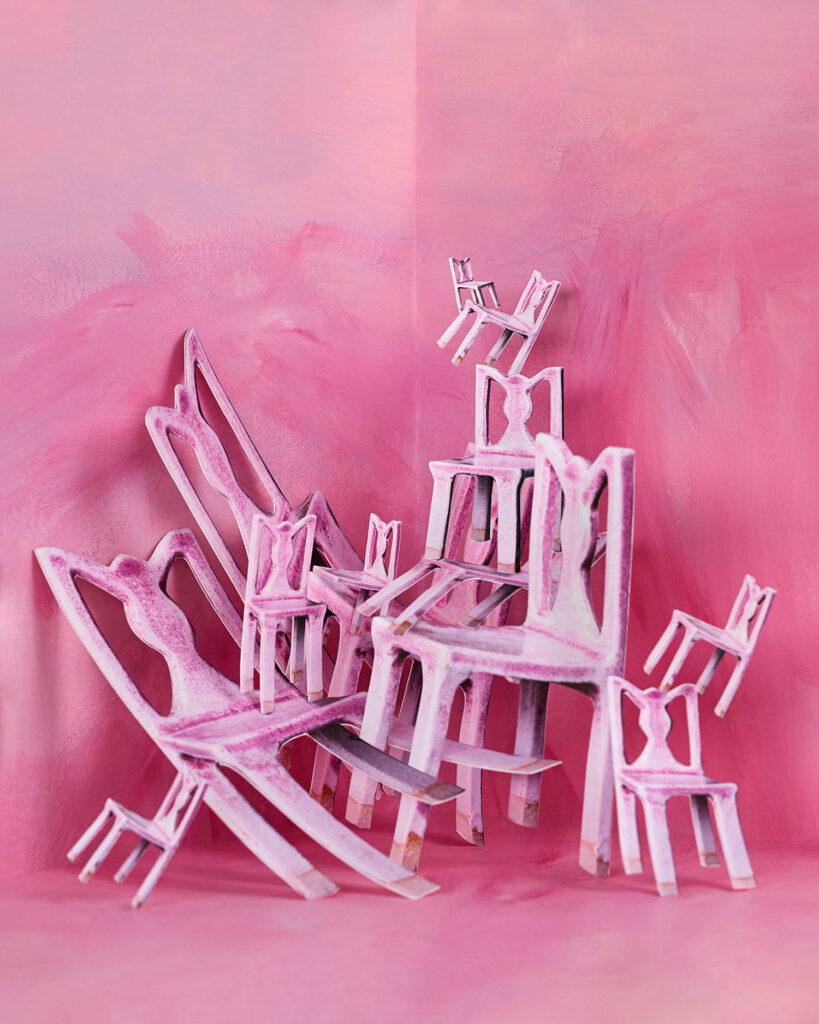
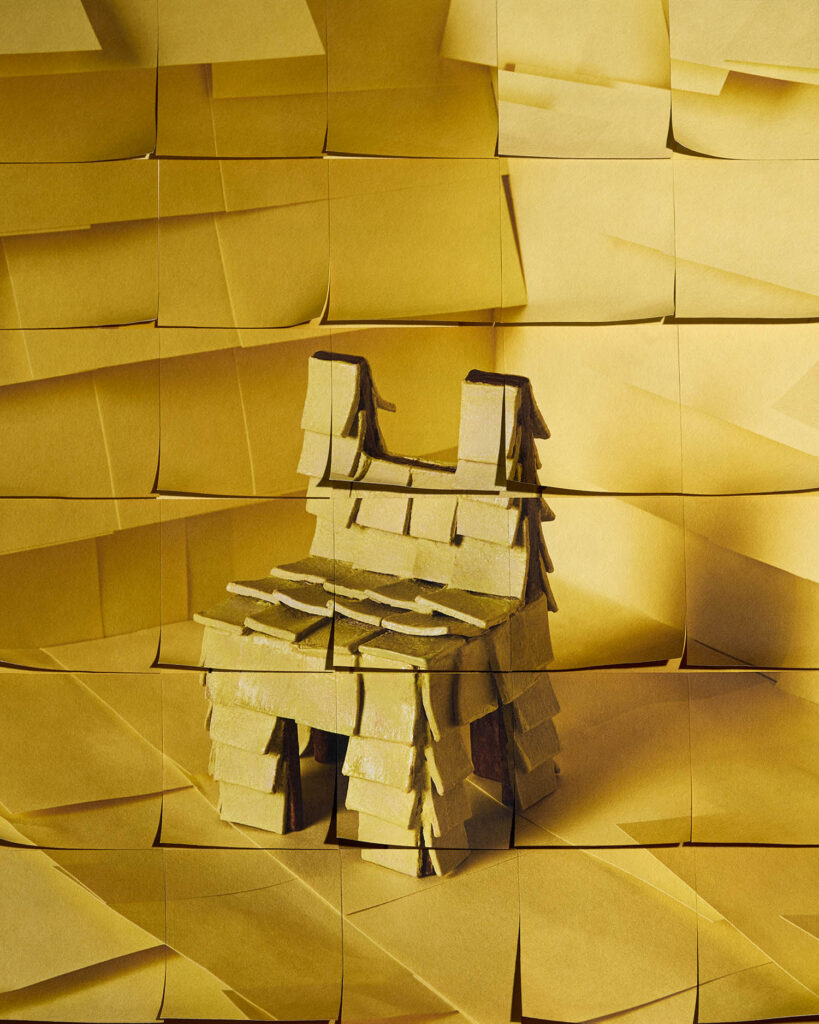
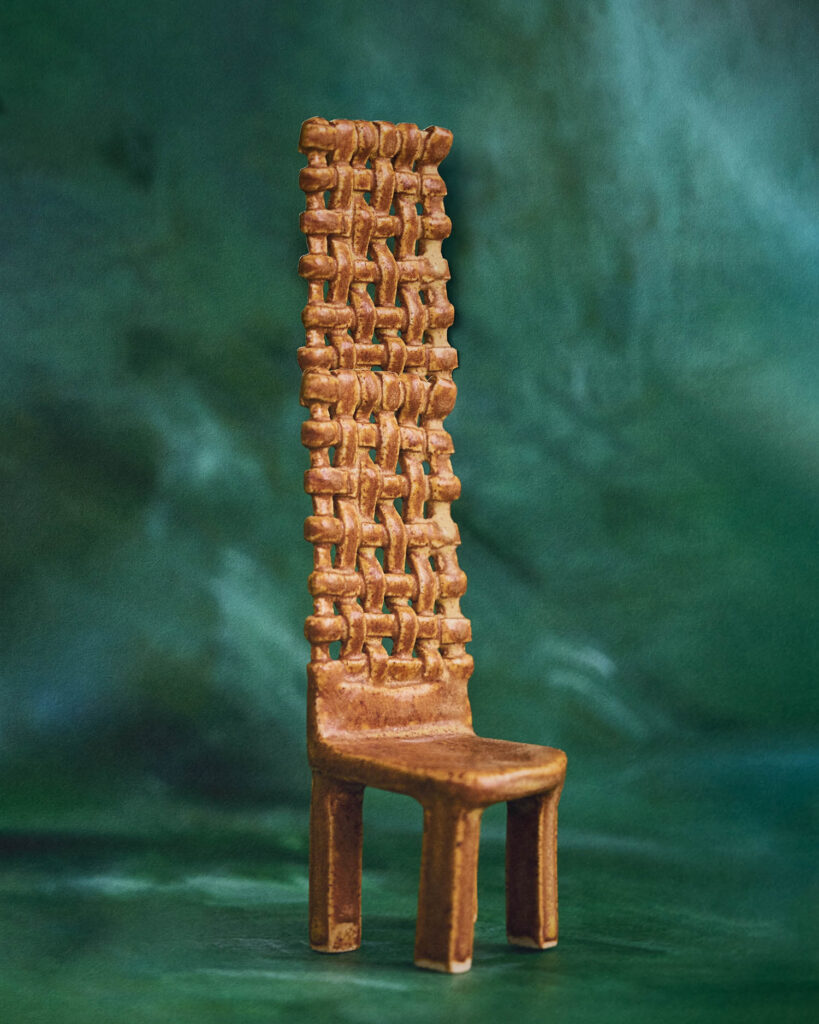
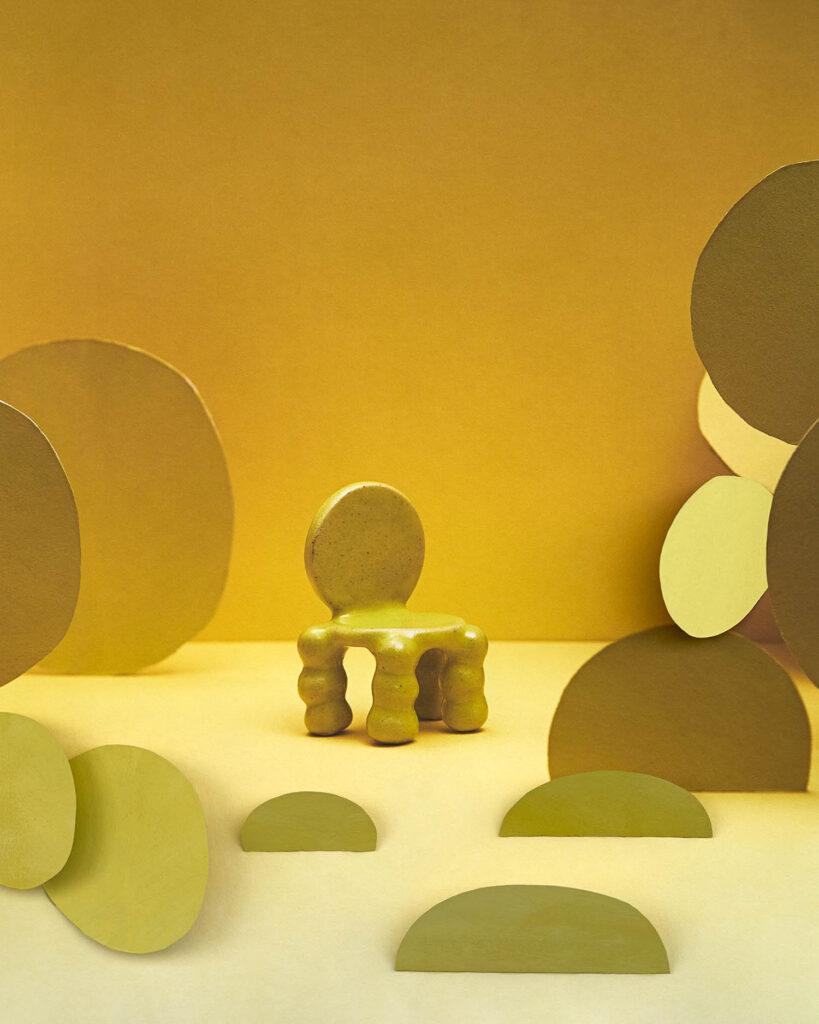
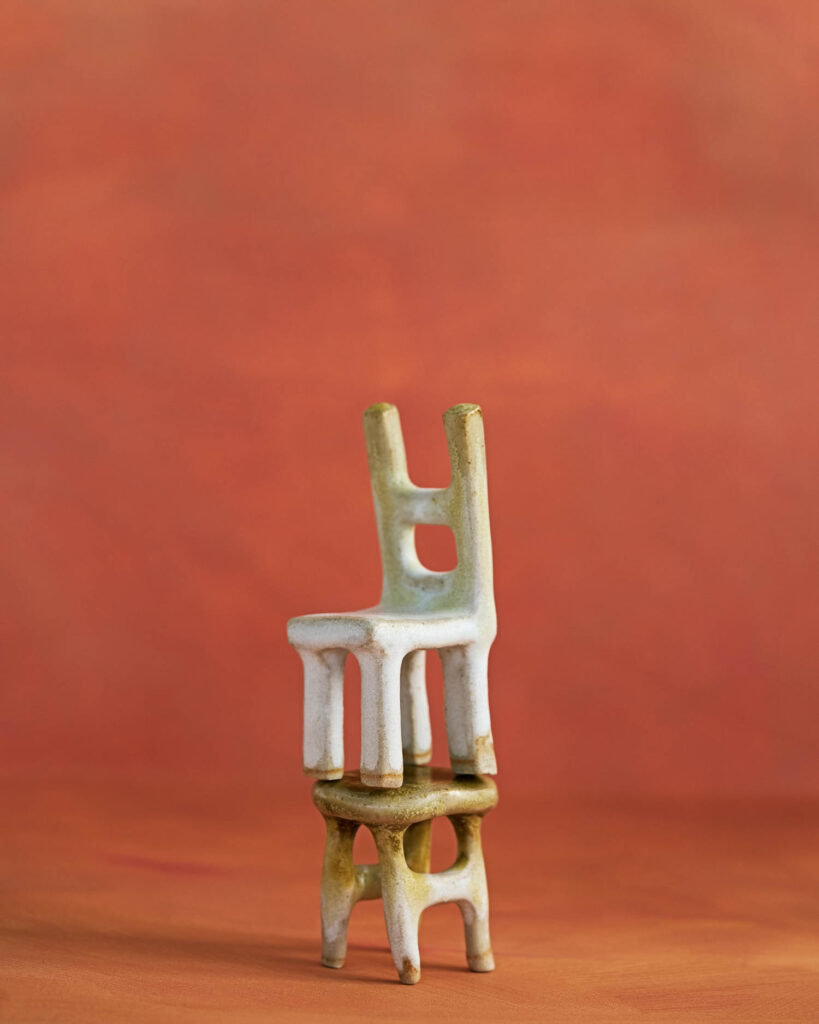
The artist’s recent Four Legs series depicted handcrafted chair miniatures photographed with distinctive backgrounds. Haser explains that she “became slightly obsessed with making miniature ceramic chairs and building small, detailed sets around each one and photographing them as interior scenes.” The Four Legs project was recently the subject of a solo exhibition at Candela Gallery in Richmond, Virginia.
Haser was born in Germany in 1989, and she is now based in South East England. She has been exhibiting her work for over a decade. She has had solo shows at the Photographers Gallery in London, the SPAO Gallery in Ottawa, Canada, and others. Haser has also participated in group exhibitions around the world, including in Paris, Barcelona, Berlin, New York, and Miami. The artist has won numerous awards for her work, including Magenta Foundation’s Bright Spark and the PDN Photo Annual Award.
Interior Design spoke with the artist about her recent exhibitions, her appreciation for analog processes, and her dislike of artificial intelligence.
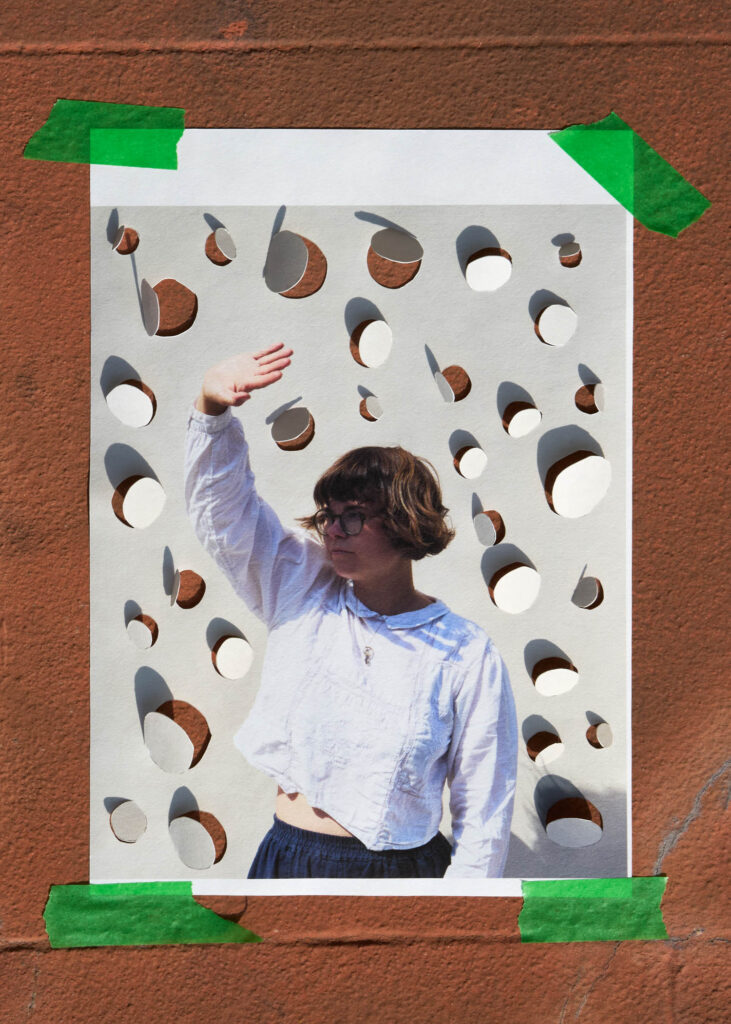
In Conversation With Alma Haser
Interior Design: You’ve become known for combining mediums in your work. Can you tell us about that?
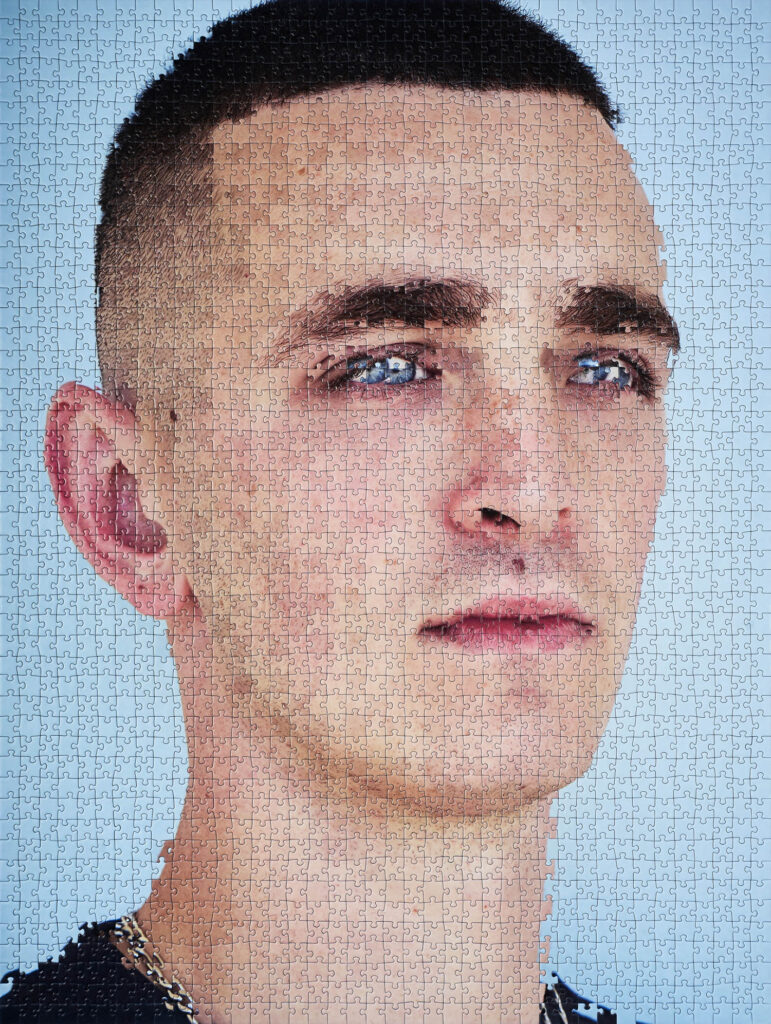
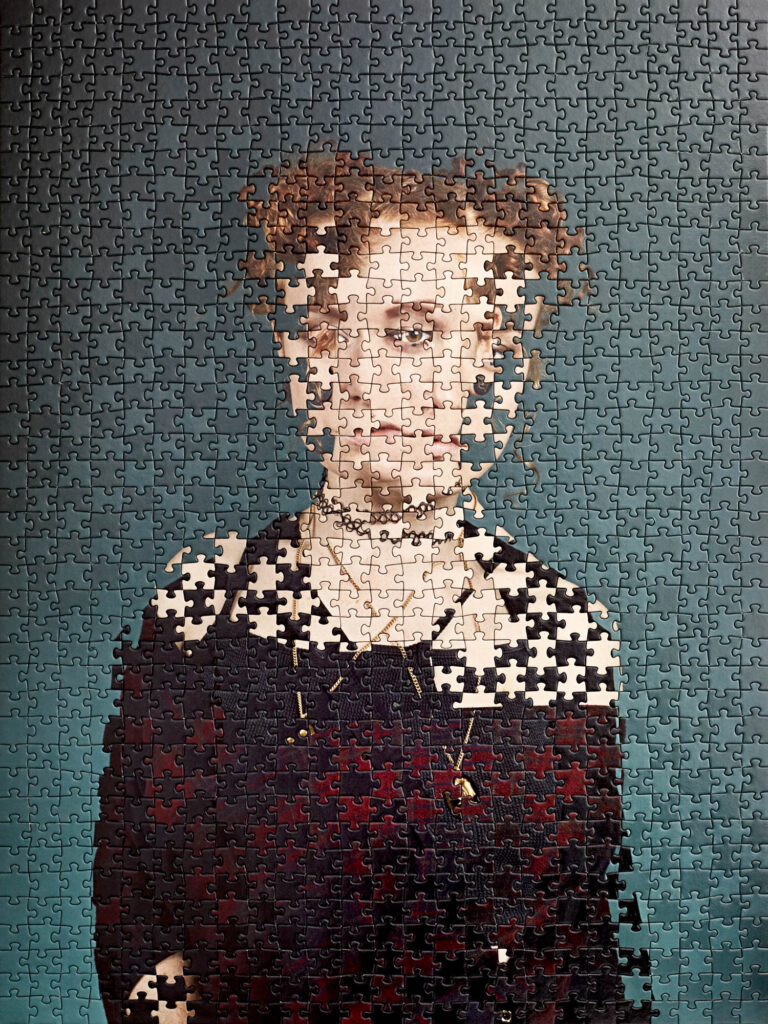
Alma Haser: I’ve always found the term ‘photographer’ a little restricting when it comes to my practice, as most of my work goes through multiple mediums and processes. I see the camera as more of a vessel. I’m an analog artist, and the hand process of my work is so important. So many of my projects revolve around playing with the idea of deception, and incorporating different mediums feeds into this. My recent series, Unlearning AI, was made through combining two puzzles by hand. This is a technique I developed with an earlier project called Within 15 Minutes.
ID: What is most essential to you in your creative practice and throughout your working process?
AH: The most essential part of my practice is having an analog approach. Before studying photography, I wanted to study sculpture and you can see that in my work. I’ve always used my hands to create and sometimes I find the amount of time I have to spend working on my screen really uninspiring. In a world where artificial intelligence is evolving with such speed, and creating massive shifts across the creative industry it feels more important than ever to celebrate analog processes and techniques that have been learnt and perfected by skilled artists over time through the process of experimentation.
ID: How did the Four Legs project start?
AH: Four Legs started completely organically. Over the past year I took up pottery in a local studio, I saw it as a chance to unwind and have one day a week to myself to create with no expectation or outcome. Making with my hands is an essential part of my practice and working with clay encourages me to let my hands lead, and to get out of my head a little. I organically started making a series of miniature chairs, and soon found that I couldn’t stop. It all felt really meditative and instinctual. After doing some research I discovered the reasons behind people’s infatuations with miniatures in general. Miniatures can offer a sense of control and calm when life feels hectic. Their size and simplicity make everything feel achievable and uncomplex.
ID: What types of miniature chairs are included and how did you choose each miniature design?
AH: I saw the chair series as a chance to reinvent something we all know so well. I was interested in how far I could push the design of a chair, and its ability to still be recognizable. There’s a real range, from more traditional chairs: the typical vintage wooden chair you remember at your grandparents’ house, to something more structural and graphic, and playful and inventive, like the post-it-note chair.
ID: Was research into furniture design or other mediums part of this project?
AH: Not consciously, no. Although I think that all feeds into the pieces naturally. I’m always promoting play and experimentation in artmaking as I think there’s so much that can come out unconsciously if you learn to trust your process. But my partner, who is also a photographer, is very much focused on design and I’m sure his interests in design and the furniture he buys for our place has influenced the making.
ID: Can you tell us more about why you feel that miniatures can provide a sense of control and escapism when real life feels a little too much?
AH: I think it’s got a lot to do with control in relation to size. Even if you are creating something quite complex, with lots of detail for example—as long as it’s small it doesn’t ever seem too daunting. It (quite literally) doesn’t take up too much room in my mind. There’s also the nostalgic factor, leading back to when as children we would play with smaller versions of the world around us, creating our own safe worlds in doll houses.
ID: These were on view at Candela Gallery in Richmond, Virginia recently. Can you tell us about the other project they were shown with?
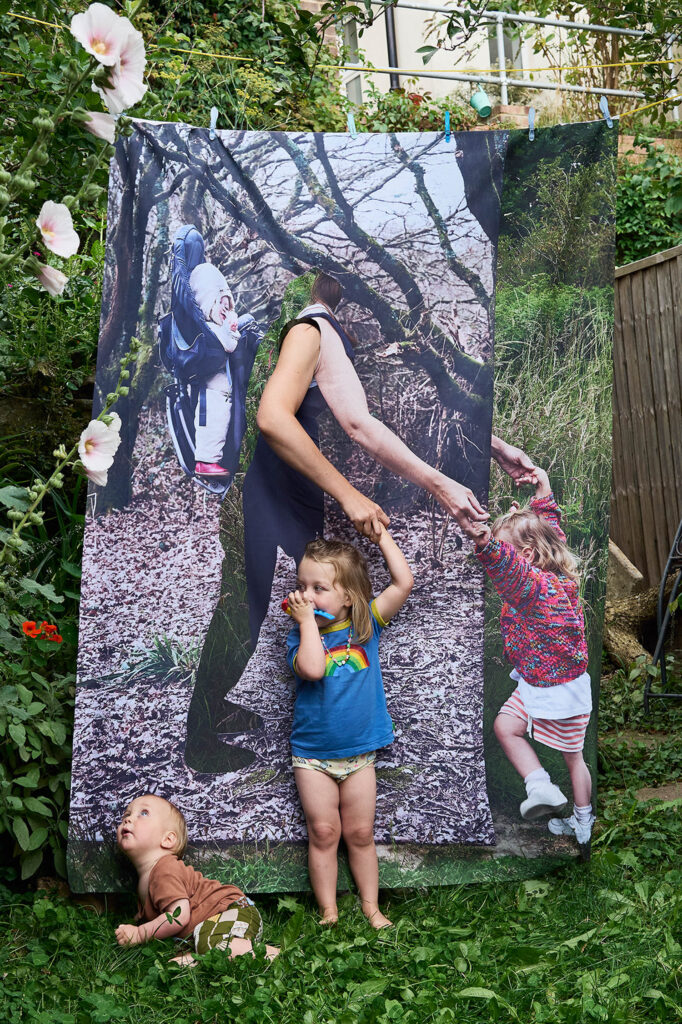
AH: Four Legs was shown alongside another project of mine called Tired, Warrior, Defeated, In Love. which explores the journey of motherhood through revisiting a group of mothers over time. Throughout the series, skin is stretched and pulled, nipples twisted, bodies bruised and bulging. Time is layered and relayered, patchworked together. The project deconstructs the misrepresentations of motherhood with a tender and playful eye. It’s hard to tell where mother ends and child begins. I wanted this show to bring mothers together, and to be a platform for mothers to find their villages.
ID: Another recent series explored language and more specifically German idioms. What medium was used for that and what were you exploring and expressing in that series?
AH: My recent project Everything has an end, only the sausage has two. brought my ceramic work into my practice for the first time. This surreal series explored the quirks of German idioms, and their often unexpected English translations. The final series included lots of three-dimensional works with paper folding and cut outs, as well as handmade paper flowers, for the idiom ’to say something through the flower.’ This idiom means to express criticism in an indirect way. The flowers were positioned to grow directly out of a woman’s mouth.
ID: What about the Unlearning AI series, how did that series start and why did you decide to sell puzzles (and are they still available)?
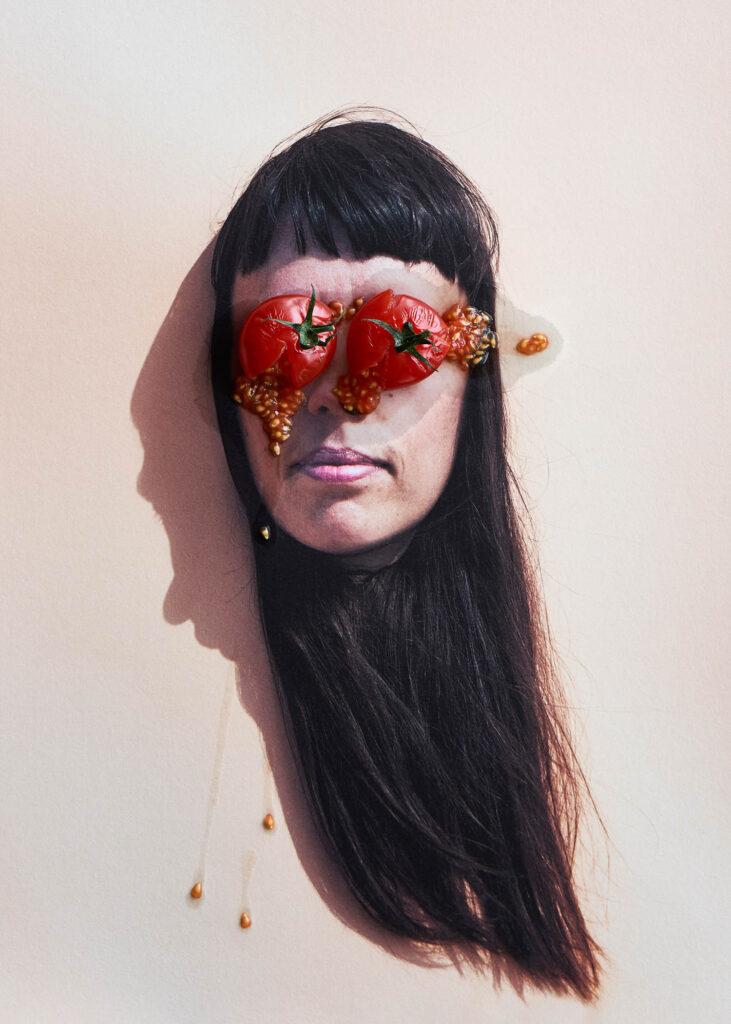
AH: Unlearning AI started from a general disdain for Artificial Intelligence. I was aware of how rapidly AI was learning and I was interested in its inability to recreate certain human features, like hands for example. In AI’s effort to create a ‘perfect’ image, the human detail is wiped, and instead you are left with often eerie results. The works distort the image and highlight manipulation rather than masking these ‘imperfections.’ AI is learning rapidly and becoming smarter, creating cleaner, smoother and more perfect images, corrupting our perceptions of what is real.
Each portrait is created from two 2,000 piece puzzles that are reconstructed by hand to reveal a restitched portrait. The seams of the image are visible, presenting the identities as distorted beings. The portraits can also be seen as digital reflections, asking how AI is effecting how we see ourselves.
The puzzles are available for purchase on my site, for people to make at home.
ID: How long have you been making art and what are you planning to make next?
AH: I’ve been making art for as long as I can remember. Both my parents are artists so we were brought up in a very creative home. It feels like an absolute necessity to life.
Both Four Legs and Tired, Warrior, Defeated, In Love are ongoing projects, so I’ll be continuing with them. But my brain works in a way where I need to start something new before returning back to an old project. I’ve been reading a lot about the Patriarchy and have some ideas about a project revolving around that…. So we will see!
I think I would love my photography and ceramic practice to merge even further and create big exhibitions with both mediums celebrated. I want people to become more open to the different techniques and materials blending,
read more

DesignWire
Emirates Debuts Hospitality Suite Inspired By Its Premium Aircraft Cabins At The US Open
Emirates brings the refined feel of its onboard experience courtside at the US Open with a newly redesigned hospitality suite featuring a replica A380 bar.
DesignWire
Dale Chihuly’s Enduring Dialogue With Venice
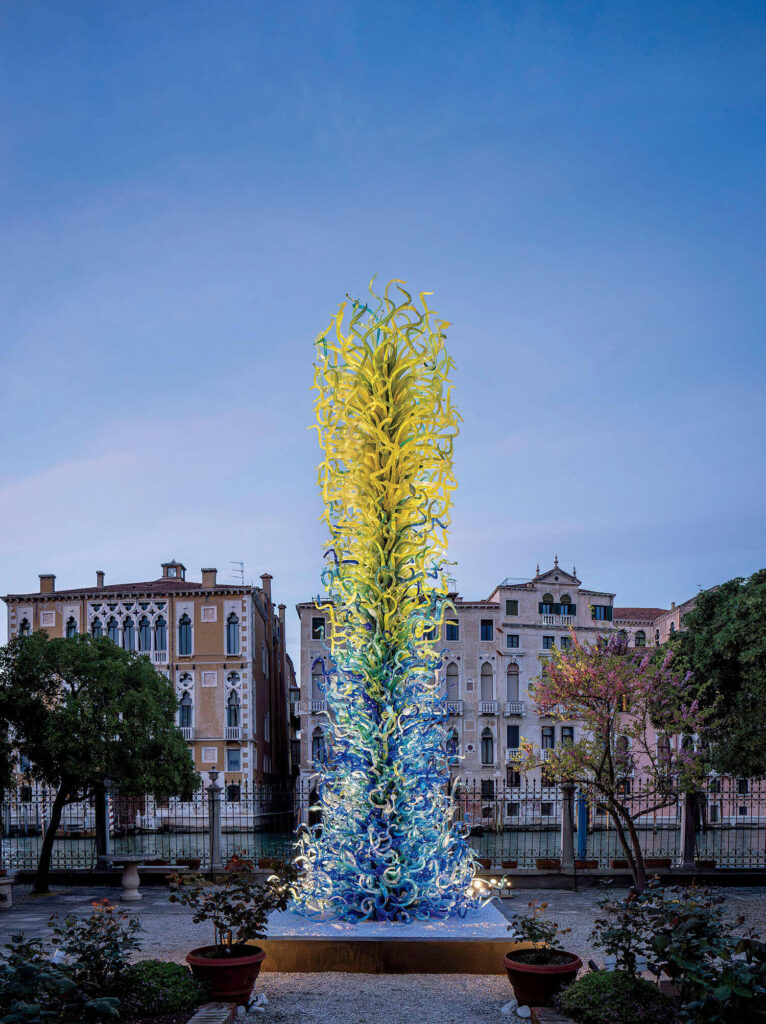
Nearly 60 years after first discovering Venice’s glassmaking traditions, Dale Chihuly returns with three monumental new works along the Grand Canal.