
Desert X AlUla Brings Immersive Art To The Saudi Desert Landscape
Woven into the ancient desert canyons of AlUla, Saudi Arabia, Desert X AlUla 2026—the open-air biannual exhibition of site-specific land art—has returned for its fifth edition, with a host of monumental artworks situated in the mesmerizing landscape.
Inspired by AlUla’s unique geology, heritage, and nature, the 2026 edition presents earthworks, sculptures, and multisensory installations from January 16-February 28, 2026. Curated by Wejdan Reda and Zoé Whitley, under the theme ‘Space Without Measure,’ the exhibition is inspired by the words of renowned Lebanese writer and poet Gibran Khalil Gibran.
“In the spirit of Gibran’s words, this edition of Desert X AlUla unfolds as an invitation to dream, to wander and to connect with the landscape, not as something observed from a distance, but as something deeply felt here,” Whitley says. “It’s from this shared invitation that the artists begin to speak, each in their own register, material and rhythm, offering personal yet deeply attuned responses to the landscape. Together, these artists form new possibilities, not to explain the desert, but to dwell within it, to listen, to feel and to remain within the openness it offers.”
Most of this year’s 11 artworks are spread across a compass-shaped canyon with four branches, from gigantic kinetic sculpture to sound-based explorations—and one installation is found at the AlUla Oasis. Sustainable practices like traditional rammed earth techniques and wood and stone carving are a major part of the artworks, created collaboratively with local botany experts at the AlUla Native Plant Nursery and artisans from with Madrasat Addeera, AlUla’s art and design centre, produced and fabricated using locally sourced-materials.
Highlights From Desert X AlUla 2026
‘A Kingdom Where No One Dies: Contours of Resonance’ by Sara Abdu
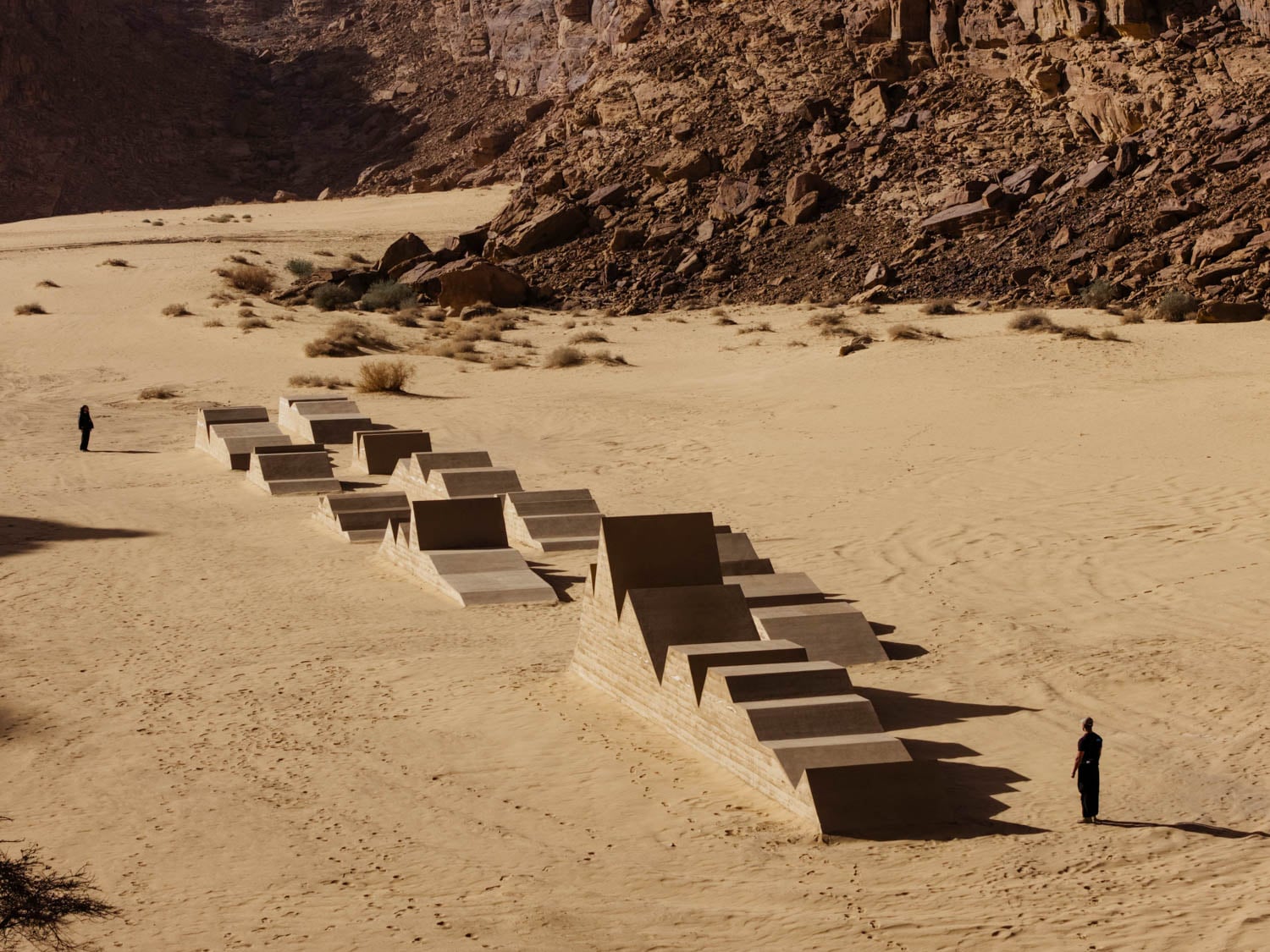
Saudi-born Yemeni artist Sara Abdu combines poetry and geological strata to create vast sculptural walls of rammed earth, reviving ancient construction techniques common to cultures around the world, which takes the form of mountains peaks. Using the sands of both AlUla and Yemen, the artist’s jagged sculpture visualizes the sound wave pattern of her voice, as she reads her poem about transcending borders and reconnecting with the earth.
‘What was the Question Again?’ by Mohammad Alfaraj
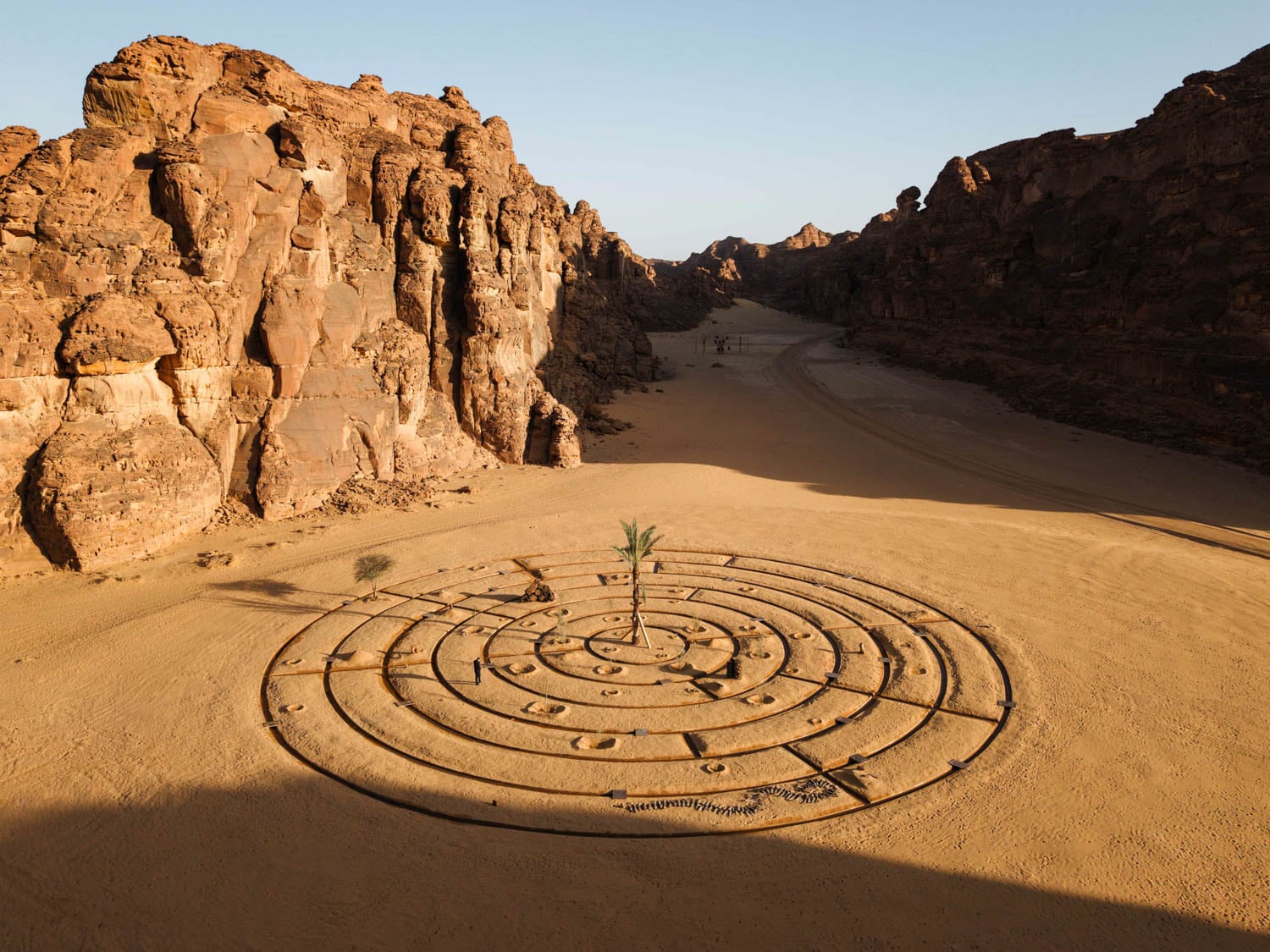
Created by multidisciplinary Saudi artist Mohammad Alfaraj, who is known for working with natural materials like wood and palm trees, the artist has created a wide-spread series of concentric circular water channels, with a palm tree made of many grafted trunks at the center. The work is inspired by fables cantered on the landscapes, from his childhood in Al Ahsa, Saudi Arabia. The piece is intended as a reflection on harmony, renewal, and the intimate relationships between people and environment.
‘The Thorn,’ ‘AlShuruf Unit,’ ‘The Triangles,’ ‘Flower Bud,’ and ‘Al Ahilla’ by Mohammed AlSaleem
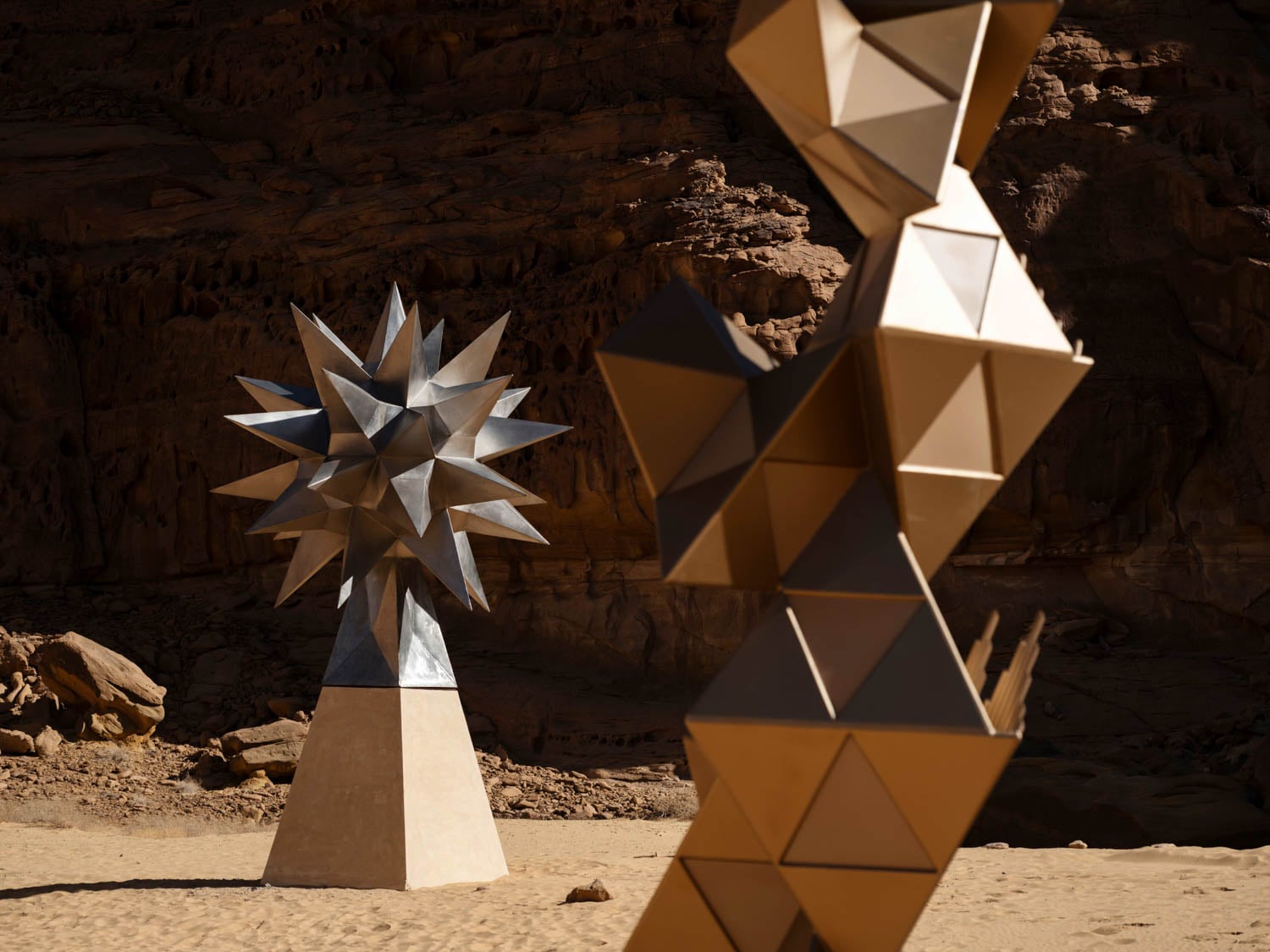
Five never-seen-before sculptural works by renowned Saudi Modernist and founder of Riyadh’s first art house Mohammed AlSaleem (1939–1997) are on show, on loan from the Riyadh Art collection. Created in the 1980s, these geometric steel totem-like pillars, each imbued with symbolic meaning inspired by desert landscapes and celestial motifs, are dotted around one of the canyon paths. The sculptures appear as futuristic alien objects contrasted against the natural vistas.
‘The Water Song’ by Tarek Atoui

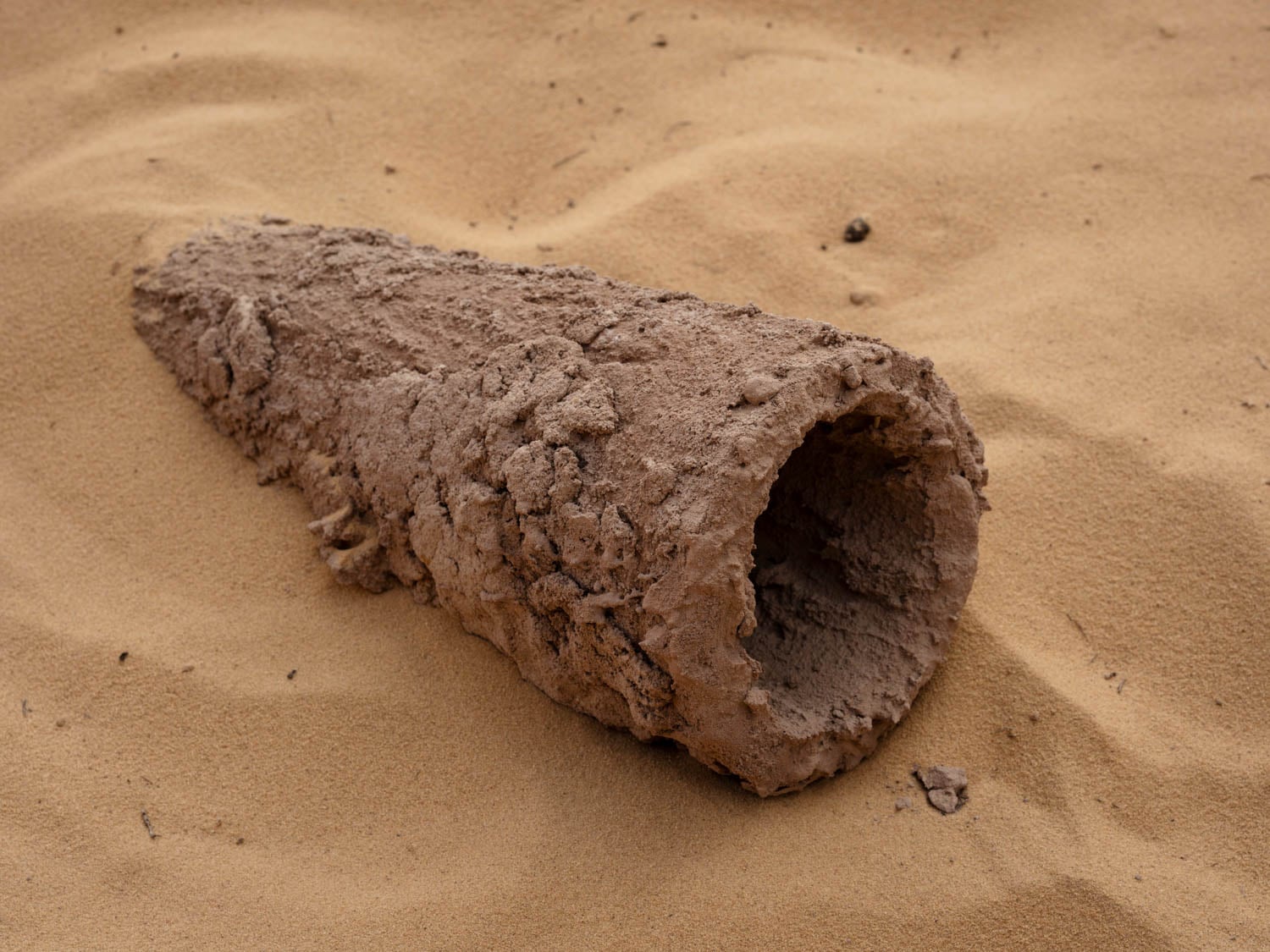
Lebanese artists and electro-acoustic composer Tarek Atoui is known for his immersive, experimental sound-based installations and collaborative performances, drawing on the local musical culture of his site-specific works. His new project ‘The Water Song’ is a continuation of his Bayt Al Hams (The Whispering House), first presented at the AlUla Arts Festival in 2025, which uses natural objects to create instruments and music. At Desert X AlUla, Atoui uses the landscape as an archaeological site, where half-excavated instruments emerge from the earth. Seven hollow horn-like structures, partially buried in the sand, are activated by air and subtle interactions with water, produce a droning generative sound sequences that echoes through the canyon. Each activation creates a unique chant, calling for water.
‘Bloom’ by Bahraini-Danish

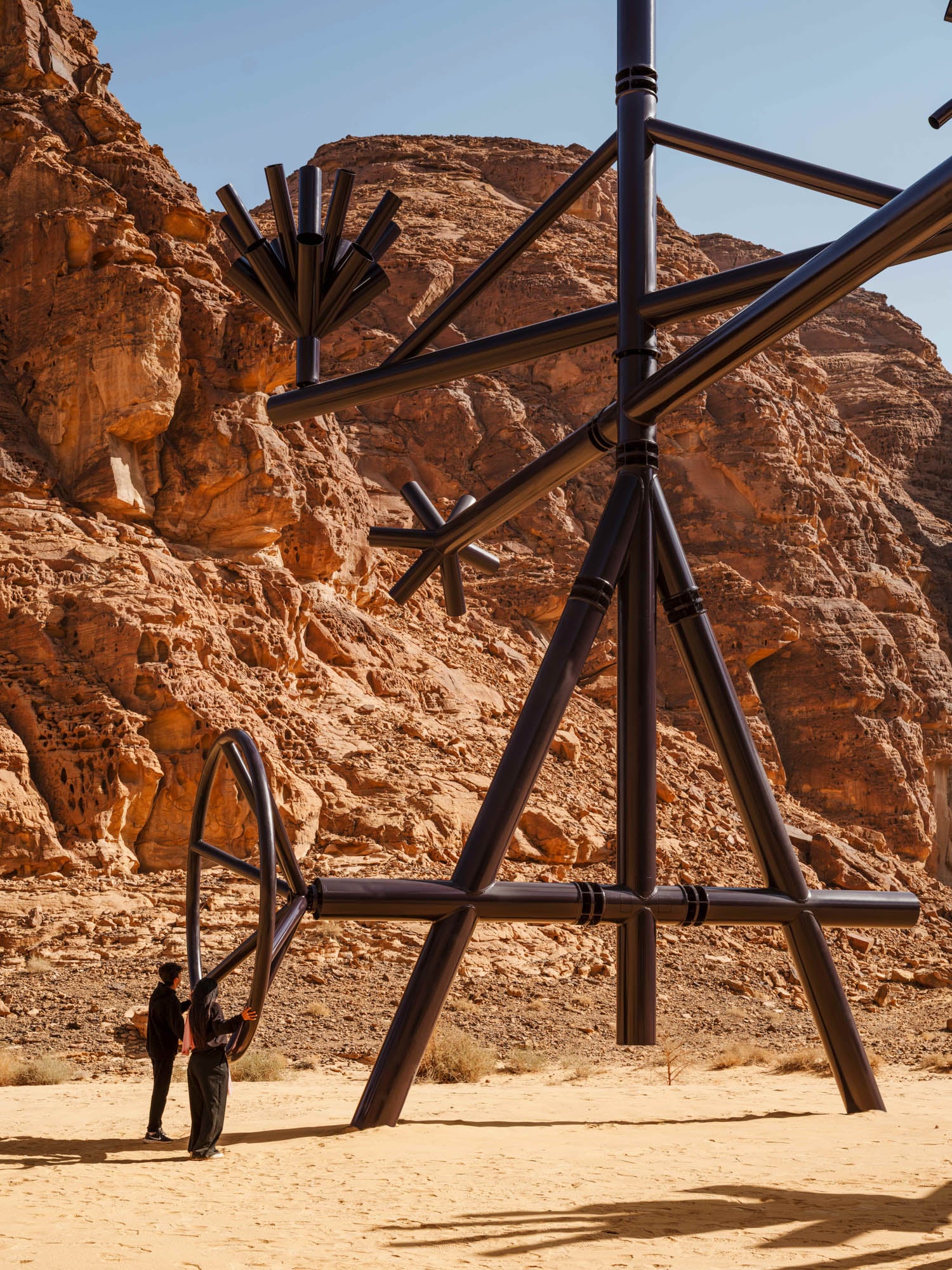
‘Bloom’ takes the form of a massive kinetic sculpture that invites guests to interact and play, moving a series of wheels, leavers and spinning forms inspired by local plant life on the large metal rig. Created by Bahraini-Danish—a collective art, architecture and design practice by Batool Alshaikh, Maitham Almubarak, and Christian Vennerstrøm Jensen—the artwork responds to the desert’s interplay of shadow and sunlight, with the spinning forms resulting in shifting shadows that sweep the surrounding landscape and create a dialogue between viewer, participant and place.
‘Imole Red’ by Maria Magdalena Campos-Pons
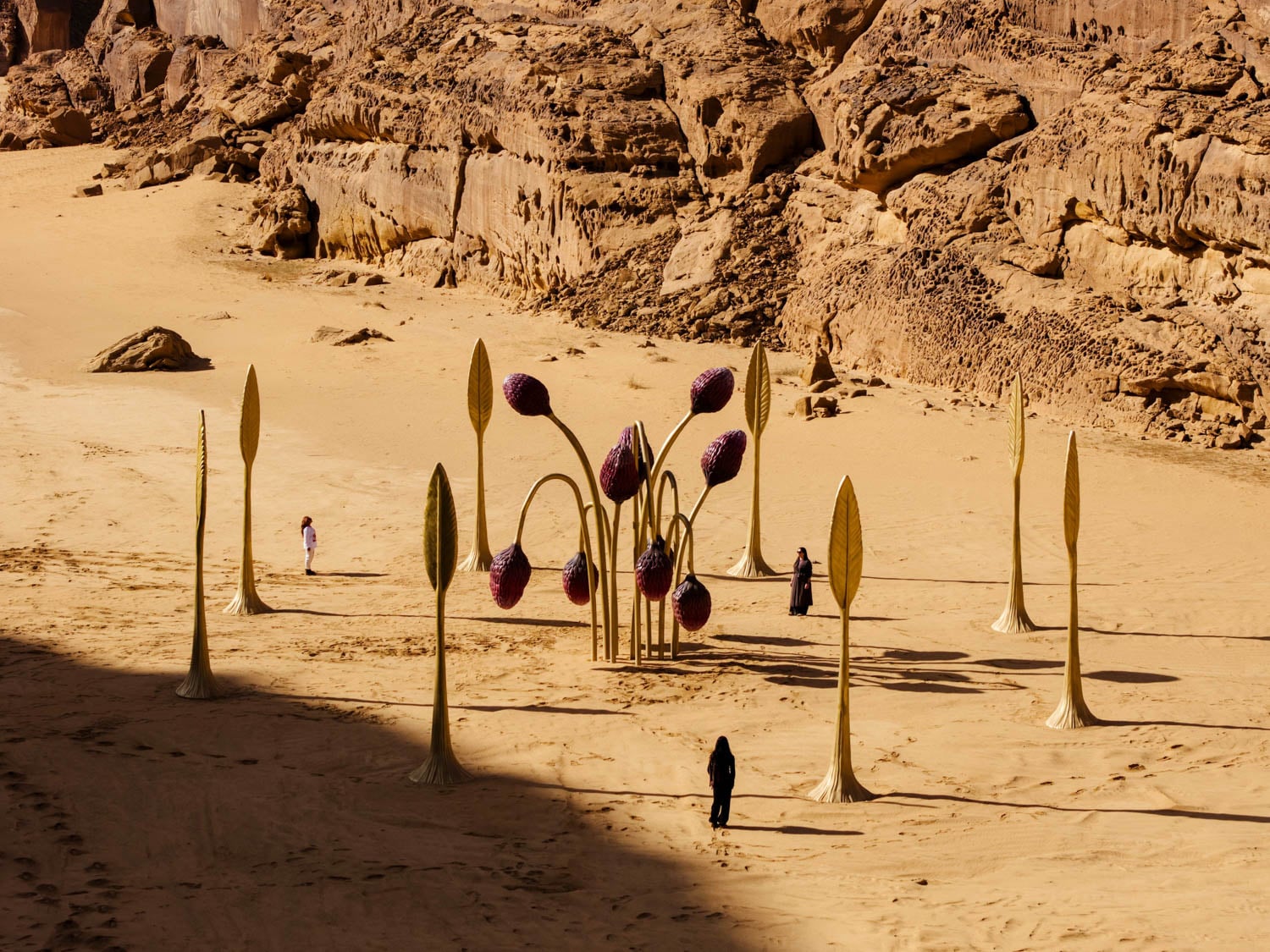
Maria Magdalena Campos-Pons is a Cuban-born, U.S.-based multidisciplinary artist whose work channels land, light, and spiritual heritage. Her monumental floral sculpture turns the viewer into a character from Thumbelina, as the plants tower above. Inspired by AlUla’s intense sunsets and West African Yoruba traditions, the artist references an array of native plants that flower across the red spectrum such as date palms, jujubes, and allium atroviolaceum. The canyon’s change chromatically from yellow, ochre, red, to purple and blue, and Campos-Pons synthesizes color, light and energy into a blossoming, alchemical garden. The installation is situated in a historic flood plain to honor the valley’s past, and the larger-than-life allium flowers serve as a reminder of our shared roots in a landscape that has transformed over millennia from sea to desert, carrying the memory of water in their bones and the promise of connection in their reaching forms.
‘Hazara Tree’ by Ibrahim El-Salahi
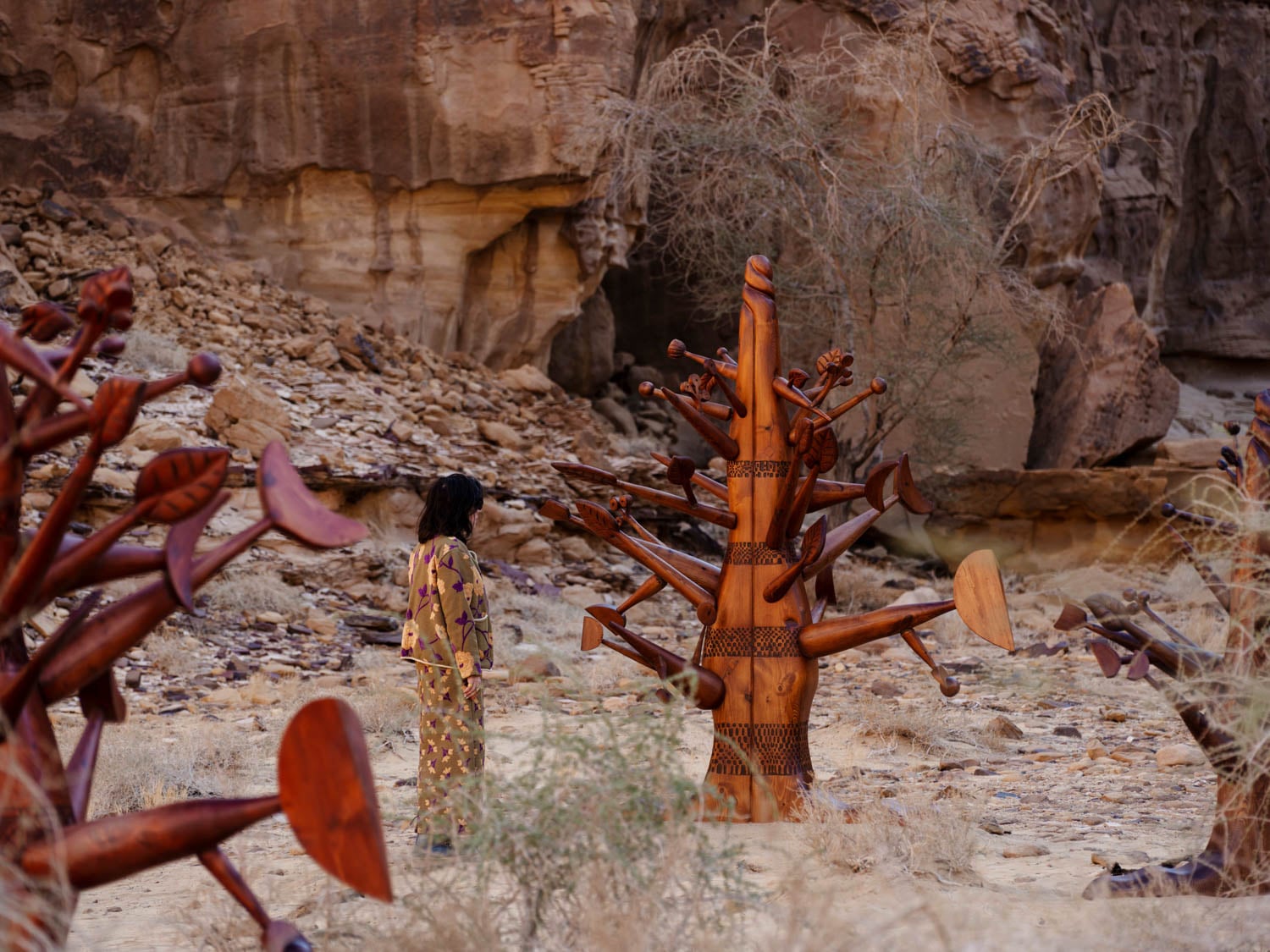
Leading Sudanese Modernist Ibrahim El-Salahi presents an installation inspired by the resilient acacia trees that grow across AlUla’s canyons. The artwork is a forest of carved wooden ‘meditation trees’ in browns, black and red. Acacia trees are known for providing shade, food for animals and firewood for travelers, with a deep linked root systems that connects the individual trees across the landscape, and so the artist envisions unity emerging from multiplicity, linking heaven and earth in a harmony of form and meaning, in the same way the real trees do.
‘Murmur of Pebbles’ by Basmah Felemban
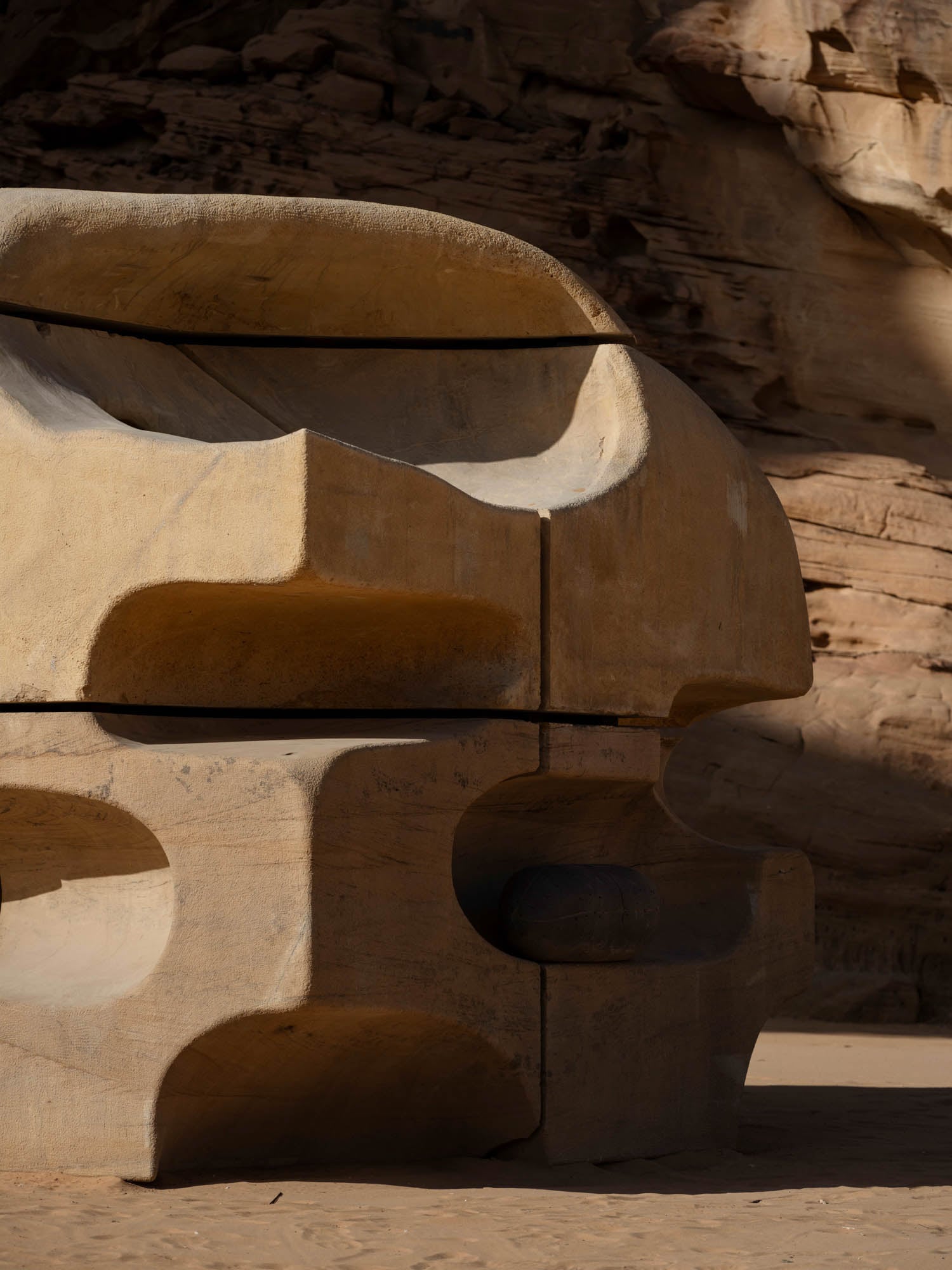
Known for her installations rooted in Islamic geometry, Saudi artist Basmah Felemban has taken the tiny geological element of pebbles and made them monumental. Magnified into large limestone sculptures, the gigantic pebbles remind the viewer that the desert canyons were once underwater millennia ago, sculpting fragments of quartz-rich rock into smooth, round pebbles tumbled by the water. Each pebble carries geological memory and knowledge of these lost waterways, but by observing the pebbles insight into the speed of the water flow and how the waterways shaped the landscape can be uncovered. The piece was originally commissioned for Desert X AlUla 2024, curated by Maya El Khalil and Marcello Dantas, and has been revisited for the 2026 edition through the new curatorial lens.
‘Future Fables’ by Vibha Galhotra

Vibha Galhotra is a New Delhi-based artist whose practice often addresses climate change and environmental degradation. In ‘Future Fables,’ she encloses fragments of AlUla’s demolished buildings within a steel framework, transforming rubble into a shelter for shared narratives, collective reflection, and imagining new futures. The concrete bricks and slabs of terrazzo tiles have been mosaicked together through steel framing, creating a shaded sanctuary in the harsh climate. The installation is an invitation to reflect of concrete’s role in driving global warming—once a symbol of progress and modernity, now an unsustainable and environmentally damaging material.
‘Tar HyPar’ by Héctor Zamora
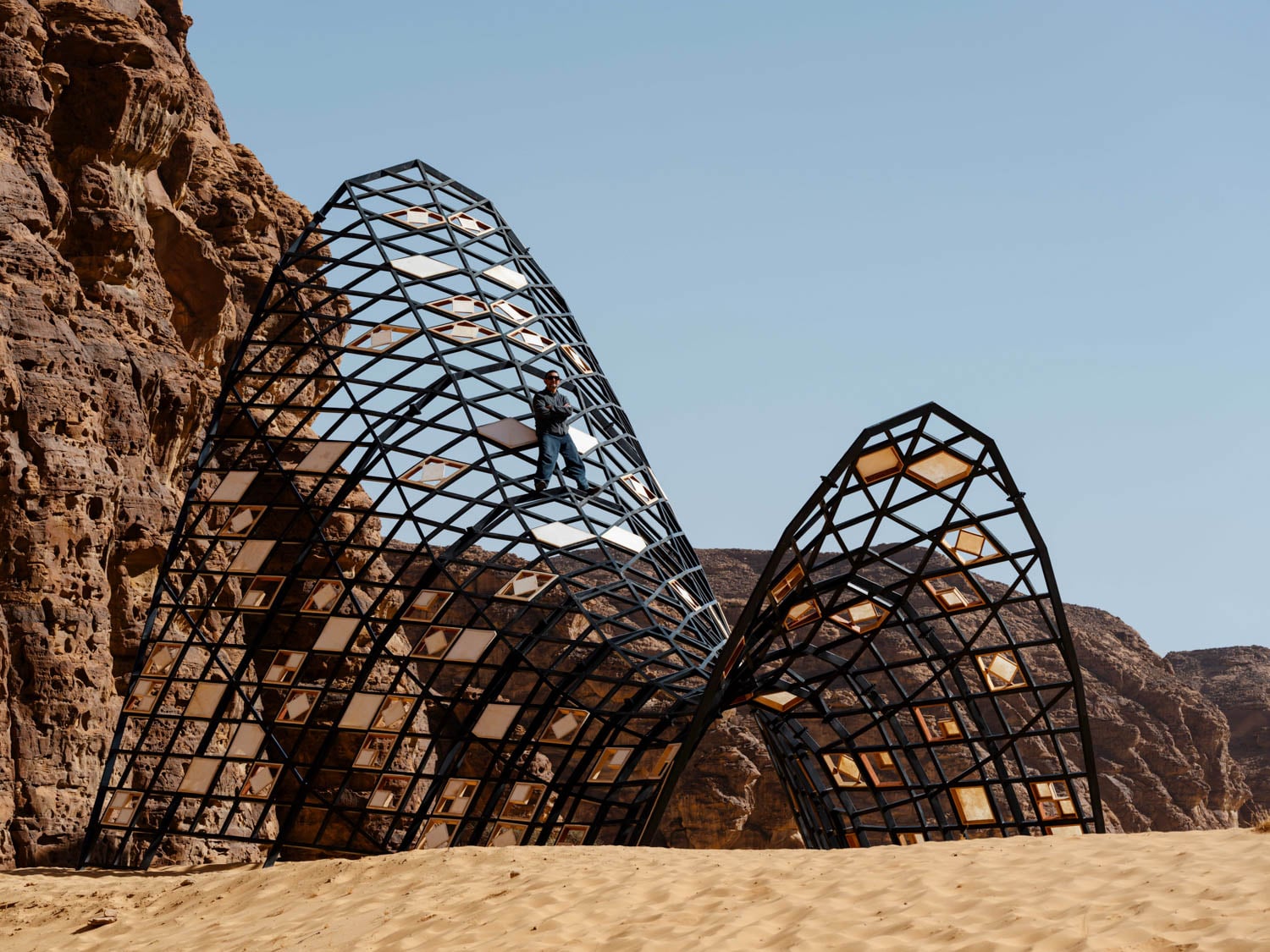
Héctor Zamora, the Mexican-born artist known for blurring boundaries between art, architecture, and public participation. Inspired by both traditional Saudi drums and hyperbolic paraboloid forms, his work ‘Tar HyPar’ transforms the valley into a musical instrument, inviting visitors to create energy through collective sound. A large metal claiming frame shaped like a tabla drum features patches of hide drum skin, allowing viewers to engage with the piece and drum out improvised rhythms together, echoing off the rock faces.
‘The Living Pyramid’ by Agnes Denes
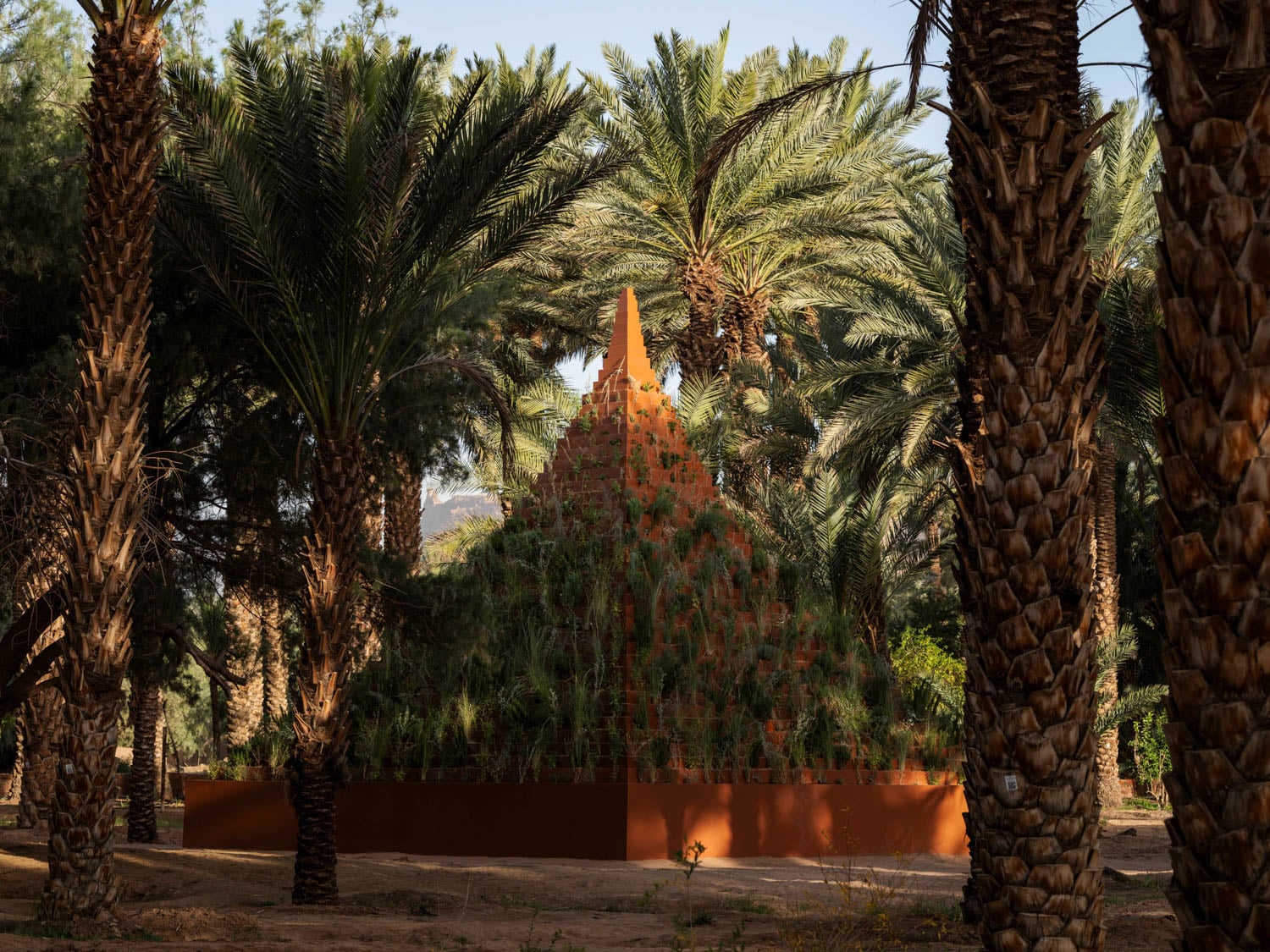
Hungarian-born U.S.-based pioneer of ecological and land art Agnes Denes presents ‘The Living Pyramid,’ the latest iteration of her global project, in which pyramids serve as massive plant pots for local flora and shrubs. The monumental, plant-filled structure in AlUla’s oasis, already planted with indigenous plantlife, is an exploration of the cycles of life from soil to seed to blossom, and speaks to the universal language of optimism, resilience, and natural beauty. The installation will remain for several months, allowing the greenery to overtake the structure and reclaim the manmade structure.
read more

DesignWire
Designers And Manufacturers On The Move: September 2026 Edition
Interior Design‘s latest On the Move includes must-know industry promotions and hires, like Perkins&Will’s strategic move to expand its design capabilities.
DesignWire
10 Questions With… Artist and Designer Conie Vallese
From sculpture and ceramics to glass, textiles, and furniture, Conie Vallese embraces a multidisciplinary practice shaped by curiosity and creativity.