
Renowned Architect Robert A.M. Stern Dies At 86
Robert A.M. Stern, an architect who indefinitely shaped the landscape of New York City, died November 27, 2025, at the age of 86. The Interior Design Hall of Famer and multi-hyphenate, who also served as dean of the Yale School of Architecture for nearly two decades, infused his projects—and his New York-based firm Robert A.M. Stern Architects, known as RAMSA—with heart.
The firm, which Stern initially founded in 1969 with John S. Hagmann before going out on his own in 1977, grew into a business with more than 250 designers, always with education at the fore, ensuring generations of architects and designers have access to resources needed to create enriching careers—and spaces. True to Stern’s experiences teaching at his alma mater, Yale University, as well as Columbia University, RAMSA distinguishes itself as a firm that prioritizes curiosity, inclusivity, and mentorship. RAMSA partner, Michael Jones, once brought scholar, Andy Campbell, author of the Queer x Design book, to the office to discuss the history of queer graphic design and the firm also has a knack for turning its halls into a gallery to showcase employee work.
Perhaps most memorable to those more familiar with Stern’s work than the workings of his firm, are his grand buildings, which foster community.
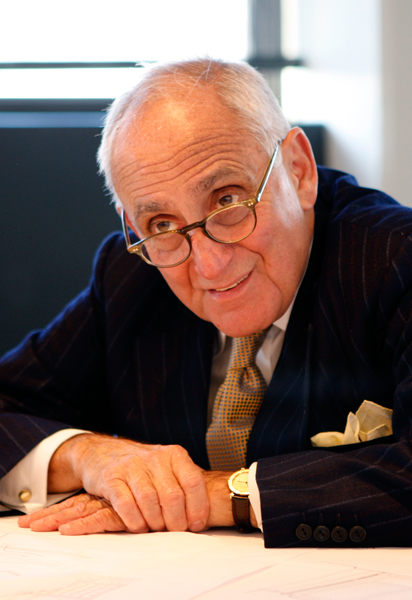
A Closer Look at The Life And Legacy of Robert A.M. Stern
With legacy buildings such as 15 Central Park West, a luxury Manhattan residence which fused the city’s past with its changing present, as well as the 57-story Comcast Center in Philadelphia, and the George W. Bush Presidential Center in Dallas, Stern’s work reflects the the immense breadth of his vision. RAMSA also won an Interior Design Best of Year Award for Higher Education in 2022 for the Schwarzman Center at Yale, which serves as a student hub and is a testament to the firm’s community-first ethos.

“Bob’s impact reverberates not just through RAMSA, but across the entire field of architecture. His legacy will live on through the books he wrote, the students he mentored, and the people who inhabit his remarkable buildings. His vision, passion, and notoriously sharp wit became the foundation for a career that will not soon be forgotten, and a firm that is honored to continue the work he began,” says Daniel Lobitz, RAMSA partner and management committee chair in a statement issued by RAMSA.
Born in Brooklyn in 1939, Stern earned an undergraduate degree from Columbia University before going on to earn an M.Arch. from Yale University, founding his firm shortly thereafter. An avid writer and author of several books, Stern’s memoir Between Memory and Invention: My Journey in Architecture offers insights into his design philosophy. He writes: “I pride myself in sticking to principles—I have no regrets over staying true to my conviction that architecture cannot flourish so long as architects believe they stand before a tabula rasa, so long as they believe that architecture is just the product of an individual program, individual talent, and individual personality. It is much more—architecture is part of a continuum.”
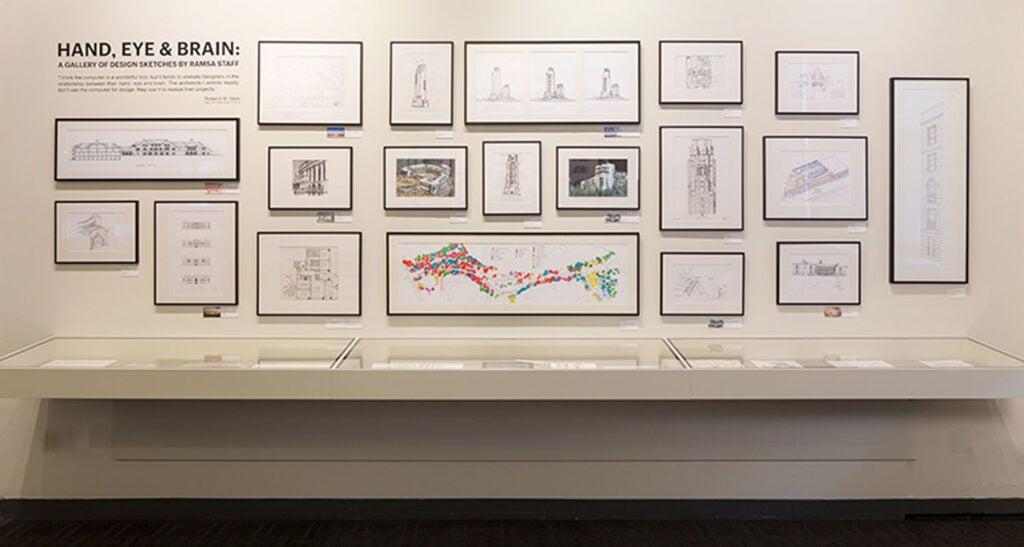
Stern was a Fellow of the American Institute of Architects, and in 2017 received the Topaz Medallion for outstanding service to architectural education. He was the 2011 Driehaus Prize Laureate and a recipient of the Congress for the New Urbanism’s Athena Award and the National Building Museum’s Vincent Scully Prize. His work also is on display in the permanent collections of the Museum of Modern Art, the Metropolitan Museum of Art, the Deutsches Architekturmuseum, the Centre Pompidou, the Denver Museum of Art, and the Art Institute of Chicago. His legacy also includes a place among the architects selected to represent the United States at the Venice Biennale for several years, and he served as Chair of the International Jury in 2012.
read more

DesignWire
Designers And Manufacturers On The Move: September 2026 Edition
Interior Design‘s latest On the Move includes must-know industry promotions and hires, like Perkins&Will’s strategic move to expand its design capabilities.

DesignWire
10 Questions With… Artist and Designer Conie Vallese
From sculpture and ceramics to glass, textiles, and furniture, Conie Vallese embraces a multidisciplinary practice shaped by curiosity and creativity.