
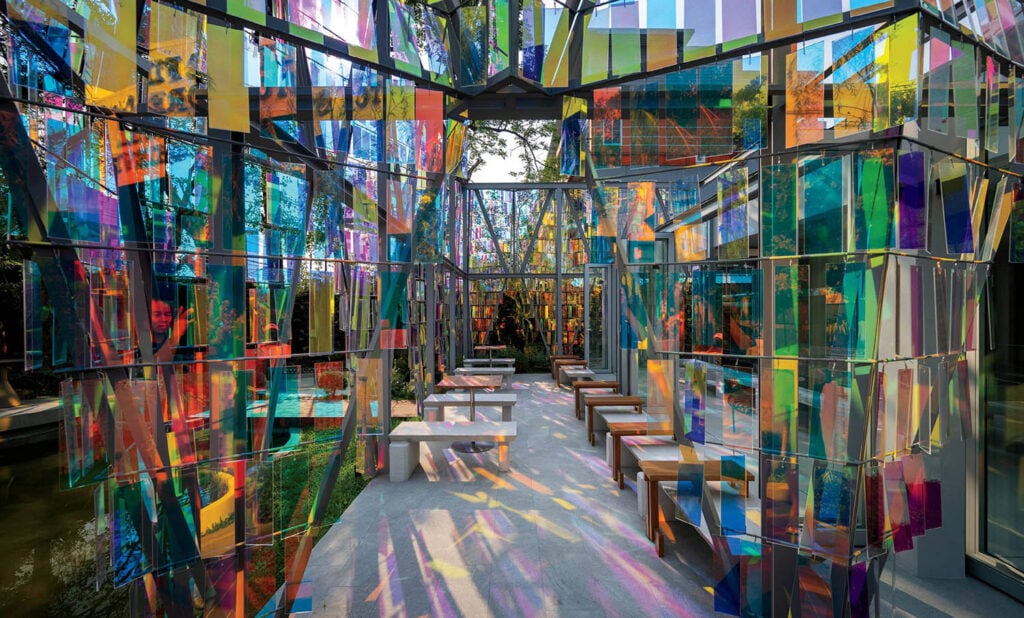
9 Top Design Trends Outlined In ASID’s 2026 Report
Among the array of tools designers have to navigate the changing landscape, one of the most valuable is the American Society of Interior Designers’ annual Trends Outlook. Version 2026, an 80-page state-of-the art report, was summarized for the press in a presentation led by Khoi Vo, president and CEO, and Lindsey Koren, director of communications, in partnership with Sherwin Williams.
This year’s overarching theme? Disruption is the new norm, and designers are the magicians to contend with it. That was part of the executives’ prologue as well as assertions that design is not limited to aesthetics or décor as it might have been thought in the past. Rather, design is about experience, values, societal ties, and universality. American life and business, as well as global economics, are driving design decisions “in response to institutional change in a fractured and chaotic world with compounding disruptions.” Yet Vo’s opener is not all doom and gloom. “On the positive side,” he counters, “it has never been more important for designers to lead. Disruption leads to change, and that’s what designers do.”
The Trends Outlook identified four macros or mega trends: trade, technology, climate, and the workforce, examining them individually and how they intersected with such additional considerations as: generational shifts, wellness, residential and concerns; institutional and security matters. We cite some of the standouts.
ASID’s 2026 Trend Report Reflects An Environment Ripe For Change
The Rapid Advance of Technology
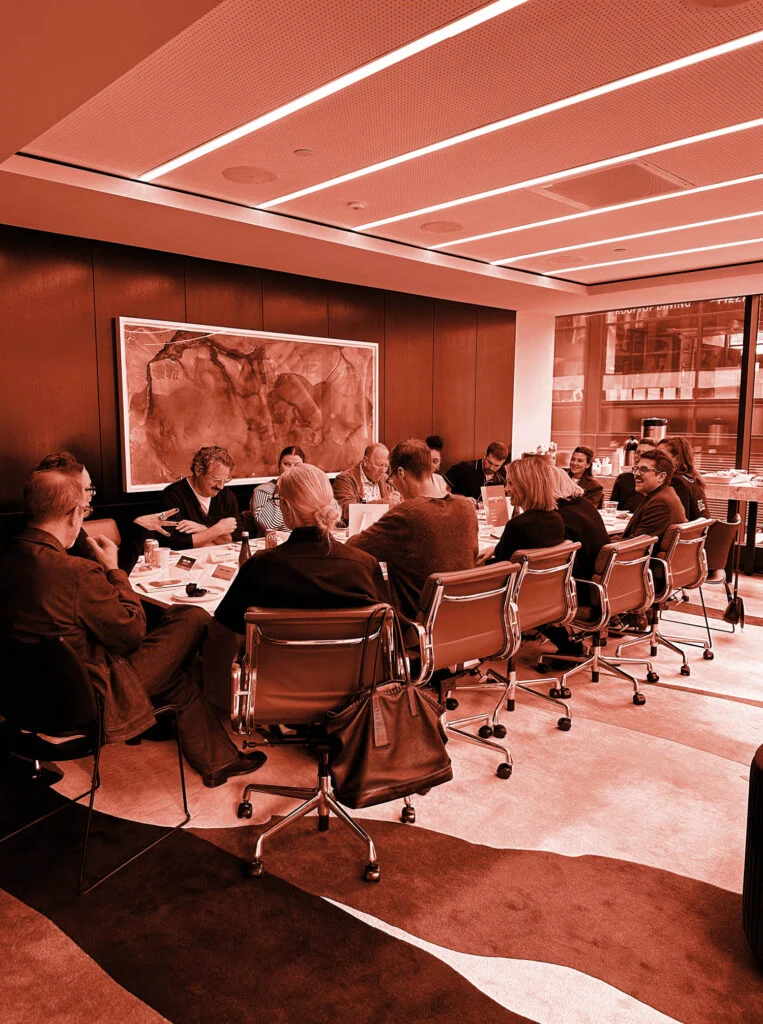
Artificial intelligence is indeed reshaping the practice of interior design. It is absolutely fundamental now, no longer experimental. Technology in practice is not just about tools but about the changing role of designers. They make more decisions rather than generating options. Creativity is seen as shifting from ideation to curation. AI is also about bringing designers into conversations sooner. But designers should fear not. They will not be replaced as new tools are consistently on the horizon. Evolving technology also touches upon cybersecurity and smart spaces, areas in which designers will increasing play advisory roles. IT fluency is part of well-being and trust. Which segues into dissection of a broader cultural moment.
Editor’s note: read more about AI and the impact of technology on the industry in our coverage of Interior Design‘s recent Hospitality Designers roundtable.
A Shift in Demographics and Values
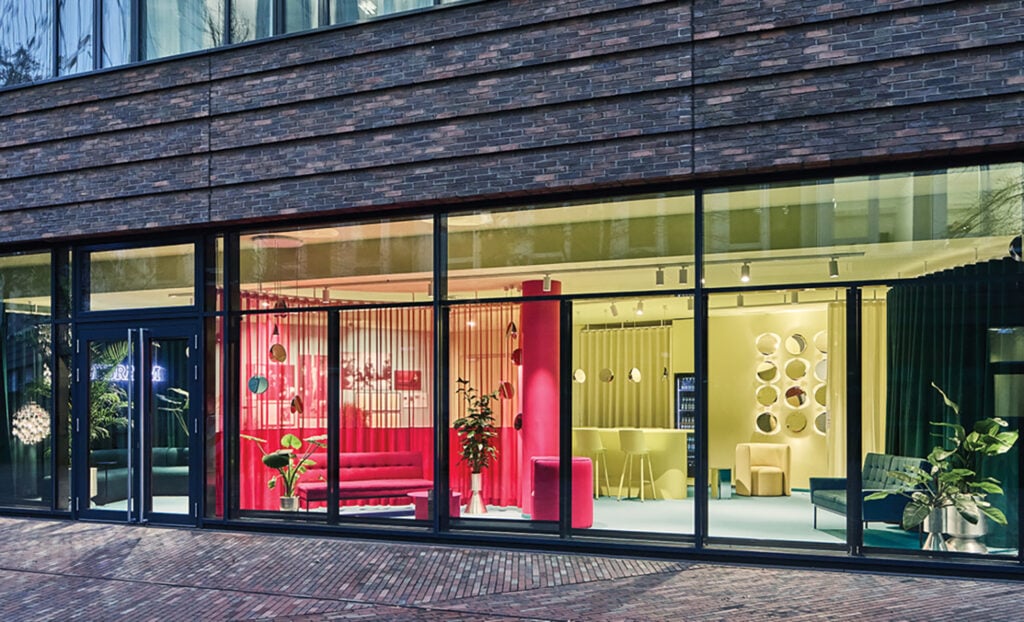
Previous years focused on Gen Z, folks who are digitally fluent, value-driven, and who had been at the forefront of designers’ considerations. Now designers see their shifts in values. There are contending with a growing decline of institutional trust and an increased desire for transparency, accountability, and care. Cozy, welcoming, and warm are the touchstones for this group, as evident in a new coworking hub the Netherlands. Meanwhile, millennials, typically at mid-career in their trajectory, are often delaying home ownership and starting families due to costs and financial uncertainties. Perhaps the big surprise comes from Baby Boomers. They’re the fastest growing population segment impacting housing, the work force, and health and wellness. They’re living long and well. Longevity, it tuns out, is here to stay. “It’s not an edge case.”
Workplace Design: From Multi-Generational Spaces to Premium vs Adaptive Reuse Buildings
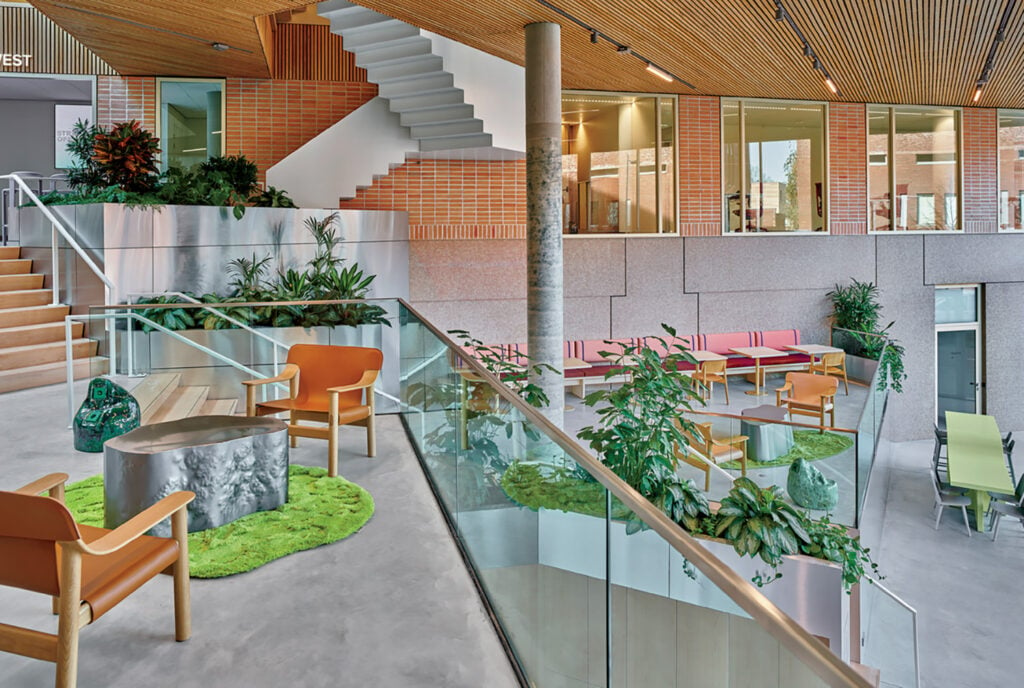
With a broad age range populating offices, it is incumbent upon designers to build in adaptability, inclusiveness, and flexible values especially as attuned to older employees. They bring to the table valuable assets including institutional knowledge and problem solving with clients. Physical sites themselves are experiencing a split in the real estate market. Class A buildings are doing well; older structures are struggling. Part of a designer’s role re the latter is determining best-case scenarios for existing conditions, optimizing assets with flexible layouts, lighting solutions, and plans for hybrid and future work schedules. Designers are also thinking across client portfolios to consider acquisitions and divestitures. In a phrase, designers are doing the heavy lifting.
Editor’s note: See more stunning offices designed for connection here.
Comfort + Performance in Residential and “Resimercial” Designs
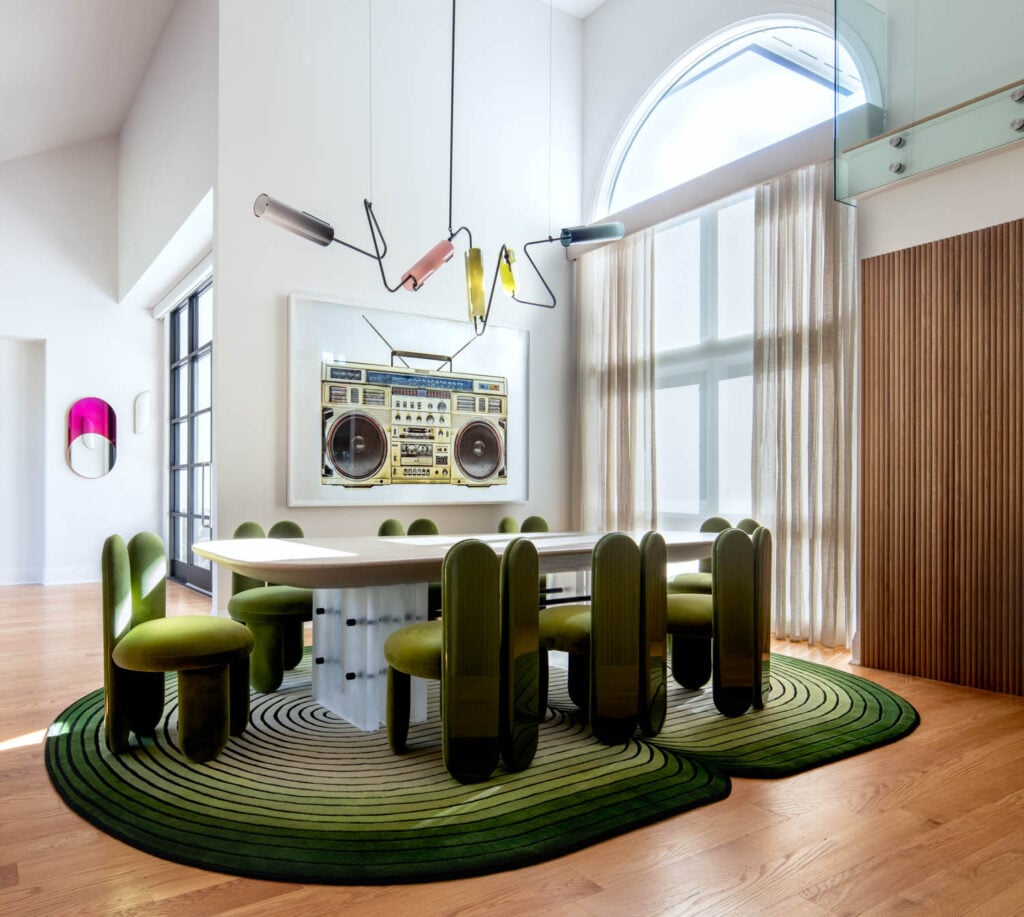
Increasingly homes are viewed more as expressions of identity—like the one pictured above for a hip-hop enthusiast—over a financial asset with re-sale value. A key factor figuring into residential design is the idea of aging in place gracefully and with dignity. A designer’s job? To lead with empathy. Other designer tasks revolve around hidden technology and selection of long-lasting elements. To wit: performance fabrics and durable furniture frames. Designer multi-tasking is especially relevant given the generational anxiety around housing availability and affordability. In fact, data cite only 21% of purchases are by first-time buyers.
Trade Disruptions and Global Economic Volatility
These uncertainties with their attendant cost pressures trickle down to every aspect of the design field. Logistics, availability, and/or scarcity of materials are key components of manufacturing and scheduling.
Learn what industry experts have to say about the impact of tariffs, AI, and more by listening to ThinkLab’s Baseline podcast on the SURROUND Podcast Network.
Climate Change, a Big Umbrella
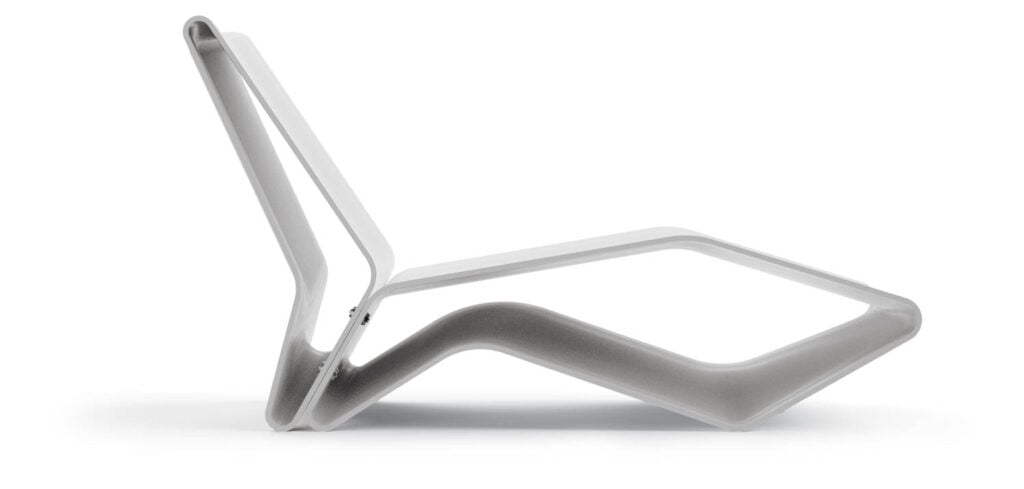
Under the aegis of climate change come considerations for health, wellness, and increased efforts for sustainability, seen in built environments and eco-conscious product design. Recent devastation resulting from wild fires and extreme weather conditions throughout the U.S. also prompt investigation of safer solutions for rebuilding.
Wellness is Key

Wellness as a consideration has transitioned from aesthetics to bona fide performance metrics. Clients want built-in contributors to health. Steam rooms—like the one pictured above located outside Tokyo—red-light therapy, cold plunges, and biophilia top the desiderata list. Bio-hacking has come into parlance, particularly as related to workplace design. Translated, it’s what makes people want to commute to work.
Purpose-Driven Design
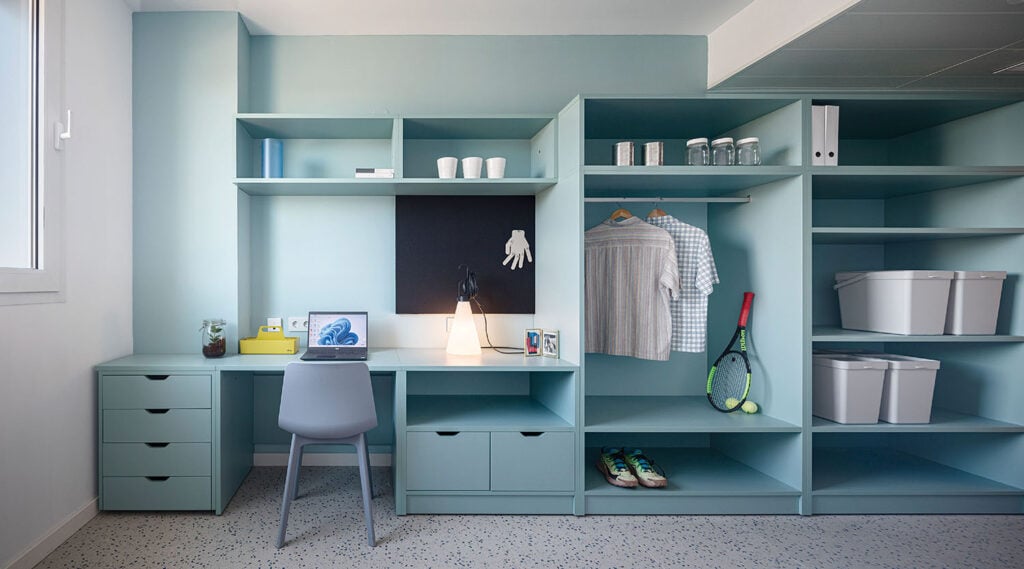
The fundamental questions designers face is how does the design of the space reflect what the institution is there for and how is it tied to the community. Again, the Trends Outlook identifies a shift delegating increasing importance to the user experience. For example, designers creating solutions differentiating the experiences tied to the intimacies of dorm rooms and those of more public cafeterias and libraries. Classrooms, too, are under re-evaluation to result in enhanced communication and more performative spaces for students. All in the service of good business and perceived value.
Authentic Branding and Marketing
Whether for clients or their own studio, designers must focus on honesty and transparency rather than chasing algorithms. Building brand trust, sensory experiences, and emotional connections is the goal.
The Big Take-Away
After offering an overview of the year’s trends, Vo stressed the importance of resiliency, noting the design community’s unique ability to take the lead when it comes to finding solutions in the face of compounding disruption. “Design is no longer a luxury, but a need to navigate complexities,” he asserts. More than ever, he notes, designers are tasked with doing more and operating with less. Yet, “designers have always been doing this,” he continues. “I think it’s all going to be okay.”
read more
DesignWire
Designers And Manufacturers On The Move: September 2026 Edition
Interior Design‘s latest On the Move includes must-know industry promotions and hires, like Perkins&Will’s strategic move to expand its design capabilities.

DesignWire
10 Questions With… Artist and Designer Conie Vallese
From sculpture and ceramics to glass, textiles, and furniture, Conie Vallese embraces a multidisciplinary practice shaped by curiosity and creativity.